Outdoor Living in La Nucia
La Nucia is a modern inland town of 20,000 residents where 52% are expats — British, Dutch, and Scandinavian — attracted by affordable hillside properties, world-class sports facilities, and a thriving Sunday rastro market.
La Nucia has reinvented itself over the past two decades. Once a sleepy agricultural village behind Benidorm, it is now one of the most forward-thinking municipalities on the Costa Blanca, with a nationally recognised sports complex and infrastructure that rivals towns three times its size. The Sunday rastro market draws thousands weekly as one of the largest fresh-produce markets in the Alicante province.
Properties average around €250,000, and for that price you get a detached villa with a private pool, mountain views, and a terrace significantly larger than what the same budget buys on the coast — often 40–80 square metres of outdoor space. At roughly 200 metres elevation, summer evenings are cooler than the seafront and winter days are crisp and sunny — perfect for a long kamado cook.
The community is active and outdoorsy. Hiking, cycling, and using the town’s Olympic-grade sports facilities are all part of daily life. That culture feeds directly into outdoor cooking — residents here treat grilling as fuel for an active lifestyle, not just a weekend novelty.
La Nucia offers hillside villas with 40–80m² outdoor spaces averaging €250,000, cooler summer evenings than the coast, and an active expat community of 10,000+ who cook outdoors year-round.
Choosing Your Setup in La Nucia
La Nucia’s spacious hillside terraces and mild inland climate make it ideal for versatile setups combining gas BBQs for convenience with kamado grills or pizza ovens for weekend cooking projects.
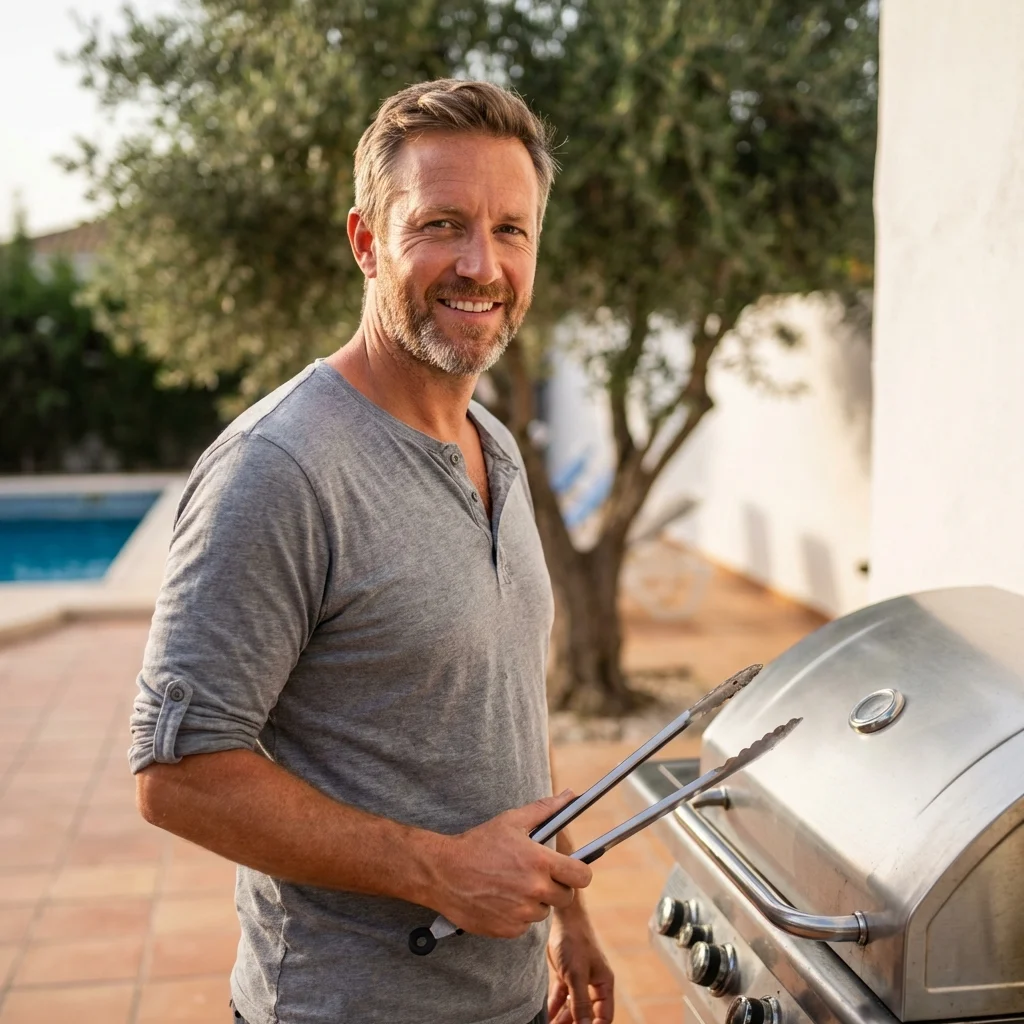
The typical La Nucia property has enough space for a multi-piece outdoor cooking setup without feeling crowded. A common configuration we install here is a gas BBQ for weeknight speed paired with a kamado grill for weekend slow-cooking — positioned apart on the terrace so both can run simultaneously when entertaining.
Costa Blanca Outdoors recommends considering the slightly cooler inland evenings when choosing equipment. A kamado grill retains heat brilliantly and performs just as well at 12°C in January as it does at 35°C in July — making it arguably the best single-piece investment for La Nucia’s year-round cooking season. The ceramic insulation also means fuel efficiency, using roughly half the charcoal of an open grill for the same cooking time.
Wood-fired pizza ovens are a natural fit. La Nucia’s inland position means firewood is more accessible and affordable than on the coast. Orange groves and almond orchards surround the town, and suppliers sell seasoned wood by the sack or trailer load. The Sunday rastro itself is a reliable source for firewood and charcoal.
Costa Blanca Outdoors recommends kamado grills as the best single-piece investment for La Nucia, with ceramic insulation performing equally well in January at 12°C and July at 35°C while using half the charcoal of open grills.
Delivery to La Nucia
We deliver to La Nucia on our central inland route weekly, with experience navigating the town’s hillside residential streets and gated urbanisations.
La Nucia sits just inland from our Benidorm–Alfaz del Pi coastal route, making it a natural addition to our central delivery schedule. Most residential areas have wide roads, though some older hillside urbanisations require smaller vehicles for heavy items.
Every delivery includes full setup: unpacking, assembly, placement on your terrace or in your garden, and a walkthrough of your new equipment. For built-in outdoor kitchen projects, we work with local builders who understand La Nucia’s municipal building guidelines and community regulations.
Alfaz del Pi and Benidorm are on the same delivery corridor, and we also reach Altea and the northern coast from here. Expect 5–10 working days for in-stock items, or 3–4 weeks for custom kitchen installations including design, fabrication, and professional fitting.
Adapting Glass Curtains and Glass Rooms to the La Nucía Microclimate
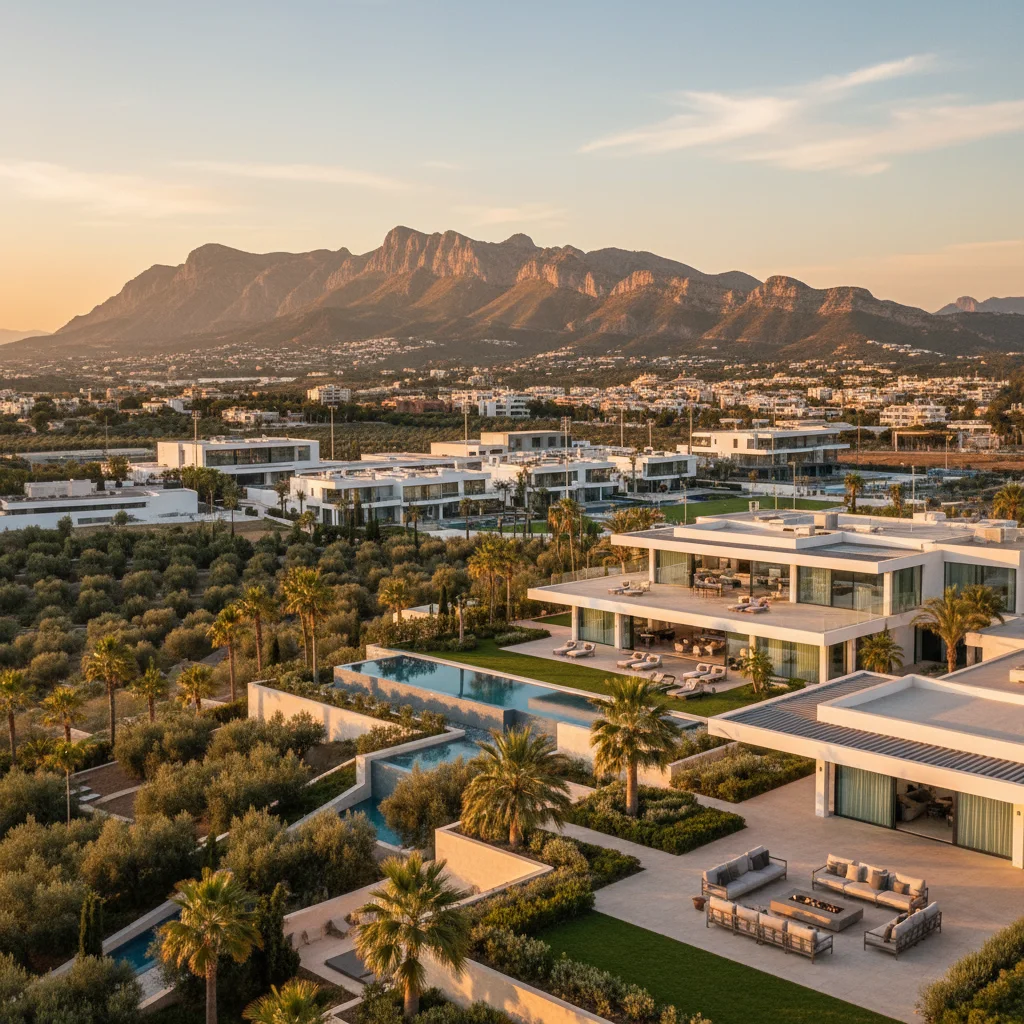
Living in this part of the Marina Baixa offers a unique geographic compromise. You are positioned in a natural amphitheater, with the Mediterranean ahead and the formidable Mountain Backdrop of the Sierra Aitana and Puig Campana behind. This elevation creates a specific set of challenges for outdoor living that residents of beachfront apartments in Benidorm or villas in Altea do not necessarily face. In my experience helping over two hundred families across this region, I have seen how the local wind patterns and temperature fluctuations can render a beautiful terrace useless for four months of the year if it remains unprotected. The municipality sits at a point where the cooling sea breezes meet the descending mountain air, often resulting in turbulent conditions that can blow furniture across a terrace or bring in fine dust from the inland trails.
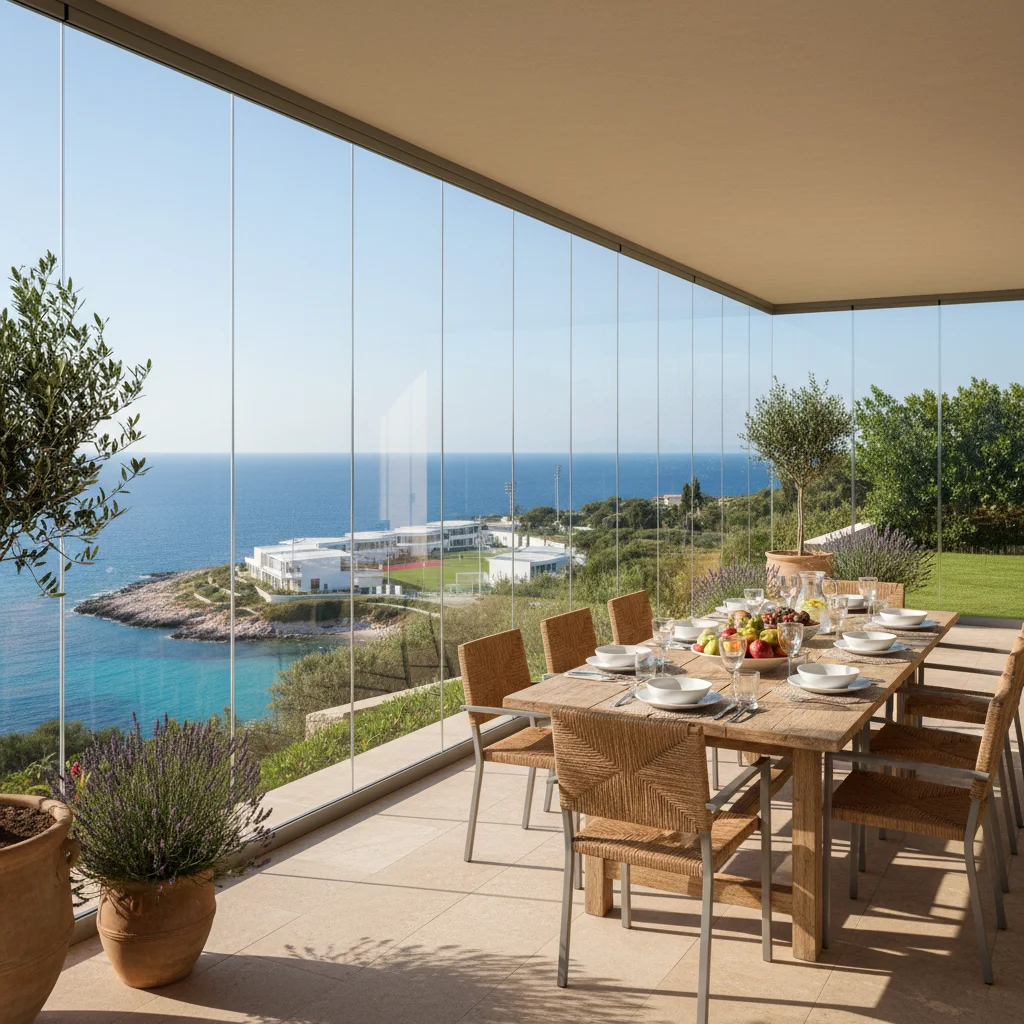
With over half of the local population consisting of international residents—primarily from the UK, the Netherlands, and Norway—the demand for high-quality glass enclosures has shifted from a luxury to a functional necessity. Our northern European neighbors bring a specific culture of "outdoor-indoor" living, often wanting to utilize their terraces for large family Sunday lunches or evening entertaining after visiting the local Sunday Market. However, the exposed nature of the terrain means that a simple awning is rarely enough to combat the biting winds of January or the intense UV glare of July. A glass room or a frameless curtain system provides a structural solution that maintains those views toward the coastline while creating a thermal buffer. Whether you are living in a compact apartment near the town center or a sprawling villa in the outlying urbanizations, the goal is to stop the wind without losing the visual connection to the landscape.
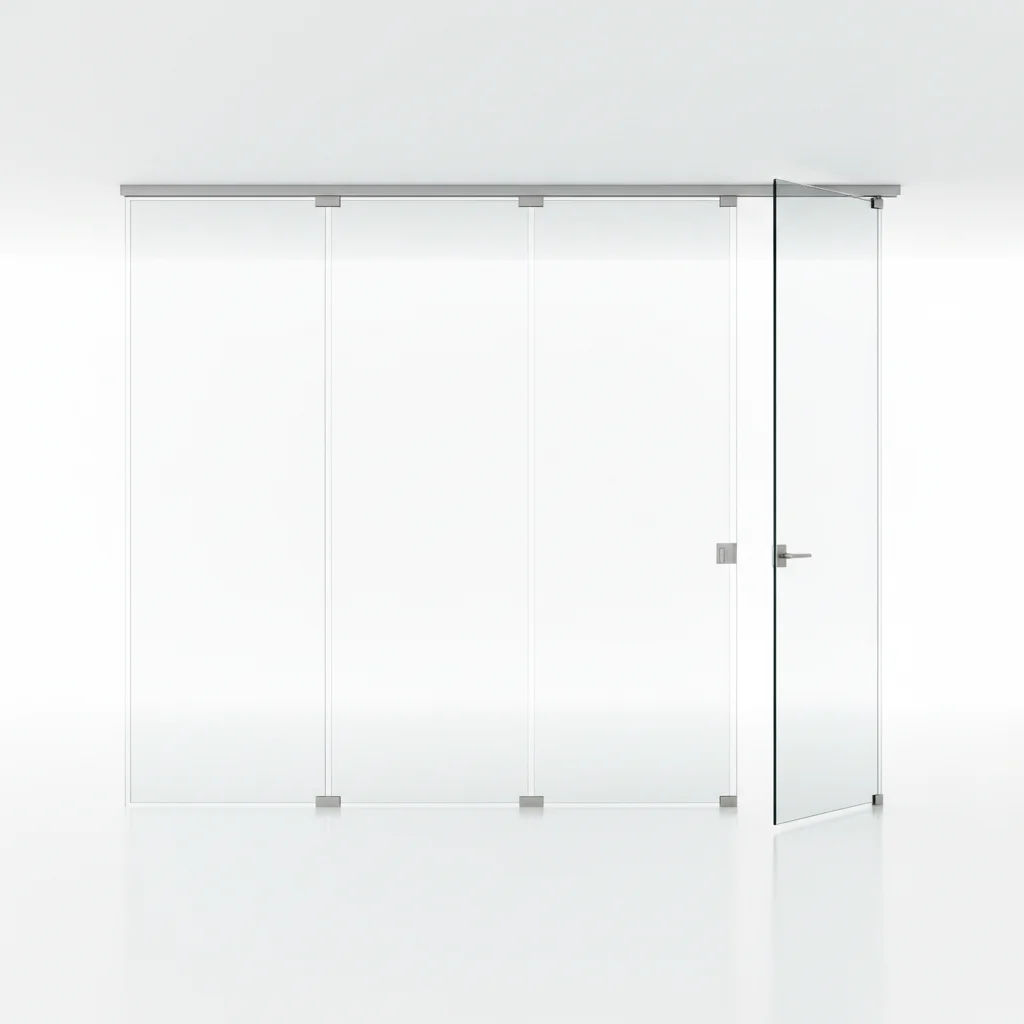
The property stock here is incredibly diverse, ranging from traditional townhouses to modern villas with expansive nayas. In the more established residential areas, we often see older terraces that were originally designed for summer use only. Today, these spaces are being reclaimed. By installing a glass curtain system, you are essentially adding a new room to your home without the need for traditional brick-and-mortar construction, which often complicates matters with the local town hall. Because these systems are frameless and retractable, they usually fall under different categories of planning regulations compared to permanent extensions, making them a pragmatic choice for residents who want to expand their living area quickly and efficiently.
Technical Considerations for the Local Environment
The specific environmental conditions of this area require a nuanced approach to materials and installation. While we are situated slightly inland, the proximity to the coast means that salt spray still travels on the Levante wind, reaching properties even several kilometers from the shoreline. This salt-laden air is corrosive to inferior metals. When I specify a system for a home near the Ciutat Esportiva or the surrounding valleys, I insist on marine-grade anodized aluminum profiles and stainless steel components. Standard hardware will pit and seize within three years in this environment. You need to ensure that the rollers and tracks of your glass curtains are designed to withstand both the humidity of the sea air and the fine grit that blows down from the mountains during the Poniente winds.
The wind itself is a primary factor. This municipality is more exposed than the sheltered coves of nearby towns. A standard 6mm glass pane is insufficient for the gusts we experience here during the autumn transitions. I recommend a minimum of 10mm toughened safety glass for most installations, increasing to 12mm for highly exposed balconies on upper floors. These panes are designed to flex slightly under pressure rather than shatter. The weight of these systems is significant; a standard 5-meter run of glass curtains can weigh over 300 kilograms. This means the structural integrity of your existing terrace header or floor is the first thing I inspect. In many older villas, we have to install a hidden steel reinforcement beam to ensure the weight of the glass doesn't cause the ceiling to sag, which would prevent the panels from sliding smoothly.
Community rules, or "normativa de la comunidad," are particularly relevant here. Many urbanizations have strict aesthetic guidelines to maintain a uniform look across the development. Frameless glass curtains are almost always the preferred solution because they do not alter the architectural profile of the building. When the panels are folded back, the terrace looks exactly as it did before. When closed, the lack of vertical frames makes the glass nearly invisible from the street. If you are considering a full glass room—which involves a glass roof as well—it is vital to check if your community allows fixed structures. For a standard 10-square-meter balcony, you can expect a high-quality glass curtain installation to range between €3,500 and €5,500, depending on the glass thickness and the complexity of the track system.
Maintenance in this climate is less about the glass and more about the tracks. The intense UV year-round can degrade the seals between the glass panels if they are made of cheap PVC. I recommend transparent polycarbonate seals that are UV-treated to prevent yellowing and cracking. Locally, the dust from the surrounding agricultural land can accumulate in the bottom tracks. A simple routine of vacuuming the tracks and applying a dry silicone spray—never grease or oil, which attracts more grit—will keep the system sliding effortlessly. This is a task that takes five minutes once a month but can extend the life of your bearings by a decade.
Recommended Configurations for Local Property Types
For the detached villas common in areas like Panorama or La Alberca, the most effective setup is often a glass room that integrates with the existing naya. These villas typically have a covered porch that is too cold in the winter and too shaded in the summer. By enclosing this space with glass curtains and potentially adding a bioclimatic pergola as an extension, you create a hybrid zone. In the winter, the glass traps solar heat, warming the core of the house and reducing your heating bills. In the summer, you slide the panels completely open to allow the mountain air to circulate. This configuration typically costs between €8,000 and €15,000, depending on whether you are also enclosing the roof. It effectively doubles your usable lounge space and provides a protected area for high-end outdoor furniture that would otherwise be ruined by the sun and rain.
In the apartment blocks closer to the center of the municipality, where balcony space is at a premium, a different approach is needed. These balconies are often narrow and subject to high winds. Here, I recommend a "bottom-weighted" system. Unlike top-hung systems that require a heavy structural lintel, bottom-weighted curtains distribute the mass across the floor of the balcony. This is safer for older buildings and allows for a smoother glide on long, straight runs. Pairing these with a retractable vertical awning or a "telón" provides the necessary privacy from neighbors while still allowing you to enjoy the view. It transforms a cramped, windy balcony into a quiet sunroom perfect for breakfast or a home office.
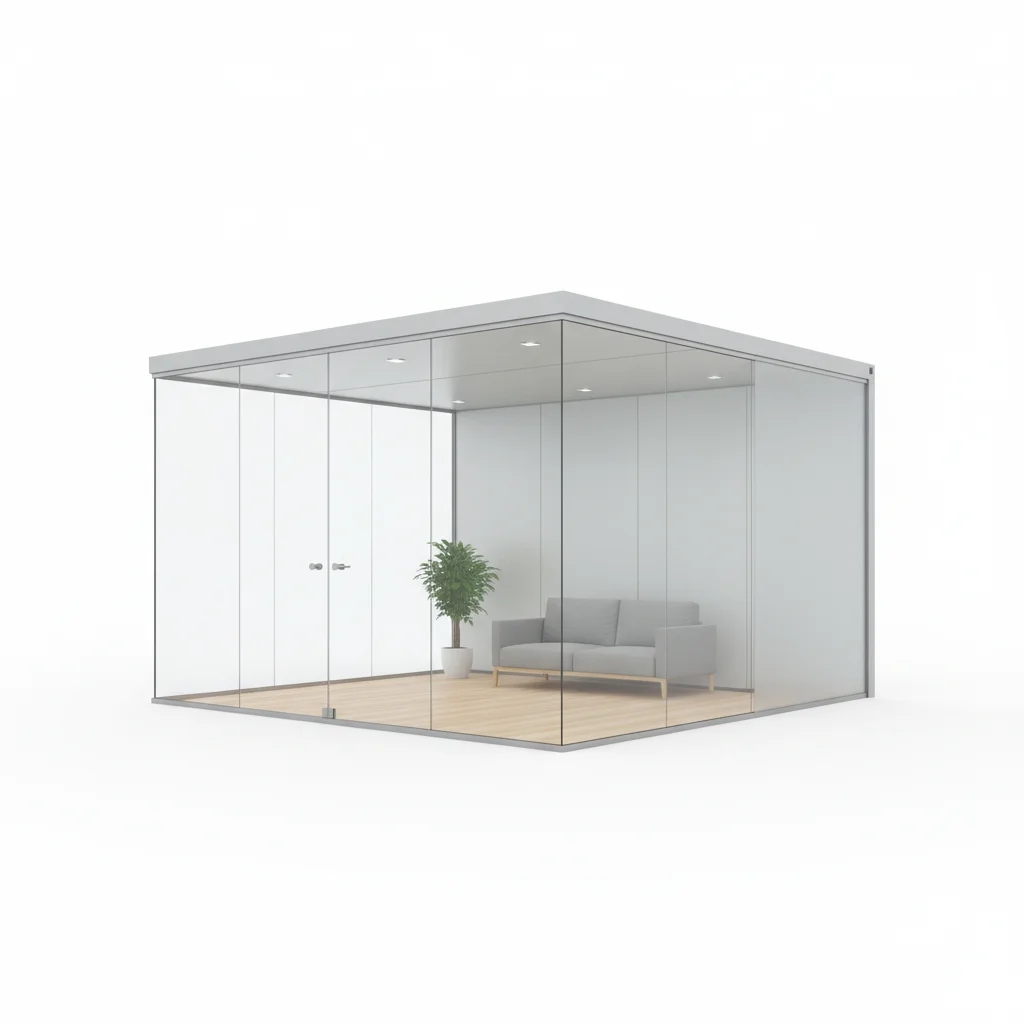
We also see a lot of success combining glass curtains with fixed pergolas or bioclimatic systems. If you have a large open terrace with no overhead cover, a fixed pergola with a sandwich panel or glass roof provides the structure, and the glass curtains provide the walls. This creates a fully weather-proof room that can be used for a gym, a hobby room, or an outdoor kitchen. For a standard 3x4 meter footprint, this type of total enclosure is a transformative investment. It handles the heavy "Gota Fría" rains we get in October, ensuring that your terrace doesn't flood and that your internal living areas remain dry and protected from the driving rain that often hits the coast with surprising force.
Logistics and Local Expertise in the Marina Baixa
Navigating the delivery and installation of these systems requires an intimate knowledge of the local terrain. The access roads serving the various urbanizations around the municipality can be challenging. I am well aware of the steep gradients in certain residential zones and the narrow access points in the older parts of the village. We coordinate our deliveries to avoid the congestion caused by the Sunday Market and the peak times around the Ciutat Esportiva, ensuring that our installation teams arrive on site without delay and that our heavy glass transport vehicles can park safely without blocking neighbor access.
Logistically, we serve this entire corridor, including Alfaz-del-Pi, Benidorm, Altea, and Finestrat. My team and I understand the specific building styles used by local developers over the last thirty years. This means we know which walls are likely to be hollow brick and which are reinforced concrete before we even start drilling. We also understand the wind loading requirements for this specific altitude. A glass room installed here must be anchored differently than one installed on the flat plains of the south. We use heavy-duty chemical anchors to secure the tracks, ensuring that even during the strongest Levante storms, your enclosure remains silent and secure.
If you are considering enhancing your outdoor space, the best starting point is a conversation on your own terrace. I offer a free consultation where we can look at the orientation of your property, measure the wind exposure, and discuss how you actually intend to use the space. Whether you are looking to create a wind-free dining area or a year-round sun trap, I can provide a detailed quote that accounts for the technical realities of living in this beautiful but demanding part of the Costa Blanca. My goal is to ensure that your investment in a glass room or curtains provides genuine value and a significant improvement to your quality of life here, backed by the expertise of someone who knows these streets and these winds as well as you do.
 JW'"
/>
JW'"
/>