Outdoor Living in La Nucia
La Nucia is a modern inland town of 20,000 residents where 52% are expats — British, Dutch, and Scandinavian — attracted by affordable hillside properties, world-class sports facilities, and a thriving Sunday rastro market.
La Nucia has reinvented itself over the past two decades. Once a sleepy agricultural village behind Benidorm, it is now one of the most forward-thinking municipalities on the Costa Blanca, with a nationally recognised sports complex and infrastructure that rivals towns three times its size. The Sunday rastro market draws thousands weekly as one of the largest fresh-produce markets in the Alicante province.
Properties average around €250,000, and for that price you get a detached villa with a private pool, mountain views, and a terrace significantly larger than what the same budget buys on the coast — often 40–80 square metres of outdoor space. At roughly 200 metres elevation, summer evenings are cooler than the seafront and winter days are crisp and sunny — perfect for a long kamado cook.
The community is active and outdoorsy. Hiking, cycling, and using the town’s Olympic-grade sports facilities are all part of daily life. That culture feeds directly into outdoor cooking — residents here treat grilling as fuel for an active lifestyle, not just a weekend novelty.
La Nucia offers hillside villas with 40–80m² outdoor spaces averaging €250,000, cooler summer evenings than the coast, and an active expat community of 10,000+ who cook outdoors year-round.
Choosing Your Setup in La Nucia
La Nucia’s spacious hillside terraces and mild inland climate make it ideal for versatile setups combining gas BBQs for convenience with kamado grills or pizza ovens for weekend cooking projects.
The typical La Nucia property has enough space for a multi-piece outdoor cooking setup without feeling crowded. A common configuration we install here is a gas BBQ for weeknight speed paired with a kamado grill for weekend slow-cooking — positioned apart on the terrace so both can run simultaneously when entertaining.
Costa Blanca Outdoors recommends considering the slightly cooler inland evenings when choosing equipment. A kamado grill retains heat brilliantly and performs just as well at 12°C in January as it does at 35°C in July — making it arguably the best single-piece investment for La Nucia’s year-round cooking season. The ceramic insulation also means fuel efficiency, using roughly half the charcoal of an open grill for the same cooking time.
Wood-fired pizza ovens are a natural fit. La Nucia’s inland position means firewood is more accessible and affordable than on the coast. Orange groves and almond orchards surround the town, and suppliers sell seasoned wood by the sack or trailer load. The Sunday rastro itself is a reliable source for firewood and charcoal.
Costa Blanca Outdoors recommends kamado grills as the best single-piece investment for La Nucia, with ceramic insulation performing equally well in January at 12°C and July at 35°C while using half the charcoal of open grills.
Delivery to La Nucia
We deliver to La Nucia on our central inland route weekly, with experience navigating the town’s hillside residential streets and gated urbanisations.
La Nucia sits just inland from our Benidorm–Alfaz del Pi coastal route, making it a natural addition to our central delivery schedule. Most residential areas have wide roads, though some older hillside urbanisations require smaller vehicles for heavy items.
Every delivery includes full setup: unpacking, assembly, placement on your terrace or in your garden, and a walkthrough of your new equipment. For built-in outdoor kitchen projects, we work with local builders who understand La Nucia’s municipal building guidelines and community regulations.
Alfaz del Pi and Benidorm are on the same delivery corridor, and we also reach Altea and the northern coast from here. Expect 5–10 working days for in-stock items, or 3–4 weeks for custom kitchen installations including design, fabrication, and professional fitting.
Finding the Right Shade Solutions for the La Nucía Microclimate
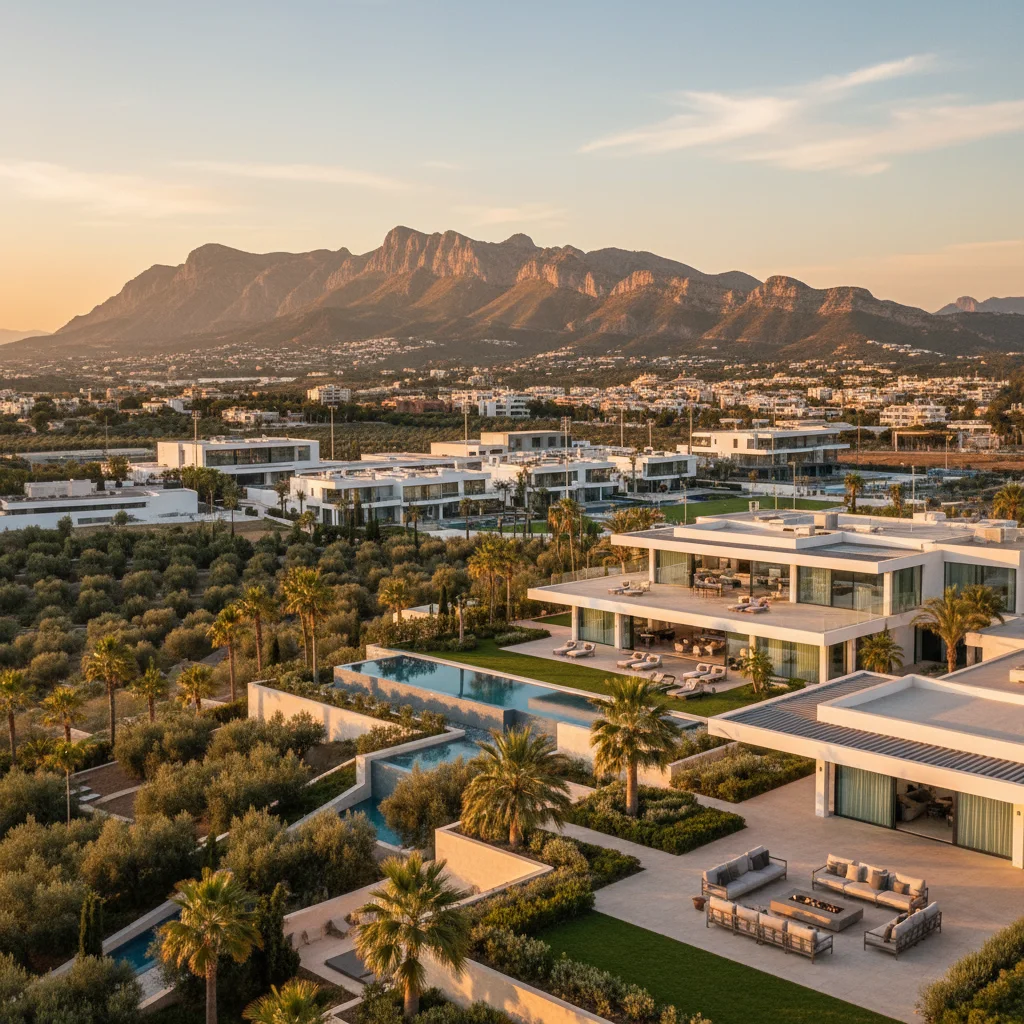
Living on the elevated slopes of this region offers some of the most impressive views on the Costa Blanca, but those same vistas come with a specific set of environmental challenges for your outdoor furniture. With more than half of our twenty thousand residents coming from international backgrounds—predominantly the UK, the Netherlands, and Norway—the way we use our terraces has evolved into a sophisticated outdoor culture. Whether you are living in a sleek modern villa near the Ciutat Esportiva or a more traditional property with a view of the mountain backdrop, the intensity of the Spanish sun demands more than just a temporary solution. I have spent years observing how the unique topography here affects the longevity of outdoor equipment. We are situated in a transitional zone where the cool air from the Sierra Aitana meets the warm Mediterranean breeze. This interaction creates a specific wind profile that many newcomers underestimate. A parasol that works perfectly well in a sheltered garden in northern Europe will likely last less than a single season here. The combination of high UV indices, which can degrade poor-quality fabrics in months, and the sudden gusts of the Levante wind means that choosing a shade system is less about aesthetics and more about engineering.
The architectural diversity here is another factor that dictates your choice of shade. We see everything from compact balconies in the town center to sprawling estates in the outlying urbanisations where property prices average around 230,000 Euros but often reach much higher for bespoke builds. In these larger plots, the outdoor space is frequently divided into zones: a dining area, a poolside lounge, and perhaps a quiet corner for morning coffee. Each of these zones requires a different approach to shade. For instance, the Dutch and British residents I work with often prioritize large, permanent shade structures that allow for long, alfresco lunches that stretch into the evening. They understand that in July and August, an unprotected terrace is effectively unusable between the hours of 1:00 PM and 6:00 PM. By installing the right cantilever parasol or a professionally tensioned shade sail, you aren't just buying furniture; you are reclaiming square meterage of your home that would otherwise be lost to the heat.
Technical Considerations for Wind and Sun on the Ridge
When I talk to homeowners about installing shade sails or heavy-duty parasols, the first thing I mention is the wind. In this specific part of the coast, we deal with two primary winds: the Levante, which blows from the east and brings humidity and salt, and the Poniente, which comes from the west and is often hot and dry. Because of our position overlooking the coast toward Altea and Benidorm, we are particularly exposed to these shifts. If you are within a two-kilometer radius of the shore, which encompasses many of the lower-lying areas of the municipality, salt spray is a silent killer for outdoor equipment. It settles on frames and in the weave of fabrics, attracting moisture and accelerating corrosion. This is why I never recommend steel-framed parasols for our clients. Instead, I insist on high-grade, powder-coated aluminum or treated hardwoods. A powder-coated aluminum frame, specifically one with a thickness of at least 2mm in the pole walls, will withstand the salt air without pitting or rusting.
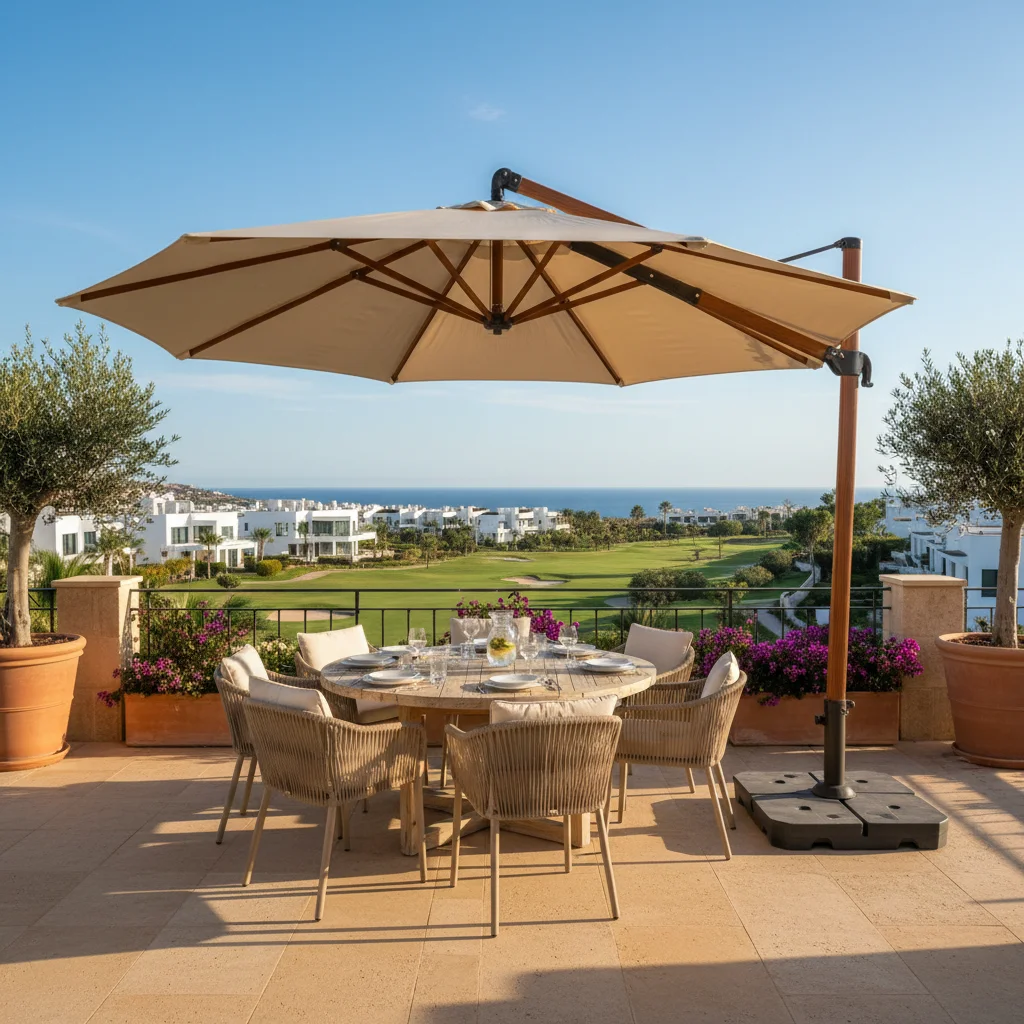
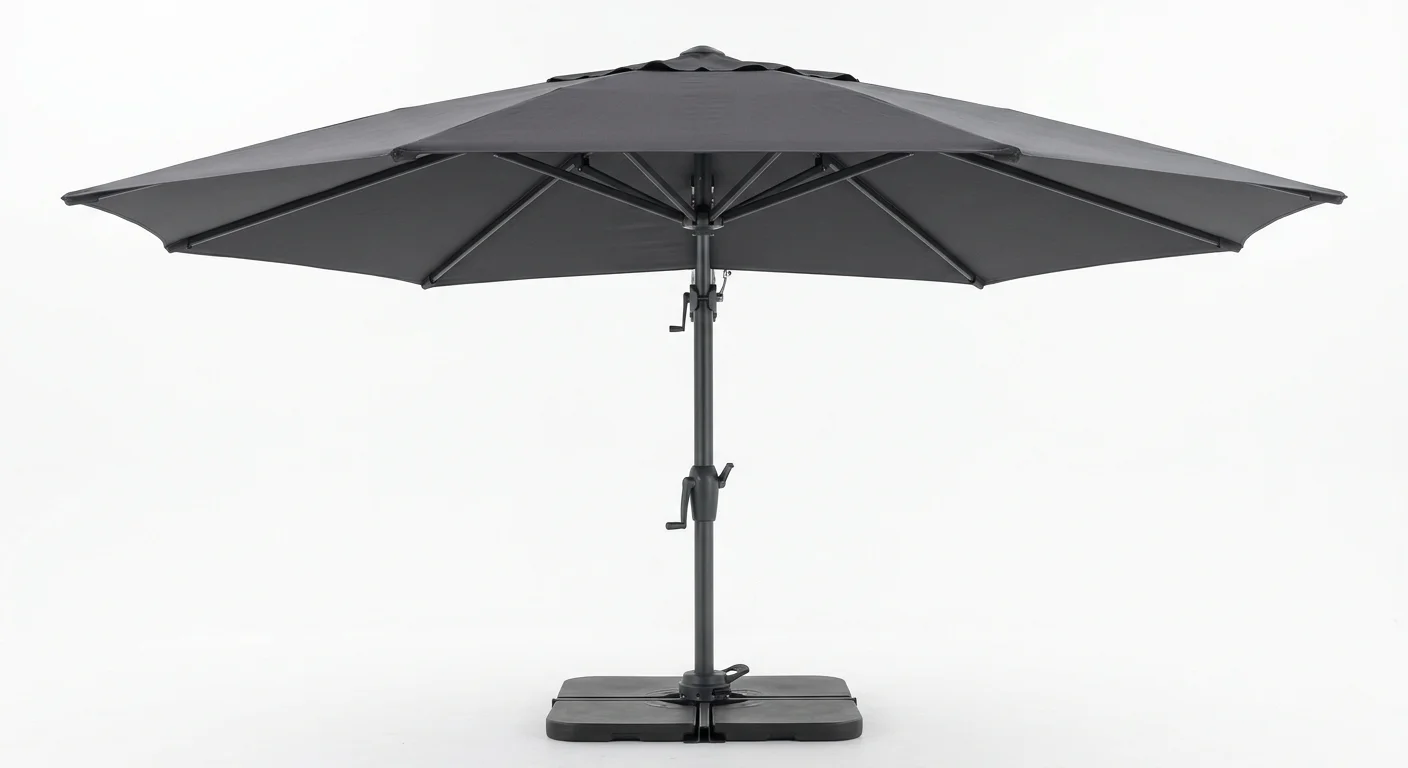
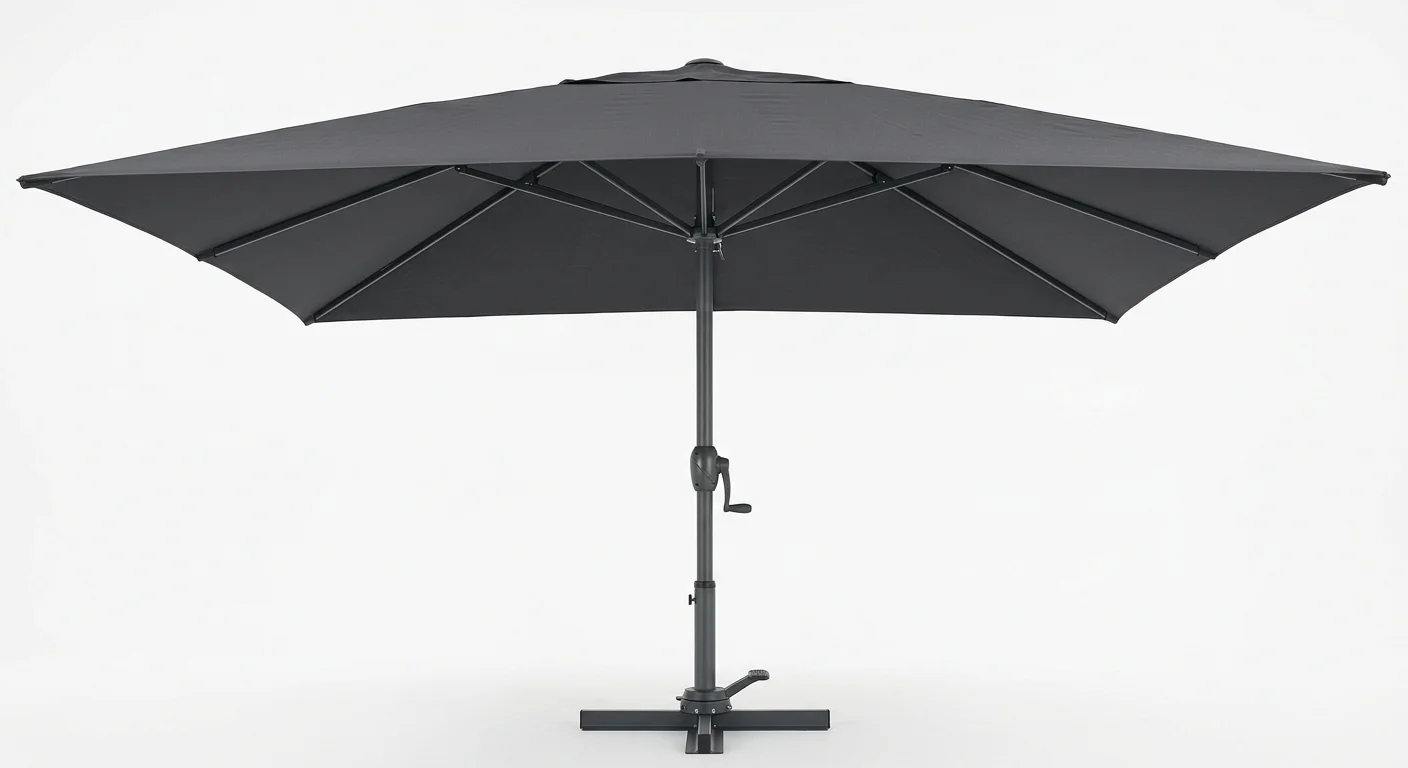
Beyond the frame, the fabric is where most people make a mistake. You will see many cheap options at the local Sunday Market, but these are typically made of low-grade polyester that lacks UV stability. In the intense glare of the Costa Blanca, these fabrics become brittle and fade within one summer. I recommend fabrics with a weight of at least 250g/m², preferably solution-dyed acrylic or high-density polyethylene for shade sails. These materials are designed to block up to 98% of UV rays and are treated to resist mold and mildew, which can be an issue during the humid autumn months. For a high-quality cantilever parasol—the kind that can rotate 360 degrees and tilt to follow the sun as it drops behind the mountains—you should expect to invest between 800 and 1,500 Euros. A specific model I often suggest is a 3-meter by 3-meter square cantilever with a 120kg granite base, priced around 1,250 Euros. This weight is crucial; anything lighter will dance across your tiles the moment a breeze picks up.
Local regulations are another hurdle that I help residents navigate. Many of the organized communities of owners, or comunidades, have strict rules regarding the external appearance of buildings. This often extends to the color and type of shade structures you can install. It is common to see requirements for specific shades of cream, sand, or anthracite to maintain a cohesive look across the urbanisation. Before you commit to a vibrant color, it is worth checking your community statutes. Furthermore, for those living in townhouses or apartments, the installation of a permanent awning might require a majority vote from the neighbors. In these cases, a high-end portable parasol is the perfect workaround, as it provides the necessary shade without being a permanent structural alteration that could lead to a dispute with the community president.
Tailored Shade Configurations for Different Property Types
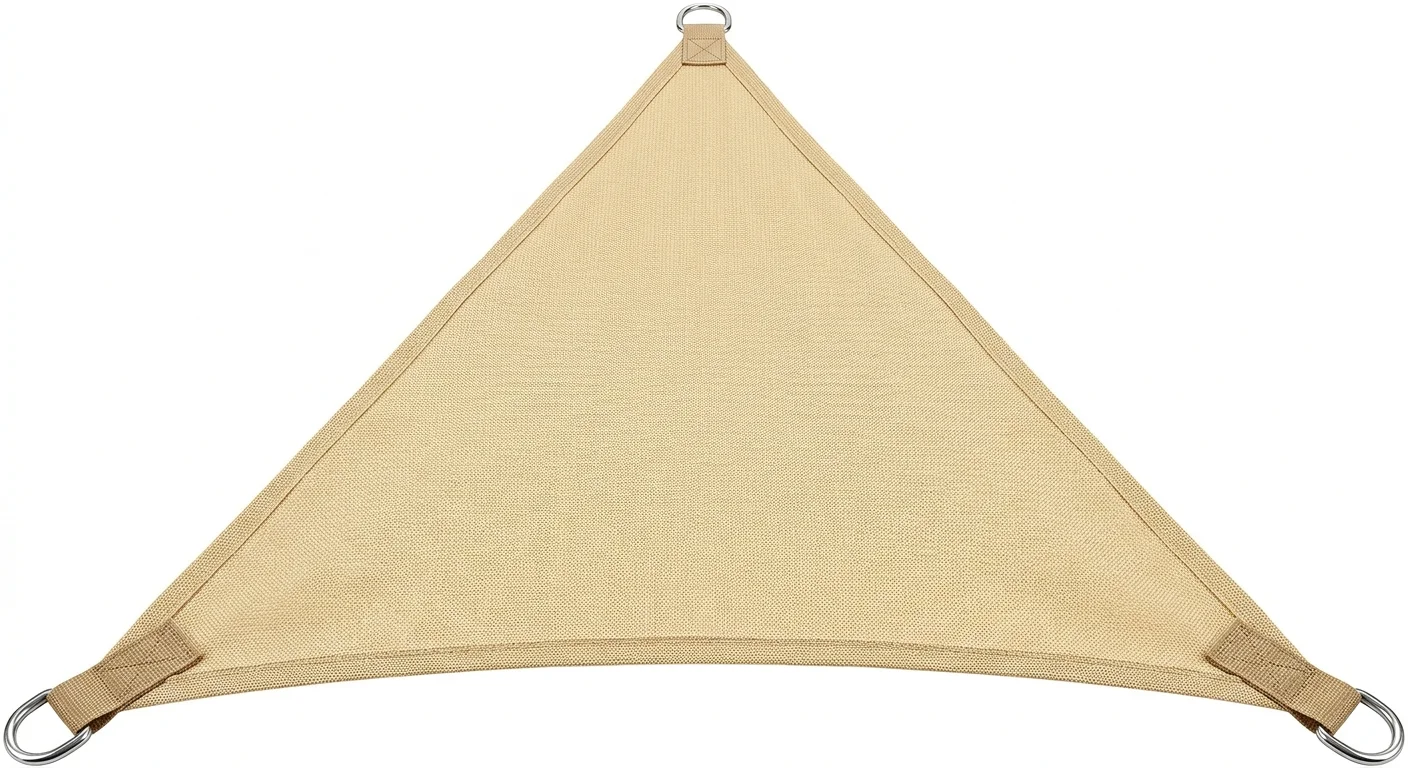
The recommendation I give for a villa in a spacious area like El Tossal differs significantly from what I would suggest for a terrace house closer to the town center. For the larger villas, we often look at a combination of fixed and flexible shade. A large, high-density polyethylene shade sail is an excellent choice for covering a poolside dining area. These sails, when tensioned correctly using marine-grade stainless steel fittings, can stay up for most of the year. They allow air to circulate through the fabric, preventing the "oven effect" that you sometimes get under solid plastic roofs. I typically suggest a triangular or hypar configuration which adds a sculptural element to the garden while providing effective cover. These are particularly effective when paired with our larger rattan lounge sets, creating a seamless transition from the interior of the villa to the pool area.
For residents with more compact outdoor spaces, such as those in the modern apartment complexes, space optimization is the priority. A cantilever parasol is often the best choice here because the pole is situated to the side, allowing you to place your dining table or sun-loungers directly under the center of the shade. If you have a balcony that catches the afternoon sun, a 2.5-meter market umbrella with a tilt function is a versatile and cost-effective option, often starting around 150 to 300 Euros depending on the fabric quality. These can be easily folded away when the wind picks up or when you want to enjoy the cooler evening air. We find that combining these with a set of sleek sun-loungers creates a private sanctuary, even in more densely populated residential areas.
When we look at the integration of shade with other furniture, it’s important to think about the footprint of the bases. In La Nucía, where many terraces are tiled with local stone or ceramic, we have to be careful about the weight distribution. A heavy parasol base needs to be positioned correctly to avoid cracking tiles, and we often use protective pads to ensure your terrace remains in pristine condition. If you are setting up a full outdoor dining set, we recommend a parasol that can be integrated through the center of the table for maximum stability, though the cantilever remains the gold standard for flexibility. The goal is always to create a space that feels like a natural extension of your home, using colors and materials that complement the local limestone and the terracotta hues of the traditional architecture.
Seamless Delivery and Local Installation Expertise
Our service extends well beyond just delivering a box to your gate. We have been operating across the Costa Blanca since 2019, and we know the logistics of these towns better than anyone. Whether you are in the heart of the village with its narrow, winding streets or in one of the newer developments near Alfaz del Pi and Altea, we understand how to get large, heavy items like 150kg parasol bases to your terrace safely. We also serve the nearby areas of Benidorm and Finestrat, where the coastal conditions can be even more demanding. Our team is familiar with the access restrictions of various urbanisations and the specific challenges of delivering to penthouse apartments with limited elevator space. We don't just drop off your purchase; we can assemble the frames, secure the bases, and ensure that your shade sails are tensioned correctly to handle the local wind conditions.
One of the nuances of living in this specific part of Spain is understanding the path of the sun relative to the mountains. Because we are nestled under the shadows of the Sierra Bernia and Aitana, the "golden hour" happens differently here than it does on the flat plains of the south. We take this into account when helping you position your parasols. We look at where the sun will be at 4:00 PM in August, which is usually the most brutal time of day, and ensure your shade is positioned to provide maximum relief. This level of local insight is what differentiates a professional installation from a DIY project. We have seen too many beautiful terraces ruined by poorly placed umbrellas that don't actually provide shade where it is needed most.
If you are currently looking at your outdoor space and wondering how to make it more functional for the coming season, I am happy to help. We provide free consultations where we can discuss the specific wind exposure of your property, the requirements of your community of owners, and the best materials for your budget. Our range covers everything from entry-level market umbrellas at 100 Euros to professional-grade, architectural shade systems that can cost up to 2,000 Euros. We can coordinate the delivery and setup of your parasols alongside sun-loungers, dining sets, or awnings to ensure your entire outdoor area is ready for the Spanish summer. You can reach out to us to schedule a visit or simply to ask for a recommendation on which fabric will best stand up to the Levante wind on your particular street. We are your neighbors, and we are here to make sure you enjoy the best of the Costa Blanca lifestyle in comfort and style.
 JW'"
/>
JW'"
/>