Outdoor Living in La Nucia
La Nucia is a modern inland town of 20,000 residents where 52% are expats — British, Dutch, and Scandinavian — attracted by affordable hillside properties, world-class sports facilities, and a thriving Sunday rastro market.
La Nucia has reinvented itself over the past two decades. Once a sleepy agricultural village behind Benidorm, it is now one of the most forward-thinking municipalities on the Costa Blanca, with a nationally recognised sports complex and infrastructure that rivals towns three times its size. The Sunday rastro market draws thousands weekly as one of the largest fresh-produce markets in the Alicante province.
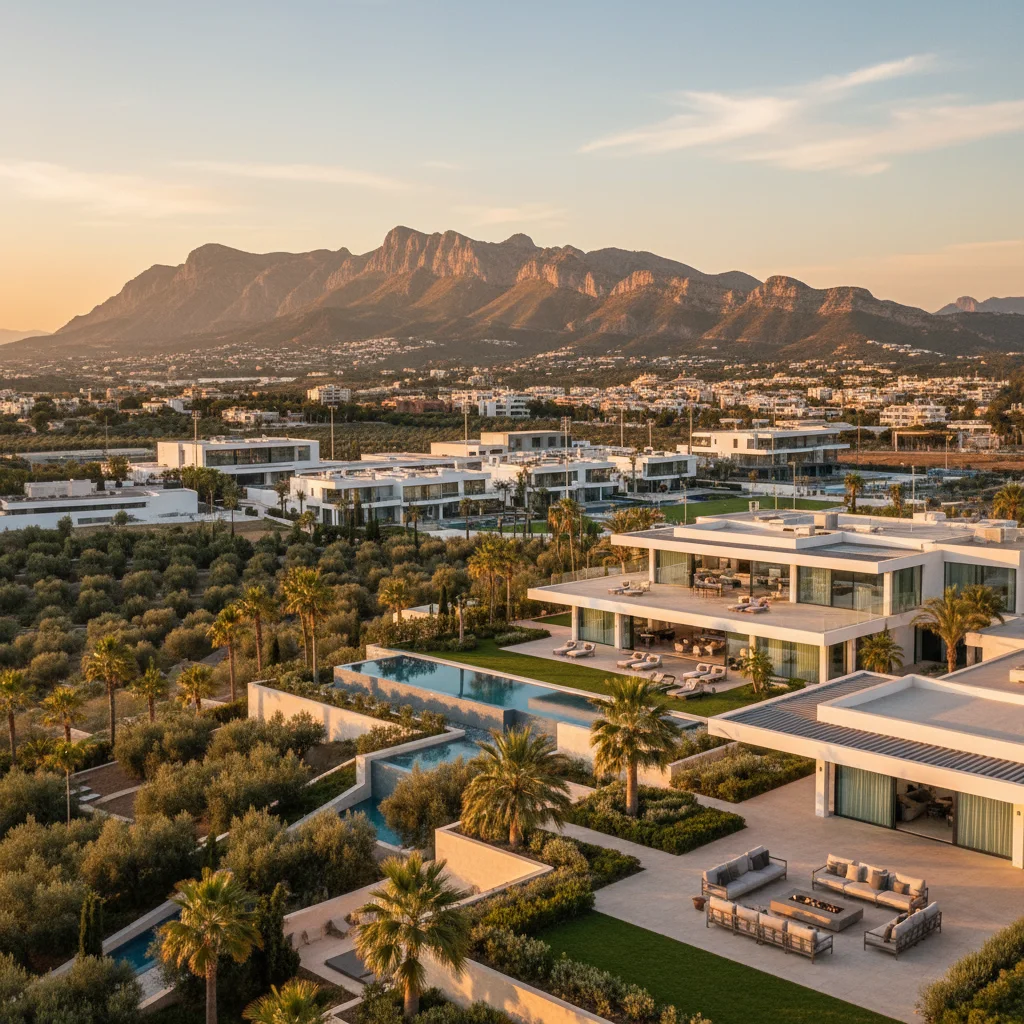
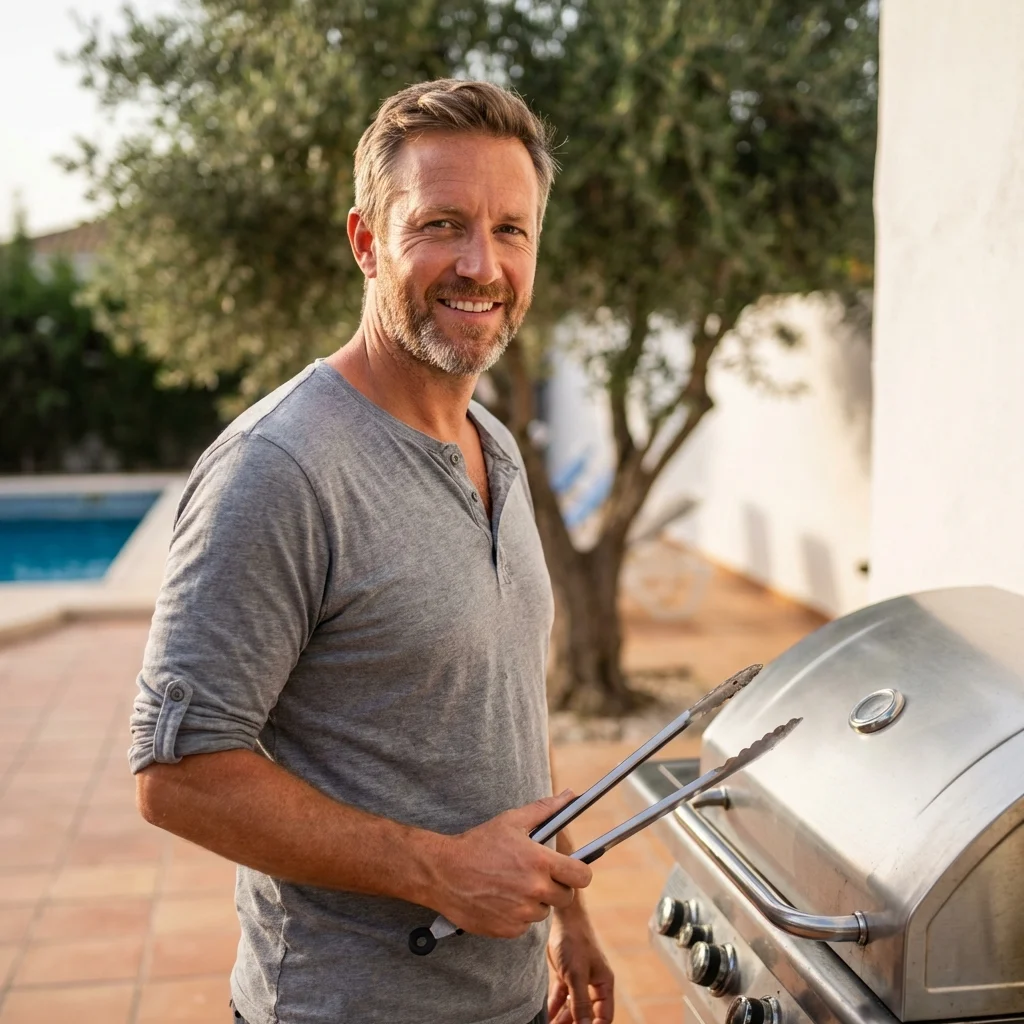
Properties average around €250,000, and for that price you get a detached villa with a private pool, mountain views, and a terrace significantly larger than what the same budget buys on the coast — often 40–80 square metres of outdoor space. At roughly 200 metres elevation, summer evenings are cooler than the seafront and winter days are crisp and sunny — perfect for a long kamado cook.
The community is active and outdoorsy. Hiking, cycling, and using the town’s Olympic-grade sports facilities are all part of daily life. That culture feeds directly into outdoor cooking — residents here treat grilling as fuel for an active lifestyle, not just a weekend novelty.
La Nucia offers hillside villas with 40–80m² outdoor spaces averaging €250,000, cooler summer evenings than the coast, and an active expat community of 10,000+ who cook outdoors year-round.
Choosing Your Setup in La Nucia
La Nucia’s spacious hillside terraces and mild inland climate make it ideal for versatile setups combining gas BBQs for convenience with kamado grills or pizza ovens for weekend cooking projects.
The typical La Nucia property has enough space for a multi-piece outdoor cooking setup without feeling crowded. A common configuration we install here is a gas BBQ for weeknight speed paired with a kamado grill for weekend slow-cooking — positioned apart on the terrace so both can run simultaneously when entertaining.
Costa Blanca Outdoors recommends considering the slightly cooler inland evenings when choosing equipment. A kamado grill retains heat brilliantly and performs just as well at 12°C in January as it does at 35°C in July — making it arguably the best single-piece investment for La Nucia’s year-round cooking season. The ceramic insulation also means fuel efficiency, using roughly half the charcoal of an open grill for the same cooking time.
Wood-fired pizza ovens are a natural fit. La Nucia’s inland position means firewood is more accessible and affordable than on the coast. Orange groves and almond orchards surround the town, and suppliers sell seasoned wood by the sack or trailer load. The Sunday rastro itself is a reliable source for firewood and charcoal.
Costa Blanca Outdoors recommends kamado grills as the best single-piece investment for La Nucia, with ceramic insulation performing equally well in January at 12°C and July at 35°C while using half the charcoal of open grills.
Delivery to La Nucia
We deliver to La Nucia on our central inland route weekly, with experience navigating the town’s hillside residential streets and gated urbanisations.
La Nucia sits just inland from our Benidorm–Alfaz del Pi coastal route, making it a natural addition to our central delivery schedule. Most residential areas have wide roads, though some older hillside urbanisations require smaller vehicles for heavy items.
Every delivery includes full setup: unpacking, assembly, placement on your terrace or in your garden, and a walkthrough of your new equipment. For built-in outdoor kitchen projects, we work with local builders who understand La Nucia’s municipal building guidelines and community regulations.
Alfaz del Pi and Benidorm are on the same delivery corridor, and we also reach Altea and the northern coast from here. Expect 5–10 working days for in-stock items, or 3–4 weeks for custom kitchen installations including design, fabrication, and professional fitting.
Bioclimatic Pergolas for the La Nucía Microclimate
Living on this specific stretch of the Costa Blanca requires a different approach to outdoor design than what you might find further south in Torrevieja or north in Javea. In this valley, nestled under the watchful eye of the Puig Campana and the Sierra Helada, we experience a unique set of meteorological conditions that dictate how we use our terraces. With an international population making up over half of our twenty thousand residents, the demand for sophisticated outdoor living has transformed the local property landscape. British, Dutch, and Norwegian homeowners here have moved away from the basic plastic-roofed porches of the past, seeking instead the versatility of bioclimatic structures that can handle the shifting moods of the valley. Whether you are situated near the bustling Ciutat Esportiva or tucked away in a quiet villa closer to the mountain backdrop, the goal is always the same: creating a space that remains functional when the sun is at its zenith and when the sudden coastal rains sweep through.
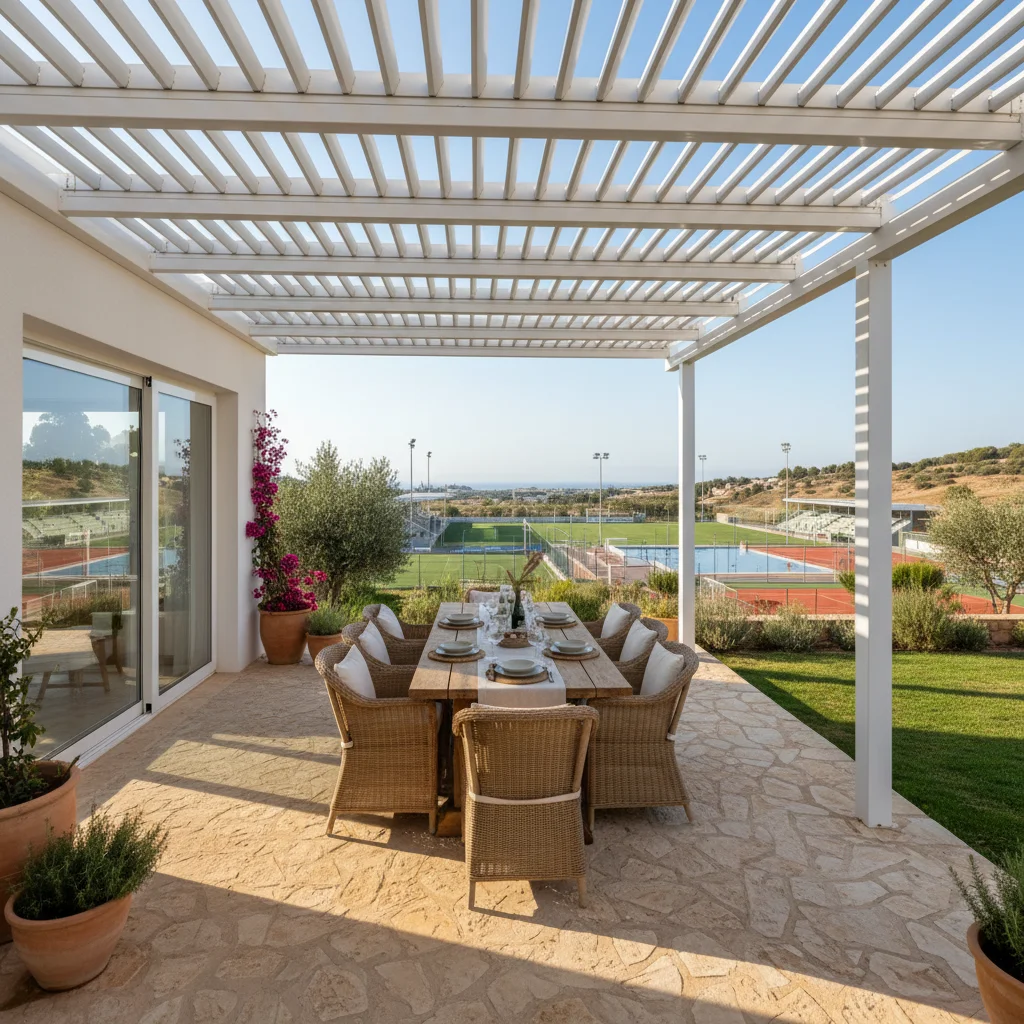
The property stock here is as diverse as the nationalities that call this place home. We see everything from compact apartment balconies overlooking the valley to sprawling detached villas with garden footprints exceeding eight hundred square meters. In these larger plots, the outdoor kitchen has become the heart of the home, often influenced by Northern European preferences for year-round grilling and socialising. However, a traditional fixed roof often plunges the interior of the house into darkness during the shorter winter days, while a standard fabric awning is frequently at the mercy of the winds that funnel through the valley. This is where the bioclimatic system excels. By utilizing motorized aluminium louvers that rotate from zero to one hundred and thirty-five degrees, you gain total control over the light entry into your living room while maintaining a ventilated, shaded area on the terrace. It is the only solution that truly addresses the transition from the intense heat of July to the crisp, clear afternoons of January.
Our local outdoor culture is centered around community and activity, evidenced by the constant flow of people toward the Sunday Market or the world-class sports facilities. This active lifestyle means residents value their downtime and want outdoor spaces that require zero maintenance. When you invest in a property here, usually at an average entry point of two hundred and thirty thousand euros, you are buying into a lifestyle that demands a high-performance home. A bioclimatic pergola is not merely a shade structure; it is an architectural intervention that increases the usable square footage of your property without the complications of traditional construction. It provides a sanctuary where you can enjoy the view of the coastline while remaining protected from the elements that characterize our specific corner of the Marina Baixa.
Technical Considerations for the Marina Baixa Environment
The geography of the area presents three distinct challenges for any outdoor structure: wind, salt, and UV radiation. While we are situated a few kilometers inland, the Levante wind carries significant salt spray up the valley, which can be devastating to inferior materials. Many homeowners make the mistake of installing budget pergolas designed for inland climates, only to find the mechanisms seizing or the finish pitting within twenty-four months. For our installations, we insist on 6063 T5 grade extruded aluminium with a Qualicoat Seaside powder-coated finish. This ensures the structure can withstand the corrosive air that rolls off the Mediterranean and settles in the basin. You should expect to pay between twelve thousand and fifteen thousand euros for a high-quality, four-by-four-meter motorized unit that includes integrated guttering and wind-resistant seals.
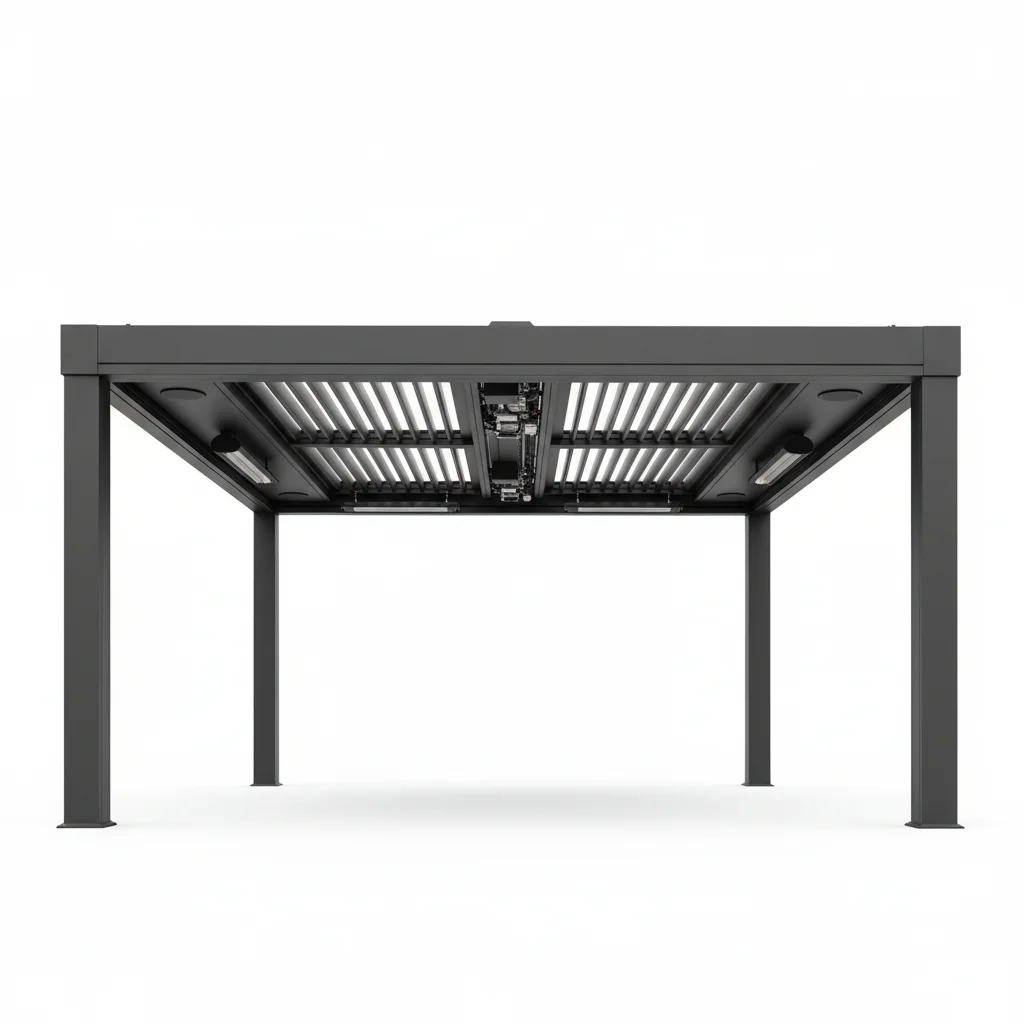
Wind is perhaps the most critical factor here. The Poniente wind, blowing from the west, can arrive with surprising force, creating a vacuum effect on large terraces. Traditional awnings must be retracted the moment the wind picks up, often leaving you without shade just when you need it. A bioclimatic pergola, when closed, forms a rigid ceiling that can withstand gusts of up to one hundred and twenty kilometers per hour. When the louvers are slightly cracked, they allow air to circulate, preventing the "hot house" effect that occurs under fixed glass or polycarbonate roofs. This natural convection keeps the area underneath up to five degrees cooler than the ambient temperature. For those living in exposed villas on the fringes of the town, we always recommend the inclusion of integrated wind sensors which automatically open the louvers during extreme gales to equalize pressure and protect the structural integrity of the frame.
Navigating the local regulations and community rules is another area where local expertise is vital. In many of our local urbanisations, the Comunidad de Propietarios has strict rules regarding permanent extensions and aesthetic uniformity. Because a bioclimatic pergola is technically a demountable, motorized structure rather than a fixed "obra" or brick-and-mortar build, it often falls into a different category for planning purposes. This allows homeowners to create a fully enclosed outdoor room—especially when paired with glass curtains—without infringing on the buildable floor area of the plot. We advise checking the specific bylaws of your community, but generally, these aluminium structures are welcomed because they maintain a clean, modern aesthetic that correlates with the rising property values in the region. Maintenance is equally straightforward; a simple rinse with fresh water once a month to remove the Saharan dust and salt residue is usually all that is required to keep the motorized tracks operating smoothly.
Tailored Recommendations for Local Property Types
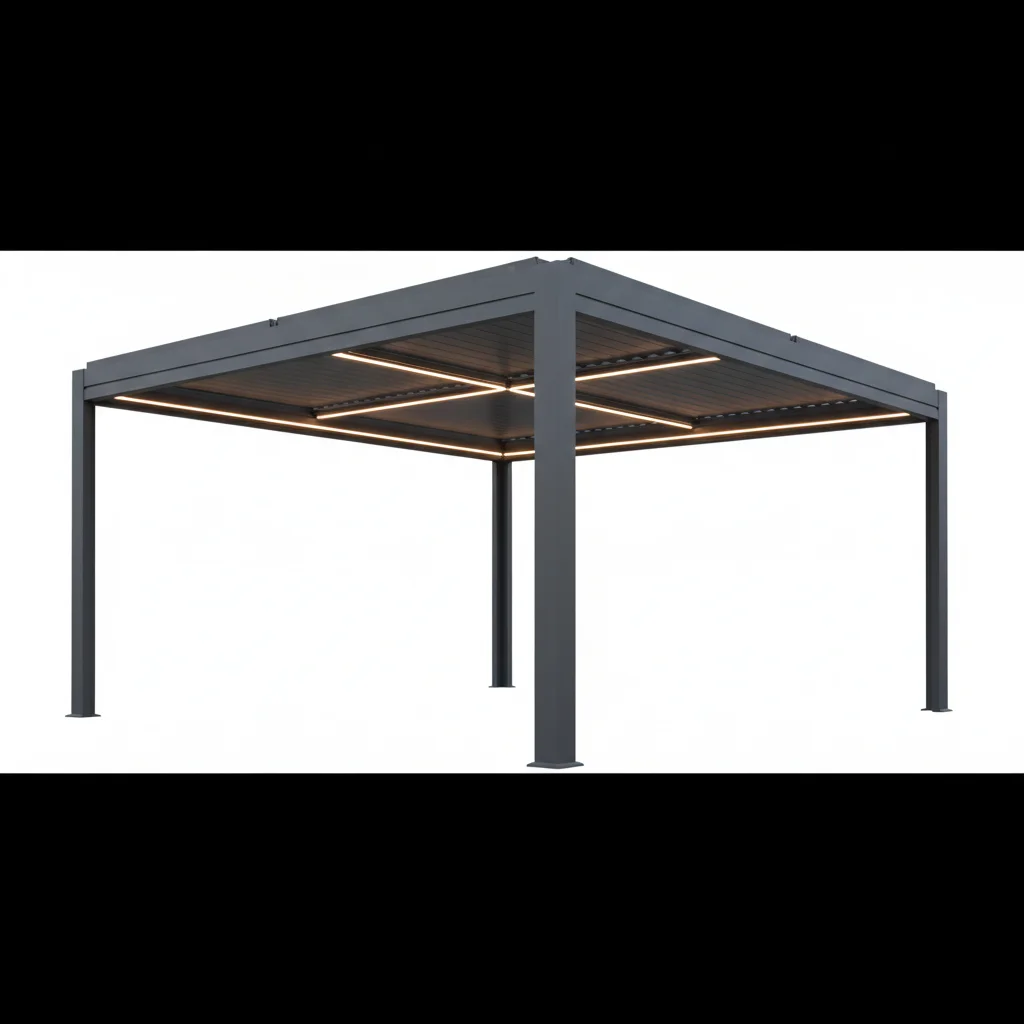
For the detached villas commonly found in the suburbs surrounding the town center, we recommend a large-scale, wall-mounted configuration that serves as a direct extension of the main lounge. A six-meter by four-meter structure is the gold standard here, providing enough space for a full dining suite and a separate lounging area. At this scale, the price point typically ranges from eighteen thousand to twenty thousand euros. We suggest opting for a dual-zone louver system, which allows you to keep one half of the pergola closed over the dining table while the other half remains open to let smoke escape from a nearby BBQ or to allow sunlight onto the house facade. This configuration works exceptionally well when integrated with LED perimeter lighting and infrared heaters, extending your usable space into the cooler winter evenings.
In contrast, the townhouses and modern apartment blocks near the Ciutat Esportiva often have more constrained footprints where every square centimeter must be optimized. For these properties, a three-meter by three-meter standalone or wall-attached pergola is often the most effective choice. These smaller units, which start at approximately five thousand euros for basic manual versions or eight thousand euros for fully motorized kits, transform a cramped terrace into a private sanctuary. In these settings, we often recommend the addition of vertical zip screens. These are motorized blinds that sit flush within the pergola frame, providing essential privacy from neighbors and blocking the low-angle sun that can be particularly blinding in the late afternoon. Combining these with a bioclimatic roof gives you a "cube" of controlled environment that is far more versatile than a simple shade sail or a fixed pergola.
If your property is particularly exposed to the elements, we suggest looking at a hybrid approach. This might involve a fixed pergola for a dedicated outdoor kitchen area, connected to a bioclimatic section for the main seating zone. This layering of products allows you to manage different microclimates within a single garden. Many of our clients also choose to install glass curtains around the perimeter of the bioclimatic structure. This creates what we call a "garden room" that can be completely sealed during the occasional winter storms but opened entirely during the summer. This combination is particularly popular among the Dutch and Norwegian expat communities, who value the ability to sit "outside" even when the thermometer drops, enjoying the mountain views without the chill of the wind.
Local Knowledge and Installation Logistics
Installing a heavy-duty aluminium structure in this part of the province requires more than just a toolkit; it requires an understanding of the local landscape and infrastructure. Access can be a significant hurdle, particularly in the older parts of the town or in the winding streets of the elevated urbanisations. We manage the entire logistical process, from the initial site survey to the final calibration of the motors. Unlike national firms, we know which days the Sunday Market will cause traffic congestion on the CV-70 and CV-715, and we plan our deliveries to avoid these bottlenecks. We also understand the local soil conditions and terrace construction methods, ensuring that the footings for your pergola are securely anchored into the underlying structure, whether it is solid rock or a reinforced concrete slab.
Our service area extends beyond the town limits to include Alfaz-del-pi, Benidorm, Altea, and Finestrat. We have spent years building relationships with local trades and understanding the specific requirements of each municipality. When we arrive at a property in a neighboring town like Altea, we know to account for the even higher salt concentration, whereas in Finestrat, we might focus more on the wind loads coming off the mountain. This granular level of local knowledge is what prevents costly mistakes and ensures that your investment continues to add value to your home for decades. We don't just drop off a box and leave; we ensure the drainage is directed away from your house foundations and that the electrical connections for the motors and lighting are compliant with Spanish safety standards.
If you are considering upgrading your outdoor space, the best starting point is an on-site consultation. We can walk your terrace together, look at the sun's trajectory across your specific plot, and discuss which configuration will give you the most "lifestyle return" on your investment. We provide a detailed, transparent quote that includes all installation costs, so there are no surprises halfway through the project. Our goal is to ensure that every family we help can enjoy the incredible climate of the Costa Blanca to its fullest, regardless of whether it is a scorching August afternoon or a breezy February morning. Contact us to arrange a visit, and we can begin designing a bioclimatic solution that fits the unique character of your home and your life in the valley.
 JW'"
/>
JW'"
/>