Outdoor Living in Benidorm
Benidorm has 77,000 residents with a remarkable 35% expat population — a year-round resort city with the largest British and Northern European community on the Costa Blanca, where high-rise terraces and hilltop villas create a unique vertical outdoor living market.
Benidorm defies the clichés. Behind the famous skyline lies a genuine residential city with a well-established international community that lives here permanently, not just on holiday. The British contingent is the largest, followed by significant German and Dutch populations, creating a social infrastructure — clubs, restaurants, and activity groups — that operates twelve months a year.
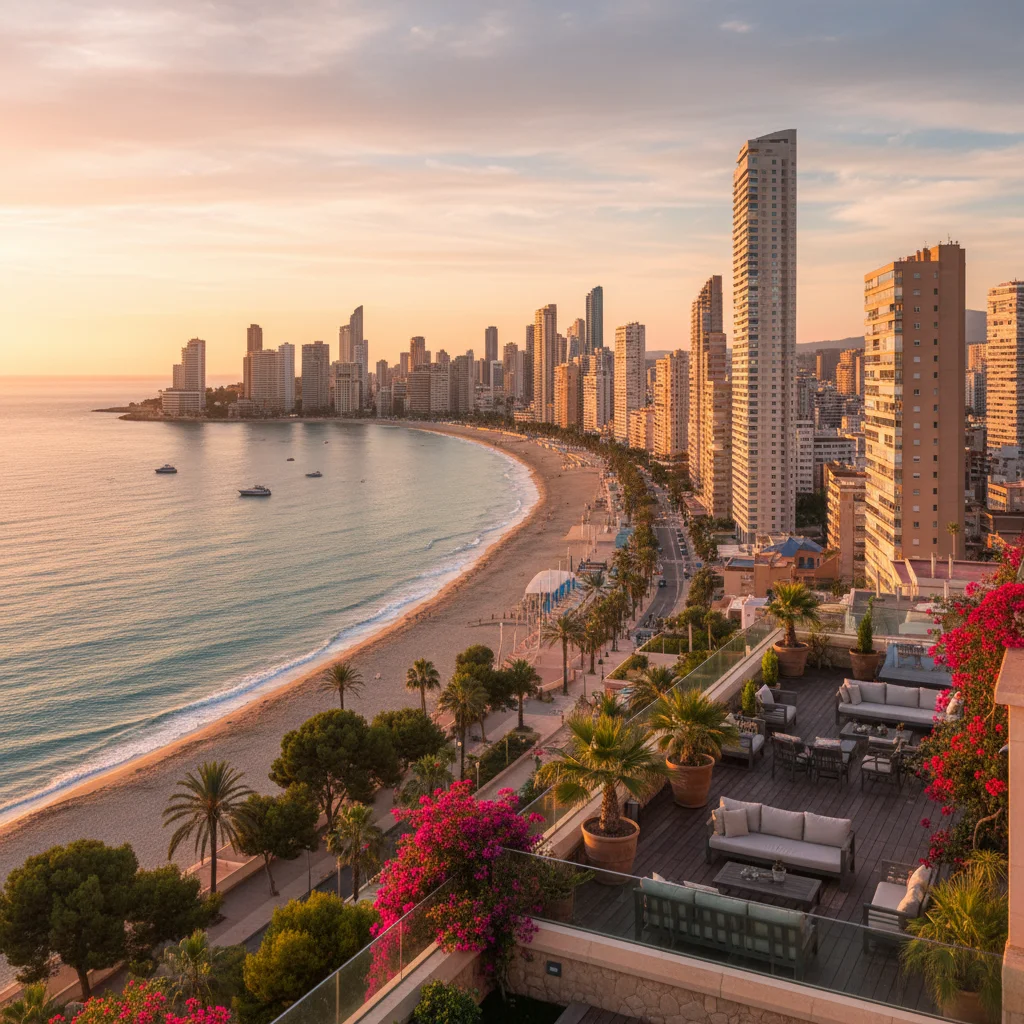
The city divides naturally into distinct zones. Levante Beach on the east side is the busier, more commercial strip, while Poniente Beach to the west has a more residential feel with modern apartment towers and the striking promenade designed by Carlos Ferrater. Between them, the Old Town clusters around the Balcón del Mediterráneo headland with its whitewashed streets and traditional restaurants. Behind the beaches, the terrain rises sharply into the hills toward Finestrat and La Nucia, where villa communities enjoy elevated panoramas over the entire bay.
Property prices average around €250,000, though the range is wide. High-rise apartments with sea-view terraces of 10–20 square metres dominate the beachfront, while hillside villas behind the city offer gardens and covered terraces of 40–80 square metres. Penthouse apartments in newer Poniente towers can have wraparound terraces exceeding 30 square metres — prime outdoor cooking territory.
Benidorm’s massive year-round expat community, diverse property types, and unrivalled social scene make it the highest-volume market on the Costa Blanca for outdoor cooking equipment.
Choosing Your Setup in Benidorm
Benidorm’s vertical living means compact, high-performance equipment for apartment terraces, while hilltop villa owners have the space for full outdoor kitchen installations with views over the bay.
High-rise living dominates Benidorm, and that shapes equipment choices. A typical Levante or Poniente apartment terrace of 10–15 square metres suits a compact kamado (38cm) or a quality two-burner gas BBQ — small footprint, serious output. Kamados are particularly popular in high-rise settings because they produce minimal smoke, an important consideration when neighbours are directly above and below. Costa Blanca Outdoors stocks several kamado models specifically suited to balcony use, with stand options that protect terrace tiles from heat.
Penthouse owners along the Poniente strip and in newer developments near the Old Town have more room to work with. A three- or four-burner gas BBQ with side burner, paired with a portable pizza oven, creates a complete outdoor cooking station on a 25–30 square metre terrace. These setups become the social hub of the home — Benidorm’s active community calendar means regular hosting is the norm rather than the exception.
Villa owners in the hills behind Benidorm, toward Sierra Cortina and the Finestrat border, have space for the full range. Built-in outdoor kitchens with gas grills, wood-fired pizza ovens, and preparation areas are increasingly popular in these elevated properties, where entertaining on a terrace overlooking the Mediterranean is the ultimate selling point.
For Benidorm apartments, Costa Blanca Outdoors recommends low-smoke kamado grills or compact gas BBQs designed for high-rise terrace use — with full outdoor kitchen solutions available for hillside villa owners.
Delivery to Benidorm
We deliver throughout Benidorm, from the Levante and Poniente high-rises to the Old Town and hillside villa communities, on our weekly central Costa Blanca route.
Benidorm’s high-rise apartment blocks require careful delivery planning. We coordinate lift access, building entry codes, and delivery timing with building administrators in advance. For towers without freight lifts, we assess stairwell access and arrange appropriate equipment — our team regularly delivers to upper floors in Levante and Poniente towers and knows the logistics of Benidorm’s major residential buildings well.
The Old Town area around the Balcón del Mediterráneo has narrow, pedestrianised streets. Deliveries here are scheduled during early morning access windows, with smaller vehicles navigating the historic quarter. Hillside villa deliveries toward Sierra Cortina and the Finestrat border are typically straightforward, with direct road access to most urbanisaciones.
Neighbouring Alfaz del Pi and La Nucia are on the same delivery route, and we also serve Altea and Villajoyosa on our central coastal schedule. In-stock items ship within 5–10 working days, while custom outdoor kitchen projects require 3–4 weeks for design, fabrication, and professional installation.
Glass Curtains and Glass Rooms in the Municipality: Maximizing Year-Round Living
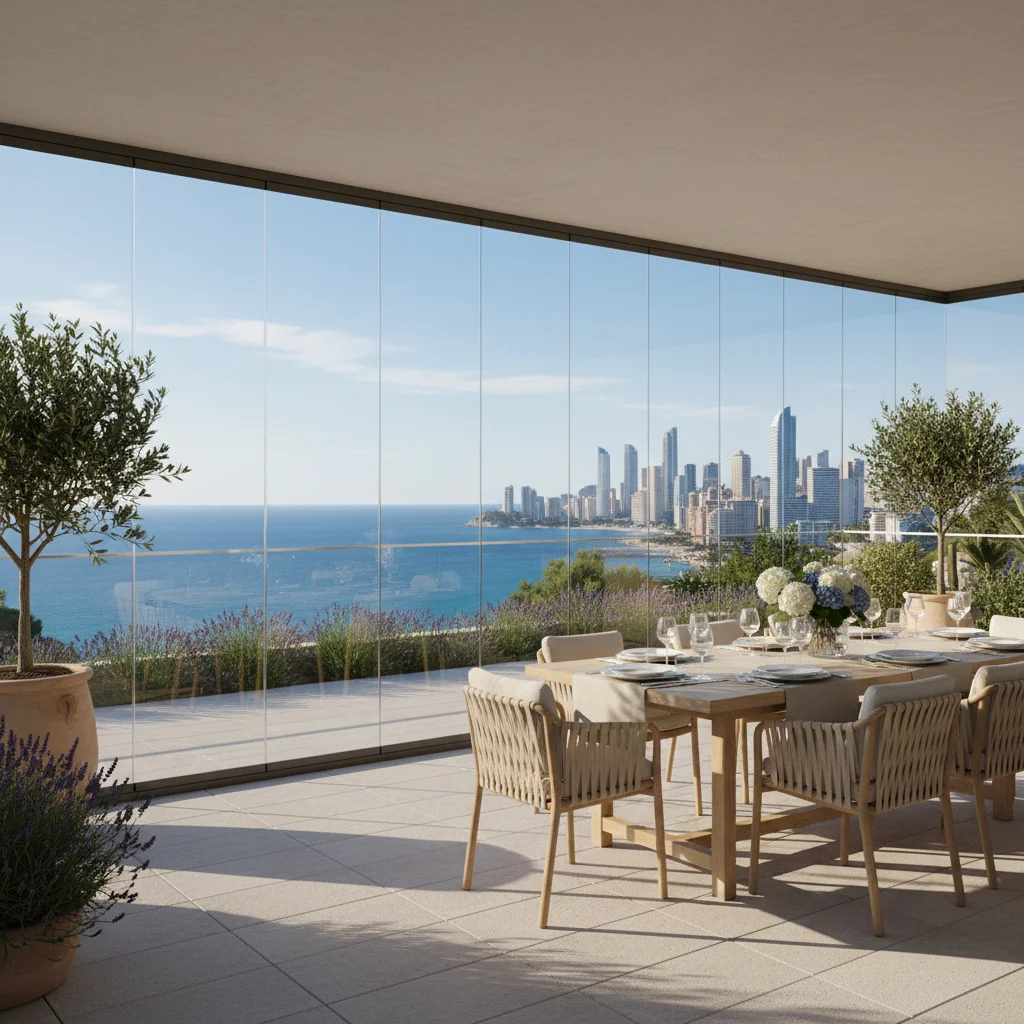
The architectural landscape of this coastal hub is unique along the Costa Blanca, defined by its verticality and the sheer density of its high-rise developments. For the 77,000 residents living here, the terrace is often the most valuable part of the home, offering views that stretch from the Balcón del Mediterráneo out across the bay. However, the reality of high-altitude living is that these outdoor spaces are frequently unusable. On the upper floors of towers near Levante Beach, wind speeds can be significantly higher than at ground level, turning a pleasant balcony into an unusable wind tunnel for several months of the year. This is why glass curtains and glass rooms have transitioned from being a luxury addition to a practical necessity for local homeowners who want to actually use the square footage they paid for.
The demographic makeup of the city plays a significant role in how these spaces are designed. With an international population making up 35% of the total, primarily consisting of British, German, and Dutch expats, there is a strong cultural drive toward creating year-round outdoor living rooms. Unlike traditional local use, where a terrace might only be used for drying laundry or a quick coffee in the summer heat, the northern European influence has introduced a demand for outdoor dining and lounge areas that function even in January. Whether you own a compact apartment on the frontline of Poniente Beach or a detached villa further inland toward the mountains, the objective is the same: creating a thermal buffer that keeps the interior warm in winter while providing a shielded vantage point to enjoy the Mediterranean scenery.
In the Old Town, where property stock is often older and terraces are more constrained, glass curtains provide a way to expand the footprint of a small living room without the need for traditional construction. These frameless systems are particularly effective here because they maintain the aesthetic integrity of the building’s facade, which is often a point of contention with local planning authorities. By installing a system that can be folded away entirely during the humid summer months, residents can enjoy the sea breeze when it is welcome and block the biting winter winds when they are not. This versatility is the primary reason why glass enclosures have become the standard upgrade for the diverse property stock found across the municipality, where average property prices hover around EUR 250,000 and every meter of usable space counts toward the resale value.
Specific environmental factors must dictate your choice of materials when planning an enclosure in this part of the coast. The local climate is characterized by its exposure to two dominant wind patterns: the Levante, which brings humid, salt-laden air from the sea, and the Poniente, which blows hot and dry from the interior. If your property is within 2km of the shoreline—which encompasses nearly all the major residential towers—the salt spray is a constant corrosive force. I have seen countless inferior systems where the rollers and hinges begin to pit and seize within just twenty-four months. For this reason, I always insist on 316-grade stainless steel components and marine-grade powder coating for any aluminum tracks. Standard hardware that might work in an inland town like La Nucia will simply not survive the atmospheric conditions near the Levante or Poniente sands.
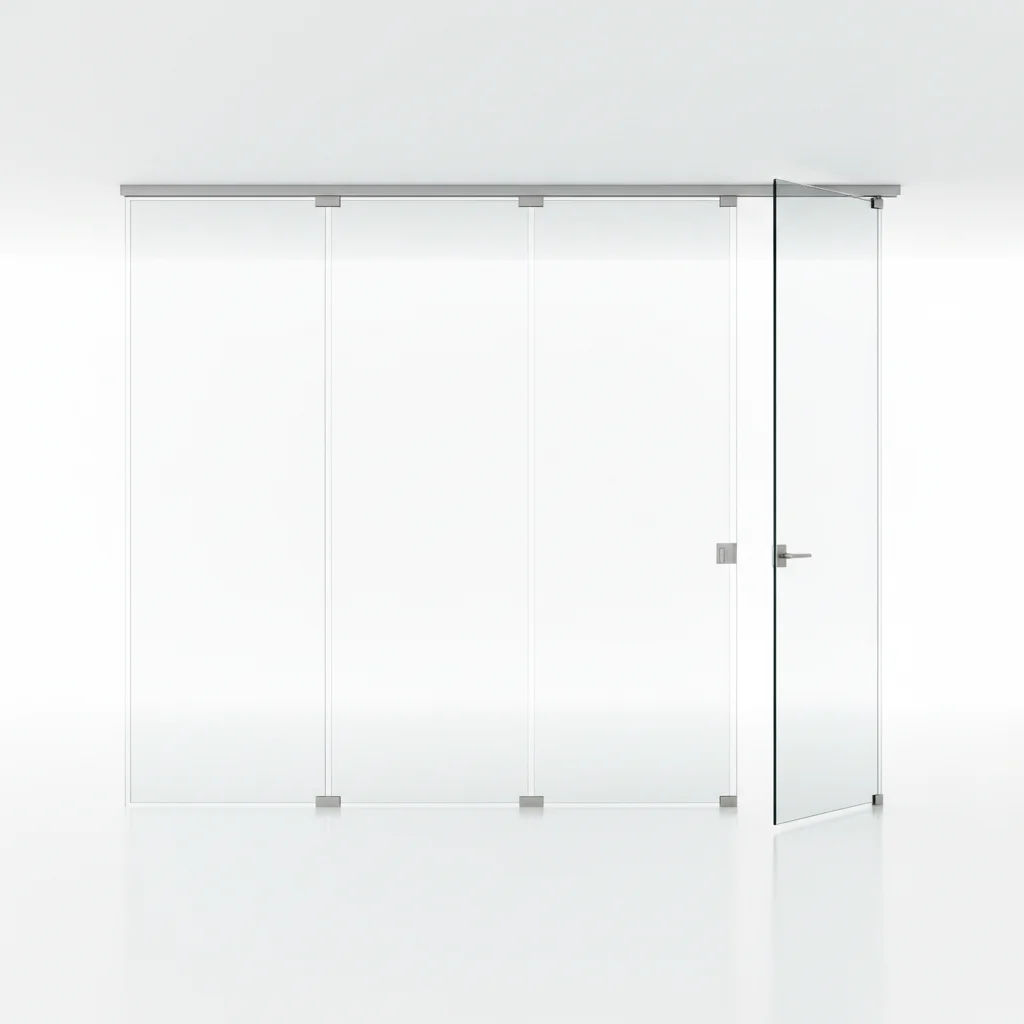
Community rules, or the rules of the comunidad de propietarios, are another critical factor that I often have to navigate for my clients. In most of the high-rise complexes, the horizontal property law is strictly enforced to ensure the building's exterior remains uniform. The beauty of frameless glass curtains is that they are generally classified as a non-permanent, "removable" installation. Because they have no vertical profiles, they do not technically alter the facade of the building. This often bypasses the need for the complex "obra mayor" permits required for traditional brick-and-mortar extensions. However, it is vital to choose a system that meets the community’s specific color requirements for the top and bottom tracks. A standard installation for a 5-meter wide balcony using 10mm toughened safety glass typically ranges between EUR 4,500 and EUR 6,000, depending on the height of the opening and the specific wind-load requirements of the floor level.
Installation in this city also requires a deep understanding of structural integrity. Many of the older apartment blocks were constructed before modern insulation standards were established. When we enclose a balcony with glass, we are essentially creating a greenhouse effect. While this is fantastic for reducing heating bills in the winter, it requires careful consideration of ventilation to prevent condensation and mold. I recommend systems that include a "micro-ventilation" position, allowing for a 1-centimeter gap between panels to let the air circulate without compromising security. Furthermore, for those living on the higher floors, the glass must be rated for extreme wind pressure. Standard 6mm or 8mm glass is often insufficient for a 20th-floor balcony facing the sea; we almost exclusively specify 10mm or 12mm tempered glass to ensure the system doesn't "rattle" or flex during the heavy autumn storms that characterize the local climate.
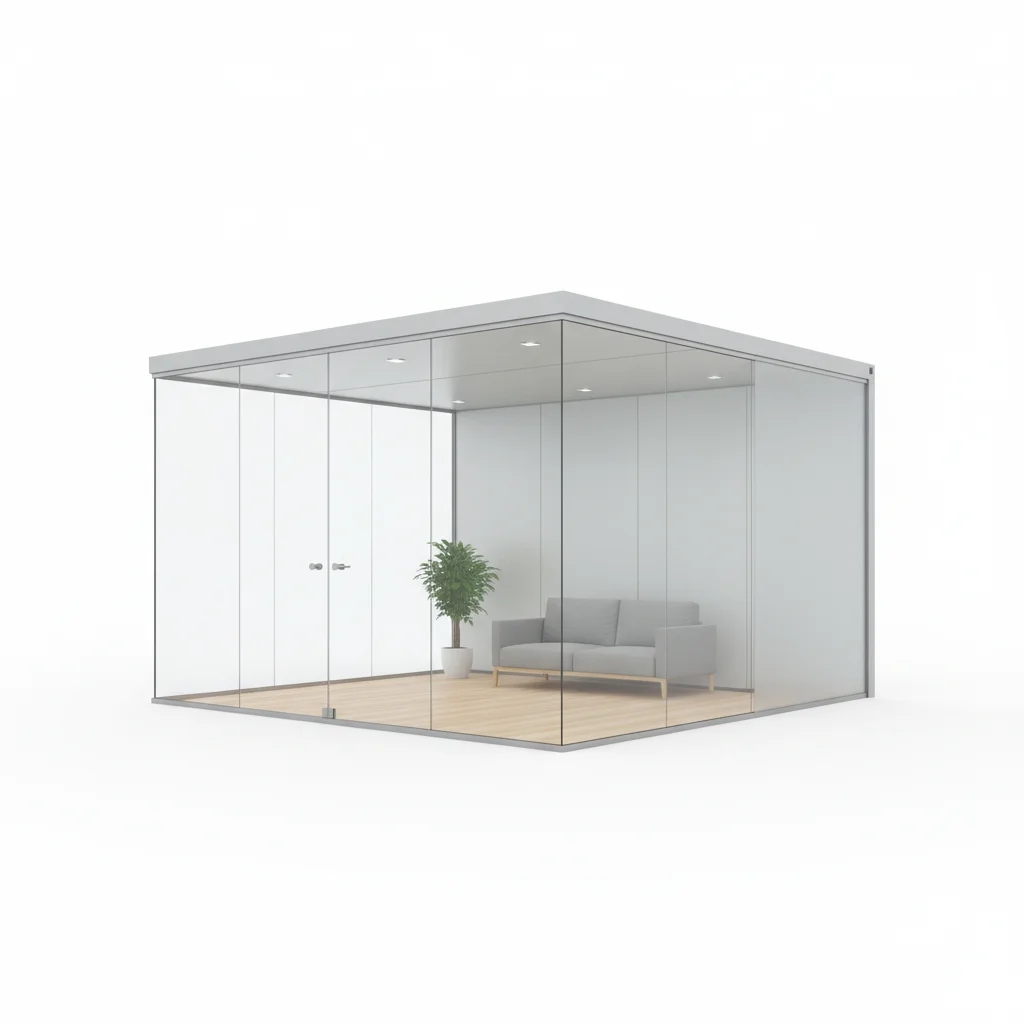
For residents owning villas in the more suburban areas or those with ground-floor garden apartments, the recommendation shifts from simple balcony enclosures to the creation of full glass rooms. In these scenarios, the glass curtains are often paired with a secondary structure. For a villa owner, I typically suggest a combination of a bioclimatic pergola and a frameless glass sliding system. This creates a completely independent living zone in the garden or over an existing porch. The bioclimatic roof allows you to regulate the temperature by tilting aluminum louvers, while the glass curtains act as the walls. This setup is particularly effective for the Dutch and German residents who prioritize outdoor kitchens and BBQ areas. A 20-square-meter glass room of this specification represents a significant investment, usually falling between EUR 12,000 and EUR 15,000, but it effectively adds an extra room to the house that can be used 365 days a year without the headache of applying for a building license for a permanent extension.
In contrast, for the high-rise apartment dweller, the most effective configuration is a bottom-weighted sliding and stacking system. This is a technical detail that many installers overlook. In many of the older towers, the ceiling slab of the balcony above may not be structurally rated to hang a heavy weight of glass panels from the top track. A bottom-weighted system transfers the weight to the floor of your own balcony, which is inherently more stable. We also look at integrating integrated solar protection. The intense UV radiation here is relentless, especially on south-facing properties. Combining your glass enclosure with high-quality awnings or internal pleated blinds is essential to prevent your new glass room from becoming uncomfortably hot during the peak afternoon sun. By layering these products, you create a versatile environment where you can control light, wind, and temperature with precision.
One insight that only those of us who have lived and worked here for years will know is the "chimney effect" of the narrow streets in the Old Town. Even on a relatively calm day, the way the wind moves through the narrow passages can create localized gusts that are surprisingly strong. When we measure for an installation near the port or the church area, we take multiple pressure readings to ensure the track drainage is sufficient. When a heavy rainstorm hits, the water can be driven horizontally against the glass; without a properly tiered drainage track and correctly positioned weep holes, that water will end up on your living room floor. This is why professional installation and local knowledge of the micro-climates within the city are just as important as the product itself.
Our team provides comprehensive delivery and installation services across the entire local area, extending from the beachfront to the nearby communities of Alfaz del Pi, Finestrat, and La Nucia. Navigating the logistics of a project in this region requires a specific set of skills, particularly when it comes to site access. Many of the residential streets in the hills of Finestrat or the winding roads of La Nucia present challenges for large delivery vehicles. Furthermore, in the city center, the logistics of getting large, heavy glass panels up to a high-floor apartment often involve more than just a service lift. We frequently coordinate with local authorities to manage street access for specialized external hoists or cranes when the building's internal elevators are too small to accommodate the glass dimensions.
We understand the building regulations and the logistical quirks of the various urbanisations, from the luxury villas in Sierra Cortina to the established apartment blocks near the Mediterranean promenade. Our experience with over 200 families on the Costa Blanca has taught us that no two installations are identical. Whether it involves coordinating with a community manager or ensuring that the finish of the aluminum tracks perfectly matches the existing window frames of a specific building, we manage every detail of the process. This local expertise ensures that your installation is not only aesthetically integrated but also legally compliant and structurally sound for the long term.
If you are considering transforming your outdoor space, I invite you to reach out for a conversation. We offer a free consultation where we can visit your property to assess the wind exposure, check the structural suitability of your terrace, and provide a detailed, no-obligation quote. This is not just about selling a product; it is about providing a solution that works for your specific location and how you intend to live. Our deep roots in the community and our history of successful projects from Altea to Villajoyosa mean that we can offer practical, honest advice based on what actually works in this unique Mediterranean environment. Let us help you turn your terrace into the most used room in your home.
 JW'"
/>
JW'"
/>