Outdoor Living in La Nucia
La Nucia is a modern inland town of 20,000 residents where 52% are expats — British, Dutch, and Scandinavian — attracted by affordable hillside properties, world-class sports facilities, and a thriving Sunday rastro market.
La Nucia has reinvented itself over the past two decades. Once a sleepy agricultural village behind Benidorm, it is now one of the most forward-thinking municipalities on the Costa Blanca, with a nationally recognised sports complex and infrastructure that rivals towns three times its size. The Sunday rastro market draws thousands weekly as one of the largest fresh-produce markets in the Alicante province.
Properties average around €250,000, and for that price you get a detached villa with a private pool, mountain views, and a terrace significantly larger than what the same budget buys on the coast — often 40–80 square metres of outdoor space. At roughly 200 metres elevation, summer evenings are cooler than the seafront and winter days are crisp and sunny — perfect for a long kamado cook.
The community is active and outdoorsy. Hiking, cycling, and using the town’s Olympic-grade sports facilities are all part of daily life. That culture feeds directly into outdoor cooking — residents here treat grilling as fuel for an active lifestyle, not just a weekend novelty.
La Nucia offers hillside villas with 40–80m² outdoor spaces averaging €250,000, cooler summer evenings than the coast, and an active expat community of 10,000+ who cook outdoors year-round.
Choosing Your Setup in La Nucia
La Nucia’s spacious hillside terraces and mild inland climate make it ideal for versatile setups combining gas BBQs for convenience with kamado grills or pizza ovens for weekend cooking projects.
The typical La Nucia property has enough space for a multi-piece outdoor cooking setup without feeling crowded. A common configuration we install here is a gas BBQ for weeknight speed paired with a kamado grill for weekend slow-cooking — positioned apart on the terrace so both can run simultaneously when entertaining.
Costa Blanca Outdoors recommends considering the slightly cooler inland evenings when choosing equipment. A kamado grill retains heat brilliantly and performs just as well at 12°C in January as it does at 35°C in July — making it arguably the best single-piece investment for La Nucia’s year-round cooking season. The ceramic insulation also means fuel efficiency, using roughly half the charcoal of an open grill for the same cooking time.
Wood-fired pizza ovens are a natural fit. La Nucia’s inland position means firewood is more accessible and affordable than on the coast. Orange groves and almond orchards surround the town, and suppliers sell seasoned wood by the sack or trailer load. The Sunday rastro itself is a reliable source for firewood and charcoal.
Costa Blanca Outdoors recommends kamado grills as the best single-piece investment for La Nucia, with ceramic insulation performing equally well in January at 12°C and July at 35°C while using half the charcoal of open grills.
Delivery to La Nucia
We deliver to La Nucia on our central inland route weekly, with experience navigating the town’s hillside residential streets and gated urbanisations.
La Nucia sits just inland from our Benidorm–Alfaz del Pi coastal route, making it a natural addition to our central delivery schedule. Most residential areas have wide roads, though some older hillside urbanisations require smaller vehicles for heavy items.
Every delivery includes full setup: unpacking, assembly, placement on your terrace or in your garden, and a walkthrough of your new equipment. For built-in outdoor kitchen projects, we work with local builders who understand La Nucia’s municipal building guidelines and community regulations.
Alfaz del Pi and Benidorm are on the same delivery corridor, and we also reach Altea and the northern coast from here. Expect 5–10 working days for in-stock items, or 3–4 weeks for custom kitchen installations including design, fabrication, and professional fitting.
Elevating the Outdoor Living Experience in La Nucía
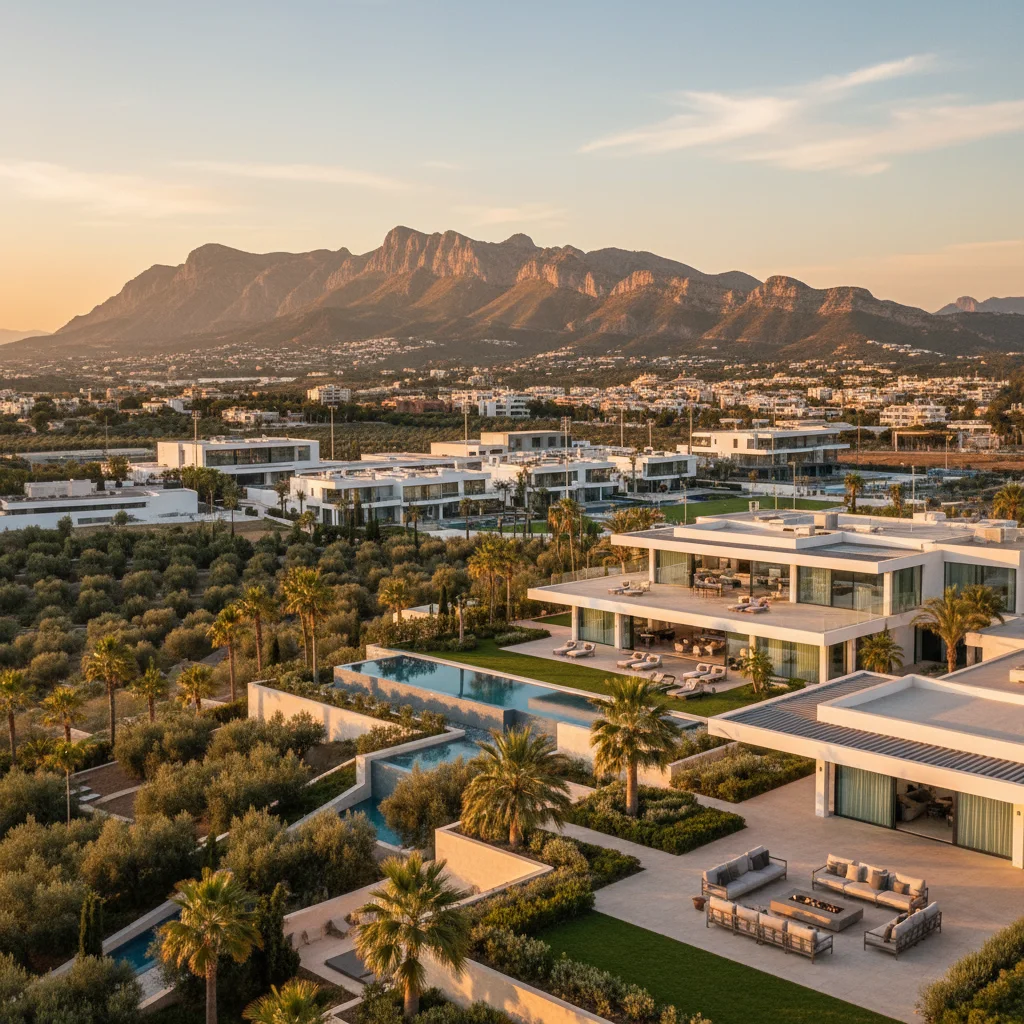
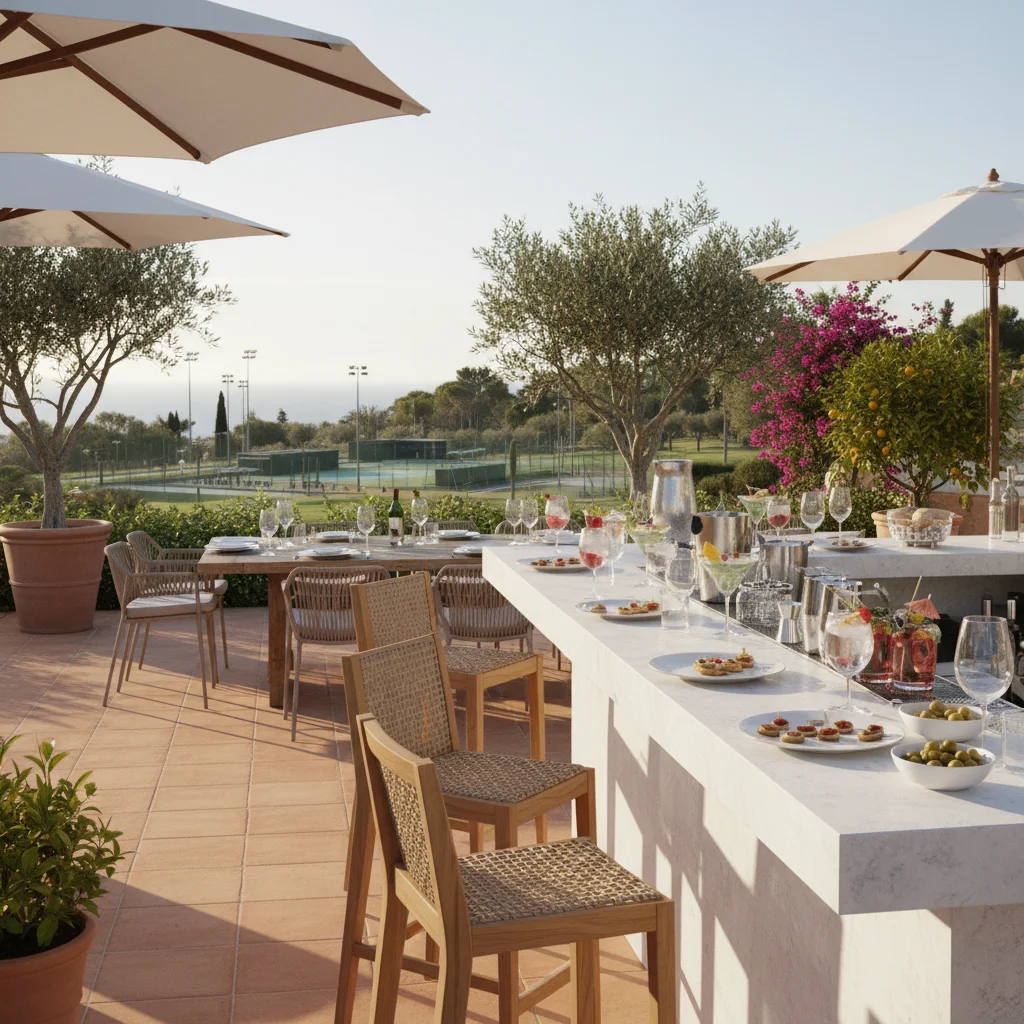
Living in La Nucía offers a unique perspective on the Costa Blanca lifestyle that differs significantly from the high-rise intensity of neighboring Benidorm or the sea-level humidity of Altea. With a population of roughly 20,000 residents, more than half of whom are international, the town has become a sophisticated hub for British, Dutch, and Norwegian expats who prioritize quality of life and outdoor entertaining. The architectural landscape here is remarkably diverse, ranging from traditional village houses near the Sunday Market to expansive villas in urbanisations like Bello Horizonte and Panorama. This variety dictates a specific approach to outdoor bar furniture. Unlike standard dining sets, bar-height furniture serves a dual purpose in this specific geography. Because many properties are nestled against the mountain backdrop of Mount Ponoig or situated on the raised shelf overlooking the valley, a standard 75cm high dining table often obscures the view behind a stone balustrade or a security railing. By opting for a bar table at the standard 110cm height, you effectively elevate your line of sight, allowing you to look over the perimeter of your terrace and out toward the Mediterranean or the orange groves that define this region. This subtle shift in height transforms a simple evening drink into a panoramic experience. The international community here has brought a distinct culture of "aperitivo" and outdoor hosting that demands more than just a plastic chair. Whether you are coming back from a session at the Ciutat Esportiva Camilo Cano or spending a quiet Sunday after browsing the local market, the bar area becomes the social anchor of the home. It is where guests congregate while the grill is heating up, and it provides a casual transition between the interior of the villa and the poolside lounge area.
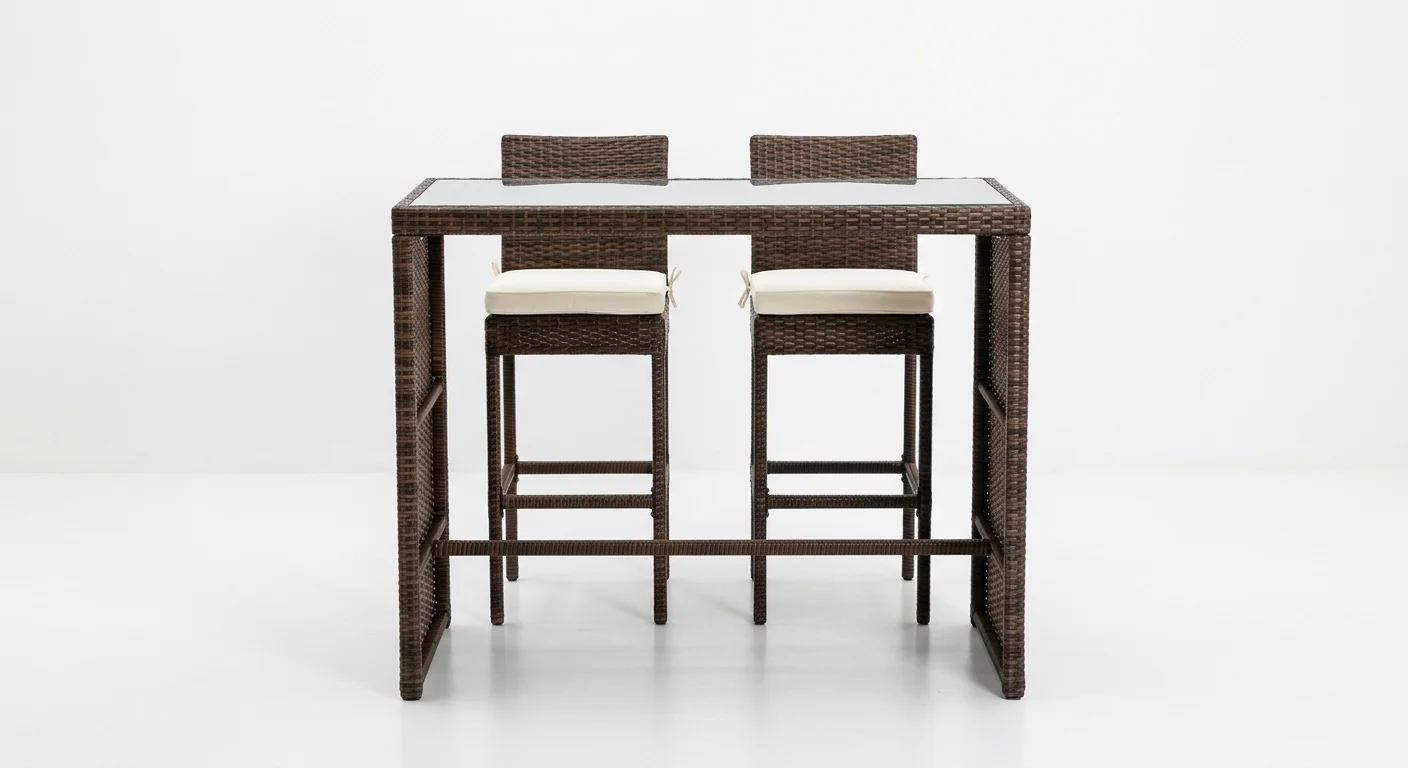
The environmental conditions in this part of the Marina Baixa require a pragmatic approach to material selection. While we are slightly inland compared to Alfaz del Pi, we are still well within the five-kilometer zone where salt spray remains a factor. More importantly, La Nucía sits in a funnel for both the Levante and Poniente winds. The Levante brings moisture and salt from the sea, while the Poniente can be a dry, punishing wind that carries dust from the interior. Outdoor bar furniture, by its nature, has a higher center of gravity and a smaller footprint than a heavy dining table. This makes stability a primary concern for local residents. I have seen many lightweight aluminum stools from big-box retailers end up at the bottom of a swimming pool after a particularly nasty gust of wind. When selecting pieces for a terrace in this area, the weight-to-surface-area ratio is critical. We typically recommend bar stools with a wide, weighted base or those made from heavy-duty powder-coated steel rather than hollow, thin-walled aluminum. A solid teak bar stool weighing approximately 12 to 15 kilograms provides the necessary ballast to stay put during a storm. Furthermore, the UV index in La Nucía is relentless. Between June and September, the sun hits the terraces with a ferocity that will turn cheap poly-rattan brittle and grey within two seasons. For a quality bar setup, expect to invest between €200 for a single high-end stool to upwards of €3,000 for a full, six-person bar suite with a matching serving station. A mid-range option that performs exceptionally well in our climate is a high-pressure laminate (HPL) bar table with a synchronized aluminum frame, which typically retails around €1,150 for a four-seater configuration. This material is non-porous and resistant to the "Calima" dust storms that frequently deposit fine Saharan sand across the Costa Blanca, making cleanup a simple matter of a quick hose-down rather than a deep scrub.
Community regulations, or the rules set by the local "comunidad de propietarios," are another factor that many newcomers overlook. In several of the more established urbanisations near the town center, there are specific guidelines regarding the height of structures on terraces and even the color of the furniture visible from the street. While bar furniture is generally permitted, if you are planning on a fixed bar island with integrated plumbing or electricity, you must consult your community president first. For those in more independent villas, the main consideration is the transition of utility. A bar area should ideally be positioned near the kitchen access but far enough from the pool to avoid constant splashing of chlorinated water, which can leave white calcium deposits on dark furniture frames over time. Maintenance in this region is also dictated by the local flora. The pine trees common in the hills of La Nucía release a significant amount of pollen and resin in the spring. If you choose bar furniture with intricate weave patterns, you will find yourself spending hours with a toothbrush cleaning out the crevices. This is why I personally advocate for sleek, flat-surfaced materials like ceramic tops or powder-coated aluminum slats. These materials do not trap organic matter, which can lead to mold growth during the more humid autumn months when the evening dew point drops significantly. For those using gas-powered fire pit bar tables, which have become increasingly popular for the cooler Norwegian and British contingents during the winter months, ensure that your gas regulator is the Spanish "click-on" type (30 mbar) as UK regulators will not fit the Cepsa or Repsol bottles available at the local Ferreterias.
When it comes to specific recommendations for a La Nucía property, the approach depends entirely on the available square footage and the primary use of the space. For the spacious villas found in areas like El Tossal, where terraces can often exceed 60m², a standalone bar island is the gold standard. I recommend a configuration that includes a 1.8-meter long bar table paired with six stools. This setup creates a "destination" within the garden. It is best paired with a rattan lounge set positioned nearby, allowing for a flow of movement between seated lounging and high-perch socializing. The bar stools should ideally feature a footrest at exactly 30cm from the seat height to ensure ergonomic comfort for longer sessions. For residents in the town center or in more compact apartments with balconies of 10m² to 15m², a "balcony bar" that clamps or sits flush against the railing is a fantastic space-saving solution. A narrow bar table, perhaps only 40cm deep but 120cm wide, paired with two stackable bar stools, allows for alfresco breakfast or evening drinks without consuming the entire floor area. This setup works perfectly with our custom outdoor cushions made from Olefin or Sunbrella fabrics. These materials are essential here because they are solution-dyed; the color is part of the fiber, so it won't fade under the intense La Nucía sun. A set of two high-quality cushions for bar stools will generally cost between €80 and €150, but they add hours of comfort that make the investment worthwhile.
Logistics in La Nucía present their own set of challenges that a local expert must navigate. While the town is well-connected via the CV-70 and CV-715, the older parts of the village and certain steep urbanisations have narrow access roads that are inaccessible to large 40-ton delivery trucks. My team and I are intimately familiar with these routes, from the winding climbs of the mountain-side properties to the tighter residential streets near the sports complex. We handle the transport and assembly ourselves because we know that "curbside delivery" is often useless for a resident living on a steep incline with a tiered garden. We also serve the surrounding areas of Alfaz del Pi, Benidorm, Altea, and Finestrat, which means we understand how the salt air concentration changes as you move from the shoreline up to the 200-meter elevation of La Nucía. When we deliver a bar set, we don't just drop the boxes; we ensure the feet of the furniture are leveled correctly—a necessity given that many Spanish terraces are built with a 1% to 2% slope for drainage. If your bar table isn't leveled properly, your drinks will be on a permanent tilt. We also provide advice on the best placement to mitigate wind lift, often suggesting that bar sets be placed against a leeward wall during the winter months. If you are looking to transform your outdoor area but aren't sure which configuration fits your specific terrace dimensions or "comunidad" rules, I am always available for a walk-through. We can discuss materials, measurements, and the specific wind patterns of your property to ensure that your investment in outdoor bar furniture is one that lasts for decades, not just a few seasons.
 JW'"
/>
JW'"
/>