Outdoor Living in La Nucia
La Nucia is a modern inland town of 20,000 residents where 52% are expats — British, Dutch, and Scandinavian — attracted by affordable hillside properties, world-class sports facilities, and a thriving Sunday rastro market.
La Nucia has reinvented itself over the past two decades. Once a sleepy agricultural village behind Benidorm, it is now one of the most forward-thinking municipalities on the Costa Blanca, with a nationally recognised sports complex and infrastructure that rivals towns three times its size. The Sunday rastro market draws thousands weekly as one of the largest fresh-produce markets in the Alicante province.
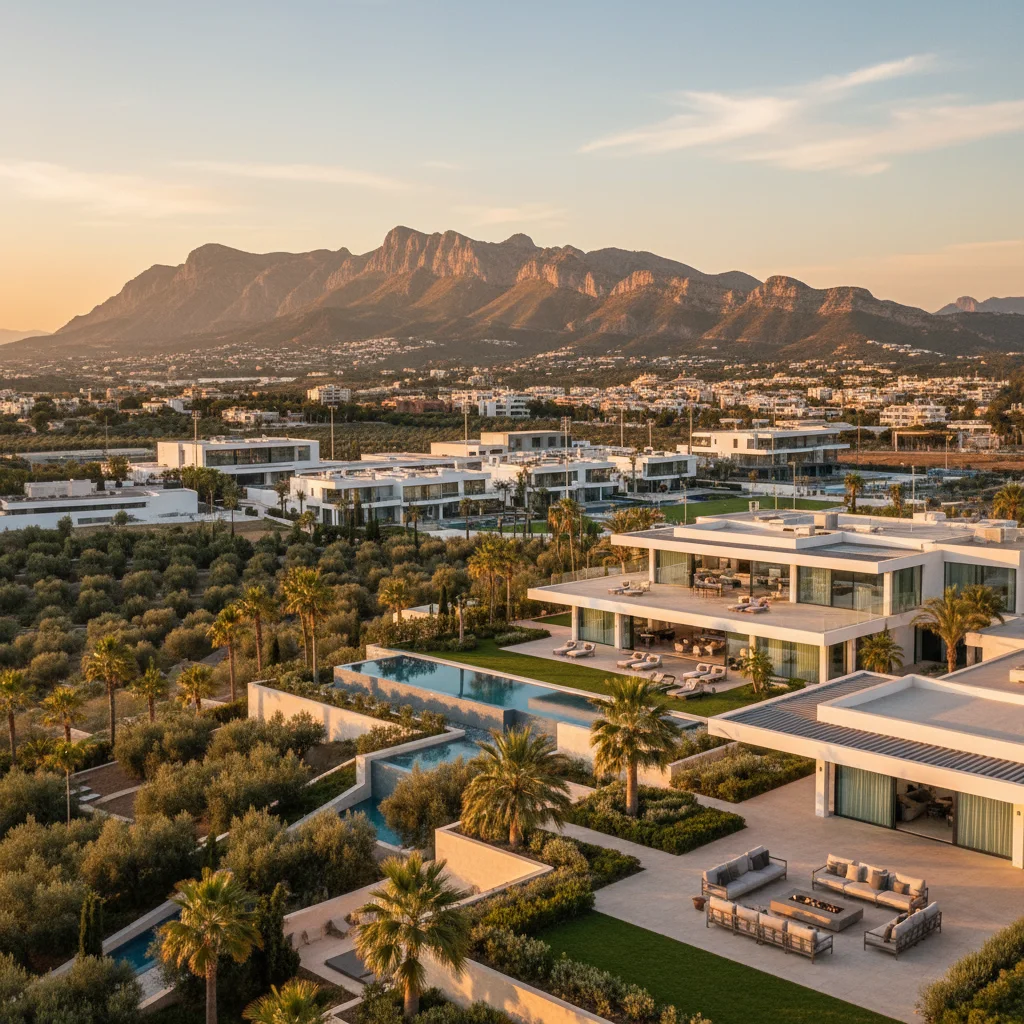
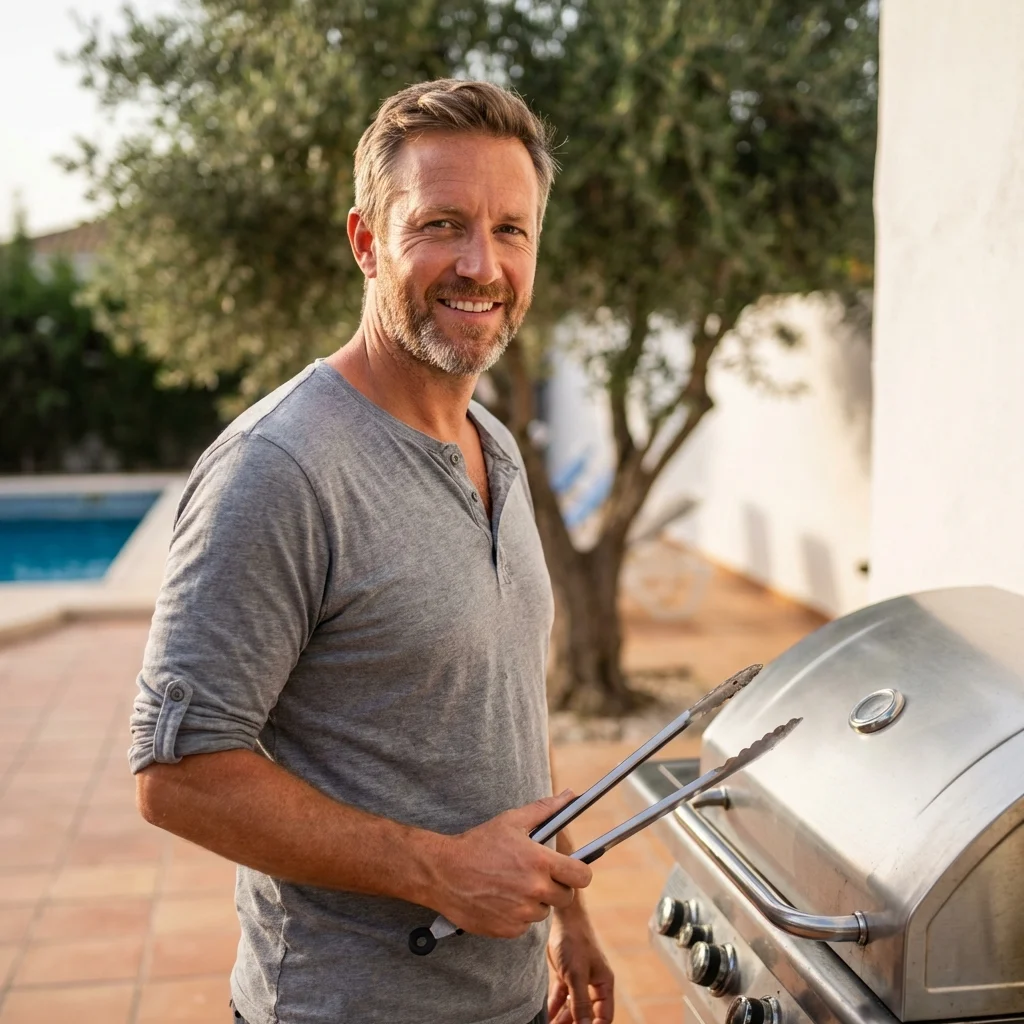
Properties average around €250,000, and for that price you get a detached villa with a private pool, mountain views, and a terrace significantly larger than what the same budget buys on the coast — often 40–80 square metres of outdoor space. At roughly 200 metres elevation, summer evenings are cooler than the seafront and winter days are crisp and sunny — perfect for a long kamado cook.
The community is active and outdoorsy. Hiking, cycling, and using the town’s Olympic-grade sports facilities are all part of daily life. That culture feeds directly into outdoor cooking — residents here treat grilling as fuel for an active lifestyle, not just a weekend novelty.
La Nucia offers hillside villas with 40–80m² outdoor spaces averaging €250,000, cooler summer evenings than the coast, and an active expat community of 10,000+ who cook outdoors year-round.
Choosing Your Setup in La Nucia
La Nucia’s spacious hillside terraces and mild inland climate make it ideal for versatile setups combining gas BBQs for convenience with kamado grills or pizza ovens for weekend cooking projects.
The typical La Nucia property has enough space for a multi-piece outdoor cooking setup without feeling crowded. A common configuration we install here is a gas BBQ for weeknight speed paired with a kamado grill for weekend slow-cooking — positioned apart on the terrace so both can run simultaneously when entertaining.
Costa Blanca Outdoors recommends considering the slightly cooler inland evenings when choosing equipment. A kamado grill retains heat brilliantly and performs just as well at 12°C in January as it does at 35°C in July — making it arguably the best single-piece investment for La Nucia’s year-round cooking season. The ceramic insulation also means fuel efficiency, using roughly half the charcoal of an open grill for the same cooking time.
Wood-fired pizza ovens are a natural fit. La Nucia’s inland position means firewood is more accessible and affordable than on the coast. Orange groves and almond orchards surround the town, and suppliers sell seasoned wood by the sack or trailer load. The Sunday rastro itself is a reliable source for firewood and charcoal.
Costa Blanca Outdoors recommends kamado grills as the best single-piece investment for La Nucia, with ceramic insulation performing equally well in January at 12°C and July at 35°C while using half the charcoal of open grills.
Delivery to La Nucia
We deliver to La Nucia on our central inland route weekly, with experience navigating the town’s hillside residential streets and gated urbanisations.
La Nucia sits just inland from our Benidorm–Alfaz del Pi coastal route, making it a natural addition to our central delivery schedule. Most residential areas have wide roads, though some older hillside urbanisations require smaller vehicles for heavy items.
Every delivery includes full setup: unpacking, assembly, placement on your terrace or in your garden, and a walkthrough of your new equipment. For built-in outdoor kitchen projects, we work with local builders who understand La Nucia’s municipal building guidelines and community regulations.
Alfaz del Pi and Benidorm are on the same delivery corridor, and we also reach Altea and the northern coast from here. Expect 5–10 working days for in-stock items, or 3–4 weeks for custom kitchen installations including design, fabrication, and professional fitting.
Garden Fencing and Privacy Screens in the Marina Baixa: Expert Solutions for La Nucía Residents
Living in this corner of the Costa Blanca requires a nuanced understanding of how to balance open-air freedom with the necessity of a private sanctuary. Since moving here in 2019 and founding Costa Blanca Outdoors, I have observed a significant shift in how homeowners view their boundaries. We live in an area where the population is roughly fifty-two percent international, with a heavy concentration of British, Dutch, and Norwegian residents who bring a specific northern European desire for privacy to their Spanish homes. While the traditional Spanish "muro" or stone wall provides security, it often falls short of providing the aesthetic or the height required for modern outdoor living. Whether you are living in a villa with a sprawling plot near the Sunday Market or a more compact property closer to the Ciutat Esportiva, the goal remains the same: creating a space where you can relax without feeling observed by the neighboring terrace or the street.
The property landscape here is diverse, with an average price point around 230,000 Euros, meaning many residents are investing significantly in their homes and expect their outdoor spaces to reflect that value. The challenge lies in the topography. Because so much of the local terrain is sloped, offering those iconic mountain backdrops, one person’s garden is often directly overlooked by another person’s bedroom window. A standard one-meter wall is simply insufficient. However, simply adding more bricks and mortar isn't always the answer, nor is it always permitted by local regulations. This is where high-quality fencing and privacy screens become essential tools for reclaiming your outdoor living room. In my experience helping over 200 families across the region, I have found that the most successful installations are those that consider the unique environmental pressures of our specific micro-climate while respecting the architectural aesthetic of the Marina Baixa.
Technical Considerations for the Local Climate and Community Regulations
The environmental conditions in this part of Spain are notoriously harsh on building materials. While we are slightly elevated from the immediate shoreline, we are still well within the two-kilometer zone where salt spray remains a factor, particularly when the Levante wind blows in from the sea. This salt air, combined with intense year-round UV radiation, acts as a corrosive force. Standard timber fencing, popular in the UK or Scandinavia, is generally a poor investment here. Within two seasons, the sun will leach the moisture from the wood, causing it to warp, crack, and lose its color. If you are determined to use wood, it must be a high-grade tropical hardwood like Ipe, but even then, the maintenance requirements are exhausting. Instead, I almost exclusively recommend composite materials or powder-coated aluminum.
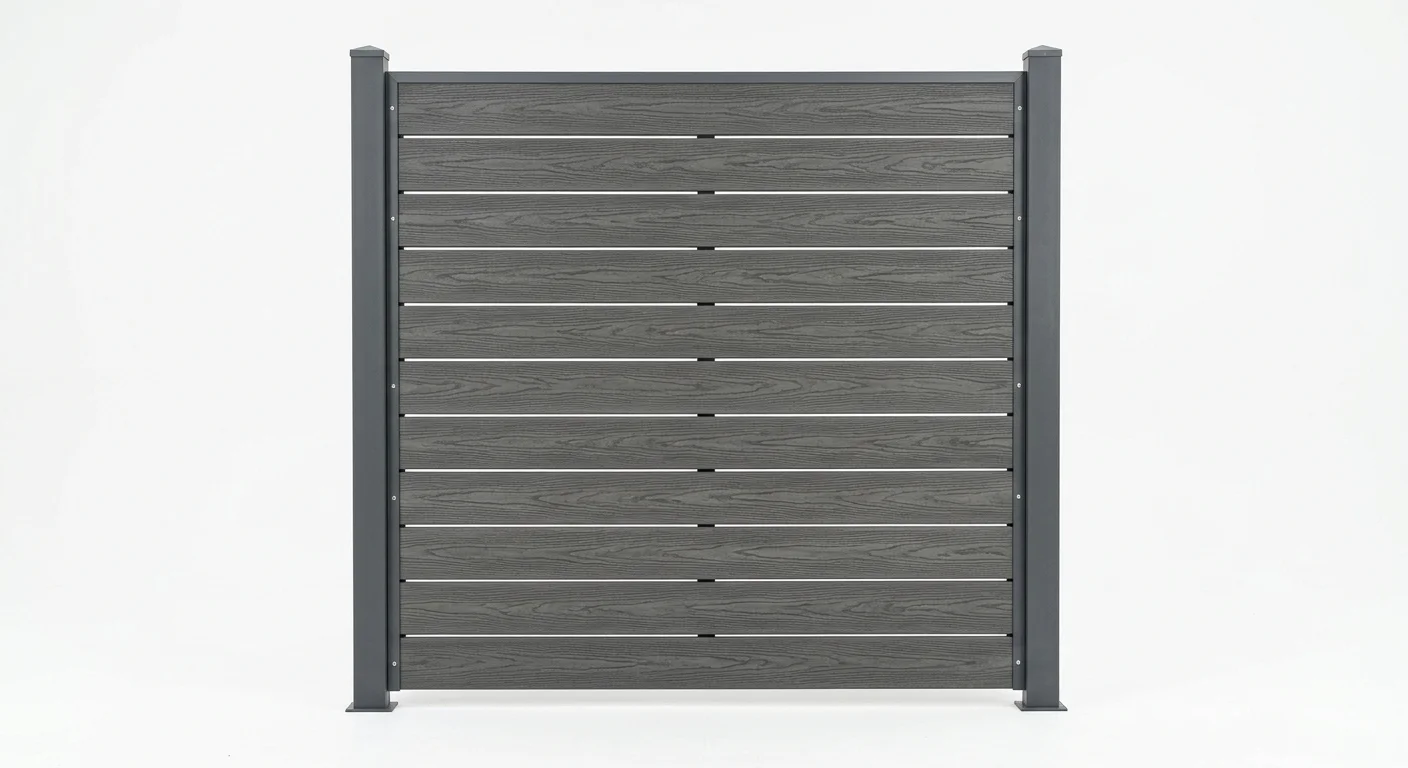
Aluminum slat fencing is perhaps the most robust solution for our area. It is impervious to the salt air and the UV index, which frequently hits 10 or 11 during the summer months. A crucial local insight that many newcomers overlook is the "sail effect" created by our winds. We experience the Levante from the east and the Poniente from the west, both of which can produce sudden, powerful gusts. If you install a solid, 1.8-meter high panel without any airflow, the wind pressure can be immense, potentially cracking the mounting points in your boundary wall or even pulling posts out of the ground. Slat fencing allows for a five-to-ten-millimeter gap between each horizontal bar. This allows the wind to pass through, reducing the structural load significantly while still providing ninety-five percent visual privacy from a distance. For a professional installation of premium aluminum slat fencing, you should expect to budget between 280 and 350 Euros per linear meter, depending on the height and the complexity of the fixings.
Beyond the climate, the "Comunidad de Propietarios" or community of owners plays a massive role in what you can and cannot do. In many urbanisations throughout the town, there are strict rules regarding the height and color of boundary treatments to maintain a harmonious look. It is a common mistake to assume that because a neighbor has a certain fence, you can do the same. I always advise my clients to check their community statutes before committing to a 5,000 Euro project. Often, a "semi-permanent" screen or a retractable side awning is permitted where a permanent wall extension is not. Furthermore, the local town hall has specific regulations about solid structures versus "permeable" ones. A screen that allows light and air to pass through is often viewed more favorably by the authorities than a solid block wall that might interfere with a neighbor’s light or view.
Recommended Configurations for Local Property Types
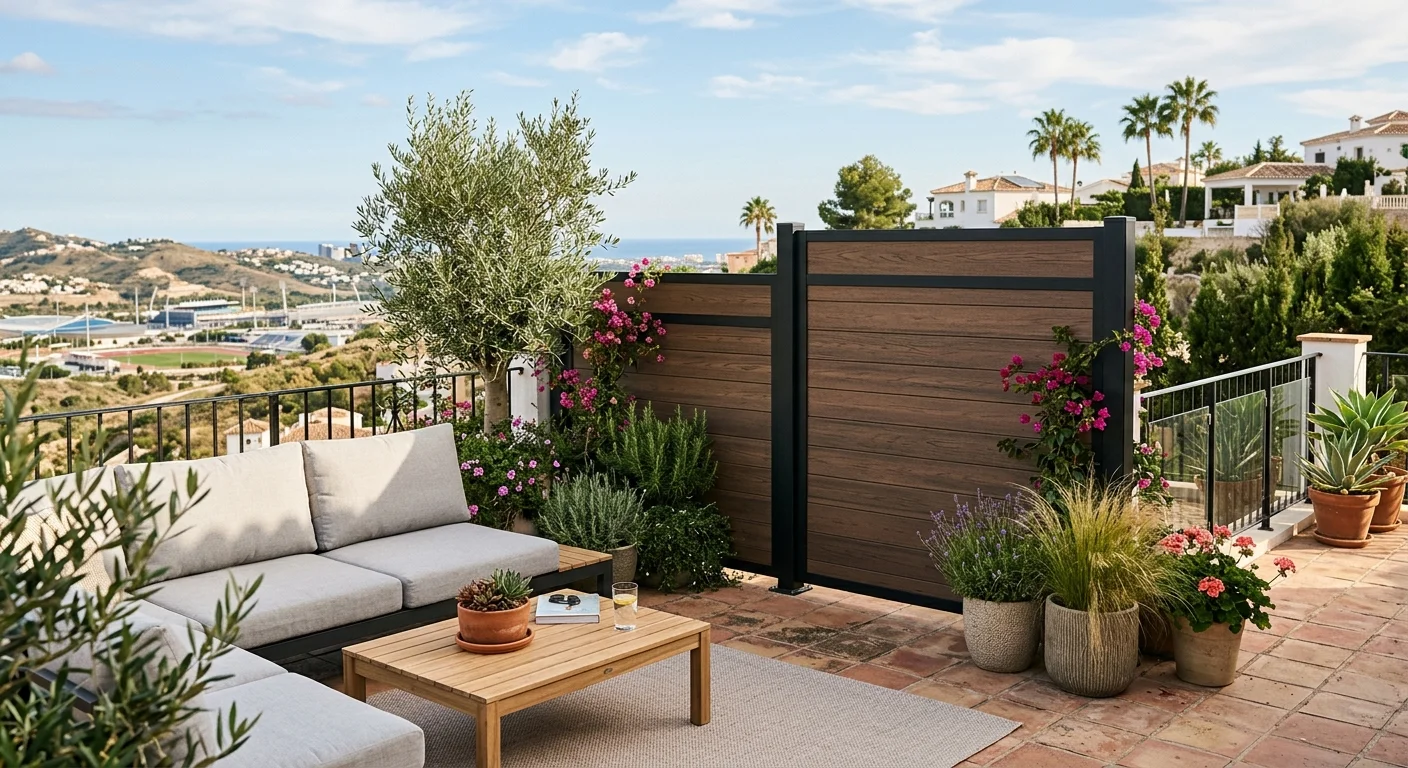
For the larger villas found in the outskirts, privacy usually centers around the swimming pool and the outdoor kitchen area. These are the zones where you spend the most time and feel most vulnerable to observation. In these settings, I recommend a combination of composite fencing panels and artificial grass to create a cohesive, low-maintenance "oasis" feel. High-quality WPC (Wood Plastic Composite) panels in a charcoal or teak finish offer the look of wood without the maintenance. We often install these in 1.8-meter by 1.8-meter sections, which retail at approximately 450 Euros per panel including the heavy-duty aluminum posts. When positioned strategically around a pergola or barbecue area, these panels create a private room within the garden. This setup works exceptionally well when paired with high-density, 40mm-pile artificial grass, as the composite colors complement the green tones perfectly, and neither material will be degraded by the chlorinated or salted pool water.
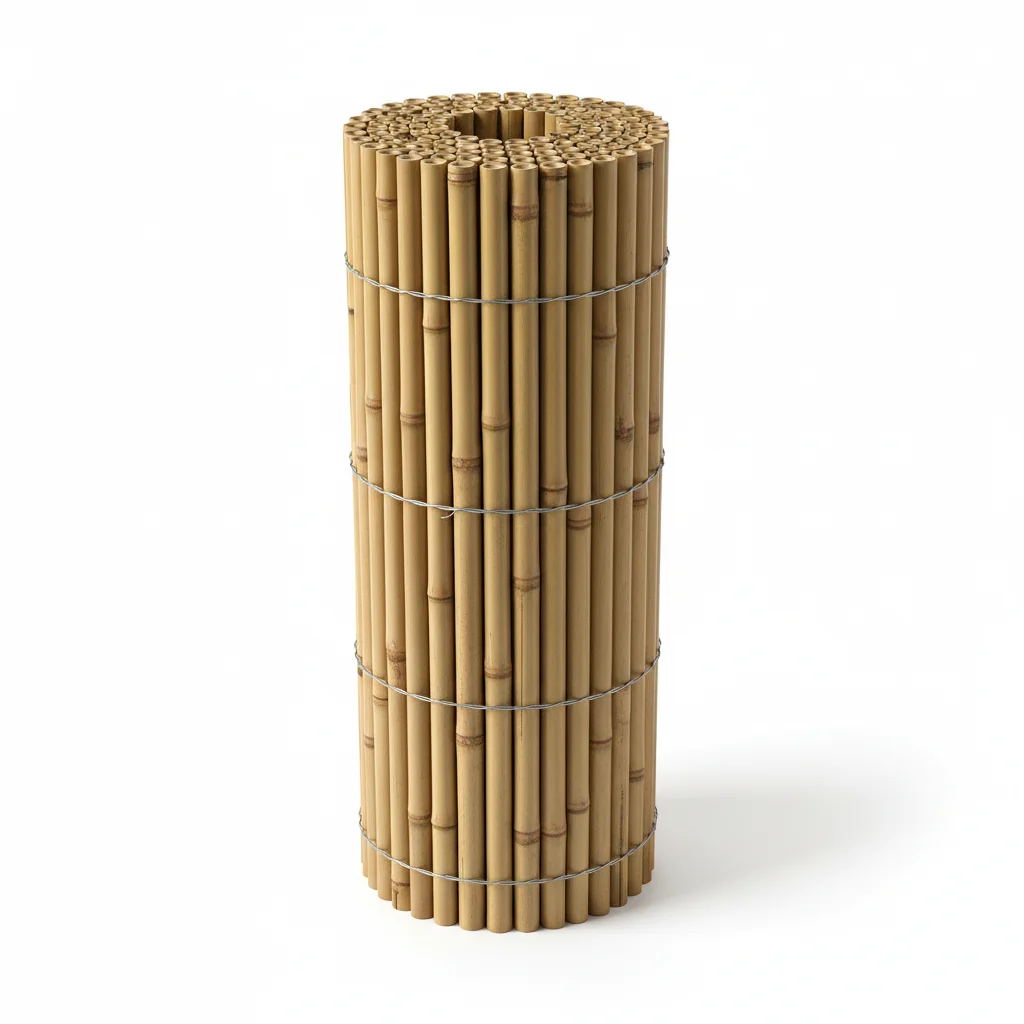
If you are residing in an apartment or a townhouse with a more compact balcony or terrace, the approach needs to be more surgical. Space is at a premium, so bulky posts are out of the question. Here, I often suggest slimline aluminum privacy screens or even high-grade bamboo screening for a more organic look. However, the most effective high-end solution for apartments is the combination of glass curtains and integrated sun or privacy blinds. While glass curtains allow you to use your terrace year-round, adding a vertical privacy screen on the side facing the nearest neighbor creates a sense of enclosure that turns a glass box into a private den. For a standard three-meter wide terrace side, a custom-fitted aluminum screen might cost around 900 to 1,200 Euros, but the increase in the usability of that space is worth every cent.
Another factor to consider is the "Calima" — the Saharan dust storms that occasionally coat everything in a fine orange powder. When choosing a privacy screen, think about the cleaning process. Intricate designs or rough-textured woods are a nightmare to clean after a Calima. Smooth-finished aluminum or high-density composites can be rinsed clean with a simple garden hose in minutes. This practical consideration is something you only learn after living through several Spanish summers and winters. Choosing a material that resists the dust and doesn't require sanding or painting every two years is the difference between enjoying your garden and working in it.
Local Logistics and Delivery Expertise in the Marina Baixa
Providing and installing fencing in this region involves more than just a truck and a drill. The logistical challenges of our local geography are significant. Many of the established urbanisations feature narrow, winding roads with steep gradients that a standard large delivery vehicle simply cannot navigate. Having worked extensively in the surrounding areas of Alfaz del Pi, Benidorm, Altea, and Finestrat, I have developed a delivery system that uses smaller, more maneuverable vehicles to ensure that your materials arrive safely at your doorstep without causing a neighborhood traffic jam. We know which streets in the old town areas are inaccessible for heavy loads and how to plan our arrival times to avoid the mid-day heat and the peak traffic periods.
Our knowledge extends to the structural integrity of the local building styles. Many boundary walls in the area are constructed from hollow "bloques de hormigón" or older stone work. Simply bolting a heavy fence into these materials without the correct chemical anchors or structural reinforcement is a recipe for disaster. We have spent years perfecting the art of securing privacy screens into the specific types of substrate found in local properties, ensuring that when the Poniente wind eventually howls down from the mountains, your fence stays exactly where it belongs. We also understand the local etiquette; we work cleanly and respect the quiet hours that are so important to the resident community, ensuring that your home improvement project doesn't become a source of friction with your neighbors.
If you are looking to secure your perimeter or create a secluded corner in your garden, the best place to start is with an on-site evaluation. No two properties in this town are identical, and the wind patterns on one side of a hill can be completely different from those on the other. I offer a consultation service where we can look at the orientation of your property, the tracking of the sun, and the most likely wind directions to determine the best material and placement for your screens. Whether your budget is 300 Euros for a small balcony screen or 5,000 Euros for a complete villa perimeter, the focus is always on longevity and genuine utility. Feel free to get in touch for a conversation about your project; I’m usually out on a site visit nearby and can stop by to provide an expert perspective on how to make the most of your outdoor space.
 JW'"
/>
JW'"
/>