Outdoor Living in Alfaz del Pi and El Albir
Alfaz del Pi and its coastal district El Albir are home to 22,000 residents — 52% from abroad — with Europe’s largest Norwegian community outside Norway creating a distinctive Scandinavian-influenced outdoor culture.
Alfaz del Pi is unlike anywhere else on the Costa Blanca. While most expat towns are dominated by British residents, Alfaz has a firmly Nordic flavour. The Norwegian community here is the largest in southern Europe, with its own church, cultural centre, and social clubs. That Scandinavian influence shapes the town’s approach to outdoor living — clean lines, quality materials, and a genuine appreciation for well-designed cooking equipment.
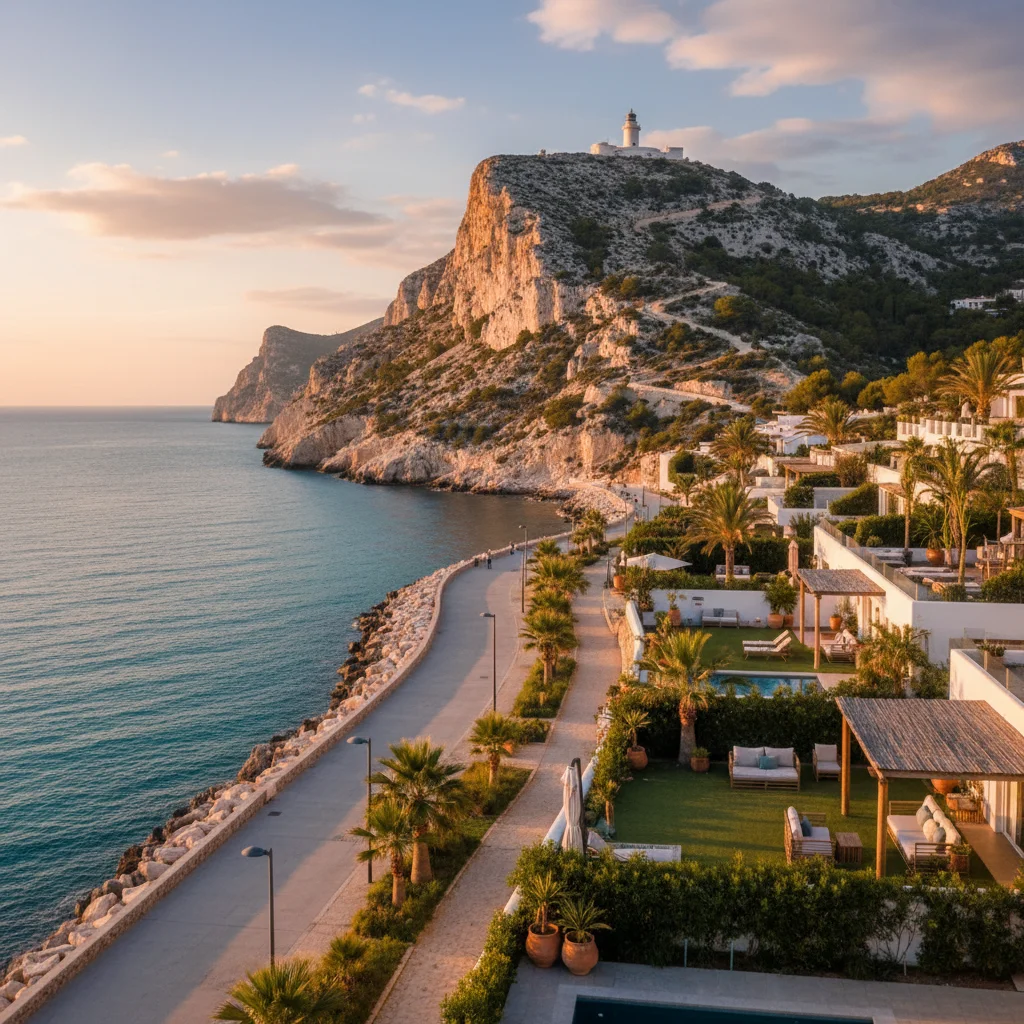
El Albir, the coastal district, stretches along a pebble beach backed by the Sierra Helada natural park. Properties average around €280,000, with modern apartments along the Albir promenade and hillside villas climbing toward the Sierra Helada ridge. Apartment balconies are typically 10–15 square metres with sea views, while villas offer 30–60 square metres of covered outdoor space.
The promenade culture sets the tone. Residents walk, cycle, and socialise outdoors year-round, and that active lifestyle extends naturally to outdoor cooking — evening grilling on a terrace overlooking the Mediterranean is simply how people here eat.
Alfaz del Pi’s unique Norwegian community and El Albir’s Mediterranean promenade lifestyle drive demand for well-designed outdoor cooking equipment, from sleek gas BBQs to premium kamado grills.
Choosing Your Setup in Alfaz del Pi
Scandinavian residents favour clean-burning gas BBQs and precision kamado grills, while El Albir’s compact apartment terraces call for space-efficient designs that maximise cooking power per square metre.
The Scandinavian community gravitates toward gas and kamado — fuel types that offer control and clean operation. Norwegian and Dutch residents consistently choose higher-specification gas BBQs with features like infrared searing zones, rotisserie attachments, and stainless-steel construction that withstands the coastal salt air. Costa Blanca Outdoors recommends marine-grade stainless models for any property within 500 metres of the El Albir seafront, where salt corrosion is a genuine consideration.
For El Albir apartment owners, a compact kamado grill (38cm) or a two-burner gas BBQ fits most balcony terraces without sacrificing serious cooking capability. Hillside villa owners between Alfaz and the Sierra Helada have space for more elaborate setups — a built-in gas station paired with a wood-fired pizza oven is a popular combination here.
Pizza ovens appeal to the area’s food-conscious residents. The Sierra Helada hiking community overlaps heavily with the outdoor cooking community, and post-hike pizza nights are a genuine social tradition in the hillside urbanisaciones. Almond and citrus wood from inland suppliers in La Nucia and the Guadalest valley burn beautifully in compact ovens.
Costa Blanca Outdoors recommends marine-grade stainless-steel BBQs for El Albir seafront properties, where salt air corrosion can damage standard equipment within two to three seasons.
Delivery to Alfaz del Pi and El Albir
We deliver throughout Alfaz del Pi, El Albir, and the Sierra Helada hillside weekly on our central Costa Blanca route, covering both seafront apartments and inland villas.
Alfaz and El Albir sit at the heart of our central delivery zone. The Albir promenade area and town centre are straightforward, with good road access and parking. Hillside properties closer to the Sierra Helada require more careful planning — we use appropriately sized vehicles and always confirm terrace access before scheduling heavy deliveries.
For apartment deliveries along the Albir seafront, we coordinate lift access and building entry in advance. Our team handles everything from unpacking to assembly and final placement, with a full walkthrough of your equipment included as standard.
Neighbouring Benidorm and La Nucia are on the same delivery routes, and we also serve Altea just up the coast. In-stock items ship within 5–10 working days, while custom outdoor kitchen projects require 3–4 weeks for design, fabrication, and professional installation.
Selecting Durable Parasols and Shade Sails for the Albir and Alfaz Landscape
Living in the northern Costa Blanca presents a unique set of environmental challenges that many newcomers don't fully appreciate until their first cheap hardware store umbrella ends up in a neighbor's swimming pool. Having helped over 200 families settle into their outdoor spaces since 2019, I have seen exactly how the intense Mediterranean sun and the unpredictable coastal winds interact with various shading solutions. Alfaz del Pi is a fascinating study in microclimates because it bridges the gap between the salt-heavy air of the Albir coastline and the slightly more sheltered, elevated terrain leading toward the Serra Gelada. With a population that is over 52% international, primarily consisting of Norwegian, Dutch, and British residents, the local outdoor culture is a sophisticated blend of Northern European design sensibilities and the practical necessity of Spanish climate management. Our Dutch and Norwegian neighbors often lean toward sleek, minimalist shade sails that offer a contemporary architectural look, while British residents frequently prefer the versatility of large cantilever parasols that can be moved as the sun tracks across the southern sky.
The transition from the bustling promenade near the Albir Lighthouse to the quiet, inland villas of the municipality changes the requirements for shade significantly. Down by the shore, the air is thick with salt spray, which acts as a corrosive agent on any metal that isn't properly powder-coated or made of high-grade stainless steel. As you move further inland toward areas like Belmonte or Jardín de Alfaz, the salt becomes less of a factor, but the wind can actually intensify as it funnels down from the surrounding mountains. These properties often feature expansive terraces and outdoor kitchens where the "second living room" concept is fully realized. Whether you are hosting a Sunday roast or a traditional Dutch "borrel," the quality of your shade dictates how many hours of the day that space remains usable. A terrace without professional-grade shade becomes a no-go zone between 1:00 PM and 5:00 PM from June through September, effectively rendering a large portion of your EUR 280,000 investment unusable during the best months of the year.
Practicality must drive your choice of equipment here. In my experience, the sheer intensity of the UV radiation in this part of Spain is significantly higher than what most northern Europeans are used to. It isn't just about skin protection; it is about material longevity. We see a lot of "bargain" parasols that look great in May but are faded and brittle by August. This is why I always emphasize the technical specifications of the fabric. You should be looking for solution-dyed acrylics or heavy-duty polyesters with a minimum weight of 250g/m². Anything less will lose its structural integrity within two seasons. When you consider that many local homes feature large floor-to-ceiling glass doors to capture the views of the Mediterranean, a well-placed parasol or shade sail also serves as a critical first line of defense for your interior cooling, reducing the load on your air conditioning units by preventing the "greenhouse effect" inside your lounge.
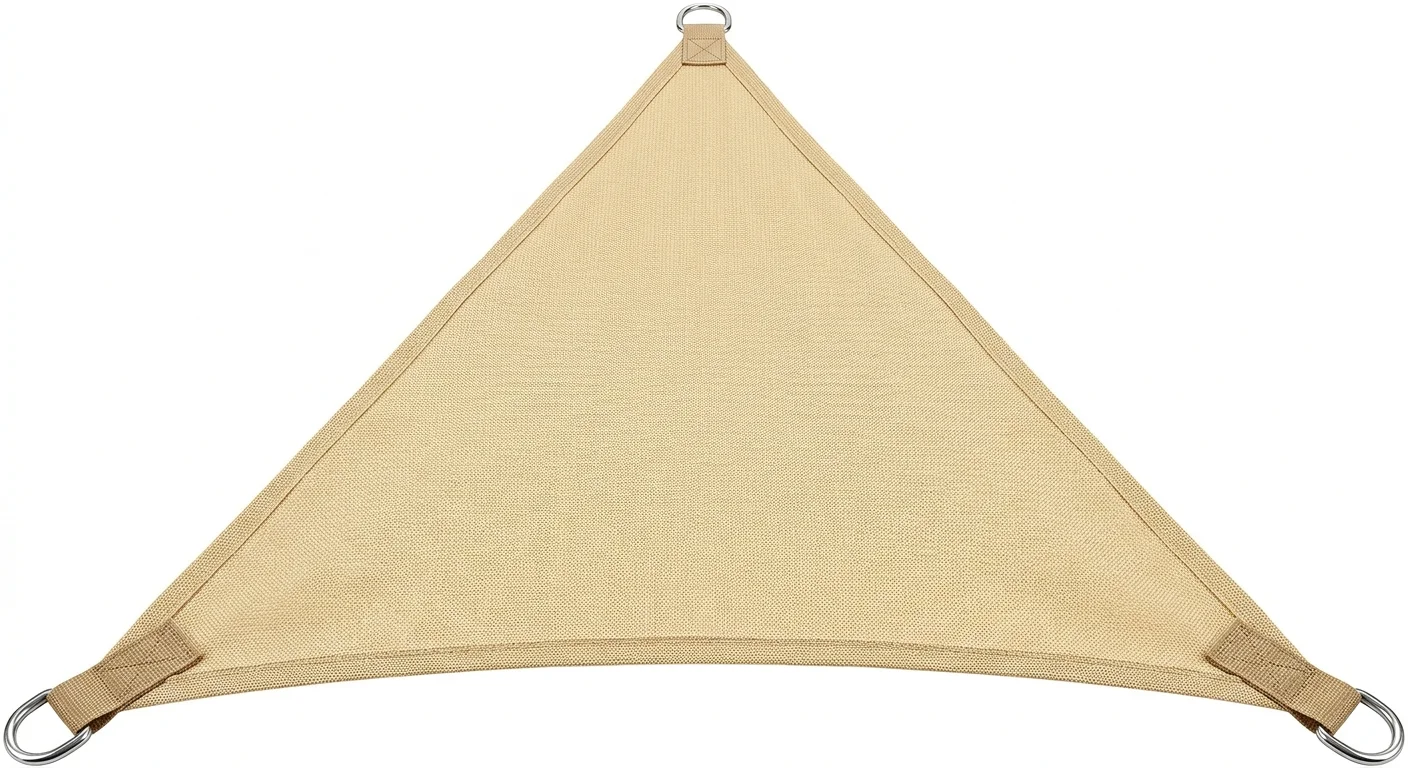
Understanding the wind is the single most important factor for anyone living in this corner of the Costa Blanca. We deal with two primary wind patterns: the Levante, which comes from the east/southeast bringing humidity and often the dreaded "calima" dust from Africa, and the Poniente, which blows from the west and can be incredibly hot and dry. In Albir, the Levante can pick up speed across the open water and hit a terrace with surprising force. If you are installing a shade sail, you cannot simply hook it to a couple of eye-bolts and call it a day. The tension required to keep a sail from flapping—which is what eventually tears the fabric or pulls the fixings out of the wall—is immense. I always recommend using chemical anchors when mounting to the traditional Spanish brickwork or "termoarcilla" blocks found in local villas. A 4m x 5m shade sail can exert hundreds of kilograms of force during a sudden gust. If your property doesn't have a reinforced concrete ring beam to bolt into, a free-standing cantilever parasol with a massive base is often the safer, more flexible choice.
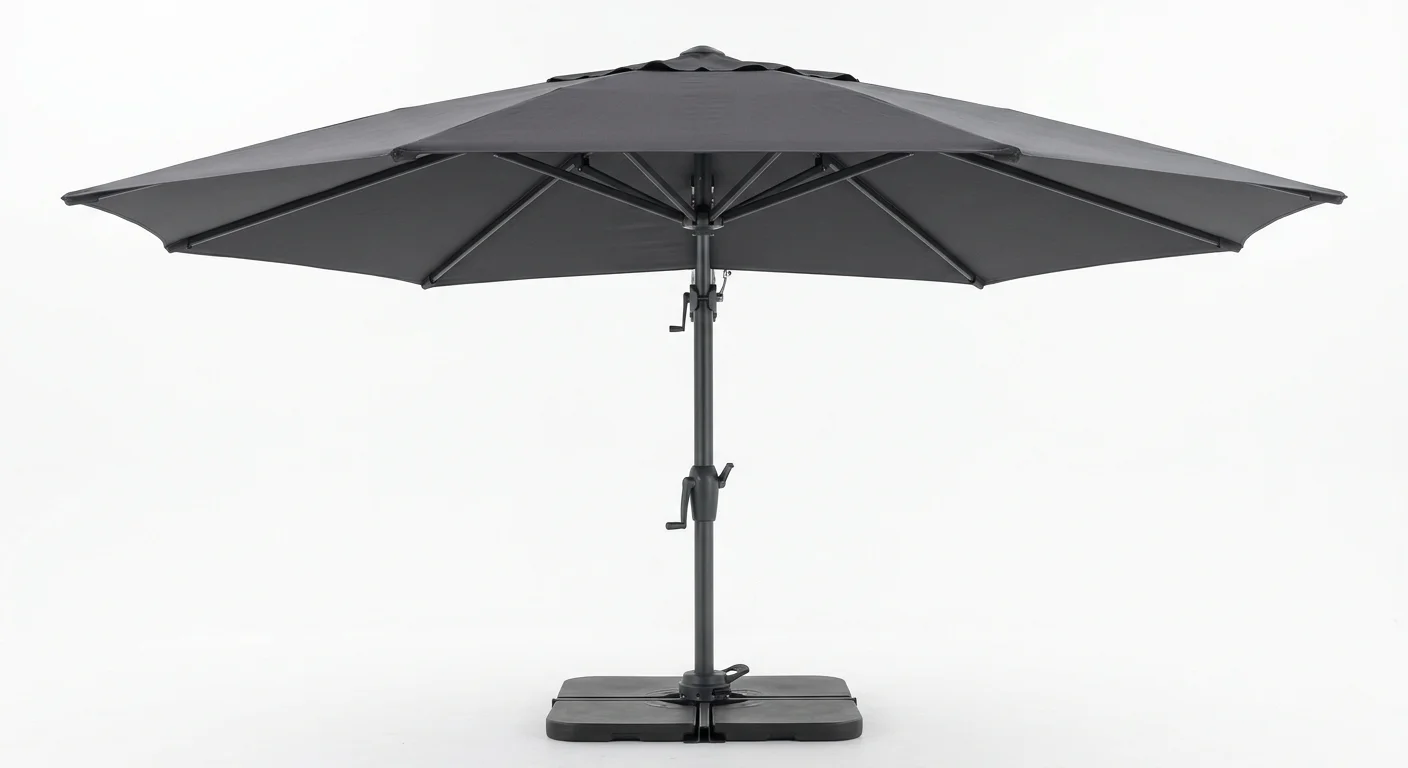
For those living in apartments or within a comunidad de propietarios, there is an additional layer of complexity: the community rules. In many urbanisations across the municipality, there are strict bylaws regarding the color and type of external shading allowed. This is done to maintain a cohesive aesthetic for the building. Before you spend €1,200 on a high-end cantilever, you must check if your community mandates a specific shade of cream, white, or charcoal. I’ve seen residents forced to remove perfectly good equipment because it didn't match the building's color code. Furthermore, if you are on a high-floor balcony in a frontline Albir building, the salt air will pit and corrode cheap chrome or low-grade aluminum in months. Look for frames with "marine-grade" powder coating. A specific recommendation I often make for these coastal balconies is a 2.7m market-style umbrella with a heavy 30kg granite base. A quality option like this usually starts around the €250 mark and provides enough coverage for a standard dining set without becoming a sail that risks blowing over the railing.
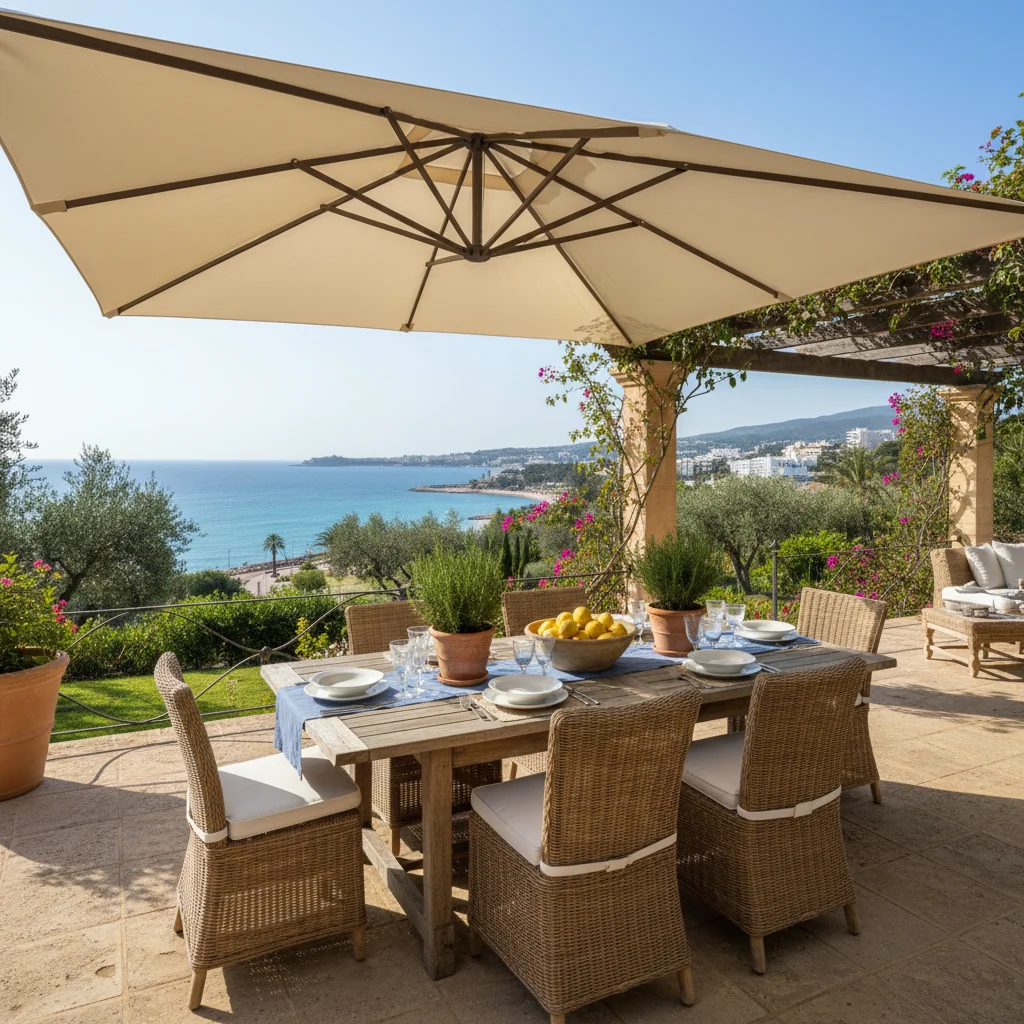
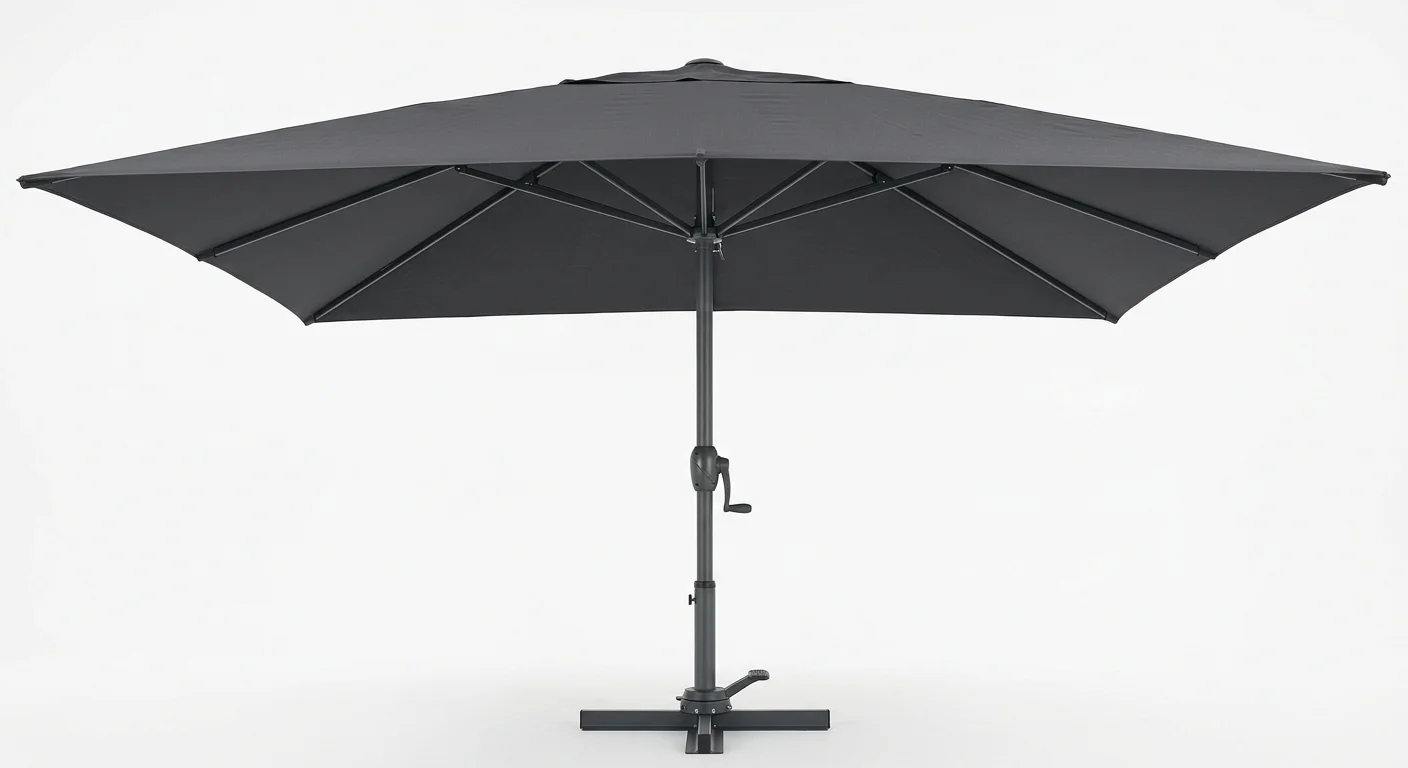
In the more spacious villas located in the foothills of the Serra Gelada, you have more room to play with. Here, the gold standard is the heavy-duty cantilever parasol. These units, like the ones we supply in the €850 to €1,500 range, feature a side-post design that allows for 360-degree rotation. This is crucial because the sun doesn't just sit in one spot; it moves from the direction of Benidorm in the morning to the hills of La Nucia in the evening. A 3m x 3m square cantilever provides 9m² of shade, which is perfectly sized to cover a modular rattan lounge set or a six-seater dining table. These units should always be paired with a mobile base—ideally one on wheels with a braking system—weighing no less than 90kg. This allows you to reposition the shade as needed while ensuring it stays grounded when the afternoon breeze kicks in. I’ve personally found that the anthracite-colored frames are the most practical for our area; they hide the fine layer of Saharan dust much better than white or silver frames, which require constant cleaning to look presentable.
When we look at the total outdoor setup, parasols and shade sails shouldn't be viewed in isolation. They are the anchor for your other furniture. If you have invested in high-quality sun-loungers, placing a tilt-adjustable parasol between them allows you to stay outdoors longer without the risk of overheating. Similarly, if you have a large rattan lounge set, a cantilever parasol can be positioned to hover over the seating area without a central pole interrupting your conversation or blocking your view of the TV or pool. For those with beachfront apartments where space is at a premium, we often suggest "half-parasols" that sit flush against the wall, providing shade for a small bistro set without taking up the entire balcony footprint. These are specifically effective for the compact terraces found in the older blocks near the Albir promenade, where every square centimeter of floor space is precious.
Another local insight that is often overlooked is the impact of the "calima." When that red dust descends, it gets into every fiber of an outdoor fabric. If you have a fixed awning, cleaning it is a nightmare. This is why I often steer clients toward high-quality, removable shade sails or parasols with machine-washable canopies. Being able to take the fabric down in five minutes when a storm or a dust cloud is forecast will triple the lifespan of your equipment. For a custom-tensioned shade sail setup, you can expect to pay around €350 to €600 per sail depending on the size and the hardware required. It is an investment, but when compared to the cost of replacing faded furniture or paying higher electricity bills for indoor cooling, it pays for itself within two seasons.
Delivery and installation in this region require a bit of local "know-how." We frequently deliver to Altea, Benidorm, and La Nucia, and we know that the logistics can be tricky. If you live in the old town of Altea, for example, a delivery van can’t get anywhere near your front door. If you are in one of the steep urbanisations behind Alfaz del Pi, getting a 120kg granite base up a flight of narrow garden stairs requires more than just a delivery driver; it requires a team that understands the local architecture. We’ve managed everything from crane-lifting parasols onto penthouse terraces to hand-carrying heavy equipment up the winding drives of the Serra Gelada. When we deliver, we don't just drop a box; we assemble, we bolt down, and we tension the sails to ensure they are safe from the moment we leave.
The outdoor lifestyle is the primary reason most of us moved to this part of the world. But the Spanish sun is relentless, and the wind doesn't care about your budget. Choosing the right shading solution is the difference between having a beautiful terrace you look at through a window and having a functional outdoor room where you spend your entire summer. I always offer a free consultation for residents in the local area because every terrace has its own wind profile and sun path. It is much better to spend twenty minutes measuring and discussing the "Poniente" versus the "Levante" now than to spend a thousand Euros on a parasol that isn't fit for purpose. Whether you are looking to shade a compact balcony in the center of town or a sprawling poolside in the hills, the goal is always the same: creating a cool, safe, and durable environment that stands up to the unique demands of the Costa Blanca climate. Reach out to me, and we can look at your space together to find a solution that will actually last.
 JW'"
/>
JW'"
/>