Outdoor Living in Alicante
Alicante is the provincial capital with 340,000 residents and a 12% expat population — a vibrant Mediterranean city where castle-top views, beachfront promenades, and year-round sunshine fuel one of the Costa Blanca’s most dynamic outdoor living scenes.
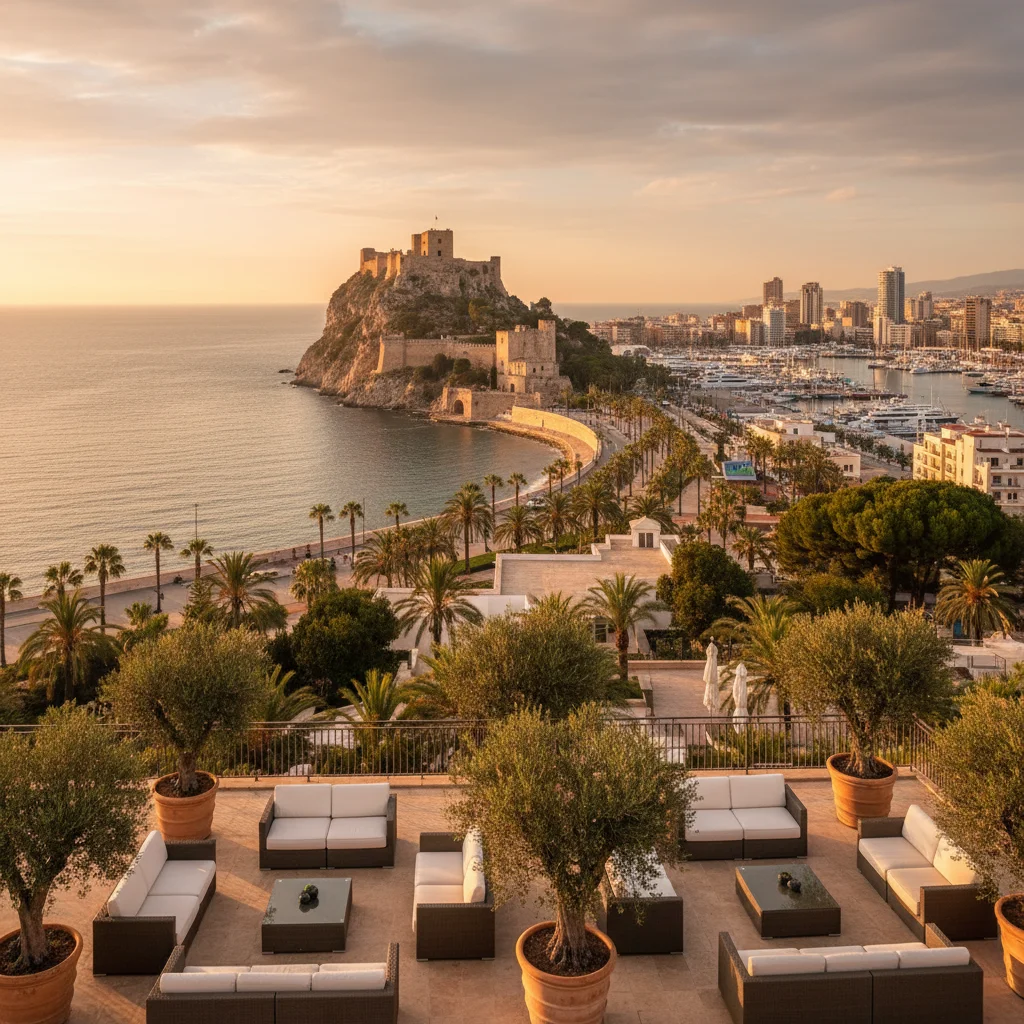
Alicante is where urban energy meets coastal lifestyle. The city rises from the sweeping Explanada promenade up through the narrow streets of the Barrio de Santa Cruz to Santa Bárbara Castle perched on Mount Benacantil. It is a proper Mediterranean city — not a resort — with international schools, a major airport, excellent healthcare, and a cultural calendar that keeps terraces busy twelve months a year.
The expat community is cosmopolitan: British, French, Italian, and increasingly Nordic and Eastern European residents mix with a large Spanish population. Property prices average around €250,000, ranging from compact city centre apartments near the Mercado Central to spacious penthouses with wraparound terraces in the Cabo de las Huertas headland. The San Juan corridor running north toward San Juan de Alicante offers suburban villas with private gardens, while areas like Vistahermosa and Albufereta provide hillside homes with panoramic sea views.
Outdoor cooking is not seasonal here — it is a way of life. Alicante’s mild winters (average January highs of 17°C) mean that a well-equipped terrace functions as an extension of the kitchen year-round. From tapas evenings on a penthouse rooftop overlooking the harbour to Sunday paellas in a San Juan garden, the demand for quality outdoor cooking equipment is constant.
Alicante’s combination of cosmopolitan city life, diverse property types, and year-round mild climate makes it one of the strongest markets on the Costa Blanca for premium outdoor cooking equipment.
Choosing Your Setup in Alicante
Property type drives equipment choice in Alicante — compact gas BBQs for city centre penthouses, full outdoor kitchens for suburban villas, and salt-resistant materials for anything near the coast.
City centre apartments in the Barrio de Santa Cruz and around the Plaza de los Luceros typically have smaller terraces of 8–12 square metres. A two-burner gas BBQ or a compact kamado (38cm) fits these spaces perfectly while delivering serious cooking performance. Penthouse terraces in newer developments along the Playa de San Juan or in Cabo de las Huertas offer 15–30 square metres — enough for a three- or four-burner gas station with side burner, ideal for entertaining.
Suburban villa owners in the San Juan corridor and Vistahermosa have space for the full treatment. Costa Blanca Outdoors designs built-in outdoor kitchens with gas grills, preparation counters, pizza ovens, and storage — turning a poolside terrace into a complete cooking and entertaining area. These setups are particularly popular with British and French residents who host regularly.
Salt air is a real factor in Alicante. Any property within a kilometre of the coast — and that includes most of the city — benefits from marine-grade stainless steel construction. Costa Blanca Outdoors stocks 304 and 316 stainless-steel models specifically for coastal installations, ensuring your investment lasts well beyond the standard three-season lifespan of cheaper alternatives.
For Alicante properties, Costa Blanca Outdoors recommends marine-grade stainless-steel equipment as standard, with setup size matched to your terrace footprint — from compact two-burner units to full built-in outdoor kitchens.
Delivery to Alicante
We deliver throughout Alicante city, from the harbour district to Cabo de las Huertas, Vistahermosa, and the San Juan beach corridor, on our weekly greater Alicante route.
As the provincial capital, Alicante is the hub of our delivery network. The city centre has some traffic restrictions and limited-access streets, particularly in the Old Quarter around the Mercado Central and Santa Cruz — we schedule these deliveries during permitted hours and coordinate building access in advance. Beachfront and Cabo de las Huertas deliveries are straightforward with good parking and lift access in most modern buildings.
For apartment deliveries, our team handles everything from ground-floor unloading to terrace placement, including unpacking, assembly, and a full equipment walkthrough. Villa deliveries in the suburban areas around Vistahermosa and the San Juan corridor are typically the simplest, with direct driveway access.
Neighbouring San Juan de Alicante and El Campello are on the same northern route, while Elche and Gran Alacant connect on our southern schedule. In-stock items ship within 5–10 working days, while custom outdoor kitchen projects require 3–4 weeks for design, fabrication, and professional installation.
Maximising the Value of Glass Curtains and Glass Rooms in Alicante
Living in this part of the world requires a different approach to home design than what many of us were used to back in northern Europe. After moving here in 2019 and helping hundreds of families across the province, I have seen how the local climate dictates the way we use our homes. This city is a unique blend of 340,000 residents, where roughly twelve percent of the population comes from abroad. While the British, French, and Italians bring their own distinct tastes to the local property market, they all face the same challenge: how to actually use an outdoor terrace when the Levante wind is howling or the summer sun is hitting forty degrees. Whether you are living in a high-rise apartment overlooking San Juan Beach or a renovated townhouse in the Old Quarter, your outdoor space is often the most valuable part of your property, yet it remains the most underutilised.
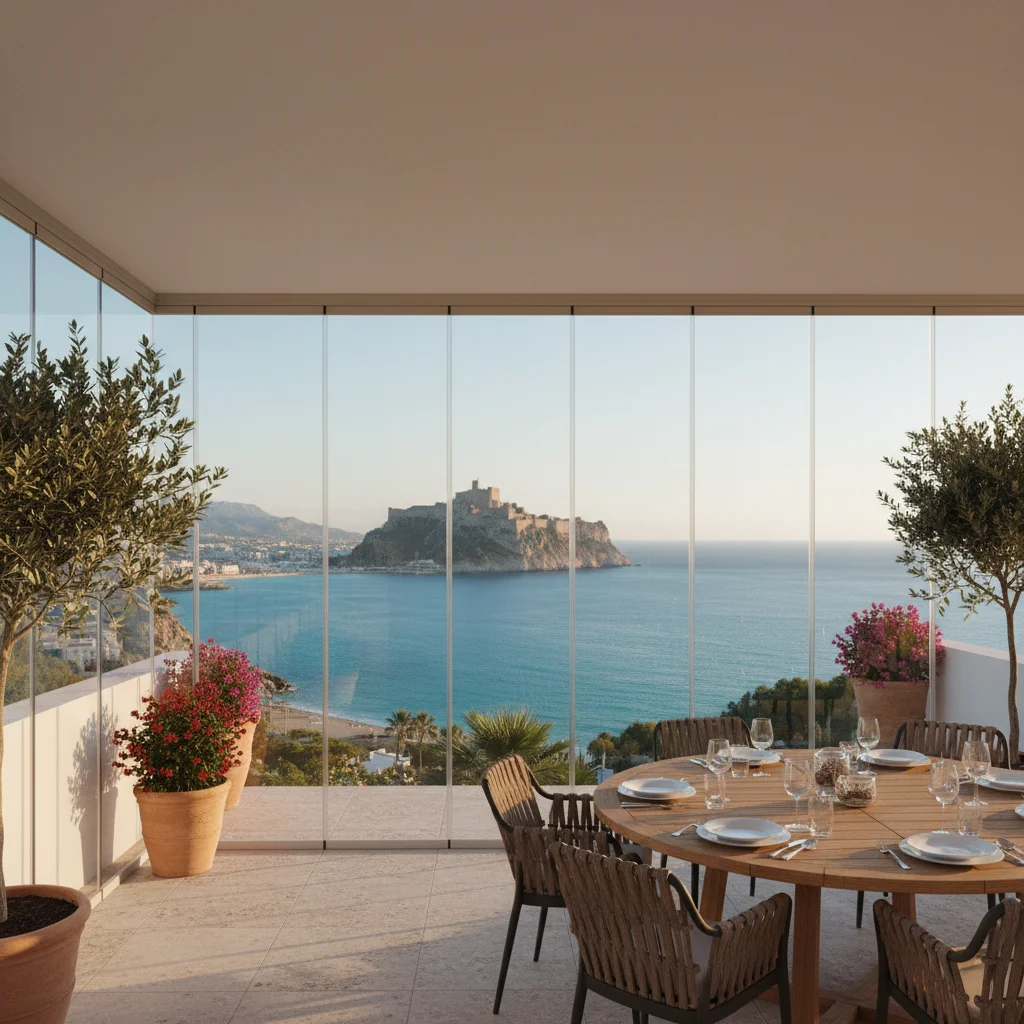
The property stock here is incredibly diverse. You might have a compact balcony near the Explanada where every square metre counts, or a sprawling villa inland toward Elche where the wind across the plains can make an open terrace feel like a wind tunnel. Glass curtains and glass rooms are the primary solution I recommend for these scenarios because they offer a level of flexibility that traditional construction cannot match. A frameless glass system allows you to retain those views of Santa Bárbara Castle while creating a thermal barrier that keeps the interior of your home cooler in the summer and warmer during those surprisingly crisp January evenings. Because these systems are typically considered non-permanent enclosures, they often bypass the complex planning permission hurdles that a brick-and-mortar extension would trigger, making them a pragmatic choice for residents looking to increase their living space without a bureaucratic headache.
European residents here, particularly the French and British, often view the terrace as a secondary dining room or a home office. However, the intense UV levels we experience year-round mean that unprotected furniture and flooring will fade and degrade within a couple of seasons. By installing a glass room, you are essentially creating a protected envelope. This shift from an exposed outdoor area to a controlled environment changes the psychology of the home. You stop seeing the terrace as a place to visit when the weather is "just right" and start seeing it as a permanent part of your floor plan. Given that the average property price in the area sits around 250,000 Euros, adding fifteen or twenty square metres of usable year-round living space through a high-quality glass enclosure provides a significant return on investment that far outweighs the initial installation cost.
When considering an installation in this specific coastal environment, you have to account for the Levante and Poniente winds. The Levante brings high humidity and salt spray, especially for those living within two kilometres of the shoreline. If your property is in a frontline position near the marina or along the northern stretches of the coast, the salt air is your biggest enemy. Standard aluminium finishes will eventually pit and corrode if they aren't treated correctly. For any glass curtain system in this zone, I insist on marine-grade powder coating or anodized finishes with a minimum of 60 to 80 microns. This ensures the tracks remain smooth and the aesthetic doesn't degrade. The Poniente wind, by contrast, is a dry, hot wind from the interior that carries fine dust and sand. A frameless glass curtain system with high-quality translucent seals between the panes is essential here to prevent your terrace from being covered in a layer of silt every time the wind shifts.
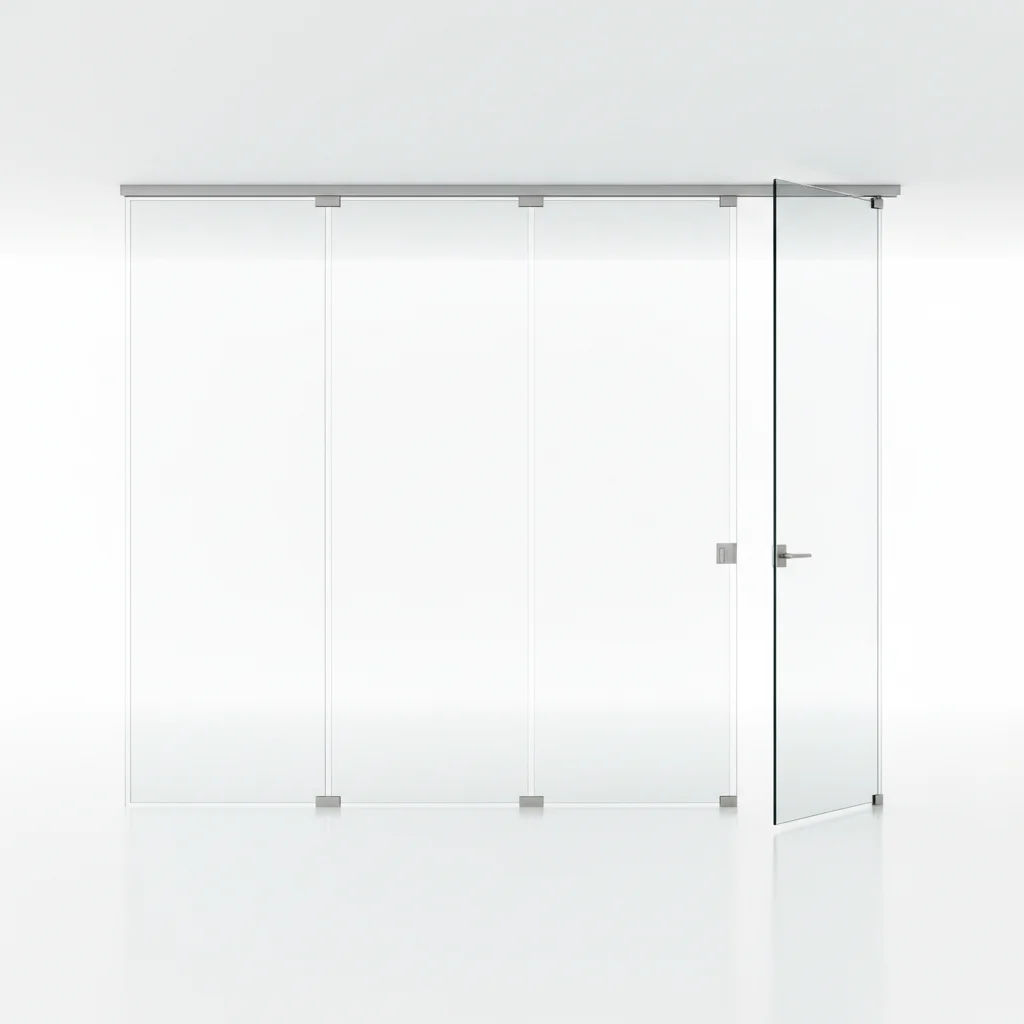
Another critical factor is the local community of owners, or the comunidad de propietarios. In many apartment blocks, particularly the older ones with historical character, the rules regarding the external appearance of the building are strict. This is why frameless glass curtains are so popular; they do not have vertical profiles, meaning that when they are closed, they are virtually invisible from the street. They don't break the visual line of the building facade, which usually makes them acceptable to even the most traditional community presidents. However, I always advise my clients to check their specific community statutes before proceeding. It is also worth noting that the glass itself needs to be toughened safety glass, usually 10mm or 12mm thick depending on the height of the installation and the wind load it will face. A standard 4-metre wide balcony enclosure might start around 3,800 Euros, but for a full glass room with a reinforced roof structure, prices can reach 15,000 Euros depending on the complexity and the choice of integrated sun protection.
The weight of these systems is a technical detail that many overlook. In some of the older property stock in the city centre, the balcony slabs were not designed to take massive point loads. Most modern glass curtains are "bottom-weighted," meaning the weight of the glass sits on the floor track rather than hanging from the ceiling. This is often the safer and more durable option for local renovations. Furthermore, maintenance in this climate involves more than just a bit of window cleaner. The Saharan dust, known locally as the Calima, can get into the tracks and act like sandpaper on the nylon rollers. I recommend a system with "easy-clean" features where the panels can be swung inward, allowing you to clean both sides of the glass from inside the safety of your balcony—a vital feature if you are on the tenth floor overlooking the coast.
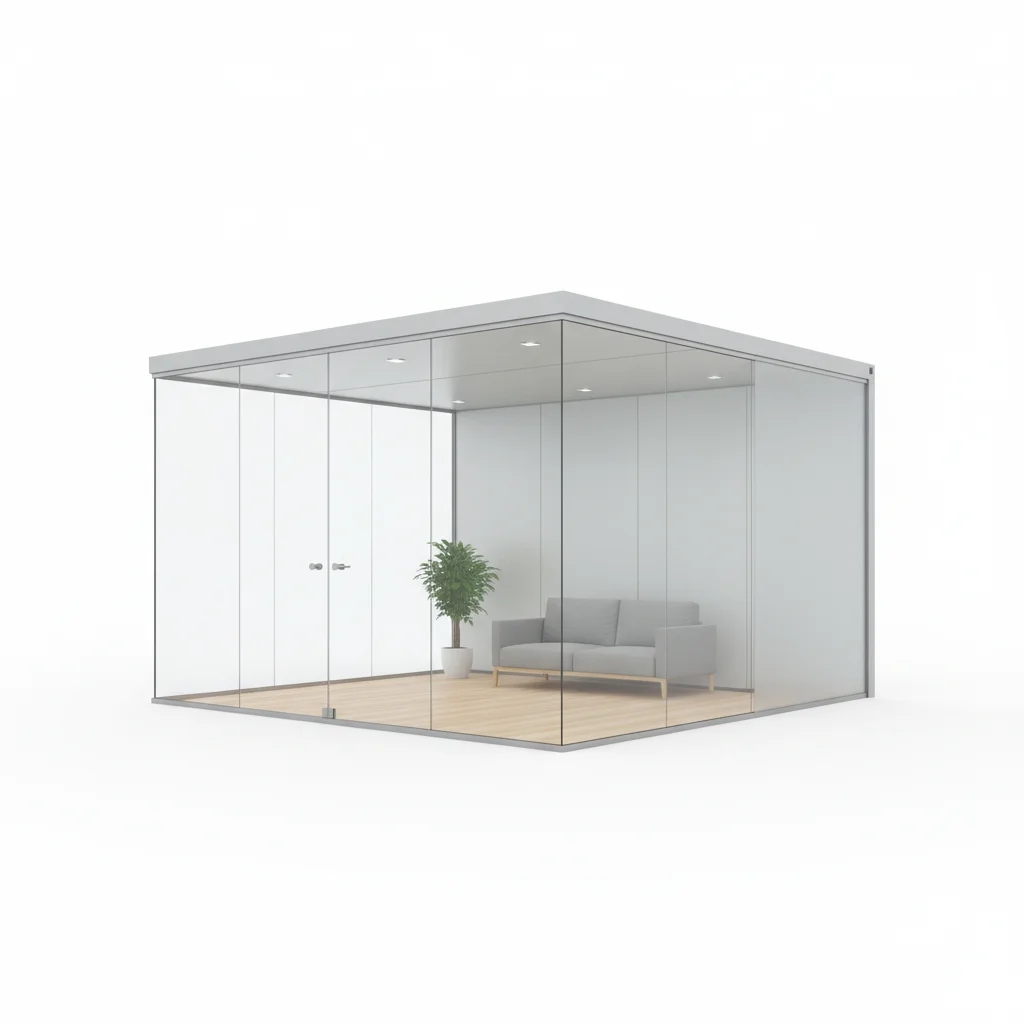
For those living in villas on the outskirts or in nearby residential areas like Vistahermosa, the recommendation usually shifts toward a full glass room. A glass room differs from curtains in that it often includes a dedicated roof system—either fixed glass, high-insulation sandwich panels, or a bioclimatic pergola. If you have a large garden-facing terrace, combining glass curtains with a bioclimatic pergola creates the ultimate outdoor living setup. In the peak of July, you can open the roof slats for ventilation and slide the glass panels back to enjoy the breeze. In the winter, you close everything up, and the greenhouse effect provides free heating for the rest of your house. This combination is particularly effective for the large-scale outdoor kitchens and lounge areas that are so popular with the international community here.
In contrast, for the urban apartments with smaller, recessed terraces, a simple frameless sliding-stacking system is the most efficient use of space. These panels stack neatly against one wall, taking up very little room and leaving the walkway clear. For these installations, I often suggest adding vertical motor-driven awnings or "screen" blinds on the inside of the glass. The glass stops the wind and rain, while the blinds handle the intense afternoon glare that can make a south-facing apartment uncomfortably hot. By layering these products—glass curtains for protection and awnings for shade—you create a sophisticated climate control system that doesn't rely on expensive air conditioning. This setup is a standard recommendation for properties in the more exposed areas of Gran Alacant, where the elevation adds another layer of wind exposure to the coastal humidity.
Our work takes us through a wide variety of local landscapes, from the flat palm groves around Elche to the rugged coastal cliffs of Campello. Each area has its own logistical quirks. For instance, when we are working in the dense urban centre or near the San Juan Beach high-rises, we often have to coordinate with the local town hall for parking permits to position a crane or a hoist. Access is everything in this business. Some of the older buildings have lifts that are too small for large glass panels, meaning we have to plan for external lifting equipment from the outset. Knowing the narrow one-way systems of the Old Quarter or the specific access points for the gated communities in San Juan is part of the local expertise we bring to every project. We don't just deliver the glass; we navigate the local infrastructure to ensure the installation is seamless.
Beyond the city limits, we serve a broad radius including Elche, Campello, and San Juan. Each of these areas has a different microclimate. Elche is significantly hotter and drier, making thermal insulation in a glass room a top priority to keep the heat out. In Campello, the focus is almost entirely on wind protection and marine-grade materials due to the direct sea exposure. We understand these nuances because we live here and see the effects of the weather on our own installations year after year. When we sit down for a consultation, we aren't just looking at the dimensions of your terrace; we are looking at the orientation of your home, the prevailing wind direction, and the specific rules of your neighbourhood.
If you are ready to stop letting the wind and dust dictate when you can enjoy your terrace, I invite you to reach out. We offer a free on-site consultation where I can personally assess your space and provide a detailed quote tailored to your property type and budget. Whether you want a simple enclosure for a small balcony or a complete glass room transformation for a garden villa, we have the local knowledge and the technical expertise to get it right. My goal is always the same: to help you create an outdoor space that you can actually use every single day of the year, regardless of what the Alicante sky is doing.
 JW'"
/>
JW'"
/>