Outdoor Living in Alicante
Alicante is the provincial capital with 340,000 residents and a 12% expat population — a vibrant Mediterranean city where castle-top views, beachfront promenades, and year-round sunshine fuel one of the Costa Blanca’s most dynamic outdoor living scenes.
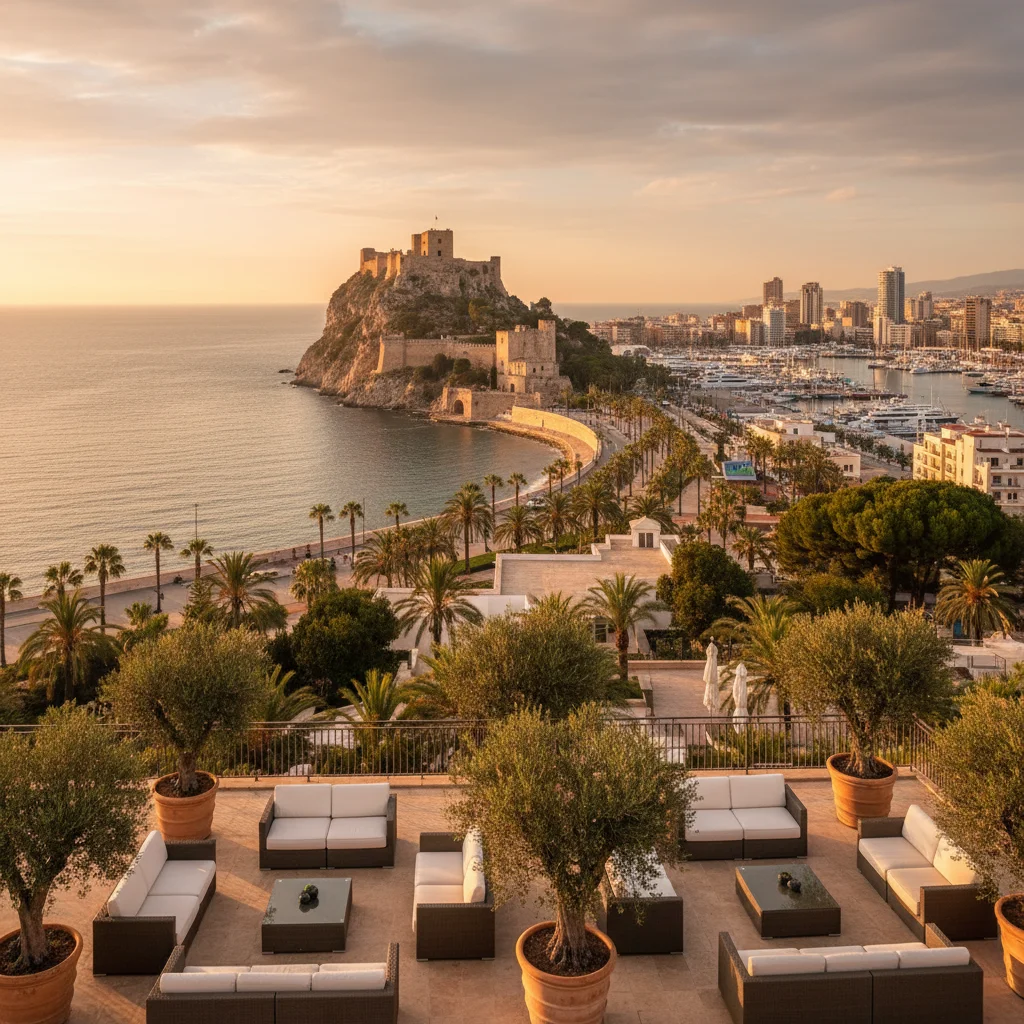
Alicante is where urban energy meets coastal lifestyle. The city rises from the sweeping Explanada promenade up through the narrow streets of the Barrio de Santa Cruz to Santa Bárbara Castle perched on Mount Benacantil. It is a proper Mediterranean city — not a resort — with international schools, a major airport, excellent healthcare, and a cultural calendar that keeps terraces busy twelve months a year.
The expat community is cosmopolitan: British, French, Italian, and increasingly Nordic and Eastern European residents mix with a large Spanish population. Property prices average around €250,000, ranging from compact city centre apartments near the Mercado Central to spacious penthouses with wraparound terraces in the Cabo de las Huertas headland. The San Juan corridor running north toward San Juan de Alicante offers suburban villas with private gardens, while areas like Vistahermosa and Albufereta provide hillside homes with panoramic sea views.
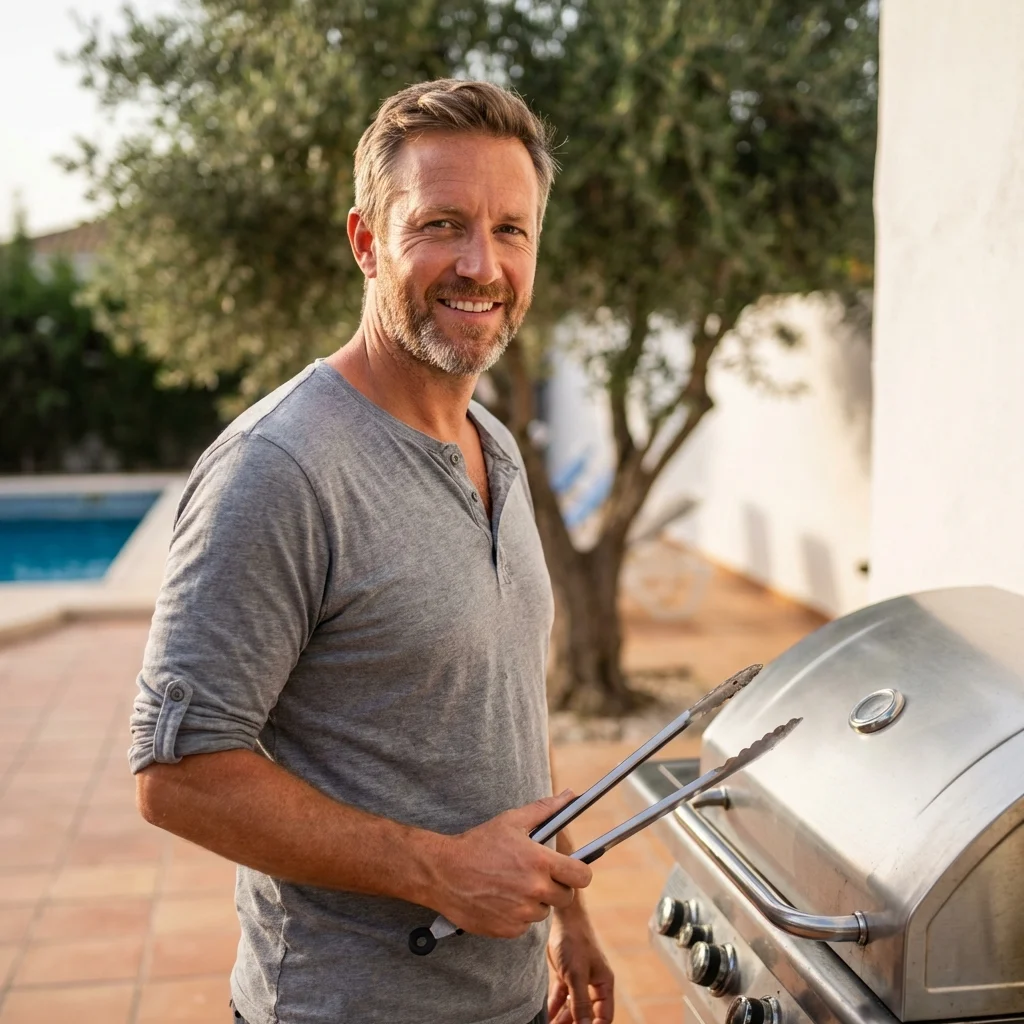
Outdoor cooking is not seasonal here — it is a way of life. Alicante’s mild winters (average January highs of 17°C) mean that a well-equipped terrace functions as an extension of the kitchen year-round. From tapas evenings on a penthouse rooftop overlooking the harbour to Sunday paellas in a San Juan garden, the demand for quality outdoor cooking equipment is constant.
Alicante’s combination of cosmopolitan city life, diverse property types, and year-round mild climate makes it one of the strongest markets on the Costa Blanca for premium outdoor cooking equipment.
Choosing Your Setup in Alicante
Property type drives equipment choice in Alicante — compact gas BBQs for city centre penthouses, full outdoor kitchens for suburban villas, and salt-resistant materials for anything near the coast.
City centre apartments in the Barrio de Santa Cruz and around the Plaza de los Luceros typically have smaller terraces of 8–12 square metres. A two-burner gas BBQ or a compact kamado (38cm) fits these spaces perfectly while delivering serious cooking performance. Penthouse terraces in newer developments along the Playa de San Juan or in Cabo de las Huertas offer 15–30 square metres — enough for a three- or four-burner gas station with side burner, ideal for entertaining.
Suburban villa owners in the San Juan corridor and Vistahermosa have space for the full treatment. Costa Blanca Outdoors designs built-in outdoor kitchens with gas grills, preparation counters, pizza ovens, and storage — turning a poolside terrace into a complete cooking and entertaining area. These setups are particularly popular with British and French residents who host regularly.
Salt air is a real factor in Alicante. Any property within a kilometre of the coast — and that includes most of the city — benefits from marine-grade stainless steel construction. Costa Blanca Outdoors stocks 304 and 316 stainless-steel models specifically for coastal installations, ensuring your investment lasts well beyond the standard three-season lifespan of cheaper alternatives.
For Alicante properties, Costa Blanca Outdoors recommends marine-grade stainless-steel equipment as standard, with setup size matched to your terrace footprint — from compact two-burner units to full built-in outdoor kitchens.
Delivery to Alicante
We deliver throughout Alicante city, from the harbour district to Cabo de las Huertas, Vistahermosa, and the San Juan beach corridor, on our weekly greater Alicante route.
As the provincial capital, Alicante is the hub of our delivery network. The city centre has some traffic restrictions and limited-access streets, particularly in the Old Quarter around the Mercado Central and Santa Cruz — we schedule these deliveries during permitted hours and coordinate building access in advance. Beachfront and Cabo de las Huertas deliveries are straightforward with good parking and lift access in most modern buildings.
For apartment deliveries, our team handles everything from ground-floor unloading to terrace placement, including unpacking, assembly, and a full equipment walkthrough. Villa deliveries in the suburban areas around Vistahermosa and the San Juan corridor are typically the simplest, with direct driveway access.
Neighbouring San Juan de Alicante and El Campello are on the same northern route, while Elche and Gran Alacant connect on our southern schedule. In-stock items ship within 5–10 working days, while custom outdoor kitchen projects require 3–4 weeks for design, fabrication, and professional installation.
Garden Fencing and Privacy Solutions Across the Provincial Capital
Creating a private retreat in a city of 340,000 residents requires a nuanced understanding of how we use our outdoor spaces. Here in the provincial capital, the culture revolves around the transition from the public energy of the Explanada or the narrow streets of the Old Quarter to the sanctuary of the home. Since moving here in 2019, I have observed a significant shift in how residents, particularly the twelve percent who make up our international community, view their balconies and gardens. British, French, and Italian expats bring a specific "outdoor room" philosophy to the region, treating a terrace not just as a place to dry laundry, but as a primary dining and lounging area. With average property prices hovering around the EUR 250,000 mark, homeowners are increasingly investing in high-quality fencing to maximize the usable square footage of their plots, whether they own a compact apartment near San Juan Beach or a sprawling villa on the outskirts.
The demand for privacy screens is driven by the density of the urban landscape. In the shadow of Santa Bárbara Castle, many traditional properties are overlooked by taller apartment blocks, making vertical screening an absolute necessity rather than a luxury. This need for seclusion is balanced against a desire for airflow and light. A solid wall can feel claustrophobic and, more importantly, can trap heat during the peak of August. This is why we focus on materials that offer a visual barrier while respecting the architectural heritage of the city. The local lifestyle often involves late-night dinners that can last until 2:00 AM, and a well-installed screen serves a dual purpose: it provides a sense of intimacy for the residents while offering a slight acoustic buffer for the neighbors, which is essential in a city where proximity is a fact of life.
Our work takes us across a diverse property stock. We see everything from beachfront penthouses that require wind-rated glass and metal combinations to inland properties where the focus is on defining boundaries with durable composite materials. The goal is always to create a space that feels like a natural extension of the interior. When we sit down with a family to plan their screening, we look at the sightlines from every neighboring window. It is about more than just height; it is about the geometry of the space. A strategically placed 1.8-meter panel can offer more privacy than a 3-meter wall if positioned correctly to block a specific vantage point from an adjacent terrace. This tailored approach is what separates a professional installation from a generic DIY solution that often fails to address the specific environmental and social pressures of living in this bustling Mediterranean hub.
Technical Considerations for the Local Climate and Regulation
When selecting fencing for this specific part of the coast, the climate is the most aggressive factor we have to manage. We are situated in a high-exposure coastal position where the Levante and Poniente winds are not just occasional breezes; they are powerful forces that can exert hundreds of kilograms of pressure on a solid fence line. I have seen countless cheap heather screens and thin PVC panels ripped from their fixings because they weren't designed to handle the wind load. For any property within two kilometers of the shore, salt spray is another silent killer of outdoor installations. The saline environment accelerates the oxidation of standard steel and low-grade plastics. We insist on using marine-grade aluminum or high-density composite materials with a minimum thickness of 20mm to ensure the structure survives more than two seasons.
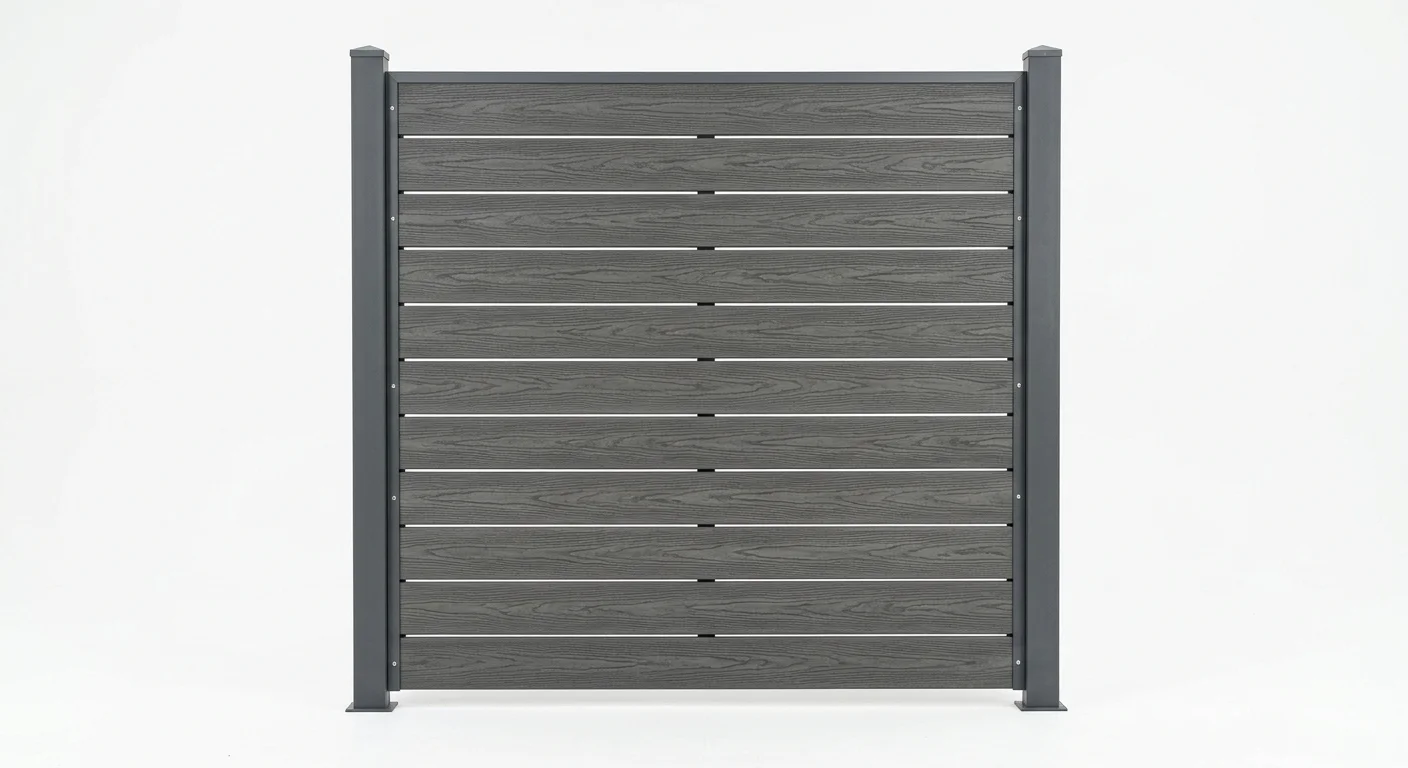
The UV index here is another critical variable. In the height of summer, the sun is relentless, often reaching levels that will cause inferior materials to warp, fade, or become brittle within twelve months. We look for products with high-level UV stabilizers. For instance, a premium powder-coated aluminum slat system, which might cost around EUR 1,200 for a standard five-meter run, provides the durability needed to withstand 300 days of direct sun without losing its structural integrity. Maintenance is another factor I always discuss with clients. Most people come here to enjoy the lifestyle, not to spend their weekends sanding and staining wooden fences. Composite panels have become our gold standard because they offer the aesthetic of wood but require nothing more than a wash with a hose to remove the Saharan dust that occasionally settles over the city.
Before any installation begins, we must navigate the rules of the Comunidad de Propietarios. This is a crucial step that many newcomers overlook. Under the Spanish Horizontal Property Law, the exterior appearance of a building or an urbanization is often strictly protected. You cannot simply install a bright green plastic screen if the rest of the building uses grey aluminum. We frequently coordinate with community presidents to ensure our designs meet the aesthetic requirements of the block. This often involves matching specific RAL color codes for metalwork. Furthermore, any structure that exceeds a certain height or involves permanent masonry may require a "Declaración Responsable" or a minor works permit from the local town hall. We guide our clients through this process to avoid the fines that can arise from non-compliant installations.
Ground conditions also vary wildly across the area. If we are working in a garden near Elche, we might be dealing with soft, silty soil that requires deep concrete footings (at least 60cm to 80cm) to secure fence posts against the wind. Conversely, in the more rocky terrain of the surrounding hills, we often have to use specialized diamond-core drills to create post holes. For terrace installations on apartment blocks, we cannot always drill into the floor due to waterproofing membranes. In these cases, we use weighted base plates or structural fixings to the perimeter walls, ensuring the screen is secure without compromising the building's integrity. These are the technical details that ensure a privacy screen remains standing when the first major Gota Fría hits in the autumn.
Strategic Recommendations for Different Property Types
For the sprawling villas located towards the outskirts or in the quieter residential pockets of nearby Gran Alacant, we generally recommend a perimeter solution that balances security with aesthetics. A combination of a solid masonry base wall topped with 60cm to 90cm of aluminum slat fencing is highly effective. This allows for total privacy at eye level while the slats permit the breeze to circulate through the garden, preventing the "oven effect" that occurs in walled-in spaces. For a typical villa perimeter of thirty meters, a high-quality composite or aluminum upgrade can range from EUR 3,500 to EUR 5,000, but it adds significant valuation to the property by creating a secure, maintenance-free boundary. We often integrate these fences with artificial grass to create a clean, green border that stays pristine regardless of water restrictions, which are an ongoing consideration in this part of Spain.
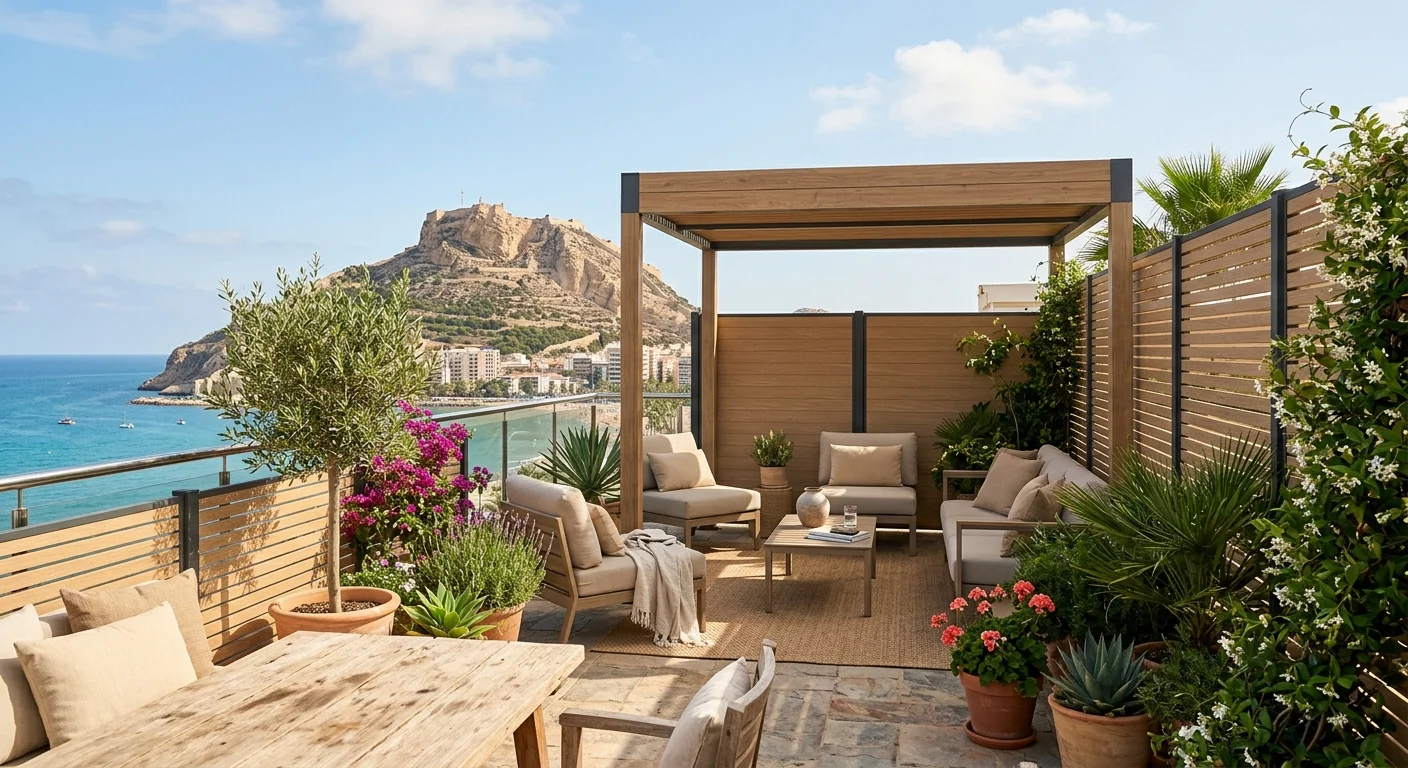
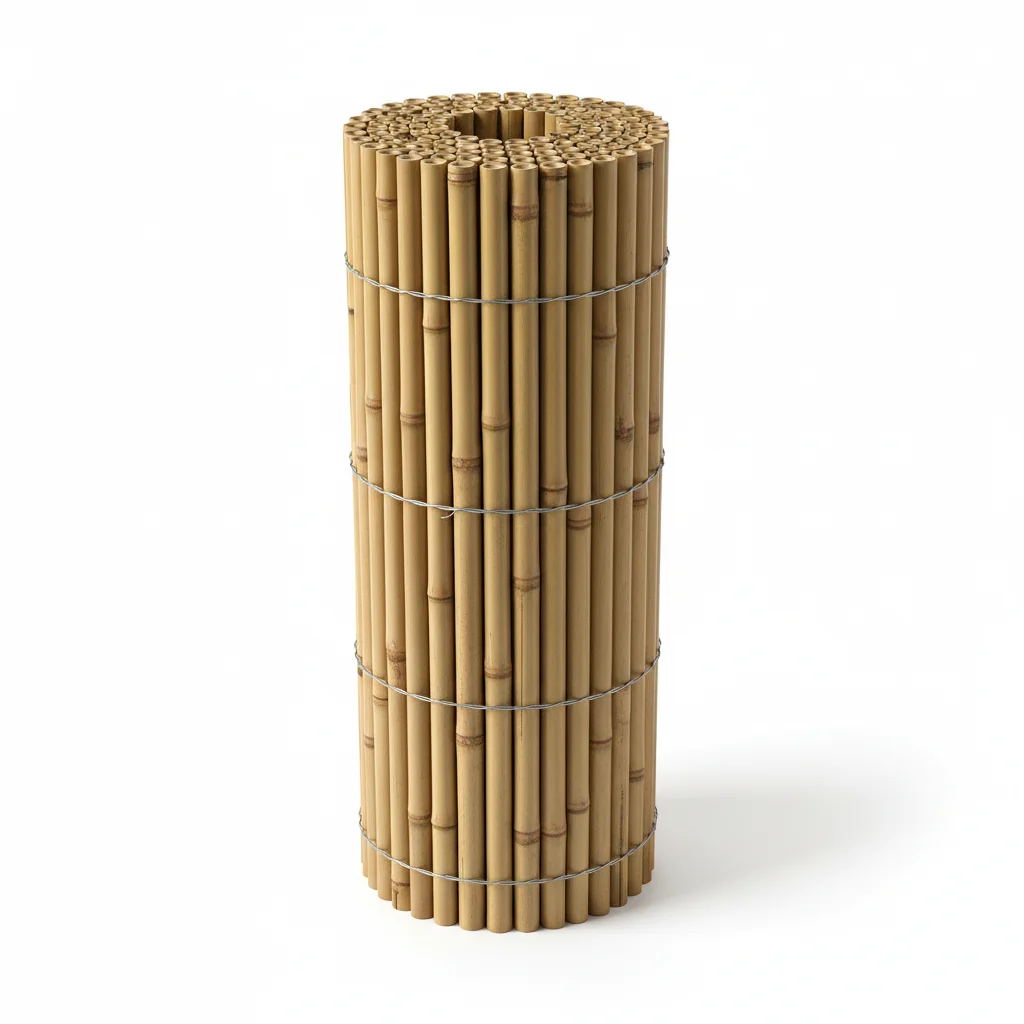
Apartment living presents a different set of challenges, particularly those with balconies overlooking the Mediterranean or the city's busy plazas. In these settings, space is at a premium. We often recommend modular privacy screens that can be bolted to existing railings. Bamboo screening is a popular entry-level option, starting around EUR 300 for a small balcony, but for those looking for a permanent solution, we suggest 10mm frosted glass panels or laser-cut metal screens. These provide a high degree of privacy without making the balcony feel smaller. If the property already has glass curtains installed, the privacy screen must be positioned to allow the glass to slide and stack without interference. The goal here is to create a "cocoon" effect, where you can sit outside in your morning robe without feeling exposed to the hundreds of neighbors in the surrounding buildings.
Another highly effective recommendation for local homeowners is the use of vertical greenery in conjunction with fencing. While natural hedges like cypress or oleander are common, they require constant pruning and a lot of water. A more modern approach is to install a high-quality artificial green wall panel onto a sturdy mesh fence. This provides an instant "jungle" feel that is incredibly private and remains vibrant even in the mid-July heat. This setup works exceptionally well in the compact patios found in the San Juan area, where a lush green backdrop can make a small courtyard feel like a high-end resort. When combined with integrated LED lighting, these screens transform the outdoor space into a sophisticated evening environment, perfect for the "tardeo" culture that is so central to life in this city.
For those with larger terraces or rooftop solariums, we often suggest creating "zones" using free-standing privacy screens. Instead of fencing the entire perimeter, which can be costly and sometimes restricted by community rules, you can create a private nook for a hot tub or a dining table. A three-panel modular screen in a charcoal grey finish, costing approximately EUR 850, can be positioned to block the prevailing wind and the view from the street. This modularity is key for many of our clients who may want to reconfigure their outdoor space as their needs change. By focusing on high-quality fixings and wind-resistant designs, these screens become a permanent fixture of the home, providing value and comfort for years to come.
Logistics and Local Expertise in the Alicante Region
Delivering and installing large-scale fencing projects in this region requires a deep understanding of the local geography and logistics. We regularly operate not just in the city center but also in the surrounding municipalities of San Juan, Campello, and Elche. Each of these areas has its own character and logistical hurdles. For instance, the narrow, winding streets of the Old Quarter require smaller delivery vehicles and careful timing to avoid the morning rush or the delivery windows of local businesses. We have the experience to manage these constraints, ensuring that materials arrive on-site without causing a disruption to the neighborhood. Our team knows the backroads and the access points that GPS often misses, allowing us to maintain a reliable schedule even during the busy summer months.
In areas like Campello or Gran Alacant, we often deal with properties built on significant inclines. This requires a different approach to fencing, where we must "step" the panels to follow the contour of the land while maintaining a consistent height for privacy. It is not just about dropping a fence in a straight line; it is about the engineering of the transition points. We also understand the specific building materials used in local constructions. Knowing whether a wall is made of hollow "tabicón" bricks or solid concrete dictates the type of anchors we use. Using the wrong fixing in a coastal environment is a recipe for disaster, as the salt air can cause rust to expand inside the wall, eventually cracking the render. We use stainless steel or chemically anchored fixings as standard to prevent these long-term issues.
Our local knowledge extends to the weather patterns that define our working week. We monitor the wind forecasts closely; we never schedule a high-panel installation during a predicted Levante blow, as the risk to the panels and the property is too high during the assembly phase. This level of care is why we have been able to help over 200 families since 2019. We aren't just selling a product; we are providing a structural addition to your home that needs to be safe and durable. Whether we are navigating the coastal roads to a beachfront apartment or heading inland to a villa in the palm groves of Elche, our approach remains the same: professional, expert, and deeply rooted in the realities of life on the Costa Blanca.
If you are considering upgrading your outdoor space, I invite you to reach out for a conversation. We offer a free consultation where we can visit your property, assess the wind exposure and the community requirements, and provide a detailed quote tailored to your specific needs. There is no substitute for an on-site assessment by someone who understands the local environment. We can show you samples of the materials that actually hold up against the Spanish sun and help you design a space that offers the privacy and comfort you deserve. Let us help you turn your terrace or garden into the private sanctuary you envisioned when you decided to make this beautiful part of the world your home.
 JW'"
/>
JW'"
/>