Outdoor Living in Alicante
Alicante is the provincial capital with 340,000 residents and a 12% expat population — a vibrant Mediterranean city where castle-top views, beachfront promenades, and year-round sunshine fuel one of the Costa Blanca’s most dynamic outdoor living scenes.
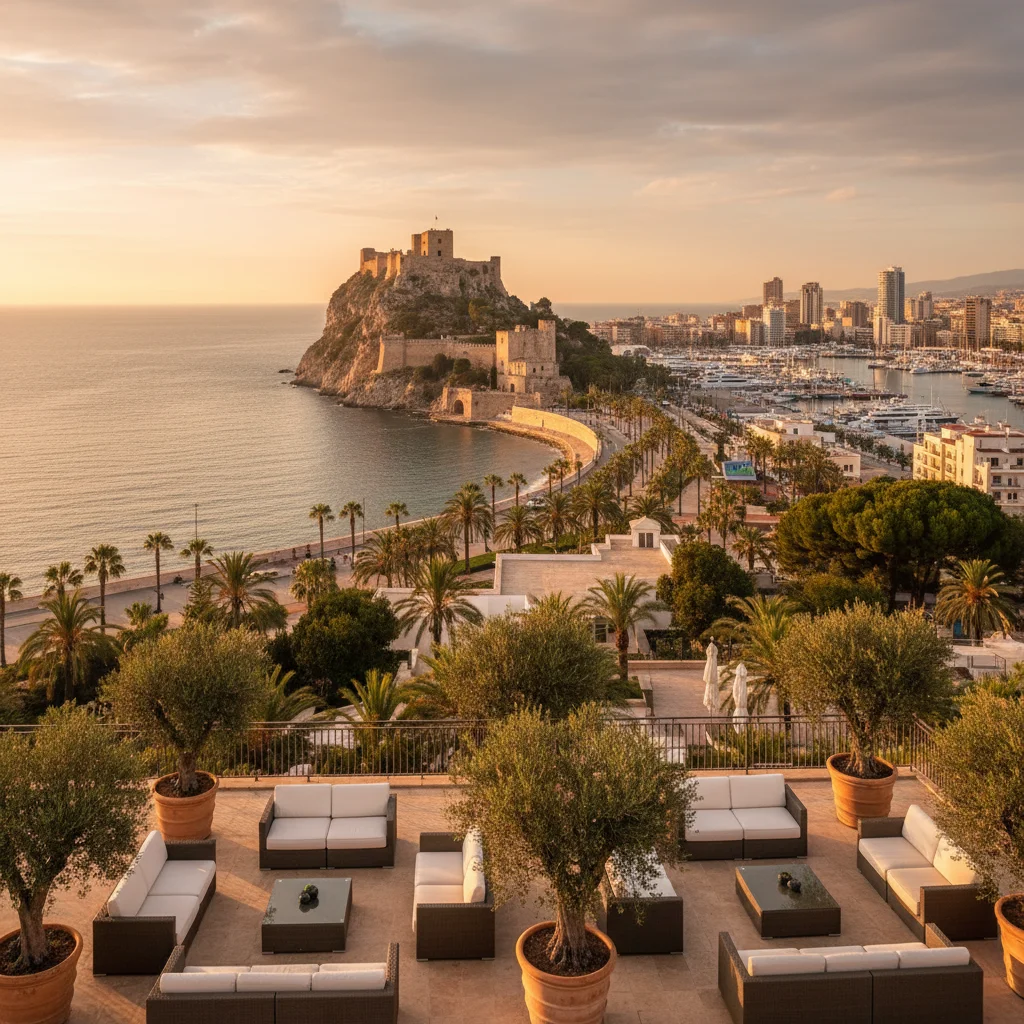
Alicante is where urban energy meets coastal lifestyle. The city rises from the sweeping Explanada promenade up through the narrow streets of the Barrio de Santa Cruz to Santa Bárbara Castle perched on Mount Benacantil. It is a proper Mediterranean city — not a resort — with international schools, a major airport, excellent healthcare, and a cultural calendar that keeps terraces busy twelve months a year.
The expat community is cosmopolitan: British, French, Italian, and increasingly Nordic and Eastern European residents mix with a large Spanish population. Property prices average around €250,000, ranging from compact city centre apartments near the Mercado Central to spacious penthouses with wraparound terraces in the Cabo de las Huertas headland. The San Juan corridor running north toward San Juan de Alicante offers suburban villas with private gardens, while areas like Vistahermosa and Albufereta provide hillside homes with panoramic sea views.
Outdoor cooking is not seasonal here — it is a way of life. Alicante’s mild winters (average January highs of 17°C) mean that a well-equipped terrace functions as an extension of the kitchen year-round. From tapas evenings on a penthouse rooftop overlooking the harbour to Sunday paellas in a San Juan garden, the demand for quality outdoor cooking equipment is constant.
Alicante’s combination of cosmopolitan city life, diverse property types, and year-round mild climate makes it one of the strongest markets on the Costa Blanca for premium outdoor cooking equipment.
Choosing Your Setup in Alicante
Property type drives equipment choice in Alicante — compact gas BBQs for city centre penthouses, full outdoor kitchens for suburban villas, and salt-resistant materials for anything near the coast.
City centre apartments in the Barrio de Santa Cruz and around the Plaza de los Luceros typically have smaller terraces of 8–12 square metres. A two-burner gas BBQ or a compact kamado (38cm) fits these spaces perfectly while delivering serious cooking performance. Penthouse terraces in newer developments along the Playa de San Juan or in Cabo de las Huertas offer 15–30 square metres — enough for a three- or four-burner gas station with side burner, ideal for entertaining.
Suburban villa owners in the San Juan corridor and Vistahermosa have space for the full treatment. Costa Blanca Outdoors designs built-in outdoor kitchens with gas grills, preparation counters, pizza ovens, and storage — turning a poolside terrace into a complete cooking and entertaining area. These setups are particularly popular with British and French residents who host regularly.
Salt air is a real factor in Alicante. Any property within a kilometre of the coast — and that includes most of the city — benefits from marine-grade stainless steel construction. Costa Blanca Outdoors stocks 304 and 316 stainless-steel models specifically for coastal installations, ensuring your investment lasts well beyond the standard three-season lifespan of cheaper alternatives.
For Alicante properties, Costa Blanca Outdoors recommends marine-grade stainless-steel equipment as standard, with setup size matched to your terrace footprint — from compact two-burner units to full built-in outdoor kitchens.
Delivery to Alicante
We deliver throughout Alicante city, from the harbour district to Cabo de las Huertas, Vistahermosa, and the San Juan beach corridor, on our weekly greater Alicante route.
As the provincial capital, Alicante is the hub of our delivery network. The city centre has some traffic restrictions and limited-access streets, particularly in the Old Quarter around the Mercado Central and Santa Cruz — we schedule these deliveries during permitted hours and coordinate building access in advance. Beachfront and Cabo de las Huertas deliveries are straightforward with good parking and lift access in most modern buildings.
For apartment deliveries, our team handles everything from ground-floor unloading to terrace placement, including unpacking, assembly, and a full equipment walkthrough. Villa deliveries in the suburban areas around Vistahermosa and the San Juan corridor are typically the simplest, with direct driveway access.
Neighbouring San Juan de Alicante and El Campello are on the same northern route, while Elche and Gran Alacant connect on our southern schedule. In-stock items ship within 5–10 working days, while custom outdoor kitchen projects require 3–4 weeks for design, fabrication, and professional installation.
Practical Shade Solutions for Alicante Terraces and Gardens
The reality of living in the provincial capital of the Costa Blanca is defined by a sun that remains relentless for over three hundred days a year. While the architectural beauty of the Santa Bárbara Castle provides a dramatic backdrop to the skyline, the limestone rock it sits upon reflects heat directly into the surrounding neighborhoods. For the 340,000 residents living here, outdoor space is not a luxury but the primary living room for six months of the year. Whether you are situated in a compact apartment overlooking the Explanada or a sprawling villa closer to the palm groves of Elche, the technical requirement for shade is identical. You need a barrier that stops UV penetration without trapping the heat underneath.
The international makeup of the local population significantly influences how these outdoor spaces are utilized. With roughly twelve percent of the population being foreign nationals—predominantly British, French, and Italian—there is a sophisticated culture of outdoor dining and lounging that demands high-performance equipment. The British contingent often looks for versatile cantilever parasols that can shade a pair of sun-loungers during the day and then swing over a dining set by evening. Meanwhile, French and Italian residents frequently prioritize the aesthetic of a well-tensioned shade sail that complements the modern lines of a villa in Vistahermosa or the traditional stone of the Old Quarter. These varied property types, ranging from beachfront studios to EUR 250,000 suburban homes, require a nuanced approach to shade that considers both the available square footage and the specific microclimate of the bay.
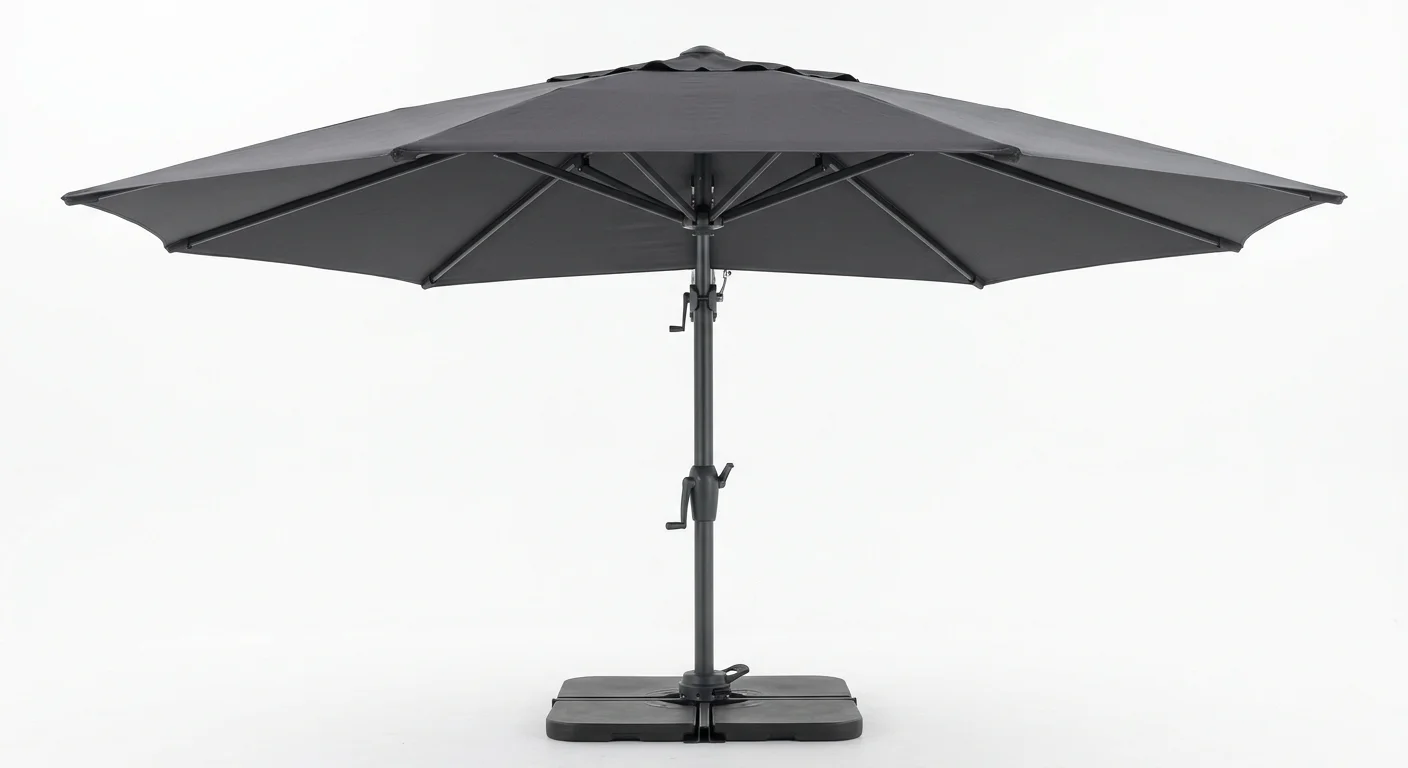
In the more densely populated areas near San Juan Beach, the challenge is often the limited footprint of the terrace. A traditional center-pole umbrella often consumes too much floor space, making it difficult to navigate around a dining table. This is where high-quality wall-mounted parasols or compact 2.5-meter market umbrellas become essential. In contrast, moving further inland toward the outskirts where gardens expand, the scale of the shade must match the architecture. Large-scale cantilever models with a 360-degree rotation allow a single installation to cover multiple zones, providing a cooling canopy over a rattan-lounge-set in the afternoon before being repositioned for an alfresco dinner. The goal is always to create a thermal break, reducing the ambient temperature on the tiles by up to ten degrees Celsius, which fundamentally changes the usability of the property.
Technical Considerations for the Local Climate and Environment
The environmental conditions in this part of the Mediterranean are particularly harsh on outdoor fabrics and mechanical components. Because of the exposed coastal position, we deal with two primary wind patterns: the Levante and the Poniente. The Levante comes off the sea, bringing humidity and salt, while the Poniente blows from the interior, often carrying dust and significant heat. Any parasol or shade sail installed within two kilometers of the shoreline is subject to constant salt spray, which acts as a corrosive agent on inferior metals. This is why I always advise against steel-framed umbrellas found in high-street hardware stores. Within a single season, the joints will seize and the powder coating will bubble. Instead, you must insist on marine-grade anodized aluminum or powder-coated frames specifically treated for high-salinity environments.
Wind-loading is the most frequent cause of product failure I see when visiting homes. A standard 3x3 meter parasol acts like a nine-square-meter sail; in a sudden gust coming off the sea near Campello, the upward lift can be immense. For cantilever models, a base weight of at least 100kg to 150kg is non-negotiable, often requiring granite slabs or water-filled heavy-duty plastic containers. For shade sails, the tensioning is the critical factor. We use 316-grade stainless steel turnbuckles and corner reinforcements. A loose shade sail will whip in the wind, eventually tearing the fabric or, worse, damaging the masonry it is attached to. The fabric itself should be a high-density polyethylene (HDPE) or a solution-dyed acrylic like Sunbrella, with a weight of at least 240g/m². This ensures that the intense UV levels don't degrade the material or bleach the color within a few months.
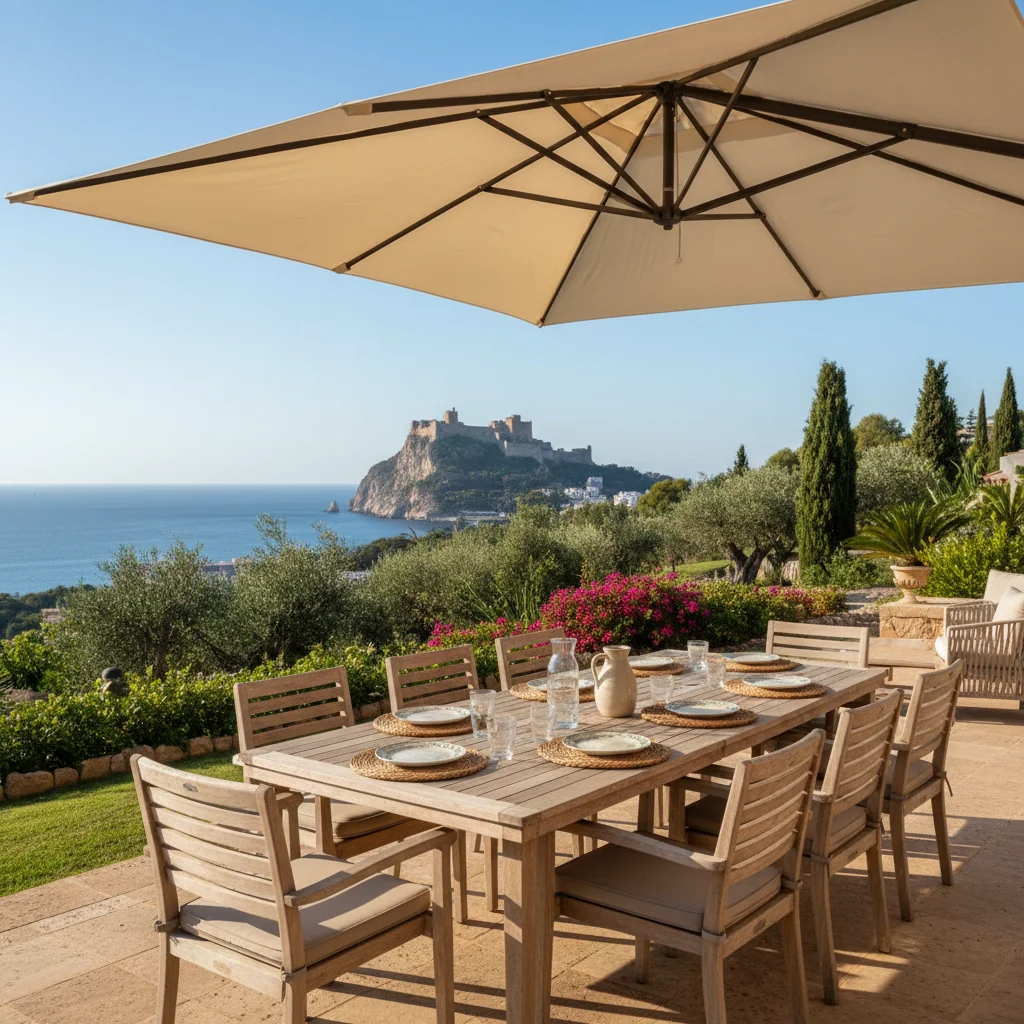
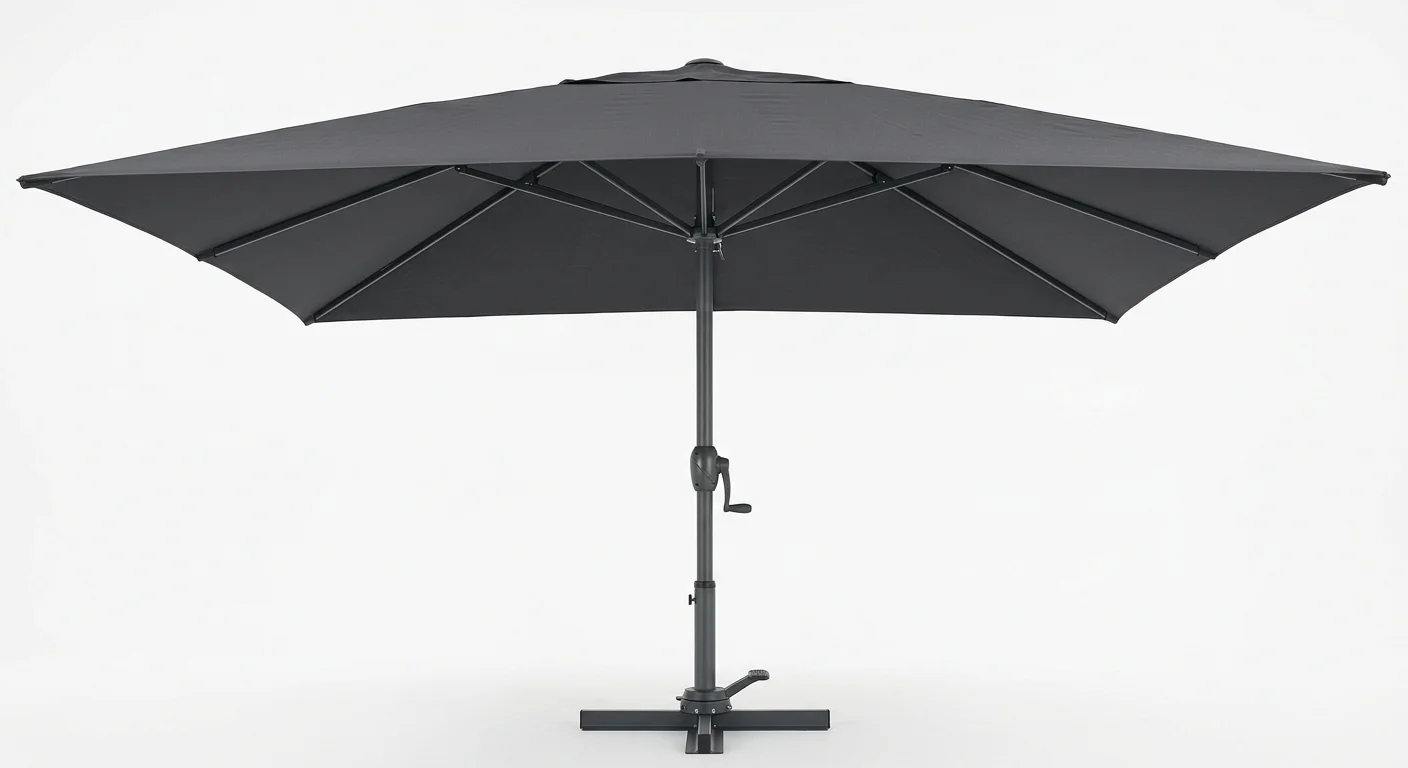
Living in a managed apartment block or a "comunidad de propietarios" brings an additional layer of complexity. Many communities have strict rules regarding the color and type of shade structures allowed to maintain the aesthetic harmony of the building. Before investing in a EUR 1,200 cantilever parasol, it is vital to check if your community specifies a particular shade of beige, grey, or terracotta. Furthermore, permanent fixtures like awnings often require a formal vote at an annual general meeting, whereas a free-standing parasol is generally considered furniture and can be installed without permission. I typically recommend a premium 3-meter square cantilever parasol with a wind-vented canopy, priced around EUR 850 to EUR 1,100, as a solution that satisfies both the need for robust shade and the flexibility required by community regulations.
Tailored Recommendations for Different Property Types
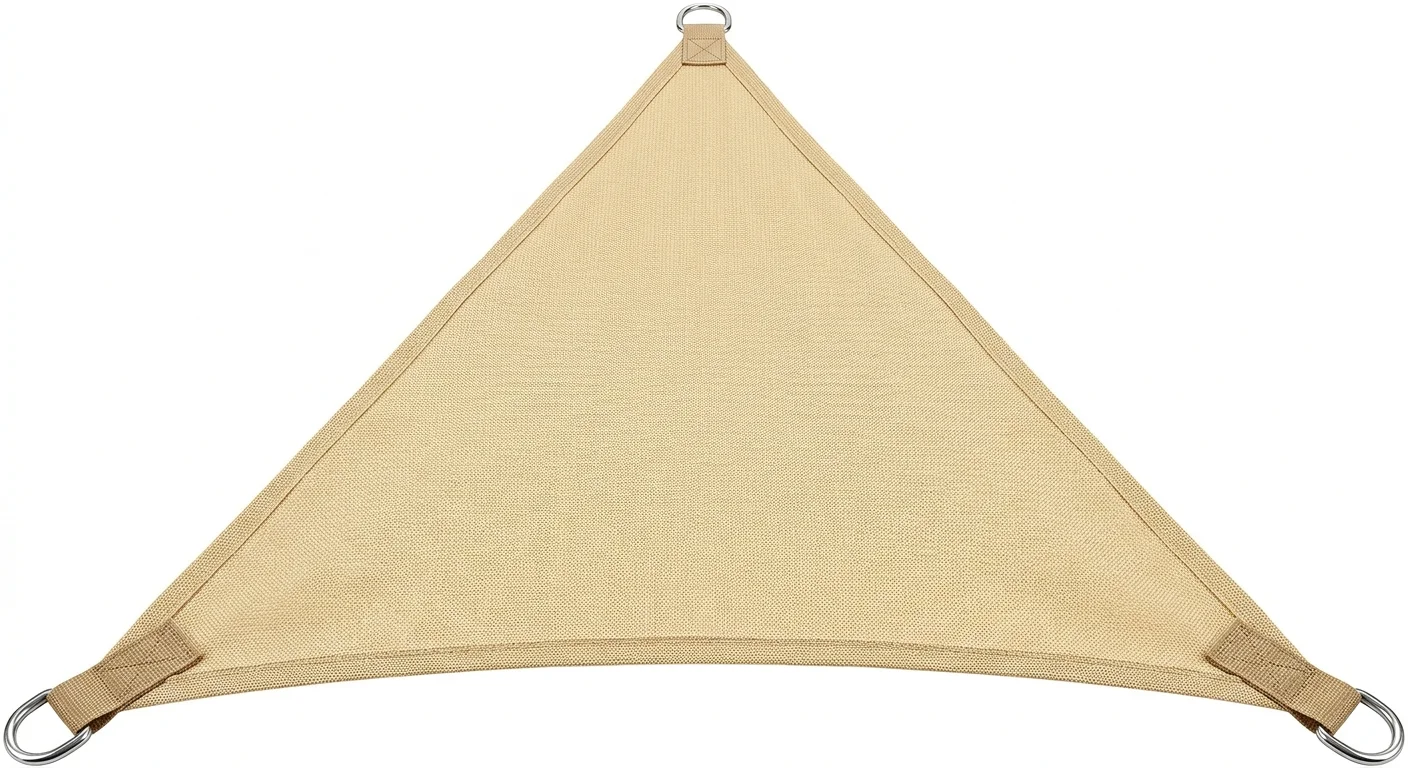
When suggesting a setup for a villa located in the quieter outskirts or toward Gran Alacant, I usually advocate for a combination of fixed and movable shade. For a large poolside area, a 4x5 meter rectangular shade sail provides a permanent architectural feature that shields sun-loungers throughout the peak heat of the day. These sails are incredibly effective because they allow hot air to rise through the breathable weave, preventing the "oven effect" often felt under solid plastic roofs. However, a villa also benefits from a high-end cantilever parasol positioned near the outdoor kitchen or dining area. This provides a secondary layer of protection that can be tilted as the sun drops lower in the sky toward the mountains behind Elche, blocking the horizontal glare that often makes late afternoon dining uncomfortable.
For those living in the more compact apartments near the city center or San Juan, the strategy changes to maximizing the vertical space. If your balcony is only two meters deep, a large cantilever will likely be too cumbersome. In these instances, a high-quality 2.7-meter market umbrella with a tilt function is the most practical choice. It can be paired with a heavy-set half-base that sits flush against the wall, providing maximum shade over a bistro set without obstructing the walkway. Integrating this shade with other furniture, such as a compact rattan-lounge-set, creates a cohesive outdoor room. I find that using light-colored fabrics—silvers, whites, or soft greys—works best for apartment balconies as they reflect the sun rather than absorbing it, keeping the interior of the apartment cooler by extension.
The synergy between shade and other outdoor furniture is often overlooked. If you have invested in a premium dining-set, the UV rays will eventually take their toll on the materials, whether they are synthetic wicker or treated wood. A well-placed parasol doubles the lifespan of your other furniture. For sun-loungers, a dedicated shade solution is a safety requirement; the Mediterranean sun can cause heatstroke in a very short window during July and August. By creating a layered shade plan—perhaps a sail for the general area and a movable parasol for specific tasks—you ensure that your outdoor space remains a functional part of your home from 10:00 to 20:00, rather than a no-go zone during the heat of the day.
Local Logistics and Expert Delivery Service
Navigating the logistics of delivering and installing heavy shade equipment in this region requires specific local knowledge. The narrow, winding streets of the Old Quarter or the restricted access zones near the Explanada present challenges that national delivery firms often struggle with. We are intimately familiar with the building layouts in areas like San Juan and Campello, where the size of the service elevator often dictates whether a 3-meter one-piece parasol pole can reach the penthouse or if it must be winched up the exterior of the building. My team and I handle these logistics personally, ensuring that your equipment arrives safely and is set up correctly, with the bases weighted appropriately for the specific wind exposure of your floor height.
We serve the entire coastal and inland corridor, including frequent deliveries to Elche and the growing residential areas of Gran Alacant. We understand the traffic patterns on the N-332 and the A-70, allowing us to provide accurate delivery windows so you aren't stuck waiting inside when you should be enjoying the outdoors. Our local experience since 2019 has taught us that every terrace has its own wind tunnel effect or "heat trap" corner, and we take the time to assess these factors during the delivery process. We don't just drop off a box; we ensure the tension is correct on your shade sail or that the rotation mechanism on your parasol is smooth and properly lubricated for the salty air.
Choosing the right shade is a significant decision that affects the comfort and value of your home. A poorly chosen umbrella will be a twisted pile of metal after the first autumn storm, whereas a correctly specified system will serve you for a decade. I am always available for a free consultation to discuss the specific orientation of your terrace and suggest a configuration that works for your budget and property style. Whether you are looking to cover a small balcony or a large commercial terrace, we have the local expertise to ensure you get it right the first time. Contact us today to discuss how we can help you reclaim your outdoor space from the intense Spanish sun.
 JW'"
/>
JW'"
/>