Outdoor Living in San Juan de Alicante
San Juan de Alicante is home to 25,000 residents with a 10% international community — an upmarket suburb anchored by one of Spain’s finest urban beaches, where higher-end properties and a professional expat demographic drive demand for premium outdoor living equipment.
San Juan de Alicante sits immediately north of the provincial capital, defined by the famous Playa de San Juan — a seven-kilometre sweep of golden sand that consistently ranks among Spain’s best urban beaches. The town functions as Alicante’s most desirable residential suburb, attracting professionals, families, and retirees who want beach lifestyle with city convenience.
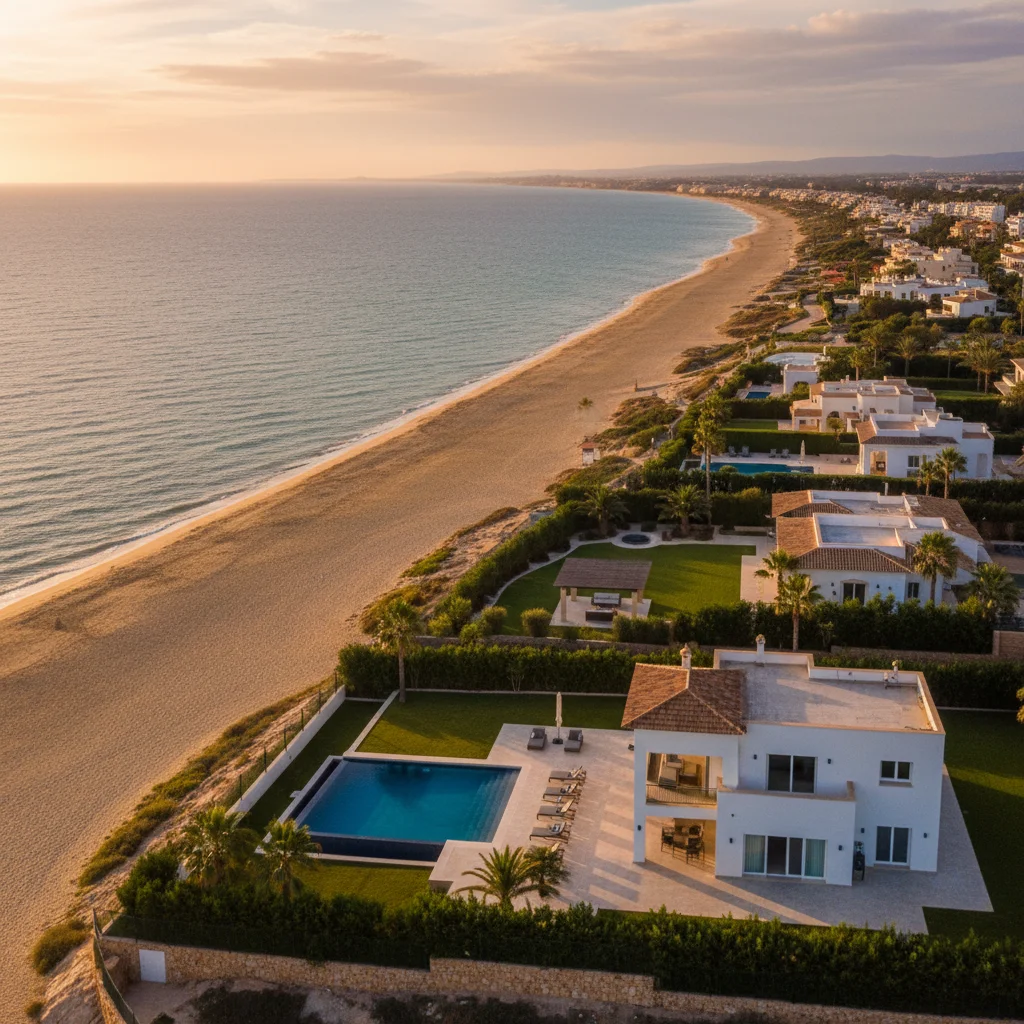
Property prices average around €280,000, reflecting the premium location. Modern apartment complexes line the beachfront boulevard, many with generous terraces of 15–25 square metres designed for sea-view living. Moving inland toward Cabo de las Huertas and the golf urbanisaciones, detached villas with private pools and gardens of 40–80 square metres offer space for elaborate outdoor entertaining setups. The golf course developments attract a particularly active social scene, with weekend barbecues and terrace gatherings forming the core of community life.
The expat mix is British, French, and German, with a strong contingent of working professionals commuting to Alicante’s business district or the university. This demographic tends toward quality over budget — they research equipment thoroughly, invest in durable materials, and expect their outdoor cooking setup to function as a genuine extension of the kitchen rather than a seasonal novelty.
San Juan de Alicante’s upmarket property market, professional expat community, and premium beachfront lifestyle create strong demand for high-specification outdoor cooking equipment and custom kitchen installations.
Choosing Your Setup in San Juan de Alicante
San Juan’s mix of beachfront apartments and Cabo area villas calls for a tiered approach — sleek, space-efficient units for terraces and full outdoor kitchen builds for villa gardens.
Beachfront apartment terraces along the Playa de San Juan are typically well-proportioned for a residential suburb — 15–25 square metres is common in newer developments. A three-burner gas BBQ with side burner fits these spaces comfortably, offering enough cooking surface for dinner parties of six to eight. For smaller terraces, a medium kamado (46cm) provides extraordinary versatility — grilling, smoking, slow-cooking, and even baking — in a single compact footprint.
Villa owners in the Cabo de las Huertas headland and the golf urbanisaciones have space for premium installations. Costa Blanca Outdoors designs built-in outdoor kitchens tailored to these properties, incorporating gas grills, pizza ovens, refrigeration, and stone or granite countertops. The golf community in particular embraces this — post-round entertaining on a fully equipped terrace is a fixture of the social calendar here.
Salt exposure matters along the San Juan beachfront. Properties within 500 metres of the shore need marine-grade stainless steel (304 or 316 grade) to resist corrosion. Inland properties around the golf course and Cabo residential zones face less salt but more sun — UV-resistant covers and shaded installation positions extend equipment life significantly.
Costa Blanca Outdoors recommends marine-grade equipment for San Juan beachfront properties and full outdoor kitchen installations for Cabo and golf area villas, matched to the higher-specification expectations of this market.
Delivery to San Juan de Alicante
We deliver throughout San Juan de Alicante, from the beachfront boulevard to Cabo de las Huertas and the golf urbanisaciones, on our weekly greater Alicante route.
San Juan de Alicante has excellent road infrastructure, with the beachfront boulevard and main avenues providing wide, accessible delivery routes. Apartment complexes along the Playa de San Juan are typically modern with lifts and adequate access — we coordinate building entry and timing in advance. Cabo de las Huertas and the golf area villas have direct driveway access in most cases, making these among the simplest deliveries in our network.
Our team handles everything from kerbside unloading to final terrace or garden placement, including full assembly, connection of gas lines where applicable, and a thorough walkthrough of your equipment. For custom outdoor kitchen projects, our installation team works on-site over one to two days, ensuring everything is built, levelled, and tested before handover.
Neighbouring Alicante city centre is minutes south on the same route, while El Campello connects just north along the coast. In-stock items ship within 5–10 working days, while custom outdoor kitchen projects require 3–4 weeks for design, fabrication, and professional installation.
Optimising Outdoor Living in San Juan de Alicante with Glass Curtains and Custom Glass Rooms
Living on this stretch of the coast since 2019 has taught me that the Mediterranean lifestyle is often interrupted by the very elements we moved here to enjoy. In San Juan de Alicante, we occupy a unique geographic position where the coastal shelf meets a relatively flat plain, allowing the sea air to penetrate deep into the residential zones. The property landscape here is diverse, ranging from the high-density apartment blocks flanking the beach to the sprawling villas surrounding the golf course and the prestigious detached homes in Cabo de las Huertas. Each of these property types faces a specific set of environmental challenges that make frameless glass systems not just an aesthetic choice, but a practical necessity for year-round comfort.
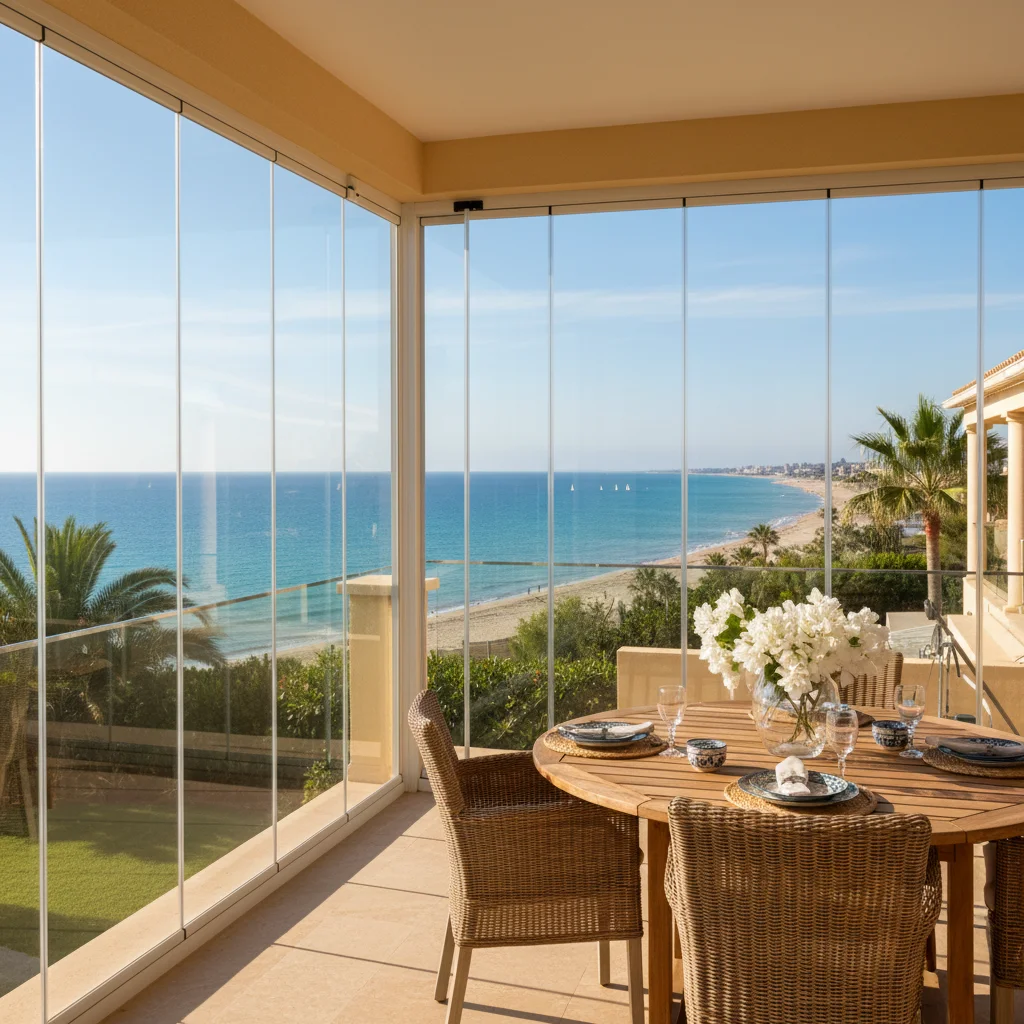
The demographic here is a sophisticated mix, with international residents making up about ten percent of the local population. I frequently work with British families who want to replicate a bright, airy conservatory feel without the heat-trap issues of traditional UK glass houses, as well as French and German residents who prioritise high-end engineering and thermal efficiency for their outdoor dining areas. Whether you are living in a frontline apartment with a compact four-metre balcony or a large villa with a thirty-square-metre porch, the goal remains the same: reclaiming space that is currently at the mercy of the wind and dust. In the Golf area specifically, the open terrain means there is very little to break the force of the breeze, often making an evening meal on the terrace impossible without some form of transparent protection. Glass curtains offer a solution that preserves the panoramic views toward the mountains or the sea while providing a physical barrier that can be retracted entirely when the weather is perfect.
The local outdoor culture revolves heavily around the transition between the interior and the terrace. Many of the newer developments near the beach have been designed with "indoor-outdoor" flow in mind, but the reality of the Levante wind often forces residents back inside behind heavy shutters. By installing a frameless glass system, you effectively create a thermal buffer zone. In the winter months, the glass traps solar gain, heating the interior of your home naturally and reducing the reliance on expensive electric heaters or air conditioning units in heat mode. For the local international community, this extra room often becomes the primary hub for morning coffee or evening entertaining, bridging the gap between the compact kitchen and the outdoor world.
Practical Engineering and Environmental Considerations for the Local Climate
When planning a glass installation in this specific part of the Costa Blanca, the environment dictates the technical specifications. We are dealing with an exposed coastal position where the salt spray from the Mediterranean is a constant factor, even for properties located two kilometres inland. Salt air is incredibly corrosive to inferior hardware. I have seen countless systems installed by budget contractors where the rollers have seized and the tracks have pitted within eighteen months. For any installation in this area, I insist on 316-grade stainless steel components and marine-grade powder coating on all aluminium profiles. This is not an optional luxury; it is the baseline requirement for a system that needs to function smoothly for a decade or more.
The wind profile in this region is dominated by the Levante from the east and the Poniente from the west. In the high-rise corridors near San Juan Beach, these winds are funneled between buildings, creating a venturi effect that can significantly increase pressure on glass panels. Standard 6mm glass is insufficient for these conditions. I recommend a minimum of 10mm toughened glass for most balcony heights, and 12mm for larger, floor-to-ceiling spans in exposed villas. These panels are designed to flex slightly under pressure without breaking, providing safety and peace of mind during the fierce autumn storms. The frameless design is particularly beneficial here because it lacks vertical profiles that would otherwise rattle or whistle when the wind picks up.
The legal framework regarding the Comunidad de Propietarios is another critical factor. In many of the urbanisations near Cabo de las Huertas, strict aesthetic rules govern what can be added to a facade. Because glass curtains are considered a non-permanent, retractable addition rather than a fixed structural change, they generally do not require the same complex planning permission as a traditional brick-and-mortar extension. However, it is vital to ensure the profile colours match the existing carpentry of the building. We typically use a range of RAL colours to ensure the tracks blend into the floor and ceiling, making the system virtually invisible from the street.
Maintenance in this high-UV environment is relatively straightforward but essential. The intense sun can degrade poor-quality PVC seals between the glass panels, causing them to turn yellow and brittle. We use high-grade EPDM gaskets that are UV-stabilised to prevent this. A mid-range glass curtain system for a standard six-metre balcony typically costs between 4,500 and 6,500 EUR, depending on the glass thickness and the complexity of the track. Investing in a system with "easy-clean" coatings is also highly advisable, as the salt and dust from the Poniente wind can leave a film that is difficult to shift without frequent washing.
Tailored Recommendations for Different Property Types
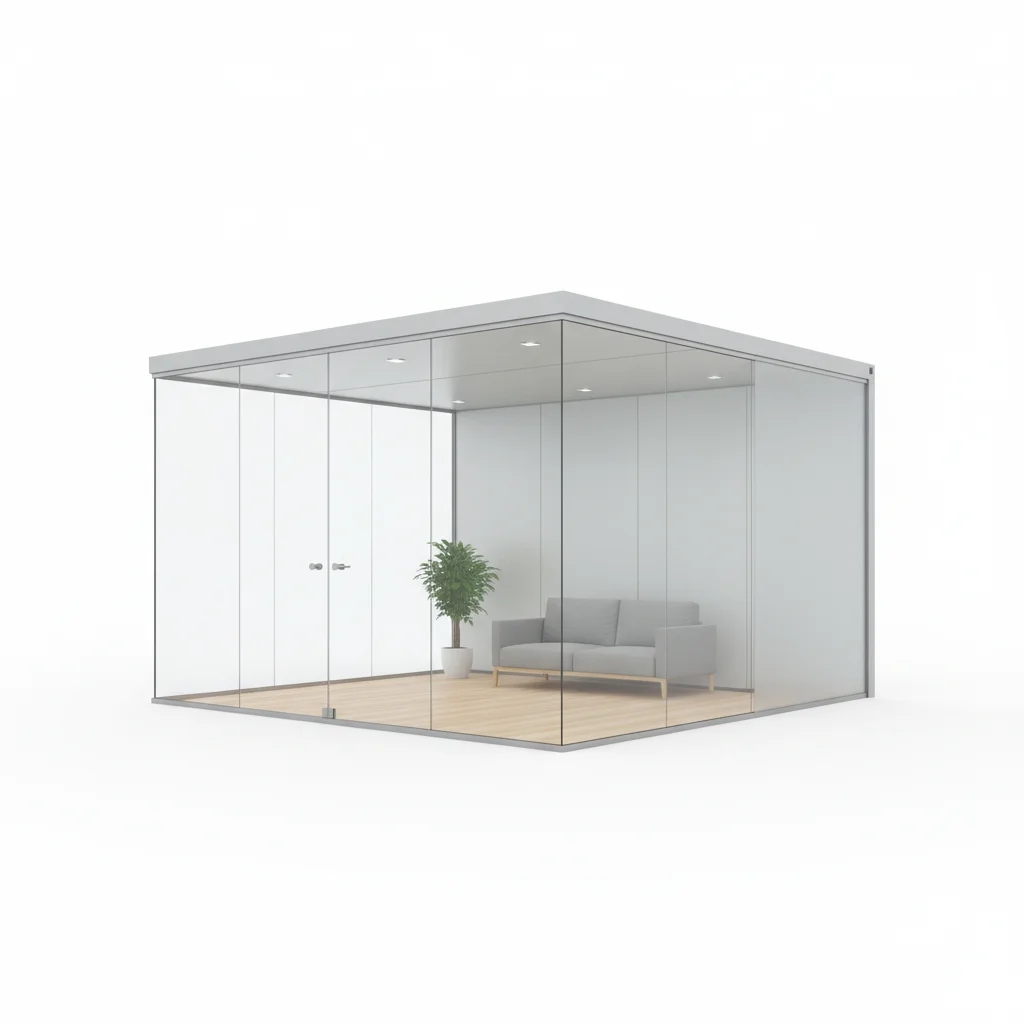
For the detached villas found around the Golf area or the more traditional homes in the town centre, a complete glass room is often the most effective way to gain usable square footage. A glass room differs from simple curtains as it includes a dedicated roofing system—either fixed glass, high-insulation sandwich panels, or a bioclimatic pergola. If your villa has a north-facing porch that stays damp and cold in the winter, a glass room with 16mm polycarbonate or 4+4mm laminated safety glass roofing can transform it into a sun-drenched lounge. I often recommend combining glass curtains with a bioclimatic pergola. This setup allows you to tilt the roof slats for ventilation and shade in the peak of July, while the glass curtains block the wind in January. A full glass room setup of this scale generally ranges from 10,000 to 15,000 EUR but adds significant value to the property by creating a genuine year-round living space.
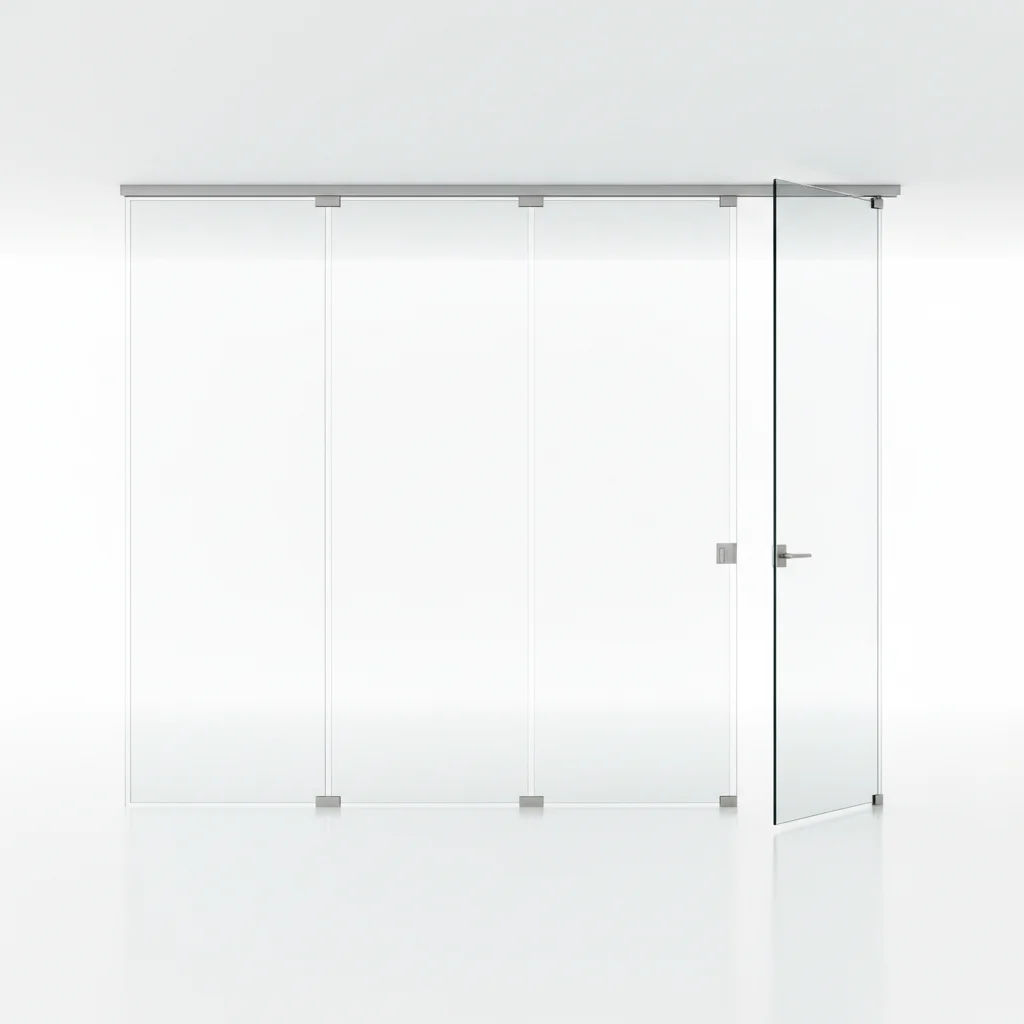
In the apartment blocks near the beachfront, space is at a premium and the weight-bearing capacity of the balcony must be considered. Here, a bottom-weighted glass curtain system is usually the best approach. Unlike top-hung systems that require a heavy structural lintel to support the weight of the glass, bottom-weighted systems distribute the load across the floor of the balcony. This is safer for older buildings and allows for a much slimmer top track. For these smaller spaces, I suggest a clear-view configuration where the panels slide and fold 90 degrees against the wall, taking up less than 50cm of space when fully opened. This ensures you don't lose the utility of your balcony during the hot summer months when you want maximum airflow.
To combat the intense summer heat, many residents find that glass alone is not enough. While the glass blocks the wind, it can create a greenhouse effect if the terrace faces south or west. In these instances, I recommend integrating internal pleated blinds or external vertical awnings. A high-quality vertical awning with "screen" fabric allows you to see out while blocking 90% of the solar heat, working in tandem with the glass curtains to keep the area cool. For a standard apartment balcony, adding a manual or motorised awning to your glass curtain setup might add 800 to 1,500 EUR to the project, but it makes the space usable even in the middle of a July afternoon.
For those with larger terraces or ground-floor garden apartments, consider a "sliding" rather than "folding" system. Sliding glass doors allow you to move panels individually to block the wind from a specific direction while keeping the rest of the terrace open. This is particularly useful in areas like Cabo de las Huertas, where the wind direction can shift rapidly throughout the day. A four-track sliding system provides a sleek, modern look with very few vertical overlaps, maintaining that clean, architectural aesthetic that modern Mediterranean homes demand.
Professional Installation and Deep Local Knowledge
Navigating the logistics of San Juan de Alicante requires more than just a delivery van. Many of the apartment complexes near the beach have restricted access or require the use of an external furniture hoist to bring large glass panels up to the tenth or twelfth floor. We are intimately familiar with these challenges and coordinate directly with the local authorities if a temporary parking permit is needed for the hoist. Our service area extends naturally into the neighbouring towns of Alicante and Campello, where we apply the same rigorous standards to every installation. We know the specific building styles of the local developers and can often predict the structural challenges of a balcony before we even arrive for the site survey.
The technical installation of glass curtains is a precision task. Because these systems are frameless, there is very little margin for error. If the floor of your terrace has a slight slope for drainage—which almost all do—the tracks must be perfectly levelled using specialised shims and high-strength sealants to ensure the panels slide effortlessly. A poorly levelled track will cause the glass to bind or, worse, put uneven pressure on the rollers, leading to premature failure. We take the time to laser-level every installation, ensuring that the glass meets the seals with millimetre precision.
Beyond the installation, we provide a long-term partnership for your home. We understand how the local dust from nearby construction or the occasional "calima" (Sahara dust) can affect the moving parts of your glass room. Our maintenance advice is based on years of seeing what actually works in this climate. We don't just hand over the keys and leave; we show you how to lubricate the tracks with dry silicone spray and how to operate the locking mechanisms safely during high winds.
If you are considering enhancing your outdoor space, the best starting point is a conversation on-site. I provide a free consultation where we can look at the orientation of your property, discuss the specific wind loads it faces, and take preliminary measurements. This allows me to provide an accurate, fixed-price quote rather than a generic estimate. My goal is to ensure that when the Levante starts to blow or the winter evening temperature drops, you don't have to retreat inside. You can stay exactly where you want to be—looking out at the Mediterranean from the comfort of your enclosed terrace.
 JW'"
/>
JW'"
/>