Outdoor Living in El Campello
El Campello is home to 29,000 residents with a 20% international community — a laid-back coastal town between Alicante and Benidorm where dramatic coves, Roman ruins, and a genuine village atmosphere attract residents seeking quality over quantity.
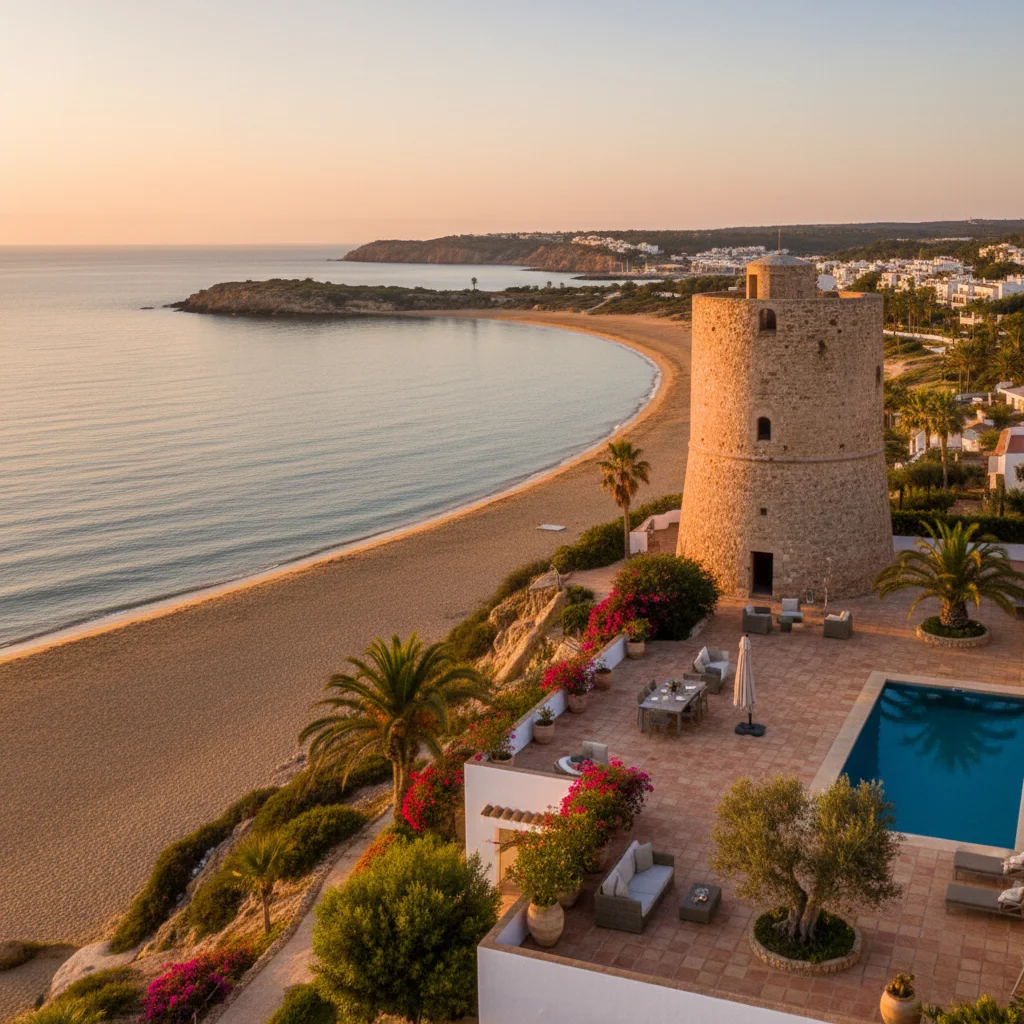
El Campello occupies one of the most visually striking stretches of the Costa Blanca coastline. The iconic 16th-century Watchtower stands guard above the fishing harbour, while the shoreline to the north reveals a succession of hidden coves and rocky inlets — Coveta Fumà, the Baths of the Queen (an ancient Roman fish pool), and the dramatic cliffs of the Cala del Amerador. It is coastal Spain at its most unspoilt.
The town draws a mix of British, Nordic, and German residents who want Mediterranean life without the crowds of larger resorts. Property prices average around €220,000, with options ranging from seafront apartments along the Muchavista beach strip to hillside villas with sweeping sea views in urbanisaciones like Pueblo Acantilado and Coveta Fumà. Townhouses in the centre, close to the weekly market and the harbour restaurants, offer a walkable village lifestyle with terraces of 15–25 square metres.
El Campello’s outdoor culture is shaped by its coastline. Residents live facing the sea, and terraces are oriented for sunset views over the Mediterranean. Evening cooking on a terrace above the coves is not a luxury here — it is the default way to spend a summer evening, and increasingly a winter one too.
El Campello’s stunning coastal setting, moderate property prices, and relaxed international community make it ideal territory for outdoor cooking enthusiasts who want space, views, and a genuine village feel.
Choosing Your Setup in El Campello
El Campello’s mix of seafront apartments and hillside villas means equipment choices range from compact terrace-friendly units to full outdoor kitchen installations — with salt-air resistance essential across the board.
Muchavista beachfront apartments typically have balcony terraces of 8–15 square metres. A compact kamado grill or a quality two-burner gas BBQ is the practical choice here, delivering real cooking performance without overwhelming the space. These terraces face the sea, which means salt exposure is significant — Costa Blanca Outdoors recommends marine-grade stainless steel or ceramic kamado grills for any property on the Muchavista strip.
Hillside villa owners in Coveta Fumà, Pueblo Acantilado, and the elevated urbanisaciones behind the town have the space for more ambitious setups. A built-in gas grill with side burner, paired with a wood-fired pizza oven, takes full advantage of those panoramic terraces. These properties often have covered naya-style outdoor living areas of 30–50 square metres — perfect for a complete outdoor kitchen installation with preparation counters and storage.
Wind is a factor in El Campello. The elevated coastal position means afternoon breezes can be brisk, particularly on hillside terraces. Kamado grills handle wind exceptionally well thanks to their sealed design, while gas BBQs benefit from windshield attachments. Costa Blanca Outdoors advises on wind-appropriate equipment selection based on your specific terrace orientation.
For El Campello, Costa Blanca Outdoors recommends wind-resistant, salt-proof equipment — ceramic kamados for exposed terraces and marine-grade stainless gas BBQs for sheltered villa setups.
Delivery to El Campello
We deliver throughout El Campello, from the Muchavista beachfront to the hillside urbanisaciones of Coveta Fumà and Pueblo Acantilado, on our weekly northern Alicante route.
El Campello sits on the N-332 coastal road between Alicante and Benidorm, making it a natural stop on our central delivery corridor. Beachfront deliveries along Muchavista are straightforward, with good road access and lift-equipped buildings. The town centre around the harbour and market area has narrower streets, so we schedule these deliveries during quieter morning hours.
Hillside properties in Coveta Fumà and the elevated urbanisaciones require careful planning. Some access roads are steep with tight turns, and we always confirm vehicle access and terrace entry points before scheduling heavy deliveries. Our team handles full assembly on-site, including positioning on elevated terraces and a complete equipment walkthrough.
Neighbouring Alicante and San Juan de Alicante are on the same southern route, while Villajoyosa and Benidorm connect on our northern schedule. In-stock items ship within 5–10 working days, while custom outdoor kitchen projects require 3–4 weeks for design, fabrication, and professional installation.
Glass Curtains & Glass Rooms in El Campello: What You Need to Know
Living on this particular stretch of the Costa Blanca since 2019 has taught me that the Mediterranean lifestyle is often interrupted by the very elements people move here to enjoy. While the town is home to roughly 29,000 residents, a significant twenty percent of our neighbors are international expats, with a heavy concentration of British, Nordic, and German families. These residents typically bring a specific vision of outdoor living that involves year-round dining and relaxation. However, the geographic reality of the local coastline, stretching from the historical Watchtower down toward the Baths of the Queen, presents a unique challenge for the diverse property stock found here. Whether you own a compact apartment on the front line with a balcony overlooking the promenade or a sprawling villa tucked into the hills of Coveta Fumà, the wind is a constant factor that determines how often you actually step outside.
The property market here features an average price of around 220,000 EUR, which means many homeowners are looking for ways to maximize their square footage without the bureaucratic headache of a full extension. Glass curtains and glass rooms have become the standard solution for this. Unlike traditional brick-and-mortar additions, these frameless systems are designed to enclose a space while maintaining the panoramic views that likely sold you on the property in the first place. In the denser urban areas near the town center, balconies are often neglected because of the noise and the dust kicked up by coastal breezes. By installing a glass system, residents are effectively reclaiming ten or fifteen square meters of living space that was previously only usable on the calmest days of the year.
The cultural shift in how we use our outdoor spaces is also driven by the Nordic and British influence in the area. There is a strong desire for outdoor kitchens and "indoor-outdoor" lounges that can withstand the cooler winter evenings. A glass room serves as a thermal buffer, trapping solar heat during the day and releasing it slowly, which is particularly beneficial for the traditional villas found in the northern coves. These structures allow you to sit "outside" during a January lunch while being completely shielded from the chill. It is not just about aesthetics; it is about the functional utility of your home in a climate that is more volatile than the brochures suggest. I have seen hundreds of families transform a dusty, wind-blown terrace into a primary dining area simply by adding the right glass enclosure.
Protecting your investment in this town requires a deep understanding of the local microclimate. We are situated in a highly exposed coastal position where the Levante and Poniente winds dominate the calendar. The Levante brings moisture and salt spray directly from the sea, while the Poniente can bring dry heat and fine dust from the interior. If your property is within two kilometers of the shore—which covers almost the entire residential core of the town—salt spray is your primary enemy. Salt is incredibly corrosive to the low-grade aluminum and nylon components found in cheaper glass curtain systems. When I consult with homeowners, I emphasize the necessity of marine-grade powder coating for the tracks and stainless steel internal components. A standard system might look fine for twelve months, but the salt air will eventually seize the rollers and pit the metal if the specifications aren't up to the task.
The intense UV radiation we experience year-round is another factor that many overlooked. Cheap translucent seals between glass panels will yellow, become brittle, and eventually crack within two seasons if they aren't high-quality UV-stabilized polymers. This leads to whistling winds and water ingress during the heavy "Gota Fría" rains we see in the autumn. For a standard four-meter balcony, you should expect to pay around 3,500 EUR for a professional-grade installation of 10mm tempered glass curtains. While 6mm or 8mm glass is available, I never recommend it for front-line properties. The wind loads hitting an eighth-floor apartment near the port can be immense, and the structural integrity of 10mm glass provides the necessary safety margin and acoustic insulation against the late-night noise of the Paseo.
Navigating the local "Comunidad de Propietarios" is a crucial step that many expats find daunting. In Spain, the "Estética del Edificio" or the building’s aesthetic is strictly protected. Because glass curtains are frameless and do not alter the architectural profile of the building, they are generally accepted by most communities, but you must still seek formal approval. I always advise my clients to check their specific community statutes before starting. Unlike a permanent room extension, these systems are usually classified as temporary or removable structures, which often exempts them from the need for a major building license (Obra Mayor) from the town hall, though a minor notification (Declaración Responsable) is standard practice.
Maintenance in this environment is relatively straightforward but non-negotiable. I tell all my clients that they should rinse their tracks with fresh water at least once a month to clear out salt crystals and fine sand. A dry silicone spray should be used on the rollers rather than an oil-based lubricant, which would only attract more grit and eventually jam the mechanism. It is this kind of local, practical knowledge that separates a long-lasting installation from one that fails after the first heavy winter storm.
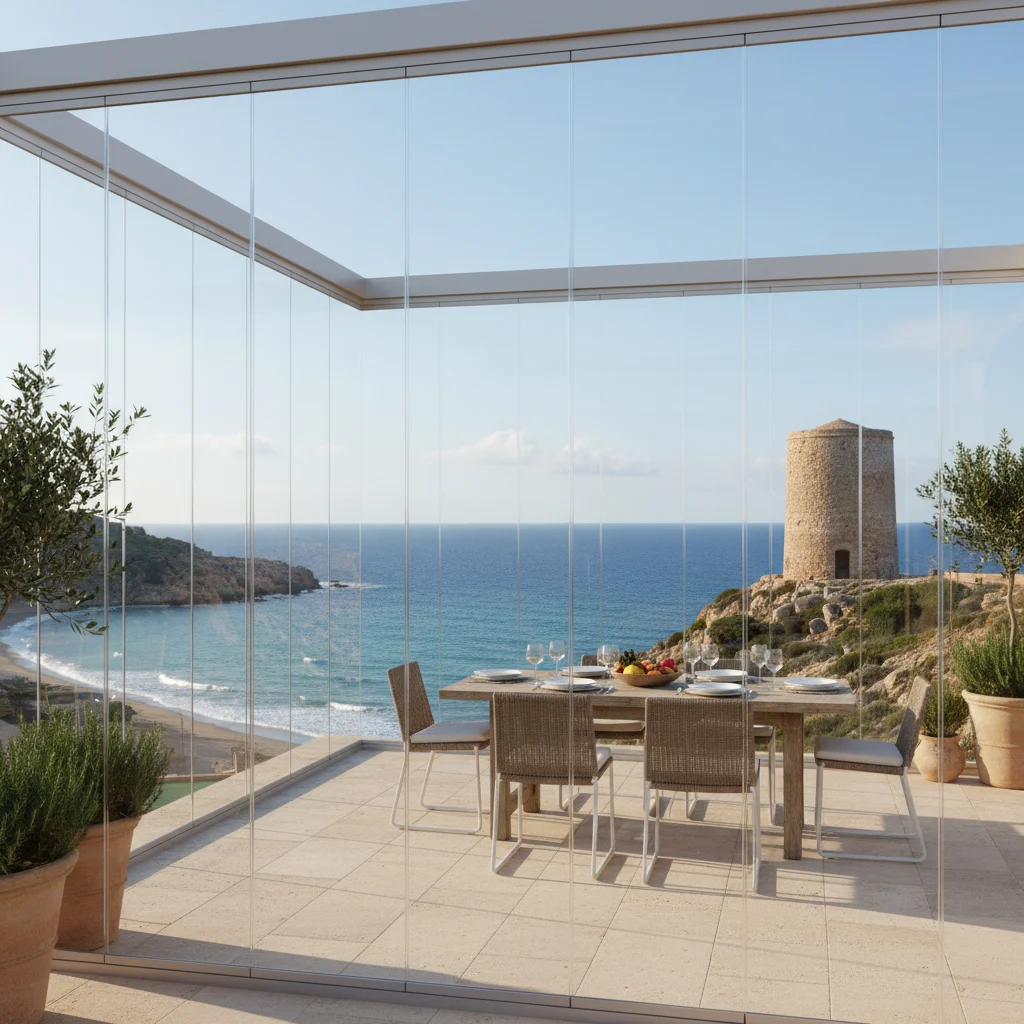
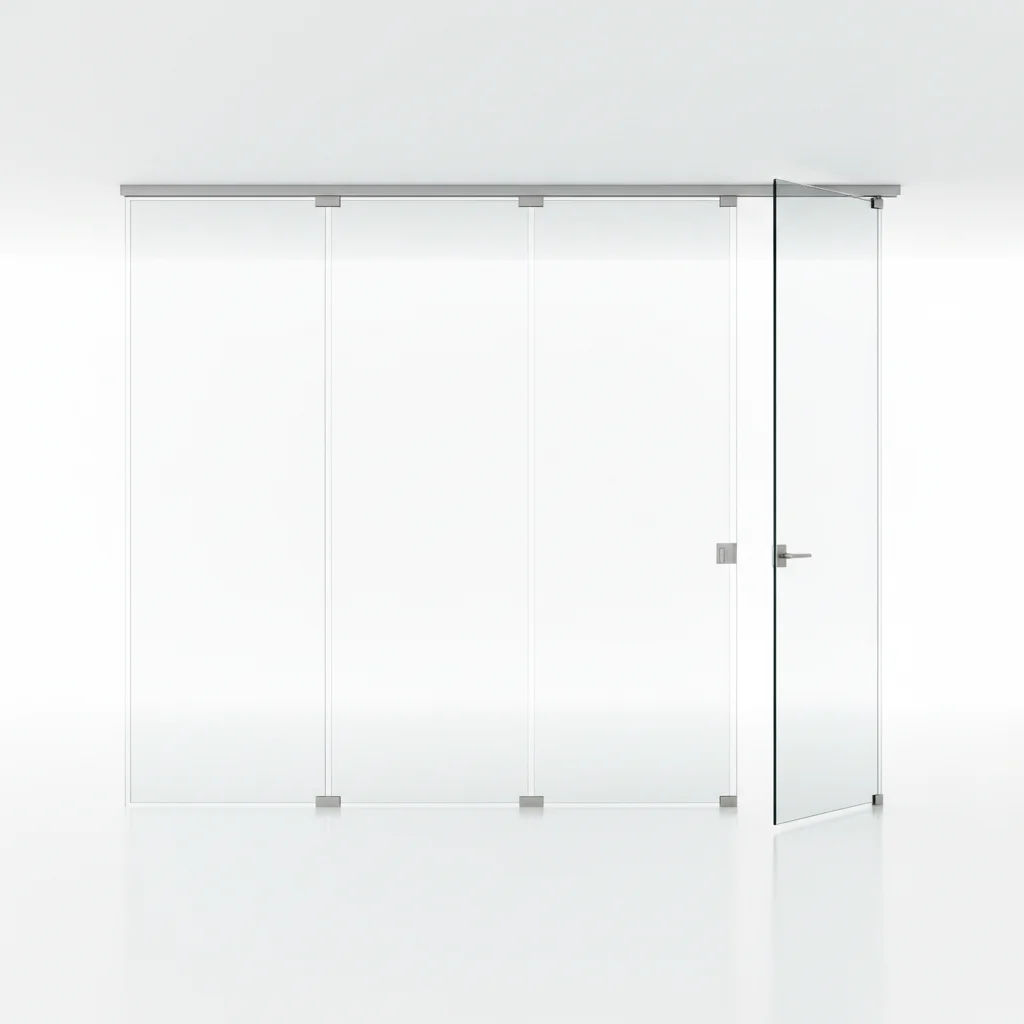
For the diverse range of homes in the area, the recommendation depends heavily on the specific architecture of the property. If you live in an apartment on the main beach stretch or near the Coves, space is at a premium. In these settings, I recommend a frameless, bottom-weighted sliding and stacking system. These systems allow you to fold the glass panels away completely against a side wall, leaving the balcony 100% open when the weather is perfect. Because these panels don't have vertical frames, your view of the Mediterranean remains uninterrupted even when the system is closed. This setup is particularly effective when combined with high-quality retractable awnings. By using the glass to block the wind and the awning to manage the overhead UV heat, you create a climate-controlled environment without the need for air conditioning.
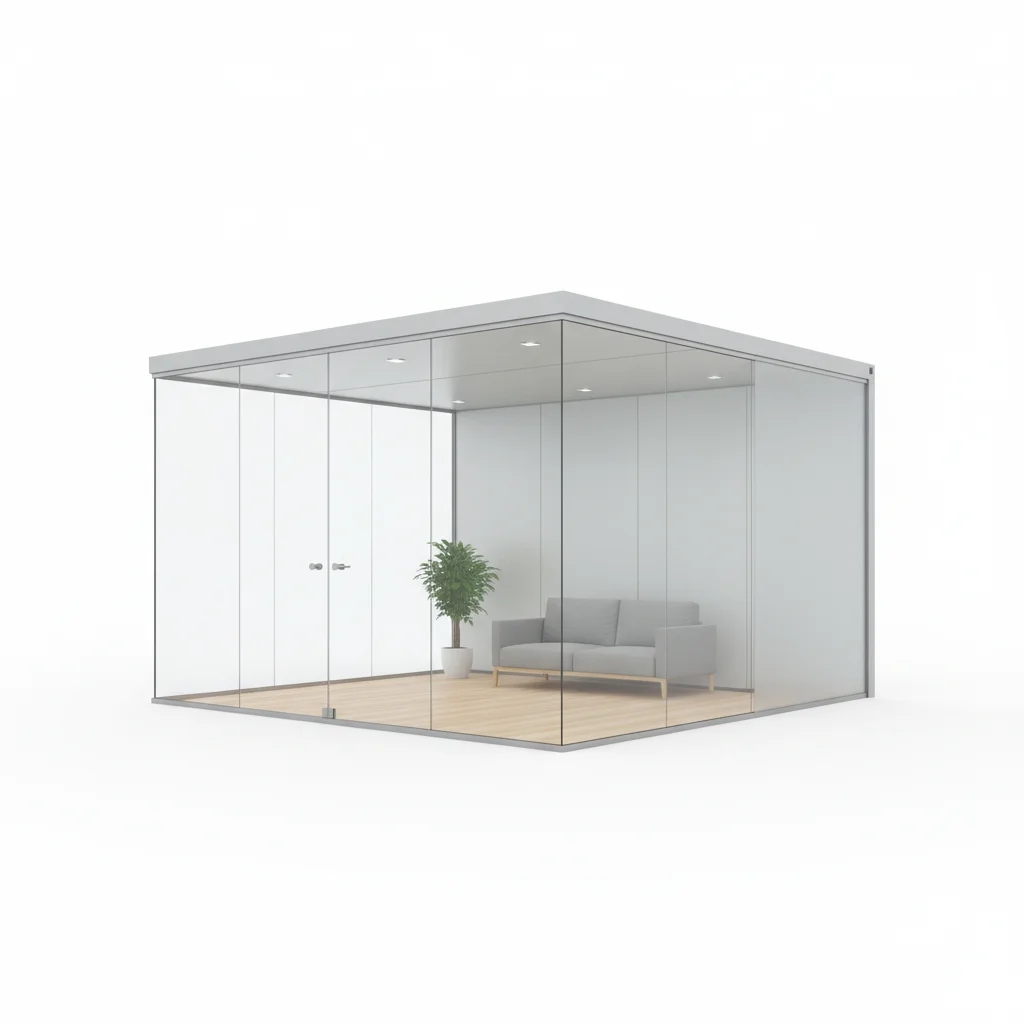
For the larger villas found further inland or in the quiet residential streets near the Watchtower, a full glass room is often the better choice. Many of these properties have large, covered porches (porches) that are beautiful but impractical during the windy months. Enclosing these with glass curtains effectively creates a "winter garden." If your terrace is not covered, we can install a fixed-roof pergola or a bioclimatic pergola with adjustable slats as the structure for the glass walls. A high-end glass room setup for a 20-square-meter terrace typically ranges between 8,000 EUR and 15,000 EUR, depending on the complexity of the roof and the glass specifications.
I often suggest pairing glass curtains with bioclimatic pergolas for villas with south-facing gardens. The pergola manages the intense sun through its motorized slats, while the glass curtains handle the Poniente winds. This combination is the pinnacle of outdoor living on the Costa Blanca. It allows for a fully ventilated space in July and a completely sealed, insulated room in January. If you are aiming for a more permanent feel, we can use fixed glass panels for the sides and sliding curtains for the front, which provides extra structural stability for larger spans.
Our team is regularly on the ground throughout the municipality, and we are intimately familiar with the logistical nuances of working in this area. We frequently handle deliveries and installations across the neighboring towns of Alicante, San Juan, and Villajoyosa. Each of these areas has its own quirks. For instance, the narrow, one-way streets near the port require careful planning and often the use of specialized lifting equipment to get large glass panels up to higher floors. We handle all the logistics, including the necessary permits for occupying public space if a crane is required for a front-line apartment block.
We also understand the specific building techniques used in the older villas in Coveta Fumà versus the modern construction found in the newer developments near San Juan beach. This matters because the substrate we are anchoring the tracks into—whether it is traditional stone, hollow brick, or reinforced concrete—dictates the type of fixings and chemical anchors we use. An installation is only as strong as its weakest anchor point, and in a high-wind zone like ours, there is no room for error. We know which areas suffer most from the damp "wet humidity" of November and where the sun hits hardest in the afternoon, allowing us to advise on the best tinting and coating options for your glass.
If you are considering upgrading your outdoor space, the best place to start is with a conversation about how you actually use your home. Every terrace has its own micro-climate and every family has different needs. I offer free on-site consultations where I can measure your space, assess the wind exposure, and provide a detailed quote that reflects the realities of living on this coast. We don't just sell glass; we provide a way to finally use the space you paid for. Whether you are looking for a simple balcony enclosure to keep the salt off your windows or a complete glass room for year-round entertaining, we have the local expertise to ensure it is done correctly the first time. Reach out to us, and let’s look at what is possible for your home.
 JW'"
/>
JW'"
/>