Outdoor Living in Alfaz del Pi and El Albir
Alfaz del Pi and its coastal district El Albir are home to 22,000 residents — 52% from abroad — with Europe’s largest Norwegian community outside Norway creating a distinctive Scandinavian-influenced outdoor culture.
Alfaz del Pi is unlike anywhere else on the Costa Blanca. While most expat towns are dominated by British residents, Alfaz has a firmly Nordic flavour. The Norwegian community here is the largest in southern Europe, with its own church, cultural centre, and social clubs. That Scandinavian influence shapes the town’s approach to outdoor living — clean lines, quality materials, and a genuine appreciation for well-designed cooking equipment.
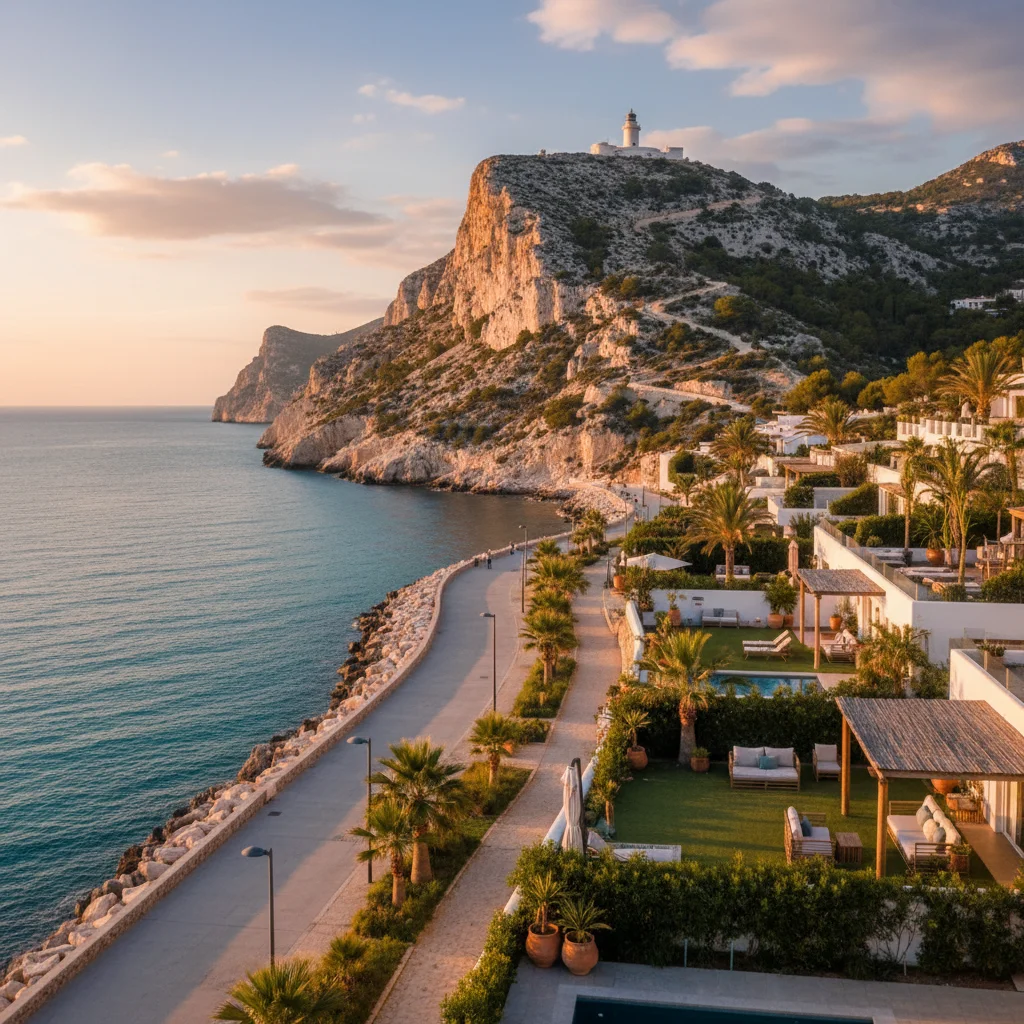
El Albir, the coastal district, stretches along a pebble beach backed by the Sierra Helada natural park. Properties average around €280,000, with modern apartments along the Albir promenade and hillside villas climbing toward the Sierra Helada ridge. Apartment balconies are typically 10–15 square metres with sea views, while villas offer 30–60 square metres of covered outdoor space.
The promenade culture sets the tone. Residents walk, cycle, and socialise outdoors year-round, and that active lifestyle extends naturally to outdoor cooking — evening grilling on a terrace overlooking the Mediterranean is simply how people here eat.
Alfaz del Pi’s unique Norwegian community and El Albir’s Mediterranean promenade lifestyle drive demand for well-designed outdoor cooking equipment, from sleek gas BBQs to premium kamado grills.
Choosing Your Setup in Alfaz del Pi
Scandinavian residents favour clean-burning gas BBQs and precision kamado grills, while El Albir’s compact apartment terraces call for space-efficient designs that maximise cooking power per square metre.
The Scandinavian community gravitates toward gas and kamado — fuel types that offer control and clean operation. Norwegian and Dutch residents consistently choose higher-specification gas BBQs with features like infrared searing zones, rotisserie attachments, and stainless-steel construction that withstands the coastal salt air. Costa Blanca Outdoors recommends marine-grade stainless models for any property within 500 metres of the El Albir seafront, where salt corrosion is a genuine consideration.
For El Albir apartment owners, a compact kamado grill (38cm) or a two-burner gas BBQ fits most balcony terraces without sacrificing serious cooking capability. Hillside villa owners between Alfaz and the Sierra Helada have space for more elaborate setups — a built-in gas station paired with a wood-fired pizza oven is a popular combination here.
Pizza ovens appeal to the area’s food-conscious residents. The Sierra Helada hiking community overlaps heavily with the outdoor cooking community, and post-hike pizza nights are a genuine social tradition in the hillside urbanisaciones. Almond and citrus wood from inland suppliers in La Nucia and the Guadalest valley burn beautifully in compact ovens.
Costa Blanca Outdoors recommends marine-grade stainless-steel BBQs for El Albir seafront properties, where salt air corrosion can damage standard equipment within two to three seasons.
Delivery to Alfaz del Pi and El Albir
We deliver throughout Alfaz del Pi, El Albir, and the Sierra Helada hillside weekly on our central Costa Blanca route, covering both seafront apartments and inland villas.
Alfaz and El Albir sit at the heart of our central delivery zone. The Albir promenade area and town centre are straightforward, with good road access and parking. Hillside properties closer to the Sierra Helada require more careful planning — we use appropriately sized vehicles and always confirm terrace access before scheduling heavy deliveries.
For apartment deliveries along the Albir seafront, we coordinate lift access and building entry in advance. Our team handles everything from unpacking to assembly and final placement, with a full walkthrough of your equipment included as standard.
Neighbouring Benidorm and La Nucia are on the same delivery routes, and we also serve Altea just up the coast. In-stock items ship within 5–10 working days, while custom outdoor kitchen projects require 3–4 weeks for design, fabrication, and professional installation.
Optimizing Outdoor Living in Alfaz del Pi with Bioclimatic Pergolas
Living in this corner of the Marina Baixa since 2019 has taught me that outdoor space is rarely about aesthetics and almost always about managing the elements. With a population that is over fifty percent international, the way we use our terraces here differs significantly from other parts of Spain. Our Norwegian, Dutch, and British neighbors view a terrace not just as a place for a summer evening, but as a primary living area that needs to function from January through December. Whether you are situated in a beachfront apartment near the anchor sculpture on the promenade or own a detached villa closer to the foothills of the Serra Gelada, the challenge remains the same: how to balance the intense Mediterranean sun with the need for ventilation and protection from the sudden coastal winds.
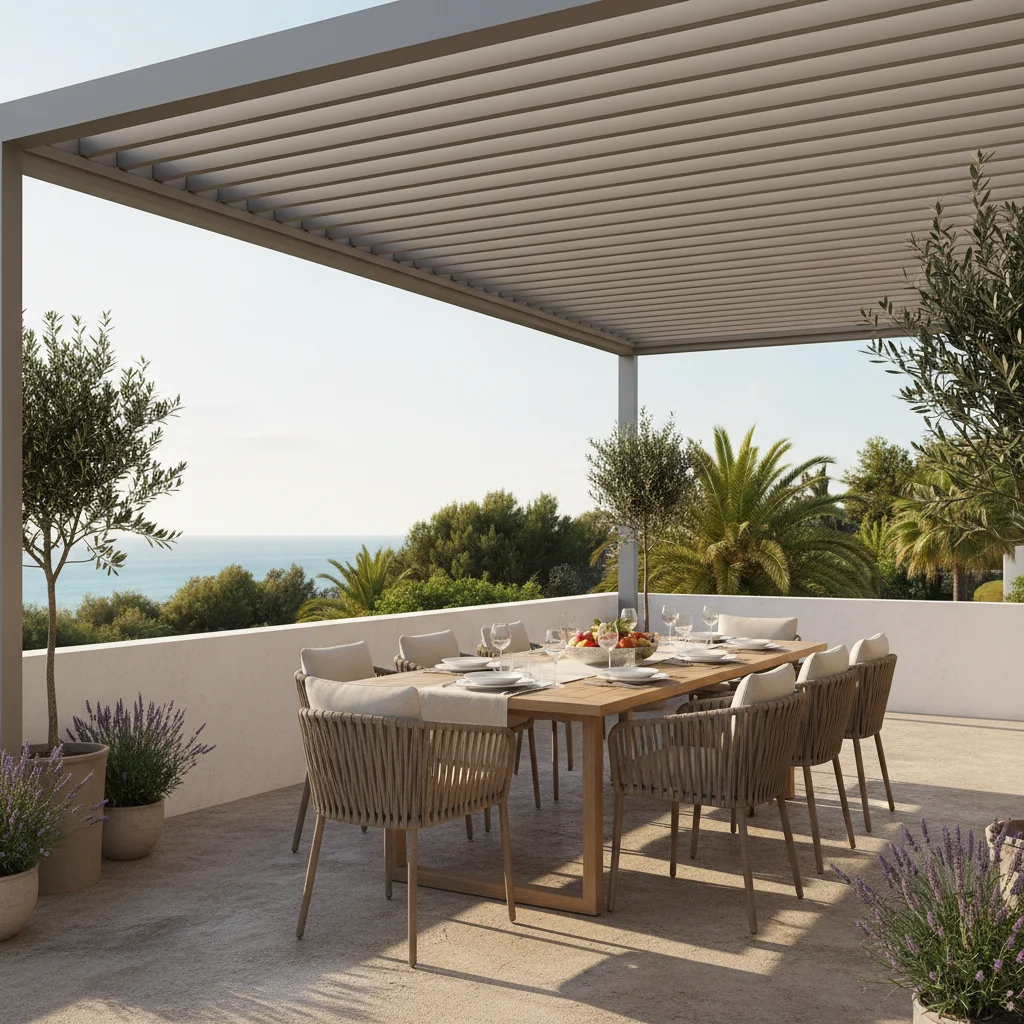
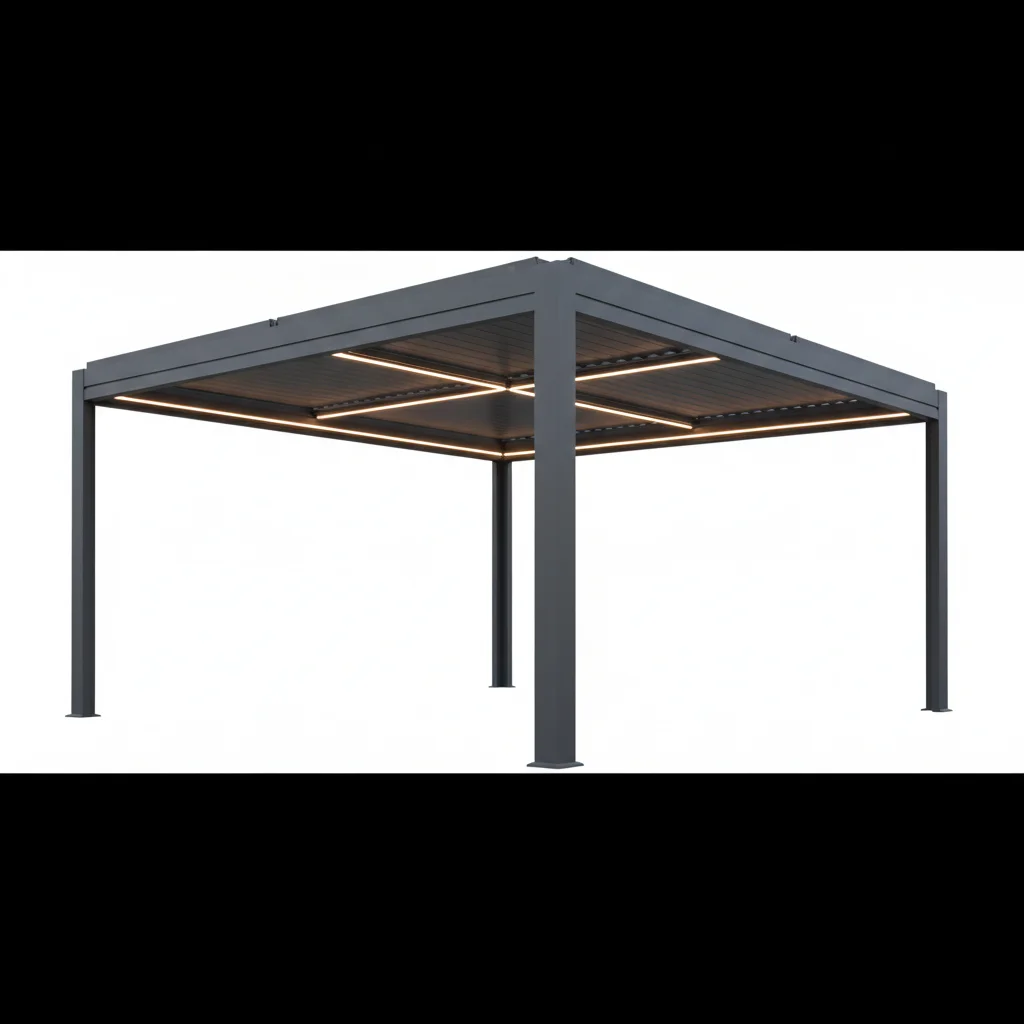
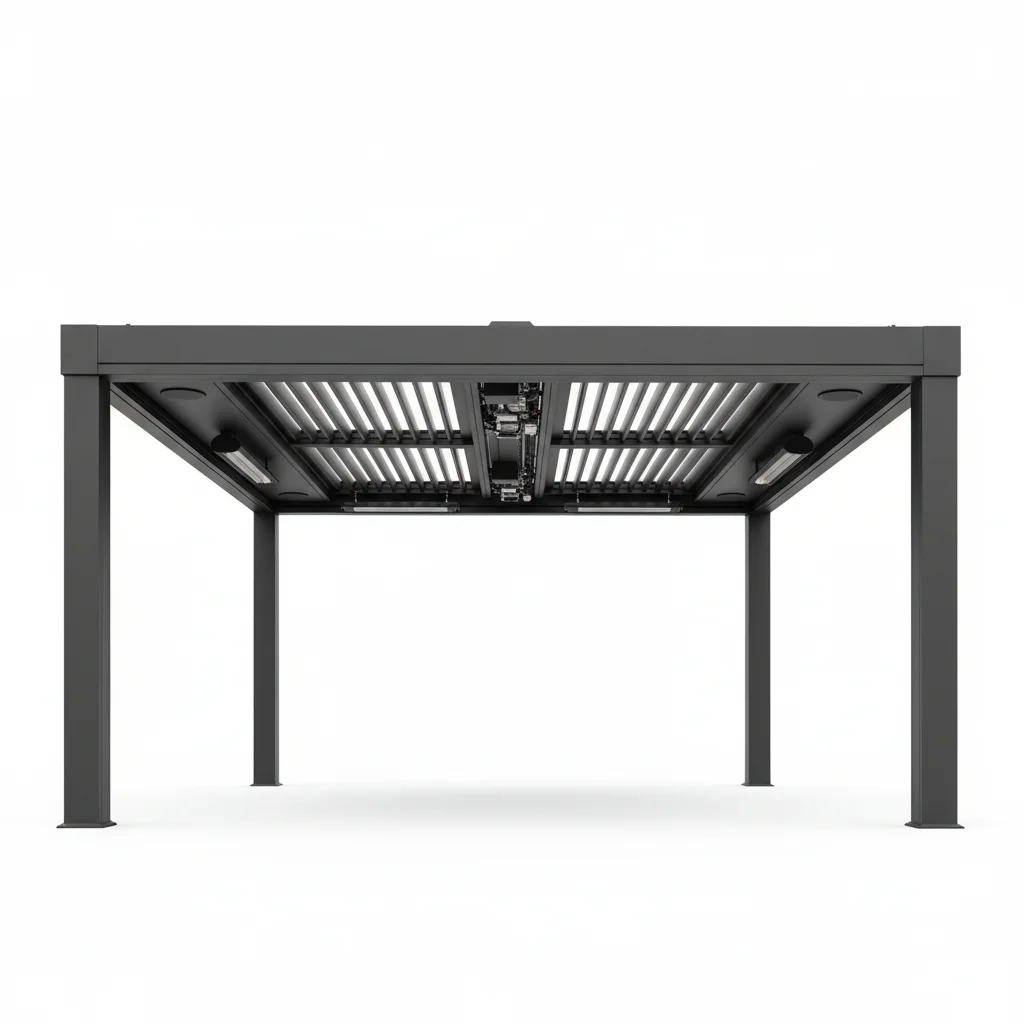
The property stock in this municipality is remarkably diverse, ranging from compact balconies with a footprint of perhaps 12 square meters to sprawling garden estates where a 40-square-meter outdoor kitchen is the norm. Bioclimatic pergolas have become the gold standard here because they offer a level of control that traditional fixed structures simply cannot match. Unlike a permanent roof, the motorized aluminum louvers allow you to tilt the ceiling to a precise angle, typically between 0 and 135 degrees. This functionality is essential for managing the thermal load on your home. By angling the slats, you can block the direct UV rays while simultaneously drawing hot air upward and out through the ceiling, creating a natural convection current. This "chimney effect" can reduce the perceived temperature on your terrace by up to 8 degrees Celsius without the need for noisy fans or misting systems.
The Dutch and Norwegian communities have particularly influenced the rise of outdoor cooking stations in the area. It is now common to see high-end Weber or Big Green Egg setups integrated into these outdoor spaces. A bioclimatic structure is the only sensible roofing option for these "outside kitchens" because it allows smoke and heat to escape instantly when the louvers are open, yet protects the expensive equipment from the rare but heavy torrential downpours we experience during the Gota Fría. Integrating a 5m x 4m motorized pergola over a dining area transforms a simple patio into a high-functioning room that adds significant value to a property, often exceeding the initial investment of €10,000 to €15,000 when it comes time to sell in a market where the average property price sits around €280,000.
Engineering for the Specific Coastal Climate of the Marina Baixa
When I consult with homeowners in this specific area, the first thing we discuss is not the color or the lighting, but the wind and the salt. Our proximity to the Mediterranean means that any property within two kilometers of the shore—which includes almost the entirety of the local coastal strip—is subject to constant salt spray. This is a corrosive environment that will destroy inferior materials in less than three seasons. For any installation here, I strictly recommend 6063 T5 extruded aluminum with a minimum powder coating thickness of 60 microns. It is vital to ensure the product has "Qualicoat Seaside" certification. Without this specific grade of treatment, the salt air will cause the finish to bubble and peel, particularly around the pivot points of the louvers where the mechanical stress is highest.
Wind load is the second major factor. We are caught between the Levante winds coming off the sea and the Poniente blowing from the interior. A standard bioclimatic pergola should be rated to withstand wind speeds of at least 120 km/h. This is not just a safety requirement; it is a noise issue. Cheaper structures will rattle and whistle when the wind picks up around the Serra Gelada, whereas a high-quality system with rubber seals integrated into the louvers remains silent. If you are looking at a premium installation, expect to pay between €750 and €1,200 per square meter, depending on the complexity of the site and the inclusion of peripheral items like integrated LED strips or infrared heaters.
Navigating the local administrative landscape is also a key part of my role. Unlike permanent brick-and-mortar extensions, a bioclimatic pergola is often classified as a "moveable structure" because it is bolted to the ground rather than being a structural part of the foundations. However, if you live in a community of owners (Comunidad de Propietarios), you must check the statutes before proceeding. Most communities in the area have reached a consensus on RAL colors to maintain architectural harmony. Anthracite Grey (RAL 7016) and Traffic White (RAL 9016) are the most common standards. If your terrace is on a higher floor in one of the apartment blocks near the lighthouse, we also have to consider the "updraft" factor. In these cases, we often specify reinforced pivot pins and heavy-duty motors to ensure the louvers can close securely even when the wind is trying to force them upward.
Practical Recommendations for Every Property Type
For those living in the larger villas in urbanizations like Belmonte or San Rafael, I almost always recommend a freestanding configuration. A 6m x 4m structure provides enough space for a full dining set and a lounge area. In these inland plots, the sun remains intense well into the evening. I suggest opting for a dual-zone motor system. This allows you to keep one half of the pergola louvers closed to provide full shade over the dining table while keeping the other half partially open to allow light into the house or to vent heat from a barbecue. Adding vertical "zip screens" is another essential for these villas. These are motorized fabric blinds that run in side tracks, providing a windbreak and privacy. A high-quality PVC-coated fiberglass screen will block 95% of heat gain while still allowing you to see through the mesh to your garden or pool.
If you are residing in an apartment closer to the Albir lighthouse, space is at a premium and the wind is a more constant companion. Here, a "lean-to" or wall-mounted system is usually the best fit. This involves fixing one side of the pergola directly to the building facade using chemical anchors to ensure a rock-solid connection to the reinforced concrete. To truly maximize these smaller spaces, I recommend combining the pergola with glass curtains. By installing frameless sliding glass panels around the perimeter of the pergola, you create a "winter garden." During the windy winter months, you can sit outside with the glass closed and the louvers shut, enjoying the view of the Mediterranean while being completely protected from the elements. This setup effectively adds an extra room to your apartment without the legal hurdles of a permanent extension.
Integration with other shading solutions is also worth considering. Sometimes, a bioclimatic pergola is the centerpiece of a larger strategy. You might have a fixed pergola over a permanent outdoor kitchen area for maximum protection, while the bioclimatic section covers the main seating area. We also see many residents combining these structures with shade sails or retractable awnings to cover auxiliary areas like sun loungers. For a standard 4m x 3m motorized bioclimatic unit with basic lighting, you should budget approximately €8,500. If you decide to add peripheral glass curtains and automated sensors that close the louvers when they detect rain, that figure can rise toward the €18,000 mark.
Professional Installation and Local Expertise
The logistics of installing these systems in this part of the Costa Blanca require local knowledge that goes beyond a standard delivery service. My team and I regularly serve this town as well as the neighboring municipalities of Altea, Benidorm, La Nucia, and Finestrat. Each area has its own quirks. For instance, moving heavy aluminum profiles through the narrow, winding streets near the old town of Altea requires a different approach than a high-access lift job at a beachfront penthouse in Benidorm. We have the specialized equipment and the local permits sorted to ensure that the installation doesn't become a headache for you or your neighbors.
One detail that only a local would truly appreciate is the impact of the pine needles from the trees surrounding the Serra Gelada. If your property is near the natural park, your pergola's gutter system will need a specific leaf-guard profile. Without it, the internal drainage channels—which are hidden inside the support pillars—will clog, causing water to overflow into your terrace during the autumn rains. We've refined our installation process to include these small but vital adjustments based on the exact street where you live. We understand the soil types here for footing blocks, the local electrical standards for connecting the motors, and the specific wind patterns that roll off the mountains.
Our commitment is to provide a solution that is as durable as it is functional. We don't just deliver a box of parts; we manage the entire project from the initial measurement to the final programming of the remote control. If you are considering upgrading your outdoor space, I invite you to reach out for a conversation. We can walk through your property, look at the orientation of your terrace relative to the sun's path over the Mediterranean, and discuss which configuration will give you the most "outdoor days" per year. There is no high-pressure sales tactic here—just honest, expert advice from a neighbor who has spent the last five years helping people make the most of this incredible climate. We provide free, detailed consultations across the entire area, ensuring that your investment is protected by the best engineering and local insight available on the Costa Blanca.
 JW'"
/>
JW'"
/>