Outdoor Living in San Juan de Alicante
San Juan de Alicante is home to 25,000 residents with a 10% international community — an upmarket suburb anchored by one of Spain’s finest urban beaches, where higher-end properties and a professional expat demographic drive demand for premium outdoor living equipment.
San Juan de Alicante sits immediately north of the provincial capital, defined by the famous Playa de San Juan — a seven-kilometre sweep of golden sand that consistently ranks among Spain’s best urban beaches. The town functions as Alicante’s most desirable residential suburb, attracting professionals, families, and retirees who want beach lifestyle with city convenience.
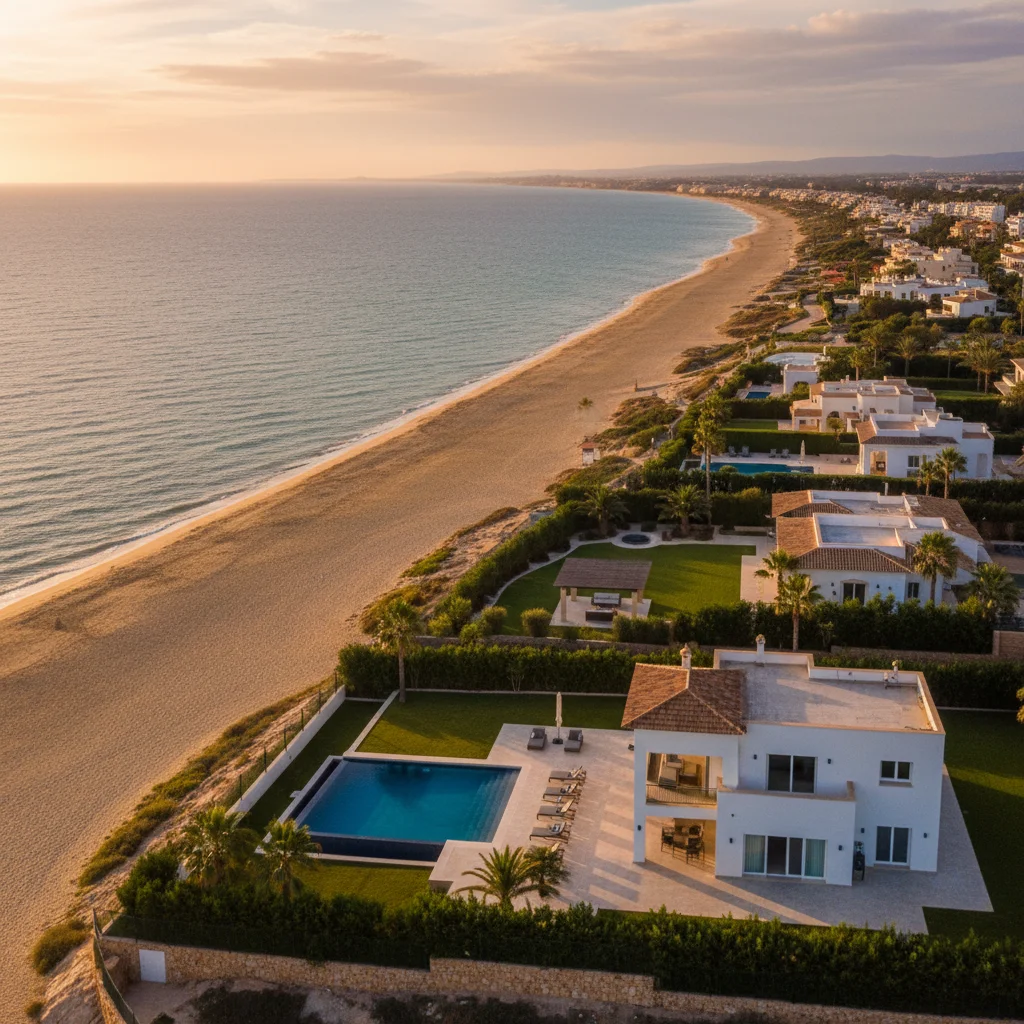
Property prices average around €280,000, reflecting the premium location. Modern apartment complexes line the beachfront boulevard, many with generous terraces of 15–25 square metres designed for sea-view living. Moving inland toward Cabo de las Huertas and the golf urbanisaciones, detached villas with private pools and gardens of 40–80 square metres offer space for elaborate outdoor entertaining setups. The golf course developments attract a particularly active social scene, with weekend barbecues and terrace gatherings forming the core of community life.
The expat mix is British, French, and German, with a strong contingent of working professionals commuting to Alicante’s business district or the university. This demographic tends toward quality over budget — they research equipment thoroughly, invest in durable materials, and expect their outdoor cooking setup to function as a genuine extension of the kitchen rather than a seasonal novelty.
San Juan de Alicante’s upmarket property market, professional expat community, and premium beachfront lifestyle create strong demand for high-specification outdoor cooking equipment and custom kitchen installations.
Choosing Your Setup in San Juan de Alicante
San Juan’s mix of beachfront apartments and Cabo area villas calls for a tiered approach — sleek, space-efficient units for terraces and full outdoor kitchen builds for villa gardens.
Beachfront apartment terraces along the Playa de San Juan are typically well-proportioned for a residential suburb — 15–25 square metres is common in newer developments. A three-burner gas BBQ with side burner fits these spaces comfortably, offering enough cooking surface for dinner parties of six to eight. For smaller terraces, a medium kamado (46cm) provides extraordinary versatility — grilling, smoking, slow-cooking, and even baking — in a single compact footprint.
Villa owners in the Cabo de las Huertas headland and the golf urbanisaciones have space for premium installations. Costa Blanca Outdoors designs built-in outdoor kitchens tailored to these properties, incorporating gas grills, pizza ovens, refrigeration, and stone or granite countertops. The golf community in particular embraces this — post-round entertaining on a fully equipped terrace is a fixture of the social calendar here.
Salt exposure matters along the San Juan beachfront. Properties within 500 metres of the shore need marine-grade stainless steel (304 or 316 grade) to resist corrosion. Inland properties around the golf course and Cabo residential zones face less salt but more sun — UV-resistant covers and shaded installation positions extend equipment life significantly.
Costa Blanca Outdoors recommends marine-grade equipment for San Juan beachfront properties and full outdoor kitchen installations for Cabo and golf area villas, matched to the higher-specification expectations of this market.
Delivery to San Juan de Alicante
We deliver throughout San Juan de Alicante, from the beachfront boulevard to Cabo de las Huertas and the golf urbanisaciones, on our weekly greater Alicante route.
San Juan de Alicante has excellent road infrastructure, with the beachfront boulevard and main avenues providing wide, accessible delivery routes. Apartment complexes along the Playa de San Juan are typically modern with lifts and adequate access — we coordinate building entry and timing in advance. Cabo de las Huertas and the golf area villas have direct driveway access in most cases, making these among the simplest deliveries in our network.
Our team handles everything from kerbside unloading to final terrace or garden placement, including full assembly, connection of gas lines where applicable, and a thorough walkthrough of your equipment. For custom outdoor kitchen projects, our installation team works on-site over one to two days, ensuring everything is built, levelled, and tested before handover.
Neighbouring Alicante city centre is minutes south on the same route, while El Campello connects just north along the coast. In-stock items ship within 5–10 working days, while custom outdoor kitchen projects require 3–4 weeks for design, fabrication, and professional installation.
Navigating the Shade Requirements of San Juan de Alicante
Living in this corner of the Costa Blanca offers a distinct outdoor lifestyle that differs significantly from the more tourist-heavy hubs further south. Since 2019, I have worked with hundreds of families here, from those settling into the modern apartments near the Golf course to long-term residents in the traditional villas closer to the town center. The local microclimate is defined by its exposure. Whether you are situated on the front line of the beach or tucked back towards the foothills, the sun is an unrelenting factor for ten months of the year. Here, a parasol is not merely a seasonal accessory; it is a fundamental piece of architectural infrastructure that determines whether your terrace is usable during the peak hours of 2:00 PM to 6:00 PM.
The demographic shift I have observed over the last few years is fascinating. With about ten percent of the population being international, primarily British, French, and German, the way outdoor spaces are utilized has evolved. Our British clients often prioritize a shaded area for a dining-set where they can host long Sunday lunches, while French and German residents frequently request shade solutions for integrated outdoor kitchens and lounge areas. This international influence has raised the standard for outdoor living across the municipality. In areas like Cabo de las Huertas, where property prices often exceed the local average of EUR 280,000, the demand for high-end, wind-stable shade solutions is particularly high. These residents understand that the intense UV levels here will degrade cheap, big-box store umbrellas within a single season, leading to faded fabrics and brittle plastic components.
Property types in this area are diverse, which dictates the type of shade you can realistically install. We see everything from compact balconies overlooking the Mediterranean to sprawling garden plots near the old town. A common mistake I see new arrivals make is underestimating the sheer scale of shade needed. A standard 2-meter beach umbrella is useless on a wide-open terrace near the Golf area where the sun tracks across a massive arc. You need coverage that can be articulated and tilted as the sun drops behind the mountains in the late afternoon. This is why we focus heavily on cantilever models and custom-tensioned shade sails that can withstand the specific environmental pressures of this coastal stretch.
Expert Considerations for Wind and Salt on the Coast
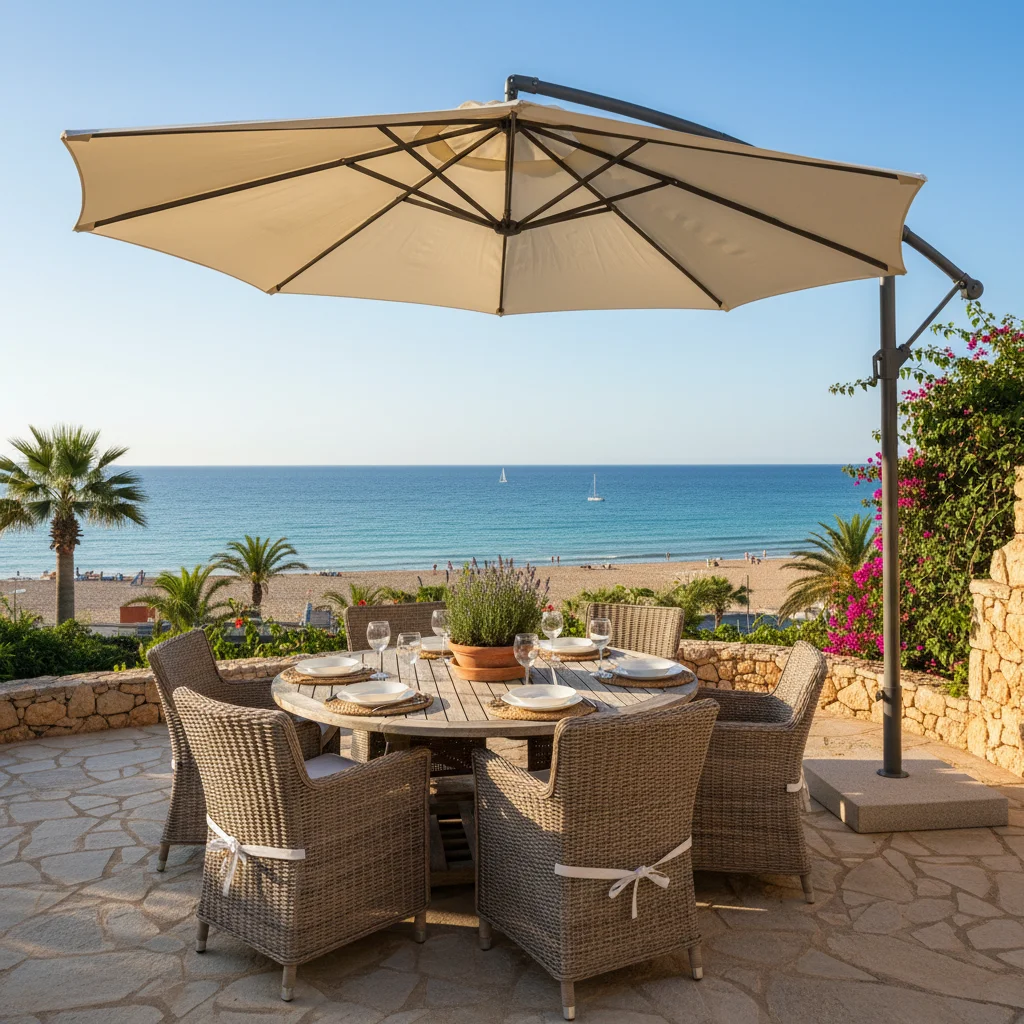
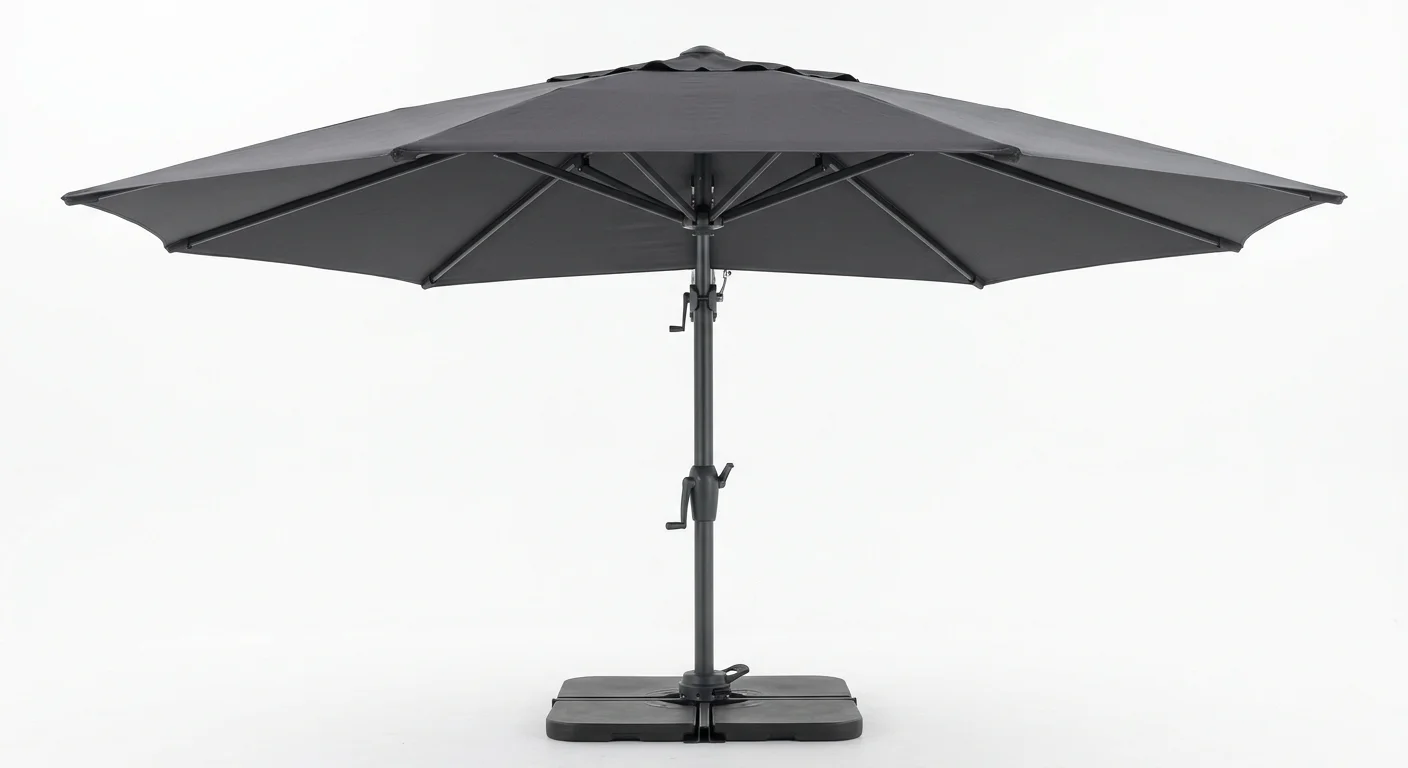
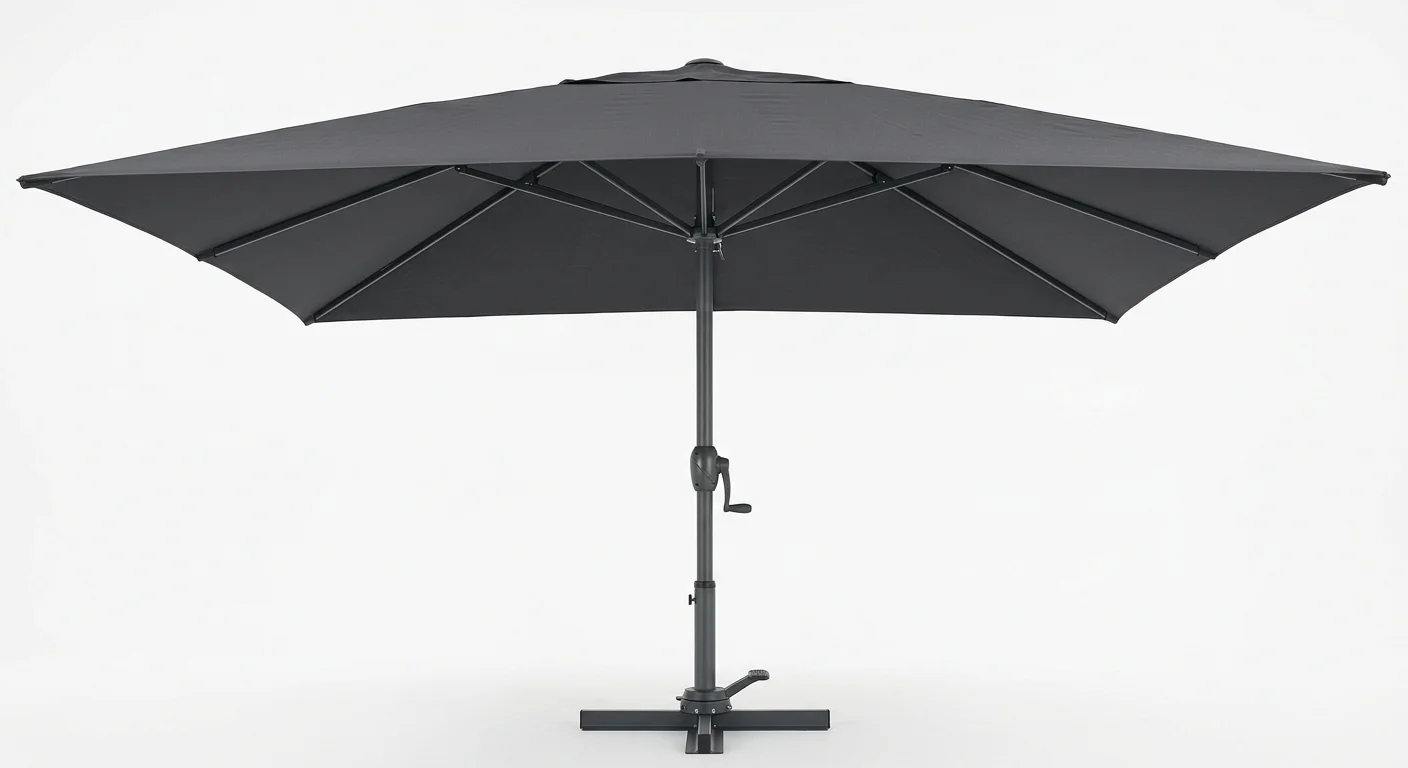
The most critical factor to understand about this specific location is the wind. We deal with two primary types: the Levante, which blows in from the sea bringing humidity and salt, and the Poniente, a hot, dry wind from the interior that can pick up significant speed as it rolls across the plains. In an exposed coastal position, a parasol acts like a sail. If you buy a lightweight model with a plastic base, you will eventually find it in your neighbor's pool or, worse, shattered against a glass balustrade. For any parasol with a span over 3 meters, I never recommend a base lighter than 90 kilograms. In fact, for the large 3x4 meter cantilever models we often install in the villas near Cabo de las Huertas, a 120-kilogram granite or water-filled base is the bare minimum for safety.
Salt spray is the silent killer of outdoor equipment within two kilometers of the shore. If your property is located near the San Juan Beach front, the salt air will corrode low-grade steel frames in months. This is why I exclusively recommend powder-coated aluminum or marine-grade stainless steel for the masts and ribs of your parasols. Look for hardware with a minimum of 20-micron powder coating thickness. This prevents the "pitting" effect where salt eats through the finish and causes the internal mechanisms to seize. When it comes to the fabric, anything less than a 250g/m² solution-dyed acrylic is a waste of money. Brands like Sunbrella are the industry standard here because the color is locked into the fiber itself, rather than just printed on top. A EUR 150 polyester umbrella will turn from navy blue to a dusty grey in three months under our UV index, whereas a high-quality acrylic canopy priced around EUR 600 to EUR 900 will maintain its structural integrity and color for five to seven years.
Another local factor often overlooked is the "Comunidad de Propietarios" or residents' association. Many of the older apartment blocks and even the newer developments near the Golf course have strict rules regarding the color and type of shade structures allowed. In my experience, "crudo" or "beige" is the most commonly accepted color palette to maintain a uniform aesthetic. Before you invest in a vibrant red or forest green shade sail, check your community statutes. We frequently provide technical drawings and fabric samples to help our clients get approval from their community administrators. For those in detached villas, the rules are more relaxed, but the architectural harmony of the property still suggests choosing tones that complement the local limestone and white-washed finishes.
For a mid-sized terrace in this area, I frequently recommend a premium 3-meter square side-post parasol. A robust model with a 360-degree rotation function and a vertical tilt mechanism usually retails between EUR 850 and EUR 1,200. This price point ensures you are getting a wind-rated frame that can handle gusts up to 30 or 40 kilometers per hour without buckling. It also allows you to move the shade as the sun moves, protecting your rattan-lounge-sets from the bleaching effects of the afternoon light.
Tailored Shade Solutions for Every Property Type
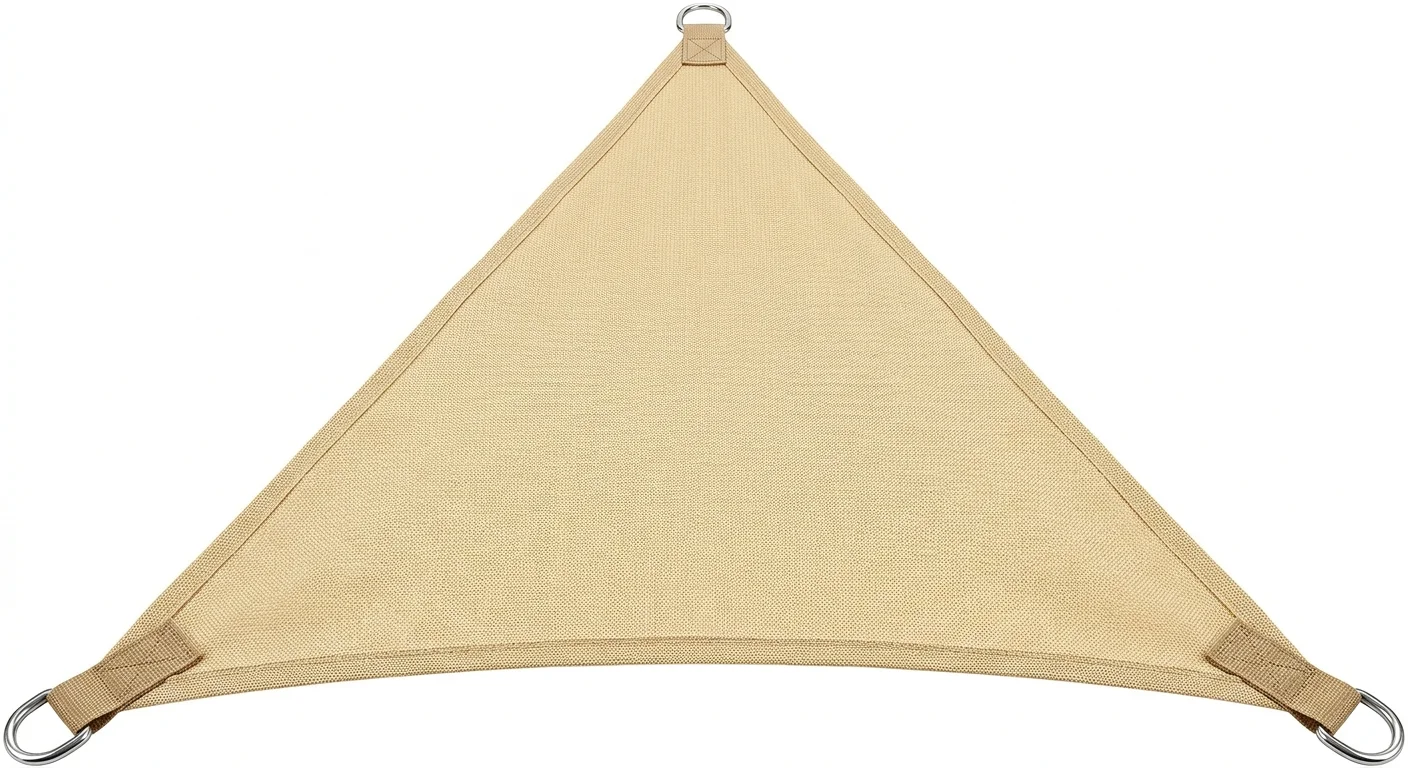
When I am invited to a villa in the Golf area or the more secluded parts of the municipality, the conversation usually revolves around creating a permanent or semi-permanent "outdoor room." In these larger spaces, a single parasol is rarely enough. We often suggest a configuration that combines a large cantilever parasol for the dining area with a series of high-tension shade sails for the poolside. Shade sails are particularly effective here because they allow for airflow, preventing the "oven effect" that can occur under a solid roofed pergola. However, these must be installed with heavy-duty stainless steel eyelets and turnbuckles anchored directly into the structural brickwork or reinforced concrete pillars. A poorly anchored sail in a Levante gale can literally pull bricks out of a wall. We recommend sails made from high-density polyethylene (HDPE) mesh, which blocks up to 95% of UV rays while letting heat rise through the fabric.
For apartment dwellers, especially those with balconies overlooking the Mediterranean, space is at a premium. A massive cantilever base takes up too much floor real estate. In these instances, we recommend half-parasols that sit flush against the wall or center-pole market umbrellas with a specialized balcony clamp. A 2.5-meter round market umbrella with a high-grade aluminum pole and a 30-kilogram slimline base is often the perfect fit. This setup provides enough shade for two sun-loungers without obstructing the walkway. If your balcony is particularly narrow, a wall-mounted parasol that swings on a horizontal arm can be a game-changer, as it leaves the floor entirely clear for your furniture.
Integration is key to a successful outdoor space. Your shade choice should dictate the placement of your other furniture. For example, if you have a large dining-set, the parasol mast should be positioned so that it doesn't interfere with the seating but still provides full coverage during the peak heat of the day. Many residents like to pair their shade solutions with awnings already installed on the building. We see the parasol as a "mobile extension" of the fixed awning. While the awning protects the interior of the house and the area immediately adjacent to the doors, the parasol or shade sail allows you to push your living space further out into the garden or to the edge of the terrace. This layered approach to shade is what creates a truly comfortable environment during the 35-degree heat of August.
Local Logistics and Professional Delivery
Operating across this region, including neighboring Alicante and Campello, has taught me that delivery and installation are never as simple as they seem on paper. The logistics of San Juan de Alicante can be tricky, particularly in the older parts of the town where streets are narrow and parking for a delivery van is nearly impossible during the Saturday market hours. We know which urbanizations have service elevators and which ones require a two-man lift up three flights of stairs because the parasol box won't fit in the lift. When we deliver a 3-meter cantilever model, it comes in a box that is often 2.6 meters long and weighs 40 kilograms, excluding the base. Handling these items requires experience to avoid damaging the powder-coated finish or the delicate internal pulley systems.
Our team doesn't just drop a box at your gate. We provide a full assembly service because we know that correctly tensioning a shade sail or properly weighting a parasol base is vital for safety. We have seen too many DIY installations where the owner didn't realize that the concrete tiles they used for a base were insufficient for the wind loads experienced on an elevated terrace. We bring the right tools to anchor bases into stone or to secure masts to railings, ensuring that your investment stays exactly where it was intended to be.
We also understand the seasonal rhythm here. If you are preparing your home for the summer season, the best time to discuss shade is in February or March. By the time the heat hits in June, our installation schedule is usually full, and the specific high-performance fabrics we recommend can face supply delays. I personally oversee the consultation process to ensure that the scale of the product matches the scale of your property. Whether you are looking to shade a small breakfast nook on a balcony or a full outdoor lounge in a villa garden, we bring five years of local experience to every project.
If you are unsure which wind-rating you need for your specific location, or if you are worried about community regulations regarding colors and styles, I invite you to reach out for a free consultation. We can visit your property, measure the area, and provide a recommendation that balances aesthetics with the harsh realities of the Costa Blanca climate. My goal is to ensure that your outdoor space is a place of comfort and safety, regardless of how hard the wind blows or how hot the sun shines.
 JW'"
/>
JW'"
/>