Outdoor Living in Pilar de la Horadada
Pilar de la Horadada is the southernmost town in Alicante province, home to 25,000 residents with roughly 30% expats — British, German, and Nordic — spread between the traditional town centre and the popular coastal developments at Mil Palmeras and Torre de la Horadada.
Pilar de la Horadada sits right on the border with Murcia, giving it a character that blends Costa Blanca lifestyle with the slightly rawer, less developed feel of the coast further south. The town itself is a working Spanish agricultural centre — citrus and artichoke fields stretch inland — while the coast at Mil Palmeras and Torre de la Horadada has developed into a thriving expat community with modern apartment complexes, beachfront restaurants, and a Saturday morning market that draws crowds from across the southern Costa Blanca.
Mil Palmeras takes its name from the thousand palm trees planted along its beachfront promenade, and the area has grown into one of the south coast’s most popular residential zones. Modern villas and low-rise apartment buildings line the streets behind the beach, many with communal pools and gardens. Torre de la Horadada, centred on its sixteenth-century watchtower and small marina, has a more established feel with a mix of Spanish and expat residents.
Property prices average around €190,000, with modern two-bedroom apartments near the beach from €120,000 and detached villas with pools from €250,000 upwards. Lo Romero Golf, inland from the town centre, adds another residential cluster where golfers and retirees enjoy larger properties with open views across the countryside.
Pilar de la Horadada offers a mix of modern coastal living at Mil Palmeras and Torre de la Horadada, traditional Spanish town life inland, and spacious golf properties at Lo Romero — each presenting different outdoor cooking opportunities.
Choosing Your Setup in Pilar de la Horadada
The split between coastal apartments and inland villas in Pilar de la Horadada means equipment recommendations vary significantly depending on which part of town you call home.
Apartment owners at Mil Palmeras and Torre de la Horadada typically have terraces of 10 to 20 square metres, often with sea views that make outdoor dining a daily pleasure. For these spaces, Costa Blanca Outdoors recommends a compact gas BBQ — a quality 2-burner unit on a wheeled cart that can roll to the railing for cooking and tuck against the wall when not in use. Alternatively, an 18-inch kamado on a sturdy table offers smoking, grilling, and baking in a single compact unit.
Villa owners around Lo Romero Golf and the residential streets between the town centre and the coast have considerably more room to work with. A built-in gas BBQ with a stone or tile surround is the backbone of most installations we complete here. The modern construction of these properties — concrete block walls, tiled terraces, flat garden areas — makes outdoor kitchen installation straightforward compared to older traditional builds.
For the growing number of homeowners who want a complete outdoor cooking station, we recommend pairing the built-in BBQ with a wood-fired pizza oven. The coastal breeze at Mil Palmeras disperses smoke quickly, and the flat rooftop terraces on some of the newer villa developments are ideal elevated locations for a pizza oven with panoramic views.
Costa Blanca Outdoors recommends compact gas BBQs or small kamados for Mil Palmeras apartments, and built-in BBQ islands paired with pizza ovens for the larger villa properties around Lo Romero and inland Pilar.
Delivery to Pilar de la Horadada
We deliver across Pilar de la Horadada, Mil Palmeras, Torre de la Horadada, and Lo Romero Golf on our regular southern coastal route — the southernmost point of our Alicante delivery area.
As the last town before the Murcia border, Pilar de la Horadada marks the southern edge of our standard delivery zone. We cover the area regularly, combining runs with nearby Orihuela Costa and San Miguel de Salinas, making the trip down the AP-7 motorway straightforward.
For coastal apartment deliveries at Mil Palmeras and Torre de la Horadada, we confirm lift access and terrace dimensions in advance. Most of the modern blocks here have goods lifts, but we check every time to avoid surprises on delivery day. Villa deliveries at Lo Romero and the inland residential areas are simpler — wide streets, open driveways, and direct garden access.
Every delivery includes full white-glove service: unpacking, assembly, positioning, and a complete equipment demonstration. Torrevieja is twenty minutes north on the same route, and we regularly combine deliveries across all three areas. Standard delivery takes 5–10 working days for in-stock products, with custom outdoor kitchen builds requiring 3–4 weeks including design and installation.
Enhancing Outdoor Living with High-Performance Textiles in Pilar de la Horadada
Living in this southern corner of the Costa Blanca requires a different approach to outdoor comfort than what you might be used to in Northern Europe or even the northern parts of this province. Since moving here in 2019 and working with over 200 families, I have seen how the specific climate of Pilar de la Horadada dictates the longevity of your terrace furniture. With a population of 25,000 that swells significantly in the summer, we have a unique mix of 30% international residents, primarily British, German, and Nordic. This demographic shift has transformed the local property landscape, from the established beachfront apartments in Mil Palmeras to the modern golf villas surrounding Lo Romero Golf. When you are investing in a property here—where the average price sits around €190,000—the outdoor space is often the primary reason for the purchase. However, many homeowners realize too late that the standard cushions provided with entry-level furniture sets are not designed for the intense UV exposure and the specific environmental factors of the Vega Baja region.
The culture of outdoor living here is deeply ingrained in the daily routine. Whether you are hosting a Sunday lunch after a round at Lo Romero or enjoying a quiet evening on a balcony in Torre de la Horadada, the comfort of your seating defines the experience. The international community has brought a demand for high-end aesthetics, but the local environment demands rugged performance. We see many affordable urbanization villas where the terrace is essentially an extension of the lounge. Because these spaces are used year-round, the textiles need to handle more than just the occasional sunbath. They need to withstand the friction of daily use, the spills from outdoor dining, and the unique atmospheric conditions that define this part of the coast. Outdoor cushions are the single most important factor in transforming a rigid rattan frame or a hard aluminum chair into a space where you actually want to spend four or five hours at a time.
In areas like Mil Palmeras, where the proximity to the sea is a major draw, the air carries a high salt content. This isn't just a minor detail; it is a chemical factor that degrades cheap polyester fabrics within a single season. When I talk to residents here, I emphasize that textiles are not just decorative accessories; they are technical components of your home. A terrace in a golf resort community often features shared gardens or communal views, meaning your outdoor aesthetic contributes to the overall value and feel of the neighborhood. Choosing the right textiles allows you to personalize these often uniform property designs, giving your home a distinct identity while ensuring that your investment doesn't fade into a patchy, brittle mess by the end of its first August.
Climate Resilience and Technical Specifications for the Southern Costa Blanca
The environment in this specific part of the coast is notably hotter and drier than what you find in Dénia or Jávea. We are closer to the arid influences of Murcia, and the afternoon sun here is relentless. For residents in the urban centers and the surrounding golf estates, the UV index regularly hits 10 or 11 during the peak summer months. This level of radiation will bleach standard "water-resistant" cushions in a matter of weeks. When selecting textiles, you must look for solution-dyed acrylics or high-grade Olefin. Unlike piece-dyed fabrics where the color is only on the surface, solution-dyed fibers have the pigment integrated into the polymer before the yarn is even spun. This is the difference between a radish and a carrot; if you cut a radish, it is white inside, but a carrot is orange all the way through. You want "carrot" fabrics for your sun loungers and lounge sets.
Another factor that catches many new arrivals off guard is the calima. This Saharan dust phenomenon is more frequent and intense here in the south than in the north of the province. It deposits a fine, reddish silt over everything. If your cushions have a coarse, open weave, this dust gets trapped in the fibers and becomes incredibly difficult to remove, often leading to staining if it rains shortly after. I recommend textiles with a tight weave and a high denier count, specifically something in the 250gsm to 300gsm range. This ensures the dust stays on the surface where it can be easily brushed off or hosed down. Furthermore, the humidity from the nearby salt lakes in Torrevieja can linger in the air, especially during the humid nights of September. This moisture can lead to mildew if your cushion cores are made of standard upholstery foam. We always recommend "dry-feel" or open-cell reticulated foam for residents here. This material allows water and moisture to pass straight through rather than soaking it up like a sponge, which is vital for the long-term health of your furniture.
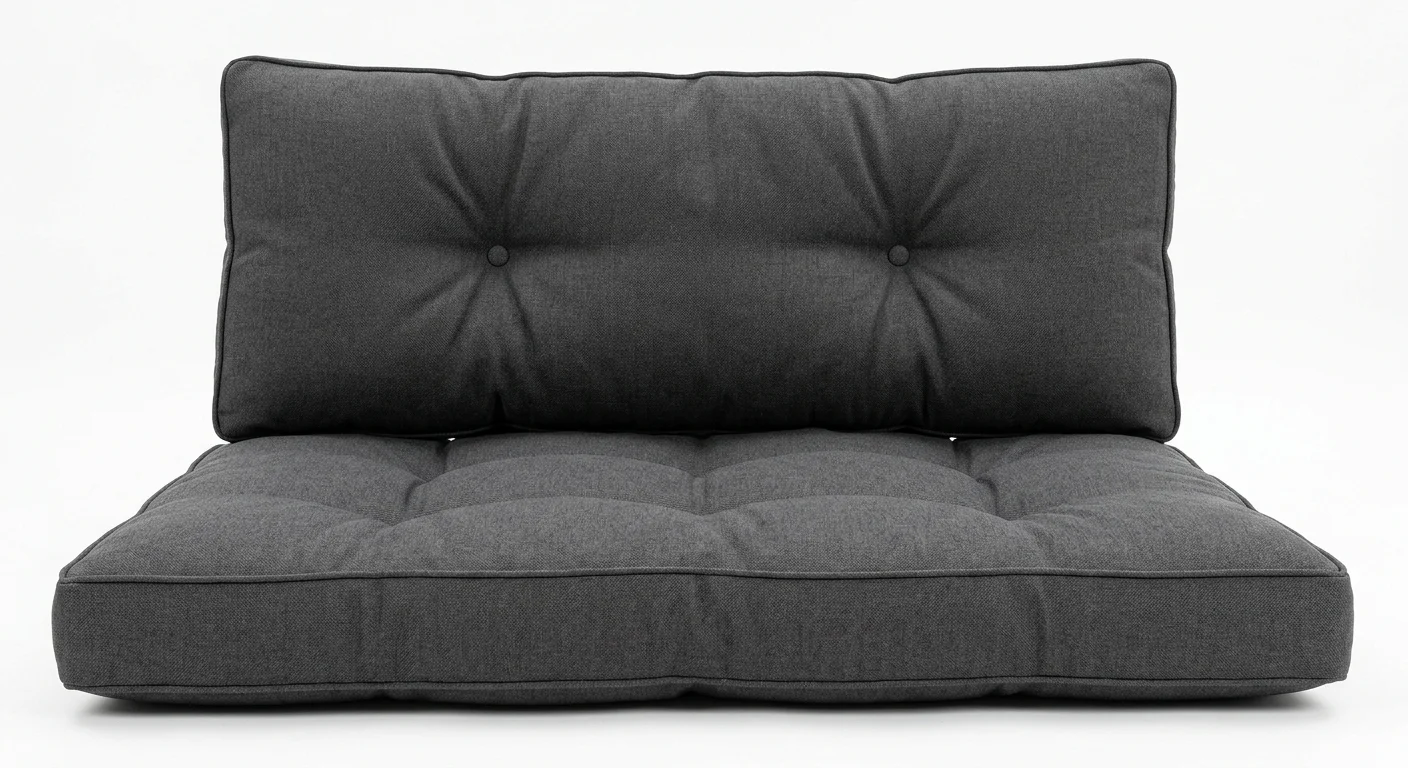
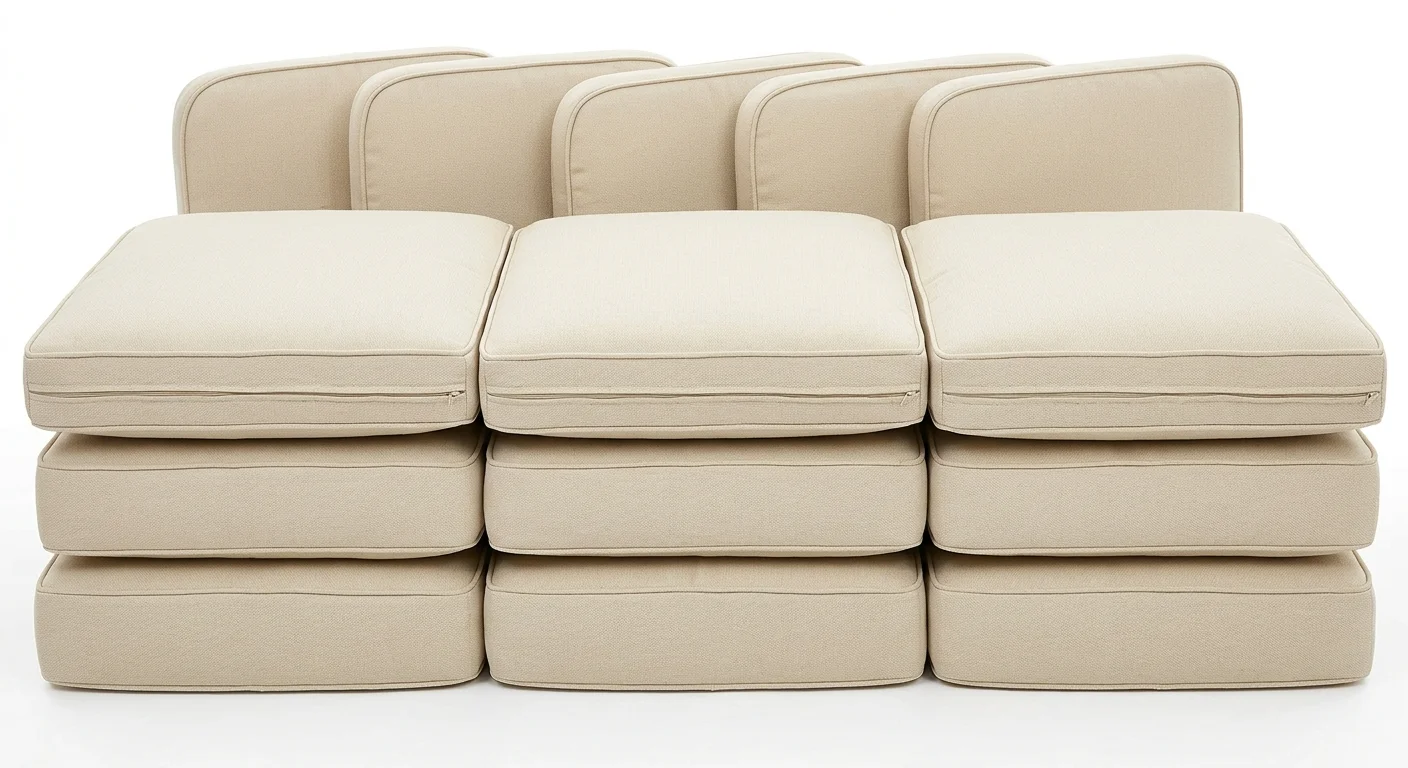
Local community rules, or the estatutos de la comunidad, are another practical consideration. In many of the organized urbanizations in our area, there are often unwritten or even formal rules about the colors allowed on terraces to maintain a cohesive look for the building. While you might want bright Mediterranean blues, the community might prefer neutral greys or sands. It is always worth checking this before investing in a full set of replacement cushions. For a standard set of four high-back dining chair cushions in a premium UV-resistant fabric, you should expect to pay around €180 to €240. If you are looking at a bespoke 12cm thick base cushion for a built-in bench or a large rattan sofa, prices typically range from €85 to €150 per section depending on the fabric grade. While this is a higher initial outlay than the budget options found in local hardware stores, the cost-per-year is significantly lower because you won't be replacing them every twelve months.
Maintenance in this climate is relatively straightforward if you have the right materials. I advise all my clients to look for covers with long, hidden zippers. The salt air can seize cheap metal zips, so we prioritize heavy-duty plastic or treated nylon fasteners. Being able to strip the covers and toss them into a 30-degree wash cycle is essential for removing the salt crust and calima residue. For those living in Torre de la Horadada, where the sea spray is a daily reality, hosing down your cushions (provided they have the correct outdoor foam) is actually a good practice to prevent salt crystal buildup, which can act like sandpaper on the fabric fibers over time.
Tailored Recommendations for Property Types in the Area
The diversity of housing in this region means a one-size-fits-all approach to textiles never works. For those living in the apartments near the coast, space is often at a premium. These terraces are frequently long and narrow, or they are penthouse solariums that are entirely exposed to the elements. For these setups, I recommend a modular approach. Instead of heavy, bulky furniture, use high-quality floor cushions and "pouf" ottomans made from weather-resistant textiles. A premium outdoor beanbag or a structured floor cushion (around 60cm x 60cm x 15cm) in a neutral Olefin fabric provides flexible seating for guests without cluttering the terrace. These can be found for approximately €75 to €110 and are easily moved inside if a storm or a heavy calima is forecast.
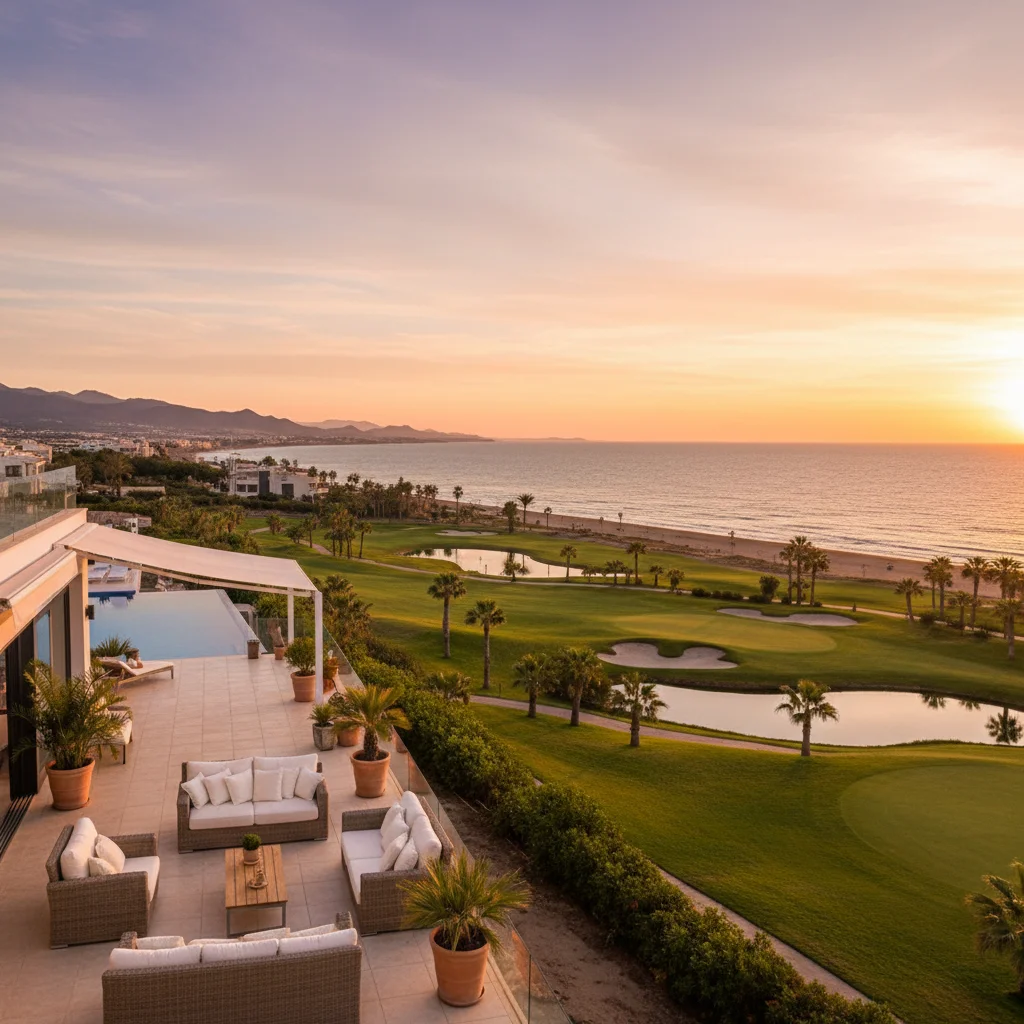
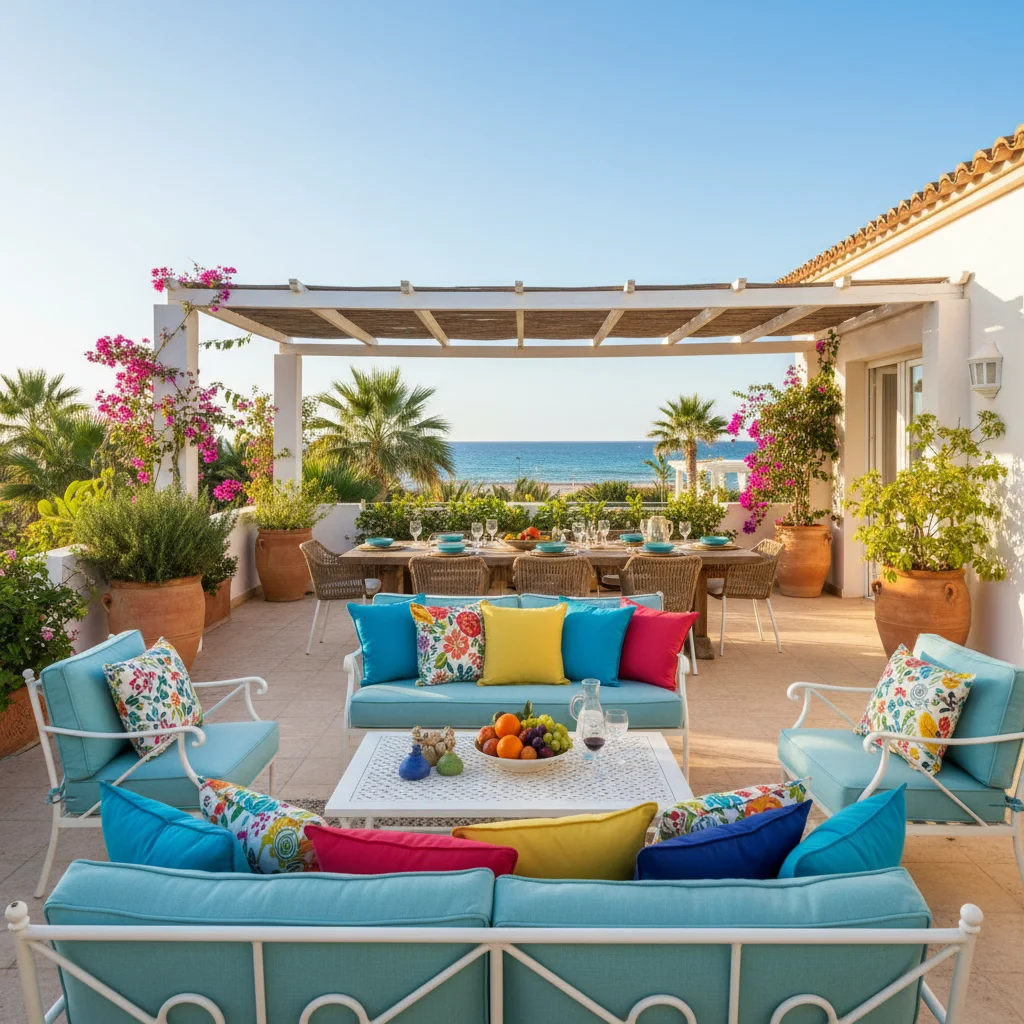
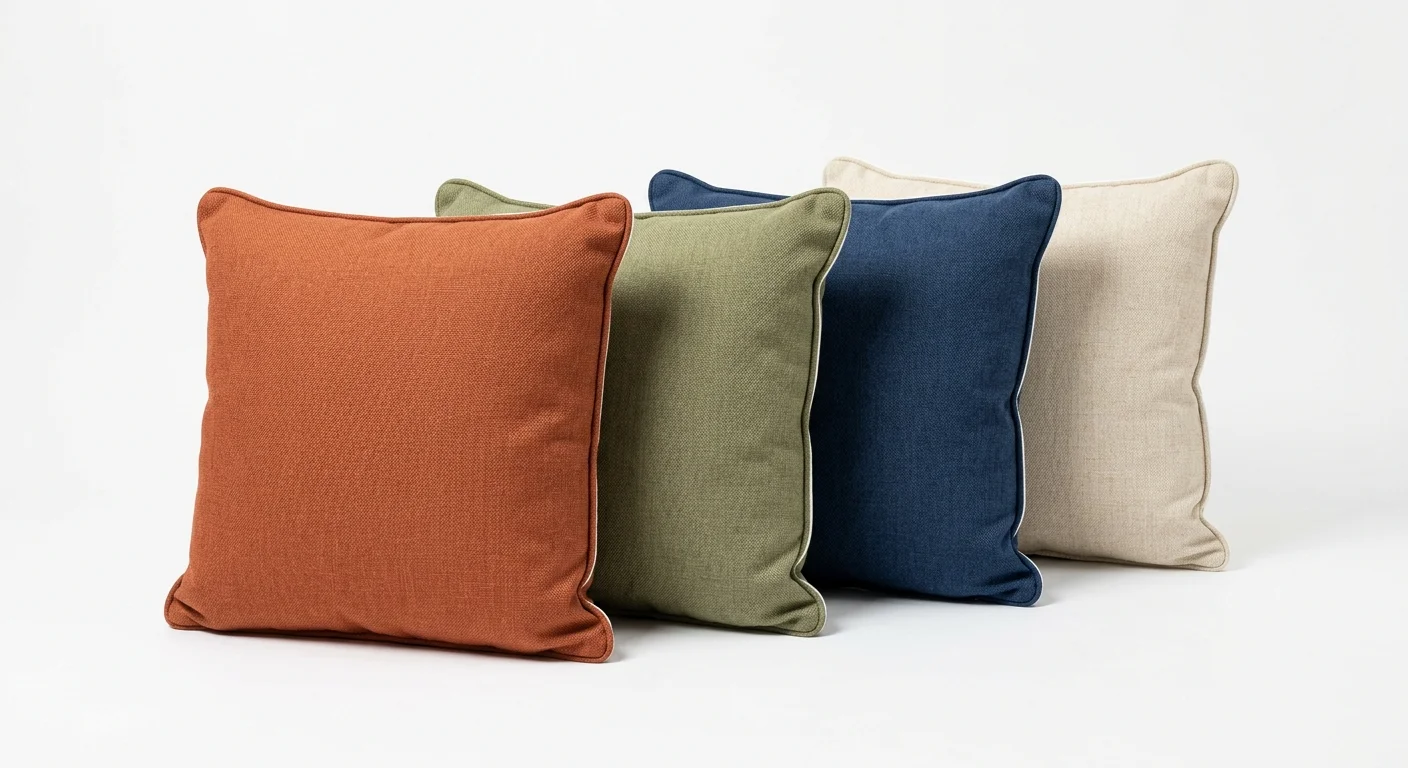
For the larger villas found in areas like Lo Romero Golf, the scale of the outdoor space allows for much more substantial textile installations. Here, we typically see large rattan lounge sets that require deep-filled cushions to be truly comfortable. If you have a south-facing villa, the heat reflection from the tiled terrace can be intense. In these cases, avoid dark colors like charcoal or navy for the main seating area; they will absorb the heat and become uncomfortably hot to sit on. Instead, use a "stone" or "mink" base color and add your pops of color through throw pillows. These smaller decorative pillows (usually €30 to €45 each) are easier to replace or store and allow you to update the look of your terrace seasonally without a major investment.
If your property features a pool area, the textiles on your sun loungers are the most vulnerable items you own. They face the most direct sun and are frequently soaked in chlorinated or salt water. I strongly recommend "box-edge" lounger cushions with a minimum thickness of 8cm. Look for straps that wrap around the back of the lounger rather than just simple ties, as the afternoon winds that blow in from the coast can easily shift lighter cushions. For a high-end, 100% solution-dyed acrylic lounger pad, you are looking at an investment of roughly €130. This price point ensures the foam won't bottom out after a few weeks of use and the fabric will remain soft against the skin rather than becoming scratchy and stiff. Combining these with a few water-resistant dining sets ensures that the entire outdoor area feels like a cohesive, professionally designed space rather than a collection of mismatched items.
Residents in the more traditional urbanizations often have built-in masonry seating. This is a classic Spanish architectural feature, but it is notoriously uncomfortable without the right padding. This is where custom-made textiles shine. We often suggest a "sandwich" foam construction—a firm base layer to prevent you from feeling the stone, topped with a softer layer for immediate comfort. Covering these in a breathable, mildew-resistant fabric transforms a cold stone bench into the most popular seat in the house. This is a common project for us in the older parts of town where families gather for long evening meals.
Logistics and Local Expertise in the South Costa Blanca
Navigating the delivery and setup of outdoor furniture and textiles in this region requires local knowledge that goes beyond a GPS. I have spent years driving these roads and understand the specific challenges of different neighborhoods. For instance, delivering to the older parts of Torre de la Horadada can be tricky during the summer months due to the narrow streets and increased pedestrian traffic. Similarly, the gated communities around the golf courses often have specific access times or security protocols that we are well-acquainted with. We don't just drop a box at your gate; we understand the layout of these developments and how to get your new textiles to your terrace efficiently.
Our service area extends consistently through the neighboring regions of Orihuela Costa, San Miguel de Salinas, and Torrevieja. We frequently find ourselves in San Miguel, helping residents with south-facing terraces that battle the intense heat reflecting off the surrounding salt flats. In Torrevieja, the challenge is often the high-density apartment living where logistics and lift access are primary concerns. We know which buildings have elevators that can accommodate a large lounge set and which require a more manual approach. This level of detail is what prevents a delivery day from becoming a stressful event for our clients.
When we deliver to Pilar de la Horadada, we are often working with people who are either setting up a new holiday home or finally upgrading their permanent residence after realizing the local climate's toll on their original furniture. We take pride in our ability to advise on the best placement for your items to maximize their lifespan. Sometimes moving a sun lounger just two meters to take advantage of the afternoon shadow from a wall can double the life of the cushions.
If you are looking to refresh your outdoor space or are starting from scratch with a new property, I invite you to reach out. We offer a free consultation where I can share more specific insights based on your exact location and property type. Whether you are in a beachfront apartment or a golf-side villa, the right textiles will fundamentally change how you use your home. There is no substitute for speaking with someone who has seen how these materials perform over several Spanish summers. We are regularly in the area and are always happy to stop by and discuss how we can make your terrace the most comfortable room in your house.
 JW'"
/>
JW'"
/>