Outdoor Living in Pilar de la Horadada
Pilar de la Horadada is the southernmost town in Alicante province, home to 25,000 residents with roughly 30% expats — British, German, and Nordic — spread between the traditional town centre and the popular coastal developments at Mil Palmeras and Torre de la Horadada.
Pilar de la Horadada sits right on the border with Murcia, giving it a character that blends Costa Blanca lifestyle with the slightly rawer, less developed feel of the coast further south. The town itself is a working Spanish agricultural centre — citrus and artichoke fields stretch inland — while the coast at Mil Palmeras and Torre de la Horadada has developed into a thriving expat community with modern apartment complexes, beachfront restaurants, and a Saturday morning market that draws crowds from across the southern Costa Blanca.
Mil Palmeras takes its name from the thousand palm trees planted along its beachfront promenade, and the area has grown into one of the south coast’s most popular residential zones. Modern villas and low-rise apartment buildings line the streets behind the beach, many with communal pools and gardens. Torre de la Horadada, centred on its sixteenth-century watchtower and small marina, has a more established feel with a mix of Spanish and expat residents.
Property prices average around €190,000, with modern two-bedroom apartments near the beach from €120,000 and detached villas with pools from €250,000 upwards. Lo Romero Golf, inland from the town centre, adds another residential cluster where golfers and retirees enjoy larger properties with open views across the countryside.
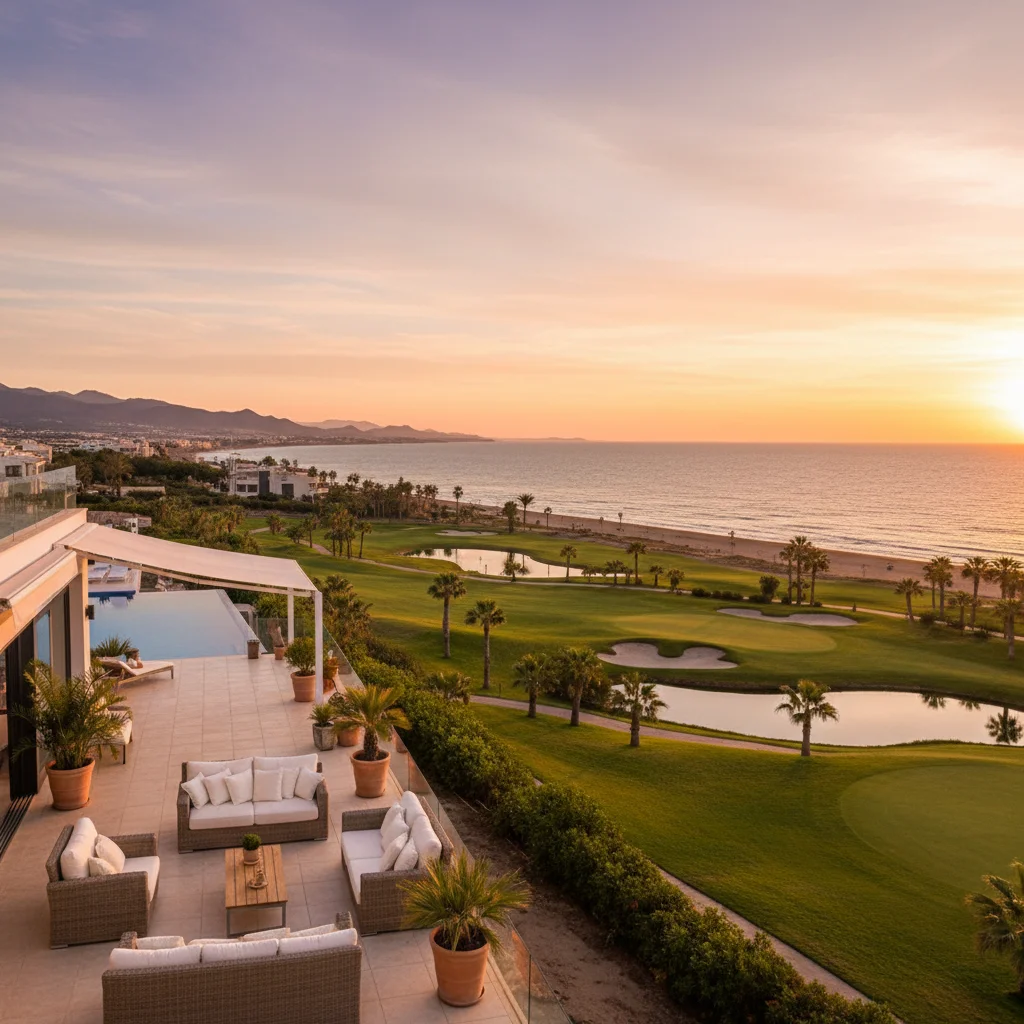
Pilar de la Horadada offers a mix of modern coastal living at Mil Palmeras and Torre de la Horadada, traditional Spanish town life inland, and spacious golf properties at Lo Romero — each presenting different outdoor cooking opportunities.
Choosing Your Setup in Pilar de la Horadada
The split between coastal apartments and inland villas in Pilar de la Horadada means equipment recommendations vary significantly depending on which part of town you call home.
Apartment owners at Mil Palmeras and Torre de la Horadada typically have terraces of 10 to 20 square metres, often with sea views that make outdoor dining a daily pleasure. For these spaces, Costa Blanca Outdoors recommends a compact gas BBQ — a quality 2-burner unit on a wheeled cart that can roll to the railing for cooking and tuck against the wall when not in use. Alternatively, an 18-inch kamado on a sturdy table offers smoking, grilling, and baking in a single compact unit.
Villa owners around Lo Romero Golf and the residential streets between the town centre and the coast have considerably more room to work with. A built-in gas BBQ with a stone or tile surround is the backbone of most installations we complete here. The modern construction of these properties — concrete block walls, tiled terraces, flat garden areas — makes outdoor kitchen installation straightforward compared to older traditional builds.
For the growing number of homeowners who want a complete outdoor cooking station, we recommend pairing the built-in BBQ with a wood-fired pizza oven. The coastal breeze at Mil Palmeras disperses smoke quickly, and the flat rooftop terraces on some of the newer villa developments are ideal elevated locations for a pizza oven with panoramic views.
Costa Blanca Outdoors recommends compact gas BBQs or small kamados for Mil Palmeras apartments, and built-in BBQ islands paired with pizza ovens for the larger villa properties around Lo Romero and inland Pilar.
Delivery to Pilar de la Horadada
We deliver across Pilar de la Horadada, Mil Palmeras, Torre de la Horadada, and Lo Romero Golf on our regular southern coastal route — the southernmost point of our Alicante delivery area.
As the last town before the Murcia border, Pilar de la Horadada marks the southern edge of our standard delivery zone. We cover the area regularly, combining runs with nearby Orihuela Costa and San Miguel de Salinas, making the trip down the AP-7 motorway straightforward.
For coastal apartment deliveries at Mil Palmeras and Torre de la Horadada, we confirm lift access and terrace dimensions in advance. Most of the modern blocks here have goods lifts, but we check every time to avoid surprises on delivery day. Villa deliveries at Lo Romero and the inland residential areas are simpler — wide streets, open driveways, and direct garden access.
Every delivery includes full white-glove service: unpacking, assembly, positioning, and a complete equipment demonstration. Torrevieja is twenty minutes north on the same route, and we regularly combine deliveries across all three areas. Standard delivery takes 5–10 working days for in-stock products, with custom outdoor kitchen builds requiring 3–4 weeks including design and installation.
Outdoor Lighting in Pilar de la Horadada: What You Need to Know
Living in the southernmost tip of the Valencian Community brings a specific set of requirements for any home improvement project, but outdoor lighting is perhaps the most transformative investment a resident here can make. Since I moved to this coast in 2019, I have noticed that the international demographic of Pilar de la Horadada, which sits at around thirty percent of the population, has a profound impact on how outdoor spaces are utilized. Our British, Nordic, and German neighbors bring a culture of evening alfresco dining and late-night socializing that demands more than just a single porch bulb. Whether you are situated in a modern villa near the fairways of Lo Romero Golf or an apartment closer to the bustling center of town, your terrace is essentially an extra room for nine months of the year. The primary challenge in this specific corner of the Costa Blanca is the sheer intensity of the environment. Unlike the greener, more sheltered areas further north toward Dénia, this area is significantly hotter and drier, with a flat landscape that leaves properties exposed to the elements.
The property landscape in this town is a unique mix. You have the established urbanisations where space is at a premium, and the newer developments in areas like Mil Palmeras and Torre de la Horadada where sleek, white-walled architecture is the standard. For those living in the more compact villas or townhouses, lighting is the most effective tool for creating a sense of depth. A well-placed set of LED spotlights directed at a feature wall or a palm tree can make a small 40-square-meter garden feel like a vast private retreat. In the golf resort communities, where shared gardens are common, residents often focus their lighting efforts on their private solariums and balconies. The goal here is usually to create a cozy, intimate atmosphere that provides privacy from neighbors while still offering enough illumination to enjoy a meal. The average property price of approximately 190,000 EUR in this area often means people are investing in homes with significant outdoor potential that hasn't been fully realized by the original developers.
Outdoor lighting is not just about aesthetics in this part of Spain; it is about extending the usability of your square footage. When the sun dips behind the Sierra de Escalona, the temperature becomes perfect for outdoor living, but without a layered lighting scheme, most people find themselves retreating indoors. I have helped over 200 families across the Costa Blanca, and those in the southern sector often emphasize the need for versatility. They want bright, clear light for cooking on the BBQ, but they also need soft, ambient tones for sitting with a glass of wine afterward. This transition is vital because our evenings here start late and last long. The architectural style in the newer parts of town often features clean lines and stark white renders, which act as a perfect canvas for grazing lights and uplighting. By understanding the local geography and the way the light interacts with these specific building materials, you can create a professional look that justifies the investment in your property.
Practical Expert Advice for the Southern Costa Blanca Climate
When selecting lighting for a home in this region, the first thing you must consider is the "Calima." Those of us who live here know all too well the fine, orange Saharan dust that periodically blankets the town. For outdoor lighting, this dust is more than an aesthetic nuisance; it is abrasive and can clog cooling fins on high-powered LED drivers or coat solar panels, drastically reducing their efficiency. If you are choosing fixtures, I always advise opting for smooth surfaces that are easy to wipe down. Intricate, textured lanterns might look traditional, but they become a nightmare to clean after a dust storm. Furthermore, the proximity to the salt lakes of Torrevieja and the Mediterranean coast at Torre de la Horadada creates a high-humidity environment with significant salt content in the air. This saline mist is incredibly corrosive. I have seen many "stainless steel" lights from big-box retailers rust within a single season. In this climate, you should only look for 316-grade stainless steel or, even better, high-quality polycarbonate or brass fixtures that can withstand the salt air without pitting or peeling.
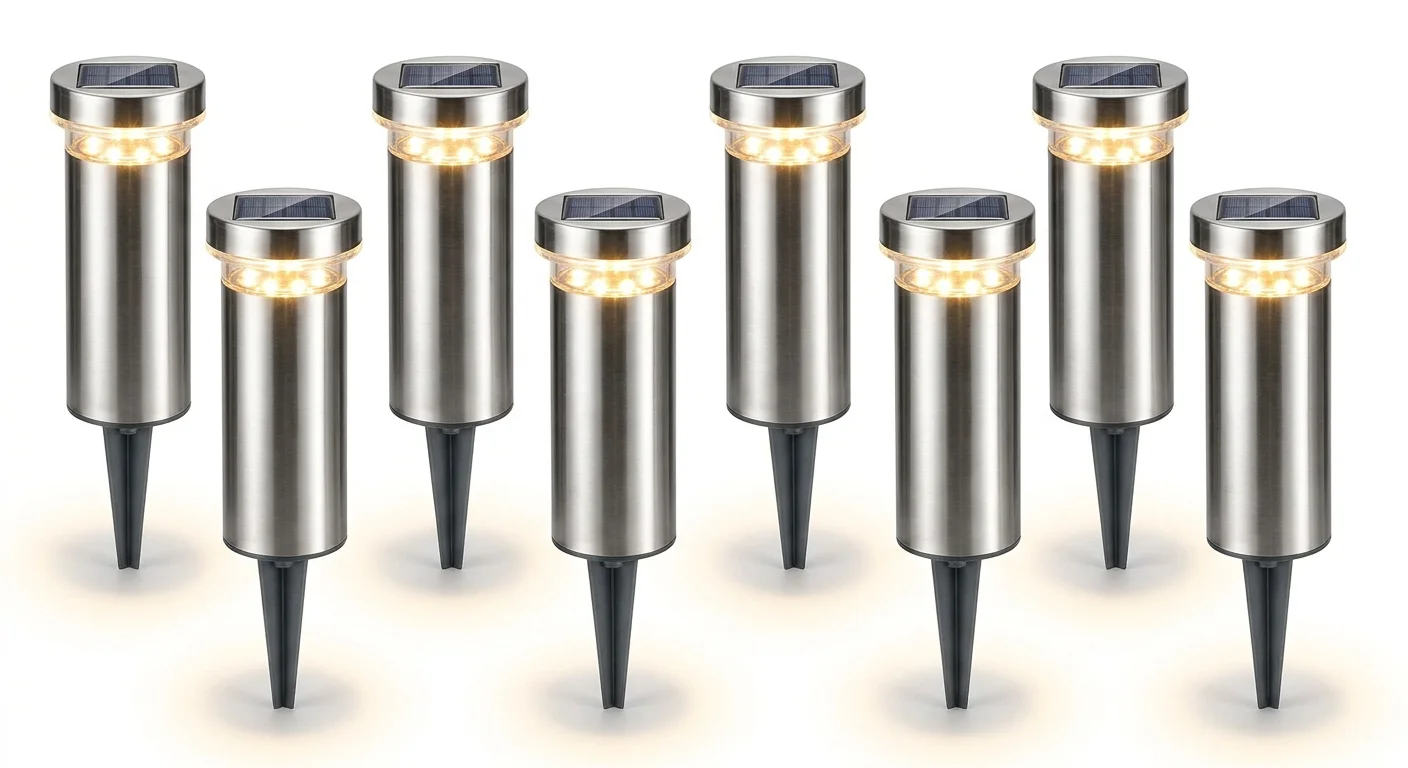
Solar power is a frequent topic of conversation among residents, given we enjoy over 3,000 hours of sunshine a year. However, the extreme heat of the afternoon sun here can be detrimental to the cheap lithium batteries found in low-end solar products. If you are going the solar route, it is worth spending more on professional-grade units. A high-quality solar path light in the 80 EUR to 120 EUR price bracket will feature a much larger photovoltaic panel and a battery designed to handle the 40-degree summer peaks we often see. For those in a "Comunidad de Propietarios" or community of owners, you must also be mindful of light pollution and community regulations. Most urbanisations in the area have rules regarding the height and brightness of external fixtures to ensure you aren't beaming light directly into a neighbor’s bedroom. It is usually better to use hooded "down-lighters" or recessed floor spots that contain the light within your own plot boundaries.
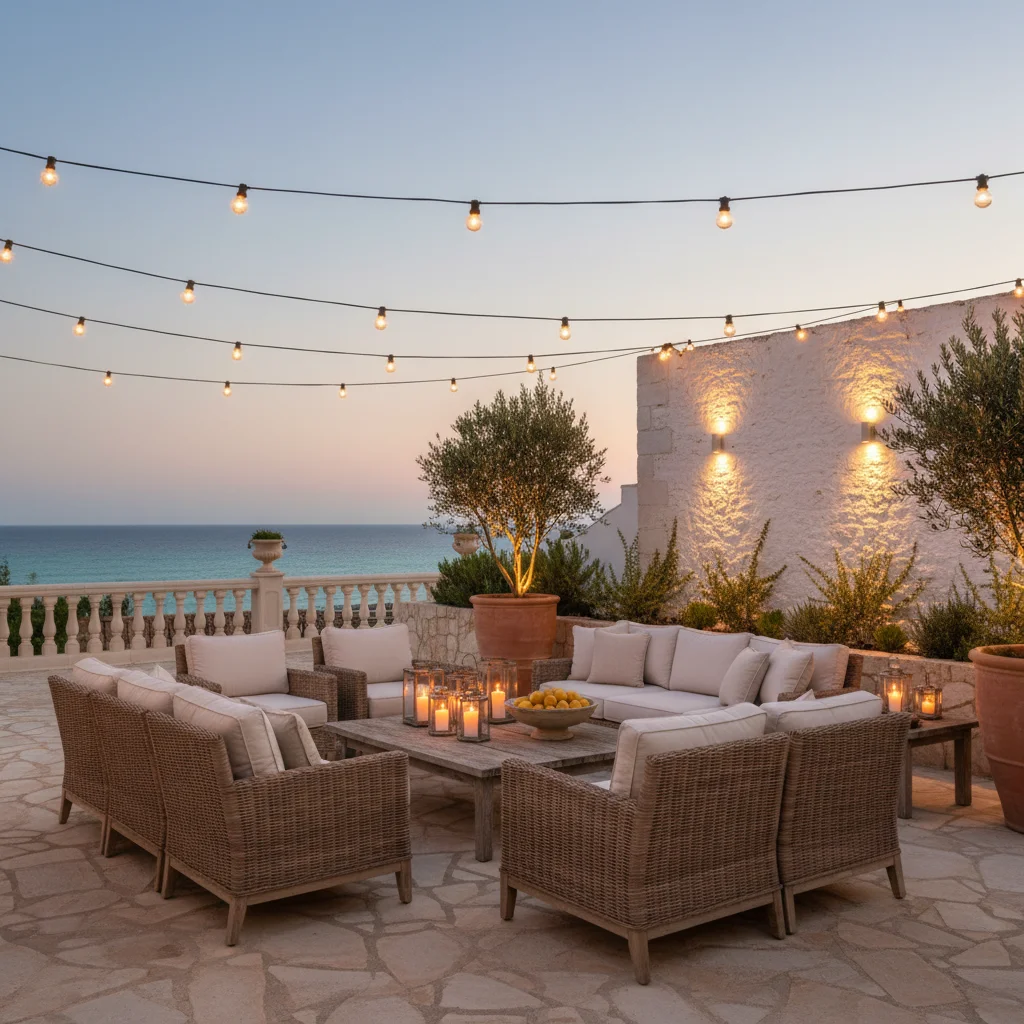
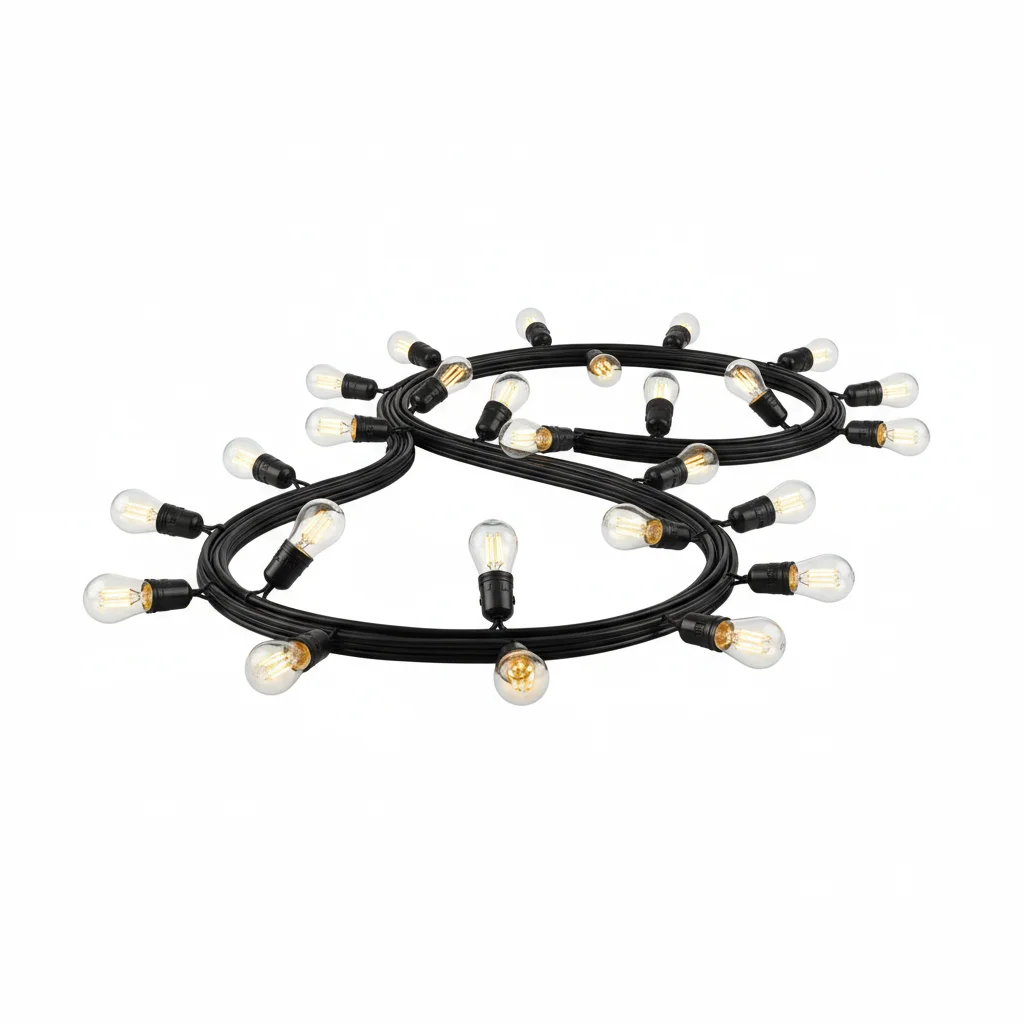
The technical specifications of your lighting are also critical. I recommend a minimum of IP65 rating for anything exposed to the rain and dust, but for ground-level spotlights that might be hit by irrigation systems, IP67 is a safer bet. In terms of color temperature, the golden rule on the Costa Blanca is to stick to "Warm White," typically around 2700K to 3000K. The harsh "Cool White" LEDs often remind people of hospital corridors and can make the beautiful local stone and white-washed walls look grey and lifeless. A professional-grade 10-meter string of festoon lights with replaceable LED bulbs, which usually costs around 115 EUR, can provide that classic Mediterranean terrace feel while being rugged enough to stay out year-round. Remember that the wind can also be a factor here; the flat plains around the town offer little protection, so any hanging lights or festoons must be securely anchored with guide wires to prevent them from becoming projectiles during a "Gota Fría" storm.
Tailored Recommendations for Local Property Types
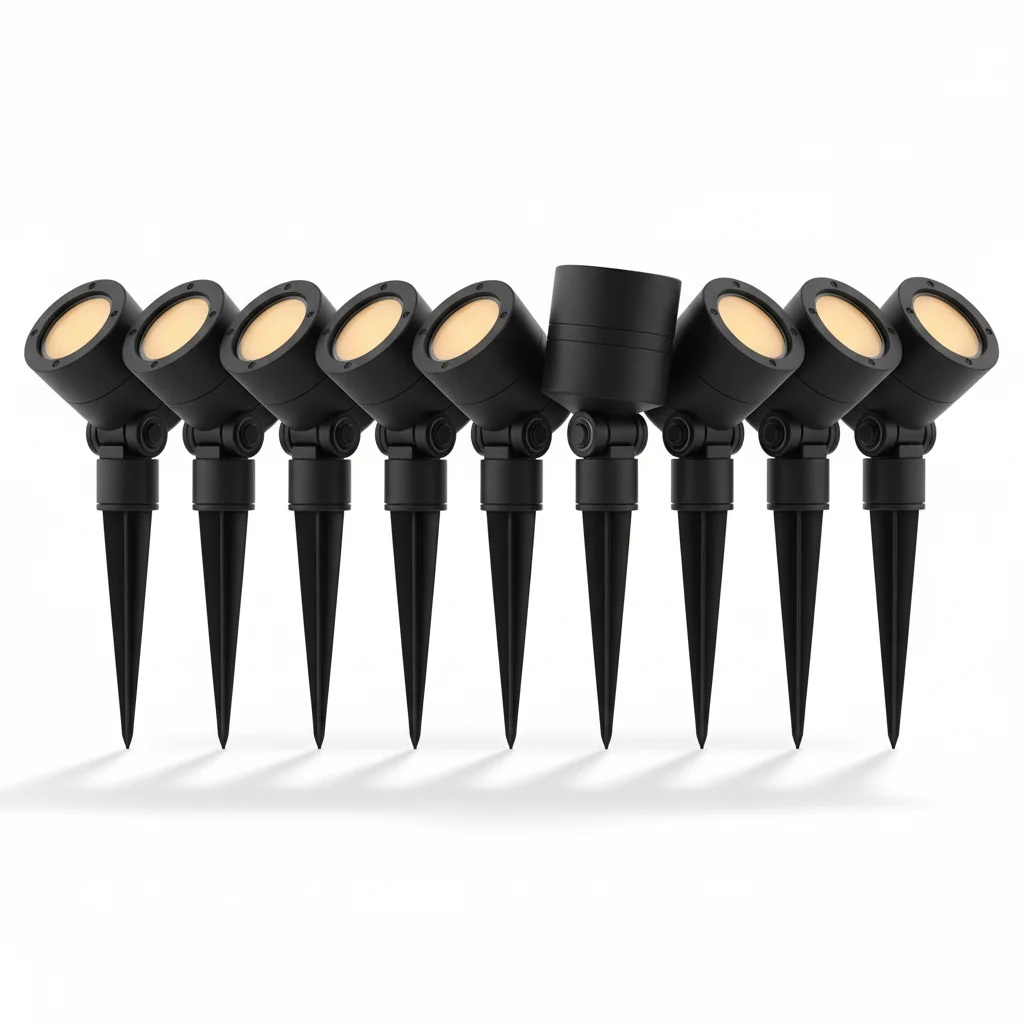
If you own one of the detached villas near Lo Romero Golf or in the quieter outskirts of the town, you likely have a larger plot that requires a multi-layered approach. For these properties, I recommend a combination of architectural uplighting and functional path lighting. Start by identifying two or three focal points—perhaps a mature palm tree or an olive tree. Use a 10W to 15W LED spike light (approximately 95 EUR per unit) positioned at the base of the trunk to create a dramatic vertical element. This provides enough reflected light to illuminate a large portion of the garden without the need for harsh floodlights. To connect these focal points, use low-level path lights that cast a pool of light downwards. This prevents the "airport runway" look while ensuring safety. If you have installed artificial grass, which is increasingly popular here due to the water restrictions and heat, we can run the low-voltage cabling discreetly along the perimeter under the 40mm pile, ensuring a clean finish without the need for extensive trenching.
For those living in the apartments or penthouses of Mil Palmeras, the challenge is often a lack of floor space. Here, the focus should shift to wall-mounted fixtures and overhead ambiance. I often suggest high-quality festoon lighting draped across a pergola or attached to the balcony railings. To make the space feel larger, use "wall grazing" techniques. By placing a slim LED bar at the base of a terrace wall, the light climbs the surface, highlighting the texture and creating a sense of boundary that makes the terrace feel like a true outdoor room. If you are adding garden fencing for privacy—a common requirement in the more densely packed urbanisations—you can integrate small, solar-powered cap lights onto the fence posts. This defines the perimeter of your private space without requiring any electrical work. A full lighting setup for a standard 20-square-meter apartment terrace typically ranges from 250 EUR to 600 EUR, depending on whether you opt for high-end dimmable systems.
Integrating your lighting with other garden features is the hallmark of a professional setup. If you are considering artificial grass, it is the perfect time to install recessed "walk-over" lights into the surrounding tiles or decking. The interplay between the vibrant green of the grass and the warm glow of the lights creates a lush, oasis-like feel that is hard to achieve with plants alone in our dry climate. For villa owners with larger boundary walls, avoid the temptation to put a light every two meters. Instead, group your lights to create "pools" of interest. This creates a more sophisticated, high-end resort aesthetic that mirrors the luxury feel of the local golf clubs. By using a 12V transformer system, you can safely manage the entire setup yourself, and it allows for much easier expansion later if you decide to add more lights to a new seating area or outdoor kitchen.
Professional Delivery and Deep Local Knowledge
At Costa Blanca Outdoors, we understand the logistical nuances of working in and around Pilar de la Horadada. We regularly deliver and consult in neighboring areas such as Orihuela Costa, San Miguel de Salinas, and Torrevieja. Our knowledge of the local road networks, from the AP-7 coastal motorway to the N-332, ensures that we can get products to your door without the delays often associated with national couriers who struggle to find specific "fincas" or numbered villas within sprawling urbanisations. We know the layout of the local "calles" and the specific challenges of access in the older parts of the town center, where narrow streets can make large deliveries difficult. When we provide a consultation, we aren't just looking at a catalog; we are looking at the orientation of your house to see how the afternoon sun will hit your fixtures and which side of the building will bear the brunt of the salt-laden sea breeze.
My experience with over 200 families has taught me that the "pre-installation" often promised by developers in this area is rarely as straightforward as it seems. We often find that the conduit pipes laid during construction are blocked or lead to nowhere, which is why we specialize in surface-mounted, low-voltage systems that look professional without needing to tear up your terrace tiles. We also understand the local "comunidad" dynamics and can advise on what types of lighting are generally accepted and what might cause friction with your neighbors. This local insight is what separates a generic purchase from a successful home improvement. We are familiar with the specific soil types in the area, which is important when installing spike lights or anchoring larger lighting posts, as the ground can be incredibly hard and rocky once you get a few inches below the surface.
If you are ready to stop sitting in the dark and start enjoying your outdoor space to its full potential, I invite you to get in touch. We offer a free consultation where I can walk through your garden or terrace with you, either in person or via a video call, to discuss your specific needs. Whether you are looking for a simple set of high-quality solar lights for a Mil Palmeras balcony or a comprehensive architectural lighting plan for a villa in Lo Romero, we have the local expertise to ensure you get it right the first time. Our price range for lighting solutions spans from 50 EUR for high-quality single fixtures to 2,000 EUR for full-scale, multi-zone automated systems. Let us help you turn your Costa Blanca house into a home that truly shines after the sun goes down.
 JW'"
/>
JW'"
/>