Outdoor Living in Orihuela Costa
Orihuela Costa is the southern Costa Blanca’s largest expat corridor, with 30,000 residents spread across Playa Flamenca, La Zenia, Cabo Roig, Villamartín, and Campoamor — 60% of them British, Scandinavian, and Irish.
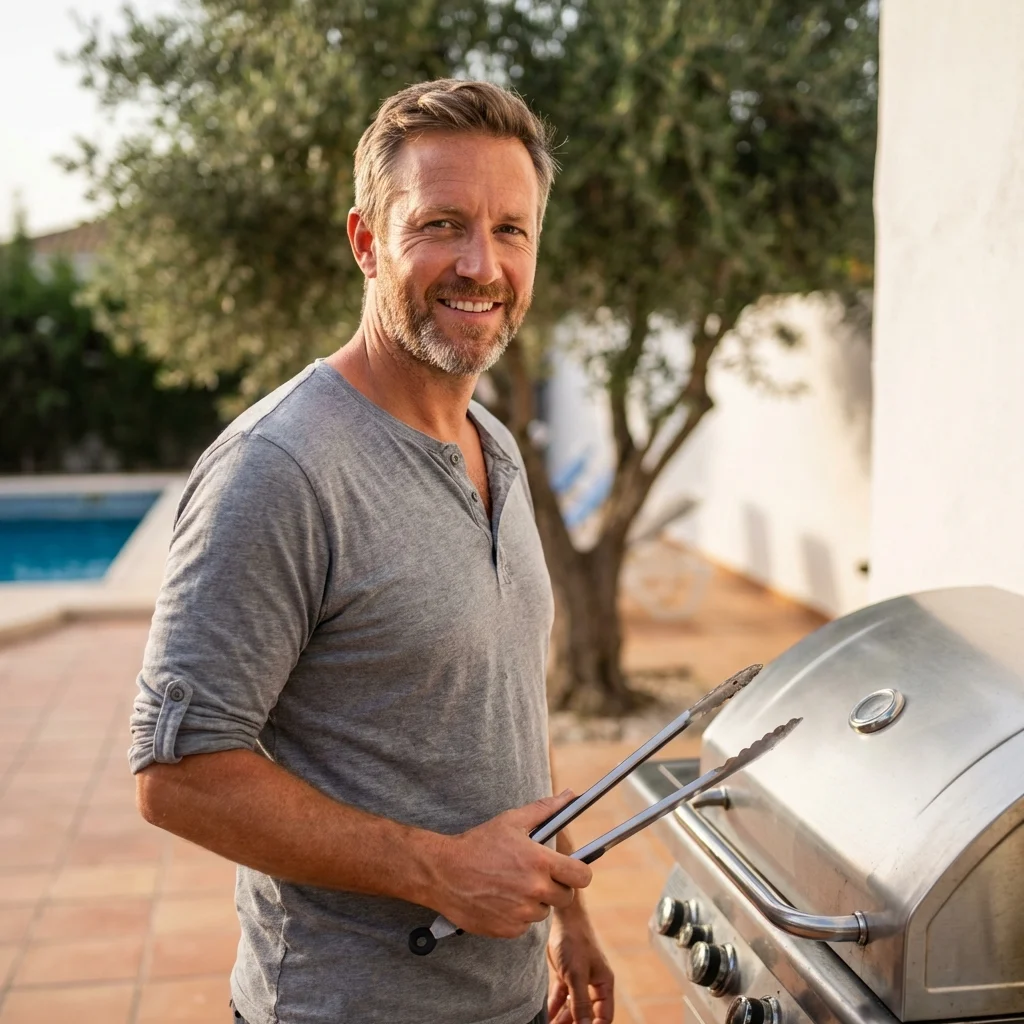
Orihuela Costa is not a single town but a string of purpose-built coastal urbanisations stretching from Punta Prima in the north to Dehesa de Campoamor in the south. Each has its own character, but they share a common thread: expat communities who have embraced outdoor living with an enthusiasm that surprises even the locals. On any given weekend between March and November, the scent of barbecue smoke drifts across rooftop solariums and poolside terraces from La Zenia to Cabo Roig.
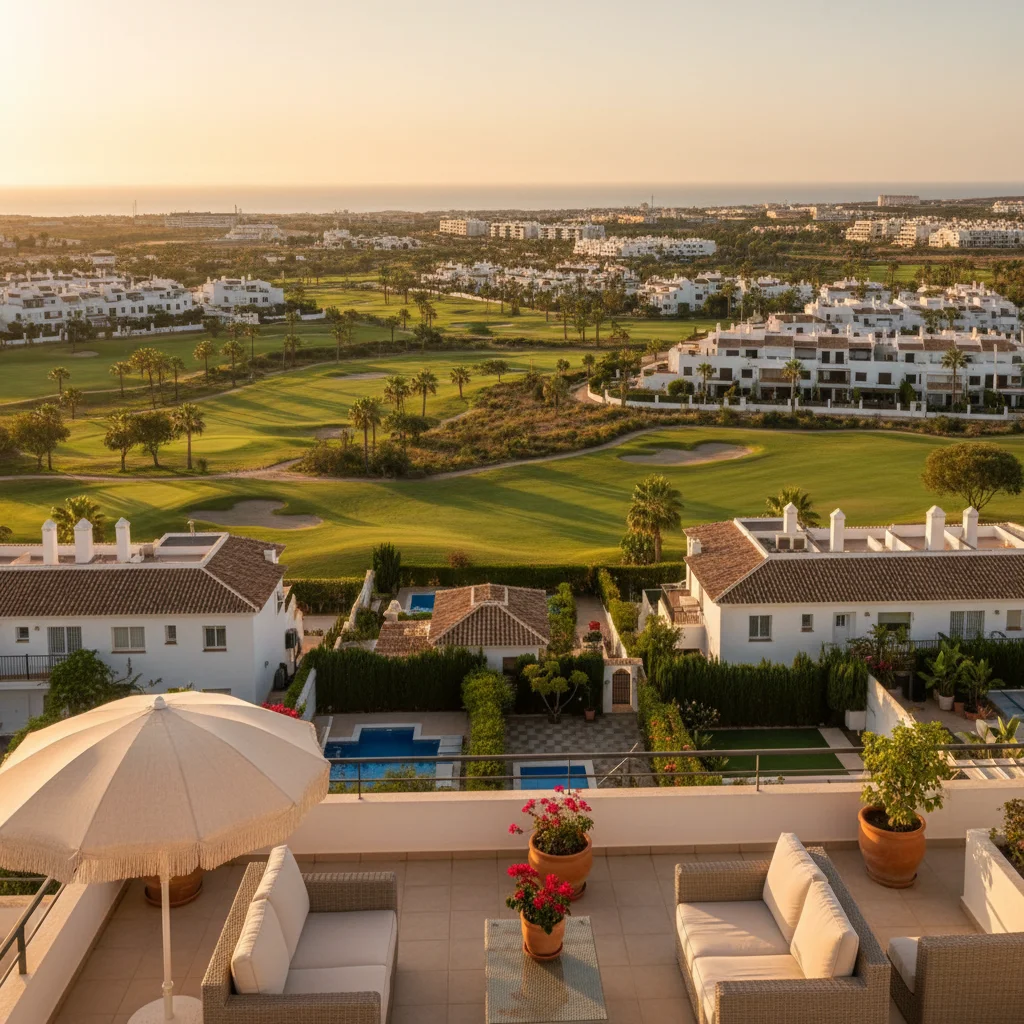
The property mix is diverse. Villamartín and Playa Flamenca lean toward apartments and townhouses with communal pools, where rooftop solariums of 15–30 square metres serve as outdoor kitchens, dining rooms, and sunbathing spots all in one. Cabo Roig and Dehesa de Campoamor offer more detached villas with private gardens and larger terraces. Average property prices sit around €200,000, though Campoamor stretches higher.
Social life revolves around the commercial centres — La Zenia Boulevard, the Cabo Roig strip, the Villamartín plaza — and the beach bars and restaurants that line the coast. The British pub culture here is strong, and many expats replicate that social atmosphere at home with regular barbecue gatherings.
Orihuela Costa’s diverse property mix — from Villamartín apartments with rooftop solariums to Cabo Roig villas with private gardens — supports outdoor cooking setups at every scale and budget.
Choosing Your Setup in Orihuela Costa
Whether you are grilling on a La Zenia solarium or building a full outdoor kitchen beside a Campoamor pool, Orihuela Costa’s year-round sunshine justifies serious investment in outdoor cooking equipment.
For apartment and townhouse owners in Playa Flamenca and Villamartín, space efficiency is everything. A compact kamado grill (around 38–47cm) fits comfortably on most solariums and delivers remarkable versatility — grilling, smoking, roasting, and even baking pizza. Pair it with a foldable prep cart and you have a complete cooking station that stores neatly when not in use.
Villa owners in Cabo Roig, Campoamor, and Dehesa de Campoamor have room for more ambitious projects. Costa Blanca Outdoors recommends a built-in gas BBQ as the foundation, adding a pizza oven for weekend entertaining and a kamado for the dedicated cooks in the family. Natural stone or tiled countertops tie the setup into the existing terrace aesthetic.
Gas is the most popular fuel choice across Orihuela Costa. Butane bombonas are available at petrol stations and hardware stores throughout the area, and many properties have existing gas points. For charcoal and wood, local suppliers serve the corridor from Torrevieja through to Pilar de la Horadada.
Costa Blanca Outdoors recommends compact 38–47cm kamado grills for Orihuela Costa apartment solariums, and built-in gas BBQ foundations with pizza oven additions for villa owners in Cabo Roig and Campoamor.
Delivery to Orihuela Costa
We deliver across all Orihuela Costa urbanisations weekly, from Punta Prima to Dehesa de Campoamor, with experience navigating gated communities and apartment block access.
Orihuela Costa is our highest-volume delivery area on the southern Costa Blanca. We know the access points for gated communities, the parking restrictions near La Zenia Boulevard, and the best times to deliver to apartment complexes without disrupting communal areas. For solarium deliveries in Villamartín and Playa Flamenca, we confirm staircase and lift access in advance — getting a kamado grill to a fourth-floor rooftop requires planning.
Every delivery includes full setup and a walkthrough. For built-in kitchen projects, we coordinate with local contractors who specialise in terrace construction across the urbanisations and understand each community’s building regulations.
We serve neighbouring Torrevieja and Rojales on the same runs, and customers in San Miguel de Salinas are just inland. Standard delivery is 5–10 working days for stocked items.
High-Performance Outdoor Cushions and Textiles for Orihuela Costa Living
Living on this specific stretch of the Southern Costa Blanca requires a different approach to outdoor textiles than you might find in the cooler, greener north around Dénia or Jávea. Having lived here since 2019 and helped over 200 families furnish their terraces, I have seen exactly what happens when the wrong materials meet our unique environment. This area is characterized by a significant international population, with roughly 60% of residents coming from outside Spain. Whether you are part of the British community in Villamartín or the Scandinavian and German groups favoriting the sleek apartments of La Zenia, the outdoor terrace is the most important room in your home. With an average property price around €180,000, many residents here own modern apartments or townhouses within golf resort communities. In these urbanizations, space is often at a premium, making the quality of your seating far more important than the quantity. Your terrace is where you spend 80% of your time, but it is also an environment that is remarkably hostile to standard fabrics.
The outdoor culture in this part of the coast is built around the terrace dining experience and late-evening social gatherings. Because we deal with a drier, hotter climate than our neighbors to the north, the sun here is relentless, especially during the peak hours between 2:00 PM and 6:00 PM. In Playa Flamenca and Cabo Roig, the lifestyle revolves around maximizing these outdoor hours. However, I often see people make the mistake of buying standard cushions from local markets or general furniture stores that are not rated for high UV exposure. Within one season, a deep navy blue can fade to a dusty grey, and the internal foam often begins to crumble. This happens because the sunlight here does not just bleach the color; it physically degrades the chemical bonds in the polyester. When you are investing in your outdoor space, the textiles should be viewed as a technical component of your home, not just a decorative afterthought.
In the localized microclimate of the southern coast, we also have to contend with the proximity to the salt lakes. If you live near the Salinas, you will notice a specific type of humidity that carries a high salt content. This salt air is incredibly corrosive, not just to metal, but to the fibers of your cushions. It gets trapped in the weave of the fabric and attracts moisture during the night, which can lead to rapid mildew growth even in a dry climate. I have walked onto many terraces in the local area where expensive-looking lounge sets are ruined by small black spots of mold that have taken hold deep within the cushion fibers. Choosing the right textiles means selecting materials that are specifically engineered to be hydrophobic and resistant to the salt-rich atmosphere we experience every day.
Technical Considerations for the Southern Costa Blanca Climate
When selecting textiles for your home, the most critical factor is the UV resistance rating. In our region, the afternoon sun is powerful enough to heat tile floors to over 50 degrees Celsius. Your cushions are sitting in that heat all day. I always recommend solution-dyed acrylics over standard piece-dyed polyester. In a solution-dyed fabric, the color is added while the fiber is still in a liquid state, meaning the color goes all the way through the thread like a carrot, rather than just being printed on the surface like a radish. This is why a premium throw pillow priced at €45 might seem expensive compared to a €10 version from a supermarket, but the premium version will hold its color for five years, while the cheap one will look five years old within five weeks. For a full replacement set for a rattan lounge, you should expect to invest between €300 and €500 for high-grade technical fabrics that can withstand our 11+ UV index during July and August.
Another local factor that many newcomers overlook is the calima. This fine, Saharan dust blows across from Africa and can coat everything on your terrace in a layer of orange silt within hours. If your cushions do not have a tight weave or a protective Teflon coating, this dust will settle deep into the fibers. When the evening dew hits or a light rain shower occurs, that dust turns into mud. This is why I insist that every cushion we provide for residents in the local area must have a removable, machine-washable cover with high-quality, salt-resistant zippers. In places like Cabo Roig, where the salt air is particularly thick, cheap metal zippers will oxidize and seize up within months. We look for heavy-duty plastic or treated metal zippers that can handle the saline environment without sticking.
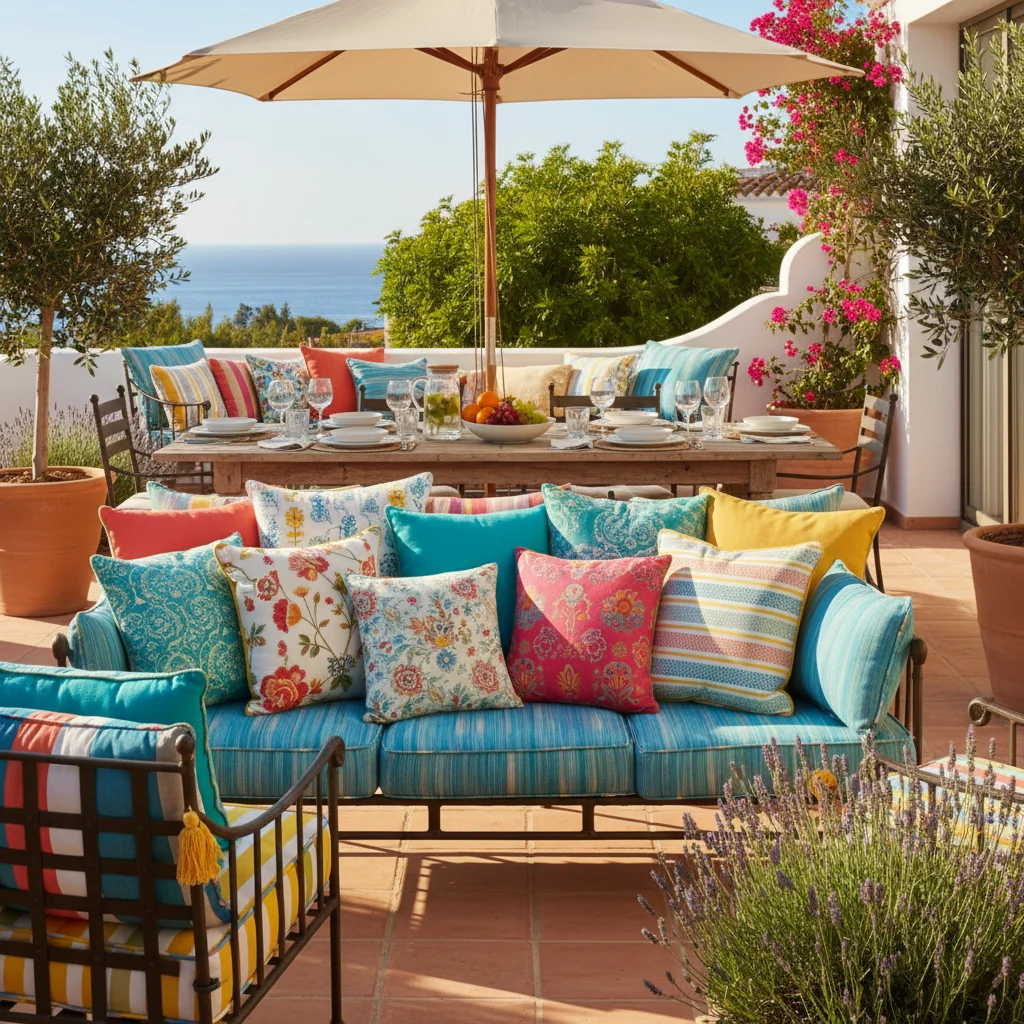
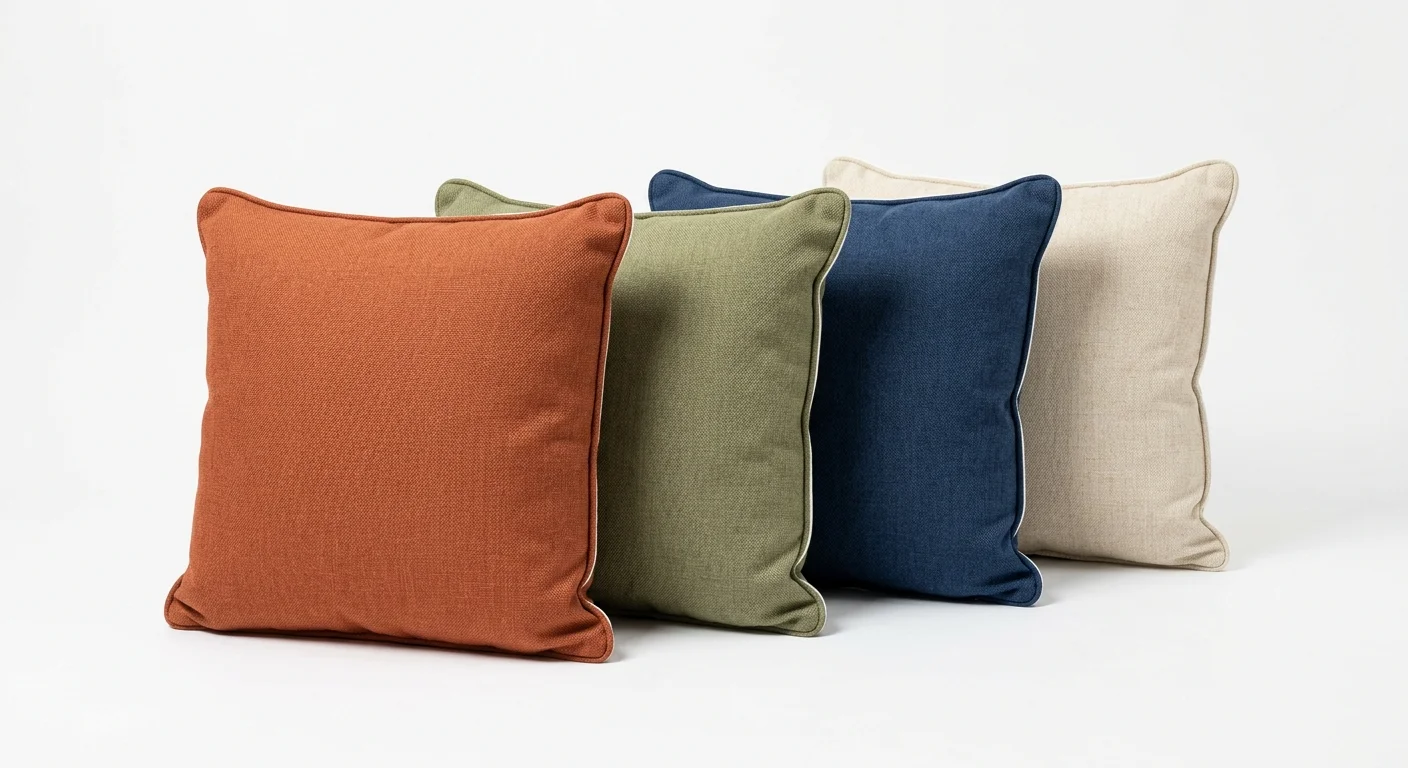
You must also consider the rules of your Comunidad de Propietarios. Many urbanizations, particularly the more established ones in Villamartín or the newer developments near the golf courses, have strict aesthetic guidelines. These rules often dictate the colors allowed for awnings and, by extension, the visible textiles on your terrace. It is quite common for a community to mandate specific shades of beige, grey, or terracotta to maintain a uniform look for the building. Before you spend €200 on a set of bright Mediterranean blue sun-lounger cushions, check your community statutes. I have seen residents forced to remove brand-new textiles because they didn't match the community’s approved color palette. Generally, a neutral base with colorful throw pillows is the safest and most versatile way to navigate these rules while still personalizing your space.
Maintenance in this area involves more than just a quick brush-off. Because of the high dust levels and salt, I recommend a light hosing of your outdoor textiles once a month, followed by air drying in the shade. Never dry your cushions in direct sunlight after washing, as the water can act as a magnifying glass and cause uneven fading. For the foam interiors, we recommend high-density "dry-feel" foam. This material has an open-cell structure that allows water to pour straight through rather than soaking it up like a sponge. If you leave a standard foam cushion out during one of our occasional Gota Fría downpours, it can take days to dry and will likely develop a musty smell. A dry-feel foam cushion, however, will be ready to sit on again within a few hours of the sun coming back out.
Tailored Textile Recommendations for Local Property Types
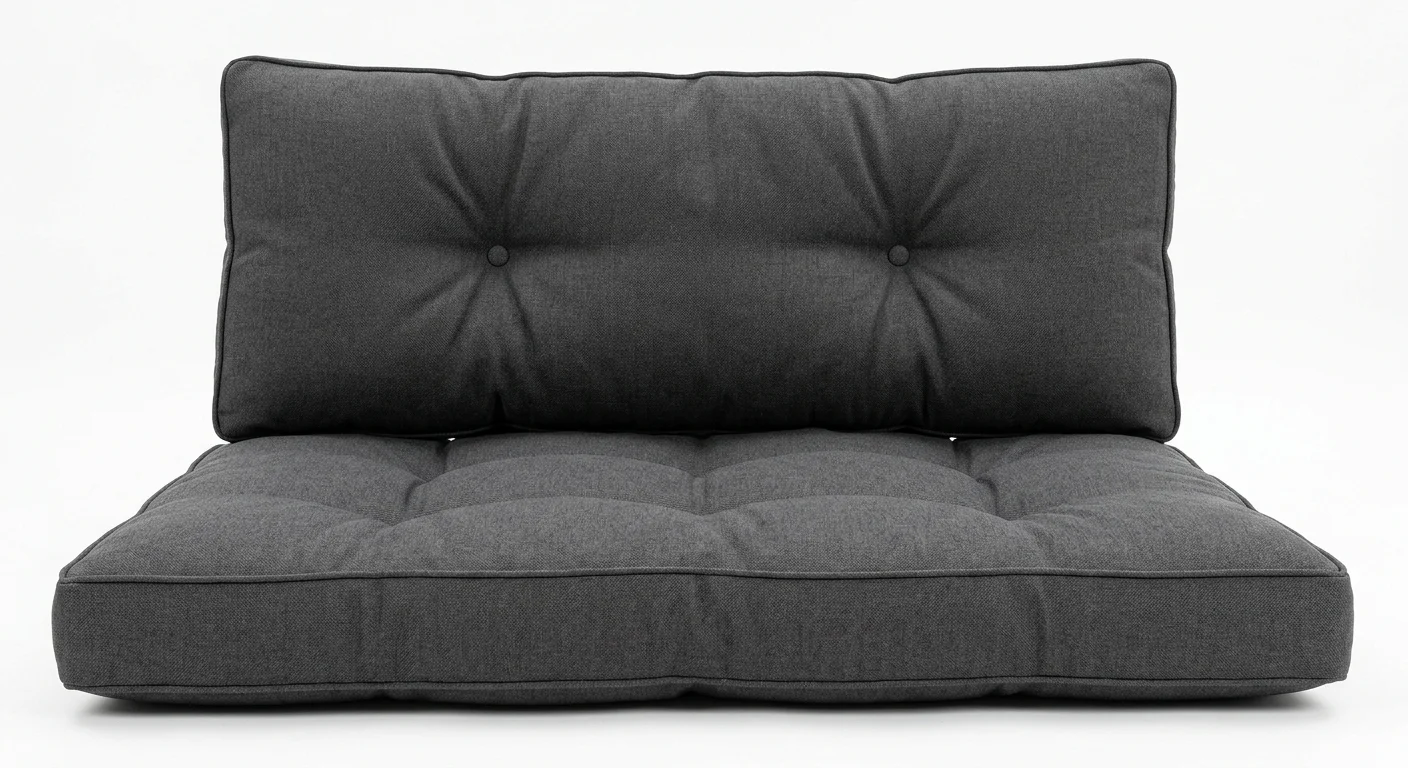
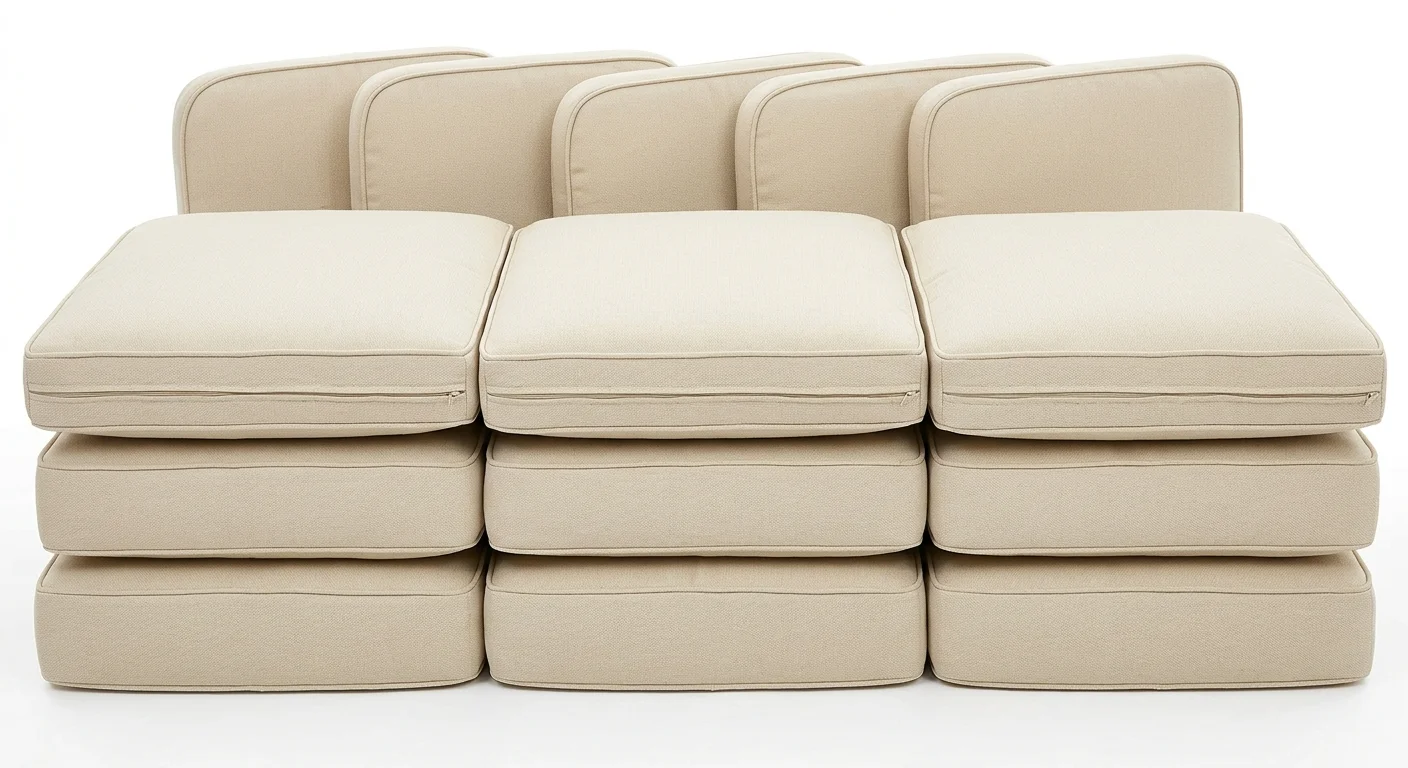
The way you furnish your outdoor space should depend heavily on your specific property type and how it sits in relation to the sun. For those living in the larger villas in areas like Villamartín or the detached homes in Cabo Roig, you likely have the luxury of space for a full rattan-lounge-set. In these larger settings, I recommend using thick, structured base cushions—at least 12cm to 15cm in depth—to provide the necessary support for long afternoons of socializing. Since these larger sets are often difficult to move, you should look for textiles with a high weight per square meter, typically around 280g/m² or higher. This weight indicates a dense weave that will resist tearing and prevent the foam from showing through the fabric over time. For a large villa setup, a combination of neutral base cushions with a mix of textured throw pillows in the €35 to €50 range creates a sophisticated, layered look that mimics the interior of a high-end home.
For apartment residents in La Zenia or Playa Flamenca, the challenge is often a combination of limited square footage and high wind. On a fourth-floor balcony, the "Zenia breeze" that kicks up in the late afternoon can be surprisingly strong. I have seen many unweighted cushions end up in a neighbor's garden or, worse, in the communal pool. For these properties, I recommend cushions with integrated ties or Velcro straps that secure them firmly to the frame of your dining-sets or sun-loungers. If you are using loose throw pillows, consider those with a slightly heavier fill or keep them stored in a weather-resistant deck box when not in use. Space-saving modular lounge sets are popular here, and you can transform their look seasonally just by swapping out the textiles, which is a much more cost-effective way to refresh your home than replacing the furniture itself.
Sun-loungers are a staple for anyone with a private solarium or a spot by the community pool. However, the standard thin pads sold in many shops offer very little comfort on a hard plastic or aluminum frame. I recommend a minimum thickness of 8cm for sun-lounger cushions, using a foam density of at least 25kg/m³. This ensures the cushion doesn't bottom out when you sit on it. If your solarium is south-facing, it will receive the maximum possible UV hit. In this scenario, do not settle for anything less than a 100% solution-dyed acrylic fabric. While a polyester cushion might cost €30, it will likely be uncomfortable and faded within a year. Investing €80 to €120 in a high-quality, breathable lounger cushion will provide better comfort and save you money in the long run as it will last for many seasons.
Integrating your textiles across different zones of your terrace helps create a cohesive living environment. You can use the same fabric for your dining chair pads as you do for the accents on your lounge sofa. This visual thread makes a small apartment terrace feel much larger and more considered. In our local climate, we also have to think about heat absorption. While dark charcoal and navy are very popular for their modern look, they absorb a tremendous amount of heat. On a 35-degree day, a dark cushion can become uncomfortably hot to the touch. I often suggest choosing mid-tones or lighter neutrals for the main seating surfaces and saving the darker, bolder colors for smaller accents like piping or decorative pillows. This keeps the seating area cool while still providing that high-contrast, modern aesthetic that many of the newer developments in the area are known for.
Expert Delivery and Support Across the Region
Our service is built on a deep understanding of the local geography and the logistical challenges of living on the Southern Costa Blanca. We regularly deliver to homes throughout Torrevieja, Pilar de la Horadada, San Miguel de Salinas, and Rojales. We know that many of the urbanizations in the area, particularly the older parts of Cabo Roig or the gated communities in Playa Flamenca, can be difficult to navigate with large delivery vehicles. We manage the logistics of getting your items to you, whether you live in a penthouse apartment with restricted lift access or a villa with a narrow driveway. Our team is familiar with the local access routes and the peak traffic times around the N-332 and Zenia Boulevard, ensuring that we get your products to you without the stress of local delivery delays.
We also understand that many of our clients are not in Spain year-round. If you are furnishing a holiday home or a rental property, you need textiles that can be left for periods of time without deteriorating. We can advise on the best storage solutions and the most durable fabrics that will withstand being closed up in a humid environment or left in the sun while the property is vacant. For rental owners, we focus on high-durability, stain-resistant fabrics that can handle the heavy use of holidaymakers while still looking premium for your next guests. We know which fabrics can be bleached and which ones require gentler care, helping you maintain your investment from afar.
Every property in this area is different, and the way the sun hits a terrace in Villamartín can be completely different from a balcony in Pilar de la Horadada. This is why we don't just sell products; we provide a localized expertise that ensures you don't waste money on items that aren't fit for purpose. We offer a free consultation to help you measure your space and select the right materials for your specific orientation and usage patterns. We can help you navigate the technical specifications of foam densities and UV ratings, ensuring that your outdoor space remains a comfortable, stylish, and durable extension of your home for years to come. Whether you are looking to replace a full set of lounge cushions or simply want to add a few high-quality accents to your terrace, our goal is to provide you with the best possible advice based on years of experience in this unique Mediterranean climate.
 JW'"
/>
JW'"
/>