Outdoor Living in Pilar de la Horadada
Pilar de la Horadada is the southernmost town in Alicante province, home to 25,000 residents with roughly 30% expats — British, German, and Nordic — spread between the traditional town centre and the popular coastal developments at Mil Palmeras and Torre de la Horadada.
Pilar de la Horadada sits right on the border with Murcia, giving it a character that blends Costa Blanca lifestyle with the slightly rawer, less developed feel of the coast further south. The town itself is a working Spanish agricultural centre — citrus and artichoke fields stretch inland — while the coast at Mil Palmeras and Torre de la Horadada has developed into a thriving expat community with modern apartment complexes, beachfront restaurants, and a Saturday morning market that draws crowds from across the southern Costa Blanca.
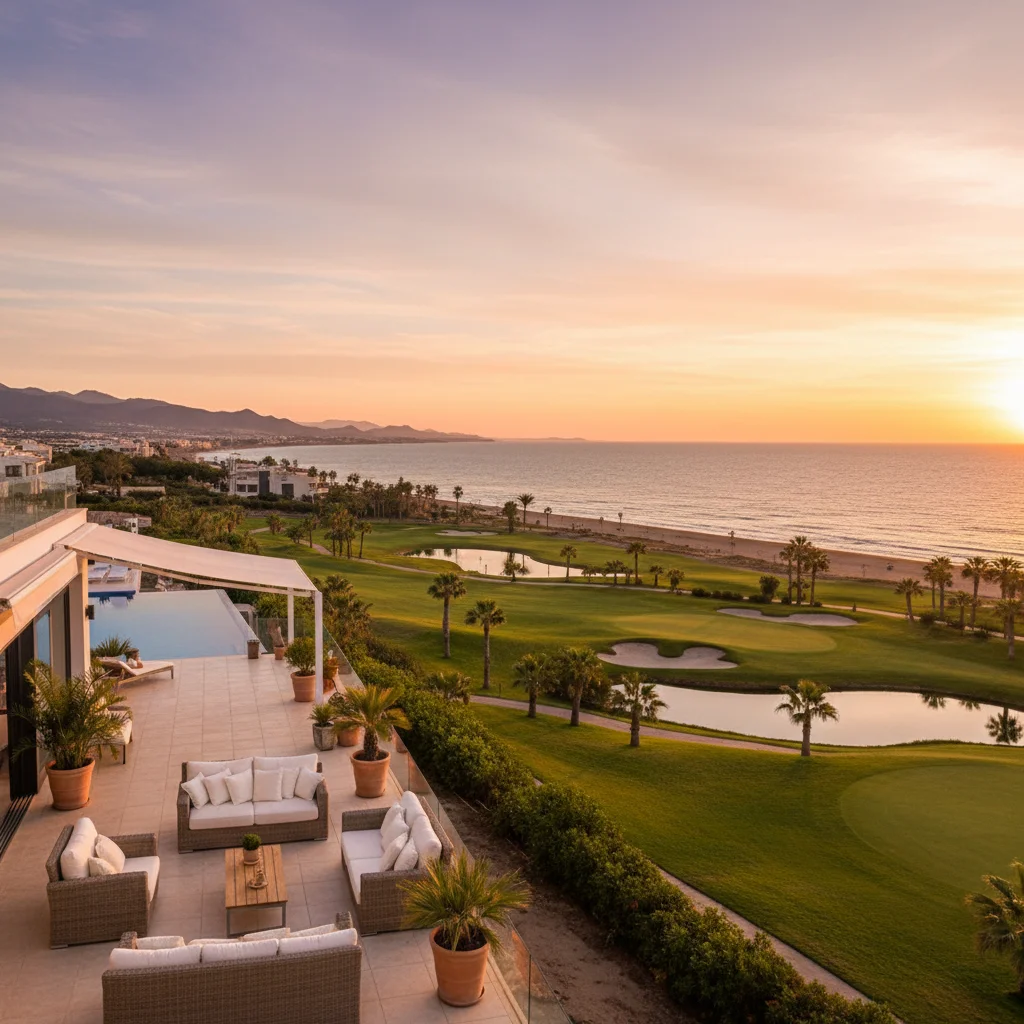
Mil Palmeras takes its name from the thousand palm trees planted along its beachfront promenade, and the area has grown into one of the south coast’s most popular residential zones. Modern villas and low-rise apartment buildings line the streets behind the beach, many with communal pools and gardens. Torre de la Horadada, centred on its sixteenth-century watchtower and small marina, has a more established feel with a mix of Spanish and expat residents.
Property prices average around €190,000, with modern two-bedroom apartments near the beach from €120,000 and detached villas with pools from €250,000 upwards. Lo Romero Golf, inland from the town centre, adds another residential cluster where golfers and retirees enjoy larger properties with open views across the countryside.
Pilar de la Horadada offers a mix of modern coastal living at Mil Palmeras and Torre de la Horadada, traditional Spanish town life inland, and spacious golf properties at Lo Romero — each presenting different outdoor cooking opportunities.
Choosing Your Setup in Pilar de la Horadada
The split between coastal apartments and inland villas in Pilar de la Horadada means equipment recommendations vary significantly depending on which part of town you call home.
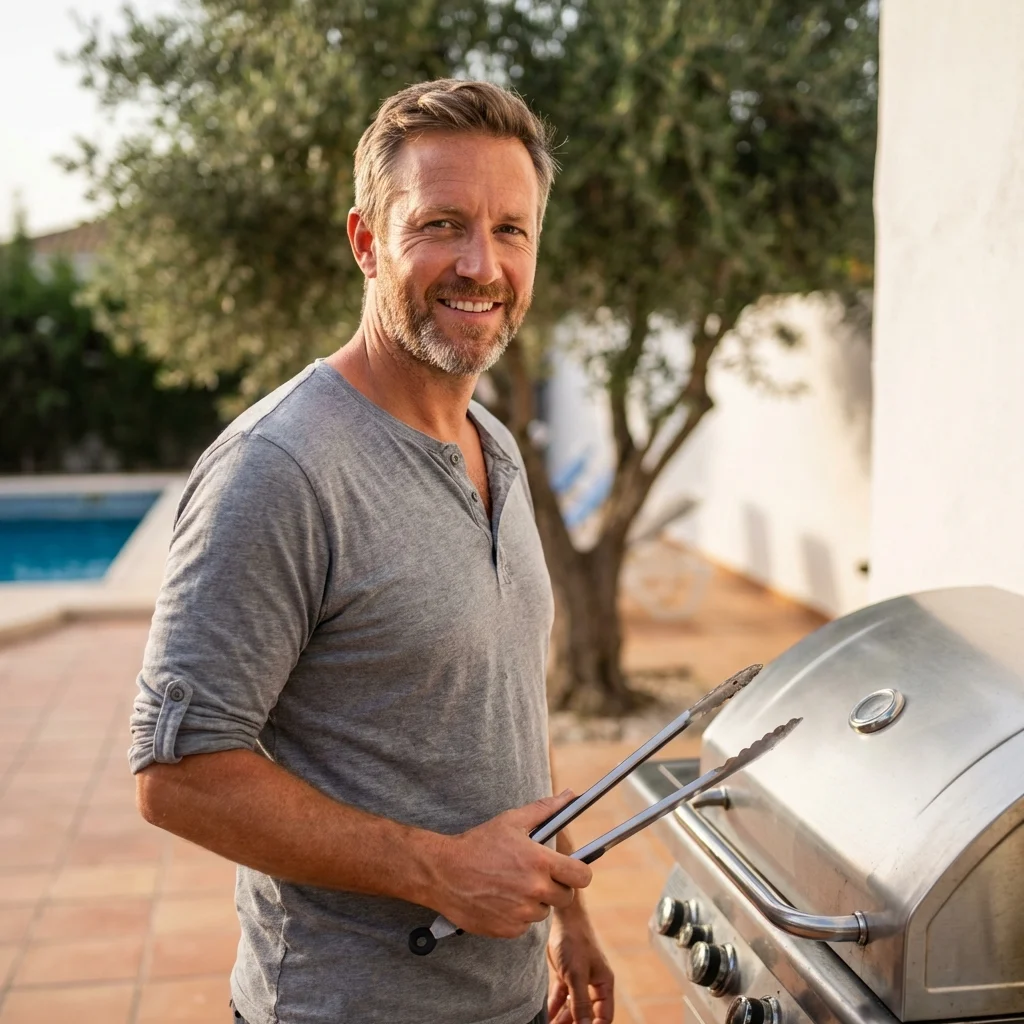
Apartment owners at Mil Palmeras and Torre de la Horadada typically have terraces of 10 to 20 square metres, often with sea views that make outdoor dining a daily pleasure. For these spaces, Costa Blanca Outdoors recommends a compact gas BBQ — a quality 2-burner unit on a wheeled cart that can roll to the railing for cooking and tuck against the wall when not in use. Alternatively, an 18-inch kamado on a sturdy table offers smoking, grilling, and baking in a single compact unit.
Villa owners around Lo Romero Golf and the residential streets between the town centre and the coast have considerably more room to work with. A built-in gas BBQ with a stone or tile surround is the backbone of most installations we complete here. The modern construction of these properties — concrete block walls, tiled terraces, flat garden areas — makes outdoor kitchen installation straightforward compared to older traditional builds.
For the growing number of homeowners who want a complete outdoor cooking station, we recommend pairing the built-in BBQ with a wood-fired pizza oven. The coastal breeze at Mil Palmeras disperses smoke quickly, and the flat rooftop terraces on some of the newer villa developments are ideal elevated locations for a pizza oven with panoramic views.
Costa Blanca Outdoors recommends compact gas BBQs or small kamados for Mil Palmeras apartments, and built-in BBQ islands paired with pizza ovens for the larger villa properties around Lo Romero and inland Pilar.
Delivery to Pilar de la Horadada
We deliver across Pilar de la Horadada, Mil Palmeras, Torre de la Horadada, and Lo Romero Golf on our regular southern coastal route — the southernmost point of our Alicante delivery area.
As the last town before the Murcia border, Pilar de la Horadada marks the southern edge of our standard delivery zone. We cover the area regularly, combining runs with nearby Orihuela Costa and San Miguel de Salinas, making the trip down the AP-7 motorway straightforward.
For coastal apartment deliveries at Mil Palmeras and Torre de la Horadada, we confirm lift access and terrace dimensions in advance. Most of the modern blocks here have goods lifts, but we check every time to avoid surprises on delivery day. Villa deliveries at Lo Romero and the inland residential areas are simpler — wide streets, open driveways, and direct garden access.
Every delivery includes full white-glove service: unpacking, assembly, positioning, and a complete equipment demonstration. Torrevieja is twenty minutes north on the same route, and we regularly combine deliveries across all three areas. Standard delivery takes 5–10 working days for in-stock products, with custom outdoor kitchen builds requiring 3–4 weeks including design and installation.
Swimming Pools in Pilar de la Horadada: Local Expertise for Your Outdoor Space
Living in this southern corner of the Costa Blanca requires a different approach to outdoor living than you might find in the greener north. I have spent years helping residents here navigate the specific challenges of our local environment. This town serves as a unique gateway between the Alicante province and Murcia, and that geographic position dictates how we build and maintain swimming pools. With a population that is roughly thirty percent international, primarily comprising British, German, and Nordic residents, the demand for high-quality private water features has shifted from simple "cooling off" spots to sophisticated year-round installations. The property landscape here is dominated by urbanisation villas and modern apartment complexes, particularly around areas like Mil Palmeras and the newer developments near Lo Romero Golf. These homes often feature compact terraces or manageable garden plots where maximizing every square meter is essential.
The outdoor culture in this specific region is centered on the concept of the "second living room." Because the average property price sits around EUR 190,000, many residents are investing heavily in their external spaces to add value and usability to their homes. Whether you are living in a traditional townhouse in the center or a detached villa on the outskirts, a pool is often the primary focal point of the garden. British and Nordic expats, in particular, tend to prioritize heating and cover systems to extend the swimming season into the shoulder months of March and October, while German residents often focus on the technical efficiency of filtration and salt-water chlorination systems. The lifestyle here transitions seamlessly from a morning walk along the promenade at Torre de la Horadada to a quiet afternoon by your own pool, avoiding the crowded public beaches during the peak of August.
Understanding the local geography is vital because your proximity to the coast or the golf courses changes the requirements for your pool construction. In the flatter coastal areas of Mil Palmeras, the ground composition is relatively stable, but the salt air is a constant factor. As you move inland toward the hills surrounding the golf courses, the terrain can become more challenging, requiring specialized structural engineering for in-ground pools to prevent shifting over time. My experience with over 200 families has taught me that a pool in this town is not just about the water; it is about creating a thermal refuge that works with the local microclimate rather than fighting against it.
Practical Technical Considerations for our Local Climate
The climate in this southern tip of the Costa Blanca is significantly hotter and drier than what you find in places like Jávea or Denia. We experience a more intense afternoon sun that can raise the water temperature of a shallow pool to an uncomfortable 32 degrees Celsius by mid-July. To counter this, I always advise clients to consider the depth and volume of their pool carefully. A standard 6m x 3m pool with a depth of 1.5 meters is a popular choice for local villas, providing enough thermal mass to stay refreshing. However, if you are looking at a smaller plunge pool, perhaps a 4m x 2m fiberglass model, you must prioritize high-quality UV-resistant gel coats. The sun here is relentless, and inferior materials will show signs of "chalking" or fading within just three seasons.
One factor that many newcomers overlook is the frequency of the Calima dust storms. Being so close to North Africa, we get hit with Saharan dust more often than the northern towns. This fine, red silt can overwhelm a standard sand filter in a single afternoon. For residents here, I recommend upgrading to a glass media filtration system or a high-capacity cartridge filter. A glass media upgrade typically costs around EUR 250 to EUR 400 more than standard sand but pays for itself in water savings and clarity during the dusty months. Additionally, the proximity to the salt lakes in Torrevieja creates a specific type of humidity that can accelerate the corrosion of metal pool components. If you are installing a heat pump or a ladder, ensure you specify AISI 316 stainless steel rather than the standard 304. The 316 grade is marine-quality and can withstand the corrosive environment created by the mix of salt air and pool chemicals.
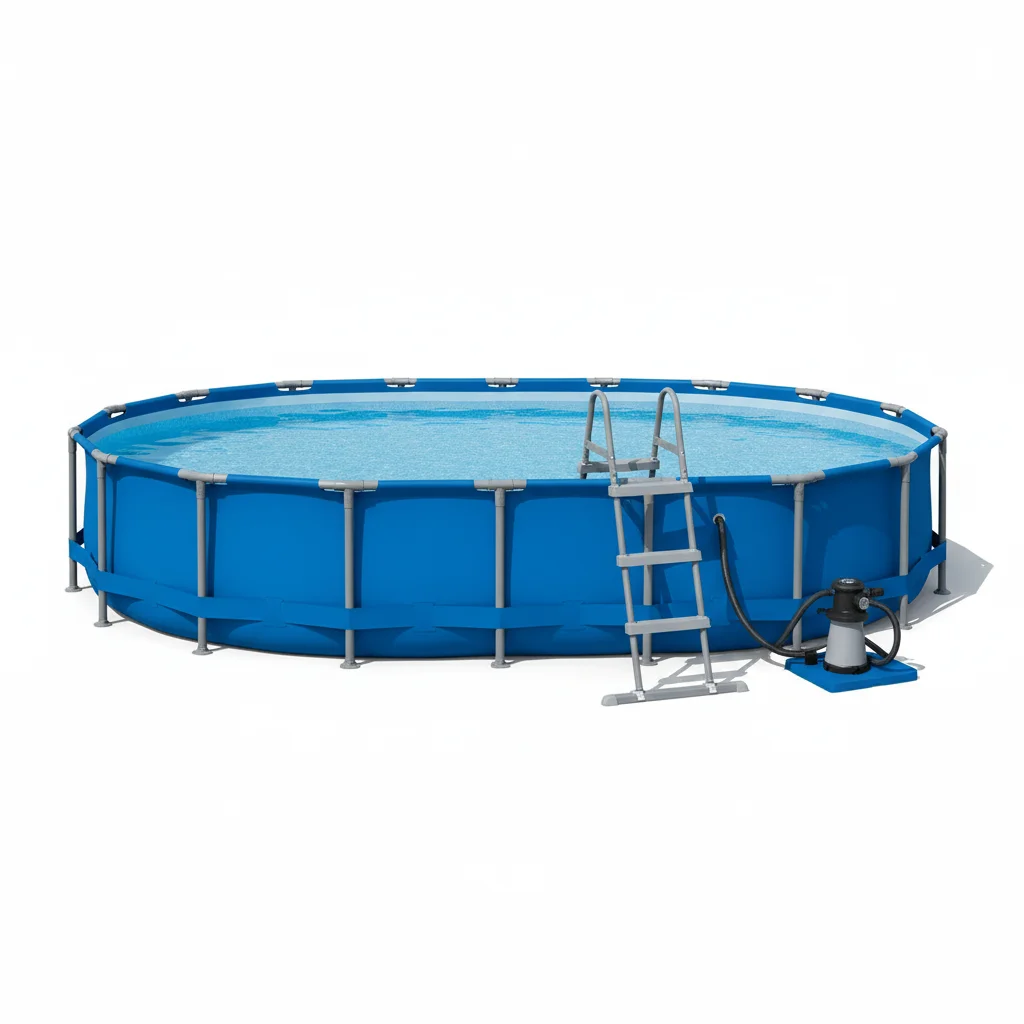
For those living in a "Comunidad de Propietarios," you must be aware of the specific regulations regarding structural changes and water usage. Installing an in-ground pool requires a "Licencia de Obra" from the Ayuntamiento, and the process involves a technical project signed by an architect. This can add EUR 2,000 to EUR 3,500 to your overall budget but is non-negotiable for legal compliance. If your garden is too small for a traditional build, a high-end above-ground pool with custom timber decking can sometimes be a workaround, though it still requires checking the community statutes. For a complete in-ground installation including excavation, gresite tiling, and a basic pump room, you should expect to budget between EUR 15,000 and EUR 25,000. If you opt for a premium fiberglass shell, which is quicker to install and easier to maintain in our hard water conditions, prices generally start from EUR 12,000 for a fully installed 5-meter unit.
Maintenance in this region also requires a focus on pH balance. The local water supply is notoriously "hard," meaning it has a high calcium content. This leads to scale buildup on the waterline and inside your equipment. I strongly suggest a salt chlorination system, often called a "Salina," which uses electrolysis to turn salt into chlorine. It is much gentler on the skin and eyes, which is a major benefit for the British and Nordic residents who may have more sensitive skin. A quality salt chlorination unit for a standard residential pool will cost approximately EUR 1,200 to EUR 1,800 but will significantly reduce your monthly chemical spend.
Recommended Pool Configurations for Local Property Types
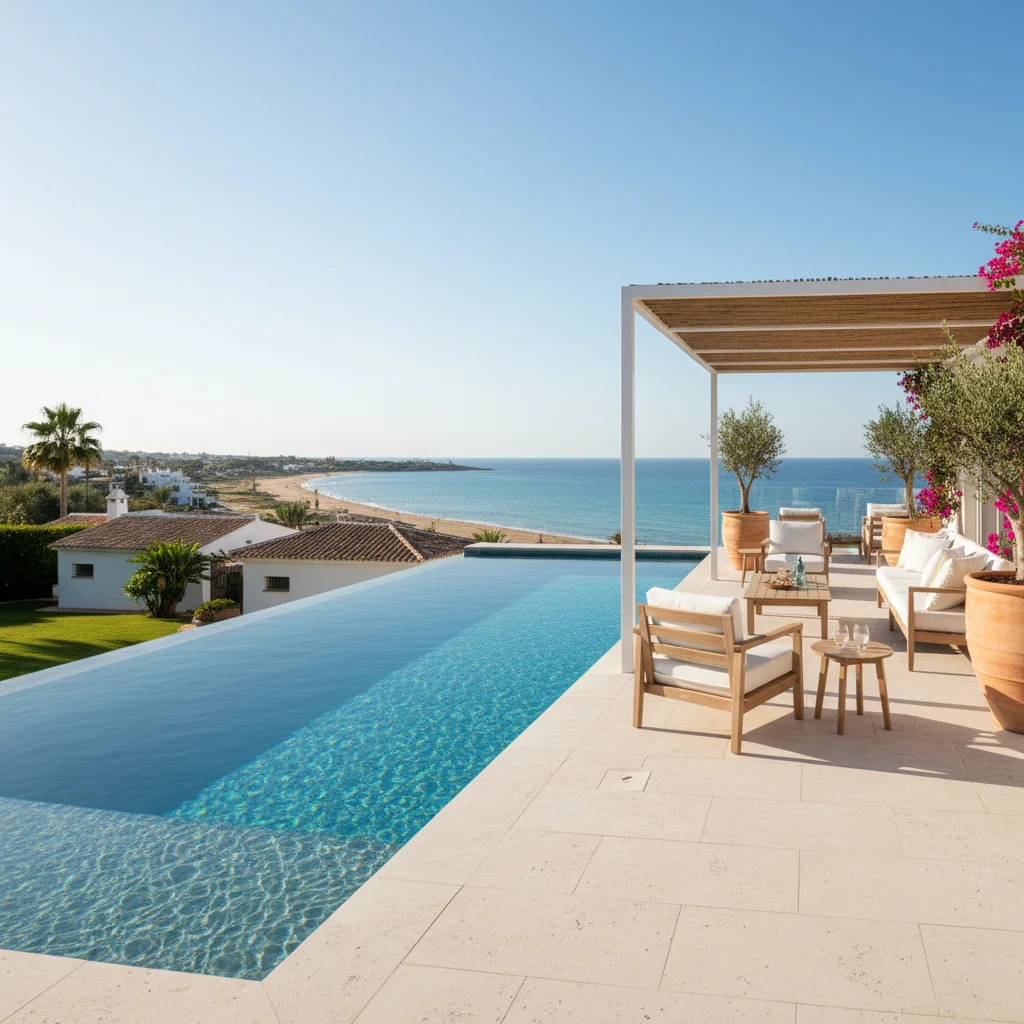
The type of home you own will dictate the most effective pool setup. For the detached villas found in the quieter residential streets or around Lo Romero Golf, there is usually enough space for a full-size in-ground pool. In these settings, I recommend a 7m x 3.5m rectangular pool with an integrated "beach" entrance or wide internal steps. This design allows for easy access, which is particularly important for the retired population who want to stay active without the strain of a vertical ladder. Pairing this with a non-slip porcelain terrace that stays cool underfoot is essential. Using light-colored stones like a sand-toned "travertino" porcelain helps prevent the ground from becoming a heat trap during the 40-degree August afternoons.
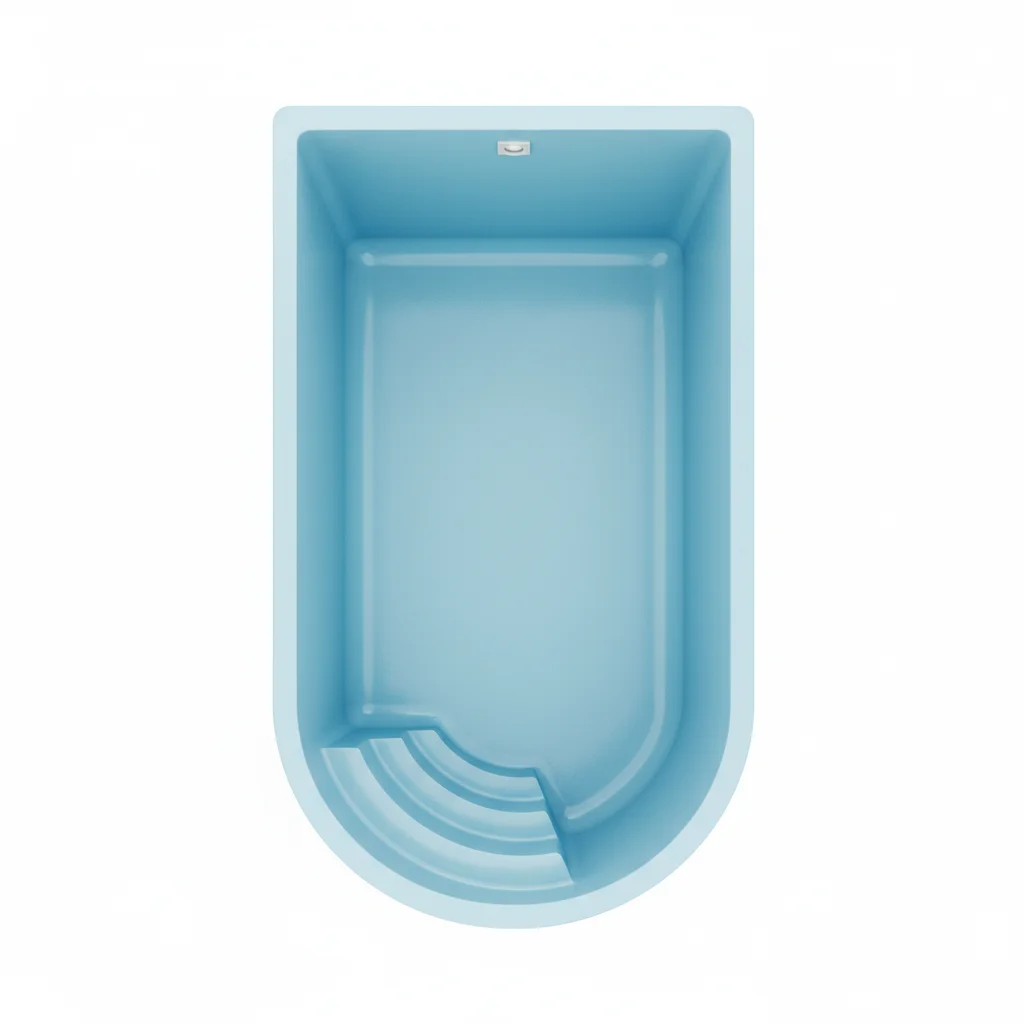
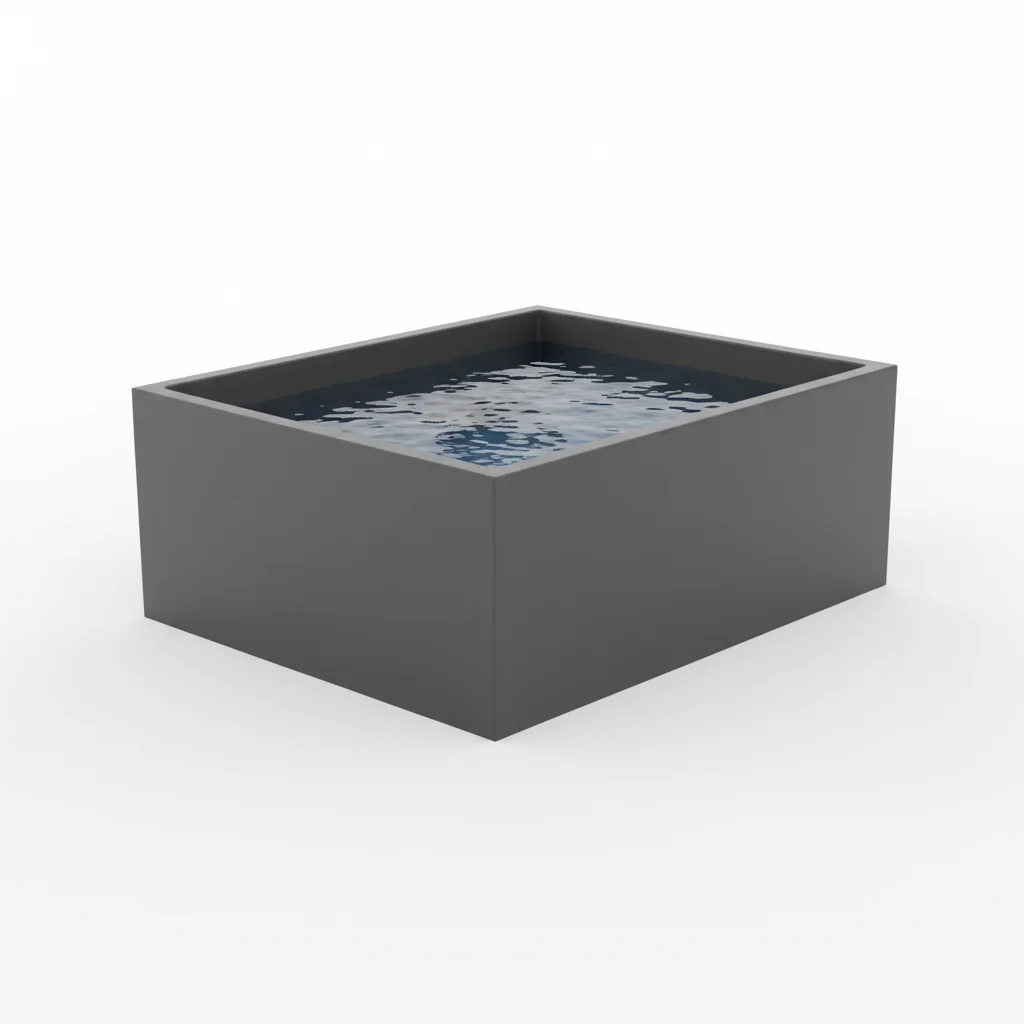
For those living in the more compact urbanisations or apartments with large ground-floor terraces, a "plunge pool" or a high-end swim spa is the most logical choice. These units are typically 3m to 4m in length and are designed for cooling off and relaxation rather than swimming laps. A pre-cast fiberglass plunge pool is an excellent investment here because it can be craned into many gardens with minimal disruption. If you have a space of at least 15 square meters, you can fit a beautiful 4m x 2m pool that leaves enough room for a dining area. For these smaller setups, I often recommend incorporating a hot tub as a companion product. Many of my clients find that while they use the pool for four months of the year, a hot tub becomes their primary sanctuary for the other eight months. A high-quality four-person hot tub can range from EUR 8,000 to EUR 12,000 and can be positioned on the same reinforced terrace as your pool, creating a complete wellness zone.
If you are located in the more modern, minimalist developments, consider a "hidden" pool cover. In this town, the wind can pick up quickly, blowing debris and dust into the water. An automatic slatted cover not only keeps the pool clean but also acts as a solar heater, raising the water temperature by 4 or 5 degrees without any electricity cost. While these systems represent a significant investment—often between EUR 5,000 and EUR 8,000—they are highly valued by the international community for the safety they provide for visiting grandchildren and the massive reduction in water evaporation. Given that water is a precious resource in this part of Spain, reducing evaporation is both an environmental and a financial win.
For apartment owners with limited structural capacity on their solariums, we often look at "over-ground" luxury options. These are built using lightweight materials and reinforced frames, allowing you to enjoy a private soak overlooking the Mediterranean without the need for heavy excavation. However, these require a structural engineer's report to ensure the terrace can handle the weight of the water, which is approximately 1,000kg per cubic meter.
Logistics, Delivery, and Local Knowledge
Installing a pool in this area involves more than just digging a hole; it requires an intimate knowledge of the local infrastructure. We regularly serve clients not only in the main town but also in the neighboring areas of Orihuela Costa, San Miguel de Salinas, and Torrevieja. Each of these zones has its own logistical quirks. For instance, many of the older urbanisations have very narrow access roads that cannot accommodate large 26-ton trucks or heavy cranes. My team and I are familiar with these "callejon" streets and know how to coordinate smaller delivery vehicles or arrange for specialized long-reach cranes that can lift a fiberglass pool shell over a two-story house.
In areas like San Miguel de Salinas, the soil can be more clay-heavy, which requires specific drainage solutions to ensure the pool structure doesn't face "hydrostatic pressure" issues during the rare but intense "Gota Fria" rain events we see in the autumn. We have seen what happens when pools are installed without proper pressure relief valves—the entire shell can "pop" out of the ground if the water table rises too quickly. My local knowledge ensures that every installation includes these vital safety features.
When we deliver to the coastal strips like Torre de la Horadada, we are also mindful of the "Ramblas" or dry riverbeds. These are key features of the local geography that dictate how we plan our construction schedules. We avoid heavy excavation during the months when flash flooding is a risk, ensuring that your garden isn't left as a mud pit during a sudden storm. Our teams are fluent in English and German, which eliminates the stress of technical translations when discussing pump specs or electrical connections.
If you are considering adding a pool or a hot tub to your home, I invite you to reach out for a conversation. We don't just sell products; we provide a full consultation to ensure that what you install is right for your specific plot, your budget, and the way you live. I can visit your property to assess access, check the orientation for maximum sun exposure, and give you a realistic idea of the timeline and costs involved. There is no substitute for local experience when it comes to making a permanent change to your Spanish home. Together, we can create an outdoor space that stays functional, beautiful, and refreshing for decades to come.
 JW'"
/>
JW'"
/>