Outdoor Living in Pilar de la Horadada
Pilar de la Horadada is the southernmost town in Alicante province, home to 25,000 residents with roughly 30% expats — British, German, and Nordic — spread between the traditional town centre and the popular coastal developments at Mil Palmeras and Torre de la Horadada.
Pilar de la Horadada sits right on the border with Murcia, giving it a character that blends Costa Blanca lifestyle with the slightly rawer, less developed feel of the coast further south. The town itself is a working Spanish agricultural centre — citrus and artichoke fields stretch inland — while the coast at Mil Palmeras and Torre de la Horadada has developed into a thriving expat community with modern apartment complexes, beachfront restaurants, and a Saturday morning market that draws crowds from across the southern Costa Blanca.
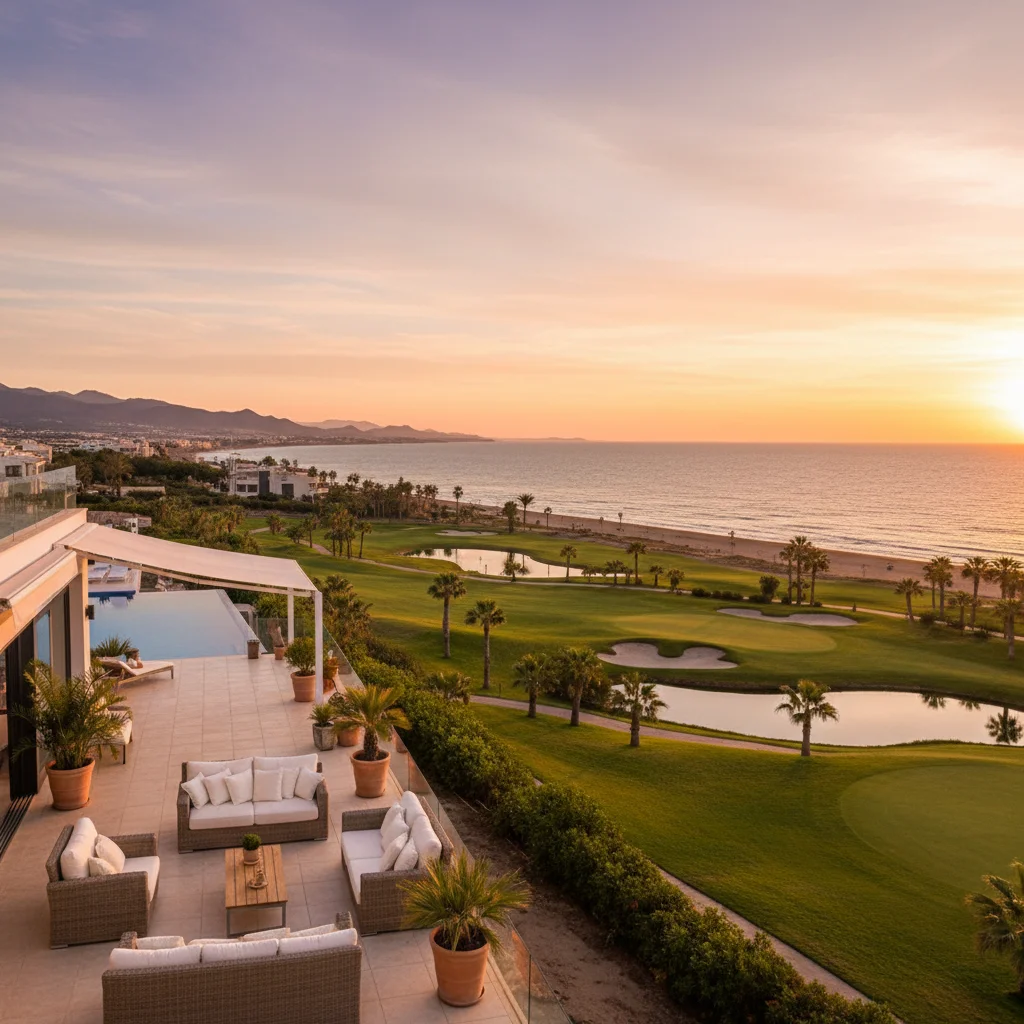
Mil Palmeras takes its name from the thousand palm trees planted along its beachfront promenade, and the area has grown into one of the south coast’s most popular residential zones. Modern villas and low-rise apartment buildings line the streets behind the beach, many with communal pools and gardens. Torre de la Horadada, centred on its sixteenth-century watchtower and small marina, has a more established feel with a mix of Spanish and expat residents.
Property prices average around €190,000, with modern two-bedroom apartments near the beach from €120,000 and detached villas with pools from €250,000 upwards. Lo Romero Golf, inland from the town centre, adds another residential cluster where golfers and retirees enjoy larger properties with open views across the countryside.
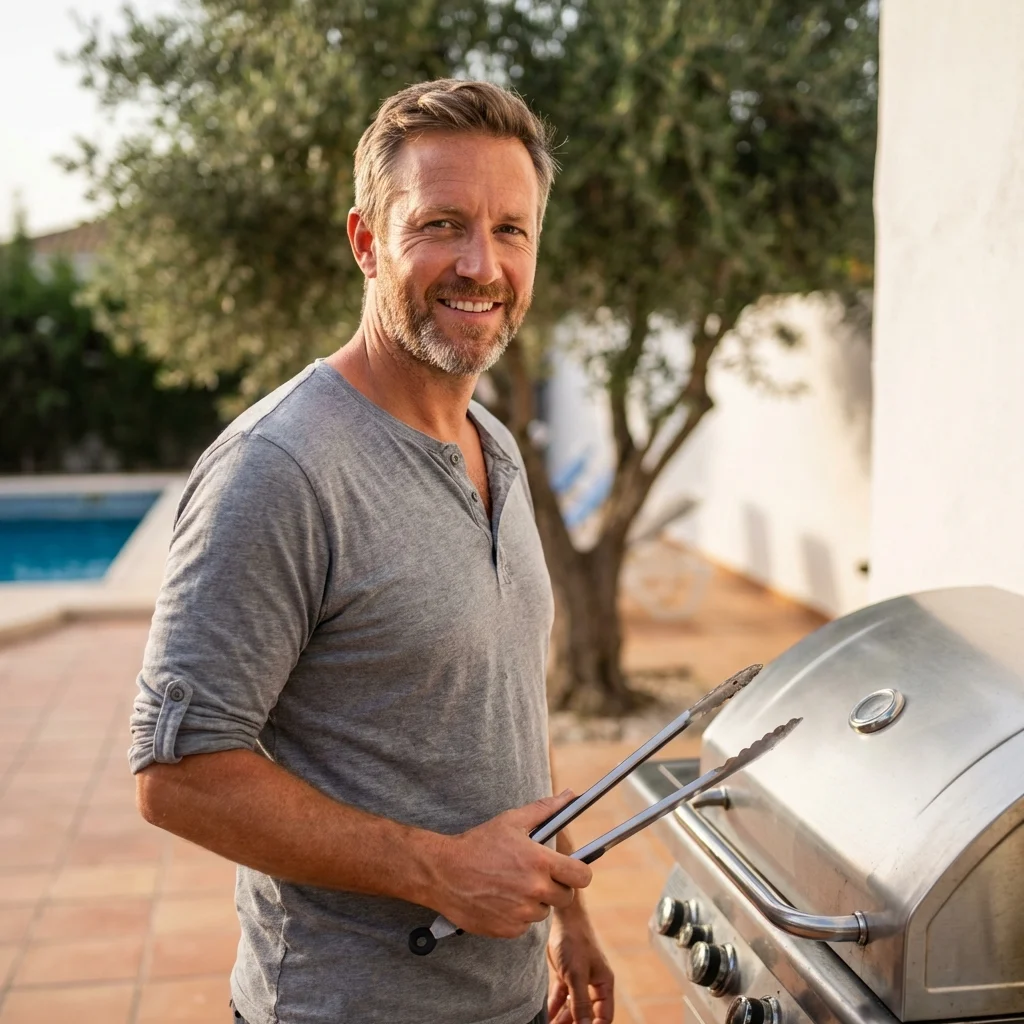
Pilar de la Horadada offers a mix of modern coastal living at Mil Palmeras and Torre de la Horadada, traditional Spanish town life inland, and spacious golf properties at Lo Romero — each presenting different outdoor cooking opportunities.
Choosing Your Setup in Pilar de la Horadada
The split between coastal apartments and inland villas in Pilar de la Horadada means equipment recommendations vary significantly depending on which part of town you call home.
Apartment owners at Mil Palmeras and Torre de la Horadada typically have terraces of 10 to 20 square metres, often with sea views that make outdoor dining a daily pleasure. For these spaces, Costa Blanca Outdoors recommends a compact gas BBQ — a quality 2-burner unit on a wheeled cart that can roll to the railing for cooking and tuck against the wall when not in use. Alternatively, an 18-inch kamado on a sturdy table offers smoking, grilling, and baking in a single compact unit.
Villa owners around Lo Romero Golf and the residential streets between the town centre and the coast have considerably more room to work with. A built-in gas BBQ with a stone or tile surround is the backbone of most installations we complete here. The modern construction of these properties — concrete block walls, tiled terraces, flat garden areas — makes outdoor kitchen installation straightforward compared to older traditional builds.
For the growing number of homeowners who want a complete outdoor cooking station, we recommend pairing the built-in BBQ with a wood-fired pizza oven. The coastal breeze at Mil Palmeras disperses smoke quickly, and the flat rooftop terraces on some of the newer villa developments are ideal elevated locations for a pizza oven with panoramic views.
Costa Blanca Outdoors recommends compact gas BBQs or small kamados for Mil Palmeras apartments, and built-in BBQ islands paired with pizza ovens for the larger villa properties around Lo Romero and inland Pilar.
Delivery to Pilar de la Horadada
We deliver across Pilar de la Horadada, Mil Palmeras, Torre de la Horadada, and Lo Romero Golf on our regular southern coastal route — the southernmost point of our Alicante delivery area.
As the last town before the Murcia border, Pilar de la Horadada marks the southern edge of our standard delivery zone. We cover the area regularly, combining runs with nearby Orihuela Costa and San Miguel de Salinas, making the trip down the AP-7 motorway straightforward.
For coastal apartment deliveries at Mil Palmeras and Torre de la Horadada, we confirm lift access and terrace dimensions in advance. Most of the modern blocks here have goods lifts, but we check every time to avoid surprises on delivery day. Villa deliveries at Lo Romero and the inland residential areas are simpler — wide streets, open driveways, and direct garden access.
Every delivery includes full white-glove service: unpacking, assembly, positioning, and a complete equipment demonstration. Torrevieja is twenty minutes north on the same route, and we regularly combine deliveries across all three areas. Standard delivery takes 5–10 working days for in-stock products, with custom outdoor kitchen builds requiring 3–4 weeks including design and installation.
Mastering the Microclimate: Bioclimatic Pergolas for Pilar de la Horadada Homes
Living at the southern tip of the Costa Blanca offers a distinct lifestyle that differs significantly from the mountainous north of the province. In Pilar de la Horadada, we deal with a flatter landscape, more intense heat cycles, and a unique proximity to both the Mediterranean and the salt lakes of Torrevieja. Since I moved here in 2019, I have walked hundreds of terraces in developments ranging from the modern villas surrounding Lo Romero Golf to the more established seaside properties in Mil Palmeras. The evolution of outdoor living in this specific corner of Spain has moved rapidly beyond the traditional toldo or the basic wooden gazebo. For the 30% of our population who have moved here from the UK, Germany, and Scandinavia, the terrace is not just a place to sit; it is the primary living room for ten months of the year. This shift in lifestyle is exactly why a bioclimatic pergola has become the gold standard for property owners in this municipality.
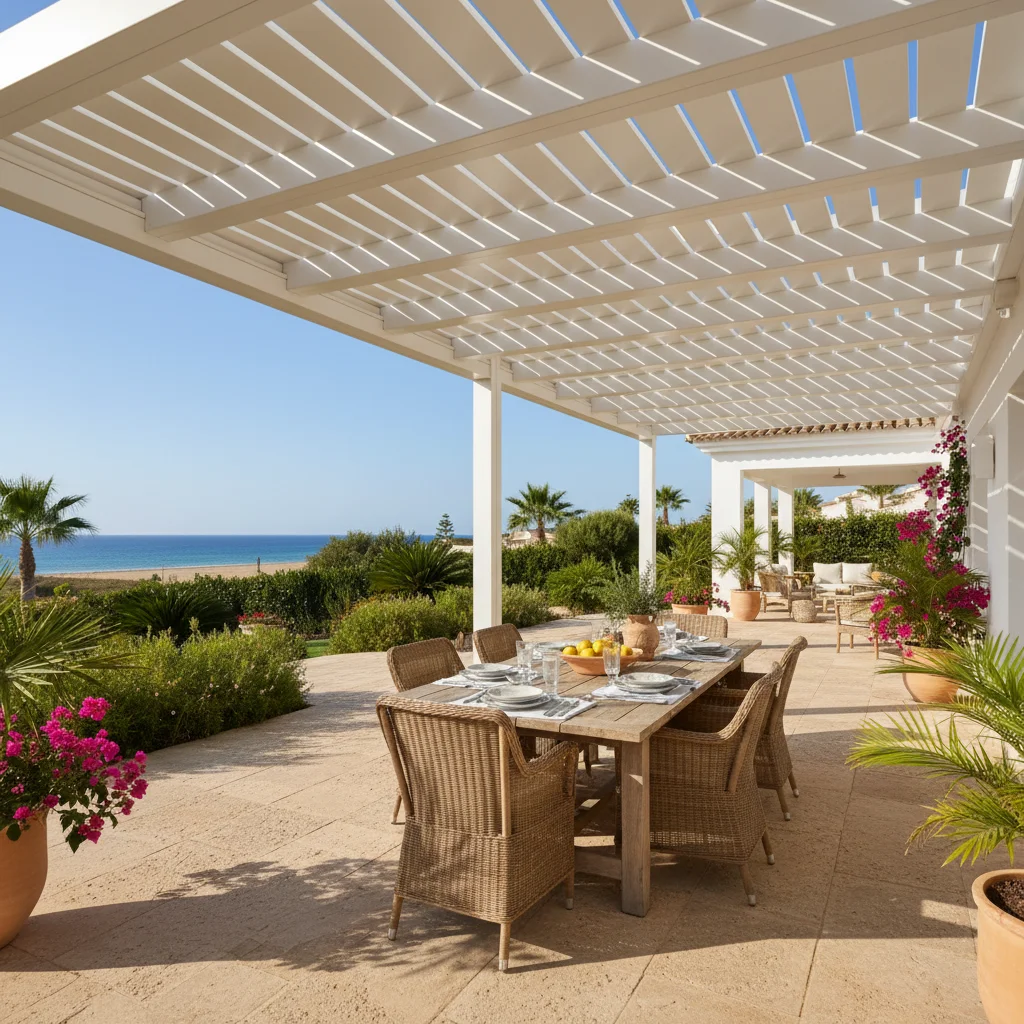
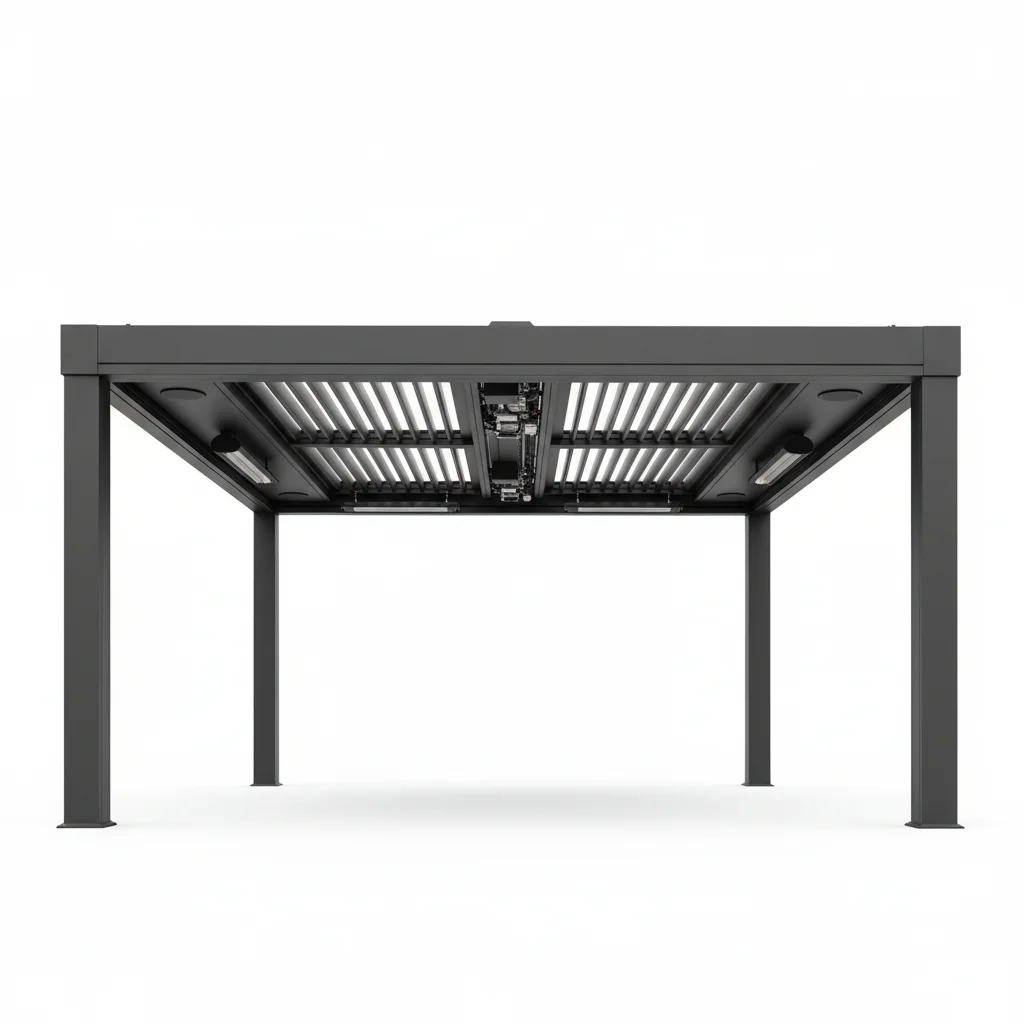
The property landscape here is diverse, yet many residents face the same challenge: maximizing a compact plot or a south-facing terrace that becomes an oven by midday. In urbanizations near the town center or moving toward Torre de la Horadada, many villas and townhouses feature terraces that are perfectly sized for a 3.5m by 4m or 5m by 3m installation. These spaces are often the heart of the home, where our international community brings a serious passion for outdoor cooking and entertaining. Whether you are hosting a Sunday roast or a Mediterranean seafood spread, the intense afternoon sun can make these activities impossible without intelligent shade. A bioclimatic system allows you to manage that heat precisely. Unlike a fixed roof, the motorized aluminium louvers can be angled to block the direct glare while still allowing rising heat to escape through the ceiling, creating a natural convection current that lowers the temperature on the terrace by several degrees compared to a standard awning.
I have found that the British and Nordic residents in particular value the "four-season" aspect of these structures. In the winter months, when the sun is lower but still warm, you can fully open the louvers to flood your interior living room with light and heat, effectively using your terrace as a solar heater for the house. Then, as the evening chill sets in, closing the roof traps the residual warmth from the house. In areas like Mil Palmeras, where the sea breeze can turn a bit sharp in February, this ability to seal the space makes a massive difference. We are seeing a significant trend where homeowners are moving away from the "cheap and cheerful" temporary solutions in favor of permanent architectural aluminium structures that actually add measurable value to their property investment, which on average sits around the €190,000 mark in this area.
Technical Realities and the Pilar de la Horadada Environment
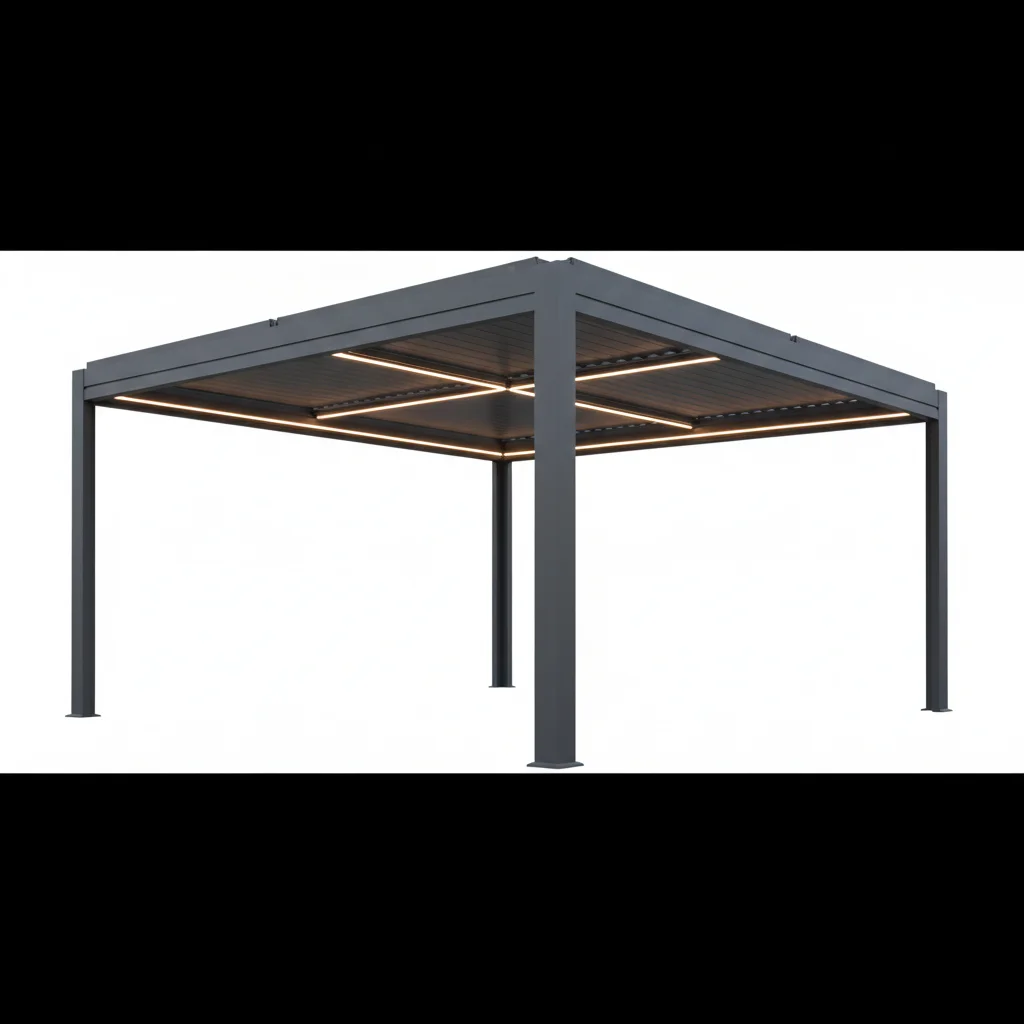
When you are investing between €7,000 and €15,000 in a premium outdoor structure, you need to account for the specific environmental stressors of our local climate. One of the biggest factors I discuss with clients in this town is the Calima. Being so far south, we get hit harder by the Saharan dust than our neighbors in Dénia. If you choose a standard white gloss finish for your pergola, you will spend half your life with a hose in your hand. I almost always recommend a textured, powder-coated finish in anthracite or a sand-toned grey. These finishes are not only more durable but are far more forgiving when the red dust settles. The motorized louvers on a high-quality bioclimatic system are designed with integrated guttering, which means that when the rain finally does come to wash away the dust, the mud is channeled down through the internal drainage in the pillars rather than spilling over the sides onto your outdoor furniture.
Another critical consideration is the salt air. If your property is in Torre de la Horadada or within a kilometer of the coast, the humidity carries a high salt content that will compromise inferior metals within a few seasons. We only install structures using Grade 6063 T6 aluminium with stainless steel fixings. This is non-negotiable for me because I have seen too many "budget" pergolas from big-box retailers start to pit and corrode within twenty-four months. For a standard 4m x 3m wall-mounted system, which typically starts around €8,200 including professional installation and motorization, the longevity of the finish is what determines your return on investment. You want a structure that looks as good in year ten as it does on day one.
In many of the newer developments and golf resort communities around Lo Romero, you must also navigate the rules of the Comunidad de Propietarios. This is where my local experience becomes vital. Most communities in Pilar de la Horadada are quite reasonable about bioclimatic pergolas because they are technically "permissible" structures—they are not permanent brick-and-mortar extensions. However, the aesthetic harmony of the urbanization is usually protected. We often have to match the RAL color code of the existing window frames or shutters to ensure the installation passes community inspection. Furthermore, the wind in this part of the coast can be deceptive. While we don’t get the Tramuntana of the north, we do get strong thermal winds in the late afternoon. A bioclimatic pergola with a certified wind resistance of up to 120km/h provides peace of mind that an awning simply cannot offer. You don't want to be the neighbor whose sunshade is flapping uncontrollably or, worse, being ripped from the wall during a sudden "Gota Fría" storm.
Tailored Configurations for Local Property Types
For the detached villas commonly found in the outskirts of the town and near the golf courses, I usually recommend a large-format, freestanding bioclimatic pergola. A popular configuration for these plots is a 6m x 4m double-bay system. At this size, usually costing between €16,000 and €20,000, you are essentially creating a new architectural wing for your home. I suggest zoning the space: one half for a dedicated outdoor dining area and the other for a lounge or "chill-out" zone. By integrating LED perimeter lighting and infrared heaters into the frame, this setup becomes a genuine year-round room. Many of my clients in these larger villas also choose to add zip-screens—motorized fabric blinds that drop down between the pillars. In Pilar de la Horadada, these are essential for blocking the low-angled sun in the late afternoon and for providing a barrier against the occasional mosquito during the humid autumn months.
For the more compact apartments and townhouses in urbanizations like those in Mil Palmeras, a wall-mounted 3m x 3m or 4m x 3m system is often the most effective use of space. Because these terraces are often overlooked by neighbors, the adjustable louvers provide a secondary benefit: privacy. By tilting the louvers to a 45-degree angle, you can block the line of sight from higher floors while still enjoying the sky and the breeze. If your terrace is particularly small, we can integrate the pergola with other solutions like glass curtains. This combination is incredibly popular among the Nordic residents who want to create a "winter garden." You can have the roof open for the sun during the day and the glass closed to keep out the wind, then close the roof at night to maintain a comfortable temperature inside.
We also see many homes where a bioclimatic pergola serves as the primary hub, but secondary shade is needed for other areas. I often suggest pairing a main aluminium structure with high-tension shade sails or a simple fixed pergola for a carport or a side garden path. This "hybrid" approach allows you to manage your budget effectively—investing in the high-tech, motorized solution where you spend the most time (the dining and lounging area) and using more cost-effective fixed solutions for transit areas. A fixed-pergola for a car port in this heat is a necessity to protect your vehicle’s paintwork and interior from the punishing UV levels we experience here, which are significantly higher than what most of our British or German clients are used to back home.
Logistics and the Value of Local Expertise
Delivering and installing high-end structures in Pilar de la Horadada requires more than just a truck and a drill; it requires an understanding of the local geography and logistics. Whether your property is in the heart of the town, near the Rambla, or in the neighboring areas of Orihuela Costa, San Miguel de Salinas, or Torrevieja, we have navigated the specific challenges of these locations. I know that access in the older parts of Torre de la Horadada can be tight, requiring specialized lifting equipment for the heavy aluminium beams, whereas the wide boulevards of the newer developments near the N-332 allow for much smoother delivery schedules. My team and I are familiar with the local building heights and the specific wind loads required for top-floor penthouses in this region, which often require additional structural reinforcement that a general contractor might overlook.
When we talk about "local knowledge," it isn't just a phrase. It’s knowing that the humidity from the nearby salt lakes can cause cheaper electronics to fail, which is why we only use high-grade, IP67-rated motors and control systems. It’s knowing exactly how the sun moves across a terrace in Lo Romero in July versus December. This level of detail ensures that when we install a system, it performs exactly as promised. We don't just drop a box and leave; we ensure the programming of the louvers is optimized for your specific orientation, so you can start enjoying the space from the moment we finish the final bolt.
If you are considering upgrading your outdoor space, the best place to start is with a conversation on your own terrace. I offer free, no-obligation consultations throughout Pilar de la Horadada and the surrounding towns. We can look at your orientation, measure the space, and discuss which RAL colors will best suit your property’s aesthetic. My goal is always the same: to help you create an outdoor space that you use every single day, regardless of whether the sun is beating down or the rain is falling. With over 200 successful installations across the Costa Blanca, I have the experience to ensure your bioclimatic pergola is a seamless, life-changing addition to your home. Reach out today, and let’s plan your perfect terrace together.
 JW'"
/>
JW'"
/>