Outdoor Living in Pilar de la Horadada
Pilar de la Horadada is the southernmost town in Alicante province, home to 25,000 residents with roughly 30% expats — British, German, and Nordic — spread between the traditional town centre and the popular coastal developments at Mil Palmeras and Torre de la Horadada.
Pilar de la Horadada sits right on the border with Murcia, giving it a character that blends Costa Blanca lifestyle with the slightly rawer, less developed feel of the coast further south. The town itself is a working Spanish agricultural centre — citrus and artichoke fields stretch inland — while the coast at Mil Palmeras and Torre de la Horadada has developed into a thriving expat community with modern apartment complexes, beachfront restaurants, and a Saturday morning market that draws crowds from across the southern Costa Blanca.
Mil Palmeras takes its name from the thousand palm trees planted along its beachfront promenade, and the area has grown into one of the south coast’s most popular residential zones. Modern villas and low-rise apartment buildings line the streets behind the beach, many with communal pools and gardens. Torre de la Horadada, centred on its sixteenth-century watchtower and small marina, has a more established feel with a mix of Spanish and expat residents.
Property prices average around €190,000, with modern two-bedroom apartments near the beach from €120,000 and detached villas with pools from €250,000 upwards. Lo Romero Golf, inland from the town centre, adds another residential cluster where golfers and retirees enjoy larger properties with open views across the countryside.
Pilar de la Horadada offers a mix of modern coastal living at Mil Palmeras and Torre de la Horadada, traditional Spanish town life inland, and spacious golf properties at Lo Romero — each presenting different outdoor cooking opportunities.
Choosing Your Setup in Pilar de la Horadada
The split between coastal apartments and inland villas in Pilar de la Horadada means equipment recommendations vary significantly depending on which part of town you call home.
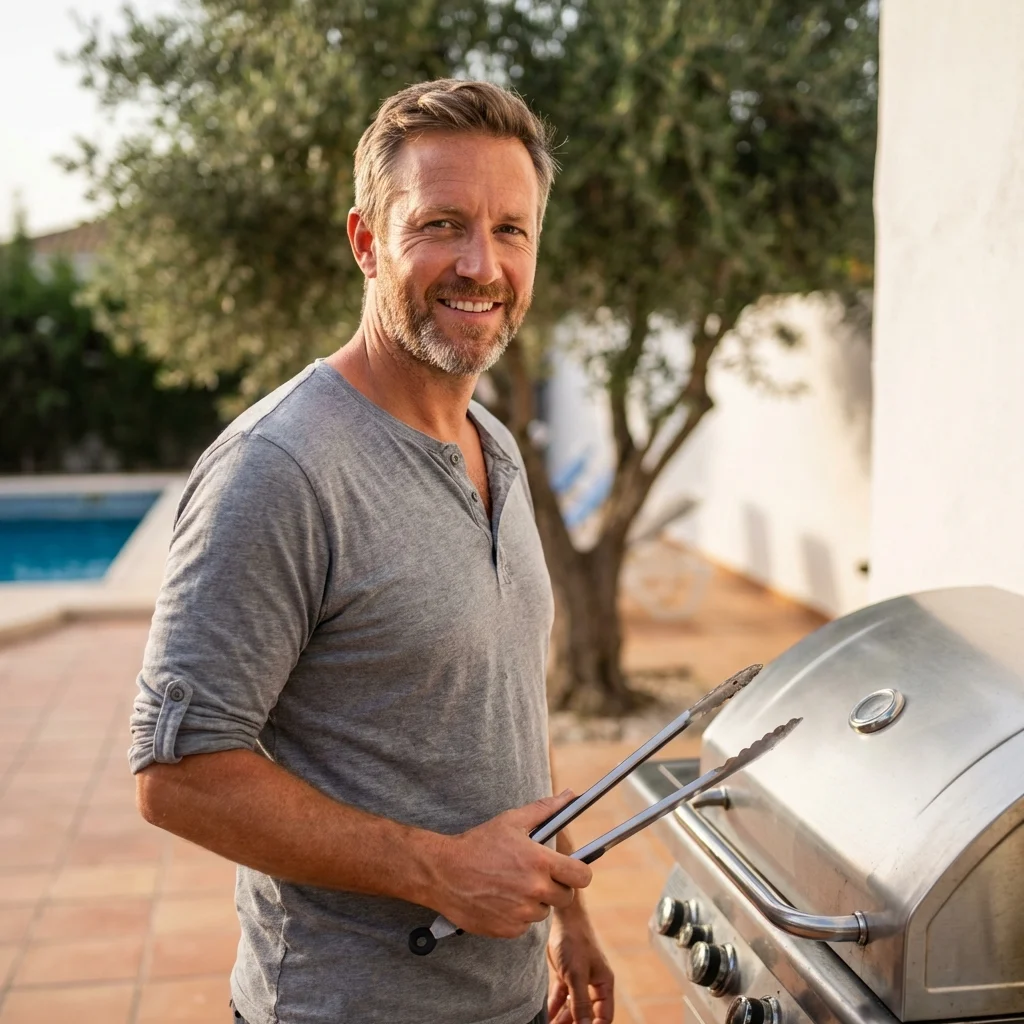
Apartment owners at Mil Palmeras and Torre de la Horadada typically have terraces of 10 to 20 square metres, often with sea views that make outdoor dining a daily pleasure. For these spaces, Costa Blanca Outdoors recommends a compact gas BBQ — a quality 2-burner unit on a wheeled cart that can roll to the railing for cooking and tuck against the wall when not in use. Alternatively, an 18-inch kamado on a sturdy table offers smoking, grilling, and baking in a single compact unit.
Villa owners around Lo Romero Golf and the residential streets between the town centre and the coast have considerably more room to work with. A built-in gas BBQ with a stone or tile surround is the backbone of most installations we complete here. The modern construction of these properties — concrete block walls, tiled terraces, flat garden areas — makes outdoor kitchen installation straightforward compared to older traditional builds.
For the growing number of homeowners who want a complete outdoor cooking station, we recommend pairing the built-in BBQ with a wood-fired pizza oven. The coastal breeze at Mil Palmeras disperses smoke quickly, and the flat rooftop terraces on some of the newer villa developments are ideal elevated locations for a pizza oven with panoramic views.
Costa Blanca Outdoors recommends compact gas BBQs or small kamados for Mil Palmeras apartments, and built-in BBQ islands paired with pizza ovens for the larger villa properties around Lo Romero and inland Pilar.
Delivery to Pilar de la Horadada
We deliver across Pilar de la Horadada, Mil Palmeras, Torre de la Horadada, and Lo Romero Golf on our regular southern coastal route — the southernmost point of our Alicante delivery area.
As the last town before the Murcia border, Pilar de la Horadada marks the southern edge of our standard delivery zone. We cover the area regularly, combining runs with nearby Orihuela Costa and San Miguel de Salinas, making the trip down the AP-7 motorway straightforward.
For coastal apartment deliveries at Mil Palmeras and Torre de la Horadada, we confirm lift access and terrace dimensions in advance. Most of the modern blocks here have goods lifts, but we check every time to avoid surprises on delivery day. Villa deliveries at Lo Romero and the inland residential areas are simpler — wide streets, open driveways, and direct garden access.
Every delivery includes full white-glove service: unpacking, assembly, positioning, and a complete equipment demonstration. Torrevieja is twenty minutes north on the same route, and we regularly combine deliveries across all three areas. Standard delivery takes 5–10 working days for in-stock products, with custom outdoor kitchen builds requiring 3–4 weeks including design and installation.
Fixed Pergolas in Pilar de la Horadada: What You Need to Know
Living on the southern edge of the Alicante province gives you a distinct microclimate that differs significantly from the northern Costa Blanca. Since moving here in 2019, I have noticed that the transition from the coastal stretches of Mil Palmeras to the higher ground of Lo Romero Golf creates unique environmental challenges for any outdoor structure. Pilar de la Horadada sits in a sweet spot where the landscape is flatter and the sun feels more direct, especially during those long afternoon stretches when the heat radiates off the limestone and tiled terraces common to the area. For the 25,000 residents here, including the 30% who have moved from the UK, Germany, and Scandinavia, the outdoor space is not just an addition but the primary living area for eight months of the year.
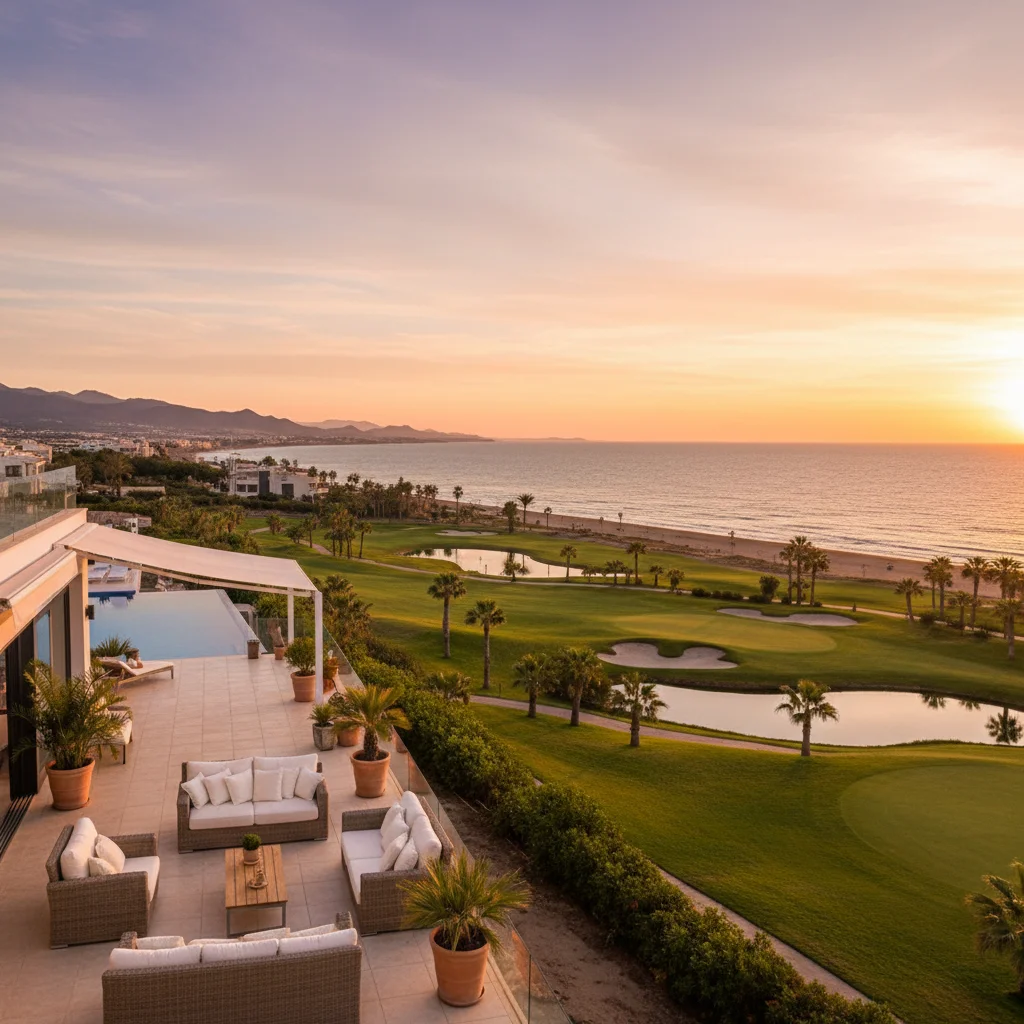
The property landscape in this town is dominated by a mix of modern urbanisation villas and mid-rise apartments, many of which are situated within golf resort communities. Whether you are situated in the newer builds near the rambla or the more established homes closer to the town centre, the terrace is usually the heart of the home. However, the intensity of the sun in this southern tip of the region often makes these terraces unusable between 1:00 PM and 6:00 PM without significant shade. A fixed pergola provides a permanent, structural solution that defines an outdoor room, offering a level of stability and architectural integration that temporary umbrellas or lightweight awnings simply cannot match. British residents in particular tend to use these spaces for elaborate outdoor kitchens and dining areas, while our Nordic neighbours often look for sleek, minimalist aluminium frames that provide a clean aesthetic against the white-washed walls of modern Mediterranean architecture.
In areas like Torre de la Horadada, the proximity to the Mediterranean Sea introduces salt spray into the air, which can be brutal on inferior materials. When we install a fixed pergola in these coastal pockets, the material choice becomes the most critical decision. The local lifestyle revolves around the "sobremesa"—that long, lingering period after a meal—and having a fixed structure means you aren't constantly checking the wind forecast or scrambling to retract a fabric canopy when the afternoon breeze picks up. Because many properties in this area, particularly around the golf courses, feature shared gardens or close-proximity neighbours, a fixed pergola also provides a much-needed sense of privacy and vertical scale, helping to frame the views of the fairways or the sea without leaving you exposed to the elements or onlookers.
Practical Expert Advice for the Southern Costa Blanca Climate
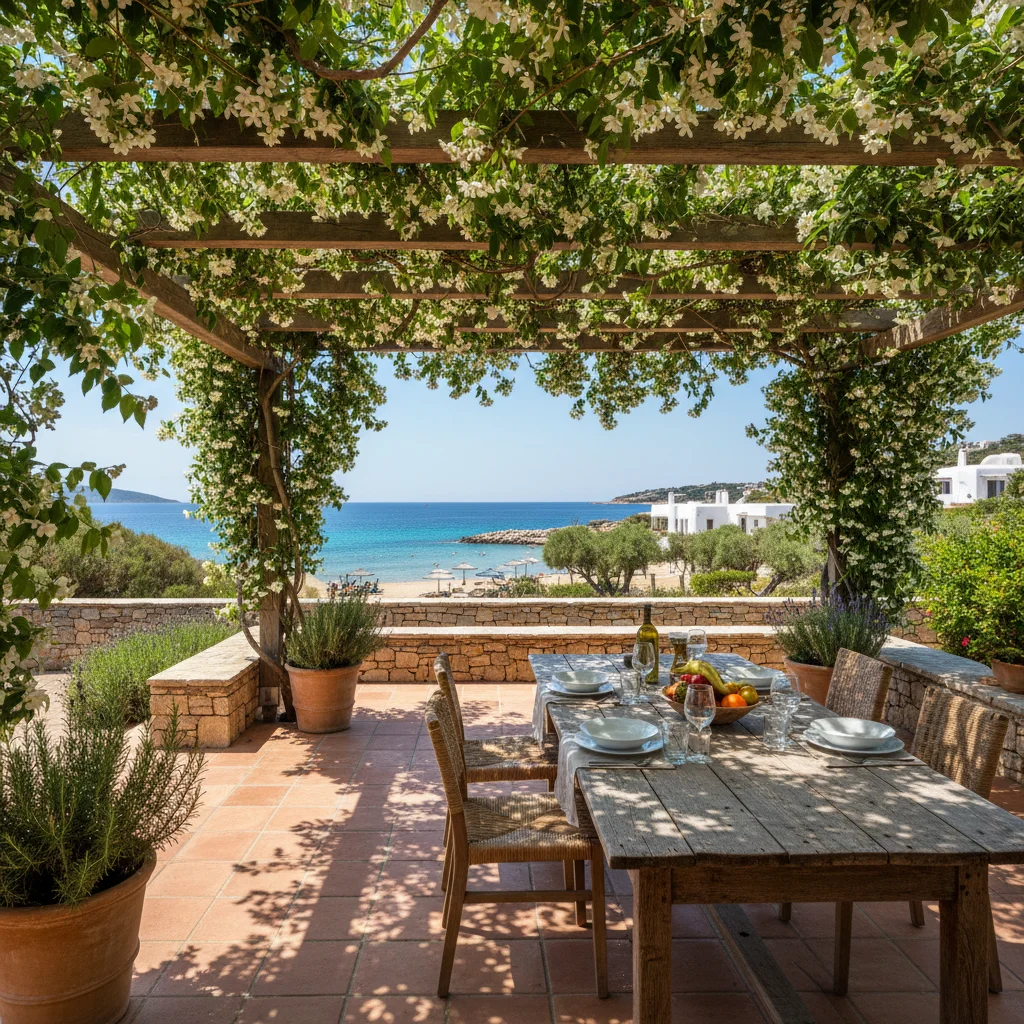
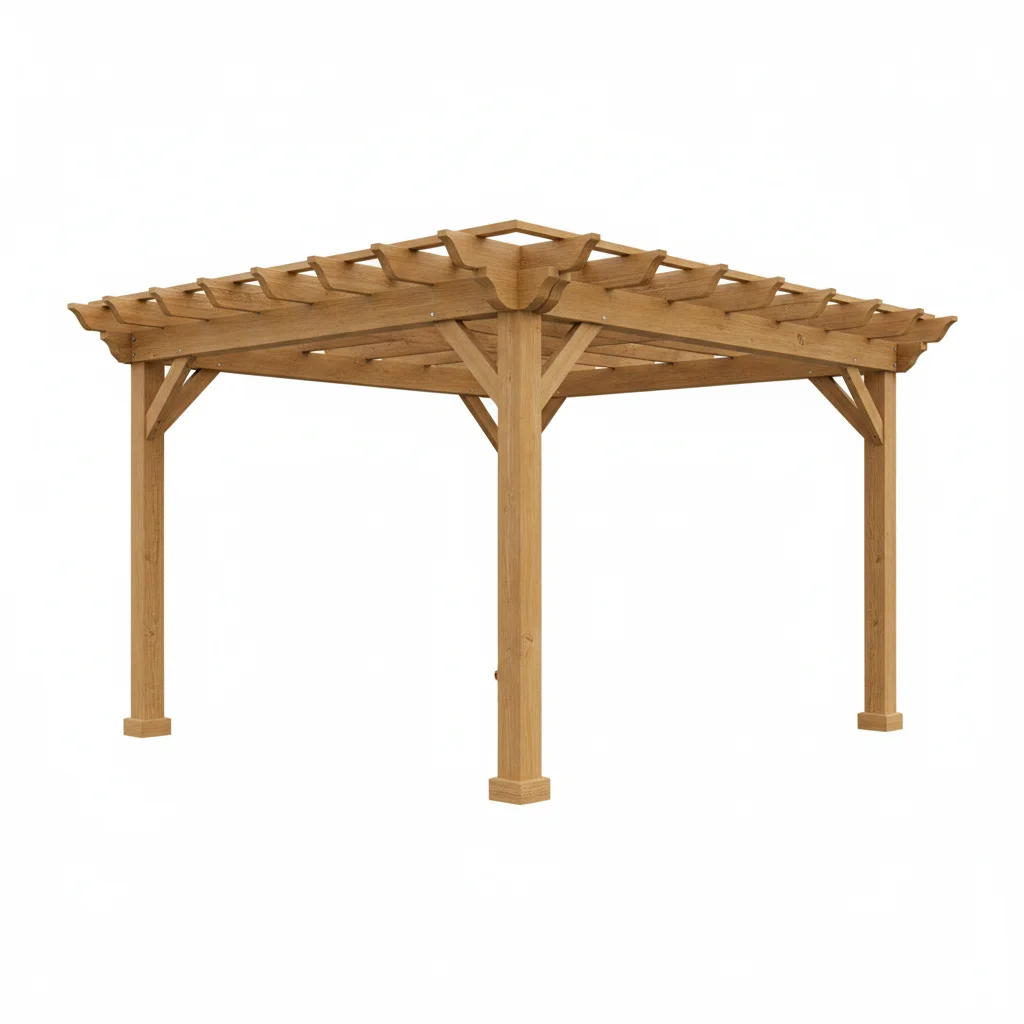
The climate in this specific part of the coast is hotter and drier than what you find in Dénia or Jávea. We are closer to the Mar Menor and the salt lakes of Torrevieja, which means humidity levels fluctuate wildly. One factor that many new residents overlook is the frequency of the "Calima"—that fine, orange Saharan dust that blankets the region several times a year. If you opt for a traditional timber pergola, this dust can settle into the grain of the wood, making it incredibly difficult to clean. If you choose wood, it must be treated with a high-quality "Lasur" rather than a standard varnish. Lasur is an open-pore finish that allows the timber to breathe and makes it possible to hose down the dust without the finish cracking or peeling under the intense UV rays. For a standard 4m x 3m timber structure, expect to invest around €3,500 for a professional installation including pressure-treated laminated beams that resist warping in the dry heat.
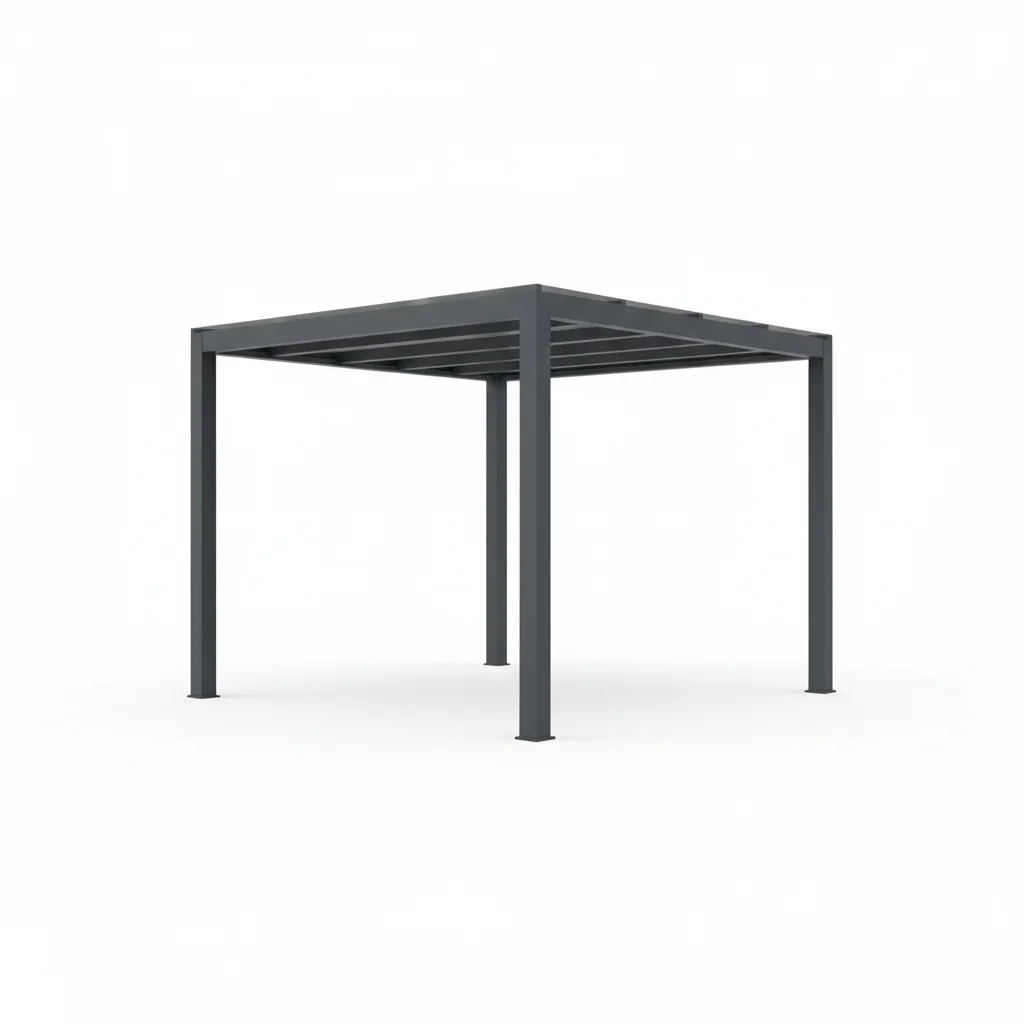
If you are living closer to the coast in Mil Palmeras or Torre de la Horadada, I almost always recommend powder-coated aluminium over timber. The salt air acts as a corrosive agent that eats through low-grade fixings and degrades wood finishes faster than you would believe. An aluminium fixed pergola with a 120mm x 120mm post profile provides the necessary rigidity to handle the "Levante" winds that occasionally whip across the flat landscape. A high-quality aluminium fixed frame in a 4m x 4m configuration typically ranges between €5,000 and €7,500. This is a significant investment, but it eliminates the need for the biennial sanding and staining that wood requires in this harsh environment. Furthermore, the aluminium can be colour-matched to the specific "RAL" code of your window frames, which is often a requirement of the "Comunidad de Propietarios" or community of owners.
Speaking of the community rules, this is a vital consideration in Pilar de la Horadada. Most urbanisations have strict statutes regarding the height and colour of external structures. Before you commit to a design, you must ensure that your pergola does not exceed the height of the boundary walls in a way that obstructs a neighbour’s view, especially in tiered developments. In many local communities, anthracite grey or off-white are the only permitted colours for metal structures. We often handle these technicalities by providing architectural drawings that residents can present to their community president. Another local insight is the ground composition; the soil here can be quite sandy near the coast or exceptionally hard "tosca" stone further inland. Ensuring that the pergola is anchored with chemical fixings rather than simple expansion bolts is the difference between a structure that lasts decades and one that shifts during a winter storm.
What We Recommend for Pilar de la Horadada Properties
For the detached villas found in Lo Romero Golf or the outskirts of the town centre, we generally recommend a heavy-duty fixed aluminium pergola with a custom-fitted retractable fabric roof or a fixed insulated sandwich panel. If you are planning an outdoor kitchen—which is very popular among the British expat community here—you need a structure that can handle the heat of a gas grill or a "Paellero" while providing total shade. A 5m x 4m structure works best for these larger plots, allowing for a dedicated dining zone and a separate lounging area. At this scale, prices move toward the €8,000 to €10,000 mark, but the value added to the property often exceeds the cost of the installation because you are effectively adding 20 square metres of usable floor space.
For the apartments and smaller townhouses common in the urban centres, space is at a premium. Here, we suggest a wall-mounted fixed pergola that utilises the existing structure of the building for support. This reduces the number of vertical posts required, which is essential for maintaining a clear flow of movement on a compact terrace. A 3m x 3m wall-mounted aluminium frame is a fantastic entry point, costing approximately €2,800 to €3,500 depending on the roof infill. To make these spaces truly year-round, we often combine these fixed pergolas with related products like glass curtains. By installing a fixed frame first, you create the necessary "skeleton" to later hang glass curtains, which can cost between €800 and €1,200 per linear metre. This combination allows you to close the space off during the rare rainy days or when the winter wind turns chilly, while still enjoying the sun.
If you find that a fully fixed roof is too claustrophobic, you might consider a hybrid approach. We often install the fixed frame and then use high-density polyethylene (HDPE) shade sails or manual "toldos" (awnings) that slide within the frame. This gives you the structural permanence of a pergola with the flexibility of an awning. In Pilar de la Horadada, where the sun angle changes drastically between the height of August and the depths of January, being able to move your shade source while maintaining a fixed architectural boundary is a very practical solution. For those with a more rustic aesthetic preference, we still offer laminated Nordic pine pergolas, but we insist on a "dark oak" or "walnut" finish to hide the inevitable calima staining and ensure the structure remains a focal point of the garden rather than a maintenance burden.
Delivery and Local Knowledge in the South
Our experience across the Costa Blanca has taught us that every town has its logistical quirks. In Pilar de la Horadada, the layout varies from the wide, easy-to-navigate avenues of the golf resorts to the much tighter, traditional streets of the old town near the Iglesia de Nuestra Señora del Pilar. When we deliver and install here, we take into account the specific access requirements of your urbanisation. Many of the newer developments have restricted entry times for contractors or specific gates that cannot accommodate large delivery cranes. We are well-versed in these local protocols and often coordinate with the local "Ayuntamiento" if a permit is needed for a crane lift over a property wall, particularly for those multi-storey apartments in Torre de la Horadada.
Our service area naturally extends to the neighbouring municipalities of Orihuela Costa, San Miguel de Salinas, and Torrevieja. We know the coastal road (N-332) and the AP-7 logistics like the back of our hand, ensuring that our installation teams arrive on site with everything needed to complete a project without delays. Because we understand the local weather patterns, we schedule our installations to avoid the peak "Gota Fría" periods in late autumn when heavy rains can turn a construction site into a mud pit. We also understand the impact of the nearby salt lakes on material longevity; we use marine-grade stainless steel fixings for every project within a 5km radius of the coast to prevent the "tea staining" rust marks that plague cheaper installations.
Choosing a fixed pergola is about more than just buying a kit and putting it up; it is about understanding how the southern sun will hit your terrace at 5:00 PM and how the salt-laden humidity will affect your chosen material over five years. We offer a free, no-obligation consultation where we visit your home in Pilar de la Horadada to measure the space and discuss the best orientation for your structure. We don't believe in high-pressure sales; we believe in providing the technical data and local expertise you need to make an informed decision for your home. Whether you are looking to create a shaded sanctuary overlooking the greens at Lo Romero or a modern social hub in Mil Palmeras, we have the local experience to ensure your outdoor space becomes the best part of your Costa Blanca lifestyle.
 JW'"
/>
JW'"
/>