Outdoor Living in Benidorm
Benidorm has 77,000 residents with a remarkable 35% expat population — a year-round resort city with the largest British and Northern European community on the Costa Blanca, where high-rise terraces and hilltop villas create a unique vertical outdoor living market.
Benidorm defies the clichés. Behind the famous skyline lies a genuine residential city with a well-established international community that lives here permanently, not just on holiday. The British contingent is the largest, followed by significant German and Dutch populations, creating a social infrastructure — clubs, restaurants, and activity groups — that operates twelve months a year.
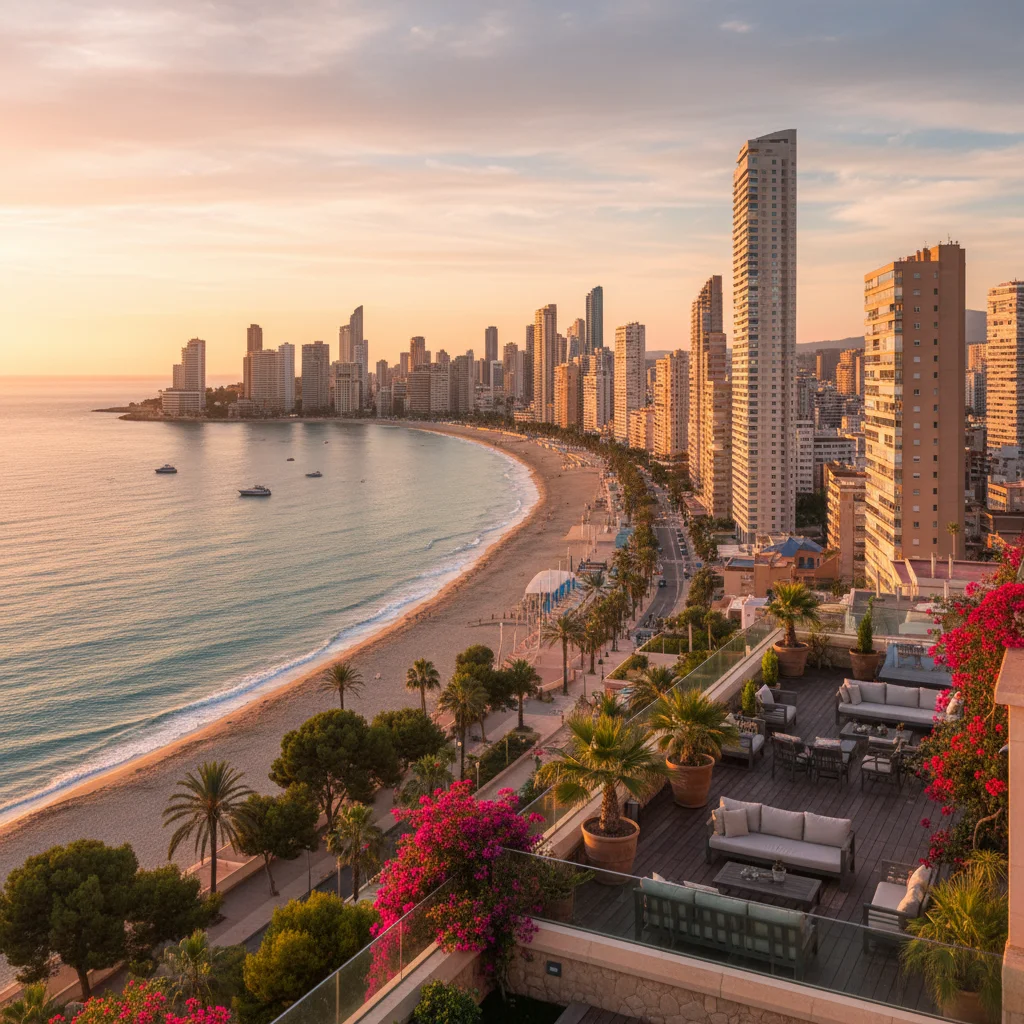
The city divides naturally into distinct zones. Levante Beach on the east side is the busier, more commercial strip, while Poniente Beach to the west has a more residential feel with modern apartment towers and the striking promenade designed by Carlos Ferrater. Between them, the Old Town clusters around the Balcón del Mediterráneo headland with its whitewashed streets and traditional restaurants. Behind the beaches, the terrain rises sharply into the hills toward Finestrat and La Nucia, where villa communities enjoy elevated panoramas over the entire bay.
Property prices average around €250,000, though the range is wide. High-rise apartments with sea-view terraces of 10–20 square metres dominate the beachfront, while hillside villas behind the city offer gardens and covered terraces of 40–80 square metres. Penthouse apartments in newer Poniente towers can have wraparound terraces exceeding 30 square metres — prime outdoor cooking territory.
Benidorm’s massive year-round expat community, diverse property types, and unrivalled social scene make it the highest-volume market on the Costa Blanca for outdoor cooking equipment.
Choosing Your Setup in Benidorm
Benidorm’s vertical living means compact, high-performance equipment for apartment terraces, while hilltop villa owners have the space for full outdoor kitchen installations with views over the bay.
High-rise living dominates Benidorm, and that shapes equipment choices. A typical Levante or Poniente apartment terrace of 10–15 square metres suits a compact kamado (38cm) or a quality two-burner gas BBQ — small footprint, serious output. Kamados are particularly popular in high-rise settings because they produce minimal smoke, an important consideration when neighbours are directly above and below. Costa Blanca Outdoors stocks several kamado models specifically suited to balcony use, with stand options that protect terrace tiles from heat.
Penthouse owners along the Poniente strip and in newer developments near the Old Town have more room to work with. A three- or four-burner gas BBQ with side burner, paired with a portable pizza oven, creates a complete outdoor cooking station on a 25–30 square metre terrace. These setups become the social hub of the home — Benidorm’s active community calendar means regular hosting is the norm rather than the exception.
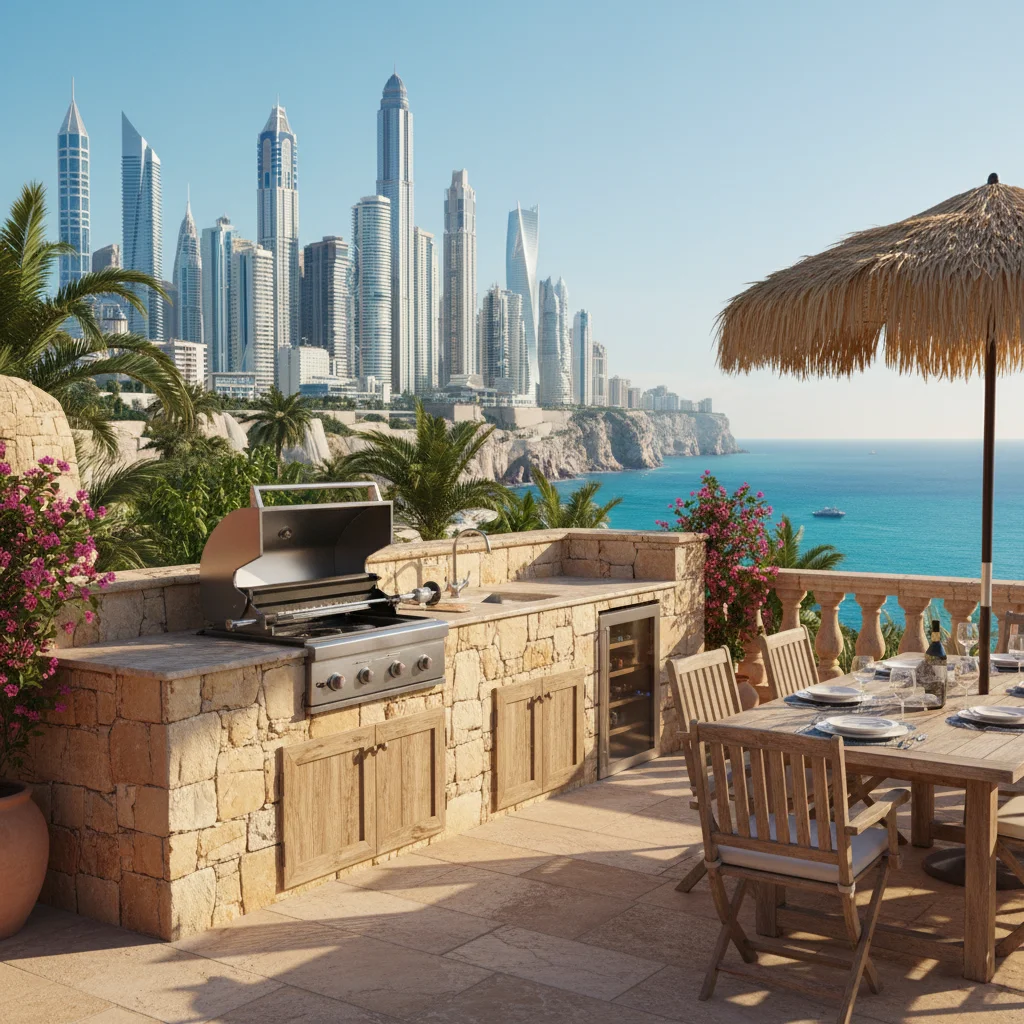
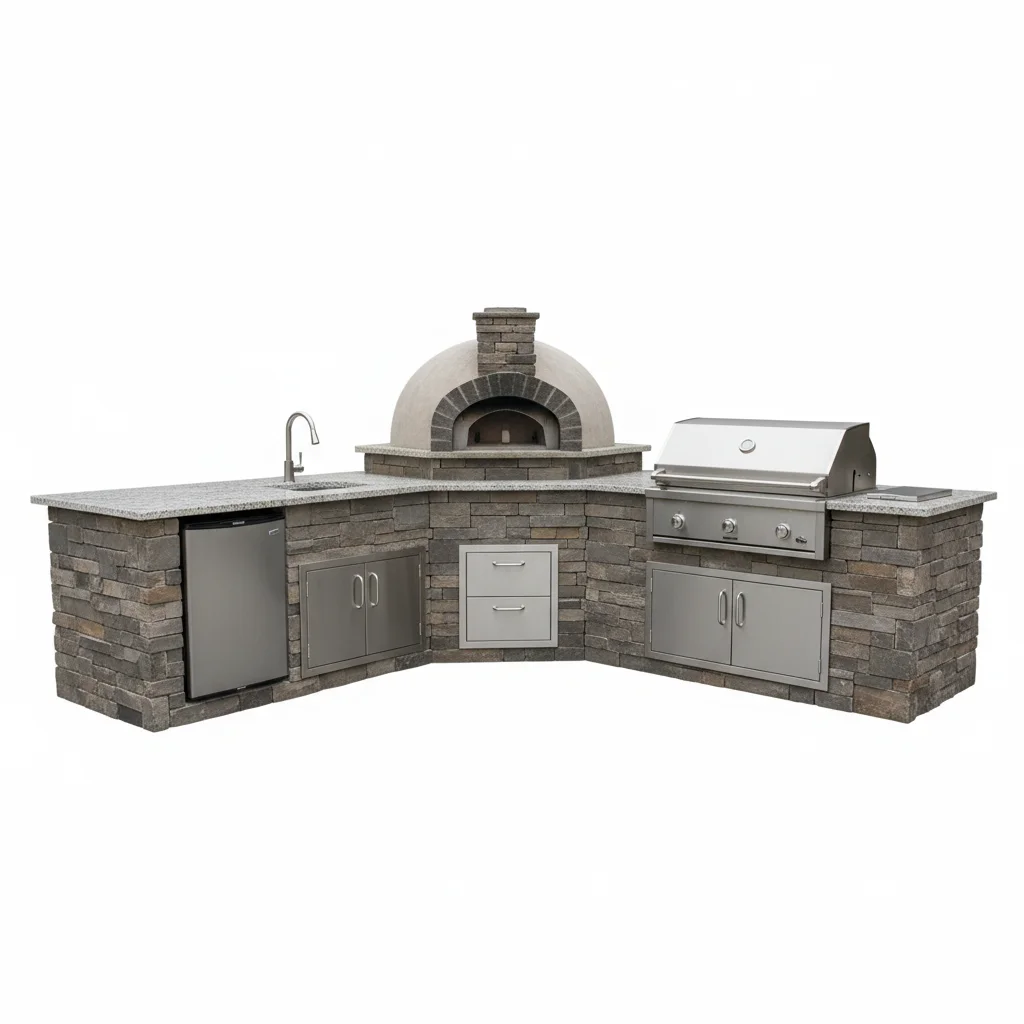
Villa owners in the hills behind Benidorm, toward Sierra Cortina and the Finestrat border, have space for the full range. Built-in outdoor kitchens with gas grills, wood-fired pizza ovens, and preparation areas are increasingly popular in these elevated properties, where entertaining on a terrace overlooking the Mediterranean is the ultimate selling point.
For Benidorm apartments, Costa Blanca Outdoors recommends low-smoke kamado grills or compact gas BBQs designed for high-rise terrace use — with full outdoor kitchen solutions available for hillside villa owners.
Delivery to Benidorm
We deliver throughout Benidorm, from the Levante and Poniente high-rises to the Old Town and hillside villa communities, on our weekly central Costa Blanca route.
Benidorm’s high-rise apartment blocks require careful delivery planning. We coordinate lift access, building entry codes, and delivery timing with building administrators in advance. For towers without freight lifts, we assess stairwell access and arrange appropriate equipment — our team regularly delivers to upper floors in Levante and Poniente towers and knows the logistics of Benidorm’s major residential buildings well.
The Old Town area around the Balcón del Mediterráneo has narrow, pedestrianised streets. Deliveries here are scheduled during early morning access windows, with smaller vehicles navigating the historic quarter. Hillside villa deliveries toward Sierra Cortina and the Finestrat border are typically straightforward, with direct road access to most urbanisaciones.
Neighbouring Alfaz del Pi and La Nucia are on the same delivery route, and we also serve Altea and Villajoyosa on our central coastal schedule. In-stock items ship within 5–10 working days, while custom outdoor kitchen projects require 3–4 weeks for design, fabrication, and professional installation.
The Practical Reality of Outdoor Kitchens in Benidorm
Living in a coastal hub where the skyline meets the Mediterranean requires a specific approach to home improvement, particularly when it comes to the culture of outdoor dining. This city has moved far beyond its identity as a holiday resort, evolving into a permanent home for approximately 77,000 residents. With thirty-five percent of the population coming from international backgrounds—predominantly British, German, and Dutch—the demand for high-end, functional terrace spaces has fundamentally changed. These residents bring a deep-seated tradition of outdoor hosting, transforming simple balcony grills into sophisticated culinary stations. Whether you are situated in a high-rise apartment overlooking Levante Beach or a detached villa in the quieter residential fringes, the outdoor kitchen is no longer a luxury but a central component of the Mediterranean lifestyle. The property stock here is remarkably diverse, ranging from compact beachfront studios to expansive family homes with an average price point of around 250,000 Euros. In the historic Old Town or near the Balcón del Mediterráneo, we often deal with vertical living where every square meter must be optimized. In these urban environments, the outdoor kitchen serves as a vital extension of a small indoor footprint. Conversely, the newer developments closer to Poniente Beach allow for more sprawling configurations that rival any indoor setup in terms of capability and design.
The local climate dictates the necessity of these installations more than any marketing trend ever could. We enjoy over three hundred days of sunshine annually, but this sun is accompanied by an intensity of UV radiation that can degrade inferior materials in a single season. The British and Northern European expats who settle here often arrive with a desire to recreate the garden culture of their home countries, yet they quickly realize that the Spanish environment demands more robust engineering. An outdoor kitchen in this region acts as the primary cooking zone from March through to November, keeping the heat of the oven and the smell of cooking oils out of the main house during the humid summer months. This transition to outdoor living is not just about comfort; it is a practical response to the local geography. By moving the kitchen outside, you reduce the load on your internal air conditioning and embrace the natural ventilation provided by the sea breezes. For the international community, these spaces become the focal point for Sunday roasts, Saturday evening barbecues, and the quiet morning ritual of coffee overlooking the sea.
Technical considerations for this specific coastal environment cannot be overstated, as the proximity to the water introduces challenges that most mainland kitchen manufacturers are unprepared for. If your property is located within two kilometers of the shore, you are living in a high-salt environment that acts as an abrasive on every exposed surface. I consistently advise against using standard 304-grade stainless steel for any installation here. While it might look acceptable in a showroom, the salt spray carried by the Levante wind will cause tea-staining and pitting within months. For residents in this municipality, I exclusively recommend 316 marine-grade stainless steel or high-pressure laminate (HPL) cabinetry. These materials are engineered to withstand the corrosive atmosphere that defines life near the water. The wind itself is another major factor that residents must plan for. We experience two dominant wind patterns: the Levante, which brings humidity and salt from the east, and the Poniente, which brings hotter, drier air from the inland. When designing a kitchen layout, the placement of the grill and the height of the backsplash must account for these gusts to prevent smoke from being pushed back into your living area or extinguishing a gas flame prematurely.
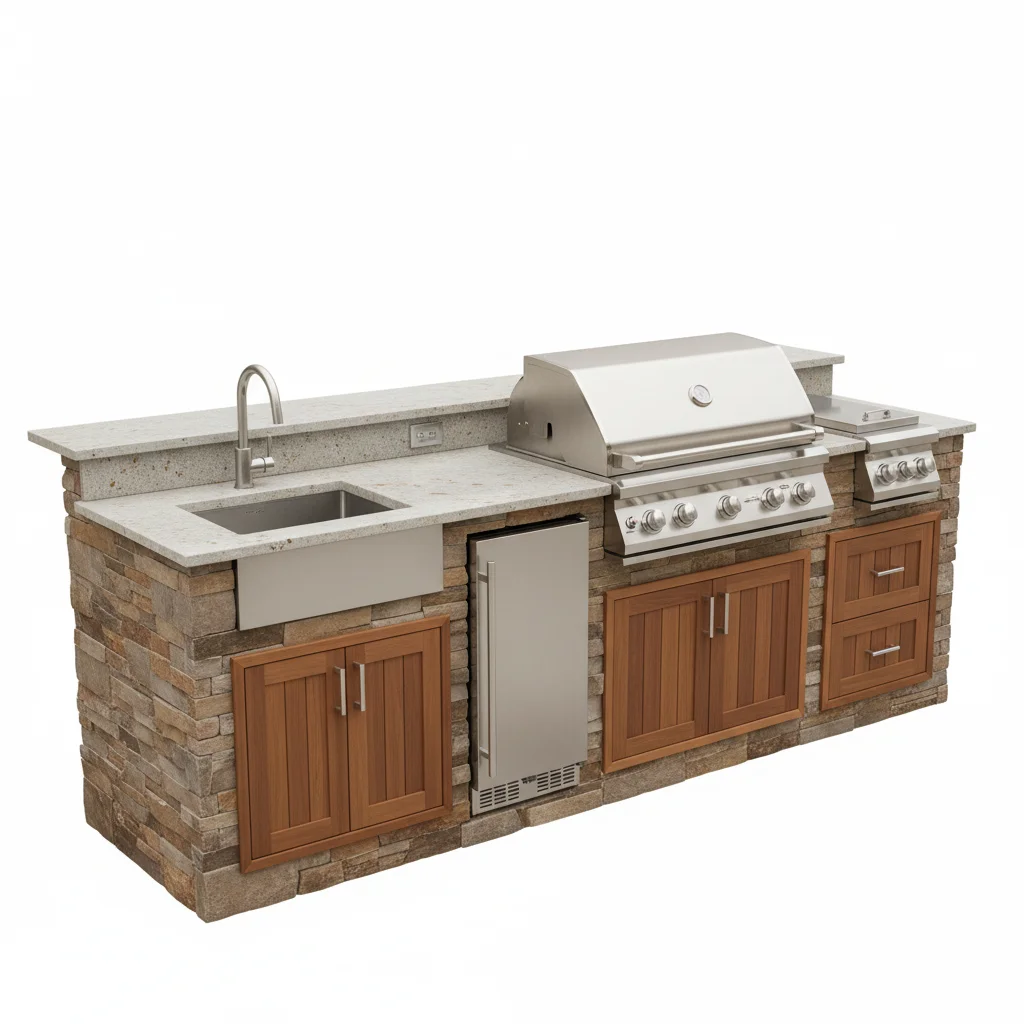
Installation logistics in a city known for its verticality require a high degree of local expertise. For many apartment owners in the high-rise blocks, the primary hurdle is the "comunidad de propietarios" rules and the physical weight limits of the terrace. A traditional masonry kitchen built with heavy bricks and mortar can exceed the structural load-bearing capacity of an older balcony. Instead, I suggest modular aluminum-framed systems which offer the same aesthetic as a built-in kitchen but at a fraction of the weight. Furthermore, the delivery of these units often involves navigating narrow access roads or utilizing crane lifts to reach penthouses on the twentieth floor. One specific insight I always share with my clients relates to the "calima"—the Saharan dust clouds that occasionally blanket the region. If you choose a kitchen with deep crevices or porous stone worktops, cleaning this fine red dust becomes a nightmare. Smooth, non-porous surfaces like Dekton or polished granite are essential for anyone who doesn't want to spend their entire weekend scrubbing their worktops. For a mid-range budget of approximately 8,500 Euros, a resident can install a high-quality three-meter modular run featuring a premium gas grill, integrated waste management, and a sink with a cover to keep out the salt and dust when not in use.
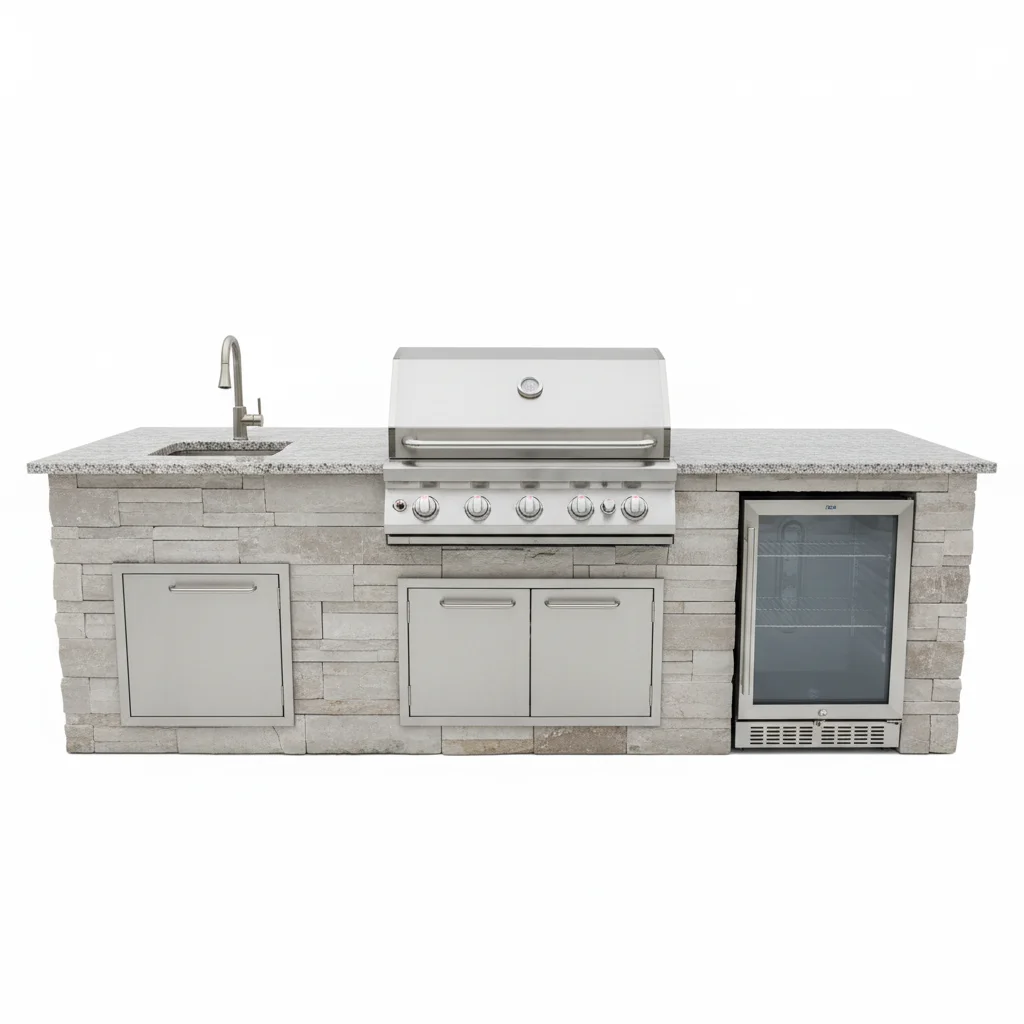
When we look at recommendations based on property type, the approach varies significantly between the urban center and the surrounding hillsides. For those living in the iconic towers near Poniente Beach, space and weight are the deciding factors. For these clients, I recommend a compact, linear configuration of approximately two meters. This setup should prioritize a high-output gas BBQ with a hood that features a glass viewing window, allowing you to monitor food without releasing heat into the wind. Integrating a small, 150-liter outdoor-rated refrigerator is also a game-changer for apartment living, as it saves countless trips back to the main kitchen. This type of setup, including professional installation and marine-grade materials, typically falls into the 4,000 to 7,000 Euro range. In this context, the outdoor kitchen often replaces the need for a traditional indoor dining room, as the terrace becomes the year-round venue for all meals.
For villa owners in the quieter residential zones, the possibilities expand into full-scale culinary centers that can reach the 25,000 Euro mark. In these larger spaces, we can move beyond the standard gas grill and incorporate specialized equipment like a ceramic kamado-bbq or a dedicated pizza-oven. The kamado is particularly popular among the Dutch and German residents here due to its incredible thermal efficiency and versatility; it can smoke a brisket for twelve hours or sear a steak at four hundred degrees Celsius. We often design "L-shaped" or "U-shaped" kitchens for these villas, creating a social bar area where guests can sit on one side while the cook works on the other. A popular configuration for a detached home includes a central gas-bbq for everyday convenience, flanked by a kamado for weekend slow-cooking, and a prep sink with a powerful side burner for frying or boiling tapas. It is also vital to consider the lighting; as the sun sets rapidly in Spain, integrated LED task lighting under the counter overhangs or specialized grill lamps are essential for safety and ambiance.
Maintenance in this part of the world is a specific discipline. Because of the intense UV year-round, any plastic components or cheap fabric covers will disintegrate within two seasons. I recommend investing in custom-fitted, heavy-duty PVC covers that are secured with bungee toggles to prevent them from blowing away during a winter storm. Regarding fuel, the majority of the local area relies on Repsol or Cepsa orange gas bottles. Designing your kitchen cabinetry to specifically house these bottles—which are 50cm tall and 30cm wide—is a detail that many non-local designers miss, leading to ugly bottles sitting out on the terrace. Furthermore, for those who choose a pizza-oven, sourcing kiln-dried olive or oak wood is easy in this region, but it must be stored in a dry, ventilated cabinet within your outdoor kitchen to prevent it from absorbing the coastal humidity, which causes excessive smoke during combustion.
Our service extends well beyond the city limits, covering the surrounding areas of Alfaz-del-pi, Finestrat, and La Nucia. We understand the specific logistical challenges of each neighborhood, from the steep, winding driveways of the hillside urbanizations to the strict delivery windows required in the more congested parts of the city. For example, delivering a heavy porcelain worktop to a villa in Finestrat requires a different vehicle and team than navigating the underground loading bays of a modern apartment block. My team and I have spent years building relationships with the best local fabricators and plumbers who understand the nuances of Spanish building standards and terrace waterproofing. We know which building permits are required for permanent structures and how to navigate the local town hall requirements for utility extensions.
Choosing to install an outdoor kitchen is a significant investment in your property and your quality of life. It transforms a simple balcony or garden into a professional-grade cooking environment that takes full advantage of the unique Mediterranean climate. Whether you are looking for a simple, elegant solution for a sunset apartment or a comprehensive culinary suite for a luxury villa, the key is choosing materials and designs that are built to last in this specific environment. I offer a free, no-obligation consultation where we can sit down and look at your specific terrace or garden layout. I will walk you through the material choices, from the heat-resistant worktops to the specialized marine-grade hardware, ensuring that your investment provides value for decades rather than just a few seasons. We have helped over two hundred families across the Costa Blanca create their ideal outdoor spaces, and we bring that wealth of practical, local experience to every project we undertake in this vibrant coastal community. Through careful planning and a deep understanding of the local wind, salt, and sun, we can create a space that becomes the true heart of your home.
 JW'"
/>
JW'"
/>