Outdoor Living in Benidorm
Benidorm has 77,000 residents with a remarkable 35% expat population — a year-round resort city with the largest British and Northern European community on the Costa Blanca, where high-rise terraces and hilltop villas create a unique vertical outdoor living market.
Benidorm defies the clichés. Behind the famous skyline lies a genuine residential city with a well-established international community that lives here permanently, not just on holiday. The British contingent is the largest, followed by significant German and Dutch populations, creating a social infrastructure — clubs, restaurants, and activity groups — that operates twelve months a year.
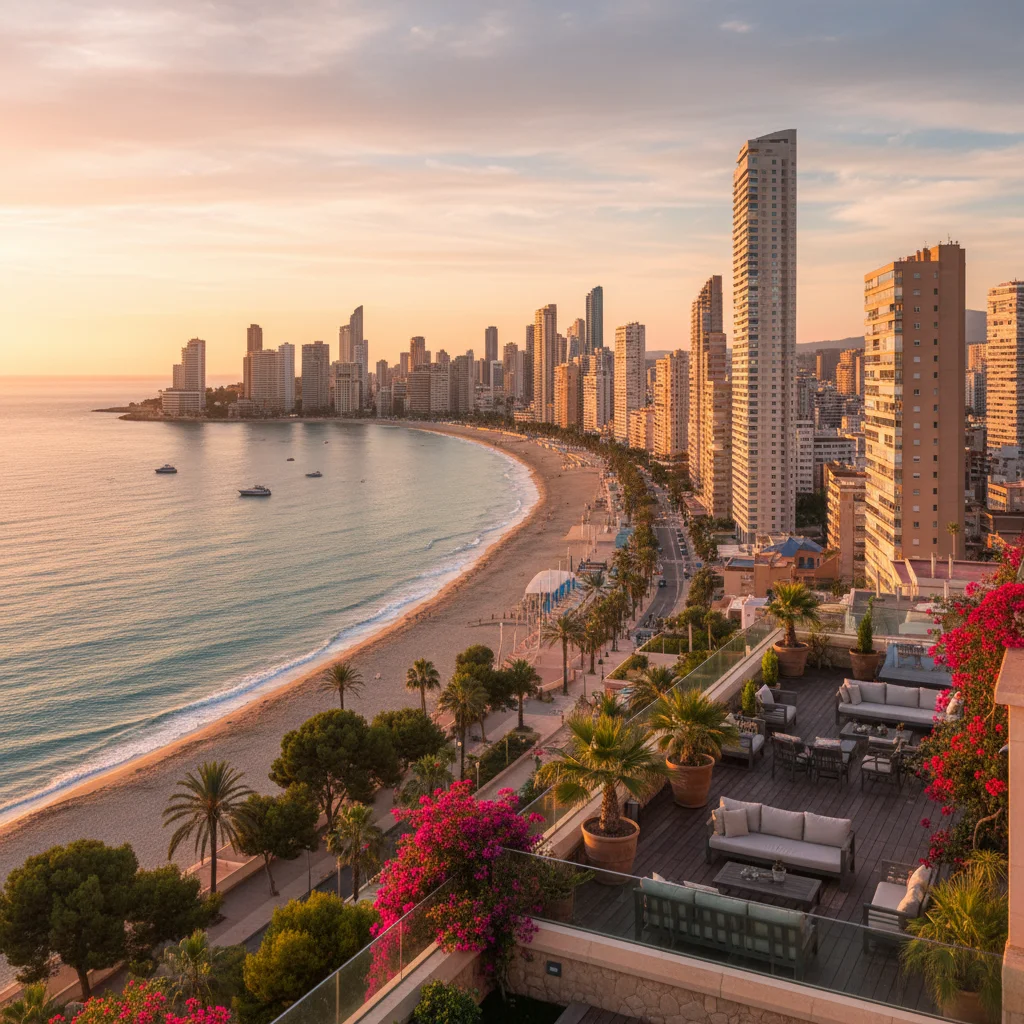
The city divides naturally into distinct zones. Levante Beach on the east side is the busier, more commercial strip, while Poniente Beach to the west has a more residential feel with modern apartment towers and the striking promenade designed by Carlos Ferrater. Between them, the Old Town clusters around the Balcón del Mediterráneo headland with its whitewashed streets and traditional restaurants. Behind the beaches, the terrain rises sharply into the hills toward Finestrat and La Nucia, where villa communities enjoy elevated panoramas over the entire bay.
Property prices average around €250,000, though the range is wide. High-rise apartments with sea-view terraces of 10–20 square metres dominate the beachfront, while hillside villas behind the city offer gardens and covered terraces of 40–80 square metres. Penthouse apartments in newer Poniente towers can have wraparound terraces exceeding 30 square metres — prime outdoor cooking territory.
Benidorm’s massive year-round expat community, diverse property types, and unrivalled social scene make it the highest-volume market on the Costa Blanca for outdoor cooking equipment.
Choosing Your Setup in Benidorm
Benidorm’s vertical living means compact, high-performance equipment for apartment terraces, while hilltop villa owners have the space for full outdoor kitchen installations with views over the bay.
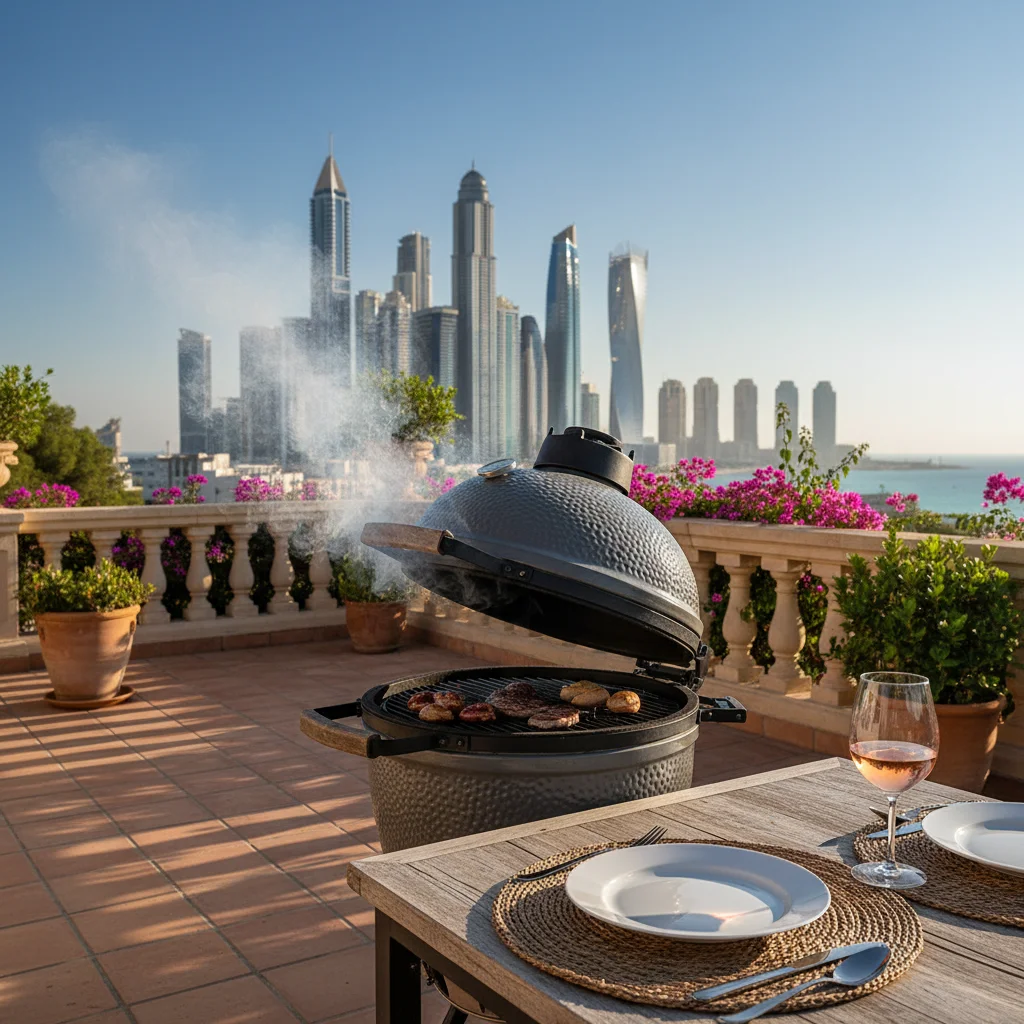
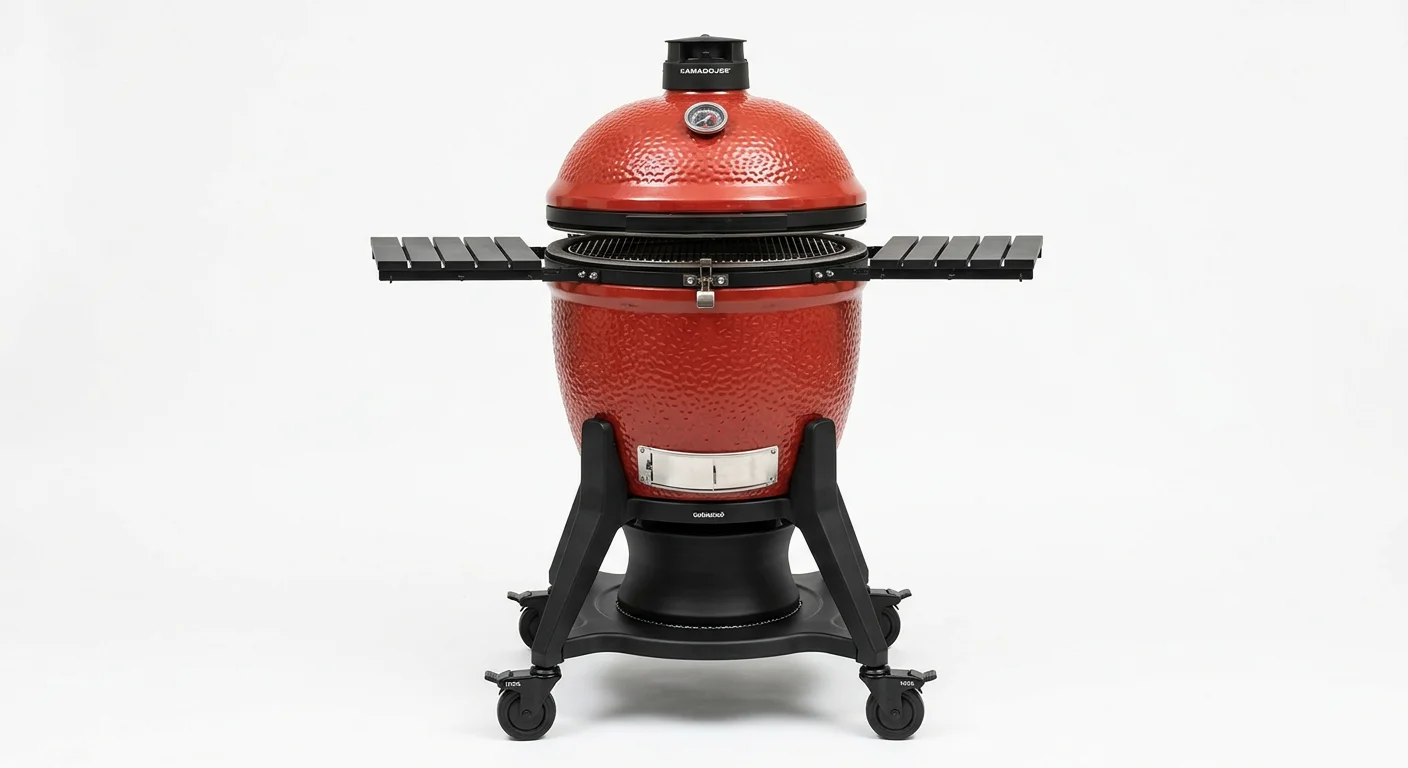
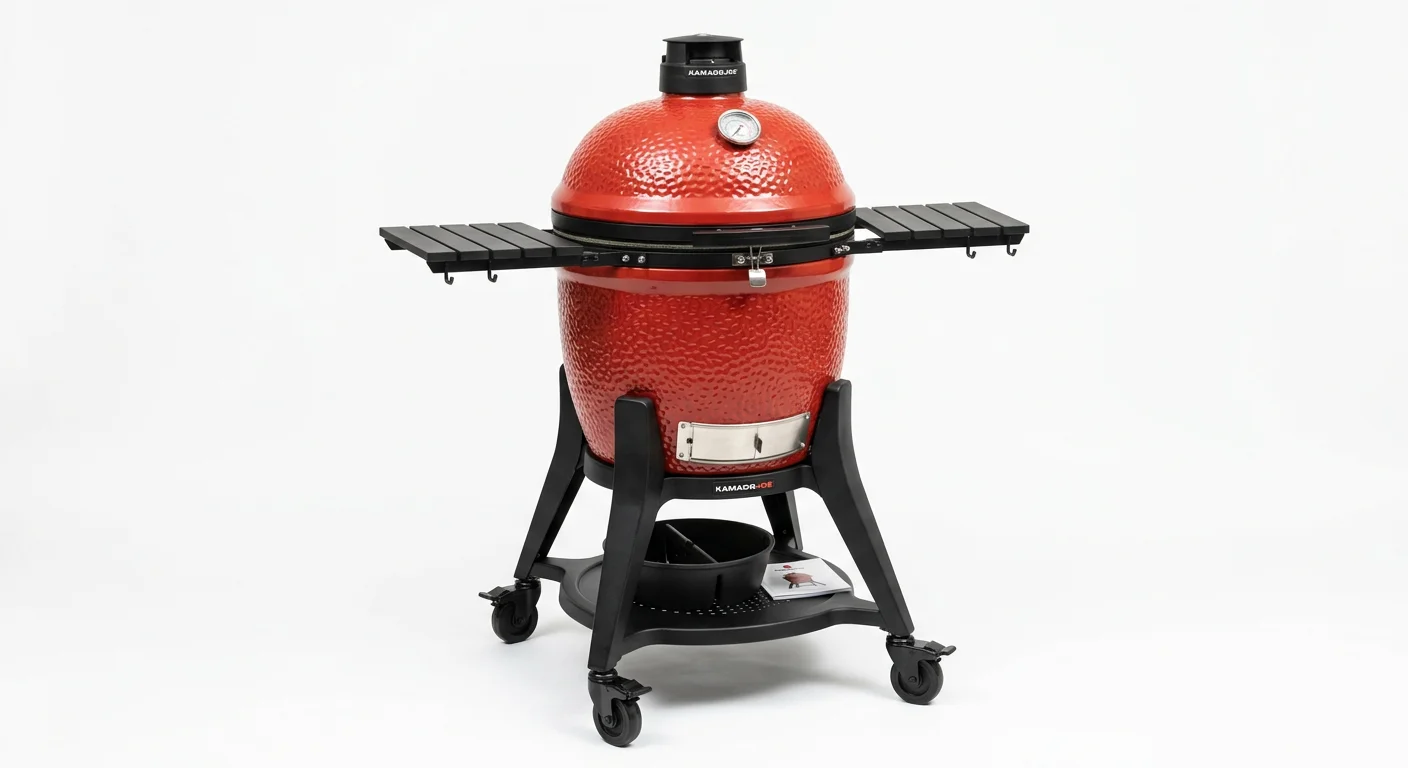
High-rise living dominates Benidorm, and that shapes equipment choices. A typical Levante or Poniente apartment terrace of 10–15 square metres suits a compact kamado (38cm) or a quality two-burner gas BBQ — small footprint, serious output. Kamados are particularly popular in high-rise settings because they produce minimal smoke, an important consideration when neighbours are directly above and below. Costa Blanca Outdoors stocks several kamado models specifically suited to balcony use, with stand options that protect terrace tiles from heat.
Penthouse owners along the Poniente strip and in newer developments near the Old Town have more room to work with. A three- or four-burner gas BBQ with side burner, paired with a portable pizza oven, creates a complete outdoor cooking station on a 25–30 square metre terrace. These setups become the social hub of the home — Benidorm’s active community calendar means regular hosting is the norm rather than the exception.
Villa owners in the hills behind Benidorm, toward Sierra Cortina and the Finestrat border, have space for the full range. Built-in outdoor kitchens with gas grills, wood-fired pizza ovens, and preparation areas are increasingly popular in these elevated properties, where entertaining on a terrace overlooking the Mediterranean is the ultimate selling point.
For Benidorm apartments, Costa Blanca Outdoors recommends low-smoke kamado grills or compact gas BBQs designed for high-rise terrace use — with full outdoor kitchen solutions available for hillside villa owners.
Delivery to Benidorm
We deliver throughout Benidorm, from the Levante and Poniente high-rises to the Old Town and hillside villa communities, on our weekly central Costa Blanca route.
Benidorm’s high-rise apartment blocks require careful delivery planning. We coordinate lift access, building entry codes, and delivery timing with building administrators in advance. For towers without freight lifts, we assess stairwell access and arrange appropriate equipment — our team regularly delivers to upper floors in Levante and Poniente towers and knows the logistics of Benidorm’s major residential buildings well.
The Old Town area around the Balcón del Mediterráneo has narrow, pedestrianised streets. Deliveries here are scheduled during early morning access windows, with smaller vehicles navigating the historic quarter. Hillside villa deliveries toward Sierra Cortina and the Finestrat border are typically straightforward, with direct road access to most urbanisaciones.
Neighbouring Alfaz del Pi and La Nucia are on the same delivery route, and we also serve Altea and Villajoyosa on our central coastal schedule. In-stock items ship within 5–10 working days, while custom outdoor kitchen projects require 3–4 weeks for design, fabrication, and professional installation.
Expert Guidance for Kamado BBQs in the Benidorm Region
Living in this specific stretch of the Costa Blanca offers a unique lifestyle that dictates exactly how you should approach your outdoor cooking setup. With a permanent population of 77,000 residents, roughly 35% of whom are international expats, the demand for high-quality outdoor equipment has evolved significantly since I moved here in 2019. British, German, and Dutch residents bring a serious culture of year-round grilling, but the local environment presents challenges that a standard supermarket grill simply cannot survive. Whether you are situated in a high-rise apartment overlooking Levante Beach or a sprawling villa in the quieter residential fringes, the choice of a Kamado BBQ is often the most logical investment for those who prioritize longevity and flavor over disposable convenience.
The property stock here is remarkably diverse, ranging from compact 60-square-meter apartments with narrow balconies to significant detached properties with 200-square-meter terraces. This diversity means a one-size-fits-all approach to outdoor kitchens is impossible. In the more densely populated areas near the Balcón del Mediterráneo and the Old Town, space is at a premium, yet the desire for that authentic charcoal flavor remains. A Kamado, with its vertical cooking profile and thick ceramic insulation, provides a far more efficient use of floor space than a wide six-burner gas rig. Furthermore, the international community has shifted the local culinary scene; we are seeing a move away from simple quick-grilling toward low-and-slow smoking and outdoor roasting, techniques where ceramic grills excel.
Outdoor living here isn't just a summer activity; it is a twelve-month reality. The intense sunlight and specific coastal weather patterns mean that your equipment is under constant environmental stress. While the average property price sits around EUR 250,000, many residents are investing heavily in their terraces because they function as the primary living room for half the year. In these spaces, a Kamado becomes more than a tool; it is a permanent architectural fixture. Its ability to bake bread, sear a Rubia Gallega steak at 400°C, or smoke a brisket for twelve hours makes it the most versatile piece of equipment you can install, especially when you consider the social nature of the local expat community.
When choosing a ceramic grill for this environment, you must consider the physical constraints of your specific neighborhood. The wind patterns around the taller buildings near Poniente Beach can be unpredictable, often creating a venturi effect that can blow out the flame in a standard open grill. The enclosed nature of a Kamado prevents this, keeping your charcoal protected within 3-centimeter-thick ceramic walls. This insulation ensures that even when the Levante wind picks up, your internal cooking temperature remains rock-solid, a feat that thin-walled metal barbecues simply cannot achieve in this part of Spain.
Technical Considerations for the Local Climate and Infrastructure
The most significant factor for any outdoor equipment in this town is the proximity to the Mediterranean Sea. If your property is within two kilometers of the shore, you are dealing with a constant salt-laden mist. This salt spray is incredibly corrosive to low-grade metals. When I help families select a Kamado, I insist on looking at the hardware—the bands, the hinges, and the nuts and bolts. You should prioritize Grade 304 stainless steel or powder-coated galvanized steel. A budget ceramic grill with cheap chrome-plated fittings will show signs of rust within a single season if you are living in an apartment near the Levante strip.
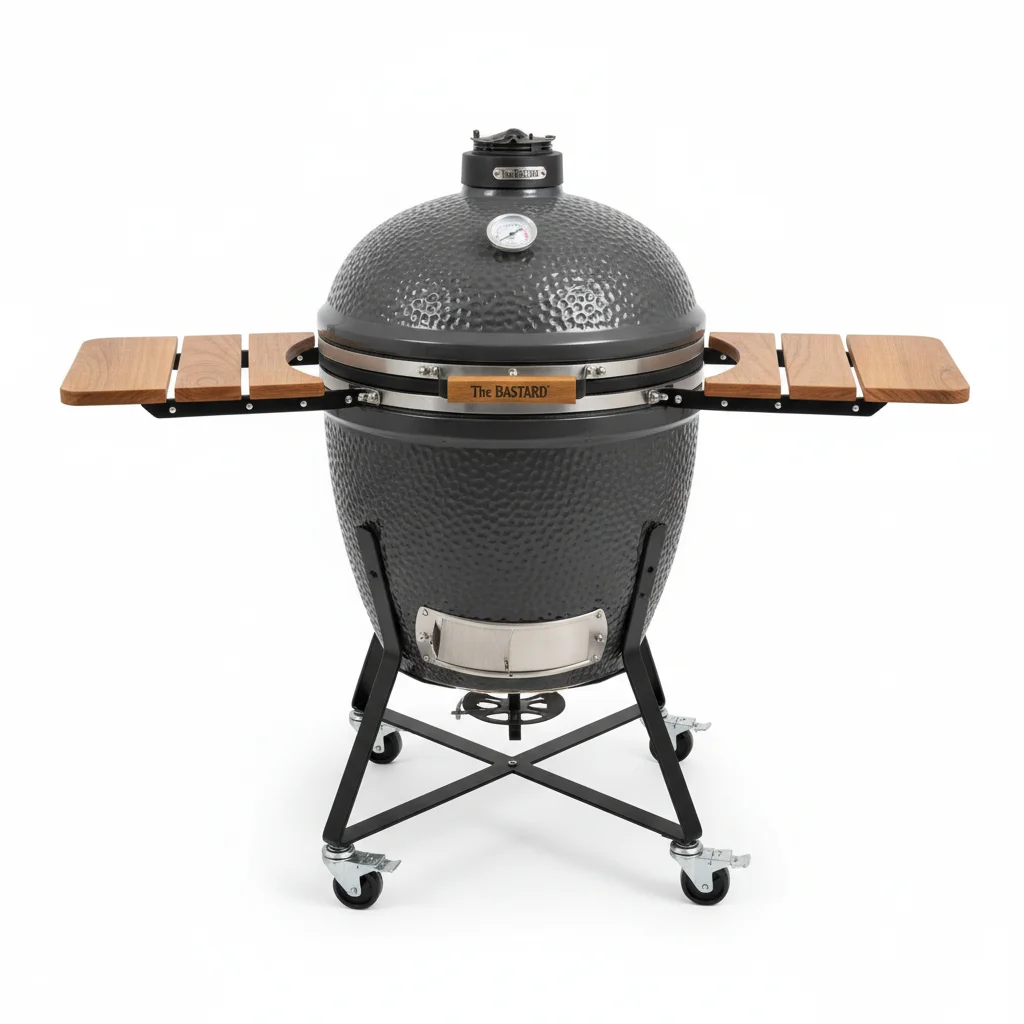
The local climate also features intense UV radiation for over 300 days a year. This solar energy degrades plastic handles and side shelves rapidly. For our local environment, I recommend models with HDPE (High-Density Polyethylene) or bamboo side shelves, though even bamboo requires an annual coat of oil to prevent cracking under the Spanish sun. The ceramic body of the grill itself is largely immune to UV damage, which is why these units often come with 20-year or lifetime warranties, making them a much more sustainable choice than metal grills that peel and flake. For a high-quality entry point, the Monolith Basic or a Kamado Joe Classic I, typically priced around EUR 1,200 to EUR 1,400, offers the necessary build quality to withstand these conditions.
If you live in a multi-story building, you must navigate the rules of the comunidad de propietarios. Most communities in the taller towers allow barbecues, but they are rightfully sensitive about smoke. This is where the Kamado has a distinct advantage over traditional open charcoal grills. Because you control the airflow so precisely through the top and bottom vents, you can produce a very "clean" burn. Once the charcoal is lit and the ceramic is up to temperature, there is virtually no visible smoke unless you are intentionally adding wood chunks for flavor. This allows you to cook a full Sunday roast or a batch of pizzas without bothering your neighbors three floors up.
Installation in this area also requires a bit of local foresight regarding fuel. While gas-bbq setups are popular, sourcing high-quality lump charcoal is straightforward here. I always advise residents to avoid the cheap briquettes found in local supermarkets, as they contain binders that can permeate the porous ceramic of your Kamado and ruin the flavor of your food. Instead, look for heavy-density hardwood charcoal like Holm Oak (Encina) or Quebracho, which are readily available and provide the 15-hour burn times required for serious smoking. Maintenance is equally specific to our climate; because of the humidity, I recommend a high-quality, breathable cover to prevent mold growth on the interior ceramics during the occasional wet weeks in October.
Optimized Setup Strategies for Different Property Types
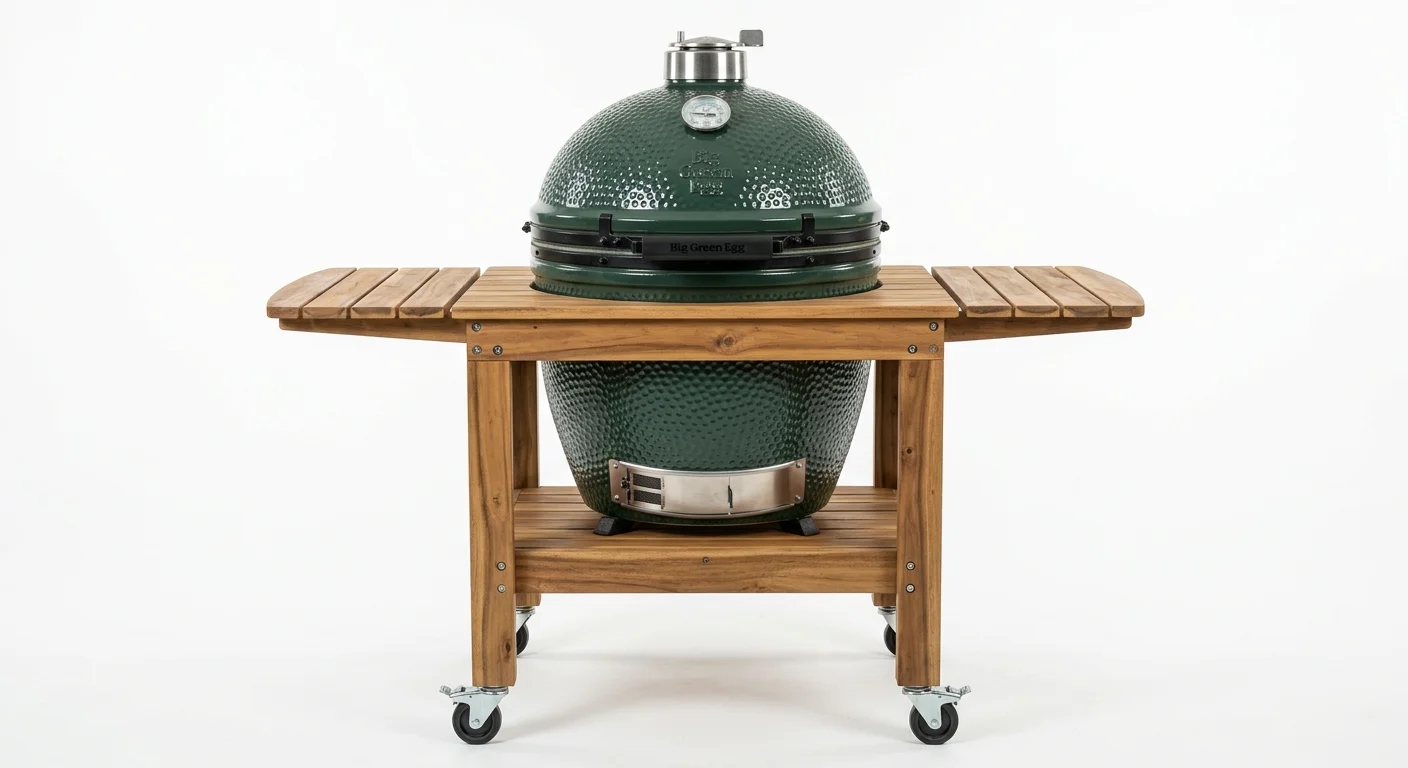
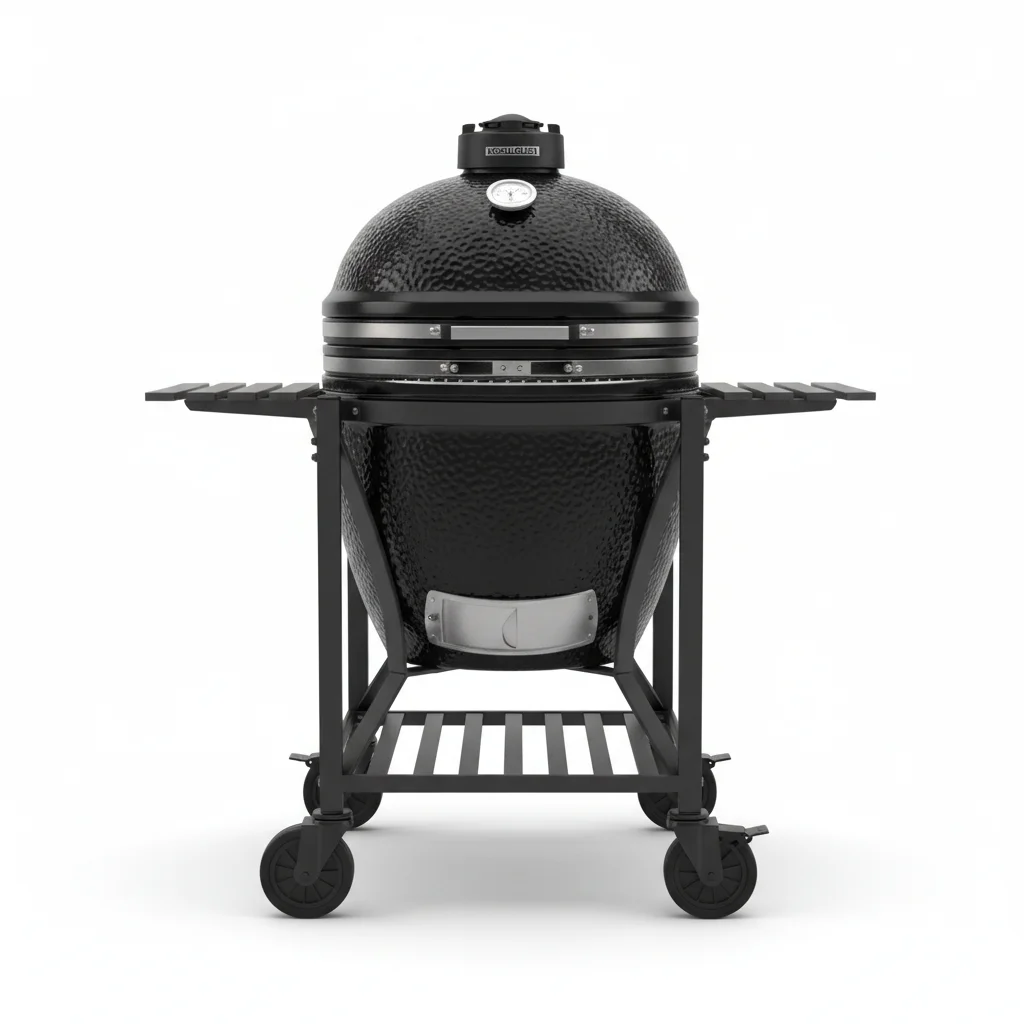
For those residing in the larger villas in the foothills or the residential areas stretching toward Finestrat and La Nucia, a Kamado often serves as the cornerstone of a full outdoor-kitchen. In these larger spaces, I recommend the "built-in" configuration. Instead of a mobile cart, the ceramic head is integrated into a stone or porcelain countertop. This creates a permanent cooking station that can be paired with a gas-bbq for quick midweek meals or a dedicated pizza-oven for social gatherings. A large-sized Kamado, with a 46cm to 55cm cooking grate, allows you to cook for ten to twelve people easily. For a premium setup like this, you should budget between EUR 2,000 and EUR 3,500, depending on the accessories like rotisseries or tiered cooking systems.
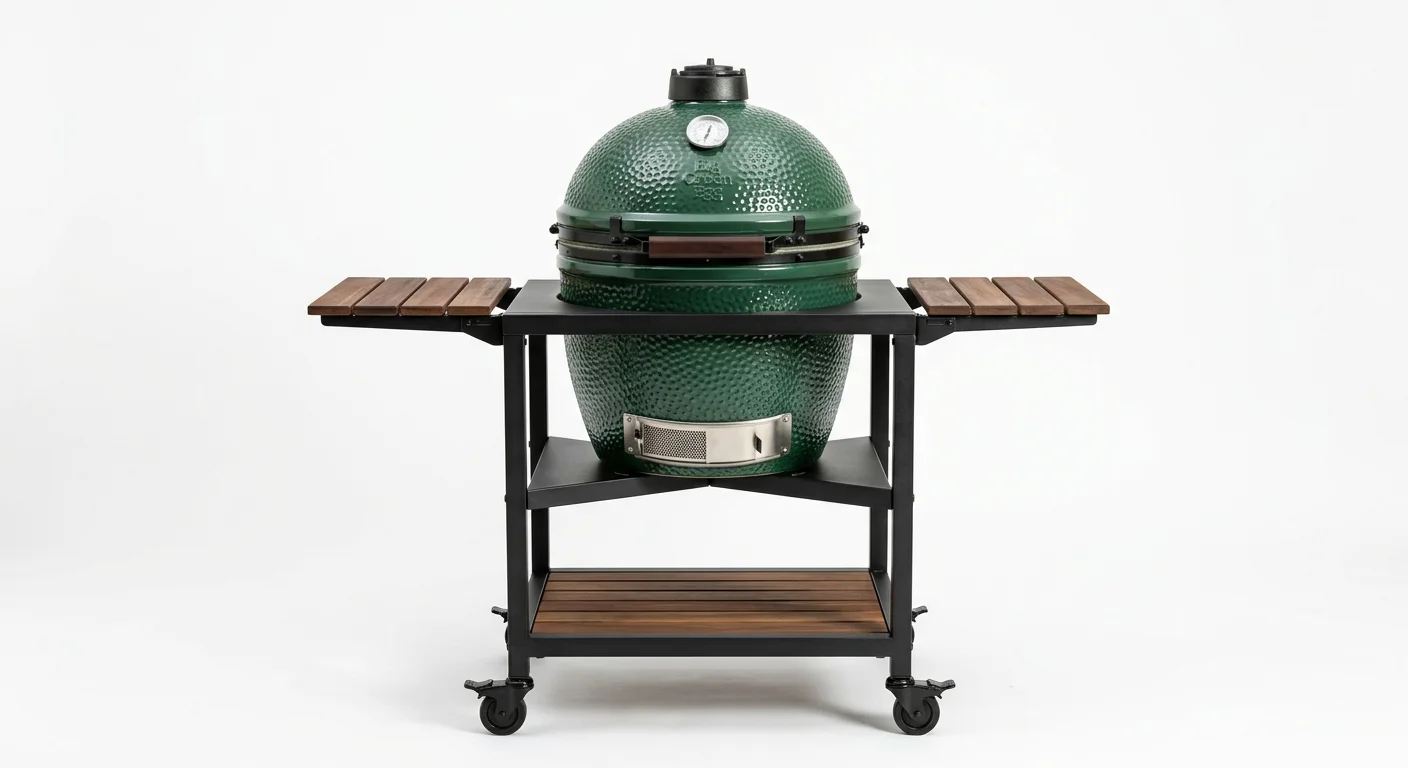
In contrast, the beachfront apartments near Poniente require a more surgical approach. Space is the primary constraint. For these residents, a "Junior" or "Minimax" size Kamado is often the better choice. These units have a diameter of roughly 33cm to 40cm and weigh significantly less—usually around 35kg to 50kg compared to the 100kg+ of a full-sized unit. This makes them portable enough to move into a storage cupboard if the terrace needs to be cleared, yet they still offer the same thermal efficiency and flavor profile. These smaller units usually sit in the EUR 800 to EUR 1,100 price bracket and are perfectly capable of roasting a whole chicken or grilling four large ribeye steaks simultaneously.
We often see a trend where residents combine different cooking technologies to suit the local rhythm of life. During the heat of July and August, you might not want to stand over a hot grill for long. Many of my clients use a gas-bbq for a fast fifteen-minute sear on some gambas al ajillo, while reserving the Kamado for the cooler evenings or weekend gatherings where the process of lighting the coals and stabilizing the temperature is part of the ritual. If you are a fan of authentic Italian-style pizza, the Kamado can reach the 400°C required for a 90-second Neapolitan crust, often negating the need for a separate standalone pizza-oven if your terrace space is limited.
The versatility of the ceramic grill also suits the local Mediterranean diet. You aren't limited to burgers and sausages; the heat retention allows you to use the Kamado as a traditional wood-fired oven. I have many clients who use theirs to cook slow-roasted lamb (cordero) or even traditional rice dishes when they want to infuse a subtle smoky depth that a standard indoor oven cannot provide. The key is understanding the heat deflectors—ceramic plates that sit between the fire and the food—turning the grill into a convection oven that circulates heat evenly without burning the bottom of your dish.
Logistics and Local Expertise in the Marina Baixa
Navigating the delivery and assembly of a 100kg ceramic grill in this region requires more than just a van and a pallet jack. I have spent years learning the nuances of the local streets, from the restricted access areas in the Old Town to the steep, winding driveways of the urbanisations in Alfaz-del-Pi and Altea. Many of the newer high-rise developments have specific service lift dimensions that must be considered before you order a Large or XL model. We don't just drop a box at your gate; we understand the logistical reality of getting a fragile ceramic vessel up to the 20th floor or across a landscaped garden in Villajoyosa.
When we deliver to nearby towns like Finestrat or La Nucia, we take into account the specific terrain. For example, many villas in these areas are built on terraced land with narrow stone steps. Moving a 110kg Kamado Joe Big Joe III requires specialized equipment and often a three-person team to ensure the ceramic isn't stressed or cracked during transit. We also provide a full commissioning service, which is vital for residents who might be new to ceramic cooking. This includes the first burn-off to remove any manufacturing residues and a detailed walkthrough of how to manage the airflow using the specific charcoal types available in the Marina Baixa.
Our local knowledge extends to the long-term care of your investment. We know exactly how the "Calima"—the red Saharan dust that occasionally blankets the region—affects outdoor equipment. We can advise on the best cleaning practices to ensure your vents don't become seized with grit and salt. Being based locally means we are available for more than just a sale; we provide the ongoing support that ensures your outdoor space remains functional and enjoyable for years to come. Whether you are in the heart of the tourist zone or in the quieter suburbs, we bring the expertise needed to navigate the unique challenges of our coastal environment.
If you are considering upgrading your terrace or planning a complete outdoor-kitchen renovation, the best starting point is a conversation about how you actually intend to use the space. Every family has a different rhythm, and every terrace has a different microclimate. I offer free consultations to help you measure up and determine which size and model of Kamado will serve you best without over-complicating your setup. Choosing the right equipment now prevents the frustration of replacing rusted metal grills every few years and allows you to fully embrace the incredible outdoor lifestyle that this part of the world offers.
 JW'"
/>
JW'"
/>