Outdoor Living in Benidorm
Benidorm has 77,000 residents with a remarkable 35% expat population — a year-round resort city with the largest British and Northern European community on the Costa Blanca, where high-rise terraces and hilltop villas create a unique vertical outdoor living market.
Benidorm defies the clichés. Behind the famous skyline lies a genuine residential city with a well-established international community that lives here permanently, not just on holiday. The British contingent is the largest, followed by significant German and Dutch populations, creating a social infrastructure — clubs, restaurants, and activity groups — that operates twelve months a year.
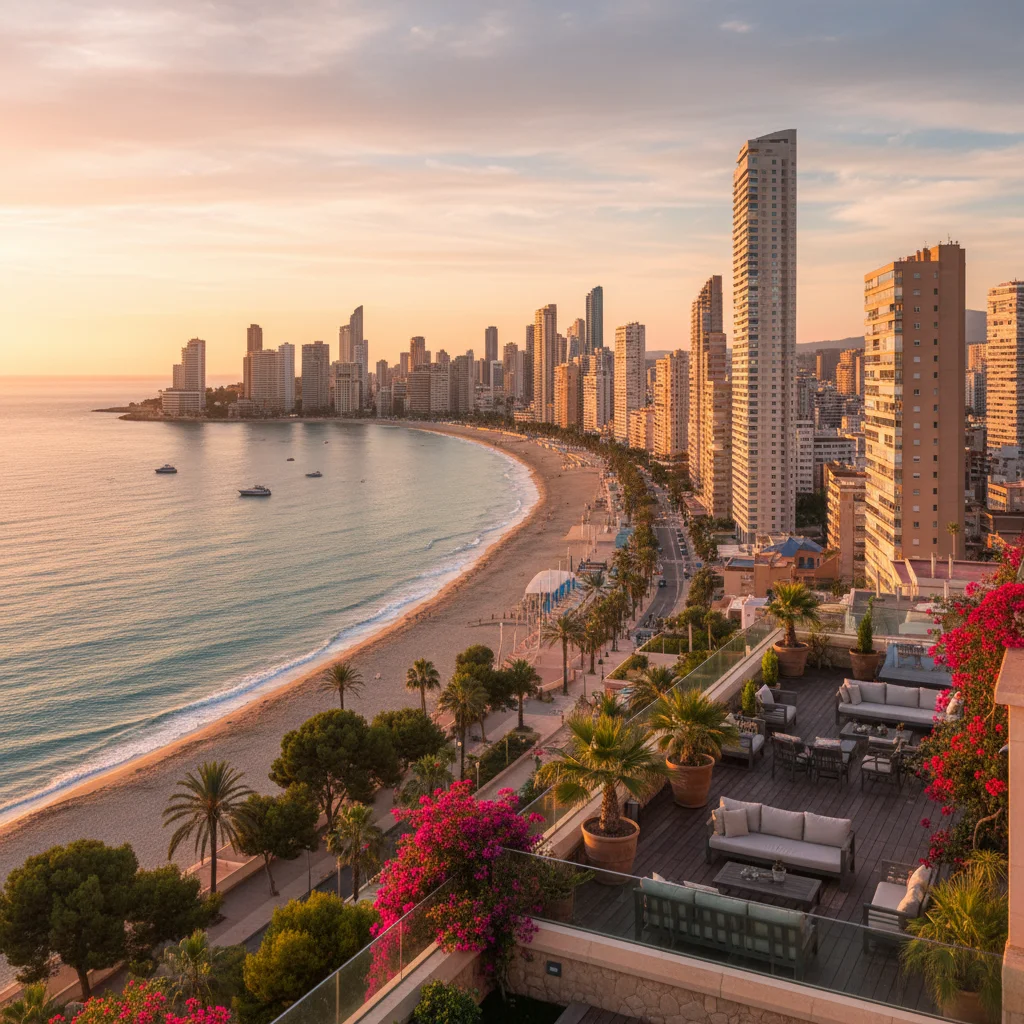
The city divides naturally into distinct zones. Levante Beach on the east side is the busier, more commercial strip, while Poniente Beach to the west has a more residential feel with modern apartment towers and the striking promenade designed by Carlos Ferrater. Between them, the Old Town clusters around the Balcón del Mediterráneo headland with its whitewashed streets and traditional restaurants. Behind the beaches, the terrain rises sharply into the hills toward Finestrat and La Nucia, where villa communities enjoy elevated panoramas over the entire bay.
Property prices average around €250,000, though the range is wide. High-rise apartments with sea-view terraces of 10–20 square metres dominate the beachfront, while hillside villas behind the city offer gardens and covered terraces of 40–80 square metres. Penthouse apartments in newer Poniente towers can have wraparound terraces exceeding 30 square metres — prime outdoor cooking territory.
Benidorm’s massive year-round expat community, diverse property types, and unrivalled social scene make it the highest-volume market on the Costa Blanca for outdoor cooking equipment.
Choosing Your Setup in Benidorm
Benidorm’s vertical living means compact, high-performance equipment for apartment terraces, while hilltop villa owners have the space for full outdoor kitchen installations with views over the bay.
High-rise living dominates Benidorm, and that shapes equipment choices. A typical Levante or Poniente apartment terrace of 10–15 square metres suits a compact kamado (38cm) or a quality two-burner gas BBQ — small footprint, serious output. Kamados are particularly popular in high-rise settings because they produce minimal smoke, an important consideration when neighbours are directly above and below. Costa Blanca Outdoors stocks several kamado models specifically suited to balcony use, with stand options that protect terrace tiles from heat.
Penthouse owners along the Poniente strip and in newer developments near the Old Town have more room to work with. A three- or four-burner gas BBQ with side burner, paired with a portable pizza oven, creates a complete outdoor cooking station on a 25–30 square metre terrace. These setups become the social hub of the home — Benidorm’s active community calendar means regular hosting is the norm rather than the exception.
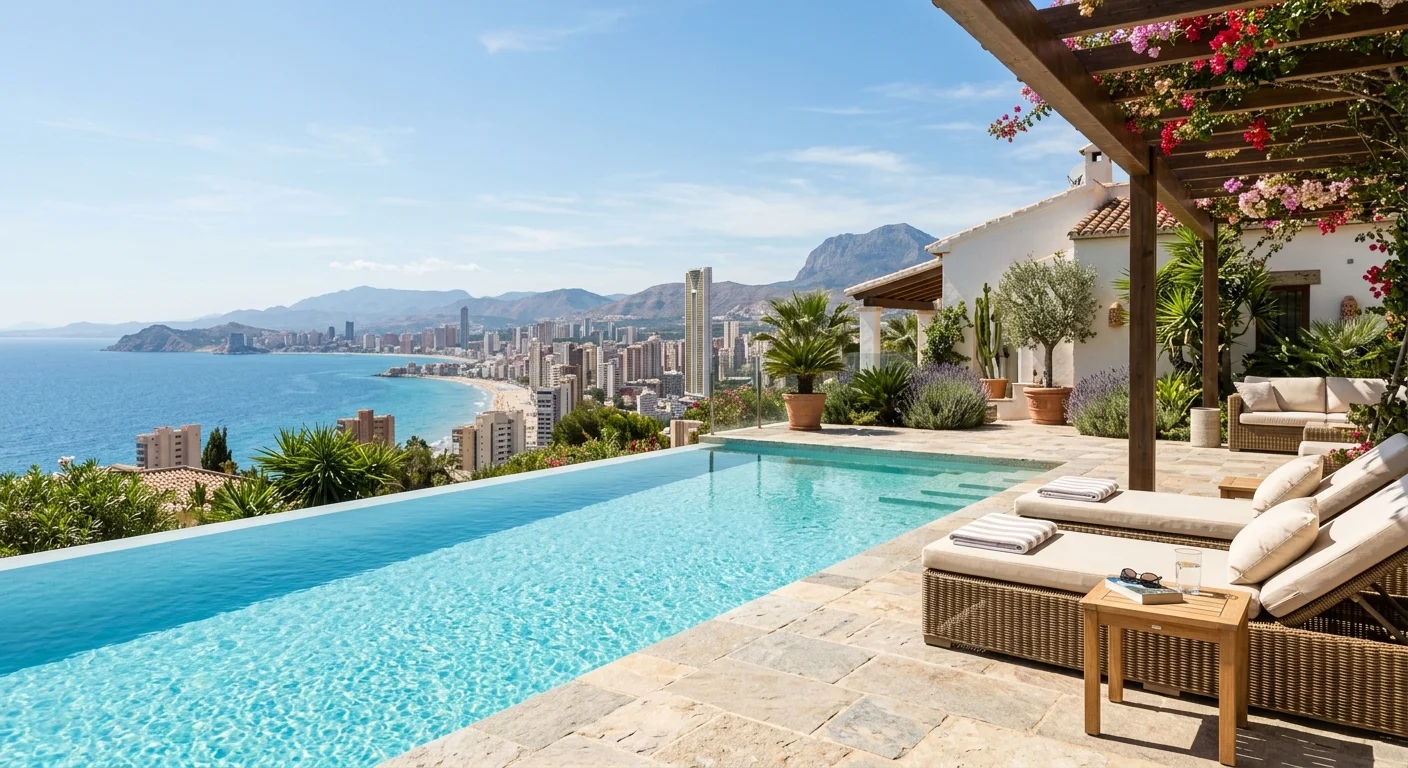
Villa owners in the hills behind Benidorm, toward Sierra Cortina and the Finestrat border, have space for the full range. Built-in outdoor kitchens with gas grills, wood-fired pizza ovens, and preparation areas are increasingly popular in these elevated properties, where entertaining on a terrace overlooking the Mediterranean is the ultimate selling point.
For Benidorm apartments, Costa Blanca Outdoors recommends low-smoke kamado grills or compact gas BBQs designed for high-rise terrace use — with full outdoor kitchen solutions available for hillside villa owners.
Delivery to Benidorm
We deliver throughout Benidorm, from the Levante and Poniente high-rises to the Old Town and hillside villa communities, on our weekly central Costa Blanca route.
Benidorm’s high-rise apartment blocks require careful delivery planning. We coordinate lift access, building entry codes, and delivery timing with building administrators in advance. For towers without freight lifts, we assess stairwell access and arrange appropriate equipment — our team regularly delivers to upper floors in Levante and Poniente towers and knows the logistics of Benidorm’s major residential buildings well.
The Old Town area around the Balcón del Mediterráneo has narrow, pedestrianised streets. Deliveries here are scheduled during early morning access windows, with smaller vehicles navigating the historic quarter. Hillside villa deliveries toward Sierra Cortina and the Finestrat border are typically straightforward, with direct road access to most urbanisaciones.
Neighbouring Alfaz del Pi and La Nucia are on the same delivery route, and we also serve Altea and Villajoyosa on our central coastal schedule. In-stock items ship within 5–10 working days, while custom outdoor kitchen projects require 3–4 weeks for design, fabrication, and professional installation.
Swimming Pools in Benidorm: What You Need to Know
Living on this stretch of the coast since 2019 has taught me that the skyline of Benidorm often distracts from the reality of its residential diversity. While the world sees the high-rise hotels of Levante Beach, the local reality for the 77,000 residents is far more nuanced. We have a property stock that ranges from compact apartments in the Old Town to expansive villas in the quieter fringes heading toward the mountains. Around 35% of the population here is international, with British, German, and Dutch residents making up the bulk of the expat community. This international mix has fundamentally changed how we view outdoor spaces. For many of my clients, a swimming pool is not just a luxury but a functional requirement for managing the intense heat that radiates off the concrete and glass of the urban landscape. The outdoor culture here revolves around the transition from the morning sea breeze at the Balcón del Mediterráneo to the private sanctuary of a backyard or terrace by mid-afternoon. Because the average property price sits around EUR 250,000, homeowners are often looking for smart ways to add value to their investments while maximizing every square metre of usable land.
I have found that the Dutch and German residents often prioritize technical efficiency and water heating systems, while the British contingent usually looks for social layouts that incorporate seating ledges and shallow entries for grandchildren. This cultural blend means the local pool industry has had to adapt to diverse standards of construction and maintenance. In the more densely packed areas near Poniente Beach, the challenge is often space. You might only have a terrace of 20 or 30 square metres, which makes a traditional in-ground installation impossible but opens the door for high-spec plunge pools or structural fibreglass units. In the surrounding hills, where the plots grow larger, the focus shifts to infinity edges that capitalize on the verticality of the local geography. Whether you are living in a refurbished apartment or a modern villa, the goal remains the same: creating a temperature-controlled environment that compensates for the relentless sun that characterizes this part of the Mediterranean.
The environmental conditions here are unique due to the exposed coastal position. We are constantly caught between the Levante wind, which blows in from the sea bringing humidity and salt, and the Poniente, a dry, hot wind from the interior that can cause water levels to drop through evaporation at a surprising rate. This constant atmospheric shift dictates exactly how a pool should be built and maintained in this specific part of the province. I often tell residents that if they are within two kilometres of the shore, they are effectively living in a salt-spray zone. This affects everything from the grade of stainless steel used in your pool ladders to the type of cover mechanism you choose. A pool that works in inland Madrid will fail here within three seasons if the materials are not chosen with the local salinity and UV index in mind.
Expert Technical Advice for the Coastal Climate
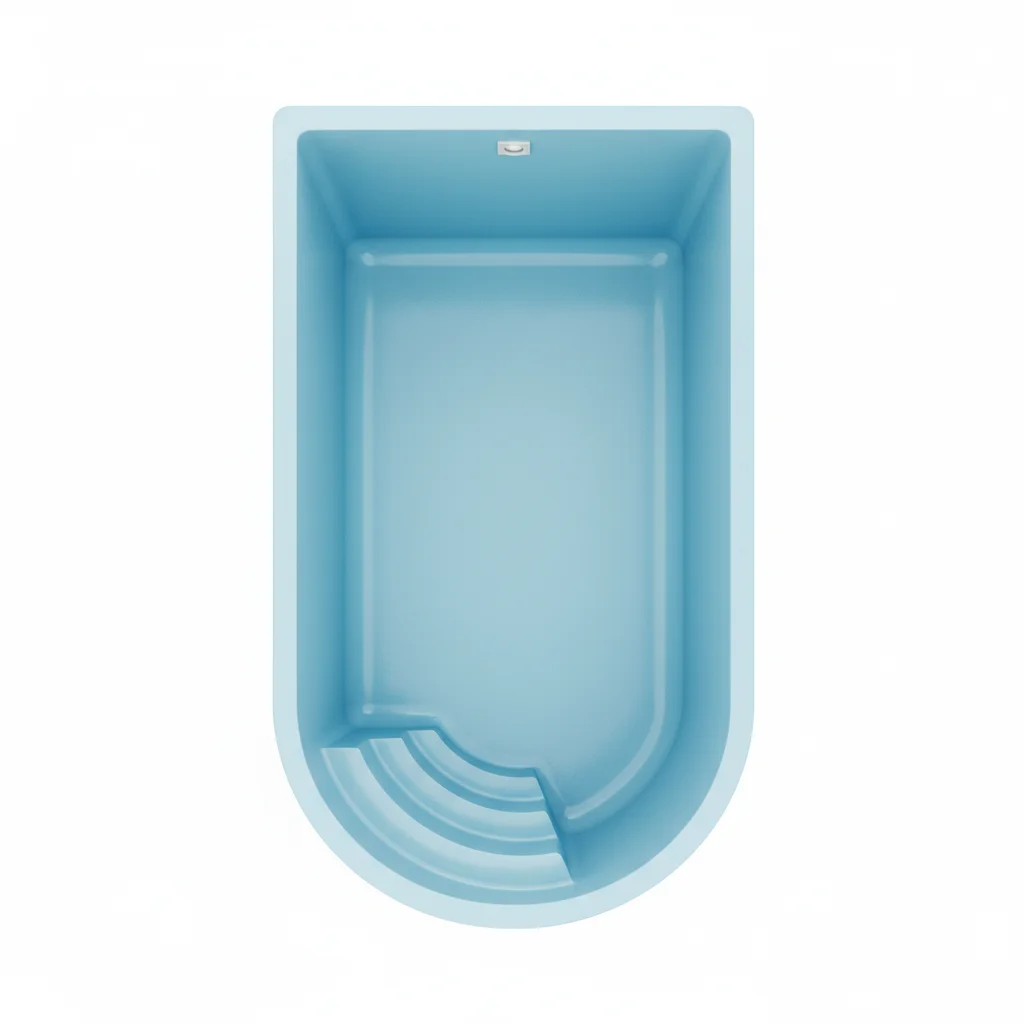
The primary technical challenge we face in this town is the combination of salt air and the high UV index. If your property is located near the coast, any metal components must be 316L marine-grade stainless steel. Standard 304 grade, which is common in cheaper installations, will begin to show tea-staining and pitting within months due to the salt spray. Furthermore, the intense UV radiation here degrades standard PVC pool liners and covers much faster than in Northern Europe. I recommend reinforced 1.5mm liners with a high-resistance lacquer coating to prevent fading. A specific product that performs exceptionally well in this environment is the pre-moulded fibreglass plunge pool, which can be installed for approximately EUR 12,500. These units are non-porous, meaning they resist the algae growth that thrives in our humid summers, and they require significantly fewer chemicals than traditional tiled pools.
Maintenance in this region also requires an understanding of the calima—the fine Saharan dust that occasionally blankets the coast. When a calima event happens, standard sand filters can struggle. I suggest upgrading to a glass media filter. Glass media does not clump like sand and can filter out particles as small as 5 microns, whereas sand usually stops at 20 or 30 microns. For a standard 8x4m pool, the cost to switch to glass media is usually around EUR 350, but it saves hundreds in water and chemical costs over a three-year period because you backwash less frequently. You also need to consider the local comunidad de propietarios rules if you live in a shared complex or an urbanisation. These communities often have strict bylaws regarding the structural modification of terraces and the hours during which filtration pumps can run to avoid noise disturbance. Always check your community statues before committing to a build, as some areas have weight restrictions that limit you to a maximum of 300kg per square metre on elevated terraces.
Evaporation is another factor that many newcomers underestimate. On a hot day with a strong Poniente wind, an uncovered pool can lose up to 8mm of water. This is why I almost always insist on a thermal cover or an automatic slatted cover. An automatic slatted cover for a 6x3m pool will cost between EUR 7,000 and EUR 9,000, but it serves three purposes: it stops evaporation, it acts as a safety barrier for children, and it helps retain heat during the cooler months of October and November. Without a cover, your salt chlorinator will have to work overtime to compensate for the constant addition of fresh, untreated water, which can throw your pH levels out of balance and lead to scaling on your tiles.
Configuration Recommendations for Local Property Types
For the larger villas found on the outskirts or in the newer developments heading toward the mountains, I recommend a full-size in-ground installation, typically 8 metres by 4 metres. In these settings, the ground can be incredibly rocky, particularly as you move toward the Sierra Cortina area. Excavation costs here can fluctuate because of the need for hydraulic hammers to break through the limestone. A standard in-ground tiled pool with a salt chlorination system and a heat pump usually starts around EUR 22,000. For these larger setups, I recommend an L-shaped entry step rather than a traditional ladder. This provides a "beach" area where you can sit in shallow water, which is far more practical for the local climate where you want to stay cool without being fully submerged for hours. Integrating this with a hot tub is a strategic move for the winter months. When the temperature drops in January, a pool is often too cold to use without significant heating costs, but a hot tub, priced between EUR 5,000 and EUR 12,000, provides a year-round outdoor option.
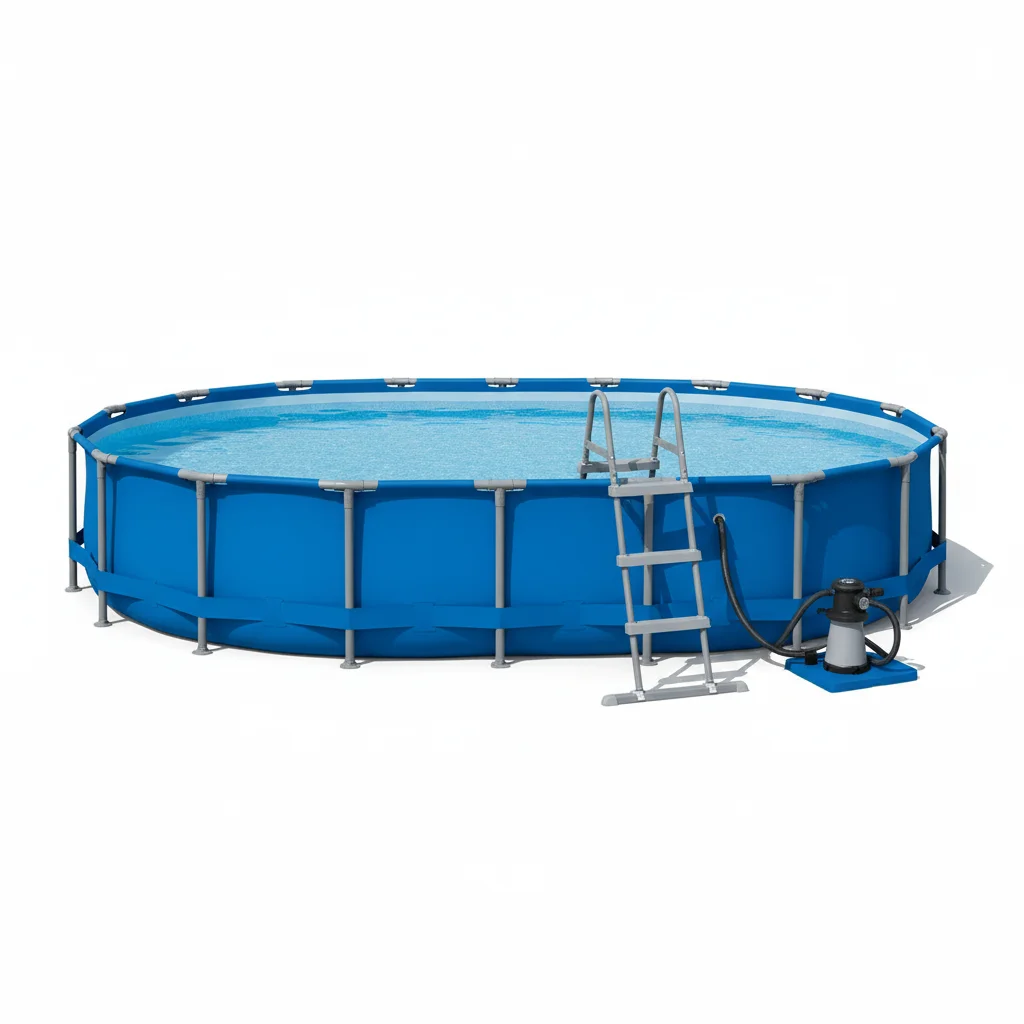
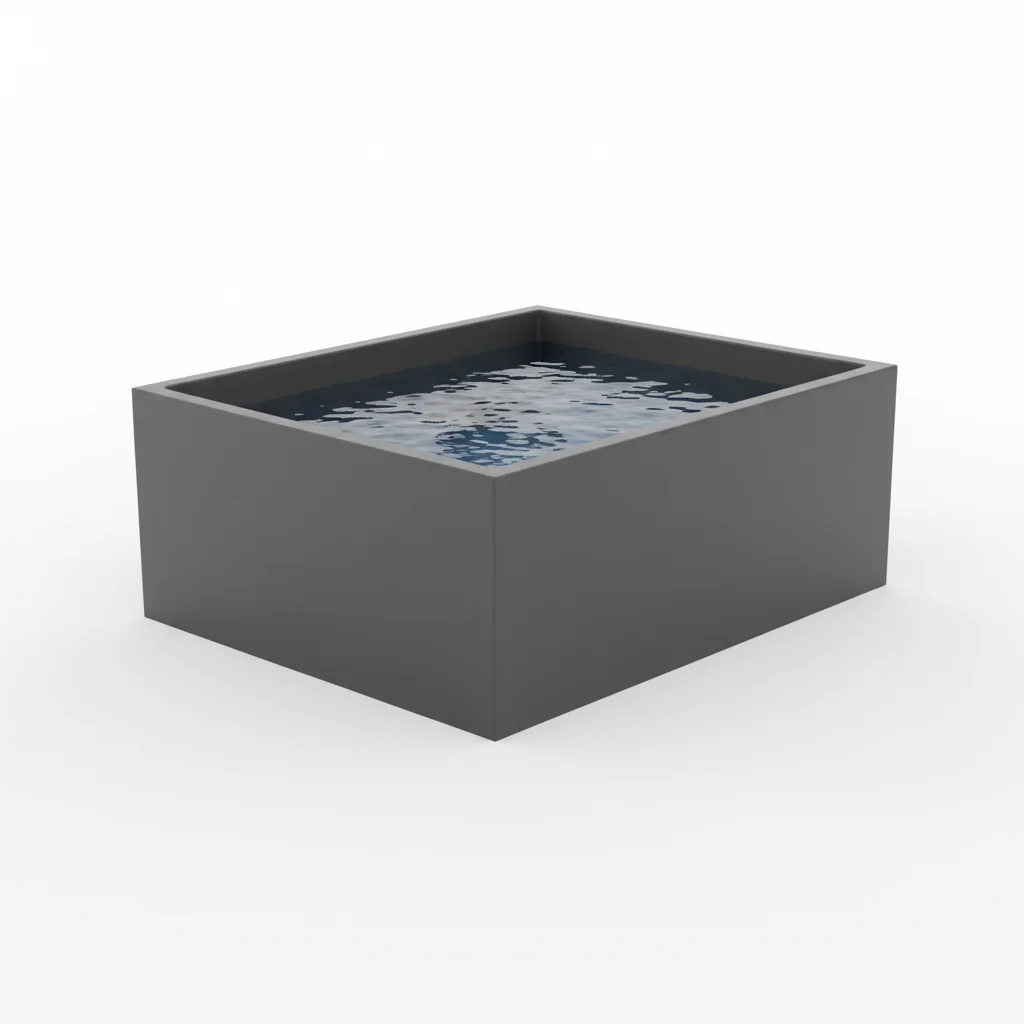
If you are living in one of the many apartments or penthouses with a terrace, your options are different but no less effective. Here, the focus is on weight and water volume. A structural steel-frame pool with a reinforced PVC liner is often the best solution. These can be custom-sized to fit a 3m by 2m corner of a terrace, providing a deep soaking area without exceeding the structural load limits of the building. These smaller "cocktail pools" or plunge pools are becoming increasingly popular in the denser urban areas because they require very little maintenance and can be filled and emptied relatively easily if major terrace repairs are needed. A high-quality plunge pool setup for a terrace usually ranges from EUR 8,000 to EUR 14,000 depending on the integrated filtration and decking finishes used to hide the plumbing.
I also suggest considering the aesthetic integration with the surrounding landscape. In this part of the Costa Blanca, the light is very bright and can be harsh. Using white or very light grey tiles can sometimes create too much glare. I recommend using "niebla" or mist-patterned tiles in sandy or light blue tones. These soften the reflection of the sun and make the water look more natural. Furthermore, because of the high salt content in the air, I advise against using wooden decking around the pool unless it is high-grade Ipe or a high-quality composite. Standard pressure-treated pine will warp and splinter within two summers here. A porcelain tile with a non-slip R11 rating is the gold standard for pool surrounds in this town; it stays cooler than stone and is impervious to the salt and chlorine splashes.
Logistics and Local Expertise in the Marina Baixa
Operating across the Marina Baixa for the last several years, I have learned that the logistics of pool installation are rarely straightforward. Whether we are delivering to a villa in Alfaz del Pi, a modern build in Finestrat, or a traditional property in La Nucia, the access roads are often the biggest hurdle. The narrow, winding streets of the older urbanisations weren't designed for heavy machinery or 12-metre trucks carrying fibreglass pool shells. This is where local knowledge becomes vital. We often have to coordinate with local police for road closures or hire specialized cranes with a 40-metre reach to lift pool shells over existing houses. If you are in the heart of the town, near the pedestrianized zones or the Old Town, we have to navigate strict delivery windows to avoid disrupting the local commerce and tourism flow.
Our team is well-versed in the specific building permit processes for the local town halls. Each municipality, from Villajoyosa to Altea, has slightly different requirements for obra menor (minor works) or obra mayor (major works) licenses. In some areas, you need a technical project signed by an architect just to install a pre-fabricated pool if it involves significant excavation. We handle these administrative hurdles so that you don't have to navigate the Spanish bureaucracy alone. We also understand the local geology; for instance, the soil in the valley between the coast and La Nucia can be quite clay-heavy, which requires specific drainage considerations to prevent the pool from "popping" or shifting during the rare but intense Gota Fría rain events we see in the autumn.
I am personally involved in the consultation phase for every project we take on. I don't believe in a one-size-fits-all approach because a pool in the windy hills of Finestrat needs a different filtration and heating strategy than a pool tucked away in a sheltered garden in Alfaz del Pi. We provide a free initial consultation where we visit your property to assess the sun orientation, wind exposure, and structural access. This allows us to provide an accurate quote that accounts for the realities of your specific plot, rather than a generic estimate that changes halfway through the build. If you are looking to transform your outdoor space into a functional, year-round retreat that stands up to the unique pressures of our coastal environment, I invite you to get in touch. We can discuss everything from the technical specs of variable speed pumps to the best way to integrate a hot tub into your existing terrace layout, ensuring your investment is protected for years to come.
 JW'"
/>
JW'"
/>