Orihuela Costa is not a single town but a string of purpose-built coastal urbanisations stretching from Punta Prima in the north to Dehesa de Campoamor in the south. Each has its own character, but they share a common thread: expat communities who have embraced outdoor living with an enthusiasm that surprises even the locals. On any given weekend between March and November, the scent of barbecue smoke drifts across rooftop solariums and poolside terraces from La Zenia to Cabo Roig.
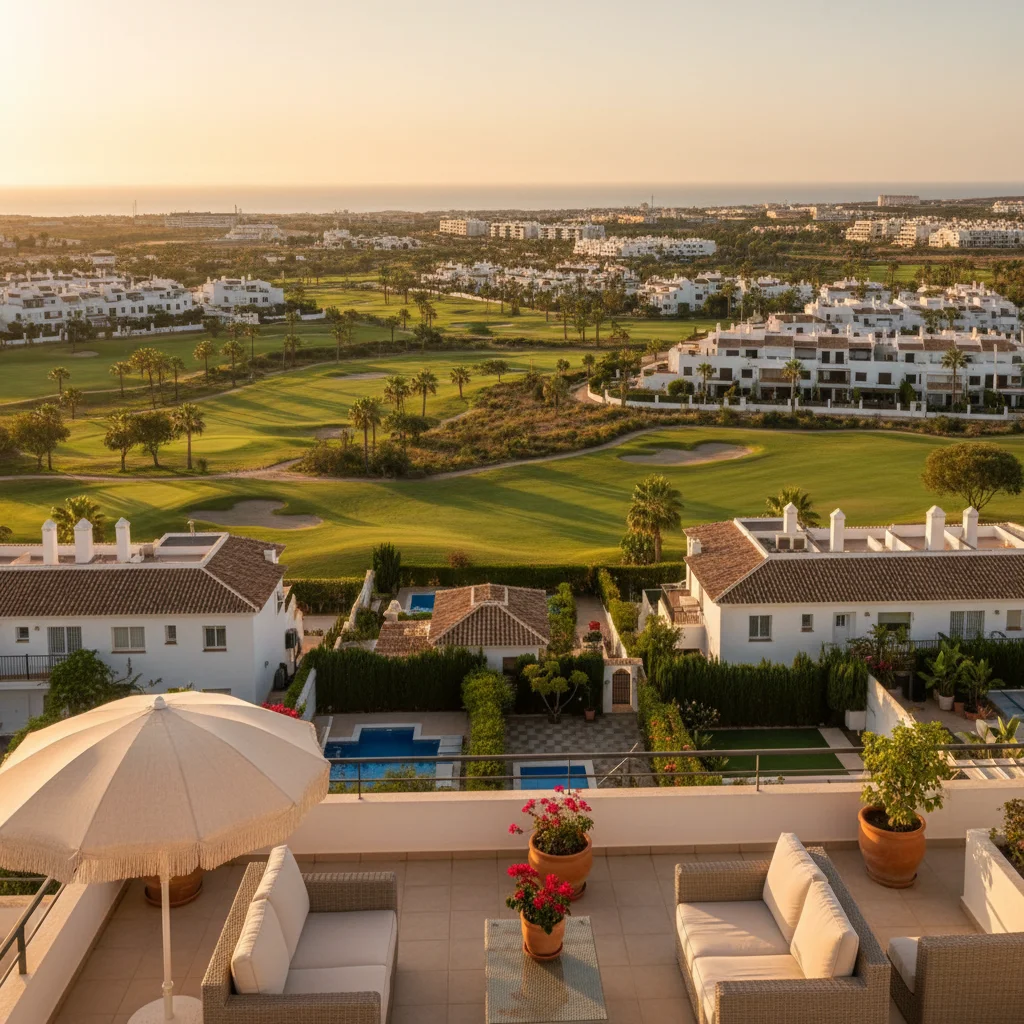
The property mix is diverse. Villamartín and Playa Flamenca lean toward apartments and townhouses with communal pools, where rooftop solariums of 15–30 square metres serve as outdoor kitchens, dining rooms, and sunbathing spots all in one. Cabo Roig and Dehesa de Campoamor offer more detached villas with private gardens and larger terraces. Average property prices sit around €200,000, though Campoamor stretches higher.
Social life revolves around the commercial centres — La Zenia Boulevard, the Cabo Roig strip, the Villamartín plaza — and the beach bars and restaurants that line the coast. The British pub culture here is strong, and many expats replicate that social atmosphere at home with regular barbecue gatherings.
For apartment and townhouse owners in Playa Flamenca and Villamartín, space efficiency is everything. A compact kamado grill (around 38–47cm) fits comfortably on most solariums and delivers remarkable versatility — grilling, smoking, roasting, and even baking pizza. Pair it with a foldable prep cart and you have a complete cooking station that stores neatly when not in use.
Villa owners in Cabo Roig, Campoamor, and Dehesa de Campoamor have room for more ambitious projects. Costa Blanca Outdoors recommends a built-in gas BBQ as the foundation, adding a pizza oven for weekend entertaining and a kamado for the dedicated cooks in the family. Natural stone or tiled countertops tie the setup into the existing terrace aesthetic.
Gas is the most popular fuel choice across Orihuela Costa. Butane bombonas are available at petrol stations and hardware stores throughout the area, and many properties have existing gas points. For charcoal and wood, local suppliers serve the corridor from Torrevieja through to Pilar de la Horadada.
Orihuela Costa is our highest-volume delivery area on the southern Costa Blanca. We know the access points for gated communities, the parking restrictions near La Zenia Boulevard, and the best times to deliver to apartment complexes without disrupting communal areas. For solarium deliveries in Villamartín and Playa Flamenca, we confirm staircase and lift access in advance — getting a kamado grill to a fourth-floor rooftop requires planning.
Every delivery includes full setup and a walkthrough. For built-in kitchen projects, we coordinate with local contractors who specialise in terrace construction across the urbanisations and understand each community’s building regulations.
Transforming Orihuela Costa Patios: Premium Bioclimatic Pergolas for Coastal Living
Orihuela Costa, a stunning 16-kilometre stretch of Mediterranean coastline nestled within the Vega Baja del Segura comarca in the Alicante province, represents the pinnacle of the southern Costa Blanca lifestyle. Boasting around 11 magnificent beaches and calas, including the golden sands of Playa Flamenca, the sheltered cove of Cala Capitán, the rocky shores of Punta Prima, and the expansive shores of Mil Palmeras, this region is defined by its relationship with the sea. With over 320 days of annual sunshine, the desire to live outdoors is universal here. However, the intense summer heat, strong coastal winds, and high humidity require specialized architectural solutions.
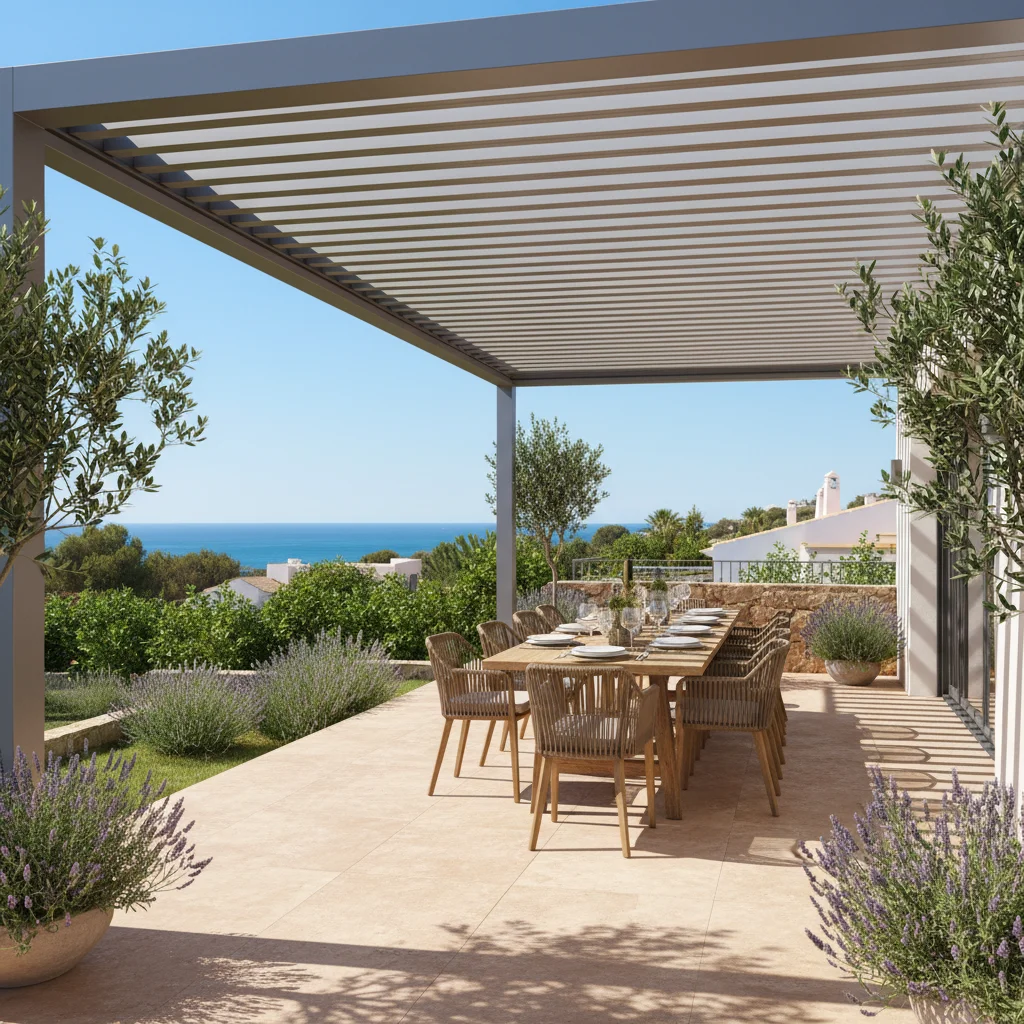
For homeowners in this region, a motorised bioclimatic pergola (pergola bioclimática) with orientable louvres is not merely a luxury home improvement; it is an essential tool for climate control. These advanced aluminium structures allow you to regulate shade, ventilation, and temperature on your terrace, effectively creating an all-weather outdoor living room. Whether you are looking to shade a sun-drenched pool deck in Villamartín or protect a frontline balcony in Cabo Roig from the elements, understanding the local environmental and administrative landscape is key to a successful installation.
The Coastal Microclimate: Salt, Wind, and Torrential Rain
Installing outdoor structures on the Orihuela Costa requires a deep understanding of the local microclimate. The proximity to the Mediterranean Sea brings specific challenges that standard, off-the-shelf garden structures simply cannot withstand.
High Salitre (Sea-Salt) Exposure
The entire coastal strip, from Punta Prima down to Mil Palmeras, experiences high levels of salitre (sea-salt spray). This airborne salt is highly corrosive to metals. Standard steel pergolas, or poorly treated aluminium, will quickly oxidise, leading to structural failure and unsightly bubbling of the paintwork.
To combat this, we supply and install bioclimatic pergolas manufactured exclusively from high-grade extruded aluminium, treated with a marine-grade powder coating (Qualicoat Seaside standard). This pre-treatment process strips the aluminium of impurities and applies a robust, corrosion-resistant layer that prevents salt-air degradation. Furthermore, all internal components, including pivot pins, screws, and motor drive shafts, must be made of marine-grade stainless steel (316 grade) and paired with UV-stable polymer fibres and seals to prevent the intense Alicante sun from warping or cracking the moving parts.
The Levante Wind and Structural Integrity
The iconic Cabo Roig headland and surrounding beaches are frequently subjected to the Levante, a strong easterly wind that blows off the Mediterranean. These gusts can appear suddenly and exert immense upward and downward pressure on terrace structures.
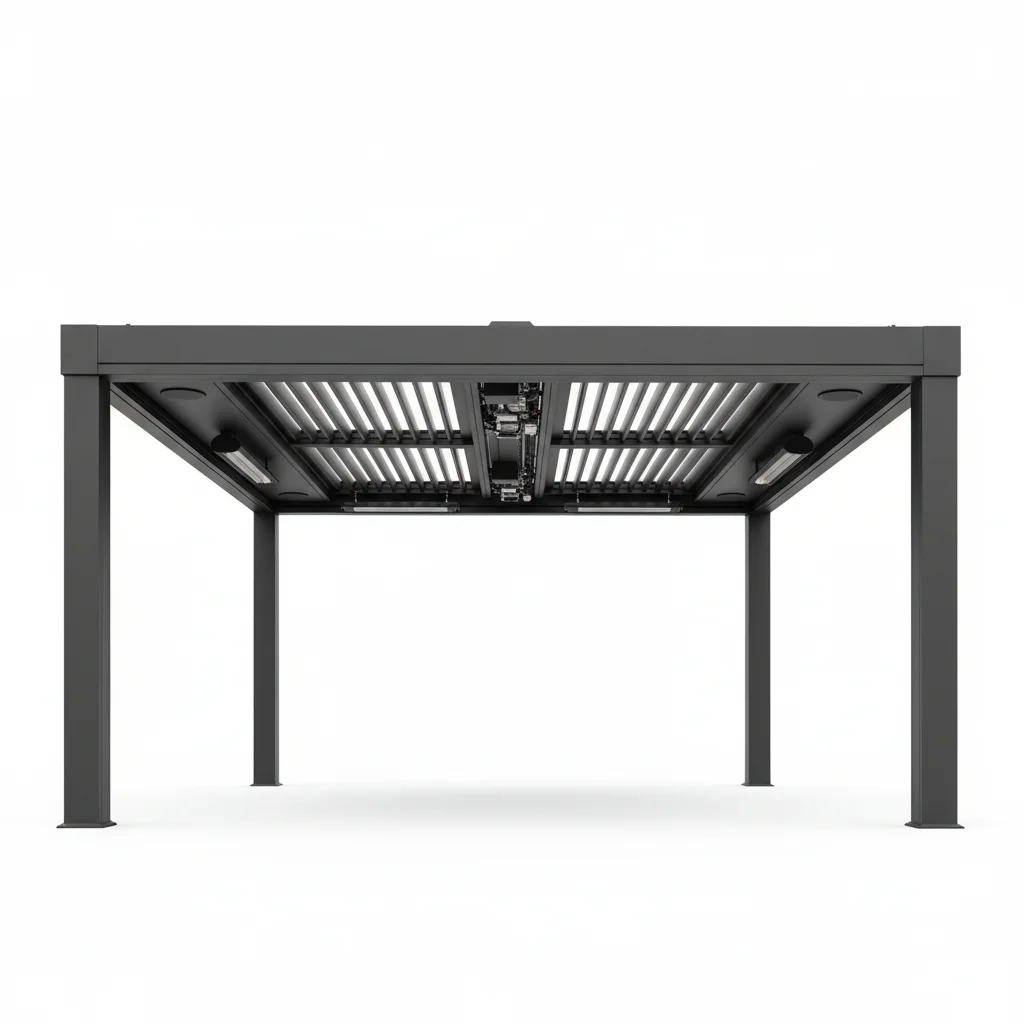
Our bioclimatic pergolas are engineered and certified to meet Clase 6 under the UNE-EN 13659 standard, which guarantees structural integrity in wind speeds up to 175 km/h. The heavy-duty aluminium profiles and reinforced internal steel brackets ensure the frame remains anchored. To provide ultimate peace of mind, we integrate automated wind sensors (anemometers). When the Levante reaches pre-set speeds, the sensor triggers the quiet 24V motor to automatically open the orientable louvres to a 45-degree angle. This neutralizes the sail effect, allowing the wind to pass harmlessly through the structure rather than lifting it.
The Gota Fría (DANA) and High-Capacity Drainage
While the Vega Baja del Segura is generally arid, the autumn months frequently bring the "gota fría" (cold drop) or DANA. These meteorological events result in sudden, torrential downpours that can drop months of rainfall in just a few hours, easily overwhelming standard guttering systems.
A premium bioclimatic pergola must act as a dry sanctuary during these storms. Our systems feature an advanced, integrated perimeter guttering system hidden within the structural beams. When the motorized louvres are fully closed, they form a watertight seal. The rainwater is directed into the internal gutters and channeled down through the hollow support columns, evacuating at the base. These systems are engineered to handle a drainage capacity of 60 l/m2, ensuring that even during the most severe autumn storm, your terrace furniture remains completely dry and water does not pool on your tiles.
Tailoring Installations to Orihuela Costa's Urbanizaciones
Unlike historic inland Spanish towns, the Orihuela Costa is a dense, post-1990s second-home urbanisation belt consisting of between 38 and 57 named urbanizaciones. Each zone has its own architectural style, housing density, and environmental exposure, requiring a tailored approach to pergola design.
- Cabo Roig and Dehesa de Campoamor: Known for their sprawling, high-end detached villas situated on cliff edges and beachside plots, these properties face the brunt of the salitre and Levante winds. Here, we typically install large-span, freestanding bioclimatic pergolas with reinforced double-walled louvres. Homeowners in these exclusive zones often opt for integrated glass curtains (cortinas de cristal) and LED lighting, creating a seamless, wind-protected outdoor lounge that can be used year-round.
- Villamartín: Situated slightly inland around the famous golf courses, Villamartín is less exposed to direct sea spray but experiences higher summer temperatures. Villas and townhouses here feature expansive, south-facing terraces and solariums that become unusable during July and August. A wall-mounted bioclimatic pergola is the perfect solution, acting as a thermal barrier. By tilting the louvres to 10 or 15 degrees, you block direct sunlight while drawing hot air upward and out, naturally cooling the interior of the home.
- La Zenia and Playa Flamenca: These areas are characterized by a dense mix of townhouses, quad-houses, and modern apartment complexes. Space is often at a premium, and privacy from neighboring properties is a common concern. For these homes, we design compact, wall-to-wall or wall-to-post pergolas. Integrating motorized zip-screens (vertical blinds) with translucent, UV-stable fabrics allows residents to block the low winter sun, screen out the wind, and create a private oasis free from the gaze of neighbors.
- Punta Prima: With its mix of established villas and modern, high-rise apartment blocks near the coast, Punta Prima installations often involve high-altitude terraces and penthouses. Installing a pergola on a tenth-floor penthouse requires specialized cranes, heavy-duty chemical anchoring into the building's concrete slab, and strict adherence to wind-load calculations due to the high wind shear experienced at elevation.
Navigating the Ayuntamiento de Orihuela and Local Regulations
One of the unique administrative challenges of living on the coast is the local governance. The entire Orihuela Costa is governed by the inland Ayuntamiento de Orihuela, located over 20 kilometers away in the historic city center. This geographical and administrative separation has been a long-standing source of local grievance for coastal residents, who often feel that coastal infrastructure and planning services are delayed.
When planning a home improvement like a bioclimatic pergola, it is essential to understand how the local Plan General de Ordenación Urbana (PGOU) of Orihuela applies to your property:
The PGOU and Buildable Volume (Edificabilidad)
Under the Orihuela PGOU, every residential plot has a maximum buildable volume. Traditional brick-and-mortar extensions or solid tiled roofs count towards this limit and require a major building license (Obra Mayor), which can take many months—or even years—to be processed by the inland town hall.
However, because a bioclimatic pergola is constructed of aluminium and features moving, orientable louvres, it is legally classified as a demountable, non-permanent structure (instalación desmontable). It does not feature permanent solid walls or a fixed roof. Consequently, in the vast majority of cases, it does not count towards your property's buildable volume. This makes it an ideal, hassle-free alternative for expanding your living space without violating local planning laws.
Protected Areas and the Sierra Escalona
While the coast itself is a highly developed urbanisation belt, it is bordered inland by highly sensitive natural environments, including the Sierra Escalona and Dehesa de Campoamor protected natural areas. If your property lies on the western fringes of the coastal urbanisations (bordering the Sierra Escalona protection zones), specific environmental impact regulations may apply regarding light pollution and structural heights. We ensure all installations in these peripheral zones use warm-toned, dimmable LED lighting to minimize ecological impact.
Technical Specifications and Complete Outdoor Solutions
When investing in a bioclimatic pergola, the technical details determine the longevity of your investment. Below are the key engineering specifications we recommend for the Orihuela Costa:
| Feature | Recommended Specification | Local Benefit |
| :--- | :--- | :--- |
| Material | Extruded Aluminium (6063-T5) | High structural strength, naturally rust-resistant |
| Coating | Qualicoat Seaside Powder Coating | Protects against high salitre (sea-salt) corrosion |
| Wind Resistance | Clase 6 (UNE-EN 13659) | Withstands Levante wind gusts up to 175 km/h |
| Drainage Capacity | 60 l/m2 | Prevents flooding during autumn DANA / gota fría |
| Operation | Motorised (24V) with remote/App control | Effortless adjustment of orientable louvres |
Premium Artificial Grass Integration
To complete your outdoor transformation, many homeowners choose to replace high-maintenance, water-thirsty natural lawns with premium artificial grass around their new pergola. In the dry climate of the Vega Baja, this is an environmentally friendly and cost-effective choice.
To achieve a seamless, high-end look, we offer complete outdoor packages. High-quality artificial grass material ranges from 10 to 40 EUR/m2, with professional ground preparation, weed-membrane installation, and fitting costing between 25 and 60 EUR/m2. We highly recommend selecting a grass with a lush 32 to 47 mm pile height. A pile height within this range provides the perfect balance of realistic aesthetics, plush softness underfoot when stepping out from under your pergola, and excellent resilience against heavy garden furniture.
Expat Demographics and Investment Value
The demographic landscape of the Orihuela Costa is highly international. According to the 2024 municipal padrón, approximately 39% of the entire Orihuela municipality consists of foreign residents. On the coast itself, this demographic shift is even more pronounced, with the registered British population actually outnumbering the Spanish population.
This vibrant expat community is characterized by a heavy UK and Irish presence, alongside a rapidly growing Nordic (Swedish, Norwegian) and Eastern-European (Russian, Ukrainian) contingent. These buyers are accustomed to high standards of construction, modern home automation, and clean, contemporary aesthetics.
When purchasing a property in La Zenia, Cabo Roig, or Villamartín, international buyers actively look for low-maintenance homes that maximize the outdoor Mediterranean lifestyle. A professionally installed, marine-grade bioclimatic pergola represents a significant value-add. It increases the usable square footage of the property, enhances its energy efficiency by shading the main house windows, and elevates the overall aesthetic appeal of the garden or solarium.
Price Orientation for Bioclimatic Pergolas
The cost of a fully installed, custom-made bioclimatic pergola in the Orihuela Costa generally ranges from 300 to 800 EUR/m2. The final price depends on several factors:
- Size and configuration: Freestanding structures require more structural posts and heavier footings than wall-mounted units.
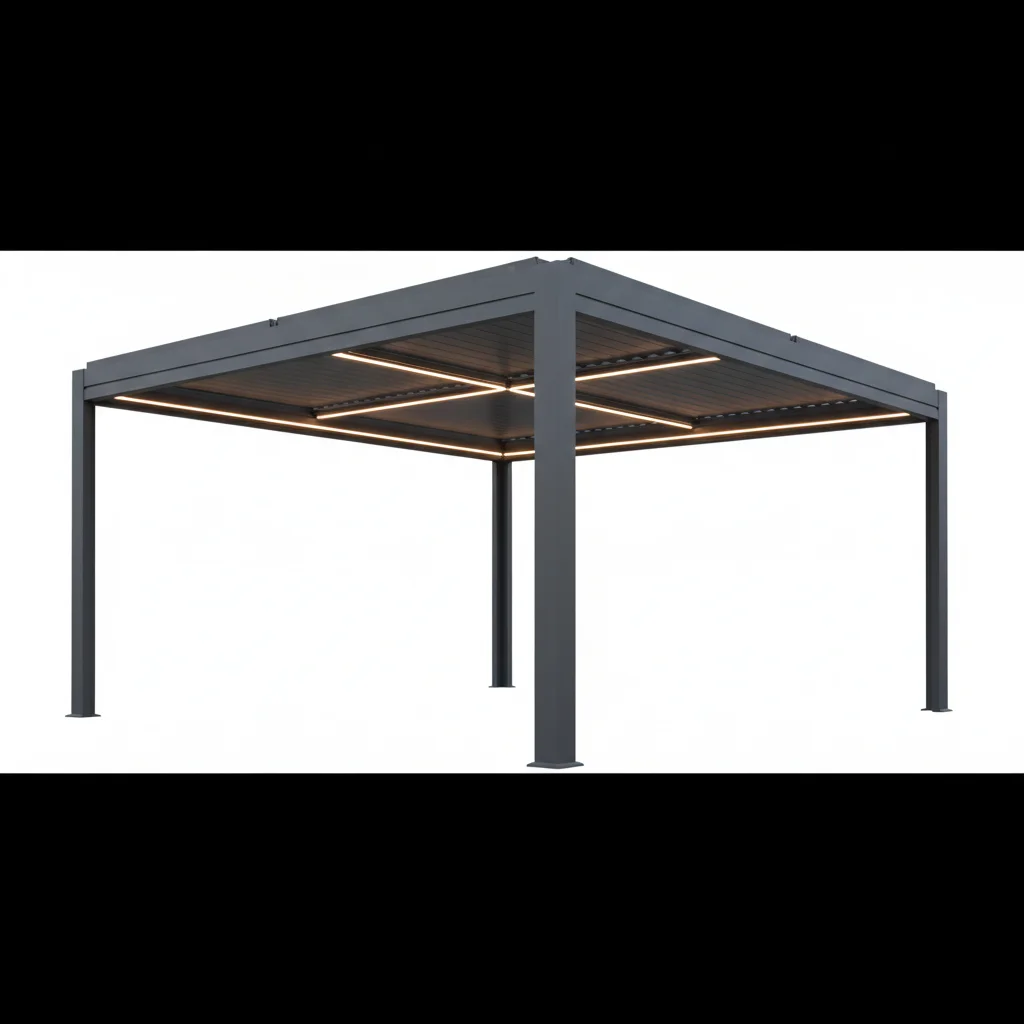
- Customization: Incorporating integrated LED strip lighting, rain and wind sensors, and custom RAL paint finishes to match your existing window frames.
- Enclosures: Adding motorized vertical zip-screens or sliding glass curtains to create a fully enclosed, heated room for the cooler winter months.
By investing in a high-quality, professionally installed system, you ensure that your outdoor space remains a beautiful, functional, and valuable asset to your Orihuela Costa home for decades to come.
 JW'"
/>
JW'"
/>