Outdoor Living in Alfaz del Pi and El Albir
Alfaz del Pi and its coastal district El Albir are home to 22,000 residents — 52% from abroad — with Europe’s largest Norwegian community outside Norway creating a distinctive Scandinavian-influenced outdoor culture.
Alfaz del Pi is unlike anywhere else on the Costa Blanca. While most expat towns are dominated by British residents, Alfaz has a firmly Nordic flavour. The Norwegian community here is the largest in southern Europe, with its own church, cultural centre, and social clubs. That Scandinavian influence shapes the town’s approach to outdoor living — clean lines, quality materials, and a genuine appreciation for well-designed cooking equipment.
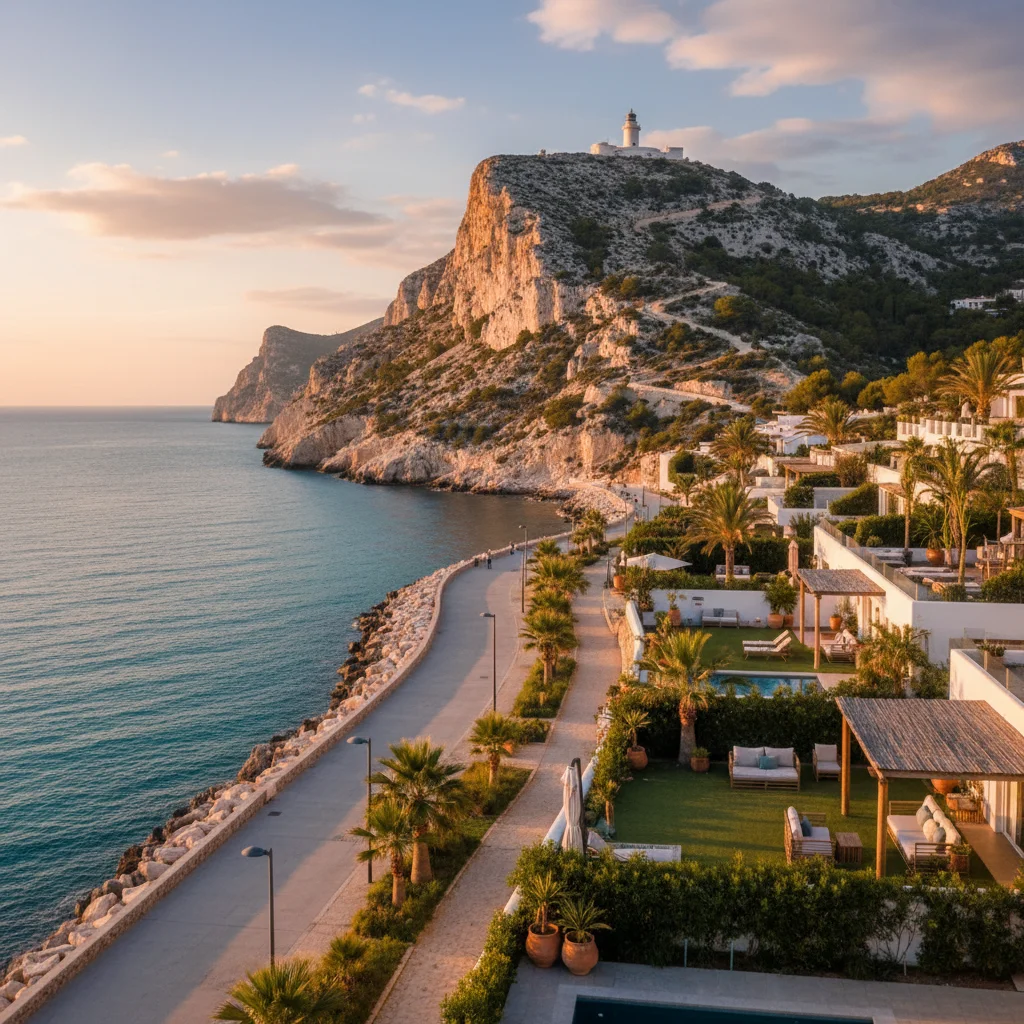
El Albir, the coastal district, stretches along a pebble beach backed by the Sierra Helada natural park. Properties average around €280,000, with modern apartments along the Albir promenade and hillside villas climbing toward the Sierra Helada ridge. Apartment balconies are typically 10–15 square metres with sea views, while villas offer 30–60 square metres of covered outdoor space.
The promenade culture sets the tone. Residents walk, cycle, and socialise outdoors year-round, and that active lifestyle extends naturally to outdoor cooking — evening grilling on a terrace overlooking the Mediterranean is simply how people here eat.
Alfaz del Pi’s unique Norwegian community and El Albir’s Mediterranean promenade lifestyle drive demand for well-designed outdoor cooking equipment, from sleek gas BBQs to premium kamado grills.
Choosing Your Setup in Alfaz del Pi
Scandinavian residents favour clean-burning gas BBQs and precision kamado grills, while El Albir’s compact apartment terraces call for space-efficient designs that maximise cooking power per square metre.
The Scandinavian community gravitates toward gas and kamado — fuel types that offer control and clean operation. Norwegian and Dutch residents consistently choose higher-specification gas BBQs with features like infrared searing zones, rotisserie attachments, and stainless-steel construction that withstands the coastal salt air. Costa Blanca Outdoors recommends marine-grade stainless models for any property within 500 metres of the El Albir seafront, where salt corrosion is a genuine consideration.
For El Albir apartment owners, a compact kamado grill (38cm) or a two-burner gas BBQ fits most balcony terraces without sacrificing serious cooking capability. Hillside villa owners between Alfaz and the Sierra Helada have space for more elaborate setups — a built-in gas station paired with a wood-fired pizza oven is a popular combination here.
Pizza ovens appeal to the area’s food-conscious residents. The Sierra Helada hiking community overlaps heavily with the outdoor cooking community, and post-hike pizza nights are a genuine social tradition in the hillside urbanisaciones. Almond and citrus wood from inland suppliers in La Nucia and the Guadalest valley burn beautifully in compact ovens.
Costa Blanca Outdoors recommends marine-grade stainless-steel BBQs for El Albir seafront properties, where salt air corrosion can damage standard equipment within two to three seasons.
Delivery to Alfaz del Pi and El Albir
We deliver throughout Alfaz del Pi, El Albir, and the Sierra Helada hillside weekly on our central Costa Blanca route, covering both seafront apartments and inland villas.
Alfaz and El Albir sit at the heart of our central delivery zone. The Albir promenade area and town centre are straightforward, with good road access and parking. Hillside properties closer to the Sierra Helada require more careful planning — we use appropriately sized vehicles and always confirm terrace access before scheduling heavy deliveries.
For apartment deliveries along the Albir seafront, we coordinate lift access and building entry in advance. Our team handles everything from unpacking to assembly and final placement, with a full walkthrough of your equipment included as standard.
Neighbouring Benidorm and La Nucia are on the same delivery routes, and we also serve Altea just up the coast. In-stock items ship within 5–10 working days, while custom outdoor kitchen projects require 3–4 weeks for design, fabrication, and professional installation.
Choosing Hot Tubs and Swim Spas for the Alfaz del Pi Lifestyle
Establishing a permanent residence in this part of the Marina Baixa means embracing a specific type of outdoor culture that few other Spanish municipalities can match. With a demographic where over half the population consists of international residents—predominantly from Norway, the Netherlands, and the United Kingdom—the local approach to wellness and home improvement is sophisticated. These northern European influences have imported a year-round appreciation for hydrotherapy that fits perfectly with the local climate. While the average property price sits around EUR 280,000, the diversity of the housing stock means that a hot tub installation here is rarely a "one size fits all" project. You might be looking to squeeze a compact spa onto a third-floor balcony in Albir with a view of the Mediterranean, or you could be planning a massive dual-zone swim spa for a sprawling villa garden tucked away in the foothills of the Serra Gelada.
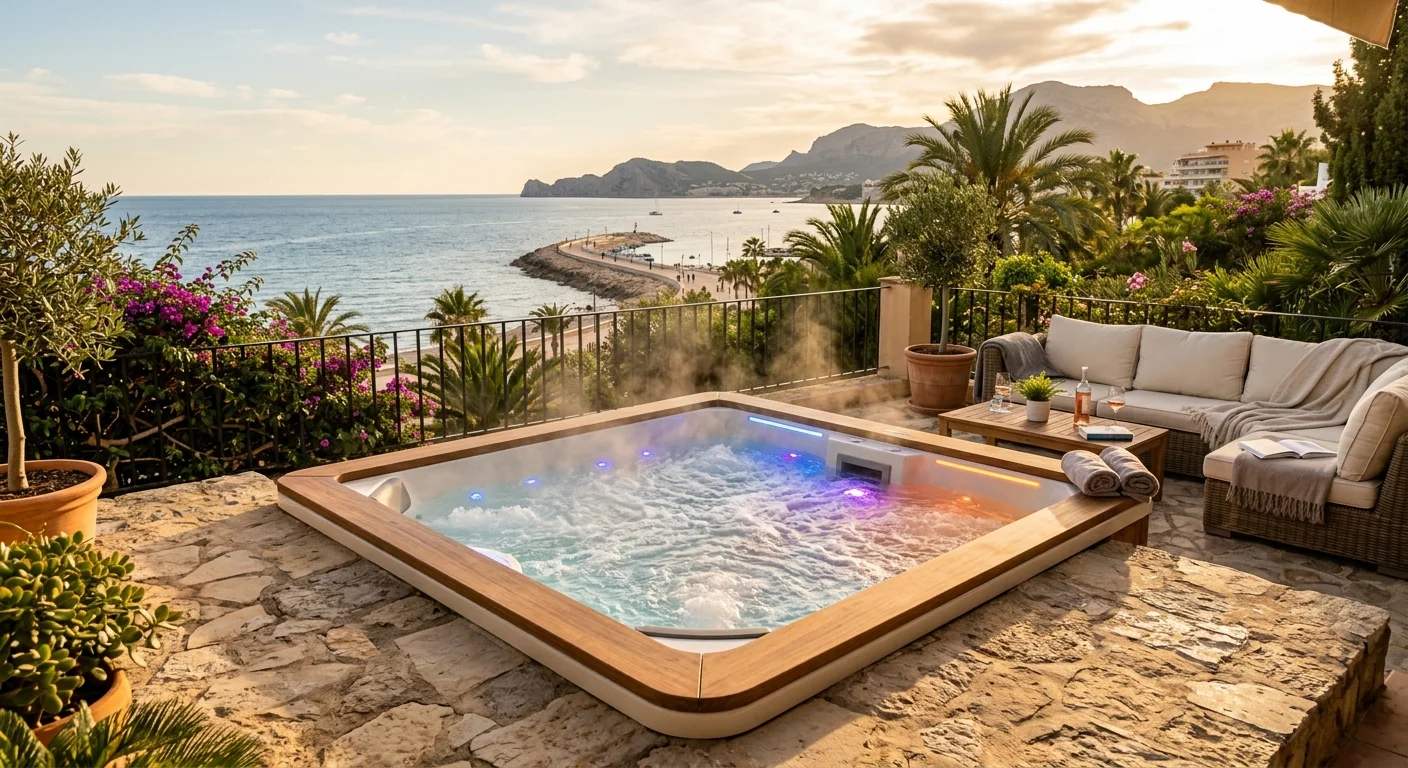
The geography of the area dictates how you use your outdoor space. In the flatter, coastal stretches near the Promenade and the Albir Lighthouse, the lifestyle is very much about maximizing smaller terraces where every square meter counts. Residents here often use a spa as a primary cooling-off point because a full-sized swimming pool isn't feasible. Conversely, as you move inland toward the pine-forested slopes, the plots grow larger and the evenings get noticeably cooler. Even in the height of summer, the temperature drop near the mountains makes a heated tub incredibly appealing once the sun sets. The international community here has a deep-rooted understanding that an outdoor space is an extension of the living room. Whether you are Dutch, Norwegian, or British, the common thread is the desire for a functional, high-end sanctuary that operates efficiently from January through December, rather than just during the peak tourist months.
Investing in a hot tub or swim spa within this specific district requires more than just picking a model from a catalog; it requires an understanding of how the local environment treats mechanical equipment. This municipality sits in a unique topographical pocket where the sea meets the mountains, creating microclimates that can be surprisingly harsh on inferior materials. When you are sitting on your terrace looking out toward the sea, you are breathing in air that is heavily laden with salt, especially if your property is within two kilometers of the shoreline. This salt spray is relentless, and it will find its way into the internal components of any outdoor appliance. Furthermore, the intense UV radiation we experience on the Costa Blanca for over 300 days a year will oxidize cheap plastic cabinets and degrade low-quality thermal covers within a single season if they aren't built to specific Mediterranean standards.
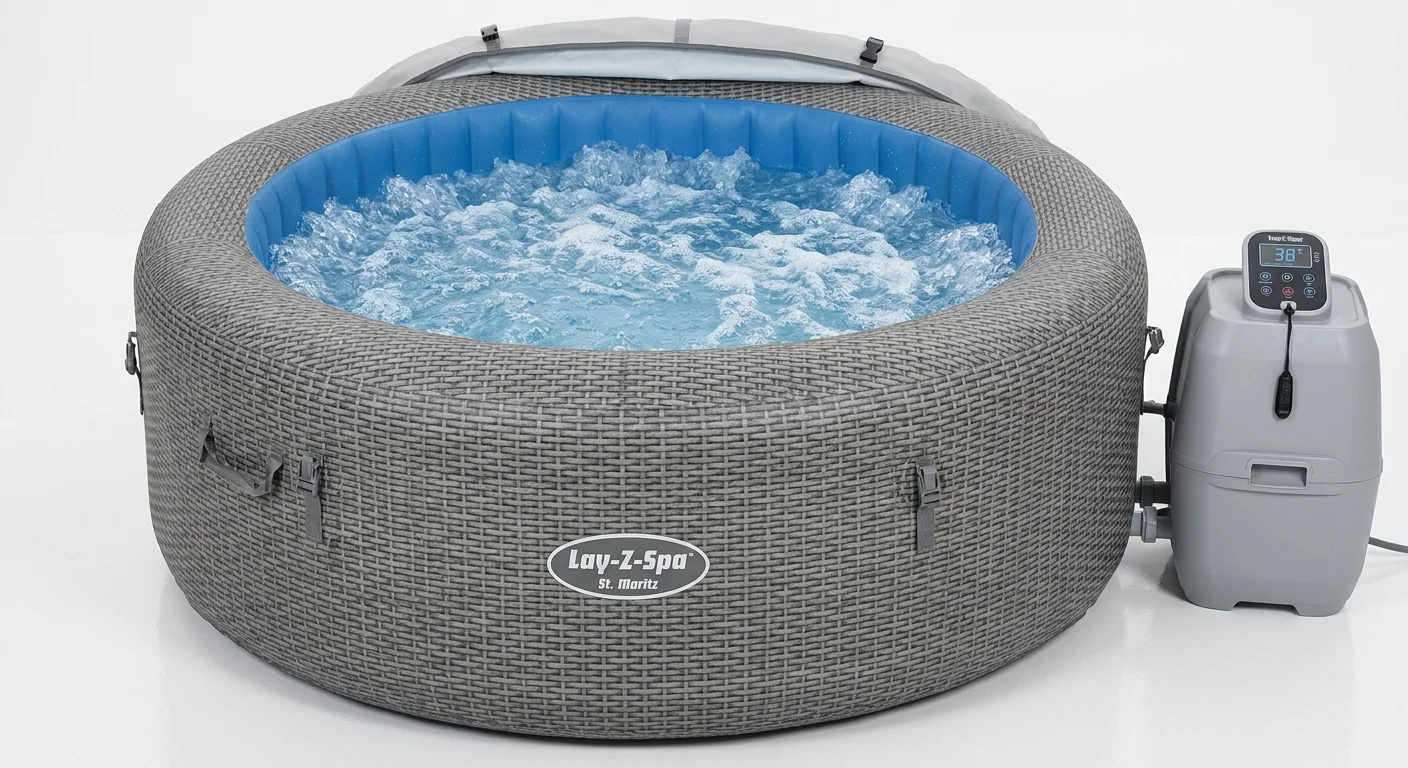
Living in this exposed coastal position means dealing with the two dominant winds of the region: the Levante and the Poniente. The Levante brings moisture and salt from the sea, while the Poniente can be dry and dusty. For a hot tub owner, this means your filtration system needs to be robust. I always advise residents to look for spas with multi-stage filtration and ozone or UV-C water purification systems. These technologies reduce the reliance on heavy chemical dosing, which is better for your skin and helps the water stay crystal clear even when the wind is blowing Saharan dust across the garden. If you are situated in one of the many apartment blocks in Albir, you also have the Comunidad de Propietarios to consider. These community rules often govern everything from the weight you can place on a terrace to the noise levels of the pumps at night. A standard Spanish balcony is typically rated for a live load of about 200kg to 300kg per square meter. A medium-sized hot tub filled with water and four adults can easily exceed 1,500kg. This doesn't mean you can't have one, but it does mean you might need a structural survey or a specific lightweight model designed for balconies, perhaps priced around EUR 4,800 for a high-quality portable unit that distributes weight effectively.
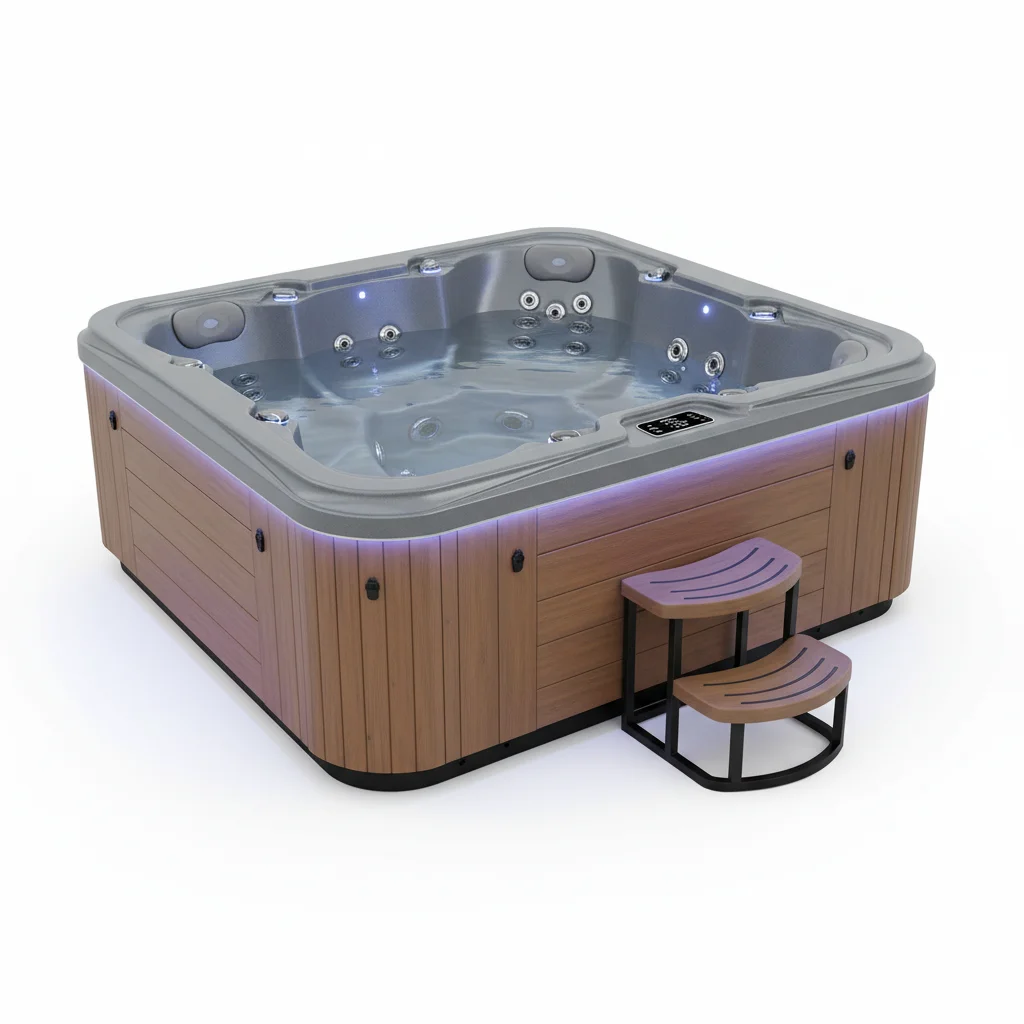
For those with more space, a premium hydrotherapy tub like a 5-seater with 30 to 40 jets typically retails between EUR 7,500 and EUR 9,500 in this region. This price point usually ensures you are getting a cabinet made of high-density weather-resistant polymers and a 316-grade stainless steel frame that won't succumb to the salt air. Maintenance in this area also involves managing the local water hardness. The water in the Marina Baixa is notoriously "hard," meaning it has a high mineral content. Over time, this can lead to scale buildup on the heating elements and inside the jet internals. I recommend installing a simple pre-filter on your garden hose when filling the tub and using a dedicated scale inhibitor. It is a small step that can add five years to the lifespan of your pumps and heaters, saving you thousands in long-term repairs.
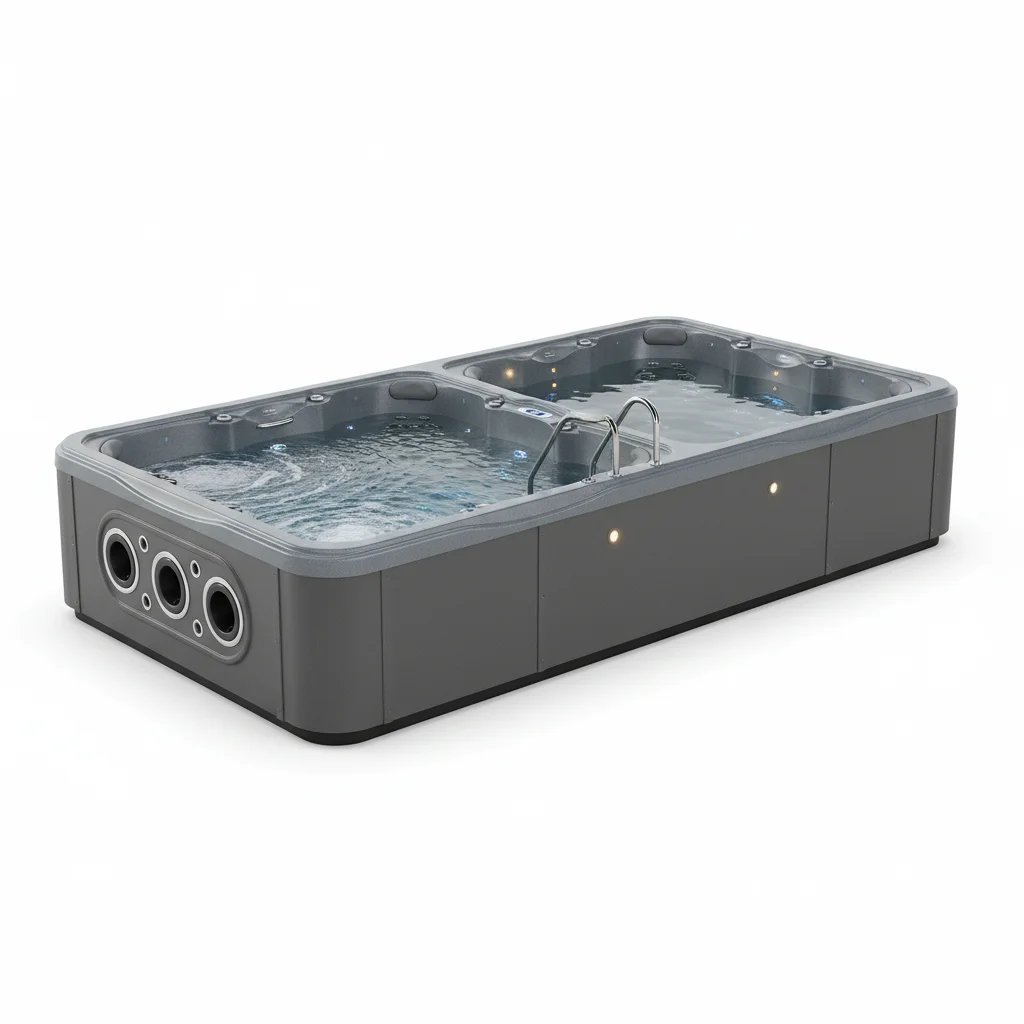
When it comes to recommending specific setups, I categorize them based on the distinct property types found in the municipality. For the inland villas, particularly those with larger plots that might already feature a traditional swimming-pool, a swim spa is often the superior choice. A swim spa provides the best of both worlds: a powerful current for lap swimming and a separate, hotter section for hydrotherapy. If you are an active resident who enjoys the hiking trails of the Serra Gelada but wants a low-impact way to stay fit at home, a 4.5-meter swim spa priced around EUR 14,000 is an incredible investment. We often see these integrated into a wider garden design alongside an outdoor-kitchen. There is a specific logic to this: by placing your spa near your outdoor cooking area, you create a social hub that functions as a year-round entertainment zone. You can be grilling on the barbecue while others are relaxing in the water, making the most of the Mediterranean climate without ever having to step inside.
For the beachfront apartments or the townhouses closer to the center, the strategy changes to "compact efficiency." In these settings, space is at a premium, and privacy is a key concern. I often suggest a 2-meter by 2-meter square tub or even a triangular "corner" spa that can be tucked into a quiet part of the terrace. To deal with the proximity of neighbors, choosing a model with high-density "full foam" insulation is vital. This doesn't just keep the water hot; it acts as a massive sound dampener for the pumps. A quiet spa means you can enjoy a midnight soak without the "comunidad" complaining about humming vibrations. In these more urban settings, I also emphasize the importance of a high-quality, lockable cover. Not only does it keep the heat in during the cooler January nights, but it also prevents the wind from lifting the lid and protects the water from the grit and dust common in busier residential areas.
The technical logistics of delivery in this part of the Costa Blanca are something only a local specialist truly understands. While the main avenues are wide and accessible, the secondary roads leading to older urbanizations or the tight corners of the village center can be a nightmare for a standard delivery truck. We have spent years navigating the specific access challenges of this area. Whether it’s coordinating a 30-ton crane to lift a swim spa over a three-story rooftop in Albir or using a specialized "spa dolly" to wheel a tub through a narrow garden gate in a La Nucia neighborhood, the physical installation is the most critical part of the process. You have to account for the slope of the land, the strength of the base—usually a 10cm reinforced concrete pad is required—and the proximity to a dedicated electrical supply. Most modern tubs require a 16-amp or 32-amp circuit with its own RCD protection, which often means running a new cable from your main consumer unit to the garden.
Our service extends well beyond the town limits into neighboring Altea, Benidorm, La Nucia, Finestrat, and Calpe. We know the building regulations in each of these jurisdictions and how they differ. For example, the wind exposure on a cliffside villa in Altea Hills is vastly different from the sheltered valley floor of La Nucia. This local knowledge allows us to recommend the right insulation packages and cover tie-downs that will actually survive a winter storm. We don't just drop a box on your driveway; we ensure the spa is positioned to take advantage of the best views while remaining protected from the harshest winds. We also understand the local power grid's quirks and can advise on energy-efficient heat pumps that can be retrofitted to your spa, potentially cutting your heating costs by 70%—a crucial consideration given current Spanish electricity tariffs.
Ultimately, adding a hot tub or swim spa to your home is about enhancing the quality of your daily life. It’s about having a place to decompress after a walk to the lighthouse or a way to keep the kids entertained during the winter months when the Mediterranean is too cold for swimming. Because I live and work right here, I am available for a free on-site consultation to look at your terrace or garden. We can measure up, check your electrical capacity, and discuss the best placement for privacy and views. There is no substitute for an expert eye on the ground, especially when dealing with the unique structural and environmental challenges of the Costa Blanca. If you are ready to transform your outdoor space into a genuine year-round retreat, let’s sit down and look at what will work best for your specific property.
 JW'"
/>
JW'"
/>