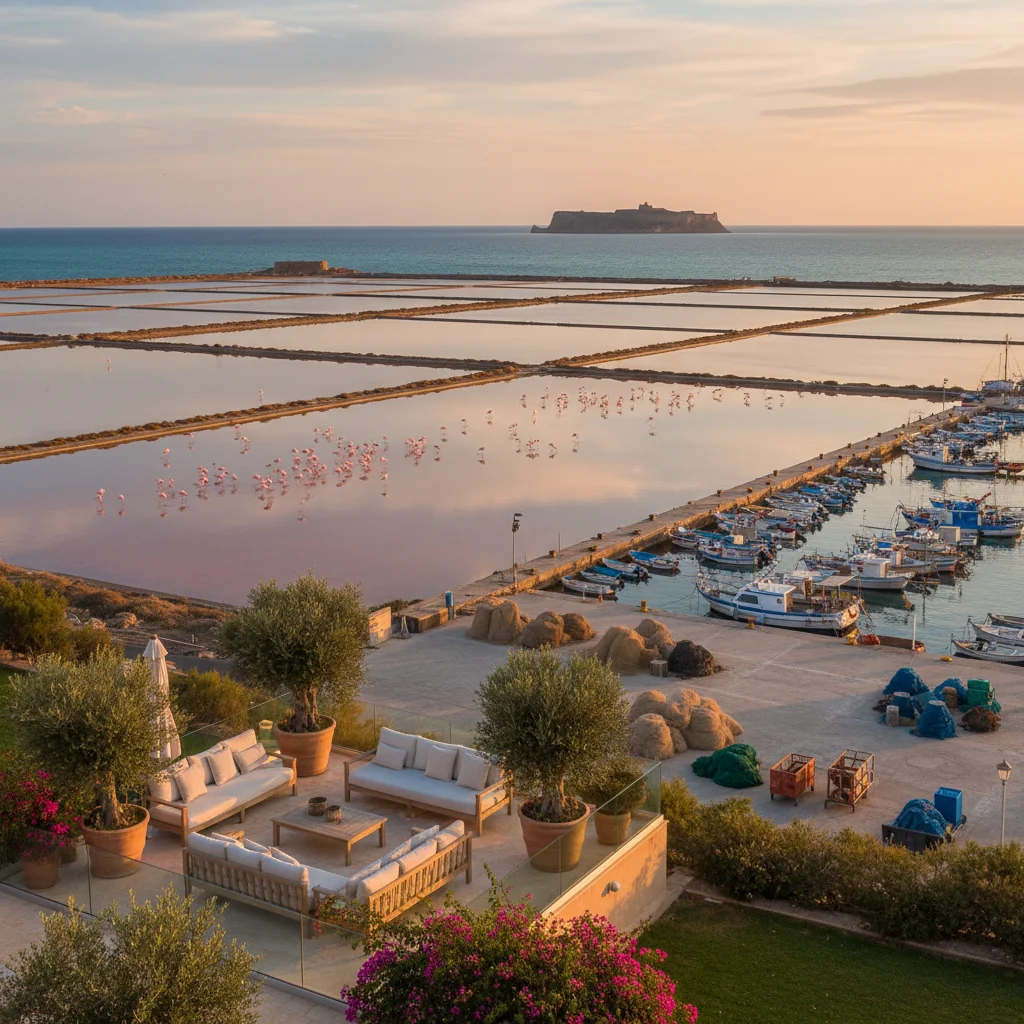
Santa Pola has resisted the full transformation that tourism brought to many of its neighbours. The fishing port still lands catches daily, the salt pans on the southern edge of town remain a working landscape that attracts flamingos and birdwatchers, and the town centre feels genuinely Spanish — busy with locals rather than expat-oriented businesses. The castle overlooking the port hosts a maritime museum, and the Cape Santa Pola lighthouse marks the dramatic cliffs that separate the town from neighbouring Gran Alacant.
The expat community here is smaller in proportion than towns further south, but it is well-established and tends to attract people who want a Spanish experience rather than a British enclave. Properties average around €200,000, with seafront apartments near the port from €150,000, townhouses in the streets behind the Paseo Marítimo from €180,000, and villas on the elevated ground near Cape Santa Pola from €300,000 upwards.
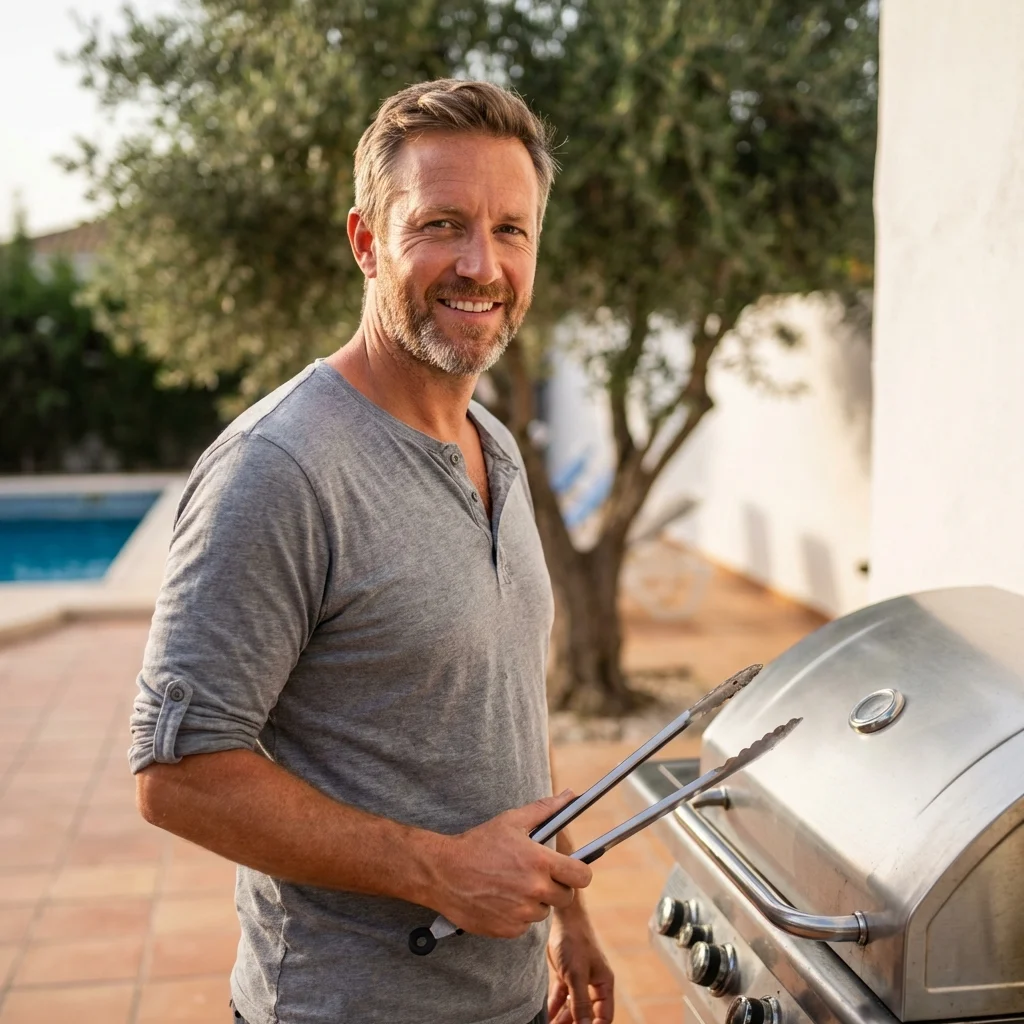
Outdoor cooking in Santa Pola carries a particular pleasure: the proximity of the fishing port means you can buy the morning’s catch and have it on the grill within the hour. Gambas from Santa Pola are renowned across Spain, and they are never better than cooked over charcoal within sight of the harbour where they were landed.
For the seafront apartments along the Paseo Marítimo and near the port, a compact gas BBQ or a small kamado is the practical choice. These properties often have terraces with sea views, and a 2-burner gas unit lets you grill those Santa Pola prawns without overwhelming the space. The salt air here is worth noting — Costa Blanca Outdoors recommends stainless steel construction for any equipment exposed to the coastal atmosphere, as painted steel corrodes noticeably faster this close to the water.
Townhouse owners in the residential streets behind the centre — particularly around the market area and towards the Gran Playa beach — typically have rear patios or rooftop terraces. A full-size gas BBQ with a protective cover works well here, and many of our customers in these properties add a tabletop pizza oven that stores indoors between uses.
Santa Pola’s compact layout makes deliveries efficient. The town centre and port area are flat and well-connected, with most apartment buildings accessible from wide main roads. Cape Santa Pola deliveries involve the winding road up to the elevated residential areas, but our team knows the route and access points well.
For seafront apartment deliveries, we confirm lift access in advance — some of the older blocks near the port have narrow staircases that require planning for heavier items like kamado grills and stone pizza ovens. Newer buildings along Gran Playa typically have goods lifts that handle our largest products without difficulty.
Custom Bioclimatic Pergolas in Santa Pola: Engineered for the Costa Blanca Coastline
With over 13 kilometres of coastline, including 11 kilometres of fine sand beaches, and stunning views stretching across the Mediterranean to the historic Isla de Tabarca, Santa Pola offers an enviable outdoor lifestyle. Located in the Bajo Vinalopó (Baix Vinalopó) comarca of the Alicante province, this historic fishing town has evolved into a highly sought-after destination for both year-round living and premium holiday homes. However, the very elements that make this coastal region so beautiful—intense Mediterranean sun, high sea-salt air (salitre), and strong coastal winds—present unique challenges for outdoor home improvements.
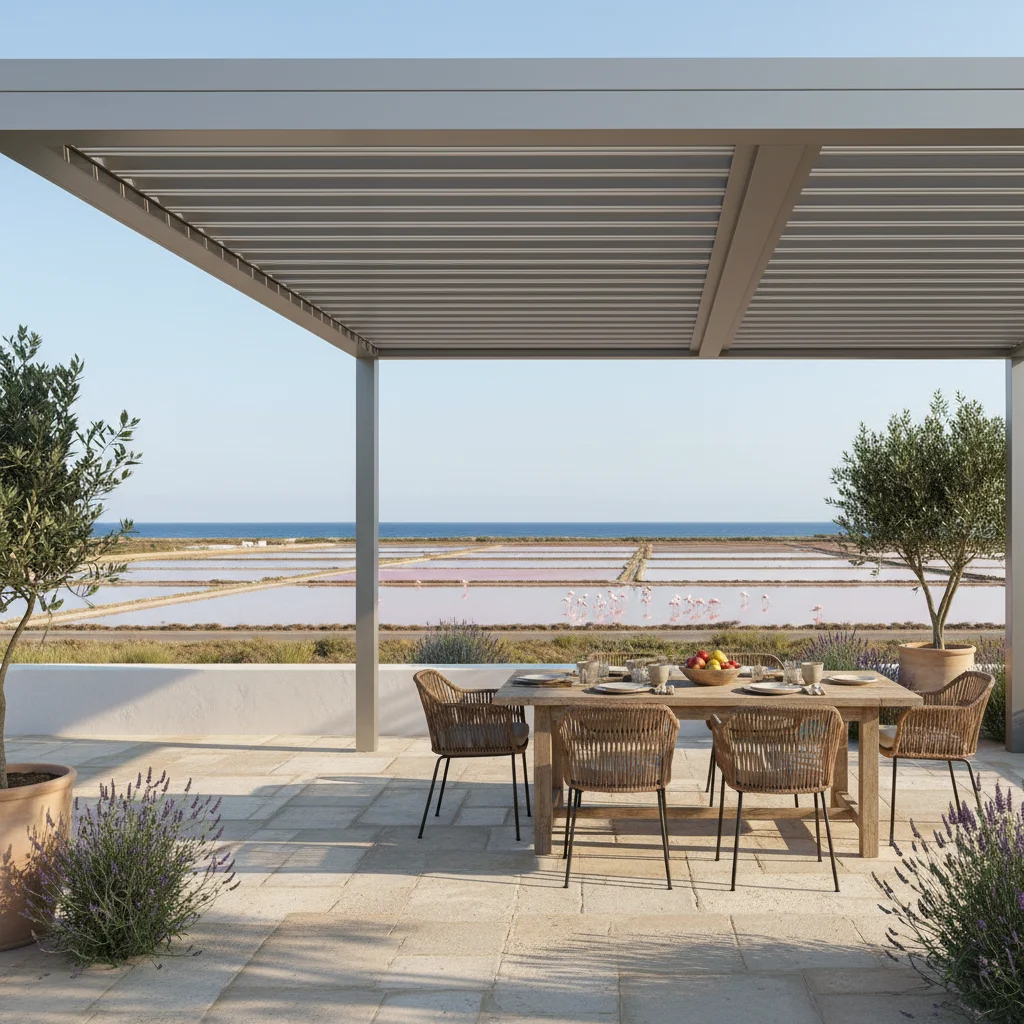
A bioclimatic pergola (a motorised aluminium structure featuring orientable, motorised louvres) is the ultimate architectural solution to bridge the gap between indoor comfort and outdoor freedom. Unlike traditional awnings that flap in the breeze or wooden structures that warp and rot under the intense Spanish sun, a custom-engineered bioclimatic pergola allows you to control microclimate, light, shade, and ventilation at the touch of a button.
For property owners in Santa Pola, investing in a high-performance outdoor living structure requires a deep understanding of local environmental factors, municipal regulations, and structural engineering. As specialist installers on the Costa Blanca, we design and install bioclimatic pergolas tailored specifically to withstand the demanding coastal conditions of this unique Mediterranean microclimate.
The Santa Pola Climate: Why Marine-Grade Engineering is Non-Negotiable
Installing an outdoor structure in Santa Pola is vastly different from installing one inland. The town’s geography, defined by its peninsula-like shape, high humidity, and direct exposure to the sea, dictates the exact technical specifications your pergola must meet to ensure longevity.
High Salitre (Sea-Salt) Exposure and Corrosion Resistance
The air in Santa Pola is heavily saturated with salt and moisture. This creates an aggressive, corrosive environment known locally as salitre. Standard powder-coated aluminium structures can quickly fall victim to filiform corrosion, where salt gets trapped beneath the paint layer, causing it to bubble, crack, and peel.
To combat this, we only supply and install bioclimatic pergolas treated with marine-grade powder coating. The aluminium profiles undergo a rigorous pre-treatment process that complies with Qualicoat Seaside or Qualicoat Class 2 standards. This chemical preparation removes impurities and applies a dense protective layer before the thermosetting polyester powder is baked on. Furthermore, all internal components—including pivot pins, drive shafts, and brackets—must be made of marine-grade 316 stainless steel. Any integrated textile elements, such as motorized ZIP side screens, must utilize UV-stable, rot-proof synthetic fibres that resist salt crystallization.
Navigating the Levante Wind: Structural Integrity and Wind Resistance
Santa Pola is famous for its wind, particularly the warm, humid Levante wind blowing from the east. The town’s unique topography, dominated by the Sierra y Cabo de Santa Pola—a spectacular 144-metre-high fossil-reef promontory—creates localized wind shear and updrafts. This is especially true for properties perched on the cliffs of Gran Alacant or along the open shoreline.
When the Levante blows, a standard pergola can act like a sail, putting immense stress on the anchoring points and the louvre mechanism. Our bioclimatic pergolas are structurally engineered to meet Clase 6 under the UNE-EN 13659 standard, certifying safe operation and structural integrity in winds up to 175 km/h.
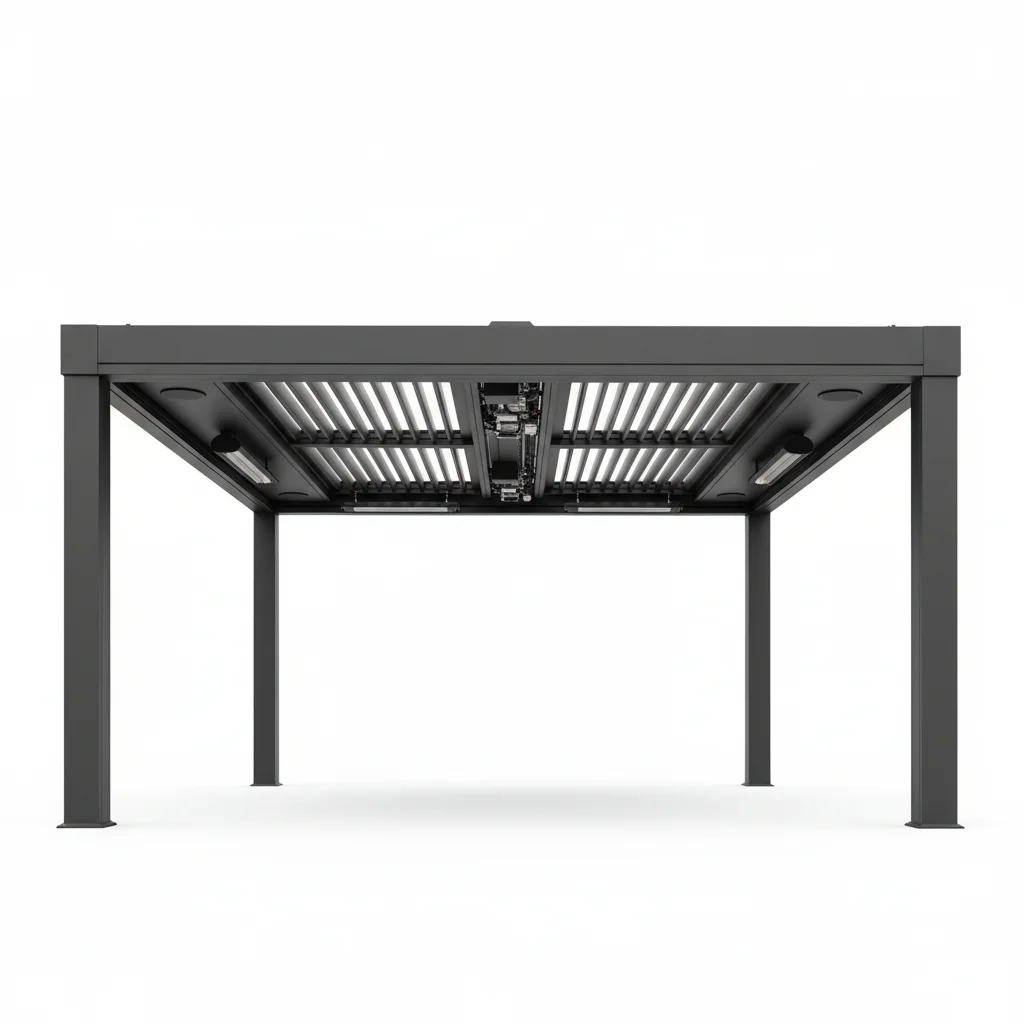
To achieve this level of wind resistance, we utilize heavy-duty extruded aluminium profiles with reinforced internal chambers. The sealing system between the louvres features a high-density structural pile. We specify a pile depth of 32-47 mm to cushion the louvres against vibration, eliminate rattling noises in high winds, and create an airtight, watertight seal when closed. Additionally, we integrate smart wind sensors. If wind speeds exceed a pre-set threshold, the automated control system automatically tilts the louvres to a 45-degree angle, allowing the wind to flow freely through the structure and neutralizing the lifting force.
Managing the Gota Fría: Advanced Drainage Systems
While Santa Pola enjoys over 300 days of sunshine a year, the autumn months can bring the dramatic meteorological phenomenon known as the gota fría (cold drop). These torrential downpours can dump immense volumes of water in a matter of minutes, easily overwhelming standard guttering.
Our bioclimatic pergolas are designed with a high-capacity, invisible drainage system. Rainwater is collected by perimeter gutters integrated into the main framework and directed down inside the structural support posts. The system is engineered to evacuate up to 60 litres of water per square metre per minute (60 l/m2), ensuring that even during a severe autumn storm, your terrace remains dry, and water is safely channeled away from your home’s foundations.
Navigating Local Regulations: Ayuntament de Santa Pola and Protected Natural Spaces
When planning a home improvement project in Santa Pola, understanding the local planning framework is essential. The town is bordered by highly sensitive, protected natural areas that place strict constraints on traditional brick-and-mortar development.
To the south and west lies the Parque Natural de las Salinas de Santa Pola, a 2,470-hectare protected wetland of international importance, famous for its salt pans and flamingo colonies. To the north sits the Sierra y Cabo de Santa Pola, a globally recognized geological fossil reef. Because of these ecological treasures, the Ayuntament de Santa Pola (the local town hall) strictly enforces coastal protection laws and building density limits (edificabilidad).
This is where a bioclimatic pergola offers a massive legal advantage over traditional extensions, sunrooms, or brick porches. In the eyes of the planning department, a bioclimatic pergola is classified as a demountable, non-permanent structure because it does not require wet-build construction, does not use concrete roof slabs, and can theoretically be dismantled.
In most areas of Santa Pola, installing a bioclimatic pergola does not count towards your property's maximum built volume limit. However, depending on your exact location—especially if your property borders the maritime-terrestrial public domain or directly abuts the boundaries of the Salinas natural park—a declaración responsable (responsible declaration) or a minor works permit (obra menor) must be filed with the Ayuntamiento. As part of our comprehensive installation service, we assist in preparing the necessary technical drawings and wind-load calculations required by local municipal technicians to ensure your project is fully compliant.
Tailored Solutions for Santa Pola's Diverse Urbanizaciones
Santa Pola is a town of contrasts, ranging from high-density coastal apartments to sprawling suburban estates. The design, size, and configuration of your bioclimatic pergola should reflect the specific architectural style and microclimate of your neighbourhood.
Gran Alacant
Perched atop the Cabo de Santa Pola, Gran Alacant is a massive international enclave home to approximately 10,800 year-round residents. Properties here range from modern apartments with panoramic sea views to detached villas.
- The Challenge: Extreme exposure to clifftop winds and intense, unfiltered UV radiation.
- The Solution: We recommend sleek, minimalist, wall-mounted pergolas with integrated wind and sun sensors. Utilizing a dual-colour scheme—such as a textured anthracite gray frame to match modern facades, combined with reflective white louvres—helps bounce away heat. Motorized ZIP screens with micro-perforated Soltis fabric are highly recommended here to block the wind while preserving those breathtaking views of the Mediterranean and Alicante bay.
Pueblo Levantino and Els Xiprerets
Located slightly inland, these established residential zones feature large, detached villas with expansive plots, mature gardens, and private swimming pools.
- The Challenge: High summer temperatures, dust from nearby agricultural land, and the desire for large-scale outdoor entertaining spaces.
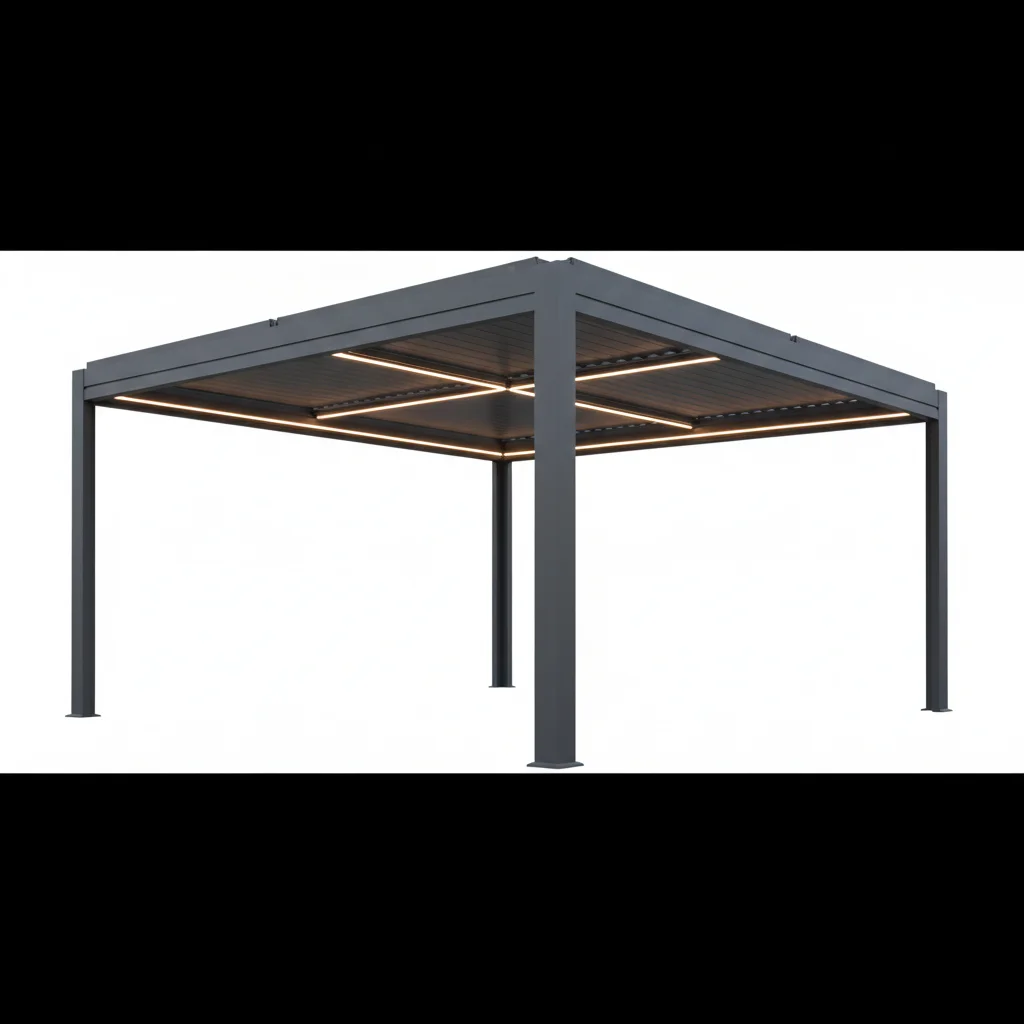
- The Solution: These properties are ideal for large, free-standing, multi-span bioclimatic pergolas. By installing a double-span system, we can cover outdoor dining areas and poolside lounges of up to 50 square metres without the need for intrusive central columns. Integrating LED strip lighting into the louvres and perimeter frame, along with built-in Bluetooth audio systems, transforms these gardens into premium evening entertainment zones.
Meleja and Punta La Sierra
These elevated, inland-facing zones offer beautiful views of the Bajo Vinalopó countryside and distant mountain ranges.
- The Challenge: Strong afternoon sun and rapid temperature drops during winter evenings.
- The Solution: A bioclimatic pergola installed here should focus on thermal control. By orienting the louvres to track the sun, homeowners can maximize solar heat gain during cooler winter days, warming the interior of the house. For chilly winter nights, we integrate short-wave infrared heaters into the pergola frame, which heat bodies directly rather than wasting energy heating the moving air.
Understanding the Expat and Second-Home Buyer Profile
The demographic makeup of Santa Pola plays a significant role in how outdoor spaces are utilized. According to the 2025 INE padrón municipal, the town has a permanent population of 39,709 residents. However, this number swells dramatically during the summer months.
The foreign resident population is highly significant. Historically, the 2011 census recorded that 21.8% of Santa Pola's residents were of foreign origin, with approximately 69.3% of those foreigners coming from EU countries, predominantly the United Kingdom. This active, diverse international community exists alongside a very strong domestic Spanish second-home market, with many families from Madrid, Elche, and Alicante owning apartments and villas near the beaches of Playa de Levante and Gran Playa.
These two distinct buyer profiles use their outdoor spaces in very different ways:
- The Northern European Expat Profile: Typically seeks to maximize light and warmth, especially during the autumn and winter seasons. For these homeowners, we design pergolas that allow the louvres to open up to 135 degrees, pulling precious winter sunlight deep into the adjacent living rooms. They also highly value glass sliding doors (glass curtains) integrated into the pergola framework, creating a fully enclosed, wind-protected sunroom for year-round use.
- The Domestic Spanish Second-Home Profile: Places a premium on deep, cool shade, ventilation, and hosting large family gatherings during the intense summer heat. For these clients, we focus on maximizing natural convection. By cracking the louvres open just 5 to 10 degrees, hot air is allowed to escape upward, drawing a cool breeze under the canopy—a natural cooling effect that can lower the temperature beneath the pergola by up to 8 degrees Celsius compared to the surrounding terrace.
Technical Specifications and Investment Breakdown
Investing in a premium, professionally installed bioclimatic pergola is a significant home improvement that adds tangible value to your Santa Pola property. Below is a realistic breakdown of the technical specifications and price orientations for a professional installation in this region.
| Component / Feature | Technical Specification | Price Orientation (Installed) |
| :--- | :--- | :--- |
| Bioclimatic Pergola Structure | Marine-grade extruded aluminium (6063-T6), Qualicoat Seaside powder coating, 316 stainless steel fixings. | 300 to 800 EUR per m² (depending on size, motorisation, and complexity) |
| Wind Resistance | Clase 6 (UNE-EN 13659) certified up to 175 km/h. | Included in base structural engineering |
| Drainage Capacity | Integrated internal guttering evacuating up to 60 l/m² per minute. | Included in base structural engineering |
| Sealing System | High-density structural pile (32-47 mm) for air/water tightness and acoustic dampening. | Included in premium models |
| Integrated Landscaping | High-quality, UV-resistant artificial grass (often installed around poolside pergolas). | Material: 10 to 40 EUR per m² <br>Installation: 25 to 60 EUR per m² |
What Influences the Final Cost?
- Mounting Configuration: A wall-mounted pergola utilizing your home’s existing structural walls requires fewer support posts and less ground anchoring work than a completely self-supporting, free-standing island structure.
- Automation and Sensors: Integrating Somfy or similar high-end motors, rain sensors (which automatically close the louvres at the first drop of rain), wind sensors, and home automation (smartphone control) adds to the initial investment but offers invaluable peace of mind when you are away from your property.
- Perimeter Enclosures: Adding motorized ZIP screens, sliding glass panels, or integrated LED lighting will increase the cost per square metre but transforms the pergola from a simple sunshade into a true, multi-season outdoor living room.
By choosing a local specialist who understands the unique environmental demands of Santa Pola, from the salt air of the port to the winds of Gran Alacant, you ensure that your investment is built to last, providing a beautiful, functional, and durable outdoor sanctuary for decades to come.
 JW'"
/>
JW'"
/>