Outdoor Living in Gran Alacant
Gran Alacant is a modern residential development of 10,000 residents with around 18% expats — British, Scandinavian, and German — perched above the dramatic Carabassí Beach cliffs, just five minutes from Alicante-Elche airport and popular with families and professionals who want coast, convenience, and community.
Gran Alacant was purpose-built from the 1980s onwards on the elevated ground between Santa Pola and Alicante, and it shows in the layout: wide streets, modern infrastructure, communal pools, and a commercial centre with supermarkets, restaurants, and services that mean residents rarely need to leave. El Faro, the central commercial and social hub, gives the development a focal point that many sprawling urbanisations lack.
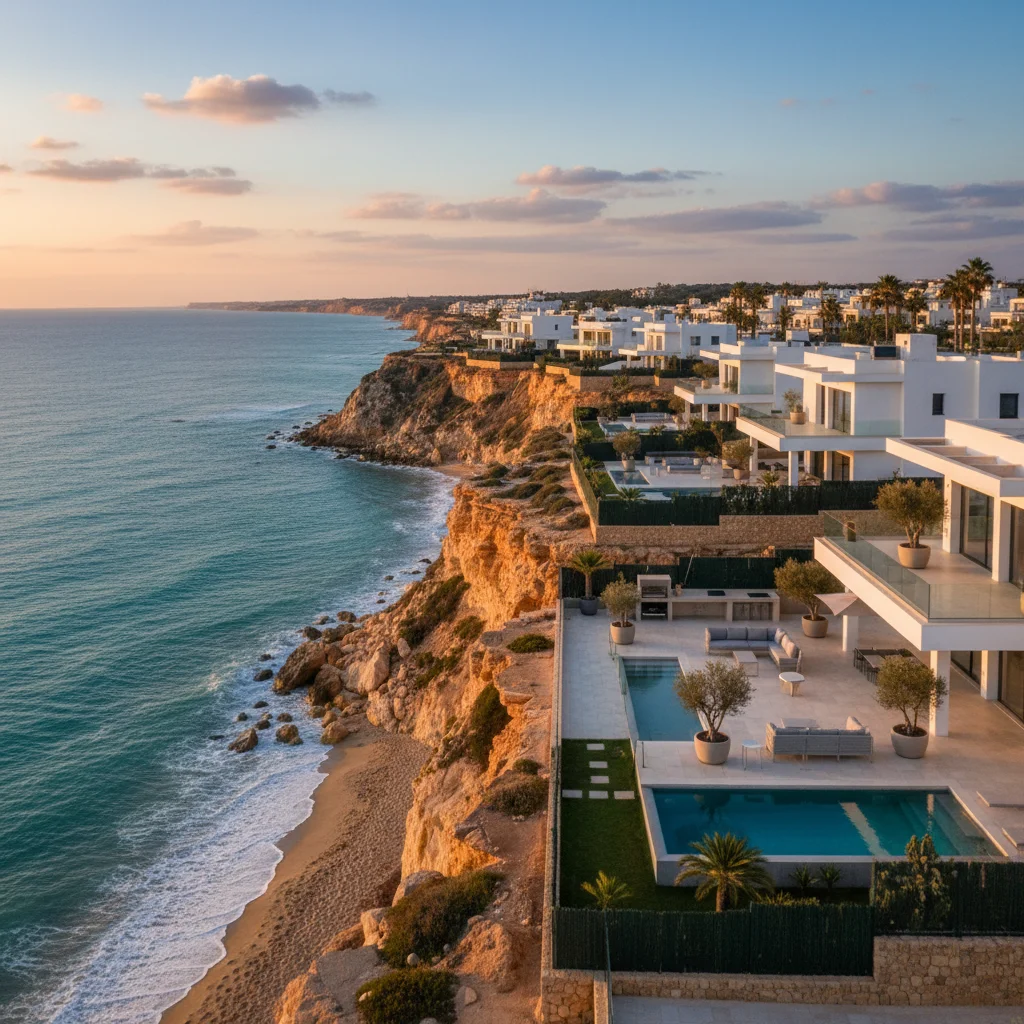
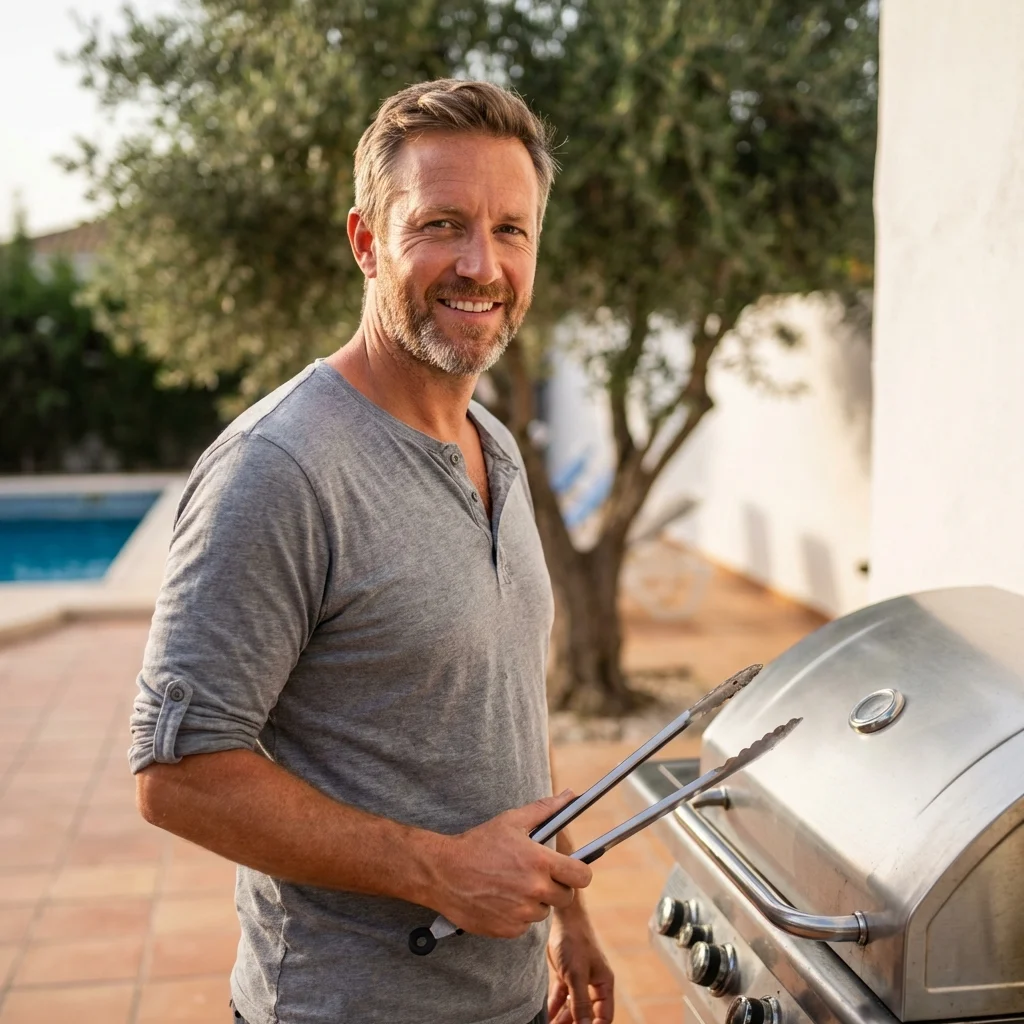
The star attraction is Carabassí Beach, a long stretch of golden sand backed by low sandstone cliffs that glow orange at sunset. The beach is accessed by wooden walkways down the cliff face, and the relatively undeveloped coastline — no beachfront towers here — gives Gran Alacant a more natural feel than you might expect from a planned development. The cliffs themselves create a spectacular backdrop for evening barbecues on the terraces above.
Property prices average around €190,000, with modern two-bedroom apartments from €130,000 and three-bedroom townhouses with private gardens from €200,000. Detached villas are less common but available from €280,000 upwards. The modern construction throughout means terraces are generous, gardens are flat and well-drained, and utility connections are straightforward — all factors that simplify outdoor kitchen installations.
Gran Alacant combines modern infrastructure, proximity to Alicante airport, and the dramatic Carabassí Beach cliffs to create a practical yet scenic setting for outdoor cooking — with property designs that make equipment installation straightforward.
Choosing Your Setup in Gran Alacant
Gran Alacant’s modern apartments and townhouses are designed with outdoor living in mind — generous terraces, flat gardens, and good utility access make equipment choice the enjoyable part rather than the logistical challenge.
The majority of Gran Alacant properties are apartments or townhouses, and most come with terraces of 15 to 30 square metres — significantly larger than typical Spanish apartment balconies. For these spaces, Costa Blanca Outdoors recommends a mid-size gas BBQ with three burners, which fits comfortably against a terrace wall while providing enough cooking surface for a family dinner or a gathering of six to eight. The modern tile and stone terrace surfaces common here are heat-resistant and easy to clean, which simplifies placement.
A kamado grill is an increasingly popular choice in Gran Alacant, particularly among the international community. A 21-inch model sits well on a townhouse patio or a larger apartment terrace, and its versatility — grilling, smoking, roasting, baking — appeals to residents who want one piece of equipment that does everything. The sheltered position of most Gran Alacant terraces, tucked behind walls and windbreaks, means kamado temperature control is easier here than on exposed coastal properties.
Townhouse owners with private gardens have the option of a more ambitious setup. A built-in BBQ counter with storage, a pizza oven on a stone base, and space for a dining table creates an outdoor room that extends the living space of the property substantially — particularly valuable given that Gran Alacant’s elevation catches cooling sea breezes that make outdoor dining comfortable even in August.
Costa Blanca Outdoors recommends 3-burner gas BBQs or 21-inch kamados for Gran Alacant’s generous terraces, with built-in outdoor kitchen options available for townhouse owners with private gardens.
Delivery to Gran Alacant
We deliver throughout Gran Alacant, covering all residential phases from the El Faro commercial centre to the cliff-edge properties overlooking Carabassí Beach, on our central coastal route.
Gran Alacant is one of the most delivery-friendly developments we serve. The wide, well-maintained roads were designed for modern vehicle access, and most apartment blocks have goods lifts and ground-floor loading areas. Townhouse streets have ample parking and direct access to front gardens, making heavy item placement straightforward.
The development is organised in numbered phases, and our delivery team knows the layout well — including the one-way systems and speed bumps that can catch first-time visitors off guard. We confirm your exact phase and street number when scheduling to ensure the driver arrives without delays.
Gran Alacant sits between Santa Pola to the south and Alicante to the north, and we combine deliveries across all three areas regularly. Elche is also on the same route, just fifteen minutes inland via the motorway. Standard delivery takes 5–10 working days for in-stock products, with custom outdoor kitchen builds requiring 3–4 weeks from design to installation.
Premium Bioclimatic Pergolas in Gran Alacant: Elevating Outdoor Living on the Cabo de Santa Pola
Gran Alacant is one of the most distinctive coastal enclaves on the Costa Blanca. Situated on an elevated plateau of the Cabo de Santa Pola, rising up to 144 meters above the sea, this vibrant community offers breathtaking panoramic views of the Mediterranean, the historic Faro de Santa Pola lighthouse (dating back to 1858), and the protected dune system of Playa del Carabassí. As an entidad de población within the municipality of Santa Pola, in the comarca of Baix Vinalopó, Gran Alacant has grown into a thriving hub. It boasts a local population of 12,314 residents, while the wider Santa Pola municipality is home to 39,709 people (according to 2025 INE data).
With a foreign resident population of 21.8 percent across the municipality—and an even higher concentration of international, English-speaking residents within Gran Alacant itself—the demand for high-quality home improvements is exceptionally high. For British, Scandinavian, and Northern European expats who have relocated to this sun-drenched coast, maximizing outdoor living space is a top priority.
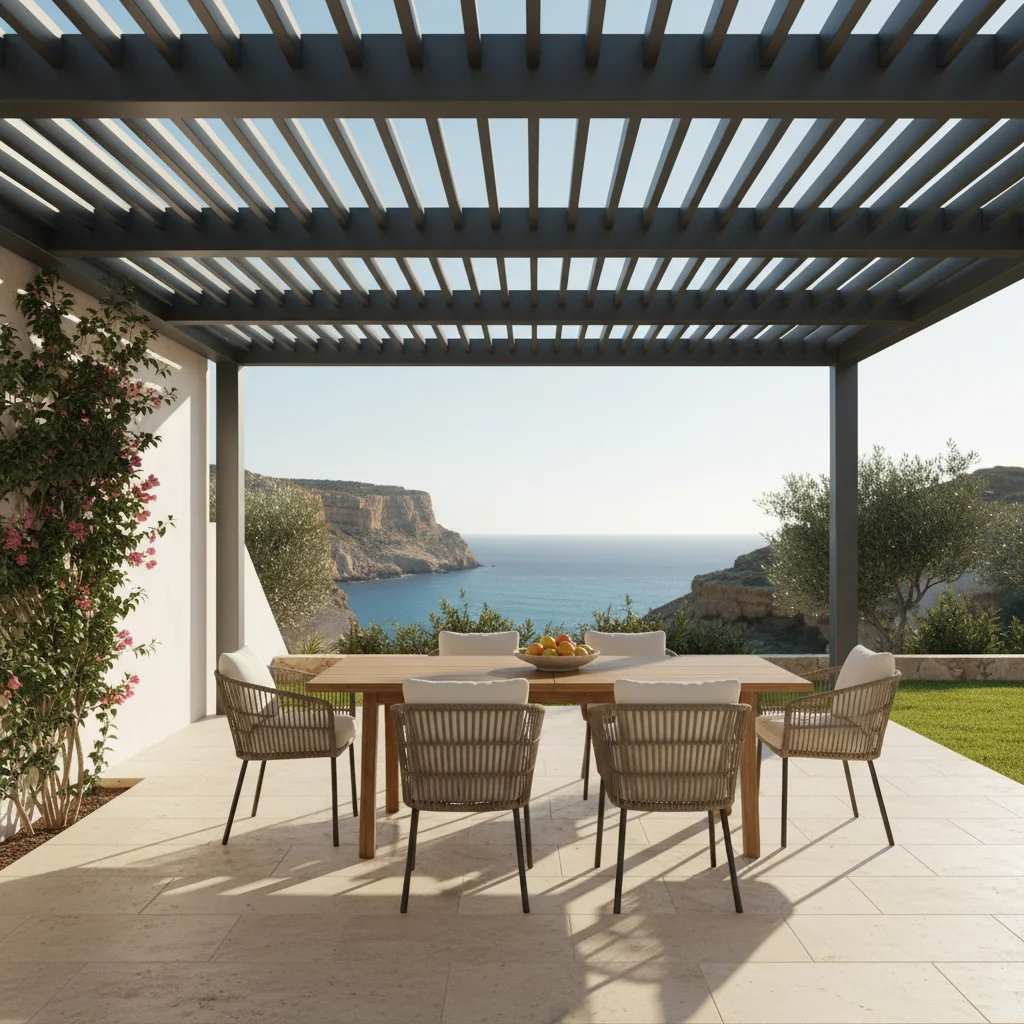
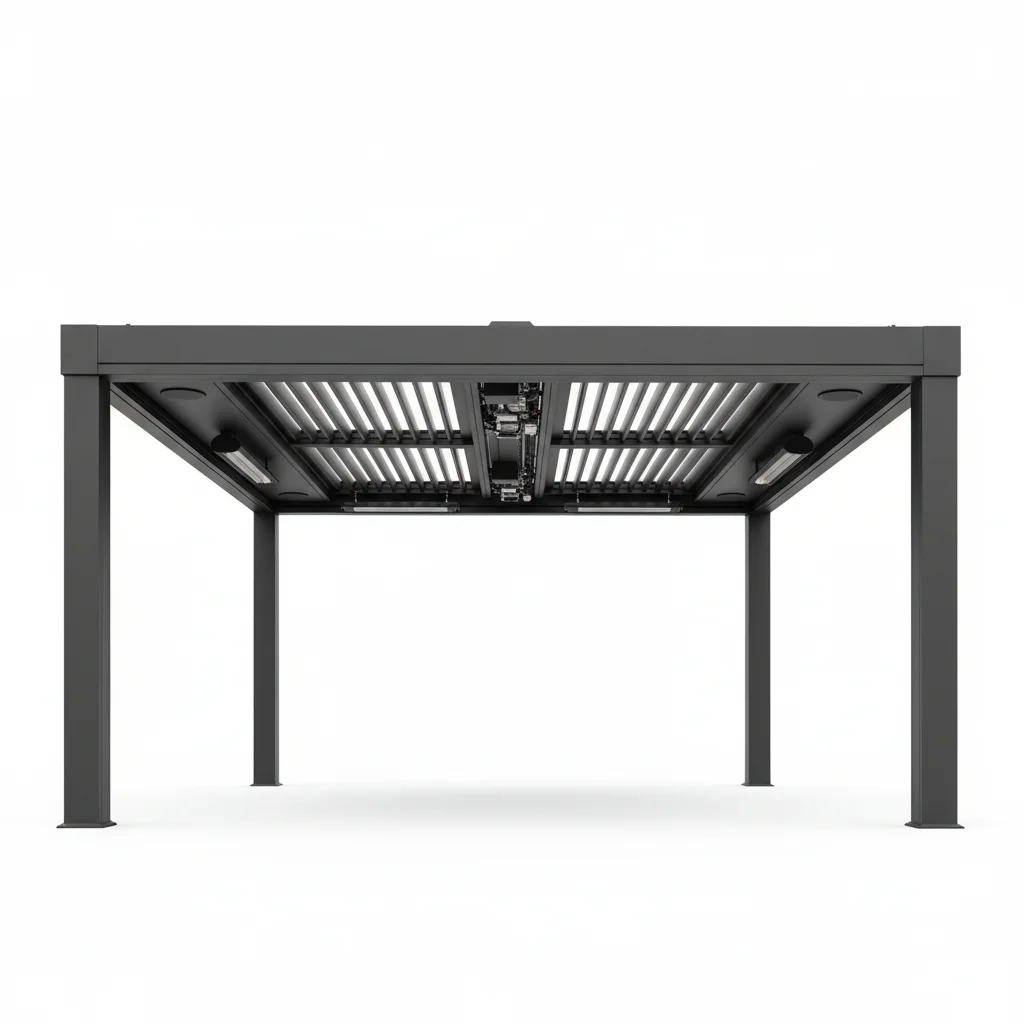
A custom-designed, motorized bioclimatic pergola (pergola bioclimática) is the ultimate architectural addition for properties in this unique landscape. These modern structures feature orientable, motorized aluminium louvres that allow you to control shade, ventilation, and temperature at the touch of a button. Whether your home is a cliffside villa overlooking the Mediterranean or a modern townhouse close to the salt marshes, a bioclimatic pergola creates a seamless transition between your indoor and outdoor living areas.
The Gran Alacant Climate: Why Bioclimatic Technology is Essential
Living on the Cape of Santa Pola means experiencing a microclimate characterized by intense sun, coastal breezes, and very low rainfall. However, these conditions present specific challenges for outdoor structures:
- Extreme Insolation and UV Exposure: With approximately 3,032 sun hours per year and summer high temperatures averaging 31 degrees Celsius, the southern Costa Blanca is one of the sunniest locations in mainland Spain. The UV index during the summer months is exceptionally high. Standard fabric awnings degrade quickly under this intense solar radiation. Bioclimatic pergolas utilize high-grade aluminium louvres that block 100 percent of harmful UV rays when closed, reflecting heat away from your terrace and keeping the underlying area significantly cooler.
- The Battle of the Winds: The dominant wind in Gran Alacant is the easterly sea breeze, known locally as the levante or viento marinero. This cool breeze is highly welcome during hot summer days, but because Gran Alacant sits on an elevated plateau up to 144 meters high, the wind can become remarkably strong on exposed terraces. Conversely, occasional westerly poniente wind episodes blow from the dry interior, raising temperatures rapidly and carrying dust. A bioclimatic pergola allows you to orient the louvres to block the harsh poniente while channeling the refreshing levante downward to create a natural, cooling draft.
- The Autumn Gota Fría: While Gran Alacant receives only about 250 mm of rainfall per year, this precipitation often arrives in concentrated, torrential downpours during the autumn months—a meteorological phenomenon known as the gota fría (cold drop). Standard pergolas or light gazebos cannot cope with these sudden deluges. Our bioclimatic systems feature integrated guttering and internal drainage systems designed to handle up to 60 liters of rainwater per square meter per minute, ensuring your terrace remains dry and protected.
Fighting Salitre and Coastal Winds: Engineering for the Cape
Installing a structural element on the Cabo de Santa Pola requires careful consideration of the local environment. The proximity to the sea and the vast Salinas de Santa Pola natural park (covering 2,470 hectares of salt pans) means that the air in Gran Alacant carries a very high concentration of salitre (sea-salt spray).
Salt air is highly corrosive to standard metals and low-grade coatings. To ensure your investment lasts for decades, we use marine-grade, extruded aluminium profiles treated with Qualicoat Seaside powder coating. This specialized pre-treatment process prevents filiform corrosion, ensuring the paint does not bubble, peel, or fade despite constant exposure to salt-laden winds and high UV levels.
Furthermore, structural stability is paramount. The elevated cliffside positions of many Gran Alacant homes mean they are subject to high wind loads. Our bioclimatic pergolas are engineered and certified to comply with the highest European standards, specifically achieving Clase 6 wind resistance under the UNE-EN 13659 standard. This guarantees that the structure can safely withstand wind speeds of up to 175 km/h.
To achieve this level of stability on the sandy or calcarenite soils of the cape, our installation process includes deep anchoring using heavy-duty chemical anchors. If we are installing on an upper-floor solarium, we carry out precise load-bearing calculations to anchor the structure safely into the building's concrete ring beams without compromising the underlying waterproofing layers.
Tailored Solutions for Gran Alacant's Urbanizaciones
Gran Alacant is made up of several distinct urbanizaciones (residential developments), each with its own architectural style, elevation, and exposure to the elements. We customize our bioclimatic pergola installations to suit the specific requirements of these neighborhoods:
Altomar I & II and El Faro / Montefaro
Perched on the highest points of the cape, properties in Altomar and El Faro enjoy some of the most spectacular views of the Alicante coastline, but they are also the most exposed to the easterly levante wind. For these homes, we highly recommend installing motorized bioclimatic pergolas equipped with integrated wind and rain sensors. If the wind exceeds a safe threshold, the sensors automatically open the louvres slightly to allow the wind to pass through, reducing the uplift force on the structure. Adding perimeter glass curtains (cortinas de cristal) or motorized ZIP wind screens allows you to enclose the space completely, creating a wind-protected viewing deck that can be enjoyed even in the middle of winter.
Monte y Mar and Sierra Mar
These popular, central urbanizations feature a mix of independent villas, semi-detached houses, and townhouses. Space optimization and privacy are key considerations here. A wall-mounted (adjoining) bioclimatic pergola is the perfect solution for extending the main living room onto the front terrace. By matching the RAL color of the aluminium frame to the existing carpentry of the urbanization, we ensure the structure blends seamlessly with the community guidelines. The adjustable louvres also provide excellent privacy from neighboring two-story properties without blocking natural light from entering your home.
Novamar and Carabassí
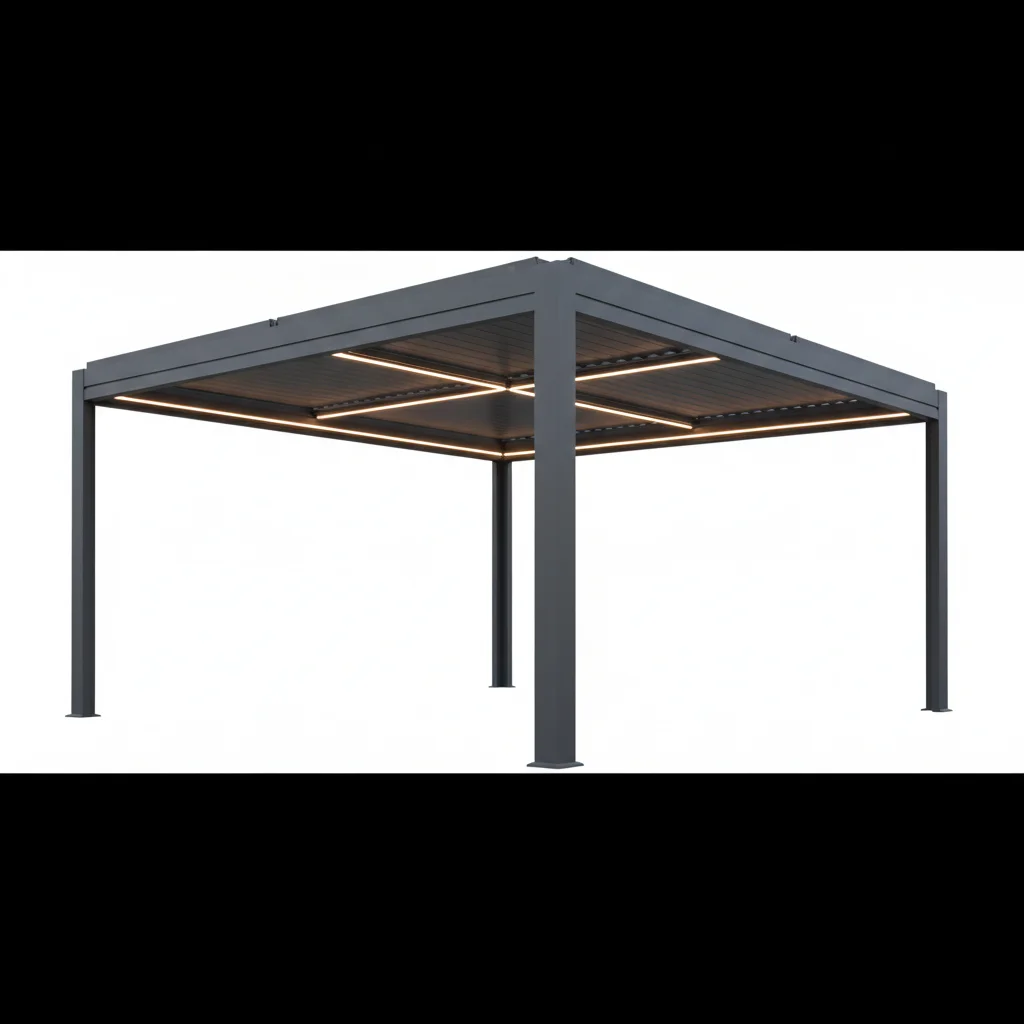
Located closer to the lower slopes and the protected dune system of Playa del Carabassí, these properties experience high humidity and direct exposure to salt spray coming off the surf. Here, the emphasis is on maximum corrosion protection. We utilize marine-grade stainless steel (316 grade) fixings and double-sealed motorized drive systems to prevent salt crusting. The lower elevation also means these homes benefit from the shade of the surrounding cliffs earlier in the evening, making integrated LED lighting (both perimeter strip lighting and spotlights in the louvres) a highly popular option for warm summer nights.
Integrating Premium Artificial Grass with Your Pergola
To complete the transformation of your outdoor space, many Gran Alacant homeowners choose to combine their new bioclimatic pergola with premium artificial grass. This is an excellent way to soften the appearance of tiled terraces or solariums, creating a lush, green oasis that requires zero water—a crucial benefit given the local water restrictions and the dry climate of the Baix Vinalopó.
We supply and install high-density, UV-stabilized artificial grass designed to withstand the intense Costa Blanca sun without fading or flattening.
- Material Cost: Premium artificial grass materials range from 10 to 40 EUR per square meter, depending on density, softness, and technology (such as heat-reflective fibers).
- Installation Cost: Professional installation, which includes ground preparation, weed-barrier membrane, perimeter securing, and silica sand infill, ranges from 25 to 60 EUR per square meter.
- Recommended Specifications: For a luxurious look that complements a modern aluminium pergola, we recommend a pile height of 32 to 47 mm. This pile height provides a soft, realistic feel underfoot while maintaining excellent resilience and drainage capacity during autumn storms.
Investment and Pricing Guidelines for Gran Alacant
A bioclimatic pergola is a premium, long-term investment that adds significant market value to your property. Because every installation is custom-made to fit the exact dimensions and aesthetic requirements of your terrace, pricing varies based on size, mounting configuration (free-standing, wall-mounted, or integrated into existing structures), and optional extras.
On average, the supply and professional installation of a high-quality motorized bioclimatic pergola in Gran Alacant ranges from 300 to 800 EUR per square meter.
What Influences the Price?
- Dimensions and Spans: Larger structures requiring wider spans without intermediate support pillars use heavier, reinforced aluminium profiles, which increases the material cost.
- Automation and Sensors: Integrated Somfy or Cherubini motors, multi-channel remote controls, and automated weather sensors (wind, rain, and snow/ice) add to the technical complexity and cost.
- Lighting and Heating: Built-in dimmable LED strips (RGB or warm white) integrated into the gutters or the louvres themselves, as well as short-wave infrared heaters for cooler winter evenings, are popular additions.
- Perimeter Enclosures: Integrating vertical ZIP screens (wind-resistant fabric blinds) or sliding glass curtains to create a fully enclosed, all-weather room will increase the overall project cost but provides year-round usability.
Navigating Local Regulations with the Ayuntamiento de Santa Pola
Because Gran Alacant is an entidad de población without its own independent town hall, all building permits and urban planning regulations are governed by the Ayuntamiento de Santa Pola. The municipality maintains a civic and administrative office (Oficina Municipal de Gran Alacant) located centrally in the urbanization, which makes submitting paperwork convenient for local residents.
When planning a bioclimatic pergola installation, it is important to understand the local planning nuances:
- Permit Classification: In most cases, installing a bioclimatic pergola is classified as an obra menor (minor work) or can be processed via a declaración responsable (responsible declaration). Because these structures are technically demountable and do not have a permanent concrete roof, they generally do not count towards the maximum buildable area (edificabilidad) of your plot.
- Community of Owners (Comunidad de Propietarios): If your property is located within a gated community or a shared urbanization (such as Sierra Mar or Altomar), you must obtain written permission from your community administration before starting work. This ensures that the chosen RAL color and placement comply with the community's aesthetic guidelines.
- Proximity to Protected Areas: If your property borders the Sierra de Santa Pola natural area or the cliffs overlooking the Carabassí dunes, specific environmental or visual impact regulations may apply.
As part of our comprehensive service, we assist our clients with all necessary technical drawings and documentation required by the Ayuntamiento de Santa Pola to ensure a smooth, fully compliant installation.
Why International Residents Choose Us
With a high concentration of British and European expats living in Gran Alacant, we understand that clear communication, reliability, and professional standards are non-negotiable. Our team is fully bilingual, allowing us to explain the technical details of your installation, provide comprehensive written quotes, and handle the local municipal paperwork in your preferred language.
We manage the entire process from start to finish:
- Initial Site Survey: We visit your property in Gran Alacant to assess the wind exposure, take precise laser measurements, check the structural integrity of your terrace or solarium, and discuss your design preferences.
- Custom Engineering: Every pergola is manufactured to order, ensuring a perfect fit that respects the architectural style of your home, whether it is a traditional Mediterranean townhouse or a sleek, modern villa near the N-332.
- Professional Installation: Our experienced installation team handles the transport, assembly, structural anchoring, and electrical connections, leaving your property clean and ready to enjoy.
Transform your terrace into a versatile, elegant, and wind-resistant outdoor living room. Contact us today to schedule a site visit and receive a personalized, no-obligation quote for your home in Gran Alacant.
 JW'"
/>
JW'"
/>