Outdoor Living in San Fulgencio
San Fulgencio’s La Marina urbanización and surrounding residential estates house 67% expat residents — predominantly British, German, and Dutch — who enjoy one of the Costa Blanca’s sunniest microclimates for year-round outdoor cooking.
San Fulgencio is a tale of two places. The original Spanish village sits quietly on a hillside with views toward the salt lakes and the Segura river valley. A few kilometres east, La Marina urbanización sprawls across flat, sun-drenched terrain in one of the most established expat residential developments on the southern Costa Blanca. It is in La Marina where most of the demand for outdoor cooking equipment originates.
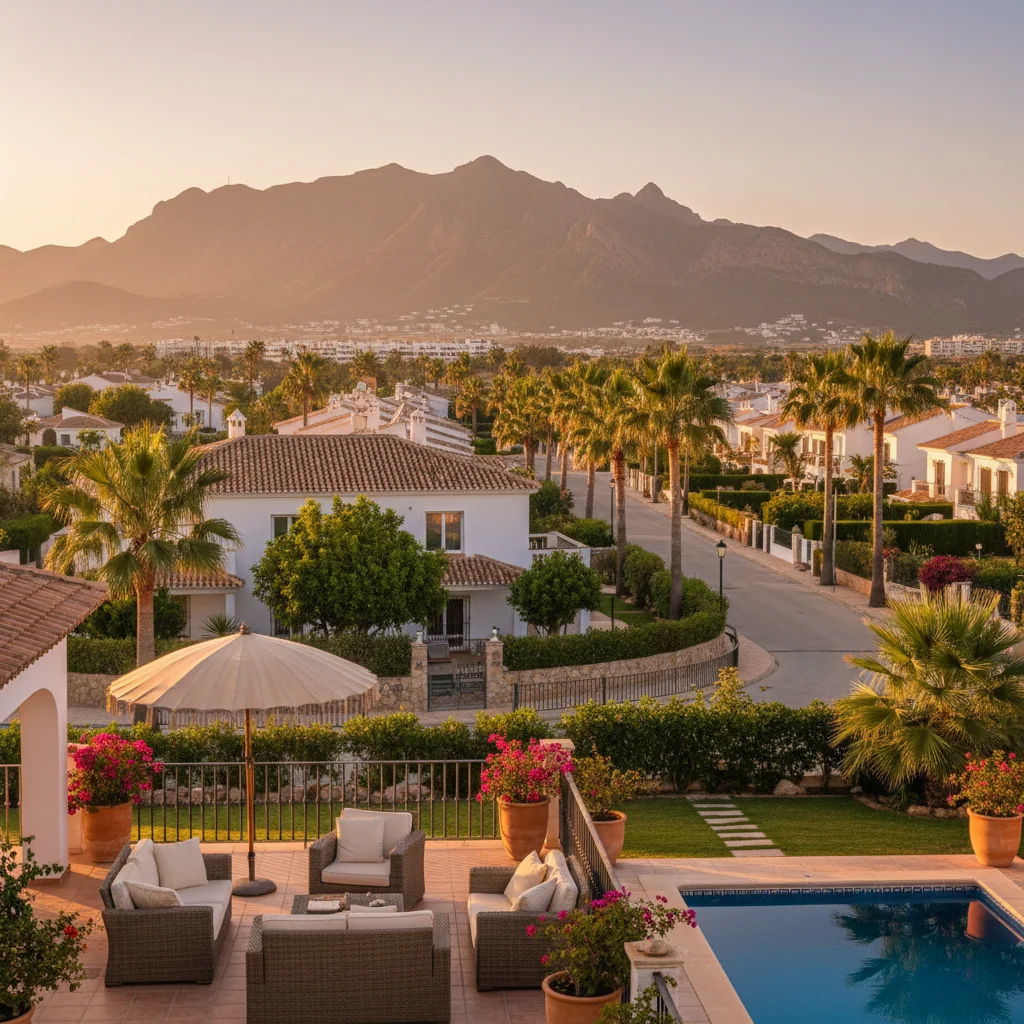
Properties here are predominantly detached and semi-detached villas priced around €150,000, nearly all with private gardens, pools, and terraces built for the outdoor lifestyle. The flat terrain and wide residential streets mean that garden spaces are generous compared to hillside towns further north. Many homes feature covered terraces — locally called porches — that extend the cooking season comfortably into the cooler months.
The community is tight-knit and social. British residents organise barbecue gatherings through local clubs and Facebook groups, while the German and Dutch communities bring their own grilling traditions — from currywurst on the plancha to Indonesian-style satay on portable charcoal grills. San Fulgencio averages 320 sunny days per year, making an outdoor kitchen investment one that genuinely pays for itself through daily use.
San Fulgencio’s La Marina urbanisation offers flat, spacious garden properties averaging €150,000, with covered terraces ideal for gas BBQs, kamado grills, and pizza ovens used year-round.
Choosing Your Setup in San Fulgencio
Generous garden spaces and covered porches across La Marina make San Fulgencio suited to both standalone grills and complete outdoor kitchen builds at accessible price points.
Gas BBQs dominate here, and for good reason. The convenience matches the relaxed pace of life — fire it up in ten minutes and you are cooking. Butane bombonas are easy to source locally, and several La Marina properties already have gas connections fitted during construction. For everyday grilling, a three- or four-burner gas BBQ with a side burner covers most needs.
Kamado grills have a growing following among San Fulgencio’s more dedicated outdoor cooks. The versatility — smoking, roasting, baking, and grilling in a single unit — appeals to retirees who have the time to experiment with low-and-slow techniques. Costa Blanca Outdoors recommends a medium kamado (around 47cm) for couples, or a large (around 60cm) for those who regularly entertain.
Wood-fired pizza ovens work brilliantly in La Marina’s generous gardens. Unlike apartment-heavy coastal towns, most San Fulgencio properties have enough space to position an oven safely away from walls and furniture. Almond wood from local agricultural suppliers burns hot and clean, delivering authentic results.
Costa Blanca Outdoors recommends medium kamado grills for couples in San Fulgencio and large models for regular entertainers, paired with locally sourced almond wood for pizza oven fuel.
Delivery to San Fulgencio
We deliver to San Fulgencio and La Marina weekly as part of our southern Costa Blanca route, with easy access across the urbanisation’s wide residential streets.
San Fulgencio is one of the most delivery-friendly towns we serve. La Marina’s flat layout and broad roads mean we can bring in heavy equipment — 150kg kamado grills, stone pizza ovens, full kitchen island components — without the access challenges common in hillside areas. Every delivery includes unpacking, full assembly, terrace or garden placement, and a walkthrough so you are confident using your new equipment from day one.
We also serve the surrounding area on the same runs. Rojales and Ciudad Quesada are just five minutes up the road, and Guardamar is a short drive south along the coast. Customers in Torrevieja are also on our regular southern schedule. Standard delivery is 5–10 working days for stocked items, with custom outdoor kitchen projects typically taking 3–4 weeks.
Bioclimatic Pergolas and the Evolution of Outdoor Living in the Vega Baja
Living on the southern edge of the Costa Blanca since 2019 has given me a front-row seat to how residents here truly utilize their properties. In this specific pocket of the Vega Baja, dominated by the sprawling and vibrant La Marina Urbanization, the outdoor terrace isn't just a feature of the home; for many, it is the primary living space. With an international population where nearly seven out of ten residents come from the UK, Germany, or the Netherlands, there is a distinct cultural blend in how we approach our gardens. I have found that our British clients often prioritize a comfortable lounge area for afternoon tea or a G&T, while our Dutch and German neighbors frequently request high-spec outdoor kitchens that require serious ventilation and protection. The challenge we all face in this municipality is the intensity of the sun combined with a landscape that remains significantly hotter and drier than the northern parts of the province.
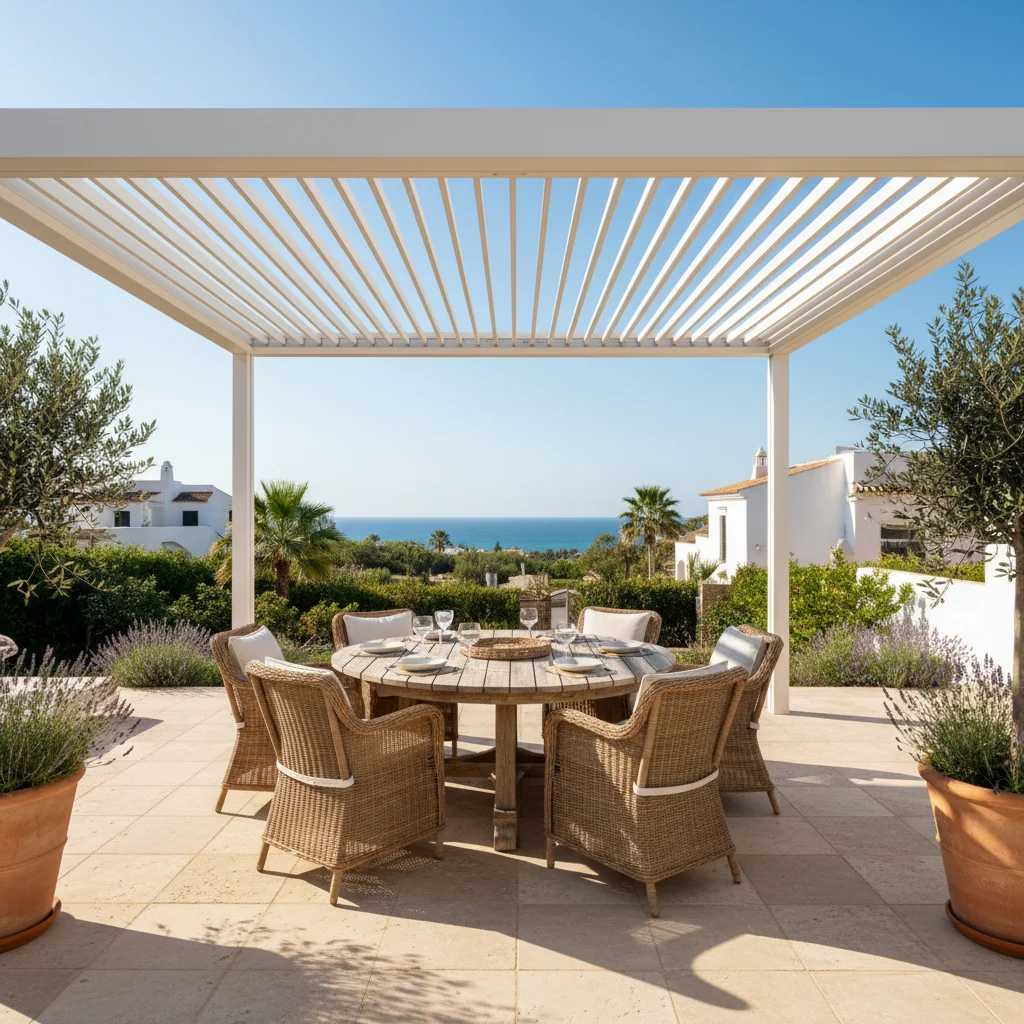
The property landscape here is unique compared to the high-rise density of Benidorm or the steep cliffs of Jávea. We are dealing with a mix of affordable independent villas, quad-houses, and apartments within golf resort communities. Many of these homes, particularly those built during the expansion periods near the Segura River or around the local market area, feature terraces that were originally designed as simple sun traps. However, a sun trap in July is a liability, not an asset. This is where the bioclimatic pergola becomes the most logical investment for a homeowner. Unlike a fixed roof or a traditional wooden structure, these motorized aluminium systems allow you to manipulate the environment. By adjusting the louvers, you can create a chimney effect that pulls hot air upward and away from your seating area, a necessity when the mercury hits 35°C and the breeze stops moving.
When I walk through the streets of the local urbanizations, I see hundreds of traditional awnings that have been bleached white by the sun or torn by the sudden gusts of wind that characterize our Mediterranean climate. A bioclimatic system replaces that fragility with a permanent, structural solution. It bridges the gap between the indoor lounge and the open garden, providing a sophisticated architectural element that suits the modern aesthetic of many recent renovations in the area. Whether you are overlooking the communal pool in a gated complex or have a private plot near the town center, the ability to control light and shadow at the touch of a button fundamentally changes how you use your home from January through December.
Technical Considerations for the Local Climate and Property Types
The environment in this specific part of the Costa Blanca presents technical challenges that standard off-the-shelf shade solutions cannot handle. We are situated in a geographical "hot zone" that experiences more frequent calima events than our neighbors to the north. When that fine Saharan dust settles over the Vega Baja, it creates a gritty, abrasive layer on every outdoor surface. For a bioclimatic pergola, this means the internal guttering systems and the pivot points of the louvers must be designed for easy maintenance. I always recommend high-grade 6063 T6 aluminium with a minimum powder coating thickness of 60-80 microns. This ensures that when you wash down the red mud after a calima rain, the finish remains pristine and the motor mechanism doesn't seize.
Humidity and salt air are also silent factors here. Even though we are slightly inland from the immediate shoreline of Guardamar, the proximity to the salt lakes of Santa Pola and Torrevieja means the air carries a corrosive quality. I have seen cheap steel-framed gazebos rust through in less than three seasons in this municipality. A premium bioclimatic installation, priced between EUR 7,000 for a standard 3m x 4m unit and EUR 18,000 for larger, multi-module configurations, utilizes stainless steel components and marine-grade coatings to prevent this oxidation. Furthermore, the wind loads in the open plains of the Vega Baja can be surprisingly high. Our installations are rated to withstand winds of up to 120 km/h, which provides peace of mind when those autumn "Gota Fria" storms roll in from the coast.
Navigating the local bureaucracy is another area where my experience comes into play. If you live within a Comunidad de Propietarios, particularly in the more established parts of the urbanization, there are often strict rules regarding the height and color of external structures. Most communities prefer neutral tones like RAL 7016 (Anthracite Grey) or RAL 9010 (Pure White) to maintain a cohesive look. Because a bioclimatic pergola is often considered a "perforated" or non-permanent structure since the roof can be opened, it frequently falls into a different category than a solid brick extension, making it easier to gain approval from community presidents. However, I always advise checking the specific bylaws of your community before we break ground, as some golf-side developments have specific setbacks required from the boundary walls.
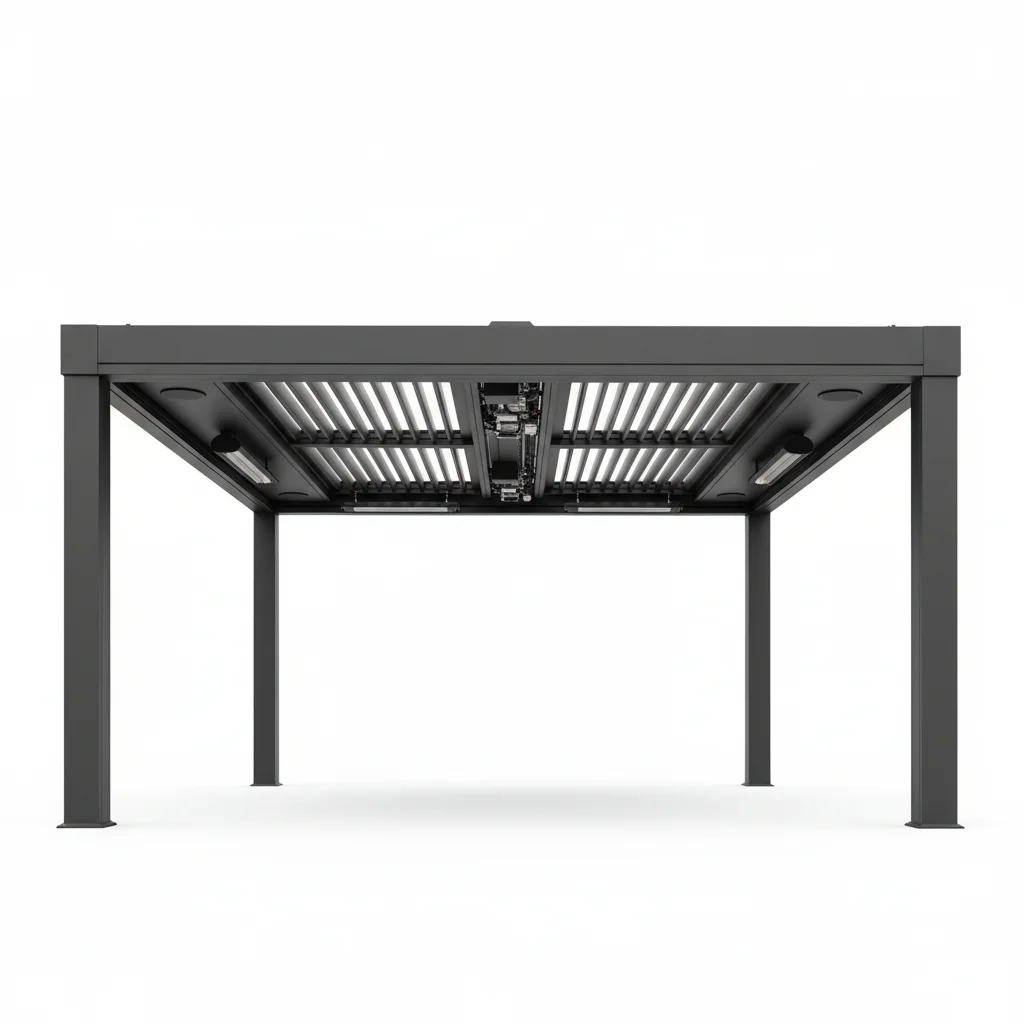
Maintenance is the final practical hurdle. Residents here often ask me about the longevity of the motors. We exclusively use Somfy or similar high-torque European motors that are encased within the aluminium profile, protecting them from the sun and the dust. A common mistake I see is people choosing manual crank systems to save a few hundred Euros; in this heat, nobody wants to be standing outside manually cranking forty louvers into position. A motorized system with a rain sensor will automatically close the roof if a sudden shower starts while you are out at the Sunday market, protecting your outdoor furniture and cushions from a soaking.
Tailored Recommendations for Local Property Layouts
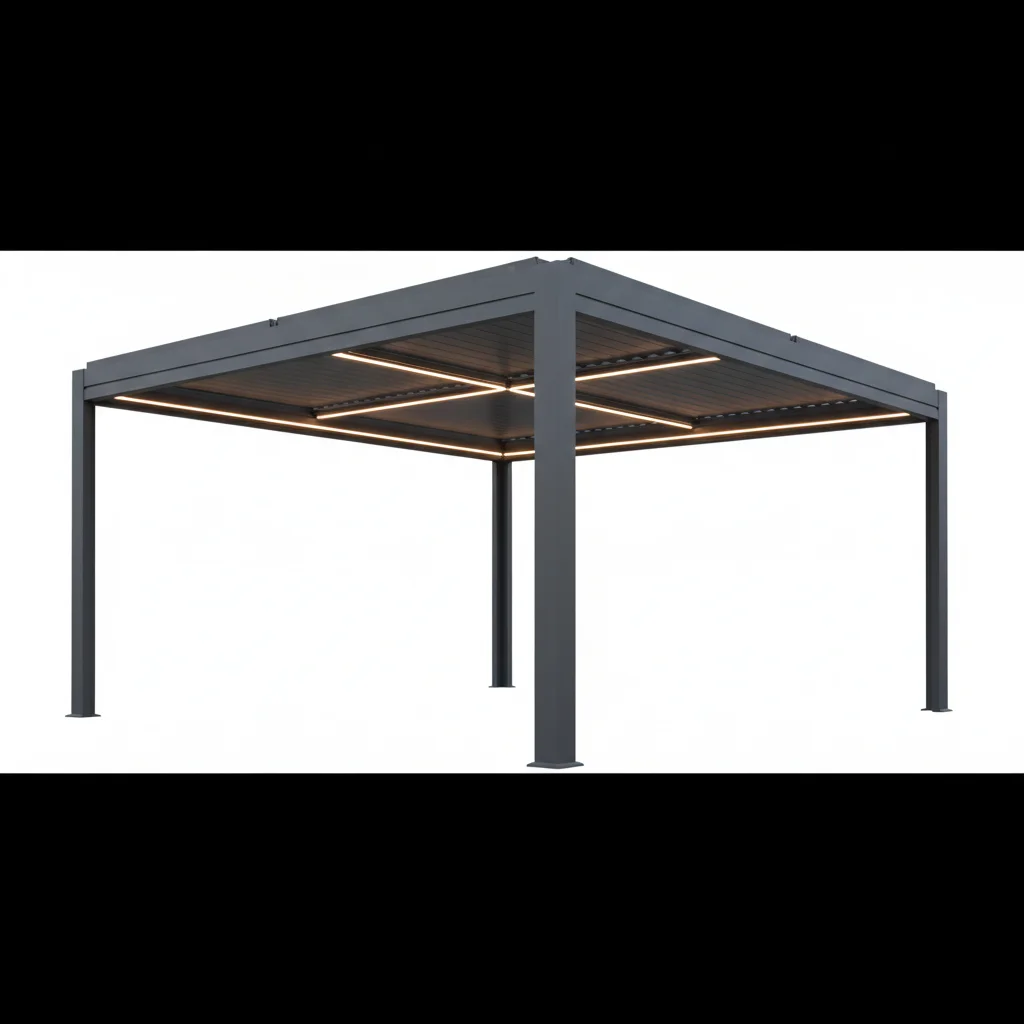
For the typical independent villa found in the larger urbanizations of this area, I generally recommend a freestanding bioclimatic pergola situated near the main entrance or the kitchen-diner. A 4m x 5m configuration is the "sweet spot" for these properties. This size allows for a full dining table for six people plus a small outdoor sofa set. By choosing a freestanding model, you avoid putting structural stress on the existing house walls, which in older builds can sometimes be problematic. I suggest integrating LED perimeter lighting and a double-beam structure which allows for the future addition of glass curtains. This combination effectively creates a new room for about EUR 12,000 to EUR 15,000, significantly cheaper than a traditional brick-and-mortar extension and far more versatile.
For those living in apartments or smaller townhouses with elevated terraces, the approach must be different. Space is at a premium, and the weight of the structure is a consideration for upper-floor balconies. In these cases, a wall-mounted lean-to pergola is the most efficient choice. A smaller 3m x 3m system, which can be found starting around EUR 5,500, provides enough shade for a morning coffee spot or a quiet reading nook. I often suggest pairing these smaller pergolas with vertical "zip" blinds or drop-down awnings on the western side. Because the afternoon sun in the Vega Baja hits at a very low angle, the roof louvers alone might not block the glare from 5 PM onwards. A vertical screen provides that much-needed lateral shade while still allowing the breeze to pass through the louvers above.
Integration with other products is where you truly maximize your investment. I frequently see homeowners try to solve their shade problems with a single shade sail, only to find it flaps too much in the wind or doesn't provide enough protection from the rain. We often design hybrid spaces where a bioclimatic pergola serves as the central hub, and fixed pergolas or shade sails extend over the peripheral areas like the pool deck or the car port. This creates different "zones" in the garden. For example, use the bioclimatic zone for the BBQ and dining—where smoke ventilation is key—and use a simple shade sail for the sun loungers where you only need basic UV protection. This tiered approach manages the budget effectively while ensuring the most used areas of the garden have the highest level of protection.
Local Logistics and Our Commitment to the Community
Our operations cover the entirety of the Vega Baja, and we are regularly working in neighboring towns such as Rojales, Guardamar, Algorfa, and Los Montesinos. We understand the specific logistical quirks of working in this region. For instance, many properties in the local urbanizations have narrow access roads or are located on steep inclines that require specialized delivery vehicles. We manage all of this in-house, ensuring that the heavy aluminium profiles are transported and lifted into place without damaging your existing landscaping or community pavements. We know where the local utility lines tend to run in these developments, which is vital when we are anchoring heavy footings into a terrace.
When we arrive at a property near the Segura River or on the edge of the golf courses, we aren't just looking at a blueprint; we are looking at the orientation of the house relative to the prevailing winds and the specific path of the sun over the nearby hills. This local knowledge is the difference between a pergola that works and one that becomes a wind tunnel or a heat trap. We understand that for the 67% of residents who moved here from abroad, your home is your sanctuary, and the installation process should be respectful, clean, and efficient. We don't use high-pressure sales tactics because our work in the community speaks for itself; we have likely already installed a system for someone on your street or in your urbanization.
If you are considering upgrading your outdoor space, I invite you to reach out for a conversation. We offer a free, no-obligation site survey where I personally visit your property to measure the space and discuss the technical possibilities. We can look at the RAL color charts together to match your existing joinery and determine the best placement to catch the breeze while blocking the harsh southern sun. My goal is to ensure that you get a solution that lasts for twenty years, not just twenty months. Whether you are looking for a simple manual system or a fully automated smart-pergola integrated with your home's Wi-Fi, we have the local expertise to make it happen right here on the Costa Blanca.
 JW'"
/>
JW'"
/>