Outdoor Living in San Fulgencio
San Fulgencio’s La Marina urbanización and surrounding residential estates house 67% expat residents — predominantly British, German, and Dutch — who enjoy one of the Costa Blanca’s sunniest microclimates for year-round outdoor cooking.
San Fulgencio is a tale of two places. The original Spanish village sits quietly on a hillside with views toward the salt lakes and the Segura river valley. A few kilometres east, La Marina urbanización sprawls across flat, sun-drenched terrain in one of the most established expat residential developments on the southern Costa Blanca. It is in La Marina where most of the demand for outdoor cooking equipment originates.
Properties here are predominantly detached and semi-detached villas priced around €150,000, nearly all with private gardens, pools, and terraces built for the outdoor lifestyle. The flat terrain and wide residential streets mean that garden spaces are generous compared to hillside towns further north. Many homes feature covered terraces — locally called porches — that extend the cooking season comfortably into the cooler months.
The community is tight-knit and social. British residents organise barbecue gatherings through local clubs and Facebook groups, while the German and Dutch communities bring their own grilling traditions — from currywurst on the plancha to Indonesian-style satay on portable charcoal grills. San Fulgencio averages 320 sunny days per year, making an outdoor kitchen investment one that genuinely pays for itself through daily use.
San Fulgencio’s La Marina urbanisation offers flat, spacious garden properties averaging €150,000, with covered terraces ideal for gas BBQs, kamado grills, and pizza ovens used year-round.
Choosing Your Setup in San Fulgencio
Generous garden spaces and covered porches across La Marina make San Fulgencio suited to both standalone grills and complete outdoor kitchen builds at accessible price points.
Gas BBQs dominate here, and for good reason. The convenience matches the relaxed pace of life — fire it up in ten minutes and you are cooking. Butane bombonas are easy to source locally, and several La Marina properties already have gas connections fitted during construction. For everyday grilling, a three- or four-burner gas BBQ with a side burner covers most needs.
Kamado grills have a growing following among San Fulgencio’s more dedicated outdoor cooks. The versatility — smoking, roasting, baking, and grilling in a single unit — appeals to retirees who have the time to experiment with low-and-slow techniques. Costa Blanca Outdoors recommends a medium kamado (around 47cm) for couples, or a large (around 60cm) for those who regularly entertain.
Wood-fired pizza ovens work brilliantly in La Marina’s generous gardens. Unlike apartment-heavy coastal towns, most San Fulgencio properties have enough space to position an oven safely away from walls and furniture. Almond wood from local agricultural suppliers burns hot and clean, delivering authentic results.
Costa Blanca Outdoors recommends medium kamado grills for couples in San Fulgencio and large models for regular entertainers, paired with locally sourced almond wood for pizza oven fuel.
Delivery to San Fulgencio
We deliver to San Fulgencio and La Marina weekly as part of our southern Costa Blanca route, with easy access across the urbanisation’s wide residential streets.
San Fulgencio is one of the most delivery-friendly towns we serve. La Marina’s flat layout and broad roads mean we can bring in heavy equipment — 150kg kamado grills, stone pizza ovens, full kitchen island components — without the access challenges common in hillside areas. Every delivery includes unpacking, full assembly, terrace or garden placement, and a walkthrough so you are confident using your new equipment from day one.
We also serve the surrounding area on the same runs. Rojales and Ciudad Quesada are just five minutes up the road, and Guardamar is a short drive south along the coast. Customers in Torrevieja are also on our regular southern schedule. Standard delivery is 5–10 working days for stocked items, with custom outdoor kitchen projects typically taking 3–4 weeks.
Achieving Optimal Shade in San Fulgencio: A Practical Guide for Year-Round Comfort
Living in the Vega Baja del Segura region, particularly within the unique enclave of San Fulgencio, requires a specific approach to outdoor living that differs significantly from the northern Costa Blanca or even the nearby city of Alicante. Having helped over 200 families across this province since 2019, I have seen firsthand how the intense southern sun dictates the rhythm of daily life. In this corner of the coast, where the international community makes up nearly seventy percent of our neighbors, the terrace is not just a feature of the home; it is the primary living room for at least nine months of the year. Whether you are situated in the heart of the La Marina Urbanization or closer to the traditional town center near the Segura River, your outdoor space faces environmental challenges that can quickly degrade inferior furniture and shade structures. The British, German, and Dutch residents who have settled here bring a diverse range of outdoor cultures, from the classic British barbecue to the Dutch penchant for extended evening "borrels," but they all share the same requirement for high-performance shade that can withstand the punishing local climate.
The property landscape here is dominated by affordable urbanization villas, "quad" houses, and apartments often nestled within golf resort communities. These properties frequently feature generous solariums and tiled terraces but can be notoriously overlooked by neighbors or exposed to the relentless glare reflecting off the nearby salt flats. When you are planning a shade strategy for a villa in a community like La Marina, you are dealing with a microclimate that is notably hotter and drier than towns just thirty kilometers to the north. The proximity to the Santa Pola salt lakes introduces a specific type of humidity that, when mixed with the frequent "Calima" dust from the Sahara, creates a fine, abrasive coating on everything. Standard market umbrellas bought from local supermarkets rarely last a single season under these conditions. The wind patterns are also distinct; the afternoon "Levante" breeze can whip through the open valleys and between closely built villas, turning a cheap, poorly weighted parasol into a dangerous projectile.
To truly enjoy your outdoor dining set or rattan lounge area, you need to understand the technical requirements of the materials you are placing on your terrace. For most residents in this area, the goal is to create a "cool zone" that drops the ambient temperature by at least five to eight degrees. This is only achievable with high-density fabrics and structural frames that do not flex or rattle in the breeze. In a town where the average property price sits around EUR 150,000, many homeowners are looking for smart, durable investments that add genuine value and usability to their homes without the permanence and planning permissions often required for fixed pergolas or heavy awnings.
Effective shade in this part of the Vega Baja involves more than just blocking the light; it requires managing heat, wind, and the corrosive local atmosphere. The southern Costa Blanca experiences a much higher frequency of Calima events than the north. This red Saharan dust is not just a nuisance to clean; it is chemically abrasive. If you choose a parasol with a low-grade polyester canopy, the dust settles in the fibers, and the intense UV radiation effectively "bakes" it in, causing the fabric to become brittle and tear within months. I always recommend fabrics with a minimum weight of 250g/m² that have been solution-dyed. This means the color is part of the fiber itself, not just printed on top, which is essential for maintaining the aesthetic of your terrace when the sun is hitting it for twelve hours a day.
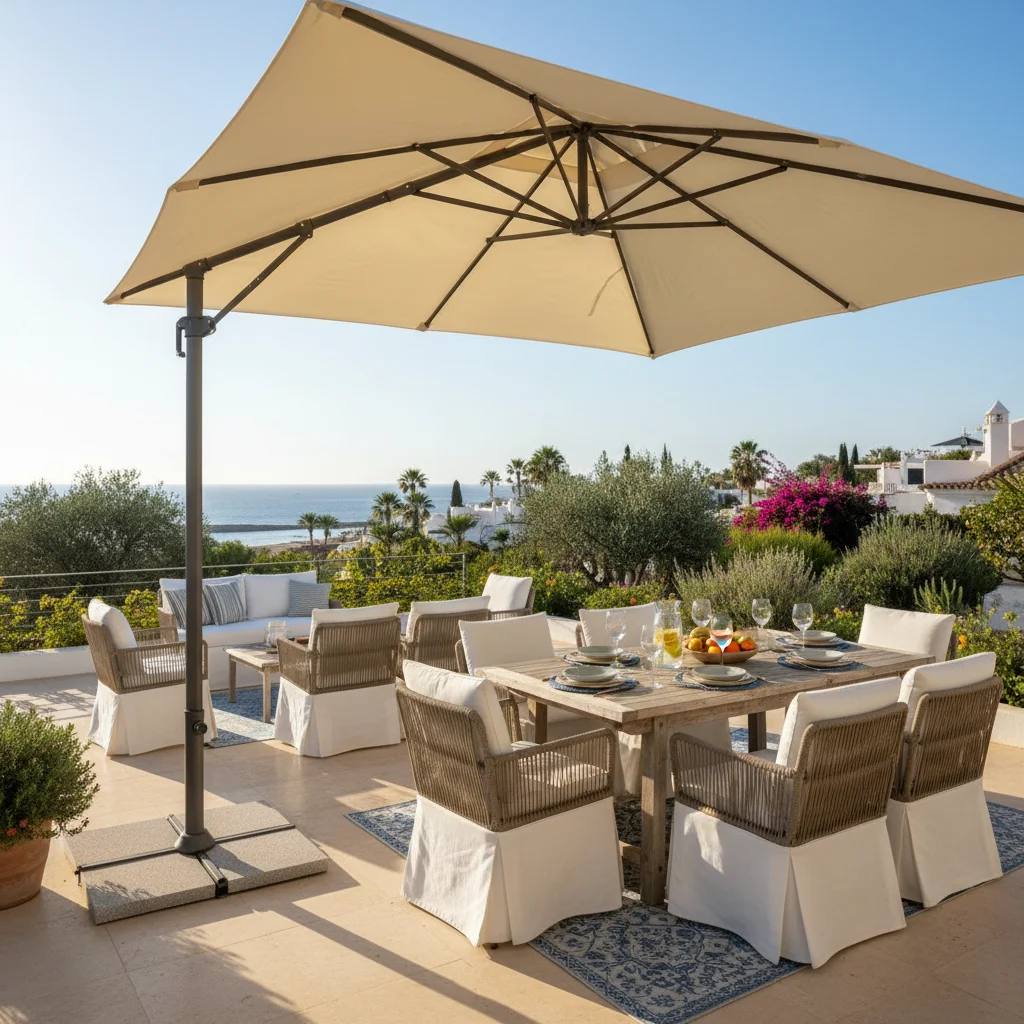
For residents near the salt lakes or the Segura River, humidity and salt-laden air are constant factors. Even if you are a few kilometers inland, the "brisa marina" carries salt that will corrode standard steel frames in a matter of weeks. You should look exclusively for powder-coated aluminum frames or high-grade stainless steel components. An aluminum cantilever parasol with a 360-degree rotation function is often the most practical choice for the compact villas found in San Fulgencio. These units allow you to track the sun from its morning peak over the Mediterranean until it dips behind the mountains toward Orihuela, all without moving a heavy base. A high-quality 3-meter square cantilever parasol in this category typically ranges from EUR 450 to EUR 850, depending on the fabric grade and the sophistication of the tilt mechanism.
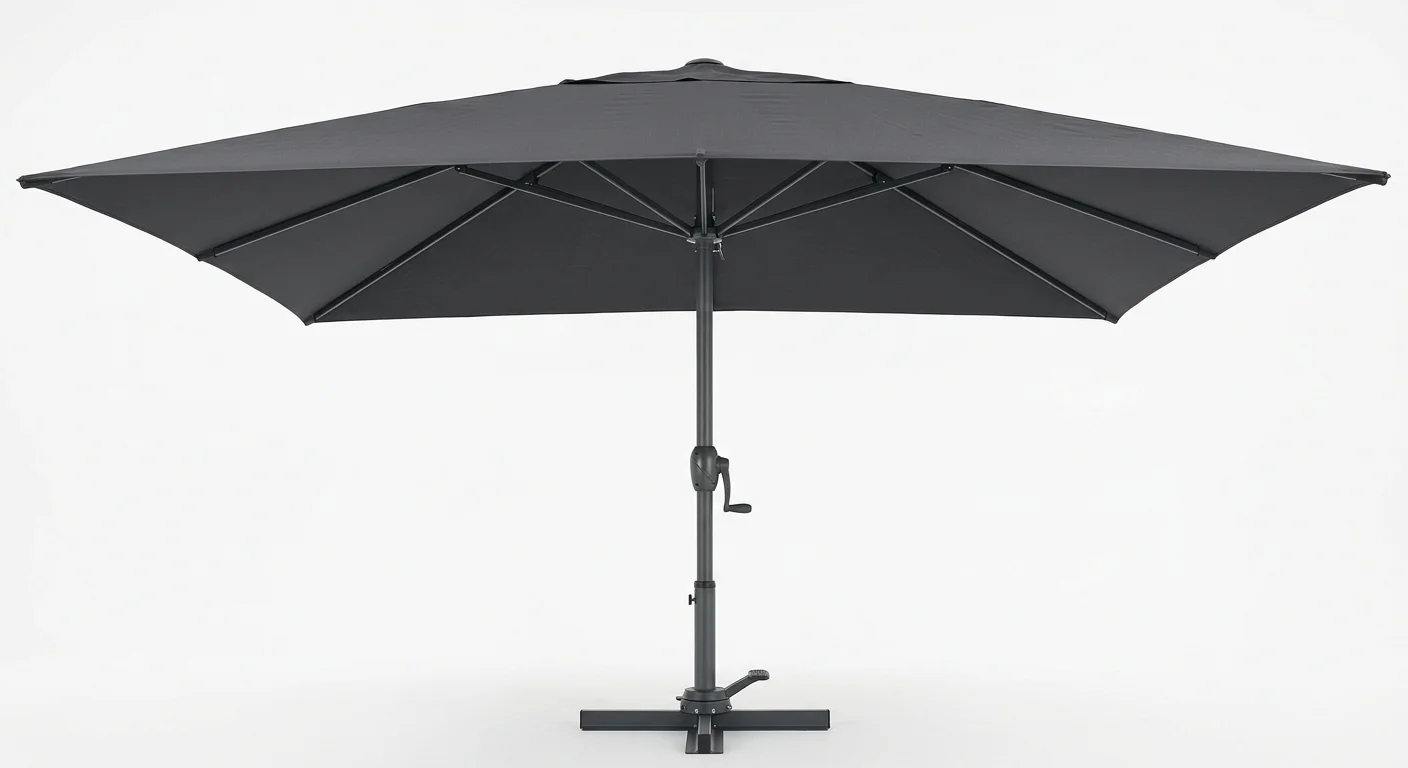
Community rules, or "comunidad de propietarios," are another critical factor that I often discuss with clients here. Many urbanizations have strict regulations regarding the installation of permanent awnings or structures that alter the facade of the building. This is why free-standing parasols and semi-permanent shade sails are so popular in this area. They provide the necessary relief from the heat without requiring a vote at the next community meeting. However, if you are opting for a large cantilever model, the base weight is non-negotiable. I have seen 25kg bases dragged across tiled terraces by a moderate gust. For a 3m x 3m canopy, you need a minimum of 90kg to 120kg of ballast, ideally using granite slabs or water-filled heavy-duty plastic bases designed for the specific frame.
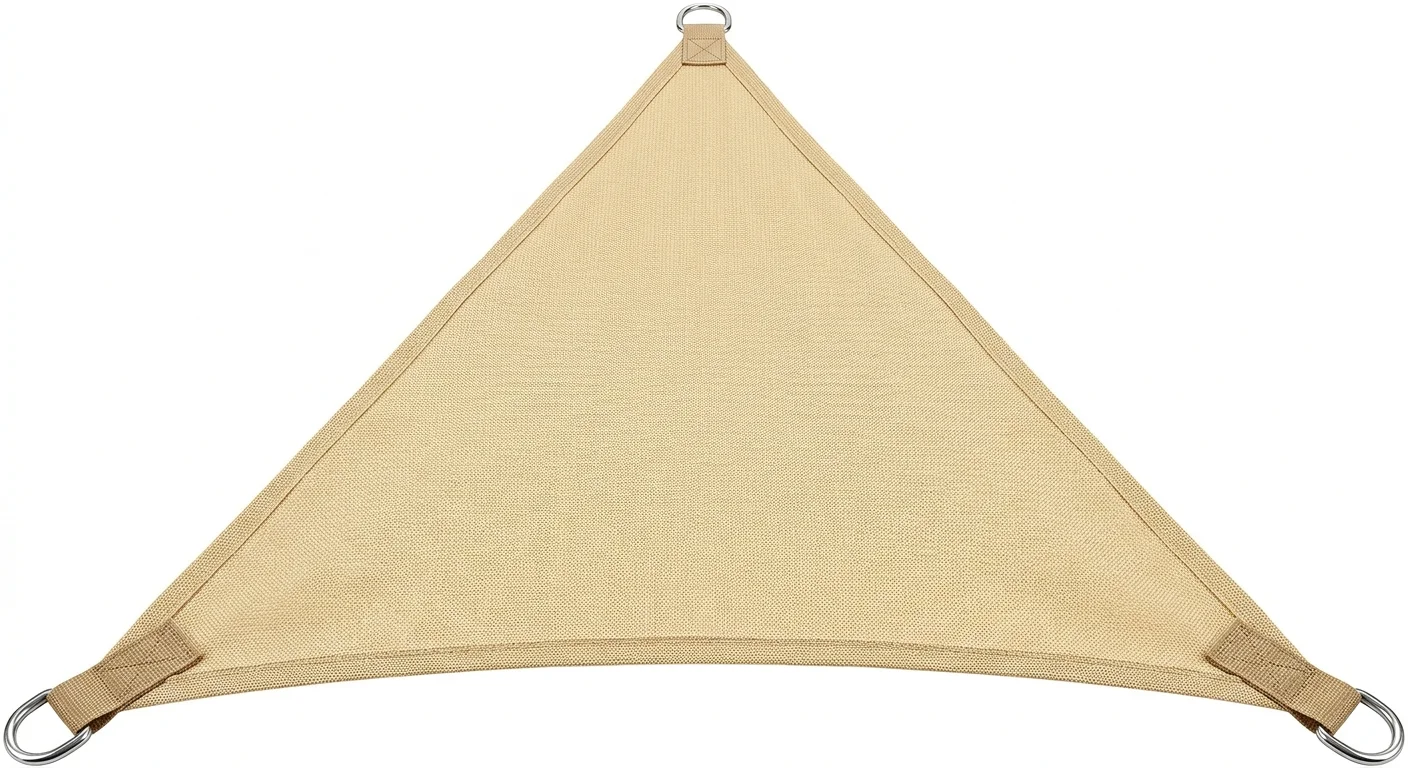
Maintenance in this climate is straightforward but essential. Because of the Calima, I advise my clients to hose down their canopies once every two weeks with fresh water. This prevents the dust from settling into the weave. If you are using a shade sail, ensure it is installed with a "hypar" or hyperbolic paraboloid twist—meaning two corners are high and two are low. This prevents the "puddling" of dust and water and allows the wind to flow over and under the sail rather than catching it like a kite. In our local environment, a 5-meter triangular shade sail made from commercial-grade HDPE (High-Density Polyethylene) mesh is an excellent option for covering a poolside dining area, typically costing between EUR 200 and EUR 400 including heavy-duty marine-grade stainless steel fixings.
When recommending setups for the specific property types in this town, I generally divide advice between the larger detached villas and the more compact quad houses or apartments. For a detached villa with a significant terrace, the most effective configuration is often a combination of a large 4m x 3m rectangular cantilever parasol for the main dining area and a separate 3m hexagonal market umbrella for the sun-lounger zone. This allows you to create distinct "rooms" within your outdoor space. A 4m x 3m premium cantilever model with a UV80+ rating and a vertical tilt function will cost approximately EUR 1,200 to EUR 1,800. This might seem like a significant investment, but when you consider that it protects a EUR 2,000 rattan lounge set from UV degradation, the mathematics of the investment become clear.
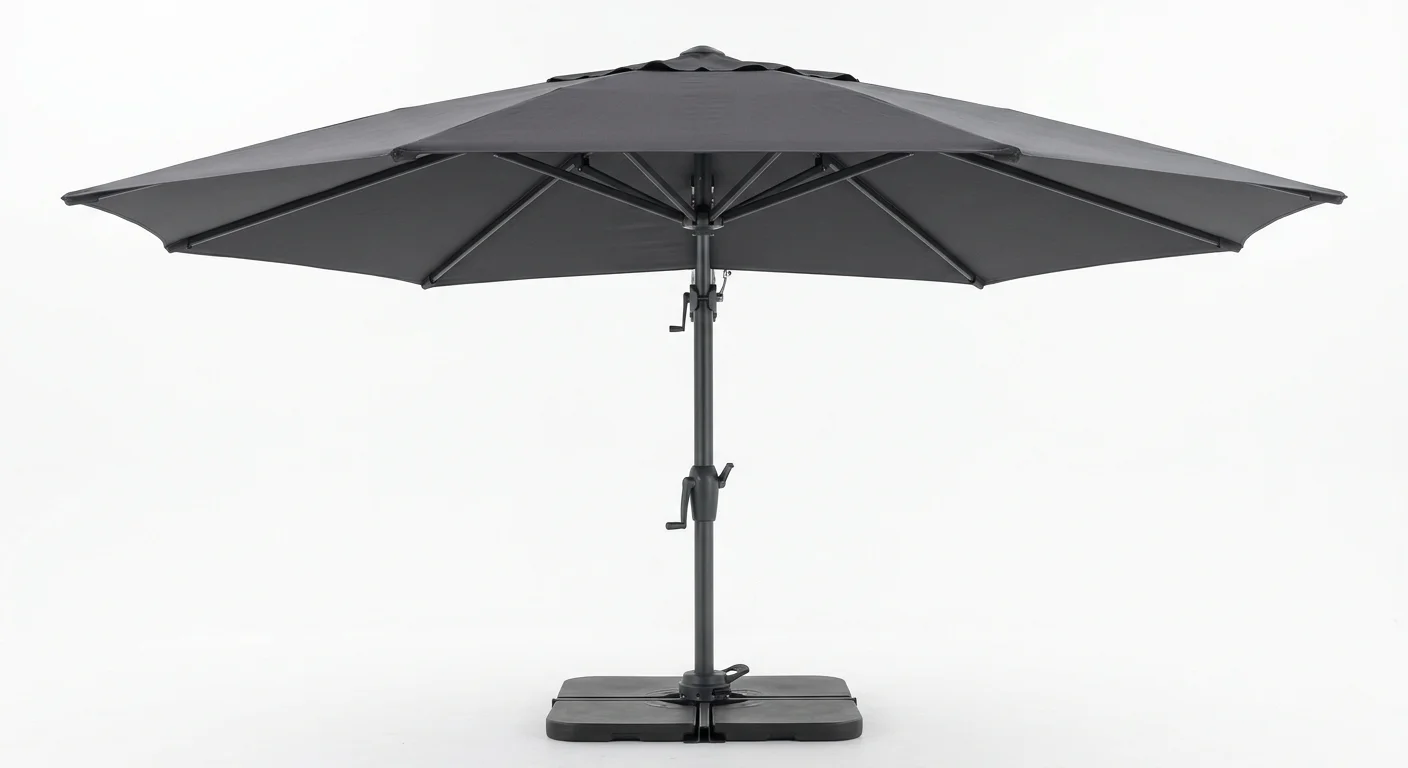
For those living in the apartment complexes or the popular quad-style houses, space is at a premium. Here, a traditional center-pole market umbrella is often the better choice because it can be integrated directly into the center of a dining table, saving valuable floor space. However, don't make the mistake of buying a lightweight beach umbrella. You need a "market" style umbrella with a pole diameter of at least 38mm to 48mm and a wind vent at the top. A 2.5-meter market umbrella with a high-quality olefin canopy can be found for around EUR 150 to EUR 300. This setup works perfectly alongside a compact four-seat dining set, providing enough shade to cover the table and chairs without encroaching on the walkway of a smaller balcony.
Shade sails are an increasingly popular alternative for roof solariums, which are a hallmark of local architecture. These spaces are often the windiest parts of the home. A permanent parasol on a roof can be risky, but a well-tensioned shade sail made from breathable mesh allows air to pass through while blocking 95% of UV rays. For a standard 20m² solarium, a bespoke or high-end ready-made sail setup can transform a space that is usually too hot to use between 1:00 PM and 6:00 PM into a comfortable lounge area. Integrating this with low-profile lounge furniture creates a private retreat that feels much cooler due to the airflow the mesh fabric permits.
Choosing the right color for your shade is also a localized decision. While dark greys and charcoals are currently very trendy in modern Spanish design, they absorb a significant amount of heat. On a 35-degree day in July, the air directly under a black canopy can be several degrees warmer than under a light grey or sand-colored one. Given the dust issues in the area, I usually recommend "Taupe" or "Silver-Grey" fabrics. These colors are the most forgiving; they don't show the red Calima dust as obviously as white or cream, yet they reflect enough heat to keep the area underneath significantly cooler than darker tones.
Our service extends deeply into the local geography, and we are frequently in San Fulgencio and the surrounding areas of Rojales, Guardamar, Algorfa, and Los Montesinos. We understand the logistical nuances of delivering to these communities. For instance, navigating a 150kg parasol base through some of the narrower streets in the older parts of the La Marina Urbanization or up the external staircases of a quad house requires planning and the right equipment. We don't just drop a box at your gate; we understand the building layouts here. We know that many properties have specific access constraints, and we tailor our delivery and assembly to ensure your new shade structure is positioned perfectly for the specific orientation of your terrace.
When we visit a property in this area, we look at the trajectory of the sun relative to your primary seating areas. A common mistake is positioning a parasol based on where the sun is at midday, only to find that by 4:00 PM—when you actually want to be outside—the shade is ten feet away on your neighbor's wall. We help you calculate the "shade footprint" throughout the day. This local expertise is what separates a functional outdoor space from one that sits unused because it’s simply too hot. If you are struggling to make your terrace usable during the peak summer months, I am always available for a walk-through of your outdoor space to discuss which configurations will work best for your specific property type and budget. We can look at how a new cantilever system or a series of shade sails will integrate with your existing sun-loungers or dining sets to create a cohesive, cool, and protected environment that stands up to the unique demands of the southern Costa Blanca climate.
 JW'"
/>
JW'"
/>