Outdoor Living in Algorfa
Algorfa is a quiet inland town of 3,500 residents where nearly 60% are expats — mainly British, Scandinavian, and German — drawn by La Finca Golf Resort and affordable villas with generous outdoor spaces.
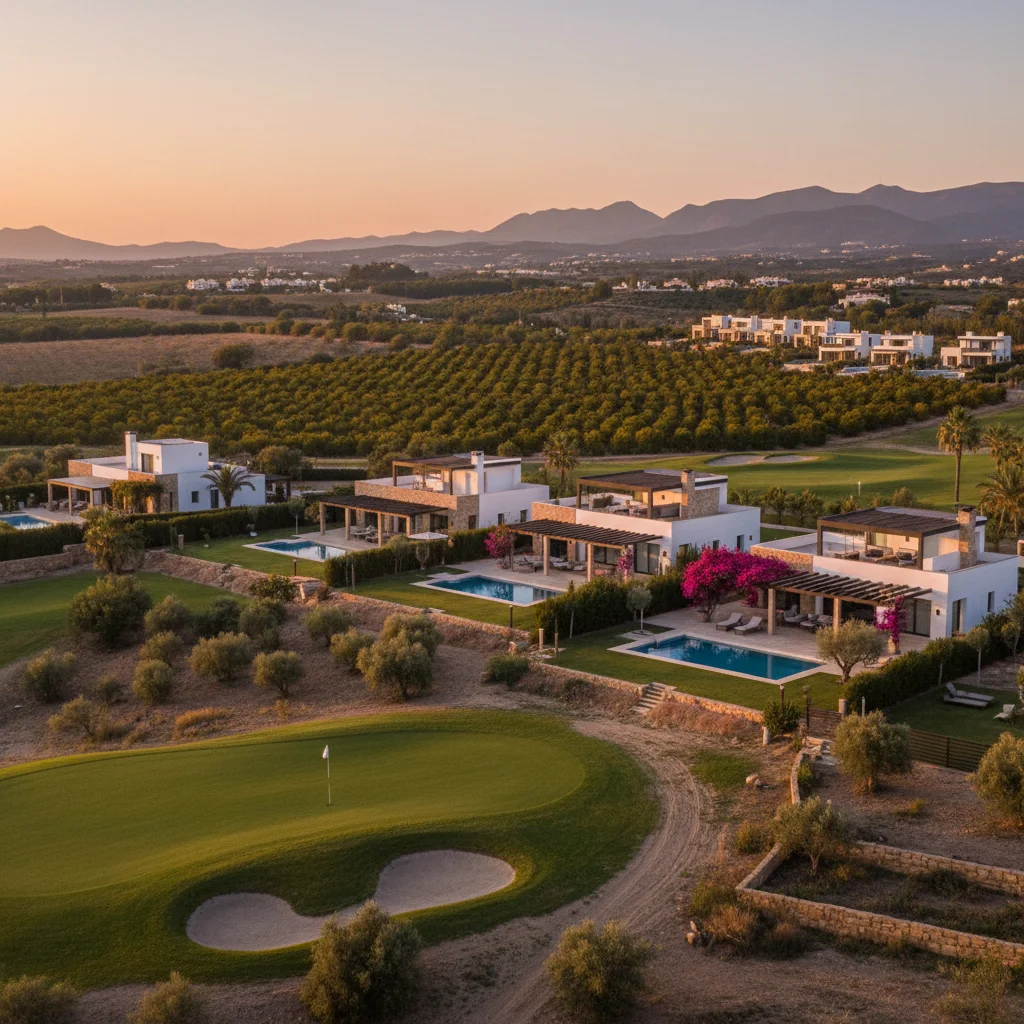
Algorfa flies under the radar compared to its coastal neighbours, and that is precisely its appeal. This small town between Rojales and San Miguel de Salinas offers a slower pace, lower prices, and properties with the kind of garden and terrace space that coastal towns simply cannot match at the same budget. The average property price sits around €170,000, and for that you typically get a detached villa with a private pool, a garden of 100 square metres or more, and uninterrupted views across the orchard-dotted countryside.
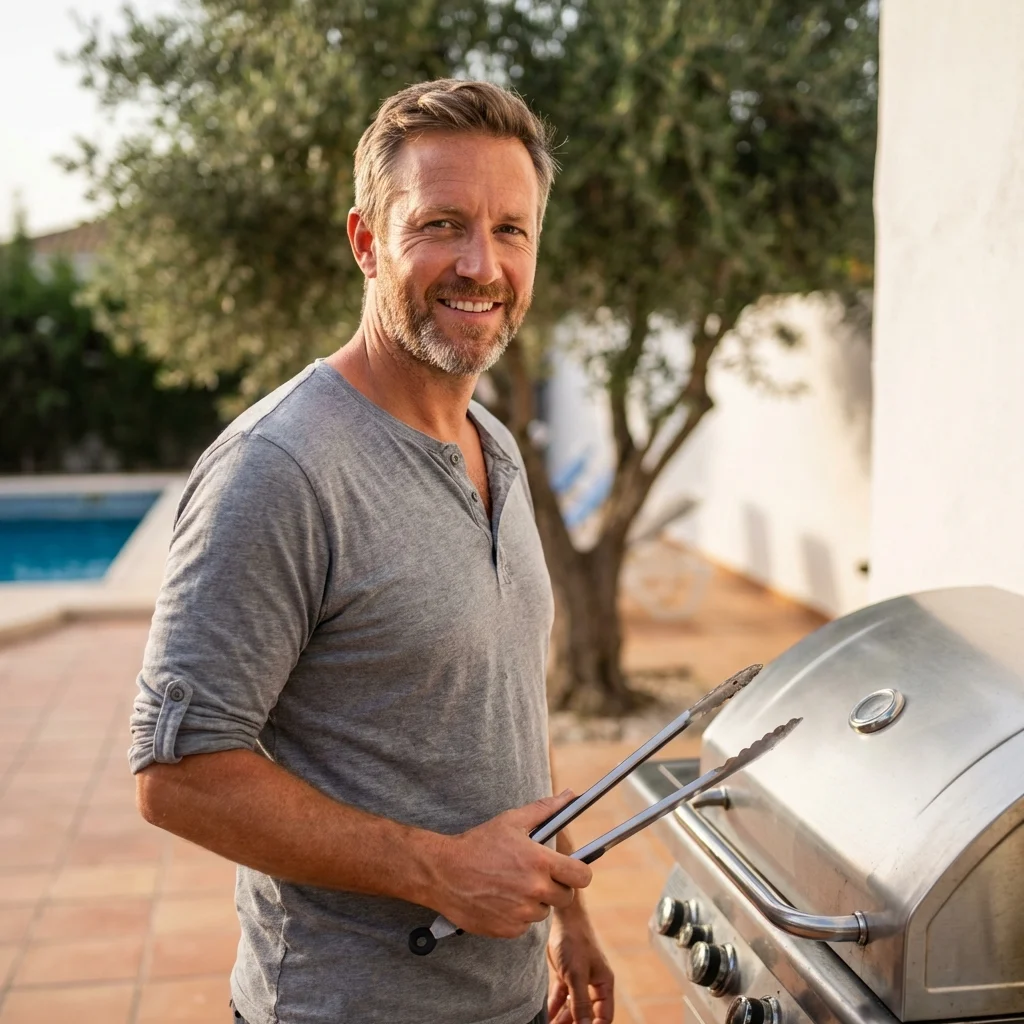
La Finca Golf Resort is the area’s centrepiece, a well-maintained development with its own clubhouse, restaurants, and a tight-knit community of golfers and retirees. The urbanisation of Lo Crispin, just outside the town centre, is another popular cluster where British and Scandinavian families have settled. Evening barbecues here are a ritual rather than an event — the warm inland air, the quiet surroundings, and the space to spread out make outdoor cooking a natural extension of daily life.
Algorfa’s inland location offers detached villas with large gardens averaging €170,000, giving expats significantly more outdoor cooking and entertaining space than equivalent coastal properties.
Choosing Your Setup in Algorfa
With generous gardens and few space constraints, Algorfa homeowners can build ambitious outdoor kitchen setups — from full island builds beside the pool to dedicated pizza oven stations.
Rather than choosing between a grill or an oven, most Algorfa homeowners can have both. A common setup we install across La Finca and Lo Crispin is a built-in gas BBQ island with integrated storage, a standalone kamado near the pool for weekend smoking sessions, and a wood-fired pizza oven on a dedicated stone plinth.
Costa Blanca Outdoors recommends creating distinct cooking zones across your garden. Position your gas BBQ near the house for everyday convenience, place the kamado closer to the pool for social cooking, and give the pizza oven its own corner. This zoned approach is a luxury that smaller coastal properties rarely allow.
Fuel sourcing is easy. Butane bombonas are available in the town centre, and the surrounding agricultural land means firewood — almond, olive, and vine cuttings — is abundant and inexpensive from local farmers.
Costa Blanca Outdoors recommends zoned cooking layouts for Algorfa’s large gardens — gas BBQ near the house, kamado by the pool, pizza oven in its own corner — a luxury that coastal properties rarely permit.
Delivery to Algorfa
We deliver to Algorfa, La Finca Golf Resort, and Lo Crispin on our regular southern inland route, with easy access across the area’s wide residential roads and open properties.
Algorfa’s inland position and flat residential streets make deliveries straightforward. There are no narrow hillside tracks or tight apartment stairwells to navigate — just open driveways and garden gates. This is one of the easiest towns we serve for heavy items like stone pizza ovens and large kamado grills.
Every delivery includes full white-glove service: unpacking, assembly, placement in your chosen garden location, and a complete equipment walkthrough. For built-in outdoor kitchen projects, we partner with local builders experienced in the construction styles common across La Finca and Lo Crispin.
Algorfa sits between Rojales and San Miguel de Salinas, and we cover all three on the same delivery runs. Torrevieja and the coast are just fifteen minutes east. Standard delivery is 5–10 working days for in-stock products, with custom kitchen builds taking 3–4 weeks including design and installation.
Bioclimatic Pergolas in the Vega Baja: Engineering the Perfect Outdoor Environment
Living in this specific pocket of the Costa Blanca since 2019 has taught me that outdoor living isn't just a luxury; it is a fundamental part of the daily routine. With a population of roughly 3,500 people, this municipality stands out because nearly sixty percent of its residents have moved here from abroad. When I speak with my British, Scandinavian, or German neighbors, the conversation almost always turns to the same challenge: how to make a terrace usable when the Spanish sun is relentless or when the afternoon winds pick up across the golf course. The local property market, with an average price point around 155,000 Euros, features a heavy concentration of urbanisation villas and apartments within golf resort communities. These homes, particularly around La Finca Golf and the nearby Country Club, are designed for the Mediterranean lifestyle, yet many residents find their outdoor spaces are either too hot in July or too exposed during the occasional winter downpour. This is where the bioclimatic pergola becomes the most significant upgrade you can make to your home.
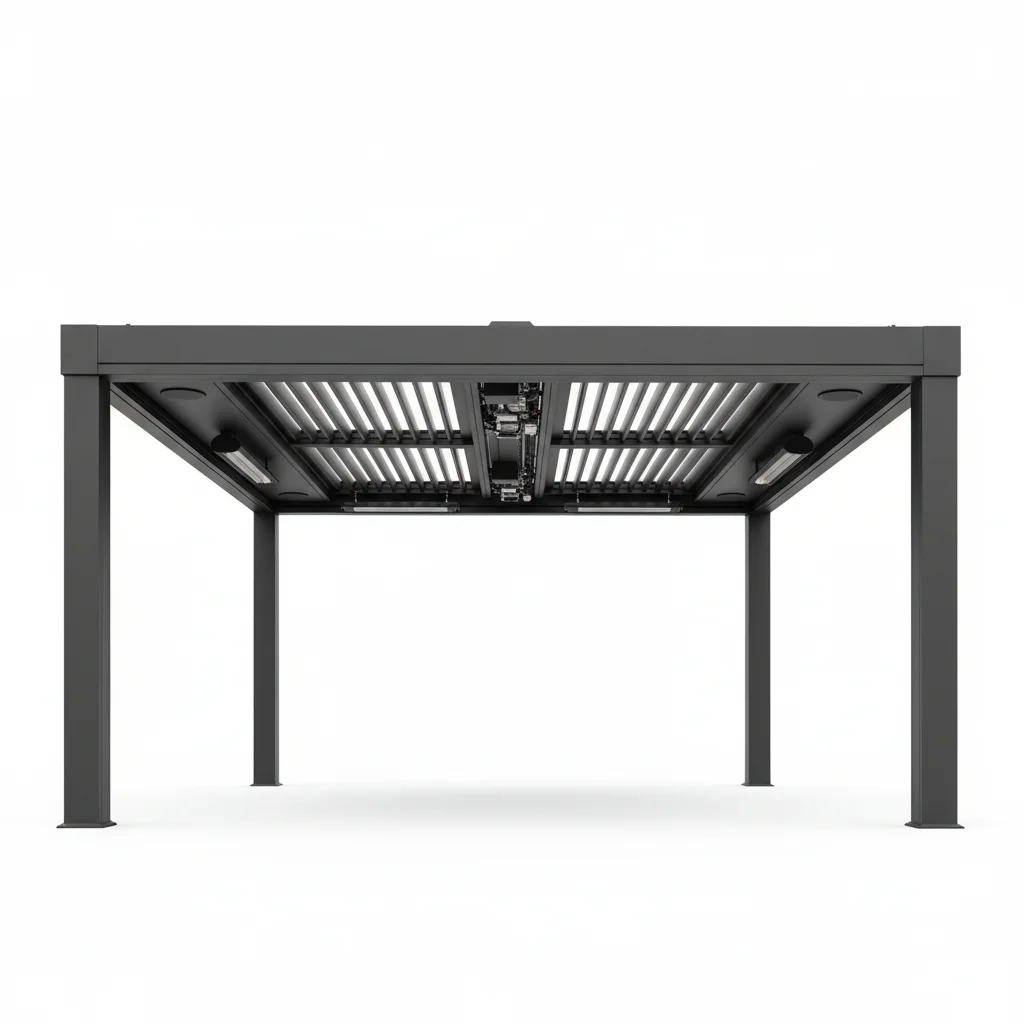
The concept of a bioclimatic structure is rooted in smart temperature regulation without the need for traditional energy sources. Unlike a fixed-pergola, which provides permanent shade but can make an interior lounge feel dark in the winter, the motorized bioclimatic systems we install feature adjustable aluminum louvers. These slats rotate up to 135 degrees, allowing you to track the sun throughout the day or, more importantly, create a natural chimney effect. In this part of the Vega Baja, the air can become stagnant and heavy during the peak of summer. By tilting the louvers slightly, you allow hot air to rise and escape, drawing a cooler breeze in from the sides. This thermal regulation is a game-changer for international residents who enjoy hosting long lunches or outdoor dinners but find the humidity from the nearby salt lakes makes the air feel thicker than it does further north in Dénia.
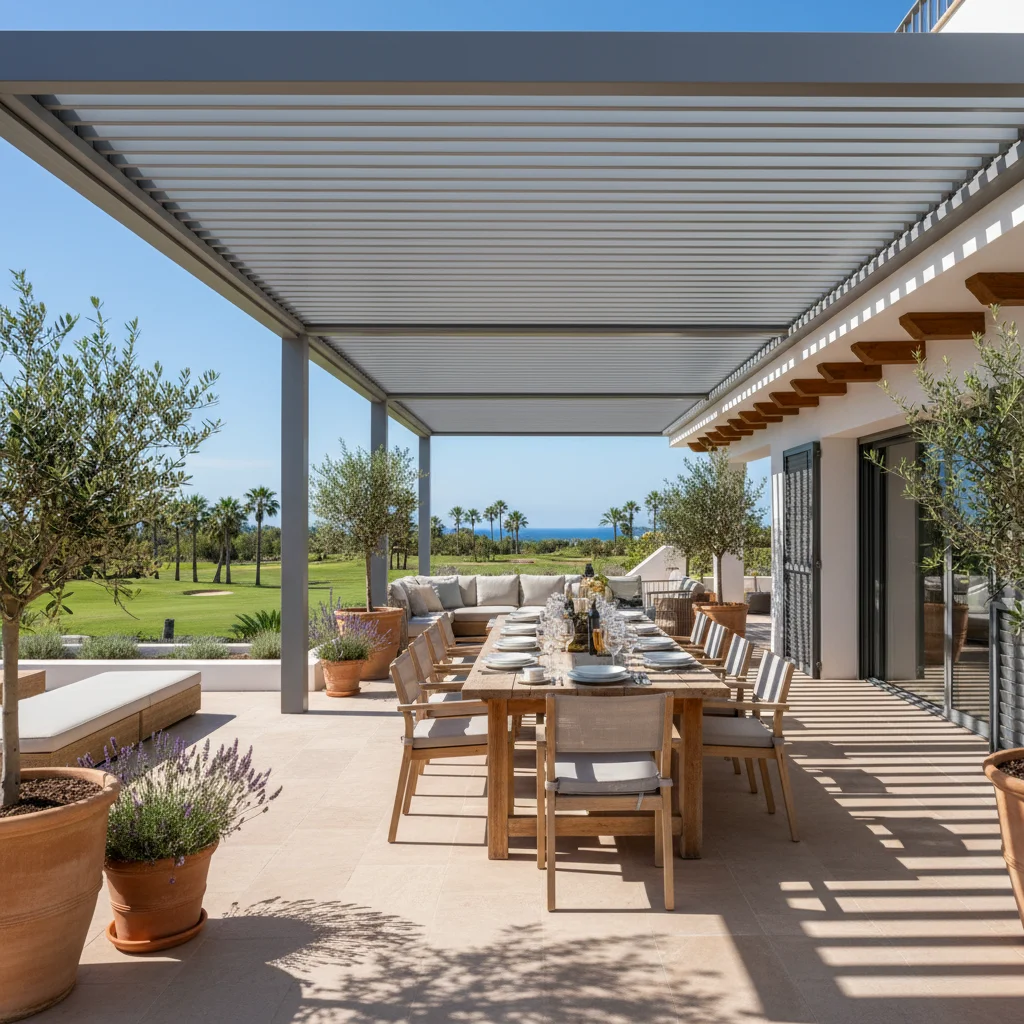
The architectural landscape of the local golf communities often dictates the type of shade solutions that work best. Many apartments and smaller villas have shared garden views where privacy and aesthetics are equally important. Because the local demographic is so internationally diverse, I see a wide range of outdoor cooking styles, from high-end German outdoor kitchens to traditional British BBQ setups. A bioclimatic pergola provides the necessary ventilation for these cooking areas that a standard roof or a fabric awning simply cannot match. It transforms a simple terrace into a fully functional outdoor room that remains comfortable regardless of whether the sun is beating down or a light rain is passing over the mountains.
Technical Considerations and Local Climate Realities
When choosing a bioclimatic pergola for this specific region, you have to account for environmental factors that people living in coastal areas like Javea don't deal with as often. We are situated in a hotter and drier zone than the northern Costa Blanca. The afternoon sun here is particularly intense, and because of our proximity to the salt lakes of Torrevieja and La Mata, the air carries a specific type of humidity that can be surprisingly corrosive over time. This is why I always insist on high-grade T6 aluminum with a Qualicoat Seaside powder coating. If you opt for a cheaper, non-certified finish, the salt air will eventually lead to "white rust" or bubbling under the paint. For a standard 4m x 3m motorized installation, you should expect to invest between 8,500 and 12,000 Euros for a high-specification unit that includes rain sensors and high-torque motors.
One of the most local-specific issues we face is the Calima. These Saharan dust storms regularly blanket the Vega Baja in a layer of fine, red silt. For a bioclimatic pergola, the Calima isn't just a cleaning nuisance; it can affect the mechanics. Lower-quality systems often have exposed pivot points that can grind when filled with dust. The premium systems I recommend feature internal gear drives and hidden drainage channels within the pillars. This ensures that when the "red rain" inevitably falls, the mud is channeled through the internal guttering system rather than clogging the rotation mechanism. It also means you won't have muddy water dripping onto your terrace furniture after the storm has passed. Maintenance in this area involves a simple pressure wash of the louvers twice a year to keep the seals clear of dust and debris.
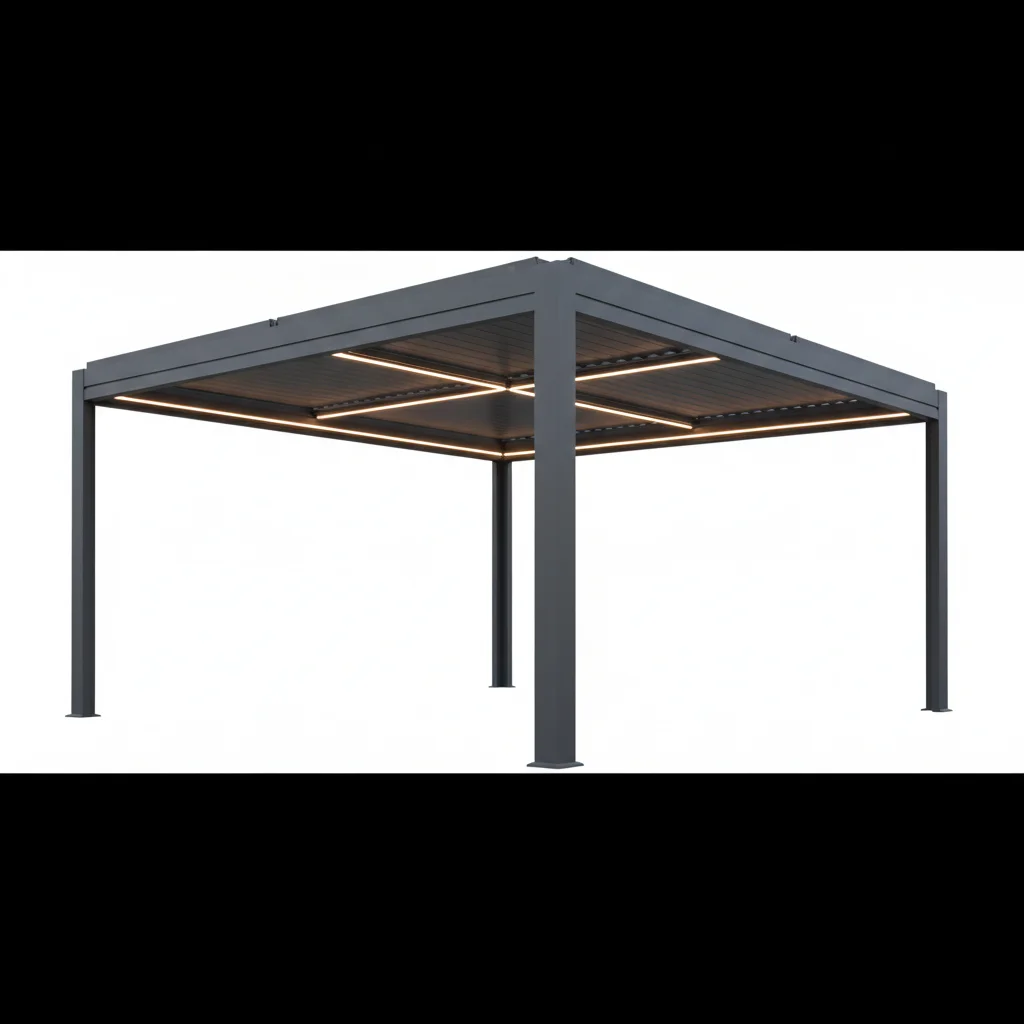
Another critical factor is the Comunidad de Propietarios, or the community of owners. Many urbanisations near the golf course have strict rules about permanent structures and aesthetic uniformity. Bioclimatic pergolas are generally viewed more favorably by these committees than solid tiled roofs or permanent extensions. Because the louvers are movable and the structure is technically "demountable," it often falls into a different legal category than a fixed extension. However, choosing the right RAL color is essential for compliance. I usually suggest RAL 7016 (Anthracite Grey) or a specific textured white to match the contemporary Mediterranean architecture found in the newer phases of the local developments. A fully integrated system with integrated LED lighting and perimeter heating can reach the 20,000 Euro mark, but it provides a level of versatility that a simple awning cannot compete with, especially when the winter sun sets and the temperature drops rapidly in the open countryside.
Tailored Recommendations for Local Property Types
The best configuration for your home depends heavily on whether you are in a detached villa in the Country Club or a golf-front apartment. For those living in detached villas with larger, open terraces, I recommend a freestanding four-post configuration. This allows you to position the pergola away from the main house wall, perhaps over a sunken seating area or a poolside dining spot. A 5m x 4m freestanding unit creates a dedicated "island" in your garden. I suggest opting for a dual-zone louver system in these larger sizes. This allows you to have one half of the pergola completely closed to protect your outdoor sofa from the sun, while the other half remains open to let light into your kitchen windows. This level of control is why people are moving away from traditional shade-sails, which are prone to flapping and tearing in the strong winds that often whip across the Vega Baja plains.
For the apartments and townhouses commonly found around the golf resort, a wall-mounted two-post system is usually the most space-efficient choice. In these properties, the terrace is often an extension of the living room, separated only by sliding glass doors. By installing a bioclimatic pergola directly against the facade, you effectively double your living space. To maximize this, I frequently recommend combining the pergola with glass-curtains. This combination is the ultimate "365-day" solution. During the scorching summer, the louvers stay open for ventilation. In the winter, you close the louvers and the glass curtains to create a sun-trap that stays warm even in January. If you are working with a tighter budget, starting with the pergola at around 5,000 to 7,000 Euros and adding the glass curtains or vertical zip-screens later is a sensible way to phase the investment.
I also see many residents trying to solve their shade issues with multiple awnings. While awnings are effective for quick shade, they must be retracted during high winds, which are common in this open landscape. A bioclimatic pergola is rated for much higher wind loads—often up to 120km/h—meaning you don't have to worry about your investment being damaged while you are away or during a sudden storm. If you already have a fixed-pergola made of timber or concrete, we can sometimes retro-fit louvered systems or high-tension fabric solutions, but a purpose-built aluminum bioclimatic structure remains the most durable and low-maintenance option for this specific climate.
Local Logistics and Expert Installation
Providing shade solutions across this part of the province requires more than just a good product; it requires an understanding of the local geography and logistics. My team and I are frequently working in nearby Rojales, San Fulgencio, San Miguel de Salinas, and Los Montesinos. We know the specific challenges of getting delivery trucks and cranes into the narrower streets of the older urbanisations. When we plan an installation, we take into account the access roads and the specific building regulations of the Vega Baja. For example, the soil composition in this area can be quite clay-heavy or sandy depending on how close you are to the old salt lake beds. This affects how we anchor the footings of a freestanding pergola to ensure it remains perfectly level and stable over decades of use.
Our local knowledge extends to the small details that make a big difference. We know which way the prevailing winds blow off the Segura river and how that impacts the "wind-driven rain" that can sometimes catch people out. When we install a system, we calibrate the rain sensors specifically for the local weather patterns, ensuring the louvers close automatically at the first sign of a downpour to protect your cushions and electronics. We also understand the electrical requirements for these units. Spanish power surges can be common in older parts of the community, so we always include high-quality surge protection for the motors and LED controllers.
If you are considering upgrading your outdoor space, the best place to start is with a conversation about how you actually use your terrace. I offer free on-site consultations where I bring material samples and show you exactly how the different RAL colors will look against your home's facade. We can discuss whether a simple manual system meets your needs or if the convenience of a fully automated Somfy-controlled motor is worth the extra investment. Being a British expat myself, I pride myself on providing clear, honest advice without the "marketing speak." I have helped over 200 families across the Costa Blanca create spaces they love, and I would be happy to help you figure out the best way to reclaim your terrace from the Spanish heat. Whether you are overlooking the fairways or tucked away in a quiet residential street, there is a technical solution that will allow you to enjoy the Mediterranean climate every single day of the year.
 JW'"
/>
JW'"
/>