Why Expats in Dénia Love Outdoor Cooking
Dénia’s UNESCO Creative City of Gastronomy status, thriving marina district, and 36.5% expat population make it the culinary capital of the Costa Blanca — and a natural home for serious outdoor kitchens.
In 2015, UNESCO designated Dénia a Creative City of Gastronomy — the only town on the Costa Blanca to hold that distinction — and that culinary DNA runs through everything, including how expats approach outdoor cooking. With 42,000 residents and a large international community, Dénia attracts people genuinely passionate about what they eat and how they cook it.
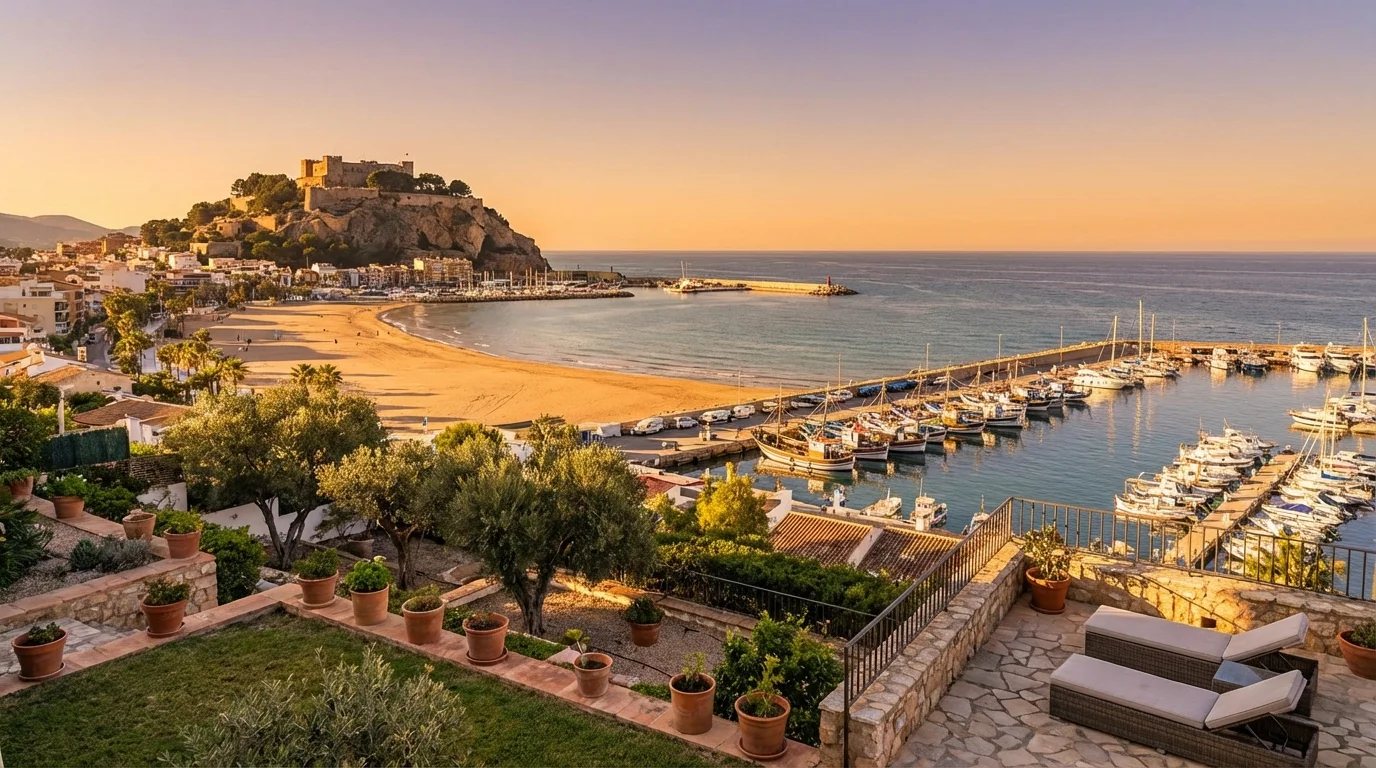
The town sprawls from the historic Castle of Dénia through the sandy Les Marines beaches to the rocky coves of Las Rotas. Behind it, the Montgó Natural Park creates a sheltered microclimate that makes outdoor cooking comfortable from late February through November.
Many residents chose Dénia for its restaurant scene — Michelin-starred Quique Dacosta put the town on the international map — and they bring that same culinary ambition home.
Answer capsule: Dénia’s UNESCO gastronomy status and food-literate expat community drive demand for high-performance outdoor cooking equipment including kamado grills, gas BBQs, and wood-fired pizza ovens.
Your Dénia Outdoor Kitchen Setup
From Les Marines beachfront apartments to countryside fincas near Montgó, Dénia offers the widest range of outdoor cooking environments on the northern Costa Blanca.
Along the Les Marines strip, modern apartments and semi-detached villas offer terraces of 15–30m² — enough for a gas BBQ and a standalone kamado side by side, or a single premium piece with a built-in prep area.
In the streets below the Castle and near the port, traditional townhouses feature interior courtyards and rooftop terraces. These sheltered, private spaces are uniquely rewarding for outdoor cooking. A compact pizza oven on a Dénia rooftop terrace, with the Castle walls lit above you at night, is a genuinely special setup.
The highest-value opportunities lie in the countryside properties between town and the Montgó. Fincas here often have 100m²+ outdoor areas with rustic barbecue structures dating back decades. Costa Blanca Outdoors recommends modernising these with contemporary appliances while preserving the original stone and brickwork — the blend of old Valencian craftsmanship and modern grilling technology is something we are particularly proud of delivering in Dénia.
Answer capsule: Dénia properties include Les Marines apartments for compact setups, Castle-district townhouses with atmospheric rooftop terraces, and Montgó fincas with expansive outdoor kitchen potential.
Gas, Charcoal, or Wood-Fired? Choosing Right for Dénia
In a UNESCO City of Gastronomy, fuel choice is about flavour first — and Dénia’s food-savvy expats increasingly choose wood and charcoal alongside gas for authentic results.
While gas BBQs remain practical for the Les Marines apartment community, a notably higher proportion of Dénia customers invest in wood-fired and charcoal cooking compared to other towns. The reason is flavour ambition.
Almond, orange, and olive wood from orchards between Dénia, Ondara, and Pedreguer is abundant and affordable. Several Dénia restaurants cook over wood or charcoal, and their influence filters directly into what homeowners want. If you have eaten a wood-grilled lubina at a Las Rotas beach restaurant, you understand why our Dénia customers ask about charcoal grills more often than gas.
Kamado grills occupy a sweet spot for food-focused residents. The ability to smoke, grill, roast, and bake at precise temperatures appeals to cooks who think about technique, not just convenience. Costa Blanca Outdoors recommends the Kamado Joe Big Joe III for Dénia customers who entertain frequently — its 61cm cooking surface handles a whole leg of lamb or six pizzas in rotation, matching the generous hospitality Dénia is known for.
Answer capsule: Dénia’s food-literate expats favour charcoal and wood-fired cooking for flavour authenticity, with kamado grills offering the temperature precision that serious home cooks demand.
Delivery & Setup in Dénia
Dénia is our northernmost major delivery hub, with excellent AP-7 access and regular routes covering the town centre, Les Marines, Las Rotas, and surrounding areas.
As the largest town in our northern zone, Dénia receives frequent scheduled deliveries. The AP-7 and N-332 both feed directly into town, making logistics reliable even for oversized items like masonry pizza ovens.
Las Rotas properties along the winding coastal road occasionally require smaller vehicles due to narrow access and gated communities. Our team knows these roads and plans accordingly — if access is tricky, we arrange a site visit beforehand.
For larger projects, our Dénia-area tradespeople handle gas lines, drainage, electrical hookups, and custom stonework while we supply and install the cooking equipment. This coordinated approach is especially valuable for finca renovations near Montgó.
We deliver on the same routes to nearby Jávea, Ondara, and Pedreguer. Standard in-stock delivery is 5–10 working days.
Designing Functional Outdoor Kitchens for the Dénia Lifestyle
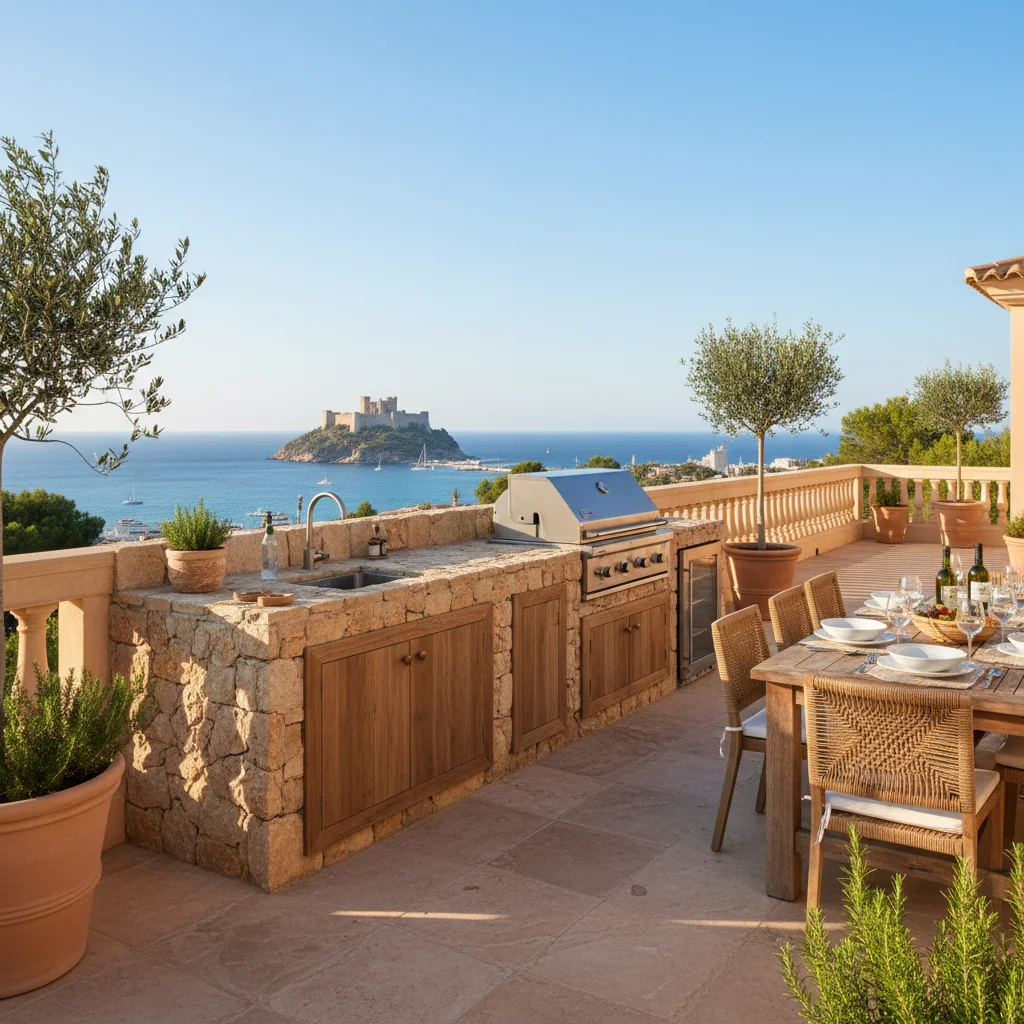
Living on this specific stretch of the northern Costa Blanca since 2019 has taught me that the transition from indoor to outdoor living is not merely a seasonal shift but a permanent lifestyle choice. With a local population of 42,000 residents, over a third of whom come from international backgrounds including the UK, Germany, and the Netherlands, the demand for sophisticated culinary spaces has evolved beyond the simple portable charcoal grill. Most property owners here are managing luxury hillside villas or expansive terrace apartments where the outdoor footprint often rivals the interior square footage. When you are looking at a terrace of 60 or 80 square meters overlooking the Mediterranean or the rugged silhouette of the Montgó Natural Park, a basic setup simply fails to meet the architectural or functional requirements of the home. The international community has brought a diverse range of cooking traditions to this northern hub, resulting in a unique fusion where traditional Spanish wood-fired methods meet high-specification northern European engineering.
The property landscape in this municipality is particularly suited for integrated outdoor kitchens because of the generous proportions of the builds. Whether you are situated in the prestigious Las Rotas area with its rocky coves or tucked into the verdant slopes of the Montgó, the property values—averaging around EUR 300,000 but often reaching well into the millions for frontline villas—justify an investment in high-quality permanent installations. I have helped over 200 families navigate the complexities of these setups, and the most successful projects are those that respect the local topography. In the Les Marines sector, where the land is flatter and more exposed to the coastal breeze, the design focus must remain on wind protection and resilient materials. Conversely, the more elevated villas near the Castle of Dénia or the mountain-facing estates require a layout that prioritizes the panoramic views while providing a sheltered cooking zone that can be used even during the cooler months of January and February.
Creating a culinary hub in this part of Spain involves more than just selecting a grill; it requires an understanding of how the 36.5% international population uses their spaces. British residents often prioritize social seating and integrated beverage cooling for long afternoons of hosting. German and Dutch expats frequently lean toward technical precision, favoring high-performance gas systems and modular cabinets with surgical-grade finishes. This melting pot of preferences has pushed the local market to provide versatile solutions that can handle everything from a slow-cooked Sunday roast to a high-heat sear for local seafood bought at the daily fish auction. The goal is to create a space that functions as the primary kitchen for at least eight months of the year, reducing the heat load inside the main house and making the most of the 300-plus days of annual sunshine that define our local environment.
The microclimate of this northern zone is one of its most significant advantages but also presents specific challenges for outdoor cabinetry and appliances. Unlike the more humid southern stretches of the Costa Blanca, the protection offered by the Montgó mountain creates a slightly drier and more tempered atmosphere. However, the proximity to the sea means that salt air remains a constant factor, particularly for properties within two kilometers of the shoreline. For any outdoor kitchen project in this town, the use of AISI 316 marine-grade stainless steel is non-negotiable for exposed metal components. Standard 304-grade steel, while excellent in inland areas like Jalon or Pedreguer, can begin to show signs of surface "tea staining" or pitting within eighteen months if it is subjected to the direct salt spray of the Las Rotas coast. I always advise clients to factor in the cost of high-quality powder-coated aluminum or specialized HPL (High-Pressure Laminate) for cabinetry, as these materials offer superior resistance to both the salt air and the intense UV radiation we experience here.
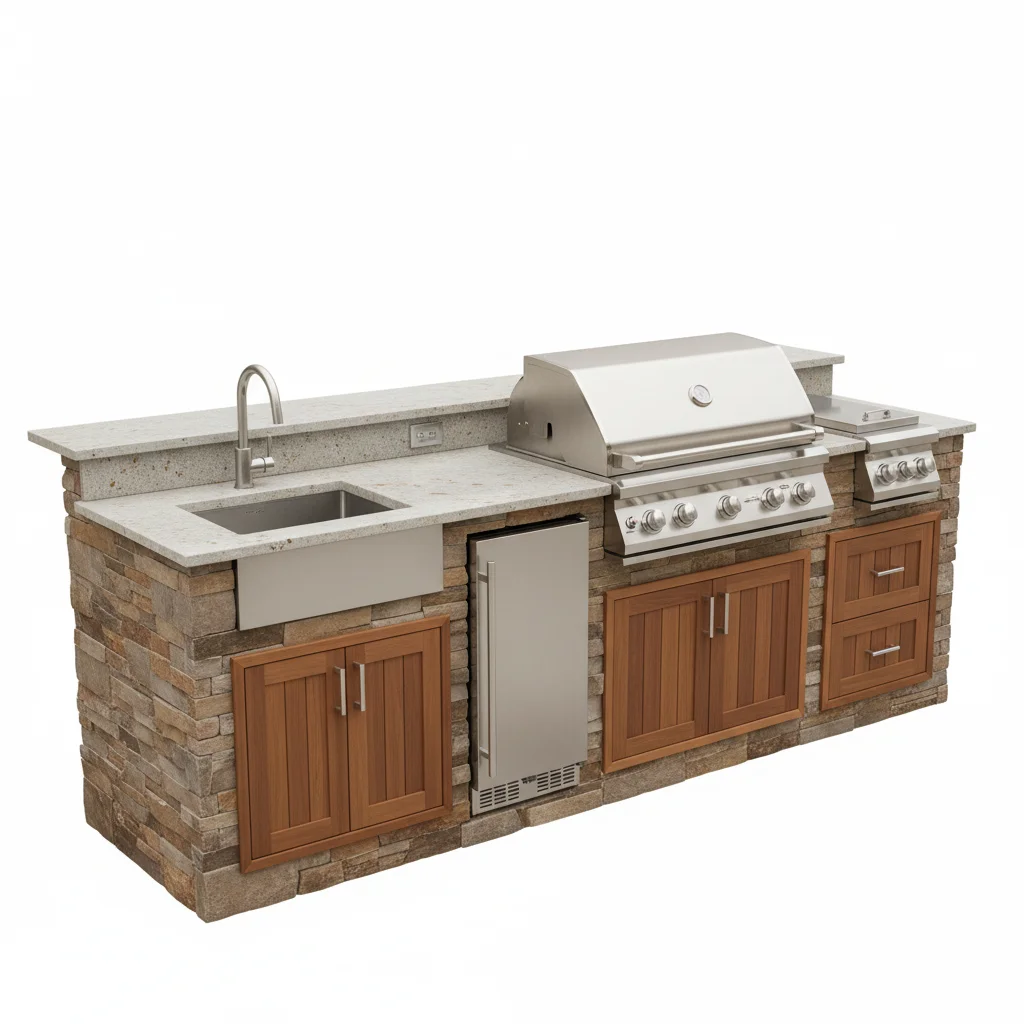
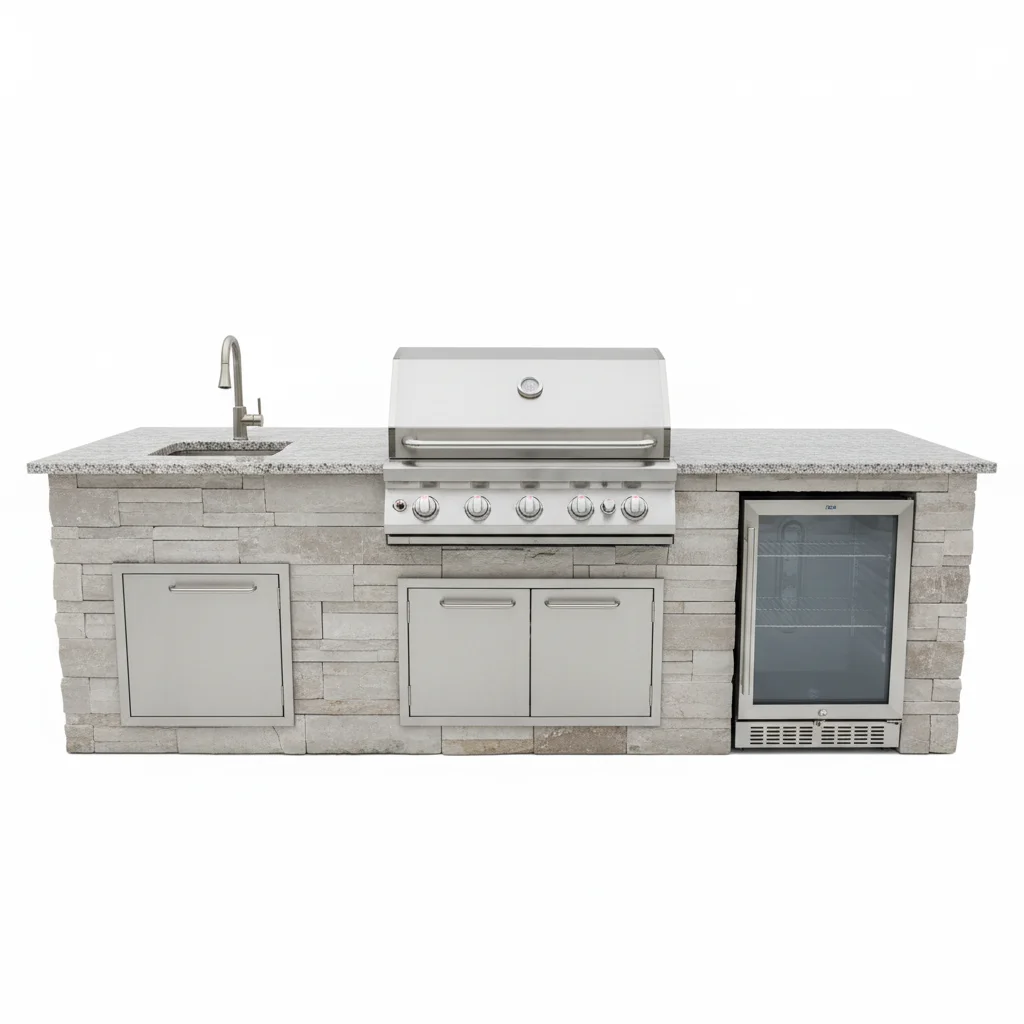
Installation considerations must also account for the local "comunidad de propietarios" rules if you are living in a shared development or a high-end apartment complex. While many villas have total autonomy, those in the urbanizations of Les Marines must ensure that their chimney heights and smoke ventilation systems comply with neighborhood bylaws to avoid disputes. When planning a gas-powered setup, the choice between bottled butane/propane and a permanent tank installation depends largely on the accessibility of your property. For villas on the steeper inclines of the mountain, a dedicated gas locker at the street level with a piped connection to the kitchen is often the most practical solution. A mid-range modular kitchen, featuring a four-burner gas grill, integrated sink, and weather-resistant storage, typically starts around EUR 7,500, while a fully bespoke masonry and stone configuration with premium appliances can easily reach the EUR 25,000 mark. One specific product I frequently recommend for this area is a premium gas grill with a minimum output of 15,000 BTUs per burner, such as the Bull Angus integrated head, which retails for approximately EUR 3,800 and offers a lifetime warranty on its cast stainless steel burners.
Maintenance is another area where local knowledge is vital. The lower humidity levels here are a blessing for most electronics, but the Saharan dust rains—the "calima"—that occasionally sweep across the coast can coat an outdoor kitchen in a fine abrasive film in a matter of hours. I suggest incorporating a high-quality, custom-fitted cover for the entire kitchen length or ensuring that the design allows for easy pressure washing of the surrounding floor area. The moderate coastal breeze helps with smoke dissipation, but it can also cause "blow-outs" on lower-end gas grills. This is why choosing equipment with protected pilot lights or high-torque ignition systems is essential for a frustration-free experience. If you are opting for a wood-fired element, such as a traditional pizza oven, the thermal mass is crucial. In our local climate, a pre-cast volcanic stone oven will retain heat far better than a thin-walled steel version, especially during the breezy evenings that are common along the coastal road.
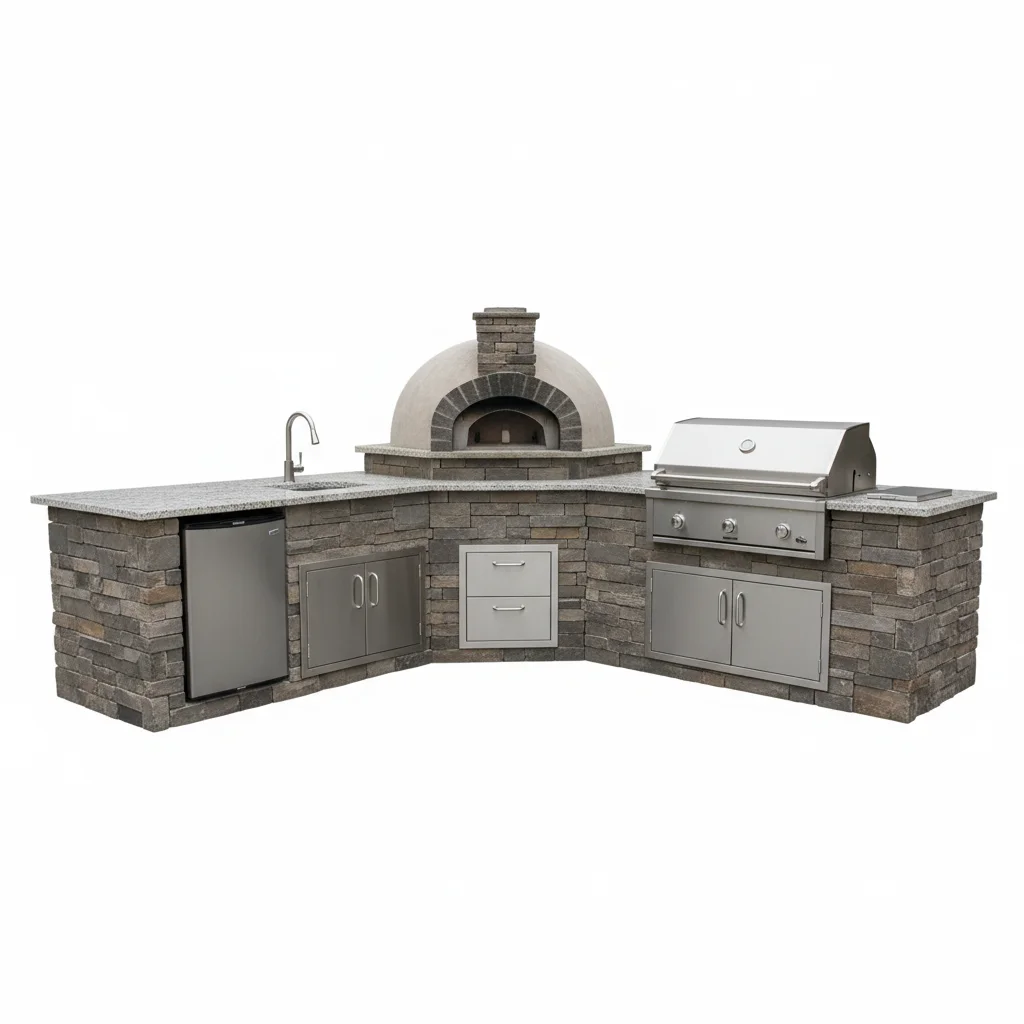
For the luxury villas that dominate the hillsides of Dénia, I recommend a comprehensive L-shaped or U-shaped configuration that mimics the functionality of an indoor chef’s kitchen. This should include a high-output gas grill as the primary cooking engine, supplemented by a secondary specialized heat source. Integrating a kamado-style BBQ, such as a ceramic grill from The Bastard or Big Green Egg, allows for low-and-slow smoking and high-temperature baking, offering a versatility that gas alone cannot match. In these larger villas, where the terrace size often exceeds 50 m², there is ample room for a 120cm wide cooking station, a dedicated prep area with a granite or Dekton countertop, and an integrated outdoor fridge. This setup ensures that the host remains part of the social gathering rather than constantly running back to the indoor kitchen for supplies.
In contrast, for the penthouses and terrace apartments near the port or the town center, space optimization is the priority. A straight-line modular setup of 2.5 to 3 meters is often the ideal solution. Here, I suggest focusing on multi-functional appliances. A high-end gas BBQ with an infrared side burner can handle both searing and small-pot cooking, effectively replacing the need for a separate hob. Combining this with a compact, portable pizza oven—which can be stored away when not in use—provides the full outdoor culinary experience without crowding the terrace. In these more confined spaces, the aesthetic integration is key; choosing finishes that match the existing joinery or the stone of the building helps the kitchen feel like an intentional architectural feature rather than an afterthought. The addition of a small under-counter sink is a game-changer for apartment living, as it eliminates the need to carry greasy trays through the living room to the indoor sink.
Modern outdoor kitchens in this region are also increasingly incorporating smart technology. From Bluetooth-connected meat thermometers that alert your phone while you are in the pool to integrated LED lighting systems that illuminate the workspace without attracting insects, the possibilities are vast. When we design these spaces, we consider the "work triangle"—the distance between the grill, the sink, and the refrigeration—just as we would for an indoor project. Given the average property price and the high standard of construction in the area, cutting corners on the infrastructure, such as the plumbing or the electrical load capacity for the terrace, is a mistake that can be costly to rectify later. We always ensure that the electrical circuits are appropriately rated for outdoor use and that drainage is planned to handle the occasional heavy downpours that characterize our autumn months.
Our service covers the entire northern region, including the neighboring towns of Javea, Ondara, Pedreguer, and the Jalon Valley. Each of these locations has its own specific logistical considerations. Delivering a heavy, pre-assembled 300kg outdoor kitchen module to a villa with a narrow, winding driveway on the slopes of the Montgó requires specialized equipment and experienced personnel. We are intimately familiar with the local access roads and the building logistics required for these installations. For instance, in the historic center of the town, near the castle, the narrow streets often necessitate the use of a crane for penthouse installations—a logistical hurdle we manage regularly. In contrast, the more open plots in Ondara or Pedreguer allow for easier access but often require more robust foundations if the kitchen is being built on a new garden plot rather than an existing reinforced terrace.
The process of selecting the right outdoor kitchen should always begin with a professional consultation to assess the specific orientation of your terrace and your typical style of entertaining. We look at the prevailing wind directions to ensure that smoke is carried away from the dining area and analyze the sun’s path to determine if a pergola or shade structure is necessary to protect the chef during the mid-day heat. Our deep roots in the community and our history of helping over 200 families mean we have already solved the problems you might be anticipating. We understand the local building codes, the environmental stressors, and the high expectations of the international residents who call this part of the coast home.
Whether you are looking for a sleek, minimalist setup for a modern apartment in the port or a sprawling, rustic culinary center for a villa in the hills, the focus must always be on durability, functionality, and aesthetic harmony. An outdoor kitchen is not just an appliance purchase; it is a structural addition to your home that should provide decades of service. We invite you to take advantage of our local expertise and our network of specialist installers. We offer free initial consultations to discuss your project, evaluate your site, and provide a realistic roadmap for creating the ultimate outdoor cooking space. By combining the best international equipment with local knowledge of the Costa Blanca environment, we ensure that your investment is protected and your outdoor living experience is maximized.
 JW'"
/>
JW'"
/>