Why Expats in Dénia Love Outdoor Cooking
Dénia’s UNESCO Creative City of Gastronomy status, thriving marina district, and 36.5% expat population make it the culinary capital of the Costa Blanca — and a natural home for serious outdoor kitchens.
In 2015, UNESCO designated Dénia a Creative City of Gastronomy — the only town on the Costa Blanca to hold that distinction — and that culinary DNA runs through everything, including how expats approach outdoor cooking. With 42,000 residents and a large international community, Dénia attracts people genuinely passionate about what they eat and how they cook it.
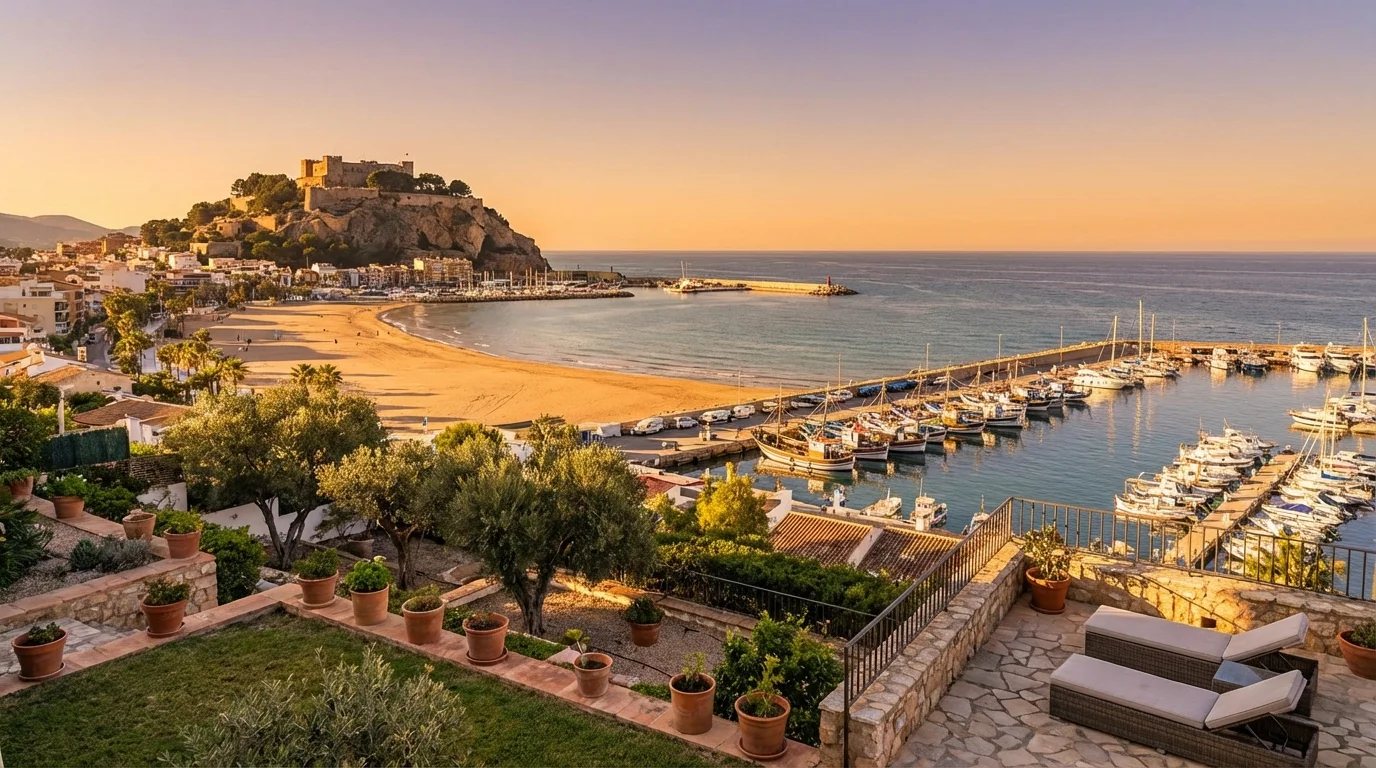
The town sprawls from the historic Castle of Dénia through the sandy Les Marines beaches to the rocky coves of Las Rotas. Behind it, the Montgó Natural Park creates a sheltered microclimate that makes outdoor cooking comfortable from late February through November.
Many residents chose Dénia for its restaurant scene — Michelin-starred Quique Dacosta put the town on the international map — and they bring that same culinary ambition home.
Answer capsule: Dénia’s UNESCO gastronomy status and food-literate expat community drive demand for high-performance outdoor cooking equipment including kamado grills, gas BBQs, and wood-fired pizza ovens.
Your Dénia Outdoor Kitchen Setup
From Les Marines beachfront apartments to countryside fincas near Montgó, Dénia offers the widest range of outdoor cooking environments on the northern Costa Blanca.
Along the Les Marines strip, modern apartments and semi-detached villas offer terraces of 15–30m² — enough for a gas BBQ and a standalone kamado side by side, or a single premium piece with a built-in prep area.
In the streets below the Castle and near the port, traditional townhouses feature interior courtyards and rooftop terraces. These sheltered, private spaces are uniquely rewarding for outdoor cooking. A compact pizza oven on a Dénia rooftop terrace, with the Castle walls lit above you at night, is a genuinely special setup.
The highest-value opportunities lie in the countryside properties between town and the Montgó. Fincas here often have 100m²+ outdoor areas with rustic barbecue structures dating back decades. Costa Blanca Outdoors recommends modernising these with contemporary appliances while preserving the original stone and brickwork — the blend of old Valencian craftsmanship and modern grilling technology is something we are particularly proud of delivering in Dénia.
Answer capsule: Dénia properties include Les Marines apartments for compact setups, Castle-district townhouses with atmospheric rooftop terraces, and Montgó fincas with expansive outdoor kitchen potential.
Gas, Charcoal, or Wood-Fired? Choosing Right for Dénia
In a UNESCO City of Gastronomy, fuel choice is about flavour first — and Dénia’s food-savvy expats increasingly choose wood and charcoal alongside gas for authentic results.
While gas BBQs remain practical for the Les Marines apartment community, a notably higher proportion of Dénia customers invest in wood-fired and charcoal cooking compared to other towns. The reason is flavour ambition.
Almond, orange, and olive wood from orchards between Dénia, Ondara, and Pedreguer is abundant and affordable. Several Dénia restaurants cook over wood or charcoal, and their influence filters directly into what homeowners want. If you have eaten a wood-grilled lubina at a Las Rotas beach restaurant, you understand why our Dénia customers ask about charcoal grills more often than gas.
Kamado grills occupy a sweet spot for food-focused residents. The ability to smoke, grill, roast, and bake at precise temperatures appeals to cooks who think about technique, not just convenience. Costa Blanca Outdoors recommends the Kamado Joe Big Joe III for Dénia customers who entertain frequently — its 61cm cooking surface handles a whole leg of lamb or six pizzas in rotation, matching the generous hospitality Dénia is known for.
Answer capsule: Dénia’s food-literate expats favour charcoal and wood-fired cooking for flavour authenticity, with kamado grills offering the temperature precision that serious home cooks demand.
Delivery & Setup in Dénia
Dénia is our northernmost major delivery hub, with excellent AP-7 access and regular routes covering the town centre, Les Marines, Las Rotas, and surrounding areas.
As the largest town in our northern zone, Dénia receives frequent scheduled deliveries. The AP-7 and N-332 both feed directly into town, making logistics reliable even for oversized items like masonry pizza ovens.
Las Rotas properties along the winding coastal road occasionally require smaller vehicles due to narrow access and gated communities. Our team knows these roads and plans accordingly — if access is tricky, we arrange a site visit beforehand.
For larger projects, our Dénia-area tradespeople handle gas lines, drainage, electrical hookups, and custom stonework while we supply and install the cooking equipment. This coordinated approach is especially valuable for finca renovations near Montgó.
We deliver on the same routes to nearby Jávea, Ondara, and Pedreguer. Standard in-stock delivery is 5–10 working days.
Professional Sun Lounging Solutions for the Northern Costa Blanca
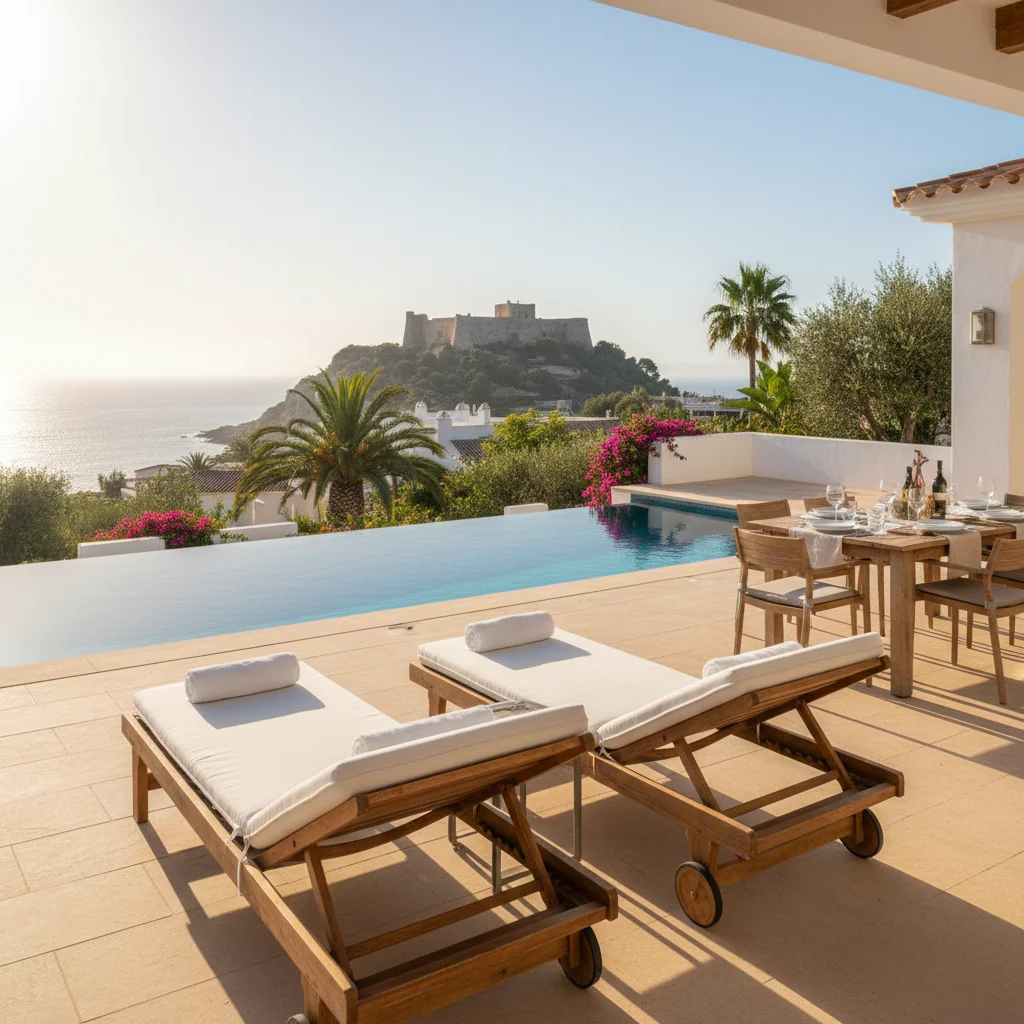
The transition from the cooler winter months to the relentless sunshine of the spring season represents a significant shift for the 42,000 residents living in this corner of the coast. For those of us who have made a home here, the outdoor terrace is not merely a feature of the property; it is the primary living room for at least nine months of the year. With an international population making up over 36.5% of the local demographic, we see a fascinating blend of British, German, and Dutch influences in how outdoor spaces are utilized. In areas like the luxury hillside villas flanking the Montgó Natural Park, the architectural focus is almost entirely on the transition between the interior and the expansive 40 to 80 m² terraces. These spaces are often designed to maximize the view of the 11th-century castle or the sweeping vistas of the Mediterranean, and the choice of sun loungers or daybeds becomes the most critical decision in your furniture layout.
When you spend EUR 300,000 or more on a property in this region, the functionality of the poolside area dictates your daily quality of life. The culture here revolves around the slow afternoon—the siesta hours when the sun is at its peak and the only sensible place to be is under a parasol on a well-padded daybed. Because we enjoy over 300 days of sunshine annually, the wear and tear on outdoor equipment is significantly higher than in northern Europe. A lounger that lasts five years in Manchester or Düsseldorf might only last two seasons here if the materials are not specified for high UV exposure. The British residents tend to favor comfort and deep cushioning, while our Dutch and German neighbors often lean toward sleek, minimalist aluminum frames that offer longevity and ease of maintenance. Regardless of your aesthetic preference, the physical environment of the local coastline demands a specific standard of engineering.
In the flatter stretches of Les Marines, the property profile shifts toward high-end apartments and townhouses where the sea breeze is a constant companion. Here, the sun lounger serves a dual purpose: it must be comfortable enough for a full day of reading but light enough to be moved as the shade shifts across a more compact terrace. In contrast, the sprawling estates in the higher elevations of Las Rotas allow for the inclusion of Balinese-style daybeds that act as permanent architectural statements. These larger pieces often become the anchor for the entire outdoor design, around which lounge sets and dining areas are oriented. Understanding the scale of your terrace is the first step; a 60 m² space can easily accommodate a pair of high-end loungers and a double daybed without feeling cluttered, provided the traffic flow toward the pool remains unobstructed.
Technical Considerations for the Local Microclimate
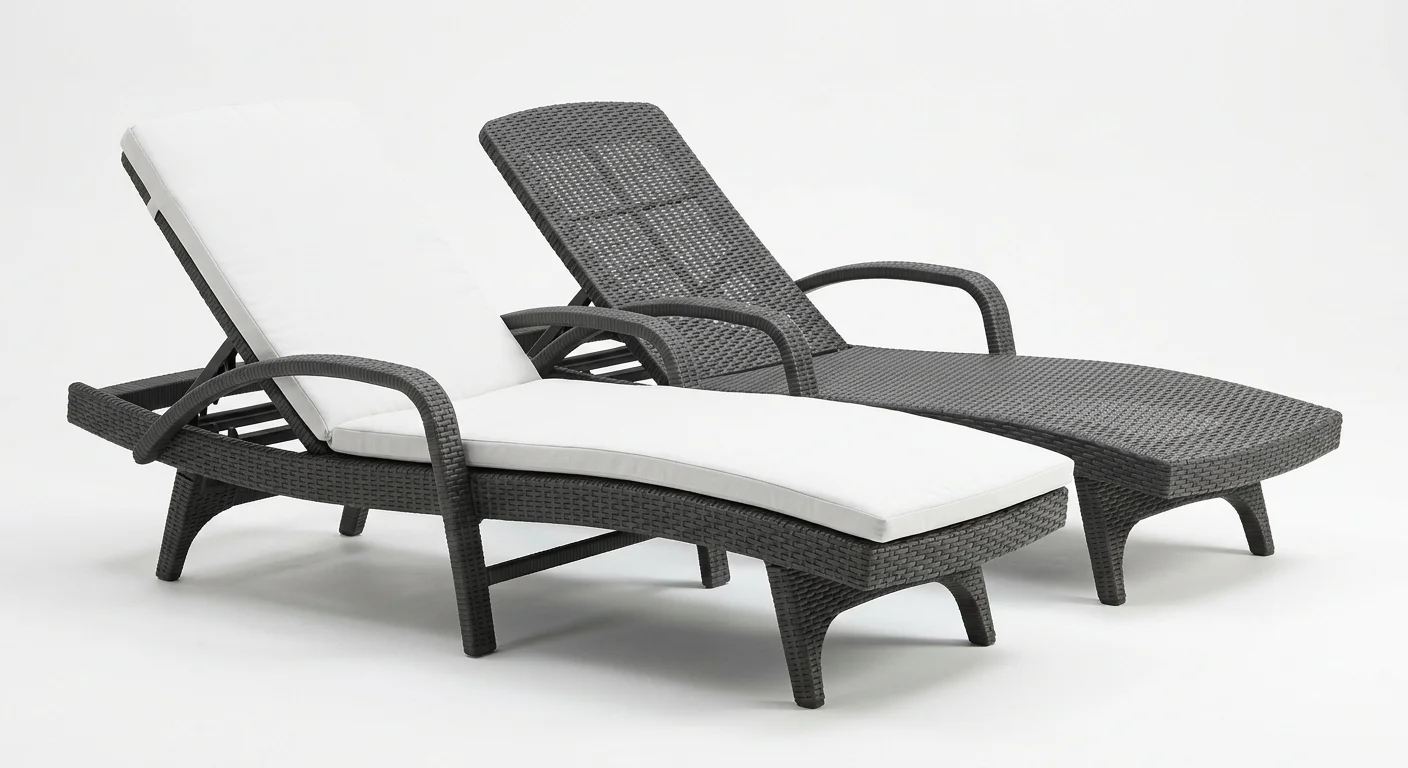
The environmental conditions in this specific part of the coast are unique, largely due to the protective presence of the Montgó. This mountain creates a sheltered microclimate that mitigates some of the harsher winds found further south, but it also creates a heat trap in the peak of July and August. When selecting sun loungers, you must consider the heat retention of the materials. Dark-colored plastic or unpainted metal frames can reach temperatures exceeding 60 degrees Celsius in direct sunlight, making them impossible to use without thick padding. I always recommend powder-coated aluminum frames for this reason. Aluminum does not rust—a vital factor for those living in Les Marines where salt spray is a daily reality—and it remains remarkably cool to the touch compared to steel or iron.
Maintenance in this region is less about rain and more about the "calima"—the fine Saharan dust that occasionally blankets the coast. If you choose a lounger with a permanent fabric sling, ensure it is made from a high-density Textilene or a similar PVC-coated polyester. This material can be hosed down and dried in minutes. For those opting for luxury daybeds with deep cushions, the fabric choice is non-negotiable: it must be solution-dyed acrylic, such as Sunbrella. Unlike cheaper polyester, solution-dyed fabrics have the color locked into the fiber, meaning they won't fade to a dull grey after one summer. A high-quality adjustable aluminum lounger with a 5cm quick-dry foam cushion will typically retail between EUR 250 and EUR 450, and it is an investment that pays for itself in durability.
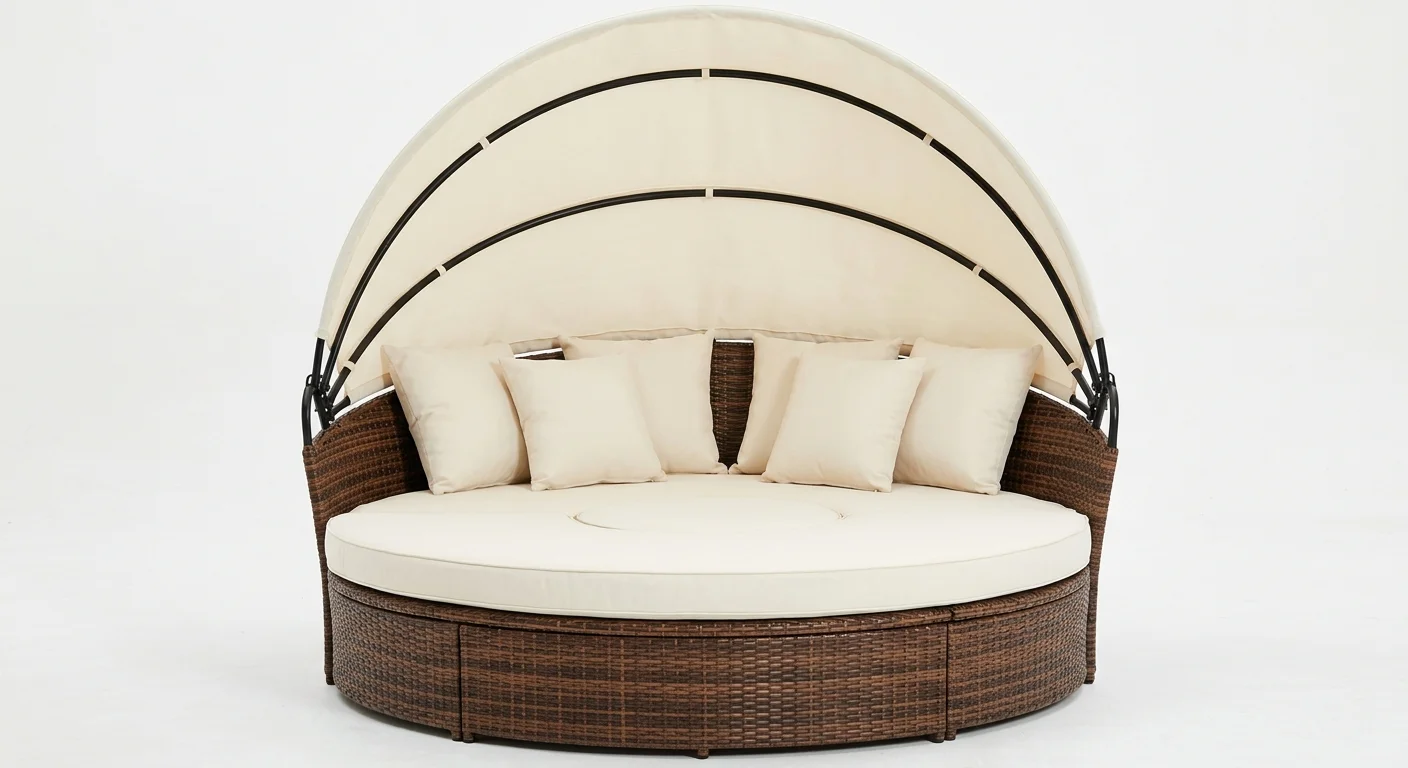
The lower humidity we experience compared to the southern Costa Blanca or the Costa del Sol is a benefit for your furniture’s lifespan, as it reduces the risk of mold and mildew in hidden crevices. However, the coastal breeze can be deceptive. A lightweight daybed with a canopy can easily act as a sail during a late-afternoon "Garbí" wind. If your property is on an exposed hillside, you need a daybed with significant weight—often a reinforced teak or heavy-gauge aluminum frame—to ensure it stays put. Furthermore, if you live within a "comunidad de propietarios," be aware of the internal bylaws. Many communities near the port or along the main coastal road have strict rules regarding the color of terrace furniture and the height of structures like daybeds to maintain a uniform aesthetic across the building facade. Always check these regulations before investing EUR 2,000 in a large Balinese canopy bed.
Installation also requires a local's eye for detail. The stone used in many local terraces is often a porous Tosca or a polished marble. Heavy furniture without proper rubber or high-density plastic feet will scratch these surfaces or leave rust rings if there are any hidden steel components. I personally check that every piece of furniture we deliver has the appropriate glides for the specific flooring of the property. For those in the older villas where the ground might not be perfectly level, loungers with discrete leveling feet are a godsend, preventing that annoying wobble every time you shift your weight.
Tailored Recommendations for Local Property Types
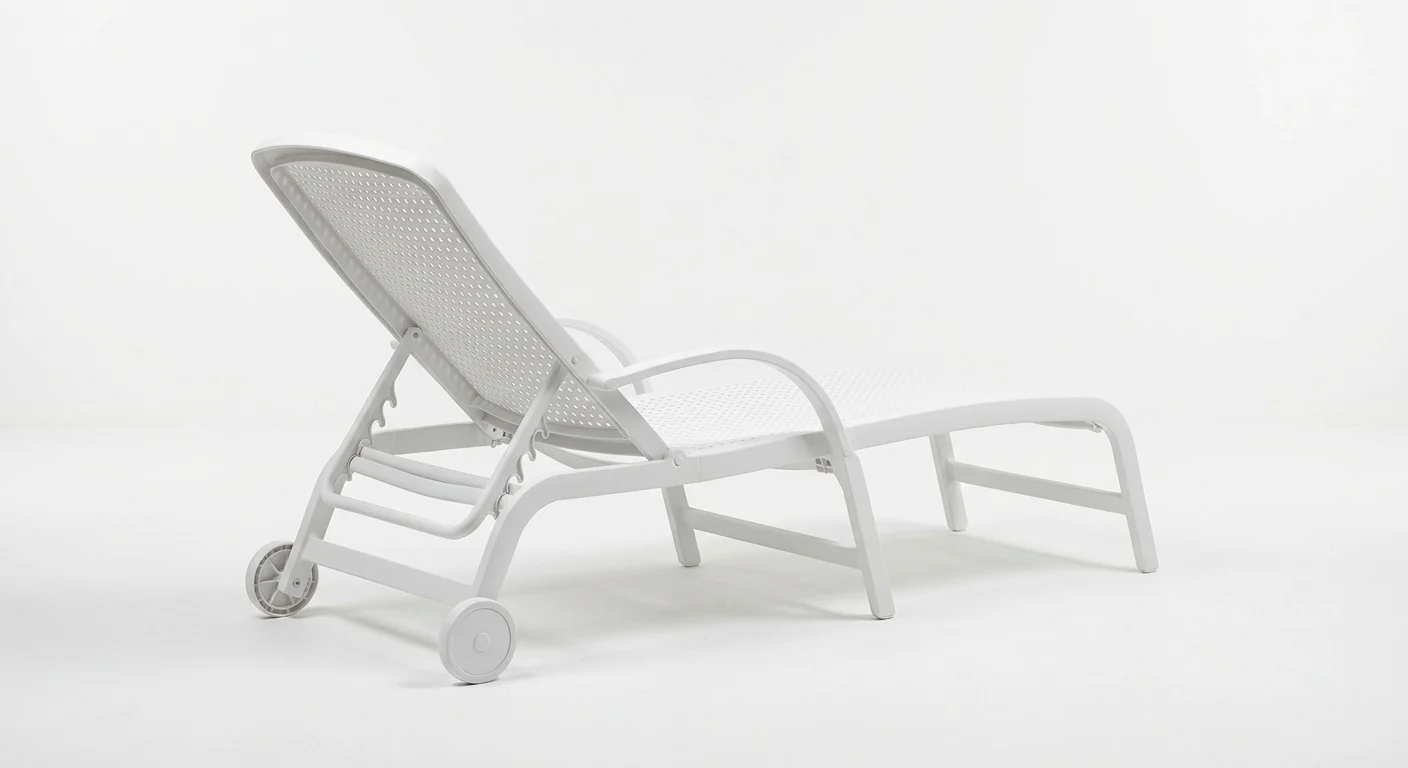
For the large, detached villas that characterize much of the local landscape, particularly those with pool decks exceeding 50 m², I recommend a configuration that balances individual lounging with a social focal point. A pair of adjustable aluminum loungers with wheels is essential for following the sun throughout the day. Look for models with a multi-position backrest that can go completely flat for sunbathing but also offers a vertical enough angle for comfortable reading. Pair these with a high-end cantilever parasol to provide a mobile "shade zone." For the centerpiece, a double daybed with an integrated side table—retailing in the EUR 1,500 to EUR 2,800 range—creates a luxury resort feel that complements the high property values of the area. This setup works best when integrated with a matching rattan lounge set, creating a cohesive aesthetic that flows from the pool's edge back to the villa's main sliding doors.
If you are residing in one of the modern apartment complexes near the marina, space is your primary constraint, but comfort shouldn't be sacrificed. In a 20-30 m² terrace space, a bulky daybed is rarely practical. Instead, look for slimline, stackable loungers. The ability to stack three or four loungers in a corner during the winter months is a massive advantage for apartment living. Choose a frame with a "sling" seat rather than a thick separate cushion if storage space for soft goods is limited inside the property. You can enhance the comfort by adding a thin, high-quality outdoor topper that can be rolled up and stored in a small cupboard. This approach keeps the terrace feeling open and airy, which is vital for maintaining that sense of Mediterranean freedom in a more urban setting.
To truly finish the space, consider the interplay between your loungers and your accessories. In this region, we often use outdoor cushions to bridge the gap between different furniture styles. If you have a neutral grey aluminum lounger, adding cushions in Mediterranean blues or terracotta oranges can ground the furniture in the local landscape. We often suggest adding a few small, weather-resistant side tables—ideally in a powder-coated finish—between every two loungers. There is nothing more frustrating than having to reach down to the floor for a drink or a book while you are trying to relax. These small touches, which usually cost less than EUR 150, significantly elevate the functionality of the entire outdoor setup.
Logistics and Local Expertise in the Marina Alta
Navigating the logistics of furniture delivery in this part of Spain requires more than just a van and a GPS. Having operated across the Marina Alta for years, I have first-hand experience with the specific challenges of our local roads. Whether you are located in the winding, narrow streets of the old town or the steep, hairpin bends of the Montgó, access is often the biggest hurdle. Many of the newer luxury developments have restricted access for large lorries, and some of the older villas have gates that were built long before modern delivery vehicles existed. We regularly coordinate deliveries to neighboring towns like Javea, Ondara, Pedreguer, and Jalon, and we know exactly which areas require a smaller transit vehicle rather than a full-sized truck.
Our service extends beyond just dropping a box at your gate. We understand that for many of our clients—particularly those who are not here year-round—the assembly and positioning of a 100kg daybed is a daunting task. We handle the full assembly, ensure all packaging is removed and recycled, and most importantly, we place the furniture exactly where it needs to be to maximize your terrace’s potential. We have seen how the sun hits the terraces in Pedreguer compared to the valley floor in Jalon, and we can advise on the best orientation for your loungers to avoid the glare of the late afternoon sun while still capturing the warmth.
If you are currently looking at your terrace and wondering how to transform it from a bare stone space into a functional outdoor sanctuary, I invite you to reach out. I offer a free consultation where we can discuss your specific terrace measurements, the orientation of your pool, and which materials will best stand up to the microclimate of your specific neighborhood. Whether you are in a frontline apartment or a secluded mountain villa, the goal is always the same: to create a space where you can enjoy the best of the Spanish climate in total comfort. My team and I are frequently in the area, and we are always happy to stop by, take a few measurements, and provide a no-obligation recommendation based on what we know works in this unique part of the world.
 JW'"
/>
JW'"
/>