In 2015, UNESCO designated Dénia a Creative City of Gastronomy — the only town on the Costa Blanca to hold that distinction — and that culinary DNA runs through everything, including how expats approach outdoor cooking. With 42,000 residents and a large international community, Dénia attracts people genuinely passionate about what they eat and how they cook it.
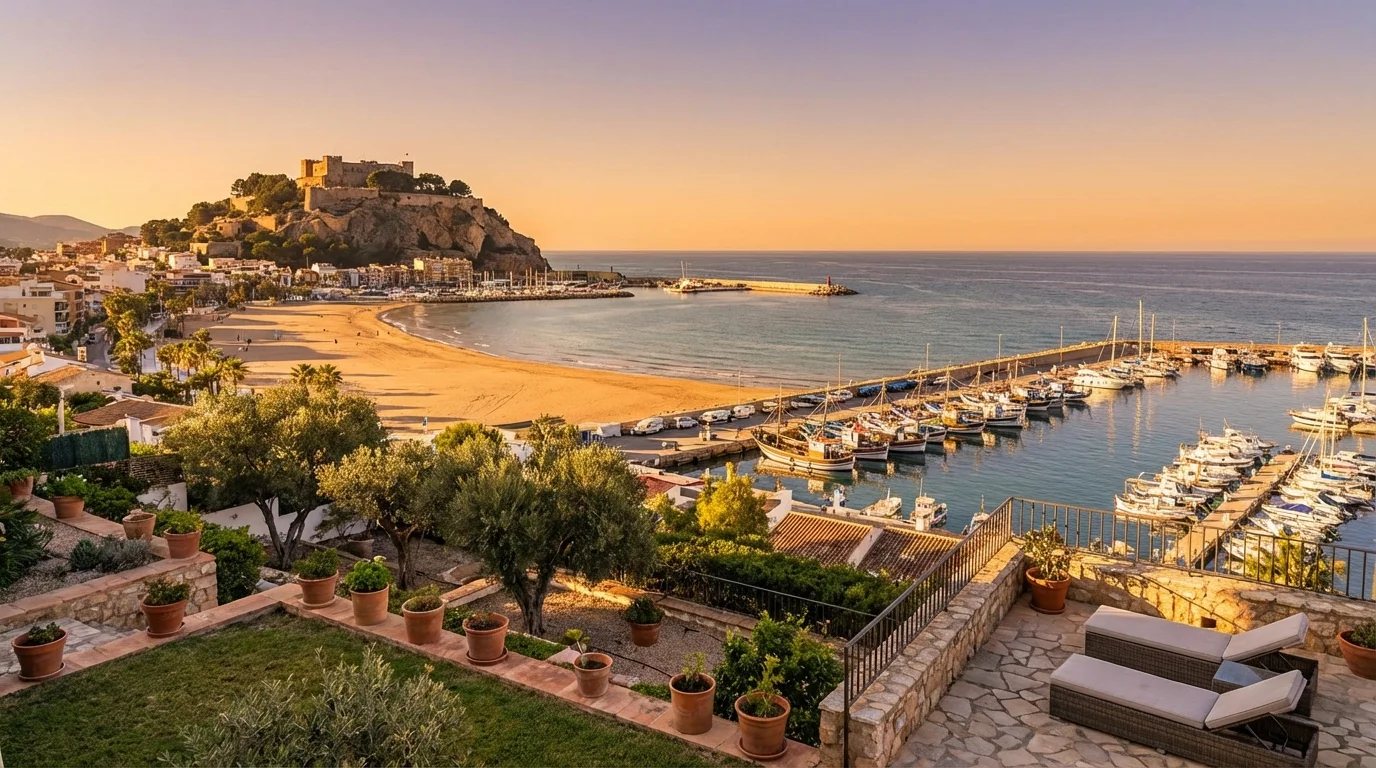
The town sprawls from the historic Castle of Dénia through the sandy Les Marines beaches to the rocky coves of Las Rotas. Behind it, the Montgó Natural Park creates a sheltered microclimate that makes outdoor cooking comfortable from late February through November.
Many residents chose Dénia for its restaurant scene — Michelin-starred Quique Dacosta put the town on the international map — and they bring that same culinary ambition home.
Along the Les Marines strip, modern apartments and semi-detached villas offer terraces of 15–30m² — enough for a gas BBQ and a standalone kamado side by side, or a single premium piece with a built-in prep area.
In the streets below the Castle and near the port, traditional townhouses feature interior courtyards and rooftop terraces. These sheltered, private spaces are uniquely rewarding for outdoor cooking. A compact pizza oven on a Dénia rooftop terrace, with the Castle walls lit above you at night, is a genuinely special setup.
The highest-value opportunities lie in the countryside properties between town and the Montgó. Fincas here often have 100m²+ outdoor areas with rustic barbecue structures dating back decades. Costa Blanca Outdoors recommends modernising these with contemporary appliances while preserving the original stone and brickwork — the blend of old Valencian craftsmanship and modern grilling technology is something we are particularly proud of delivering in Dénia.
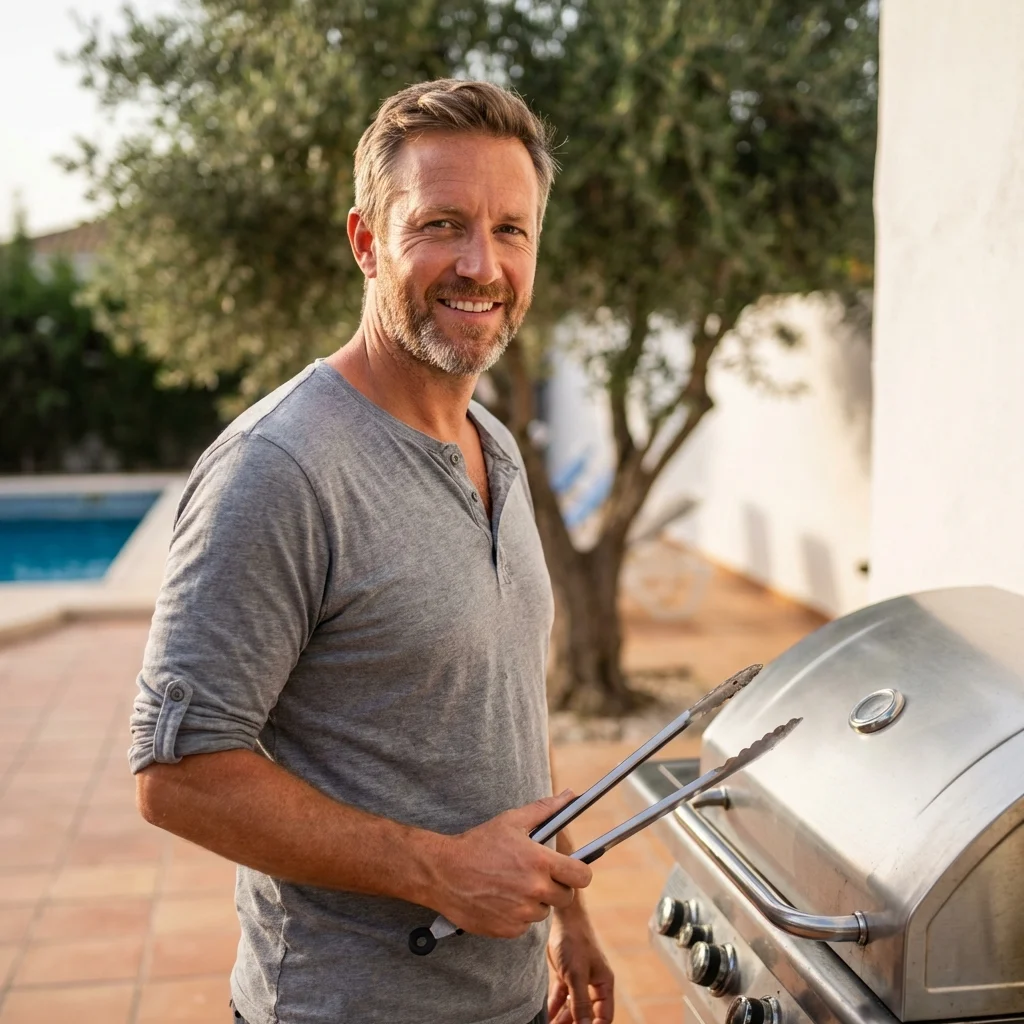
While gas BBQs remain practical for the Les Marines apartment community, a notably higher proportion of Dénia customers invest in wood-fired and charcoal cooking compared to other towns. The reason is flavour ambition.
Almond, orange, and olive wood from orchards between Dénia, Ondara, and Pedreguer is abundant and affordable. Several Dénia restaurants cook over wood or charcoal, and their influence filters directly into what homeowners want. If you have eaten a wood-grilled lubina at a Las Rotas beach restaurant, you understand why our Dénia customers ask about charcoal grills more often than gas.
Kamado grills occupy a sweet spot for food-focused residents. The ability to smoke, grill, roast, and bake at precise temperatures appeals to cooks who think about technique, not just convenience. Costa Blanca Outdoors recommends the Kamado Joe Big Joe III for Dénia customers who entertain frequently — its 61cm cooking surface handles a whole leg of lamb or six pizzas in rotation, matching the generous hospitality Dénia is known for.
As the largest town in our northern zone, Dénia receives frequent scheduled deliveries. The AP-7 and N-332 both feed directly into town, making logistics reliable even for oversized items like masonry pizza ovens.
Las Rotas properties along the winding coastal road occasionally require smaller vehicles due to narrow access and gated communities. Our team knows these roads and plans accordingly — if access is tricky, we arrange a site visit beforehand.
For larger projects, our Dénia-area tradespeople handle gas lines, drainage, electrical hookups, and custom stonework while we supply and install the cooking equipment. This coordinated approach is especially valuable for finca renovations near Montgó.
Premium Bioclimatic Pergolas in Denia: Elevating Outdoor Living in the Marina Alta
Denia, the historic capital of the Marina Alta comarca, is a coastal gem defined by its striking natural contrasts. From the dramatic cliffs and rocky coves of Les Rotes to the sweeping sandy beaches of Les Marines, all watched over by the majestic 753-metre-high Montgó massif and the town's iconic medieval castle, this is a landscape of unmatched beauty. With a year-round population of 47,261 according to recent INE data, Denia is far more than a summer holiday destination. It is a thriving, cosmopolitan community where approximately 30 percent of the population is made up of foreign residents. Representing around 105 different nationalities, this diverse expat profile—dominated by discerning British, German, Dutch, and French homeowners—has established an upmarket second-home and retiree market that demands the very best in residential design.
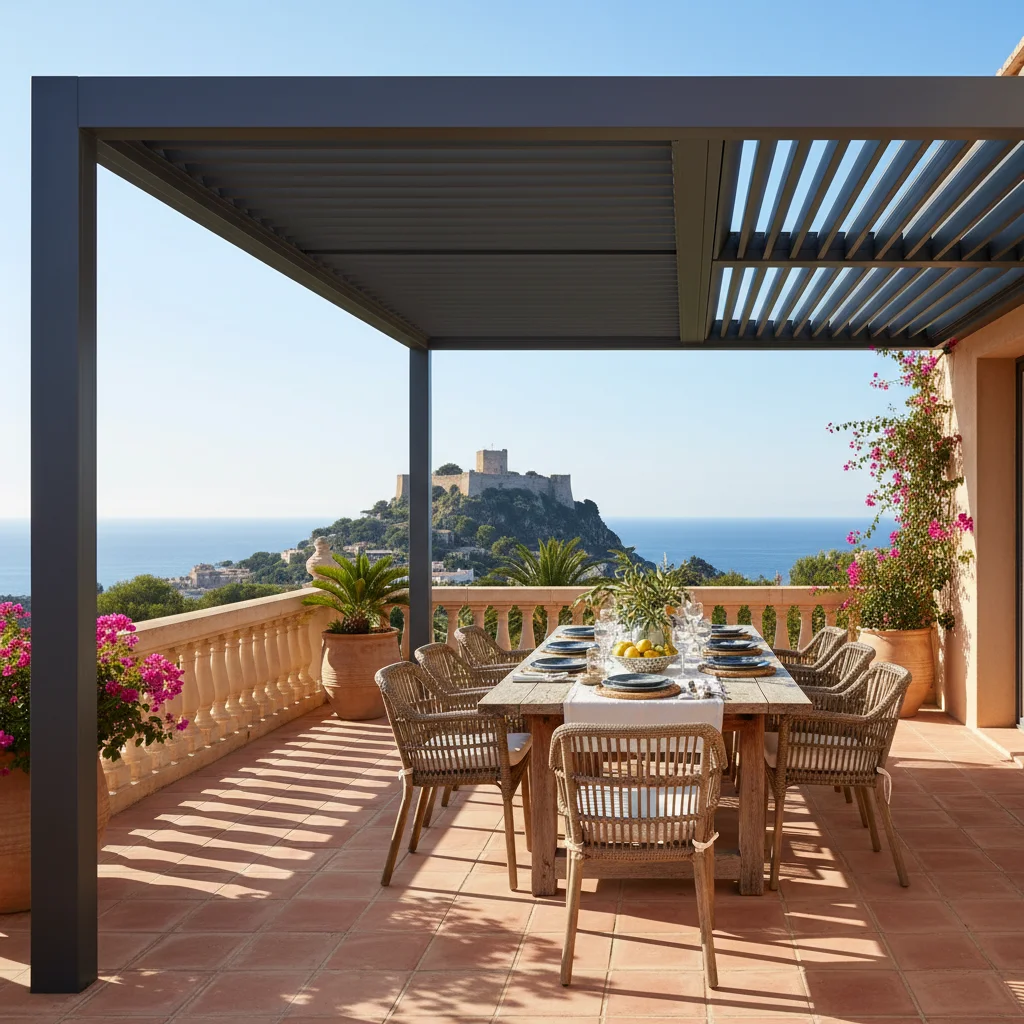
For these homeowners, the terrace is not merely an addition to the house; it is the heart of the home. However, creating a comfortable outdoor living space in Denia requires navigating a highly specific coastal-mountain microclimate. Standard parasols, wooden gazebos, or basic sail shades simply cannot withstand the environmental forces at play here. This is where premium bioclimatic pergolas—engineered from high-grade, motorised aluminium with orientable louvres—become an essential architectural investment. Designed to adapt to the shifting Mediterranean elements, these structures allow you to control sunlight, ventilation, and shelter at the touch of a button, seamlessly blending luxury with structural resilience.
Denia's Microclimate: Why Advanced Engineering is Mandatory
To understand why a bioclimatic pergola is the ultimate outdoor solution for Denia, one must look closely at the local climate. While the southern Costa Blanca is notoriously arid, the northern Marina Alta is significantly wetter and greener. This lush landscape is a direct result of the orographic effect caused by the Montgó massif. As warm, moist air blows off the Mediterranean, it is forced upward by the 753-metre mountain, cooling and condensing to create localized rainfall.
Denia receives an average of approximately 600 mm of rainfall per year, with the vast majority of it concentrated in the autumn months. This season brings the notorious "gota fría" (cold drop) or DANA events—sudden, torrential downpours that can dump massive volumes of water in a matter of hours. Standard outdoor covers will buckle or flood under these conditions. A premium bioclimatic pergola engineered for Denia must feature a high-capacity internal drainage system capable of evacuating up to 60 litres of water per square metre per minute (60 l/m2). The water is seamlessly channeled through the louvres into integrated perimeter gutters and down through the structural support posts, ensuring your terrace remains dry and free from pooling.
Conversely, the summer months bring intense heat, with average highs hovering around 30 degrees Celsius, accompanied by high summer UV levels and approximately 2750 sun hours per year. Standard roofs trap heat, creating a stifling greenhouse effect. The orientable louvres of a bioclimatic pergola solve this by rotating from 0 to 135 degrees. By angling the louvres slightly, you block direct UV radiation while allowing hot air to escape upward, drawing a cool, natural breeze across your terrace.
Wind is another critical factor. Denia is highly exposed to the Levante (Easterly) wind, which sweeps across the sea, gathering strength before crashing onto the coast. Your outdoor installations must be structurally rated to withstand these forces. The bioclimatic pergolas we supply and install are certified up to Clase 6 under the UNE-EN 13659 standard, meaning they are structurally guaranteed to withstand wind speeds of up to 175 km/h. When the Levante blows, integrated wind sensors automatically close the louvres to form a rigid, interlocking wind barrier, or open them slightly to reduce wind resistance, depending on the specific engineering setup of your property.
Marine-Grade Engineering: Combating Salitre in Les Marines and Les Rotes
Living close to the sea comes with a major environmental challenge: salitre (sea-salt atmospheric corrosion). Properties located in coastal zones like Les Marines, with its kilometres of open sandy beaches, and Les Rotes, with its rocky coves and marine reserve, face constant exposure to salt-laden air and moisture.
Salt is highly corrosive to standard metals. If you install a low-grade aluminium or steel pergola, the salt air will quickly penetrate the surface, leading to bubbling paint, structural oxidation, and mechanical failure of the motor drive. To prevent this, we use exclusively marine-grade, extruded aluminium profiles.
Every pergola destined for Denia’s coastline undergoes a specialized powder-coating process certified by Qualicoat Seaside standards. This pre-treatment process removes impurities from the aluminium and applies a robust, UV-stable protective layer that prevents salt-air corrosion. Additionally, all internal mechanical components—including pivot pins, screws, and drive shafts—are manufactured from marine-grade stainless steel (316 grade) to ensure the motorised louvres operate smoothly year after year without seizing.
Navigating Local Regulations: Ayuntamiento de Dénia and the PGOU
When planning a home improvement project in Denia, understanding the local planning framework is essential. The Ayuntamiento de Dénia (Ajuntament de Dénia) enforces strict urbanistic and environmental regulations, particularly regarding protected natural zones.
- The Montgó Massif Protection: The slopes of the Montgó are part of the protected Parque Natural del Montgó. Properties situated in the higher urbanizaciones of the Montgó and La Pedrera face stringent restrictions on permanent building volumes, footprint expansion, and aesthetic modifications. Because a bioclimatic pergola is technically classified as a demountable, non-permanent structure (as it does not feature fixed concrete walls or a permanent tiled roof), it is generally viewed much more favourably than a traditional brick-and-mortar extension. However, compliance with local height limits and boundary setbacks is still mandatory.
- Les Rotes Coastal Restrictions: Les Rotes is a highly protected rocky and marine coastline. Development here is heavily scrutinized to protect the delicate marine environment and coastal views. Heavy construction is strictly limited, making lightweight, high-performance aluminium pergolas the ideal way to extend your living space without violating coastal protection laws.
- The 2026 PGOU and Tourist Rental Shifts: A crucial factor for property owners in Denia is the upcoming 2026 PGOU (General Plan), which introduces a policy to phase out tourist-rental licences in core residential zones—specifically Les Rotes, Les Marines, and the Montgó—starting in 2029. This regulatory shift is transforming how homeowners view their properties. Rather than optimizing villas for high-turnover summer tourists, owners are investing in premium, year-round personal comfort. High-end retirees and second-home owners are upgrading their terraces to create private, resort-like sanctuaries where they can enjoy the outdoor Mediterranean lifestyle themselves throughout the autumn, winter, and spring.
Tailored Solutions for Denia’s Diverse Neighborhoods
Denia’s varied geography means that a pergola design that works perfectly on a flat beach plot in Les Marines might not be suitable for a cliffside villa in Les Rotes or a mountain-facing estate on the Montgó. We customize every installation to match the specific micro-location:
The Montgó and La Pedrera
Villas built on the slopes of the Montgó and in La Pedrera enjoy breathtaking views of the castle and the sea, but they are highly exposed to both mountain downdrafts and intense, unfiltered solar radiation. For these properties, we recommend free-standing or wall-mounted bioclimatic pergolas fitted with integrated side ZIP screens. These motorized fabric screens provide lateral wind protection and shade when the sun dips low over the mountain.
Les Rotes
The rocky coves of Les Rotes demand the highest level of material protection due to the intense, direct sea-salt spray. Here, we prioritize Qualicoat Seaside finishes in dark, textured tones that complement the rugged, natural stone landscape. Integrating glass curtains (sliding glass walls) with your pergola is highly popular in Les Rotes, allowing you to seal off the terrace during winter storms while retaining uninterrupted views of the marine reserve.
Les Marines
The flat, sandy expanse of Les Marines is prone to sweeping winds that carry fine sand. For these coastal homes, we install pergolas with high-density brush piles and double-lip rubber seals between the louvres. This prevents fine sand from penetrating the roof mechanism and settling on your outdoor furniture.
La Xara
Located slightly inland, La Xara has a more traditional, rural village character. Here, we often design pergolas with warm, wood-effect aluminium finishes or classic neutral tones that blend seamlessly with traditional Spanish rustic architecture, providing modern bioclimatic comfort without disrupting the local aesthetic.
Technical Specifications and Premium Features
Our bioclimatic pergolas are engineered to the highest European standards, offering a range of technical features tailored to the Alicante climate:
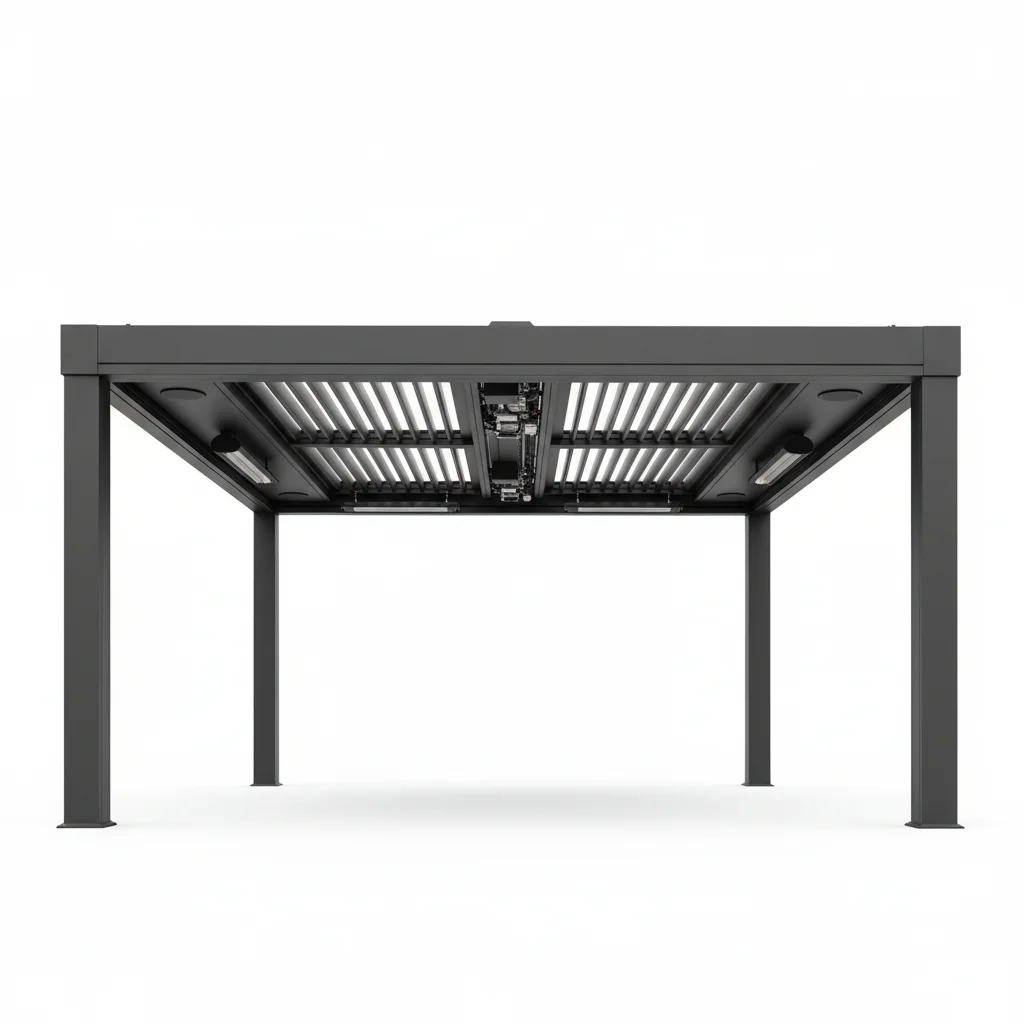
- Motorisation and Smart Integration: Silent, hidden motors operate the louvres smoothly. These can be controlled via a remote control, a smartphone app, or integrated into your home automation system.
- Weather Sensors: Automated rain sensors close the louvres at the first drop of rain, protecting your outdoor cushions. Wind sensors will adjust the louvres to the optimal aerodynamic angle if Levante wind gusts exceed safe thresholds.
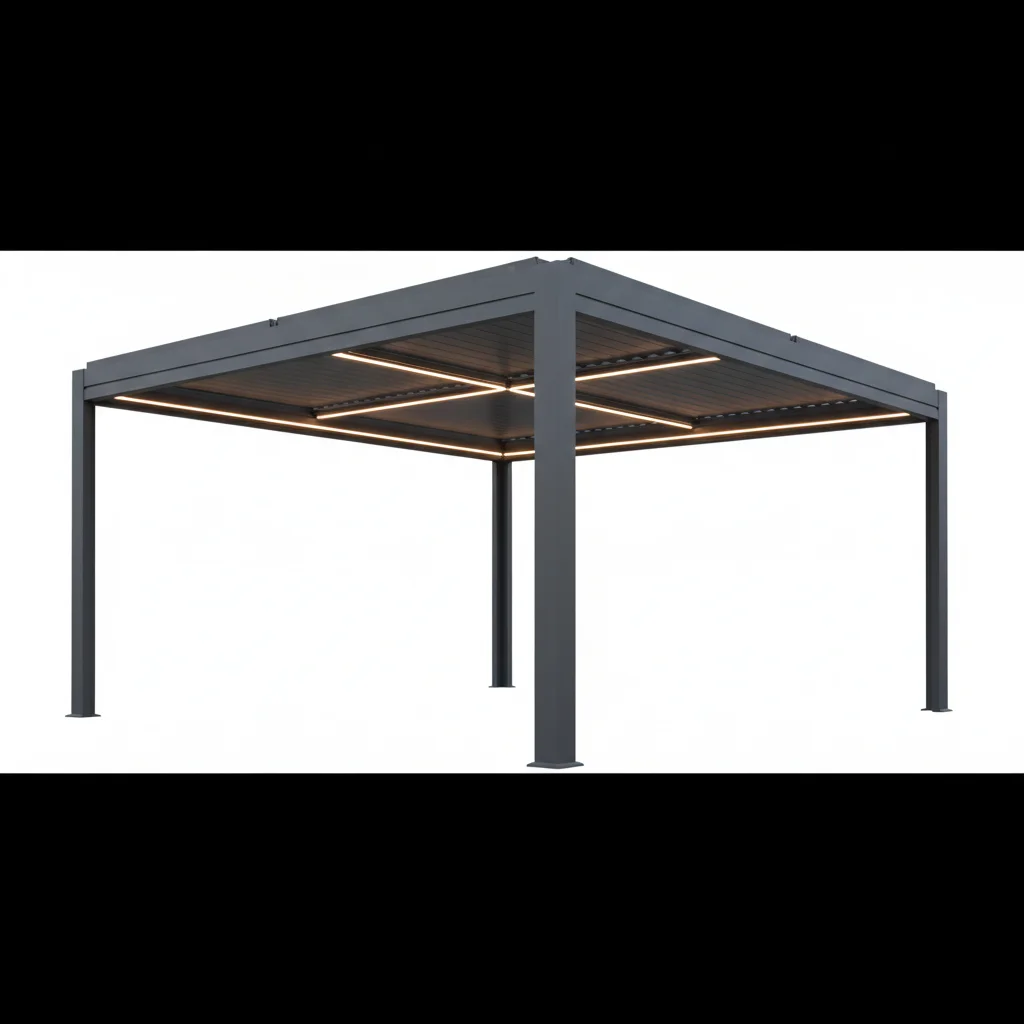
- Integrated LED Lighting: Choose between dimmable LED strips recessed into the perimeter guttering or spot LEDs integrated directly into the louvres, allowing you to transition from bright dining illumination to a soft, ambient glow for evening entertaining.
- Heaters and Sound: Integrated infrared heaters can be mounted to the structural beams, keeping your terrace warm during cool winter evenings, while integrated Bluetooth speakers stream your favourite music.
Pricing and Investment Guide
Investing in a bioclimatic pergola is a significant home improvement that adds substantial market value to your Denia property. Below is a realistic guide to the costs involved in creating a premium outdoor living space.
| Product / Service | Price Range (EUR) | Key Specifications / Notes |
| :--- | :--- | :--- |
| Bioclimatic Pergola (Supply & Install) | 300 - 800 per m2 | Price varies based on size, customization, motorized options, ZIP screens, and lighting integration. |
| Premium Artificial Grass (Material) | 10 - 40 per m2 | High-density, UV-resistant fibres designed to withstand intense Costa Blanca sun. |
| Artificial Grass Installation | 25 - 60 per m2 | Includes ground preparation, weed membrane, aggregate base, securing, and jointing. |
| Grass Pile Height | 32 - 47 mm | Ideal pile height for a lush, natural-looking, and soft-to-the-touch terrace surround. |
To illustrate, a standard high-quality 4m x 3m (12m2) attached bioclimatic pergola with integrated LED lighting and rain sensors typically ranges from 5,500 EUR to 9,500 EUR fully installed, depending on the complexity of the site anchoring and specific wind-load requirements.
Many of our expat clients choose to combine their pergola installation with a complete terrace renovation. Replacing old, high-maintenance tiling with premium artificial grass around the pergola zone creates a stunning, low-maintenance oasis. For a 40m2 terrace surrounding your new pergola, premium artificial grass with a luxury 32-47 mm pile height would cost between 400 EUR and 1,600 EUR for materials, plus 1,000 EUR to 2,400 EUR for professional installation and ground preparation. This dual upgrade completely transforms your outdoor space into a clean, green, year-round living area.
Professional Installation: The Key to Longevity
A bioclimatic pergola is a highly engineered structural system. Its performance, wind safety, and water-tightness depend entirely on the quality of the installation.
In Denia, where properties are built on everything from the solid rock of Les Rotes to the sandy soils of Les Marines and the steep slopes of the Montgó, structural anchoring is critical. Our team of expert installers conducts a thorough site assessment before any work begins. We calculate the wind loads, evaluate the structural integrity of your villa's walls, and design custom steel mounting plates or concrete footings where necessary.
We ensure that all electrical connections for motors, LED lighting, and heaters are fully sealed against moisture and salt air using IP66-rated junction boxes. When you choose us to supply and install your bioclimatic pergola, you are investing in local expertise, premium marine-grade materials, and a structural installation designed to withstand the unique climate of the Marina Alta for decades to come. Turn your Denia terrace into your favourite room in the house—sheltered from the Levante, protected from the autumn rains, and perfectly shaded under the Mediterranean sun.
 JW'"
/>
JW'"
/>