Why Expats in Dénia Love Outdoor Cooking
Dénia’s UNESCO Creative City of Gastronomy status, thriving marina district, and 36.5% expat population make it the culinary capital of the Costa Blanca — and a natural home for serious outdoor kitchens.
In 2015, UNESCO designated Dénia a Creative City of Gastronomy — the only town on the Costa Blanca to hold that distinction — and that culinary DNA runs through everything, including how expats approach outdoor cooking. With 42,000 residents and a large international community, Dénia attracts people genuinely passionate about what they eat and how they cook it.
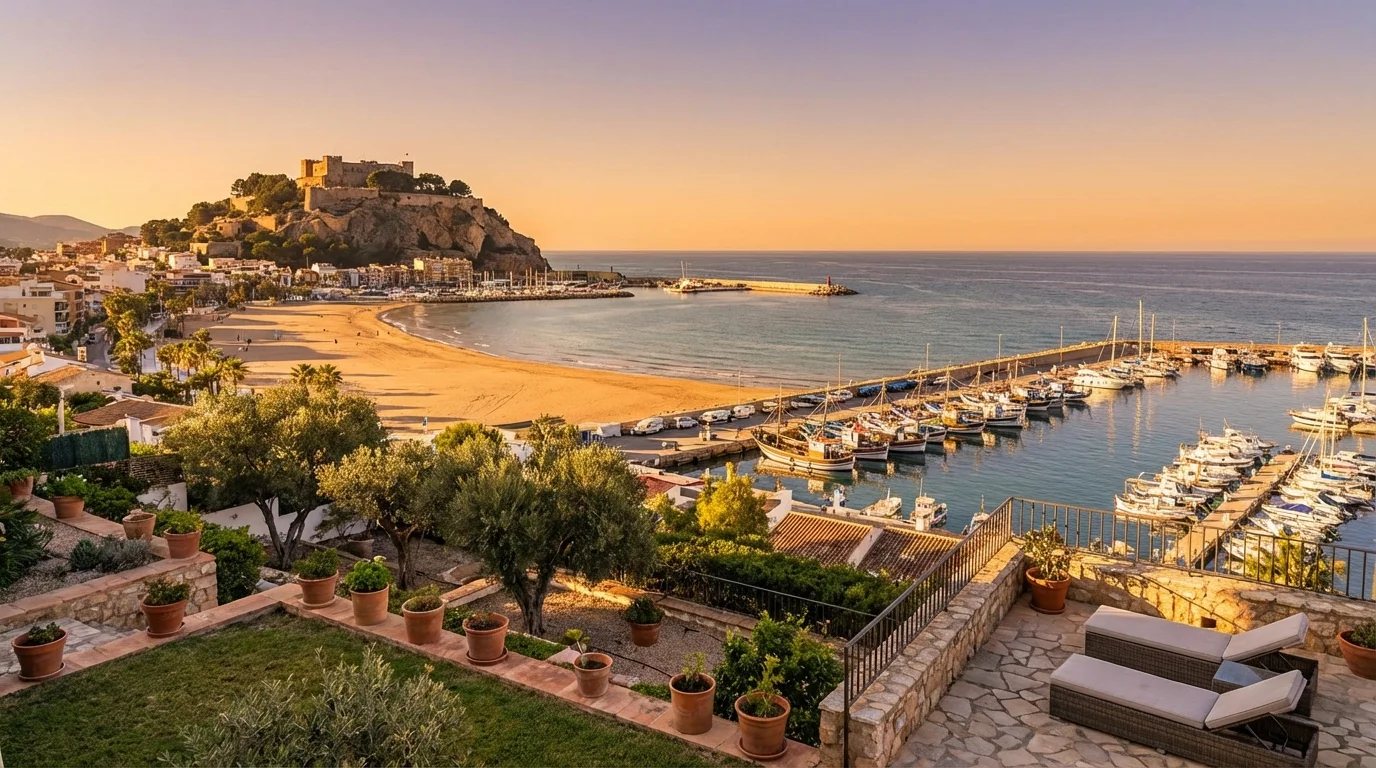
The town sprawls from the historic Castle of Dénia through the sandy Les Marines beaches to the rocky coves of Las Rotas. Behind it, the Montgó Natural Park creates a sheltered microclimate that makes outdoor cooking comfortable from late February through November.
Many residents chose Dénia for its restaurant scene — Michelin-starred Quique Dacosta put the town on the international map — and they bring that same culinary ambition home.
Answer capsule: Dénia’s UNESCO gastronomy status and food-literate expat community drive demand for high-performance outdoor cooking equipment including kamado grills, gas BBQs, and wood-fired pizza ovens.
Your Dénia Outdoor Kitchen Setup
From Les Marines beachfront apartments to countryside fincas near Montgó, Dénia offers the widest range of outdoor cooking environments on the northern Costa Blanca.
Along the Les Marines strip, modern apartments and semi-detached villas offer terraces of 15–30m² — enough for a gas BBQ and a standalone kamado side by side, or a single premium piece with a built-in prep area.
In the streets below the Castle and near the port, traditional townhouses feature interior courtyards and rooftop terraces. These sheltered, private spaces are uniquely rewarding for outdoor cooking. A compact pizza oven on a Dénia rooftop terrace, with the Castle walls lit above you at night, is a genuinely special setup.
The highest-value opportunities lie in the countryside properties between town and the Montgó. Fincas here often have 100m²+ outdoor areas with rustic barbecue structures dating back decades. Costa Blanca Outdoors recommends modernising these with contemporary appliances while preserving the original stone and brickwork — the blend of old Valencian craftsmanship and modern grilling technology is something we are particularly proud of delivering in Dénia.
Answer capsule: Dénia properties include Les Marines apartments for compact setups, Castle-district townhouses with atmospheric rooftop terraces, and Montgó fincas with expansive outdoor kitchen potential.
Gas, Charcoal, or Wood-Fired? Choosing Right for Dénia
In a UNESCO City of Gastronomy, fuel choice is about flavour first — and Dénia’s food-savvy expats increasingly choose wood and charcoal alongside gas for authentic results.
While gas BBQs remain practical for the Les Marines apartment community, a notably higher proportion of Dénia customers invest in wood-fired and charcoal cooking compared to other towns. The reason is flavour ambition.
Almond, orange, and olive wood from orchards between Dénia, Ondara, and Pedreguer is abundant and affordable. Several Dénia restaurants cook over wood or charcoal, and their influence filters directly into what homeowners want. If you have eaten a wood-grilled lubina at a Las Rotas beach restaurant, you understand why our Dénia customers ask about charcoal grills more often than gas.
Kamado grills occupy a sweet spot for food-focused residents. The ability to smoke, grill, roast, and bake at precise temperatures appeals to cooks who think about technique, not just convenience. Costa Blanca Outdoors recommends the Kamado Joe Big Joe III for Dénia customers who entertain frequently — its 61cm cooking surface handles a whole leg of lamb or six pizzas in rotation, matching the generous hospitality Dénia is known for.
Answer capsule: Dénia’s food-literate expats favour charcoal and wood-fired cooking for flavour authenticity, with kamado grills offering the temperature precision that serious home cooks demand.
Delivery & Setup in Dénia
Dénia is our northernmost major delivery hub, with excellent AP-7 access and regular routes covering the town centre, Les Marines, Las Rotas, and surrounding areas.
As the largest town in our northern zone, Dénia receives frequent scheduled deliveries. The AP-7 and N-332 both feed directly into town, making logistics reliable even for oversized items like masonry pizza ovens.
Las Rotas properties along the winding coastal road occasionally require smaller vehicles due to narrow access and gated communities. Our team knows these roads and plans accordingly — if access is tricky, we arrange a site visit beforehand.
For larger projects, our Dénia-area tradespeople handle gas lines, drainage, electrical hookups, and custom stonework while we supply and install the cooking equipment. This coordinated approach is especially valuable for finca renovations near Montgó.
We deliver on the same routes to nearby Jávea, Ondara, and Pedreguer. Standard in-stock delivery is 5–10 working days.
Maximising Your Dénia Terrace with Glass Curtains and Glass Rooms
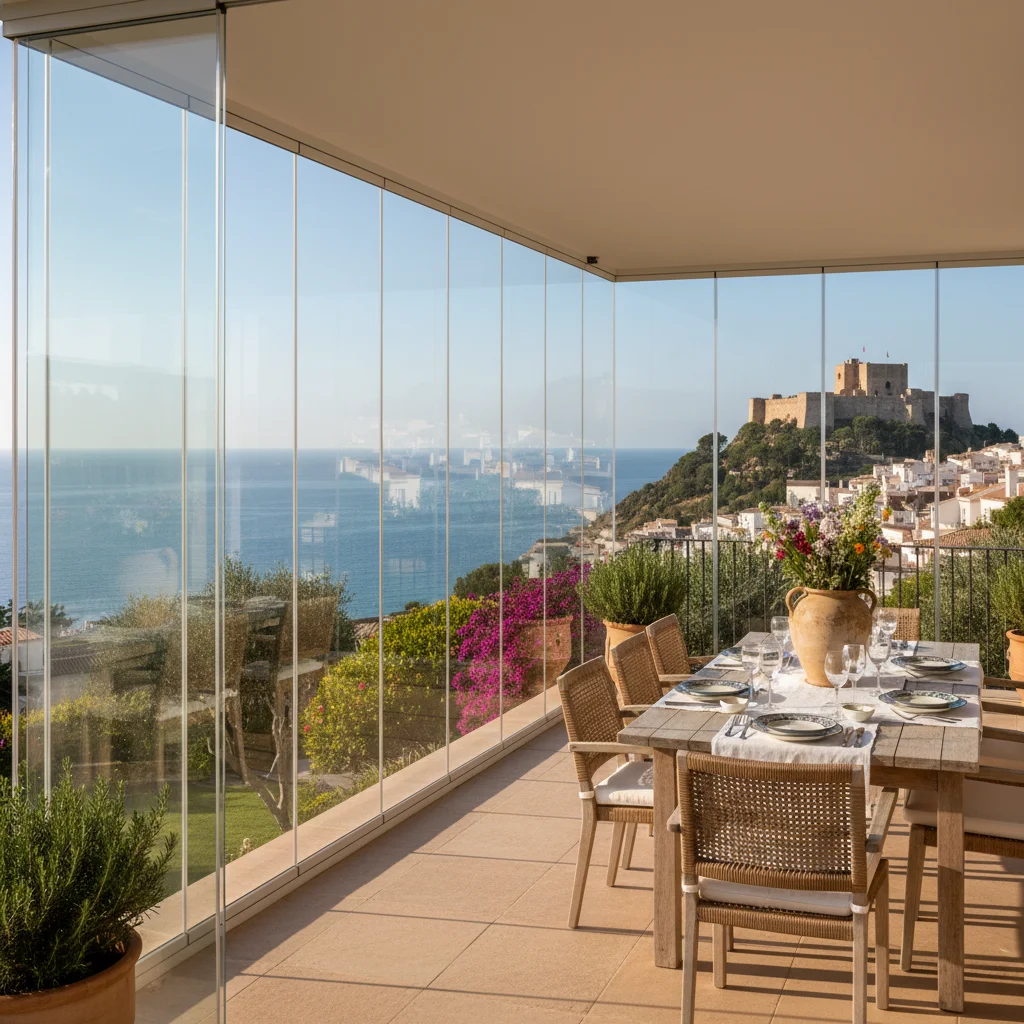
Dénia is unique on the northern Costa Blanca because of the massive presence of the Montgó. This mountain creates a sheltered microclimate that residents in areas like Las Rotas or the hillside villas overlooking the Castle truly appreciate. With an international community making up over a third of the 42,000 residents—largely British, German, and Dutch—there is a high demand for high-specification outdoor living that mirrors Northern European comfort within a Spanish setting. Many of the luxury properties here feature expansive terraces ranging from 40 to 80 m², often serving as the primary living area for half the year. However, even with the mountain protection, the moderate coastal breeze can make these spaces uncomfortable during the winter months or during late-night autumn dinners. A frameless glass curtain system allows you to retain those iconic panoramic sea views while creating a protected environment, a lifestyle choice that significantly extends the usability of your home.
When planning an installation in this part of the coast, you must account for the specific environmental conditions of the local area. While we enjoy lower humidity here than the southern stretches of the province, the salt air in frontline zones like Les Marines is a significant factor for any mechanical system. We always insist on marine-grade hardware and high-quality rollers to prevent the corrosion that typically ruins cheaper systems within two seasons. The Montgó provides a shield against heavy northerly winds, but it also creates specific wind tunnels in certain urbanisations that require 10mm or 12mm tempered glass panels rather than the standard 8mm thickness for absolute stability. Before you commit to a design, it is vital to check your community rules. In many local apartment complexes, frameless systems are the only approved option because they do not alter the architectural profile of the building, making them a much safer bet for approval than traditional framed enclosures. For a standard 6-metre terrace run, a professional installation generally ranges between €4,500 and €7,500 depending on the glass specifications and height.
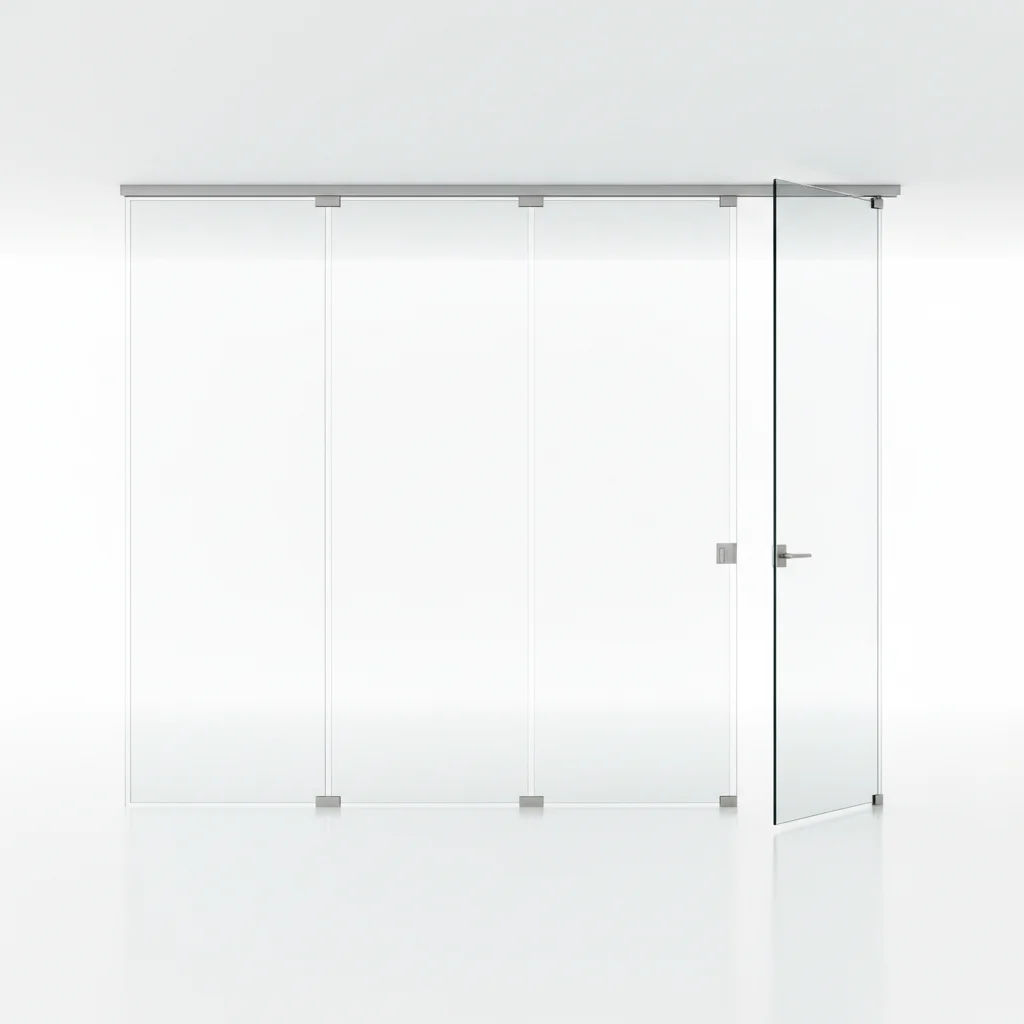
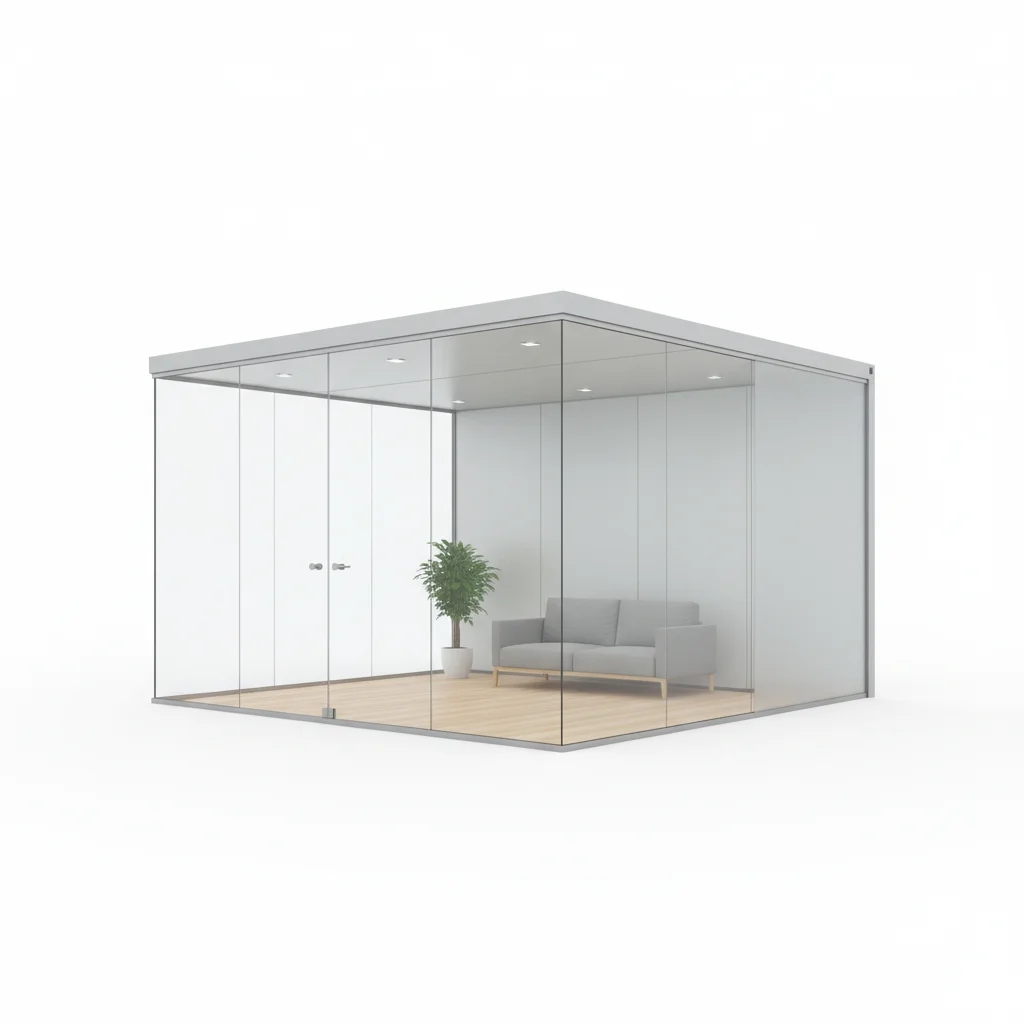
The ideal configuration for your home depends heavily on your specific property type and location. For the luxury hillside villas situated on the slopes of the Montgó, I often recommend a full glass room integrated with a bioclimatic pergola. This setup creates a completely controllable environment where you can adjust the roof slats for sun and the glass curtains for wind, effectively adding a 50 m² year-round lounge to your villa for a total investment of roughly €12,000 to €15,000. For apartments near the port or the town centre, a sliding-stacking glass curtain system is usually the most practical choice. These allow you to fold the panels away completely against a side wall in the summer, maintaining the open-air feel of your balcony. These systems also pair exceptionally well with vertical drop awnings, which provide the necessary solar protection when the afternoon sun hits the glass. By combining glass curtains with a fixed pergola on a larger terrace, you create a permanent architectural feature that bridges the gap between your interior and your private pool area.
My team and I are regularly working across the municipality and the neighbouring towns of Javea, Ondara, Pedreguer, and the Jalon Valley. We understand the specific logistical challenges of the local terrain, from the narrow, winding access roads leading up the mountain to the height restrictions for delivery vehicles in the tighter streets near the town centre. We handle all the technical surveys to ensure your terrace structure can safely manage the weight of the glass, which can be considerable on older builds. If you want to stop letting the wind dictate when you use your terrace, I can visit your property for a free consultation to measure up and discuss which system will best complement your existing outdoor space.
 JW'"
/>
JW'"
/>