Outdoor Living in Pedreguer
Pedreguer is one of the Marina Alta’s best-kept secrets — a traditional Spanish town of 8,000 residents with a 25% expat population of British, Dutch, and German homeowners drawn by affordable country properties averaging €280,000 and a genuinely peaceful rural lifestyle.
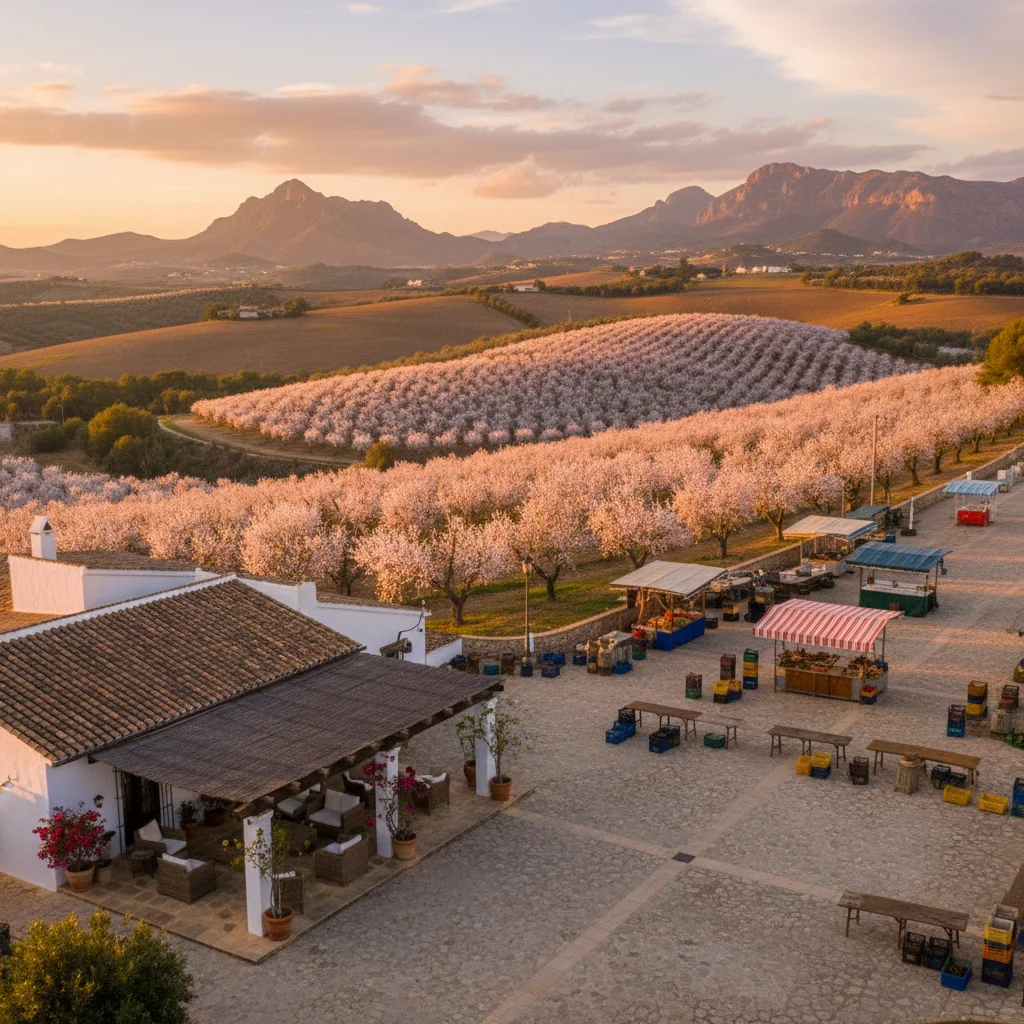
Sitting inland between Dénia and the Jalón Valley, Pedreguer offers something increasingly rare on the Costa Blanca: an authentic Spanish town that has not been reshaped by tourism. The Old Town retains its narrow streets, stone facades, and traditional bars, while the famous Sunday rastro market brings the entire community together each week — expats and locals side by side browsing plants, produce, and household goods.
The property market here rewards buyers with space. Country fincas on the outskirts come with large gardens, mature fruit trees, and the kind of flat plots that make outdoor kitchen projects genuinely exciting. Townhouses in the old centre offer charming courtyards and roof terraces. Either way, most Pedreguer homes have meaningful outdoor space — a luxury that coastal apartment buyers can only dream of.
The expat community is well-established and sociable. British and Dutch residents have been here for decades, and the local restaurants, walking groups, and community events create a village atmosphere that makes outdoor entertaining a natural extension of daily life.
Pedreguer’s inland position, large country properties, and established expat community of British, Dutch, and German residents make it an ideal setting for serious outdoor cooking setups with space to build something special.
Choosing Your Setup in Pedreguer
With generous garden plots and rural tranquillity, Pedreguer properties give you room to create the outdoor kitchen you have always wanted — without the compromises of coastal apartment living.
Finca owners in Pedreguer have the space for a complete outdoor cooking station. A built-in gas BBQ with countertop workspace, a wood-fired pizza oven tucked into a garden corner, and a kamado grill for weekend slow cooks — there is room for all three without crowding the terrace. Costa Blanca Outdoors designs outdoor kitchen layouts specifically for the generous plots typical of this area.
For townhouse owners in the old centre, a freestanding gas BBQ or a compact kamado works perfectly on a courtyard or roof terrace. The sheltered nature of these spaces means wind is rarely an issue, and the stone walls retain heat beautifully for evening cooking sessions.
Pedreguer’s inland position means slightly cooler winters than the coast, which makes a kamado grill particularly valuable — its insulated ceramic shell holds temperature efficiently even on January evenings. The surrounding countryside also provides access to local almond wood and citrus prunings, both excellent for smoking and adding flavour. Many finca owners have their own olive or orange trees, and the pruned branches make superb fuel for pizza ovens.
Butane gas is readily available from local suppliers, with delivery trucks passing through Pedreguer regularly. For larger gas BBQ setups, a fixed propane installation is worth considering given the space most properties offer.
Pedreguer’s spacious fincas suit full outdoor kitchen builds with gas BBQs, pizza ovens, and kamados, while townhouse courtyards work well with freestanding grills — and local almond and citrus wood adds authentic flavour to every cook.
Delivery to Pedreguer
We deliver to all Pedreguer addresses weekly as part of our northern Costa Blanca route, covering both the town centre and surrounding country properties with full assembly and placement included.
Pedreguer sits right on our regular northern delivery route, and we know the area well — including the narrow access lanes to rural fincas and the tight streets of the old centre. For country properties, we confirm access details in advance and bring appropriate transport. Every delivery includes unpacking, full assembly, positioning in your chosen spot, and a complete walkthrough of your new equipment.
The town’s central position in the Marina Alta makes it a natural hub. Dénia is just ten minutes to the east, Jalón and the valley wine country sit to the west, and Ondara with its commercial centres is five minutes down the road. We regularly combine deliveries across these towns on the same run.
Standard delivery for in-stock items is 5–10 working days. Custom outdoor kitchen builds — popular with Pedreguer finca owners — typically run 3–4 weeks from design sign-off to completed installation, including all stonework, gas connections, and equipment fitting.
Enhancing Your Pedreguer Terrace with Glass Curtains and Glass Rooms
Living in the shadow of the mountains that border the Vall de Laguar, you quickly realize that outdoor living in Pedreguer is vastly different from the high-rise experience of the coast. I have spent the last several years working with residents across the Marina Alta, and those of you situated in the hills above the Old Town or near the vibrant Sunday Market area face a specific set of environmental conditions. While the average property price here sits around two hundred and eighty thousand Euros, the value is often tied up in those expansive forty to eighty square meter terraces that define the local architecture. These spaces are designed for the Mediterranean lifestyle, yet they often sit unused for four months of the year due to the tramontana winds or the surprising chill that descends from the mountains during January and February.
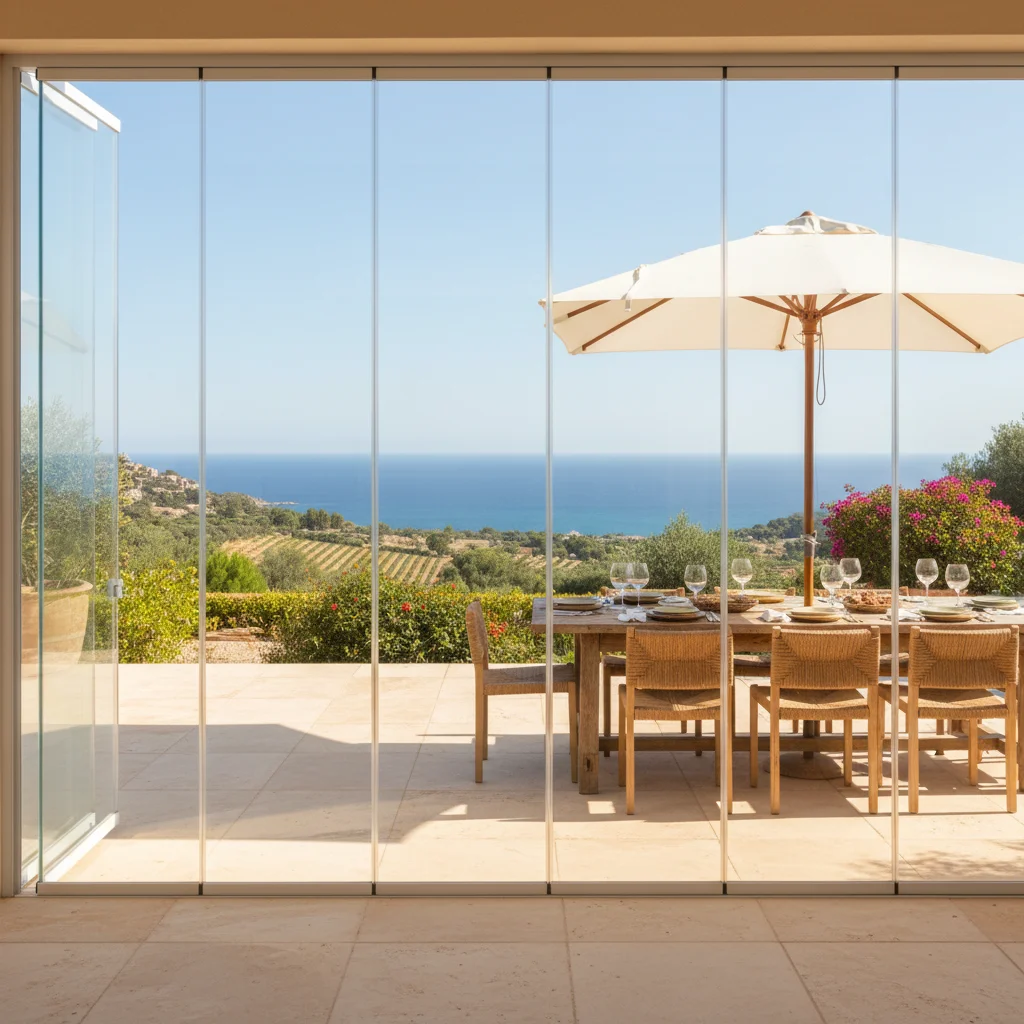
The international makeup of Pedreguer, where roughly a quarter of our neighbors are British, Dutch, or German, has fundamentally shifted how these terraces are utilized. I have noticed a significant trend where homeowners are moving away from the traditional "seasonal" use of their outdoor space. Instead, there is a demand for permanent, weather-protected zones that function as second living rooms or integrated outdoor kitchens. A frameless glass curtain system is the most effective way to achieve this without sacrificing the panoramic views that make hillside living so desirable. Unlike traditional PVC enclosures or heavy-framed windows, these systems allow you to maintain an unobstructed visual link to the valley while providing a physical barrier against the elements.
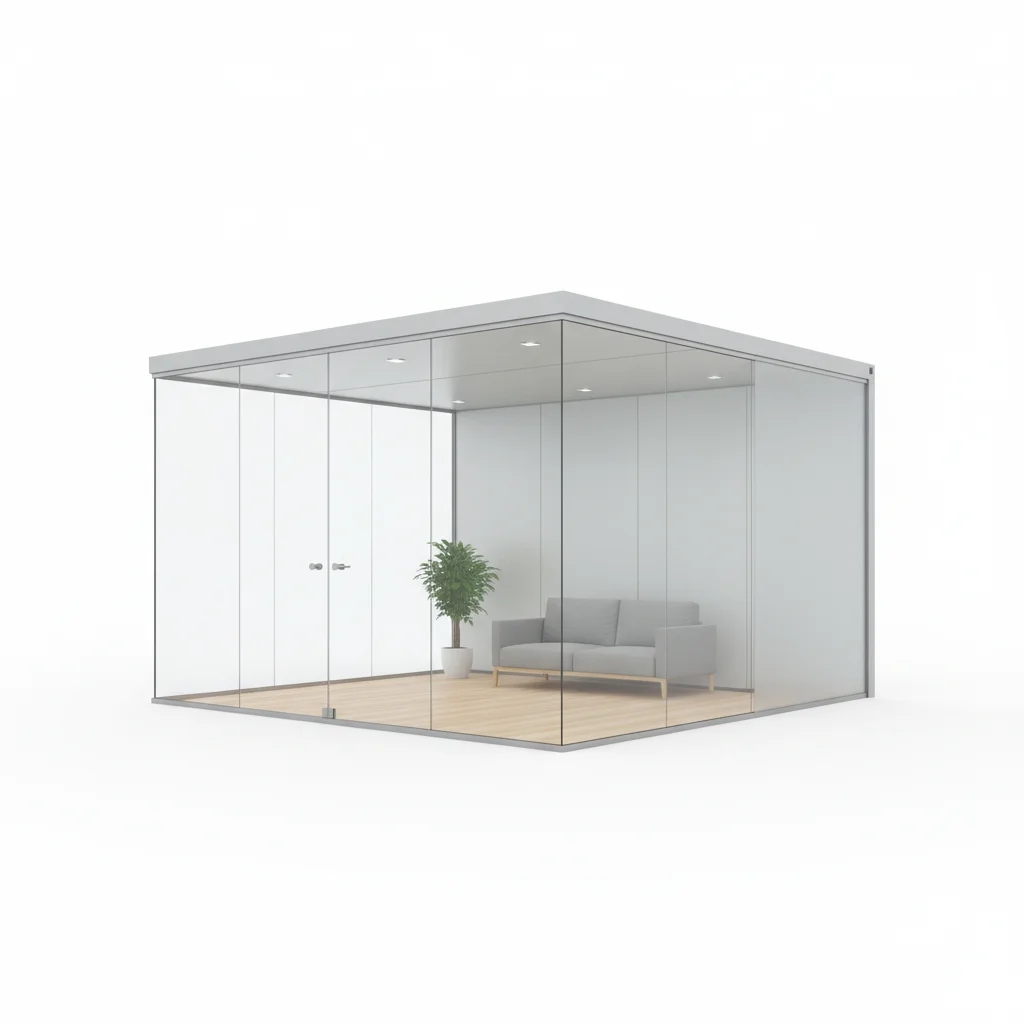
When we look at the typical luxury villa in the outskirts of town, we are often dealing with substantial floor-to-ceiling heights and wide spans. A glass room, which combines a fixed or retractable roof with glass curtain walls, effectively adds a twenty to forty square meter footprint to your home. This is particularly relevant for the German and Dutch residents I work with, who often prioritize thermal efficiency and high-end finishes for their outdoor cooking areas. By enclosing a terrace with ten-millimeter toughened glass panels, you are creating a thermal buffer zone. This space traps solar heat during the day, which in turn reduces the heating load on your main living area during the cooler months. It is a practical solution that respects the local aesthetic while solving the very real problem of wind-whipped terraces.
Practical Technical Considerations for the Pedreguer Microclimate
Pedreguer benefits from a sheltered microclimate that many coastal towns envy. The protection provided by the surrounding ranges, similar to the Montgó-style mountain shielding found in Javea, means we deal with lower humidity levels than the southern zones of the Costa Blanca. However, this geography also creates a funneling effect for breezes. If your property faces the opening of the valley toward Ondara or Dénia, you likely experience a moderate but persistent coastal breeze that can make an open terrace uncomfortable for evening dining. When I am advising on a glass curtain installation here, the first thing I look at is the wind load. For a standard five-meter span, a high-quality frameless system will cost between four thousand and six thousand Euros, depending on the glass thickness and the complexity of the track system.
One of the most significant advantages of our specific area is the reduced salt air impact compared to front-line properties in Dénia or Javea. In Pedreguer, the air is drier and less corrosive, which means the stainless steel bearings and aluminum tracks of your glass curtains will have a significantly longer lifespan with less maintenance. While coastal residents have to wash salt residue off their tracks weekly to prevent pitting, a Pedreguer homeowner can usually manage with a simple bi-monthly wipe-down and a spray of silicone lubricant on the moving parts. However, we do have to contend with the calima—that fine red dust from the Sahara. Glass curtains are an absolute lifesaver here. Instead of spending hours scrubbing your terrace furniture after a dust storm, you simply slide the glass panels shut and keep your interior pristine.
Before you commit to a project, it is essential to understand the local regulations. In many of the urbanizations surrounding the town center, there is a Comunidad de Propietarios to consider. While glass curtains are generally viewed as a non-permanent, demountable installation that does not require the same rigorous planning permission as a brick-and-mortar extension, it is always professional courtesy—and often a legal requirement—to check the community statutes. Most communities in this area are supportive because these systems maintain the uniform look of the building facade. I often recommend the 10mm toughened glass panels over the 8mm variety for these hillside villas. The extra weight provides a more solid feel when the wind picks up and offers superior acoustic insulation if your property is near the busier transit routes leading toward the AP-7 or the national road.
For a mid-sized terrace enclosure of approximately six linear meters, you should budget roughly five thousand five hundred Euros for a top-tier system. This includes the bottom-weighted or top-hung tracking, the specialized weather stripping between the panes, and the professional installation required to ensure the panels slide and stack perfectly. If you are looking at a full glass room—meaning we are also installing a glass or sandwich-panel roof—the investment typically starts at around twelve thousand Euros. This investment is frequently recovered in the increased valuation of the property, as you are effectively turning a seasonal terrace into a year-round living space that matches the high standards of the local real estate market.
Tailored Configurations for Hillside Villas and Townhouses
The architecture in Pedreguer is diverse, ranging from the narrow, high-ceilinged townhouses of the Old Town to the expansive modern villas on the surrounding slopes. For those living in a villa with a large terrace of sixty square meters or more, a "one-size-fits-all" approach never works. I typically recommend a hybrid configuration. This involves installing a bioclimatic pergola as the primary structure, with frameless glass curtains integrated into the sides. This setup allows you to control the overhead sunlight and ventilation via motorized louvers while having the option to completely seal the sides during a rainstorm or a particularly windy afternoon. This combination is the gold standard for outdoor living in the Marina Alta.
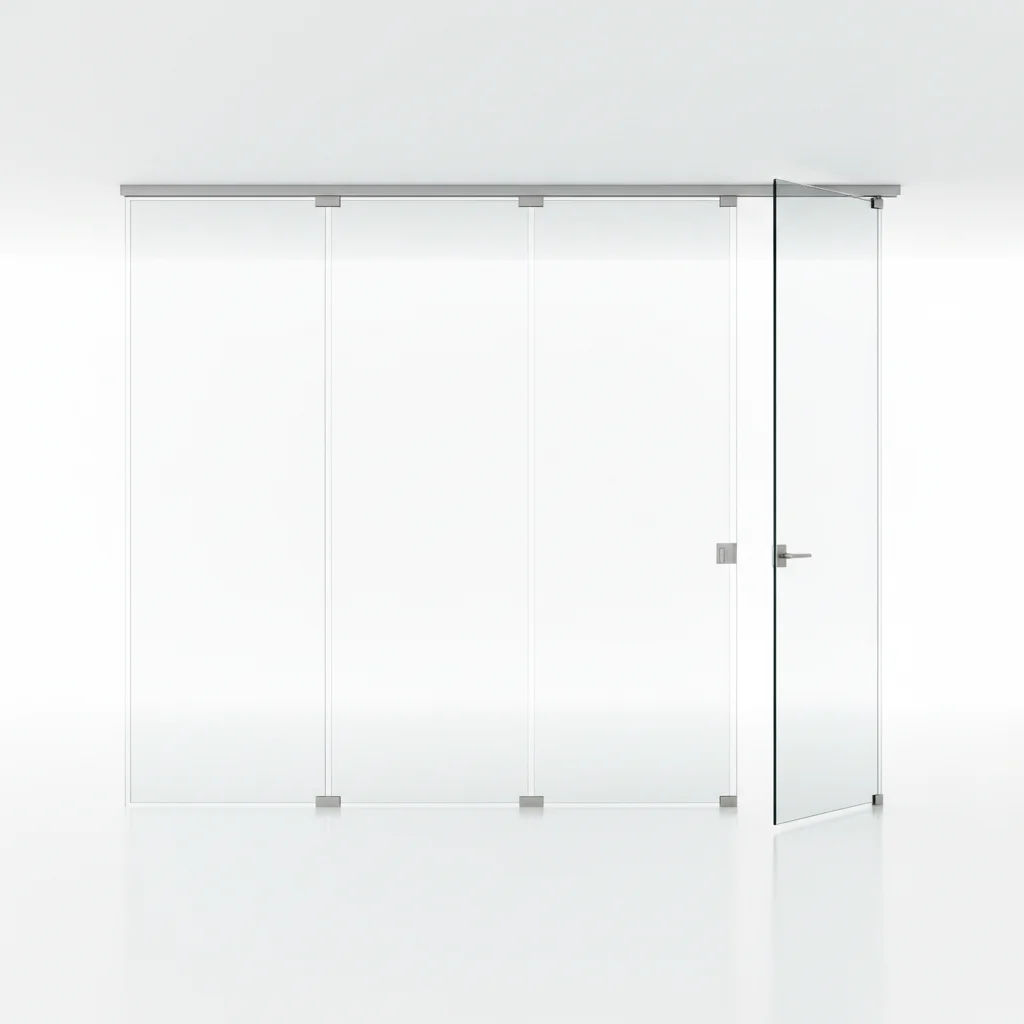
In these larger villa setups, we often use a "side-stacking" mechanism. This allows all the glass panels to slide to one or both ends of the track and fold inward like the pages of a book. When fully opened, the system takes up less than five percent of the total span, leaving your view of the valley completely unobstructed. For a typical eight-meter terrace width, we might split this into two four-meter sections that stack on either side. This ensures the weight distribution is managed correctly across the header beam of your terrace. If your villa has a curved terrace, which is common in some of the older, more traditional builds near the Vall de Laguar, we can utilize specialized tracks that allow the glass to navigate corners and curves, though this does add a premium to the installation cost.
For residents in the more compact townhouses or apartments closer to the Sunday Market area, the focus is often on privacy and wind protection. In these cases, we might suggest glass curtains with a slight tint or a reflective coating to manage the heat of the afternoon sun. If your space is limited, perhaps a smaller four-meter balcony, a glass curtain system can be installed for as little as three thousand two hundred Euros. This is an excellent way to create a quiet reading nook or a protected space for your plants. Many of my clients also choose to pair their glass curtains with vertical awnings or "screen" blinds. This gives you total control: glass for wind and rain, and the awning for solar protection and privacy from the street.
When we integrate these systems with other products like fixed pergolas or traditional awnings, we are looking to create a multi-layered defense against the weather. For example, a fixed pergola with a sandwich panel roof provides permanent shade and rain protection, but without glass curtains, it remains a wind tunnel. By adding the glass, you transform it into a legitimate room. I always emphasize that the track must be recessed into the floor whenever possible to create a seamless transition between the interior and exterior. This "flush-floor" finish is something that requires careful planning during the initial survey, but it makes a massive difference in the daily usability and safety of the space, especially if you have grandchildren or elderly guests visiting.
Logistics and Local Expertise in the Pedreguer Region
Executing a successful installation in this part of the Costa Blanca requires more than just high-quality glass; it requires an intimate understanding of the local geography. Pedreguer has its quirks, from the incredibly narrow streets of the historic center that challenge delivery vehicles to the steep, winding driveways of the hillside urbanizations. I have personally overseen deliveries where we had to coordinate smaller transit vans because a standard heavy goods vehicle simply couldn't make the turn near the Old Town plaza. When we work in nearby Jalon or Benissa, we face similar logistical hurdles, and knowing which access roads are viable is part of the service we provide.
Our team is deeply familiar with the neighborhoods from Ondara to Javea and Dénia. We understand that a house sitting on the edge of the Pedreguer woods will have different drainage requirements for its glass curtain tracks than a penthouse in the center of town. When it rains here, it often comes down with significant intensity—what we call the Gota Fría. A standard glass curtain system is not one hundred percent hermetic, but with the correct drainage channels built into the tracks and proper sealing at the base, it will keep your terrace dry even in a heavy downpour. This local knowledge ensures that we don't just install a product, but we install a solution that actually works when the weather turns.
Beyond the installation, I pride myself on being a neighbor you can rely on. If you have questions about how a glass room might affect your property's orientation toward the afternoon sun, or if you are concerned about how the wind coming off the mountains will impact the stability of a large glass span, I am here to help. I offer free on-site consultations throughout Pedreguer and the surrounding valleys. We can sit on your terrace, look at the specific angles of your property, and I will give you a straight-up assessment of what will work and what won't. There is no marketing speak or high-pressure sales here—just honest advice from someone who has spent years helping families make the most of their life on the Costa Blanca. Whether you are in the middle of a renovation or looking to upgrade your current villa, let’s talk about how we can make your outdoor space more functional for every day of the year.
 JW'"
/>
JW'"
/>