Outdoor Living in El Campello
El Campello is home to 29,000 residents with a 20% international community — a laid-back coastal town between Alicante and Benidorm where dramatic coves, Roman ruins, and a genuine village atmosphere attract residents seeking quality over quantity.
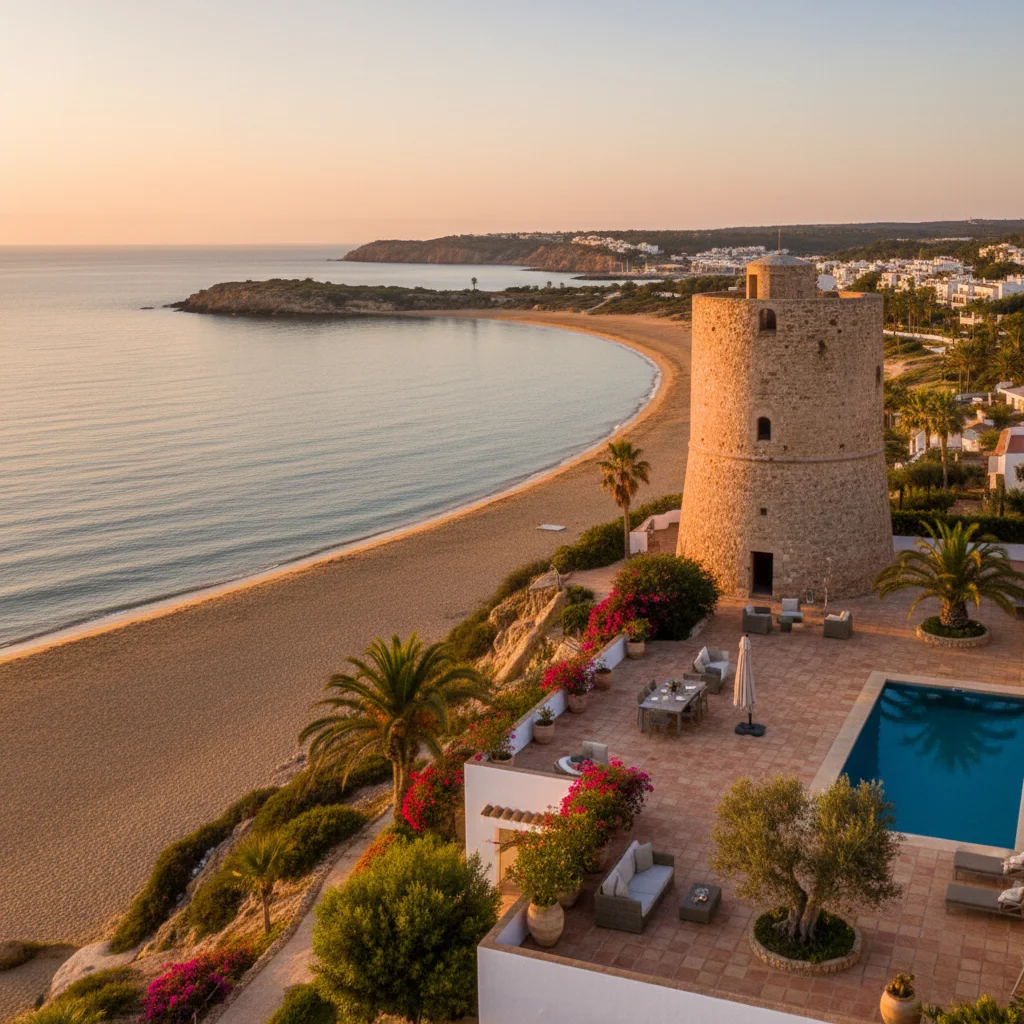
El Campello occupies one of the most visually striking stretches of the Costa Blanca coastline. The iconic 16th-century Watchtower stands guard above the fishing harbour, while the shoreline to the north reveals a succession of hidden coves and rocky inlets — Coveta Fumà, the Baths of the Queen (an ancient Roman fish pool), and the dramatic cliffs of the Cala del Amerador. It is coastal Spain at its most unspoilt.
The town draws a mix of British, Nordic, and German residents who want Mediterranean life without the crowds of larger resorts. Property prices average around €220,000, with options ranging from seafront apartments along the Muchavista beach strip to hillside villas with sweeping sea views in urbanisaciones like Pueblo Acantilado and Coveta Fumà. Townhouses in the centre, close to the weekly market and the harbour restaurants, offer a walkable village lifestyle with terraces of 15–25 square metres.
El Campello’s outdoor culture is shaped by its coastline. Residents live facing the sea, and terraces are oriented for sunset views over the Mediterranean. Evening cooking on a terrace above the coves is not a luxury here — it is the default way to spend a summer evening, and increasingly a winter one too.
El Campello’s stunning coastal setting, moderate property prices, and relaxed international community make it ideal territory for outdoor cooking enthusiasts who want space, views, and a genuine village feel.
Choosing Your Setup in El Campello
El Campello’s mix of seafront apartments and hillside villas means equipment choices range from compact terrace-friendly units to full outdoor kitchen installations — with salt-air resistance essential across the board.
Muchavista beachfront apartments typically have balcony terraces of 8–15 square metres. A compact kamado grill or a quality two-burner gas BBQ is the practical choice here, delivering real cooking performance without overwhelming the space. These terraces face the sea, which means salt exposure is significant — Costa Blanca Outdoors recommends marine-grade stainless steel or ceramic kamado grills for any property on the Muchavista strip.
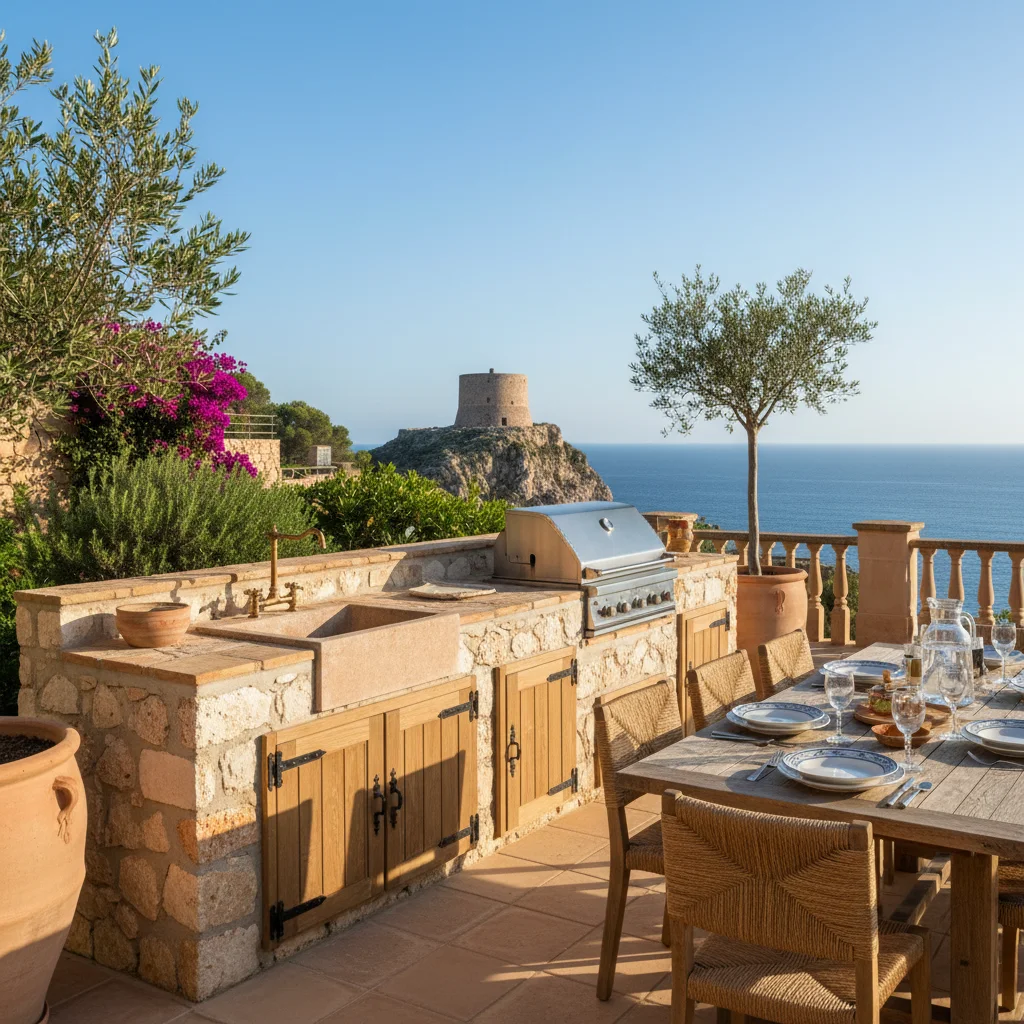
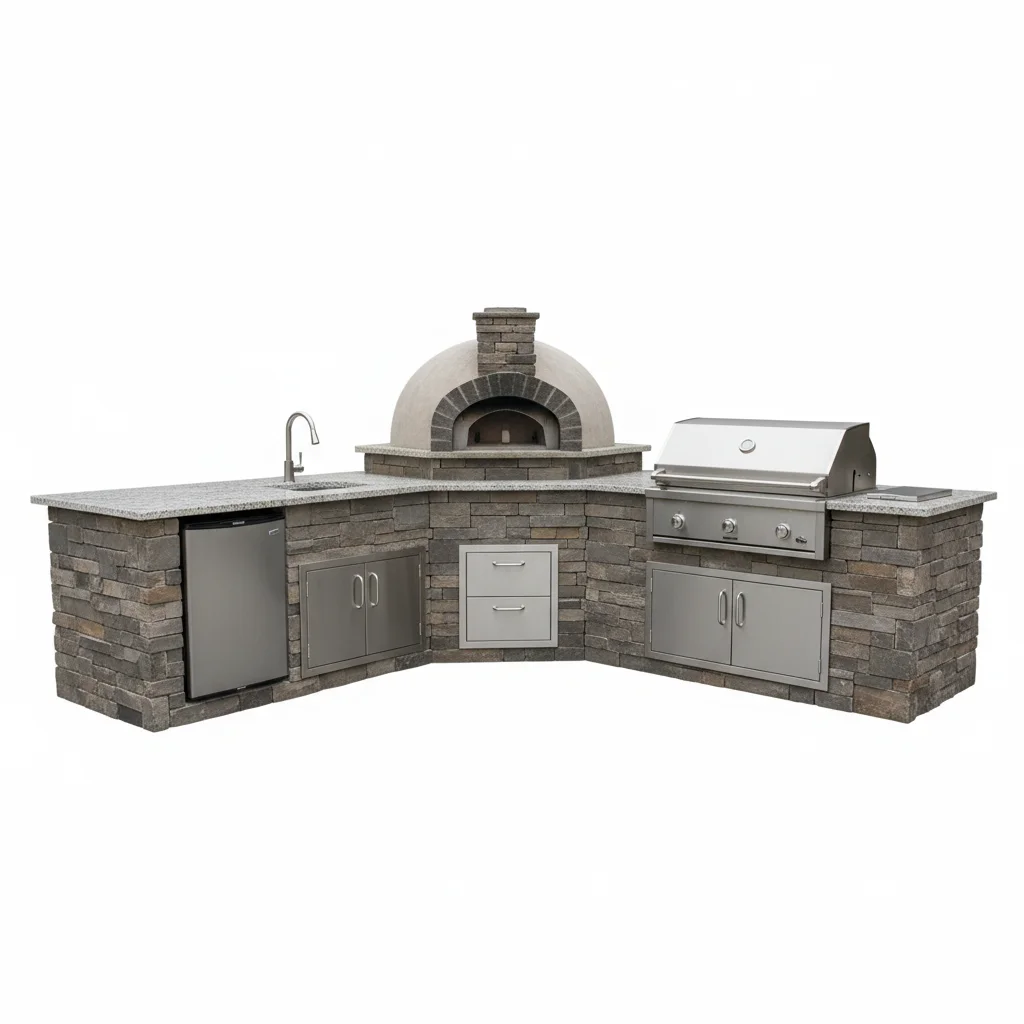
Hillside villa owners in Coveta Fumà, Pueblo Acantilado, and the elevated urbanisaciones behind the town have the space for more ambitious setups. A built-in gas grill with side burner, paired with a wood-fired pizza oven, takes full advantage of those panoramic terraces. These properties often have covered naya-style outdoor living areas of 30–50 square metres — perfect for a complete outdoor kitchen installation with preparation counters and storage.
Wind is a factor in El Campello. The elevated coastal position means afternoon breezes can be brisk, particularly on hillside terraces. Kamado grills handle wind exceptionally well thanks to their sealed design, while gas BBQs benefit from windshield attachments. Costa Blanca Outdoors advises on wind-appropriate equipment selection based on your specific terrace orientation.
For El Campello, Costa Blanca Outdoors recommends wind-resistant, salt-proof equipment — ceramic kamados for exposed terraces and marine-grade stainless gas BBQs for sheltered villa setups.
Delivery to El Campello
We deliver throughout El Campello, from the Muchavista beachfront to the hillside urbanisaciones of Coveta Fumà and Pueblo Acantilado, on our weekly northern Alicante route.
El Campello sits on the N-332 coastal road between Alicante and Benidorm, making it a natural stop on our central delivery corridor. Beachfront deliveries along Muchavista are straightforward, with good road access and lift-equipped buildings. The town centre around the harbour and market area has narrower streets, so we schedule these deliveries during quieter morning hours.
Hillside properties in Coveta Fumà and the elevated urbanisaciones require careful planning. Some access roads are steep with tight turns, and we always confirm vehicle access and terrace entry points before scheduling heavy deliveries. Our team handles full assembly on-site, including positioning on elevated terraces and a complete equipment walkthrough.
Neighbouring Alicante and San Juan de Alicante are on the same southern route, while Villajoyosa and Benidorm connect on our northern schedule. In-stock items ship within 5–10 working days, while custom outdoor kitchen projects require 3–4 weeks for design, fabrication, and professional installation.
Designing a Resilient Outdoor Kitchen for the El Campello Lifestyle
Living on this specific stretch of the Costa Blanca requires a shift in how we think about home infrastructure, particularly when moving the heart of the home outside. With a population of roughly 29,000 people and a significant international community making up a fifth of the residents, the demand for high-quality outdoor culinary spaces has evolved. The British, Nordic, and German families who have settled here bring diverse expectations for their terraces, ranging from high-heat searing for northern European meats to slow-roasting capabilities. Whether your property is a compact apartment overlooking the promenade near the Watchtower or a sprawling villa tucked into the hills of Coveta Fumà, the environment dictates your design choices more than your aesthetic preferences ever will.
The outdoor culture here is defined by longevity. We have over 300 days of sun, but that sunlight is accompanied by high UV indices that can degrade inferior plastics and low-grade powders in a single season. In the more elevated areas near the Coves, the topography creates microclimates where wind speeds can pick up unexpectedly, making the stability and weight of your kitchen modules a safety consideration. For those living closer to the historical Baths of the Queen, the lifestyle is very much centered on the transition between the sea and the terrace. This means your cooking space isn't just a place to flip burgers; it is a permanent architectural feature that must withstand the specific atmospheric pressures of a coastal Mediterranean town.
When I talk to homeowners in the municipality, I often see a divide in property types that necessitates very different approaches to outdoor kitchen planning. The average property price here sits around €220,000, which covers everything from front-line apartments with 12m² balconies to older detached houses with 800m² plots that require full landscape integration. In a villa setting, an outdoor kitchen serves as an anchor for the garden, often requiring a footprint of at least 3 to 5 linear meters to accommodate a prep sink, refrigeration, and multiple heat sources. In contrast, the apartment dweller near the town center needs a vertical, compact solution that maximizes every square centimeter without violating the strict regulations often set by the local comunidad de propietarios regarding smoke and permanent structures.
Engineering for Salt, Sun, and the Alicante Winds
The technical reality of installing an outdoor kitchen in this region is dominated by two primary forces: the Levante and the Poniente. The Levante brings humid, salt-heavy air from the east, while the Poniente arrives as a hot, dry blast from the interior. For anyone living within two kilometers of the shoreline, salt spray is a relentless corrosive agent. I have seen standard "outdoor" grills sold in big-box retailers rust through in less than eighteen months because they used 430-grade stainless steel. If you are serious about a kitchen that lasts, you must insist on 304-grade stainless steel at a minimum, though 316-grade—often referred to as marine-grade—is the gold standard for those fronting the Mediterranean.
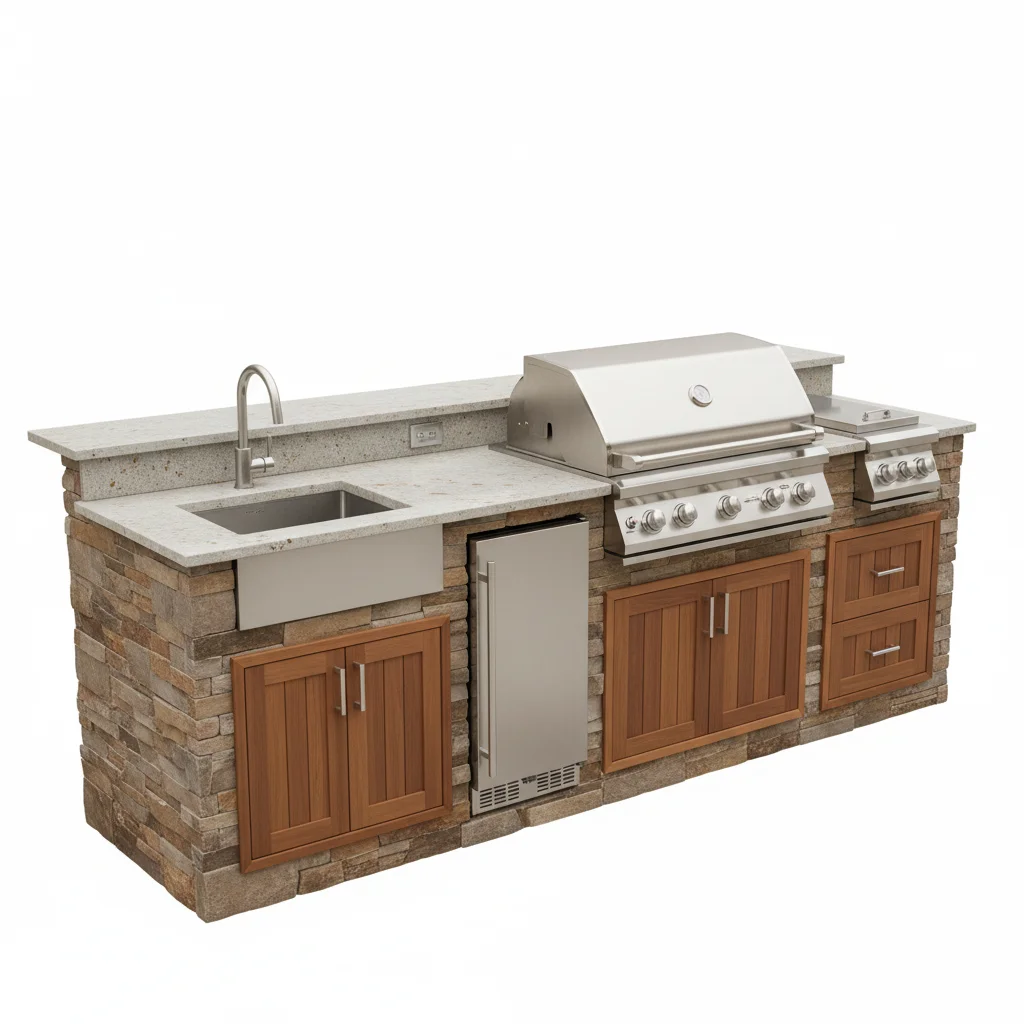
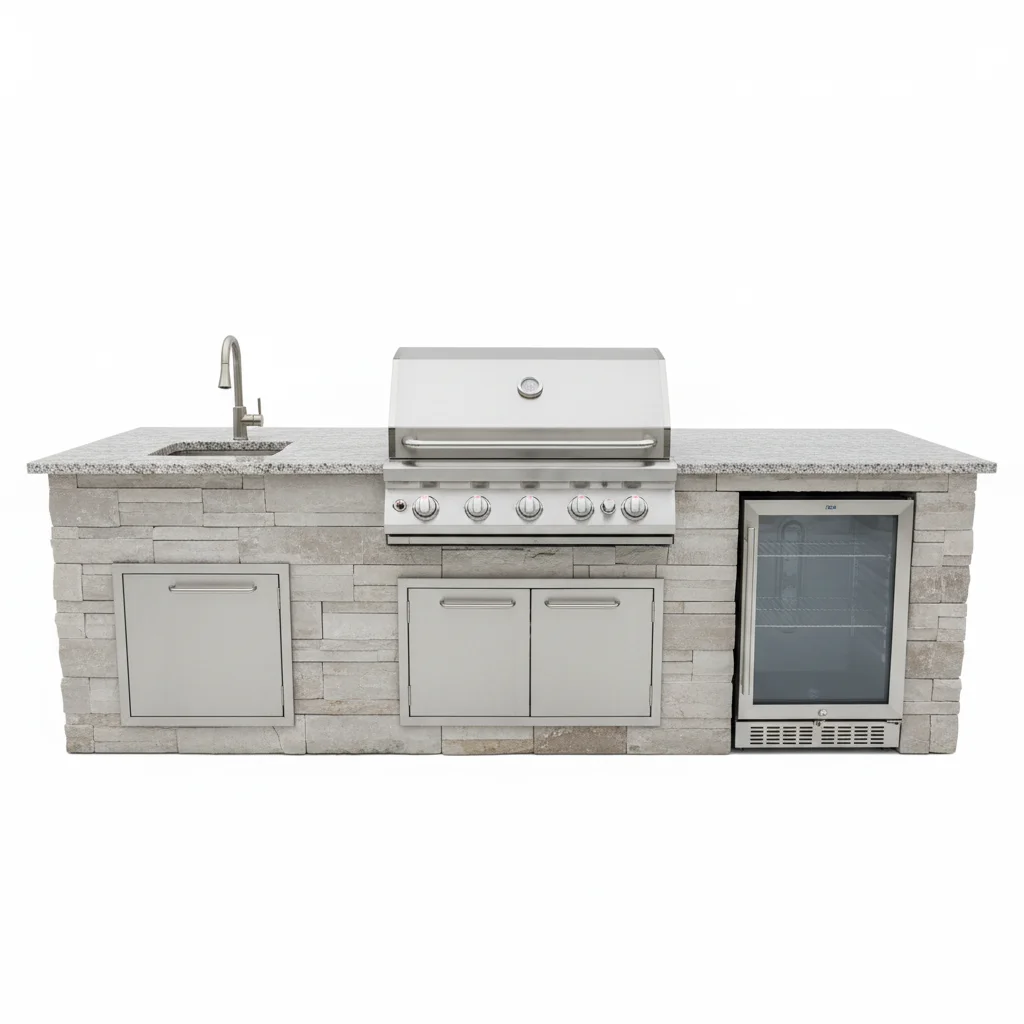
Beyond the metalwork, the worktop material is where most mistakes happen. Natural granite is a popular choice, but it must be sealed correctly to prevent staining from oils and acidic spills like lemon juice or wine. Dekton or other sintered stones are often better suited for the intense UV exposure we experience here; they won't fade or crack under the expansion and contraction caused by the thermal shock of a mid-day sun followed by a cool evening breeze. If you are planning a budget of around €8,000 for a mid-range modular setup, allocating a significant portion of that to the countertop material is a wiser long-term investment than buying a flashy grill with too many plastic dials.
Installation logistics in the older parts of town or the winding streets of the northern coves also present unique challenges. Access for delivery vehicles can be tight, and if you are on an upper floor of a residential block, we often have to coordinate with local crane operators to lift heavy stone components or large grill units over balconies. You also need to consider the gas supply. While some newer developments have piped town gas, most residents still rely on the orange Butano or Cepsa bottles. A well-designed outdoor kitchen must include a ventilated, accessible cabinet specifically for these bottles, ensuring they are hidden but easy to swap out during a Sunday lunch. For a high-performance setup, I recommend the Napoleon BILEX 485 built-in gas head, which usually retails around €1,200 to €1,500. It offers the heavy-duty stainless steel construction needed for our climate and fits perfectly into a custom masonry or modular island.
Tailored Configurations for Local Property Types
For the villas found in the quieter, residential outskirts of the town, I recommend a comprehensive "L-shaped" or "U-shaped" configuration that creates a self-sufficient cooking zone. A typical 4-meter run allows for a zone-based layout: a wet zone with a deep sink for cleaning locally caught fish, a prep zone with integrated waste bins, and a hot zone. In these larger spaces, I strongly advise combining a high-performance gas grill for convenience with a ceramic Kamado-style BBQ. The Kamado, such as a Monolith or Kamado Joe, acts as a versatile oven for slow-cooking lamb or smoking briskets, which is particularly popular with our Nordic and German residents. This combination, including cabinetry and stone worktops, typically ranges from €12,000 to €18,000 depending on the complexity of the plumbing and electrical work required.
In the beachfront apartments and penthouses where space is a premium, the strategy shifts toward "lineal efficiency." You don't need a 5-burner monster that dominates the terrace. Instead, a 2.5-meter straight run with a high-quality built-in gas grill and a compact pizza oven can provide more than enough utility. The pizza oven is a fantastic addition here because it reaches temperature quickly and serves as a social focal point without the footprint of a full traditional oven. Brands like Gozney or Ooni have models that can be integrated into a countertop, keeping the floor space clear for seating. A high-end apartment setup of this nature, using premium weather-resistant cabinetry, generally costs between €4,500 and €7,500.
Crucially, any installation in a shared building must respect the communal rules. Many buildings near the port have specific bylaws about where smoke can be vented. We often suggest installing powerful, outdoor-rated extraction hoods if the kitchen is located under a terrace overhang, or positioning the grill at the furthest point from the building's facade to allow the sea breeze to naturally disperse the smoke. Furthermore, the use of covers is non-negotiable. Even the highest quality 316-steel will benefit from a heavy-duty, breathable cover to protect it from the fine "calima" dust that blows over from the Sahara, which can trap moisture and salt against the metal surfaces if left unattended.
Local Logistics and Expert Implementation
Operating across the Costa Blanca since 2019 has taught me that no two streets have the same requirements. When we deliver to clients in this area, or to our neighbors in Alicante, San Juan, and Villajoyosa, we aren't just dropping off boxes. We are navigating the logistical realities of the N-332 and the AP-7, understanding that a delivery to a hilltop property in Coveta Fumà requires a different vehicle than a delivery to a narrow street in the old town center. We know where the "vados" (private Ford entrances) are and how to manage the municipal permits if a skip or a crane is needed for a larger renovation project.
Our deep knowledge of the local geography extends to the environmental stressors of each neighborhood. We know that a kitchen installed 50 meters from the shoreline requires different hardware than one installed three kilometers inland where the air is slightly less saline but the wind is more turbulent. This local nuance is what prevents a €20,000 investment from becoming a maintenance nightmare three years down the line. We have spent years vetting local subcontractors—plumbers who understand the nuances of Spanish water pressure and electricians who know how to properly ground outdoor circuits in high-humidity environments.
If you are considering upgrading your outdoor living space, the first step isn't choosing a grill; it's assessing your site's orientation and its exposure to the elements. We offer a free initial consultation where we look at your terrace or garden, measure the available space, and discuss the technical requirements for gas, water, and electricity. Whether you want a simple modular unit to improve your weekend grilling or a full-scale professional-grade kitchen that rivals your indoor setup, we can guide you through the process from initial sketch to the first lighting of the burners. Our goal is to ensure that your outdoor kitchen becomes a permanent, value-adding part of your home that stands up to the unique demands of life in this part of Spain.
 JW'"
/>
JW'"
/>