Outdoor Living in Villajoyosa
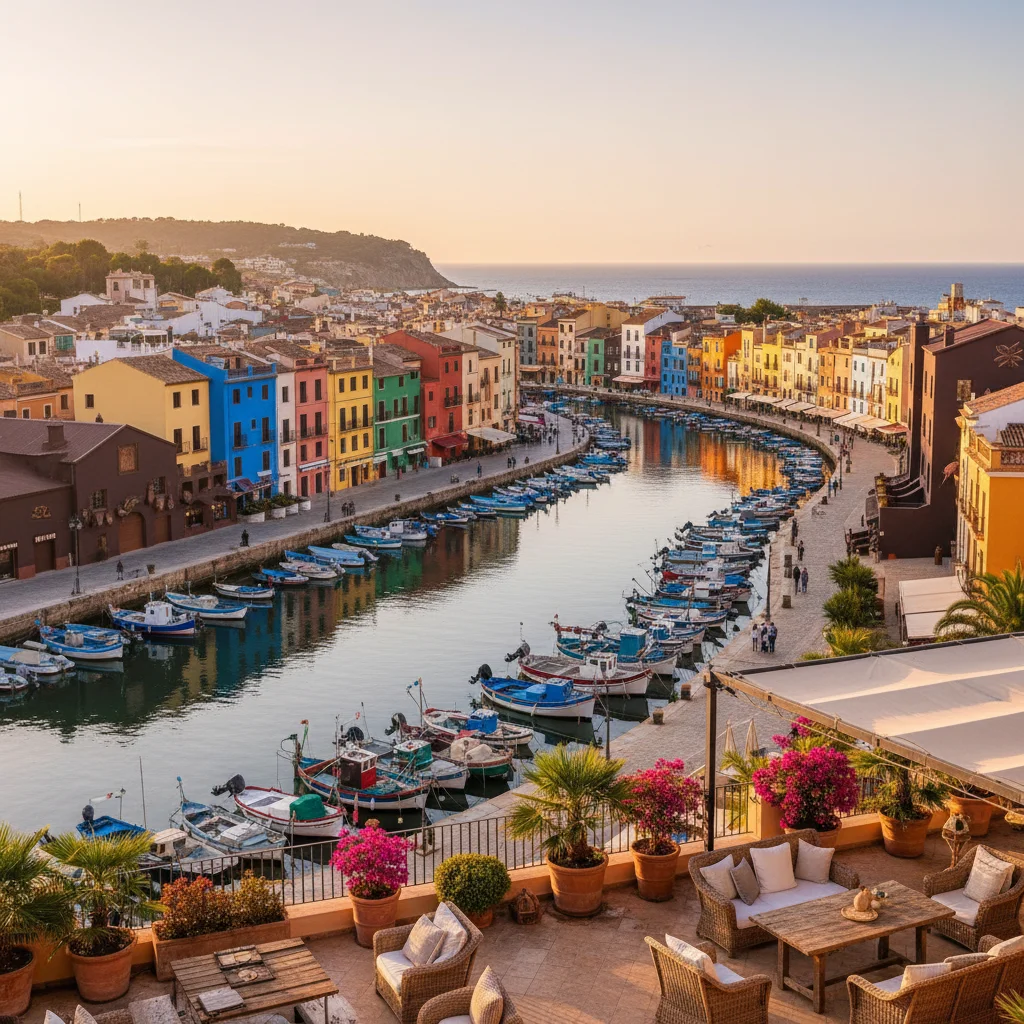
Villajoyosa — La Vila Joiosa in Valencian — is an authentic Spanish coastal town of 35,000 residents with a 15% expat community, famous for its rainbow-painted seafront houses, Valor chocolate factory, and an active fishing port that puts fresh-caught seafood on the grill within hours of landing.
Villajoyosa feels different from the resort towns that surround it. This is a working town with a genuine Spanish identity. Fishermen still haul catches into the port each morning, the Valor chocolate museum draws visitors from across the province, and the iconic coloured houses along the waterfront have become one of the Costa Blanca’s most photographed landmarks. At €200,000 average, property prices remain remarkably accessible for a coastal town with this much character.
The old quarter climbs the hillside behind the seafront in a tangle of narrow streets and traditional houses. Behind the town, residential villas dot the slopes with sea views. Beachfront apartments line the Playa Centro and extend toward the quieter Paraiso and Bol Nou beaches to the south. This variety means outdoor cooking setups range from compact balcony grills on seafront apartments to full terrace installations on hillside villas.
The expat community, while smaller proportionally than in neighbouring Benidorm or Finestrat, is a committed group of residents who chose Villajoyosa specifically for its authenticity. British, Dutch, and German homeowners mix easily with the Spanish majority, and the town’s restaurants, fiestas, and beach culture create a social environment where outdoor entertaining is a weekly fixture, not a special occasion.
Villajoyosa’s authentic Spanish coastal character, affordable property market, and active fishing port create a unique outdoor cooking environment where fresh seafood, colourful streetscapes, and a genuine community come together.
Choosing Your Setup in Villajoyosa
With fresh fish from the port, hillside villa terraces, and a seafront that demands stainless steel — Villajoyosa’s equipment choices need to balance coastal conditions with the town’s exceptional access to quality produce.
The fishing port changes your approach to outdoor cooking. When you can buy dorada, lubina, or gambas straight off the boat each morning, a gas plancha or flat-top grill becomes essential rather than optional. Many of our Villajoyosa customers add a plancha attachment to their main BBQ specifically for seafood — the high, even heat sears fish perfectly without the flare-ups that grill grates can cause.
For beachfront apartment owners along Playa Centro, a compact gas BBQ rated for balcony use is the practical choice. Salt air is a serious consideration this close to the water — Costa Blanca Outdoors exclusively recommends stainless-steel construction or marine-grade coated models for any seafront position. Check your building’s community rules regarding balcony cooking before purchasing, and we will advise on compliant options.
Hillside villa owners have more options. A full gas BBQ, a pizza oven for weekend bread and pizza sessions, and a kamado grill for smoking the fresh fish and seafood that the port provides daily. The elevated positions above town typically get good afternoon breezes, which helps with charcoal and wood-fired cooking but means positioning your setup with a windbreak is sensible.
A wood-fired pizza oven pairs beautifully with the local food culture. Villajoyosa’s bakeries and the Valor chocolate tradition reflect a town that takes food seriously — your outdoor kitchen fits right into that heritage.
Prioritise stainless steel for seafront apartments, add a plancha for the port’s fresh seafood, and take advantage of hillside villa space for full outdoor kitchen builds — Villajoyosa’s food culture deserves quality equipment.
Delivery to Villajoyosa
We deliver across all Villajoyosa neighbourhoods weekly — from the seafront apartments to the hillside villas and the old quarter — as part of our central Costa Blanca route.
Villajoyosa is a regular stop on our central delivery circuit. The town is well laid out with good road access to most areas, though the old quarter requires some care with narrow streets and limited parking. For seafront apartment deliveries, we coordinate lift access, timing, and building entry in advance. Hillside villa deliveries are straightforward, with private driveways and easy terrace access.
Every delivery includes full unpacking, assembly, placement in your chosen spot, and a walkthrough of your equipment’s features and maintenance requirements — particularly important for coastal locations where salt air care extends the life of your investment.
Villajoyosa sits between several towns on our regular route. Benidorm is ten minutes north, Finestrat just inland, and Campello a short drive south toward Alicante. We combine deliveries across these towns regularly.
Standard delivery for in-stock items is 5–10 working days. Custom outdoor kitchen installations for hillside villas run 3–4 weeks from design to completion, including countertop construction, equipment fitting, and all gas connections.
Securing Privacy and Durability for Your Villajoyosa Property
Living in Villajoyosa offers a unique Mediterranean lifestyle that differs significantly from our neighbors in Benidorm or the more urbanized pockets of Alicante. As someone who has spent years navigating the local landscape of the Costa Blanca, I have observed how the 35,000 residents here, including a significant fifteen percent international community of British, Dutch, and German expats, prioritize their outdoor living spaces. Whether you own one of the iconic Coloured Houses near the seafront or a modern villa closer to the Chocolate Museum, the requirement for effective garden fencing and privacy screens is driven by more than just aesthetics. It is a fundamental necessity for creating a functional outdoor room. The property stock here is incredibly diverse, ranging from compact beachfront apartments where every square centimeter of a balcony counts, to sprawling inland villas with garden perimeters exceeding fifty meters. In my experience helping over 200 families settle into this region, I have found that the Dutch and German residents particularly value high-spec screening to facilitate year-round outdoor cooking, while many British expats focus on creating a secure, private enclosure for pets and family gatherings.
The outdoor culture in this part of Spain is centered around the terrace, yet the density of the historic center and the rising popularity of new developments in areas like the heights of Montiboli mean that overlooking is a common issue. When you are sitting on your terrace enjoying a local coffee, you do not necessarily want the entire neighborhood to be part of your conversation. This is where high-quality screening comes into play. However, choosing the right material for this specific town requires more than just an eye for design. You are dealing with a varied geography that transitions rapidly from the humid fishing port environment to the drier, wind-swept hillsides. The average property price here sits around two hundred thousand Euros, and making the wrong choice in fencing can lead to a rapid depreciation of your home’s curb appeal or, worse, a costly replacement project within just twenty-four months due to the aggressive local climate.
Essential Technical Considerations for the Local Climate
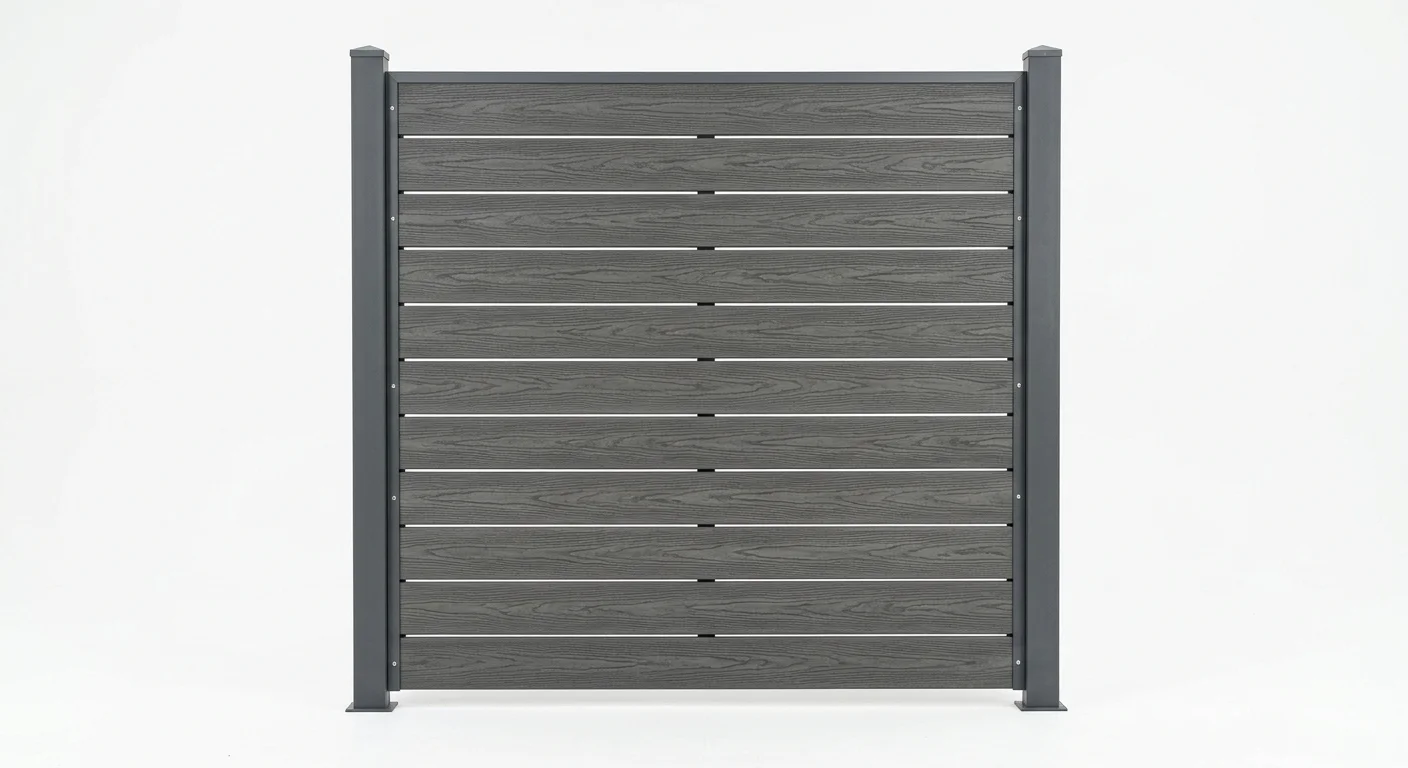
The coastal position of our town presents a specific set of environmental challenges that I see many homeowners overlook until it is too late. We are situated in an area heavily influenced by both the Levante and Poniente winds. The Levante brings in high humidity and salt spray directly from the Mediterranean, which is a significant factor for any property located within two kilometers of the shore. If you install standard metal fencing that hasn't been specifically treated for marine environments, the salt air will begin to penetrate the finish almost immediately, leading to oxidation and structural failure. For residents living near the fishing port or along the frontline, I always recommend high-grade powder-coated aluminium or specialized composite materials. A standard aluminium slat fencing system, which might cost between EUR 150 and EUR 220 per linear meter depending on the height and slat spacing, offers the best resistance to this saline corrosion. Unlike timber, which requires annual sanding and staining to prevent the salt from drying out the fibers, aluminium remains inert and only requires a simple rinse with fresh water to maintain its integrity.
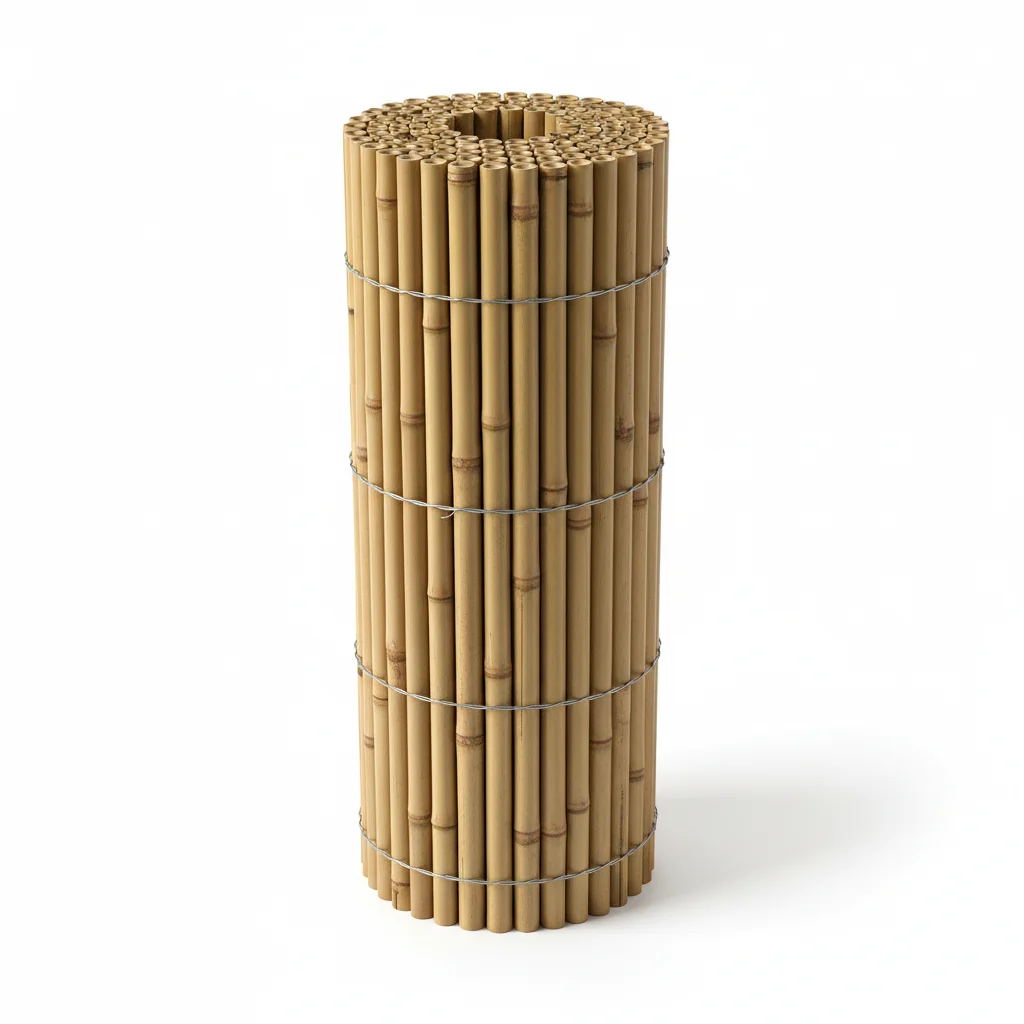
The second major factor is the intense UV radiation we experience year-round on the Costa Blanca. The sun here is relentless, and inferior PVC or low-quality plastic screening will become brittle and lose its color within two summers. I have seen countless "bargain" reed mats and green plastic meshes turn to dust under the Spanish sun. If you are considering composite panels, you must ensure they are "capped" composites with high UV stabilizers. For a mid-range budget of approximately EUR 800 to EUR 1,200, you can secure enough high-quality, UV-resistant bamboo or composite screening to cover a standard ten-meter terrace perimeter. This investment ensures that the rich greys or natural wood tones you choose today will look exactly the same five years from now. Furthermore, the wind loading in our area cannot be underestimated. A solid fence acts like a sail. In a heavy Poniente wind, a poorly anchored privacy screen can be ripped clean off a wall or, worse, can cause structural damage to your terrace railings. I advise my clients to look for "permeable" designs—slat fencing or perforated screens that allow air to pass through while still blocking the line of sight.
Navigating the local comunidad de propietarios or Community of Owners is another hurdle that is very specific to our region. If you live in an apartment block or a shared urbanization, you are likely bound by strict rules regarding the height, color, and material of any external modifications. In Villajoyosa, many communities mandate a specific shade of "Grey Anthracite" or a particular style of wood-effect screening to maintain a uniform look across the facade. Before you spend EUR 2,000 on a new fencing setup, it is vital to obtain written permission from your community president. I have witnessed several instances where owners were forced to dismantle beautiful, expensive installations because they deviated from the community's master plan. Always remember that your fencing must also comply with local municipal height restrictions, which generally cap garden walls and fences at two meters, though this can vary if you are on a corner plot or near a public right-of-way.
Tailored Recommendations for Your Property Type
When it comes to selecting a specific setup, your property type dictates the most effective solution. For the larger villas found on the outskirts toward Finestrat or tucked away in the more rural partidas, I frequently recommend a combination of hard and soft landscaping. A robust base of anthracite aluminium fencing provides the primary security and privacy, while the integration of artificial-grass at the base can soften the look and reduce heat radiation from the ground. For a villa garden with a thirty-meter perimeter, a professional installation of 1.5-meter high composite fencing might range between EUR 3,000 and EUR 5,000. This provides a permanent, zero-maintenance boundary that withstands the wind and requires nothing more than an occasional hosing down to remove the Saharan dust that occasionally settles over our region. The composite material mimics the warmth of wood without the risk of termite infestation or rot, which are real concerns in the more humid parts of our town.
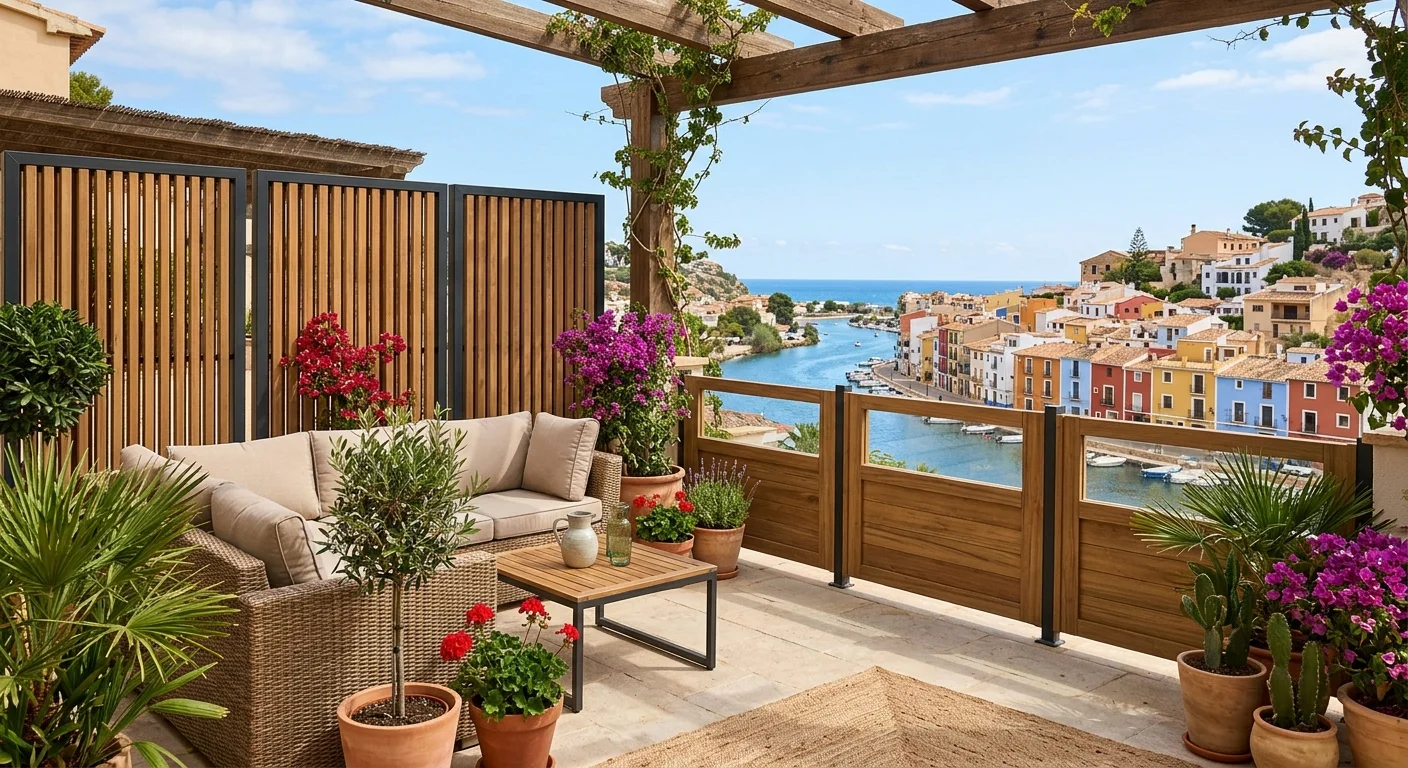
For the apartment dwellers closer to the town center or overlooking the beach, the approach must be more surgical. Space is at a premium, and the goal is often to block the view from a neighboring balcony while maintaining the sea breeze. In these scenarios, I recommend vertical slat privacy screens. These are thin, elegant, and can be mounted directly to existing railings or walls. They take up less than five centimeters of floor depth but provide total visual privacy. If you combine these screens with glass-curtains, you create a protected outdoor room that is usable even during the cooler months of January and February. A typical balcony setup using premium aluminium slats or high-density polyethylene screening will usually cost between EUR 400 and EUR 900. This configuration is particularly popular among our Dutch and British residents who want to maximize their square footage while ensuring their terrace remains a private sanctuary.
Another highly effective option for smaller spaces is the use of expandable trellis screening with integrated synthetic foliage. While I generally steer people away from cheap "plastic ivy," there are high-end versions made from UV-rated materials that are incredibly realistic. These are excellent for covering unsightly utility areas or air conditioning units which are common on Spanish terraces. Integrating these with a few well-placed pots can transform a sterile concrete area into a lush, private nook. The key is to ensure that every element is securely fastened with stainless steel fixings. I cannot stress this enough: using standard galvanized or plastic ties is a mistake in Villajoyosa. The salt will eat the galvanized coating in months, and the UV will snap the plastic ties, leading to your screens flapping dangerously in the next storm.
Local Logistics and Professional Delivery
Managing the delivery and installation of bulky fencing materials in our town requires a deep understanding of the local geography. Villajoyosa is not a grid; it is a historic town with narrow, winding streets and specific access restrictions, particularly around the fishing port and the older quarters near the Coloured Houses. Delivering a four-meter pallet of composite panels to a property in the center is an entirely different logistical challenge than delivering to a modern villa in nearby Finestrat or a coastal apartment in Campello. We understand these nuances. We know which streets require smaller delivery vehicles and where we need to coordinate with the local police for temporary parking permits to offload materials safely and efficiently.
Our team is also well-versed in the logistical requirements of neighboring areas like Benidorm and Alicante. We understand that a delivery to a high-rise apartment on the outskirts of Benidorm requires a different set of tools and manpower than a delivery to a flat plot in the rural parts of El Campello. When we provide a consultation, we aren't just looking at the dimensions of your garden; we are looking at the access route, the wind exposure of your specific plot, and the orientation of your terrace in relation to the sun. This local knowledge ensures that the materials we deliver are not only right for the job but can actually be transported to your doorstep without causing a neighborhood traffic jam.
Whether you are looking to secure a large garden or simply want to reclaim your balcony from the prying eyes of passers-by, we offer a free consultation to help you navigate these choices. We can talk through the technical specifications of different materials, help you understand the price points for various heights and lengths, and ensure that whatever you choose will survive the unique environmental pressures of the Costa Blanca. My goal is to ensure that your outdoor space becomes the retreat you envisioned when you first decided to call this beautiful part of Spain your home. We are here to provide the expertise, the quality materials, and the local logistical support to make that happen.
 JW'"
/>
JW'"
/>