Outdoor Living in Villajoyosa
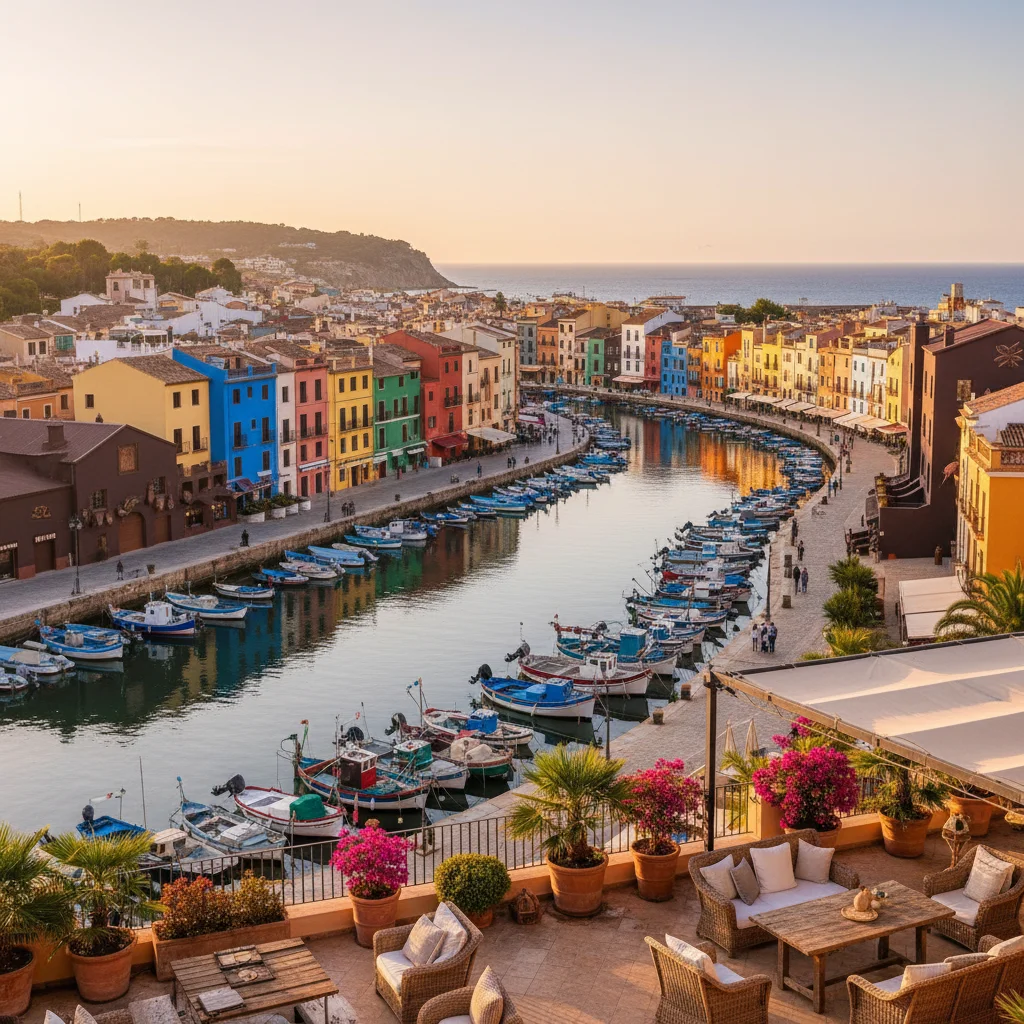
Villajoyosa — La Vila Joiosa in Valencian — is an authentic Spanish coastal town of 35,000 residents with a 15% expat community, famous for its rainbow-painted seafront houses, Valor chocolate factory, and an active fishing port that puts fresh-caught seafood on the grill within hours of landing.
Villajoyosa feels different from the resort towns that surround it. This is a working town with a genuine Spanish identity. Fishermen still haul catches into the port each morning, the Valor chocolate museum draws visitors from across the province, and the iconic coloured houses along the waterfront have become one of the Costa Blanca’s most photographed landmarks. At €200,000 average, property prices remain remarkably accessible for a coastal town with this much character.
The old quarter climbs the hillside behind the seafront in a tangle of narrow streets and traditional houses. Behind the town, residential villas dot the slopes with sea views. Beachfront apartments line the Playa Centro and extend toward the quieter Paraiso and Bol Nou beaches to the south. This variety means outdoor cooking setups range from compact balcony grills on seafront apartments to full terrace installations on hillside villas.
The expat community, while smaller proportionally than in neighbouring Benidorm or Finestrat, is a committed group of residents who chose Villajoyosa specifically for its authenticity. British, Dutch, and German homeowners mix easily with the Spanish majority, and the town’s restaurants, fiestas, and beach culture create a social environment where outdoor entertaining is a weekly fixture, not a special occasion.
Villajoyosa’s authentic Spanish coastal character, affordable property market, and active fishing port create a unique outdoor cooking environment where fresh seafood, colourful streetscapes, and a genuine community come together.
Choosing Your Setup in Villajoyosa
With fresh fish from the port, hillside villa terraces, and a seafront that demands stainless steel — Villajoyosa’s equipment choices need to balance coastal conditions with the town’s exceptional access to quality produce.
The fishing port changes your approach to outdoor cooking. When you can buy dorada, lubina, or gambas straight off the boat each morning, a gas plancha or flat-top grill becomes essential rather than optional. Many of our Villajoyosa customers add a plancha attachment to their main BBQ specifically for seafood — the high, even heat sears fish perfectly without the flare-ups that grill grates can cause.
For beachfront apartment owners along Playa Centro, a compact gas BBQ rated for balcony use is the practical choice. Salt air is a serious consideration this close to the water — Costa Blanca Outdoors exclusively recommends stainless-steel construction or marine-grade coated models for any seafront position. Check your building’s community rules regarding balcony cooking before purchasing, and we will advise on compliant options.
Hillside villa owners have more options. A full gas BBQ, a pizza oven for weekend bread and pizza sessions, and a kamado grill for smoking the fresh fish and seafood that the port provides daily. The elevated positions above town typically get good afternoon breezes, which helps with charcoal and wood-fired cooking but means positioning your setup with a windbreak is sensible.
A wood-fired pizza oven pairs beautifully with the local food culture. Villajoyosa’s bakeries and the Valor chocolate tradition reflect a town that takes food seriously — your outdoor kitchen fits right into that heritage.
Prioritise stainless steel for seafront apartments, add a plancha for the port’s fresh seafood, and take advantage of hillside villa space for full outdoor kitchen builds — Villajoyosa’s food culture deserves quality equipment.
Delivery to Villajoyosa
We deliver across all Villajoyosa neighbourhoods weekly — from the seafront apartments to the hillside villas and the old quarter — as part of our central Costa Blanca route.
Villajoyosa is a regular stop on our central delivery circuit. The town is well laid out with good road access to most areas, though the old quarter requires some care with narrow streets and limited parking. For seafront apartment deliveries, we coordinate lift access, timing, and building entry in advance. Hillside villa deliveries are straightforward, with private driveways and easy terrace access.
Every delivery includes full unpacking, assembly, placement in your chosen spot, and a walkthrough of your equipment’s features and maintenance requirements — particularly important for coastal locations where salt air care extends the life of your investment.
Villajoyosa sits between several towns on our regular route. Benidorm is ten minutes north, Finestrat just inland, and Campello a short drive south toward Alicante. We combine deliveries across these towns regularly.
Standard delivery for in-stock items is 5–10 working days. Custom outdoor kitchen installations for hillside villas run 3–4 weeks from design to completion, including countertop construction, equipment fitting, and all gas connections.
Mastering Outdoor Shade in the Coastal Microclimate of Villajoyosa
Living in this corner of the Marina Baixa offers a unique lifestyle that differs significantly from our neighbors in Benidorm or the more sheltered valleys of Finestrat. Since moving to the coast in 2019, I have spent a lot of time observing how the Mediterranean sun interacts with the specific architecture of this town. With a population of roughly 35,000 residents and a notable fifteen percent international community—primarily British, Dutch, and German expats—the demand for high-quality outdoor living spaces is exceptionally high. Most residents here treat their terraces and gardens as the primary living room for ten months of the year. However, the diverse property stock, ranging from the iconic narrow-fronted properties near the Chocolate Museum to the expansive modern villas on the outskirts, requires a nuanced approach to shade.
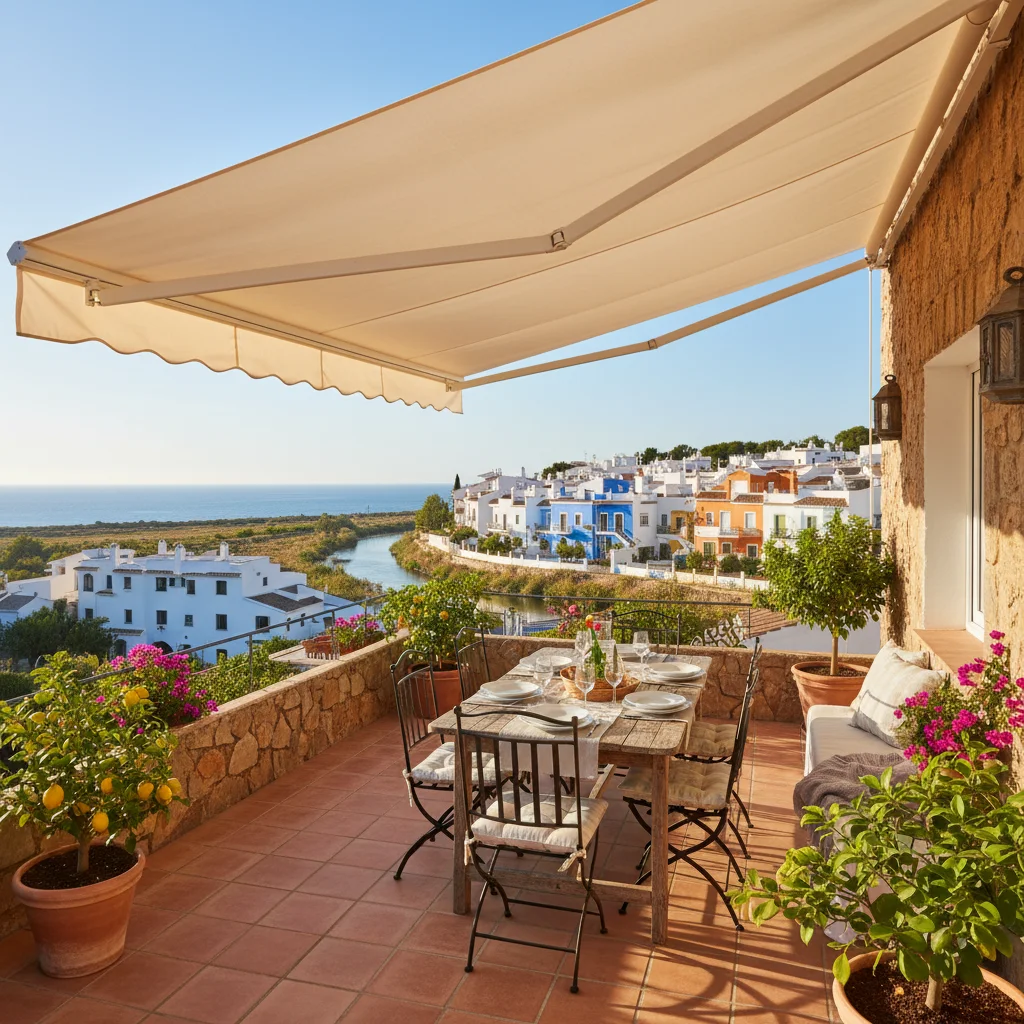
The outdoor culture here is heavily influenced by the international demographic. British and German residents often bring a tradition of outdoor dining and professional-grade grilling that requires more than just a simple umbrella. When you are hosting a lunch on a terrace overlooking the Fishing Port, a standard parasol rarely suffices because of the shifting sun angles and the unpredictable coastal breezes. We see a lot of families investing in property around the €200,000 mark, often realizing quickly that without a professional toldo, their south-facing balcony becomes unusable between 11:00 and 17:00. The heat retention in the traditional stone and modern concrete structures is immense, and a retractable awning serves as the first line of defense, not just for the terrace, but for cooling the interior of the home as well.
In the older parts of town, near the famous Coloured Houses, space is at a premium. Balconies are often deep but narrow, meaning an awning must be engineered to provide maximum projection without requiring a wide mounting point. In contrast, the newer developments toward the southern end of the municipality offer larger footprints where residents want to create entire outdoor "rooms." This is where the British and Dutch influence on outdoor lounge culture really shows. People want to replicate their indoor comfort outside, but the intense UV levels on the Costa Blanca will destroy cheap polyester fabrics in a single season. Genuine local expertise means understanding that a toldo is an architectural addition, not a temporary accessory.
Engineering for Salt Wind and Intense Mediterranean UV
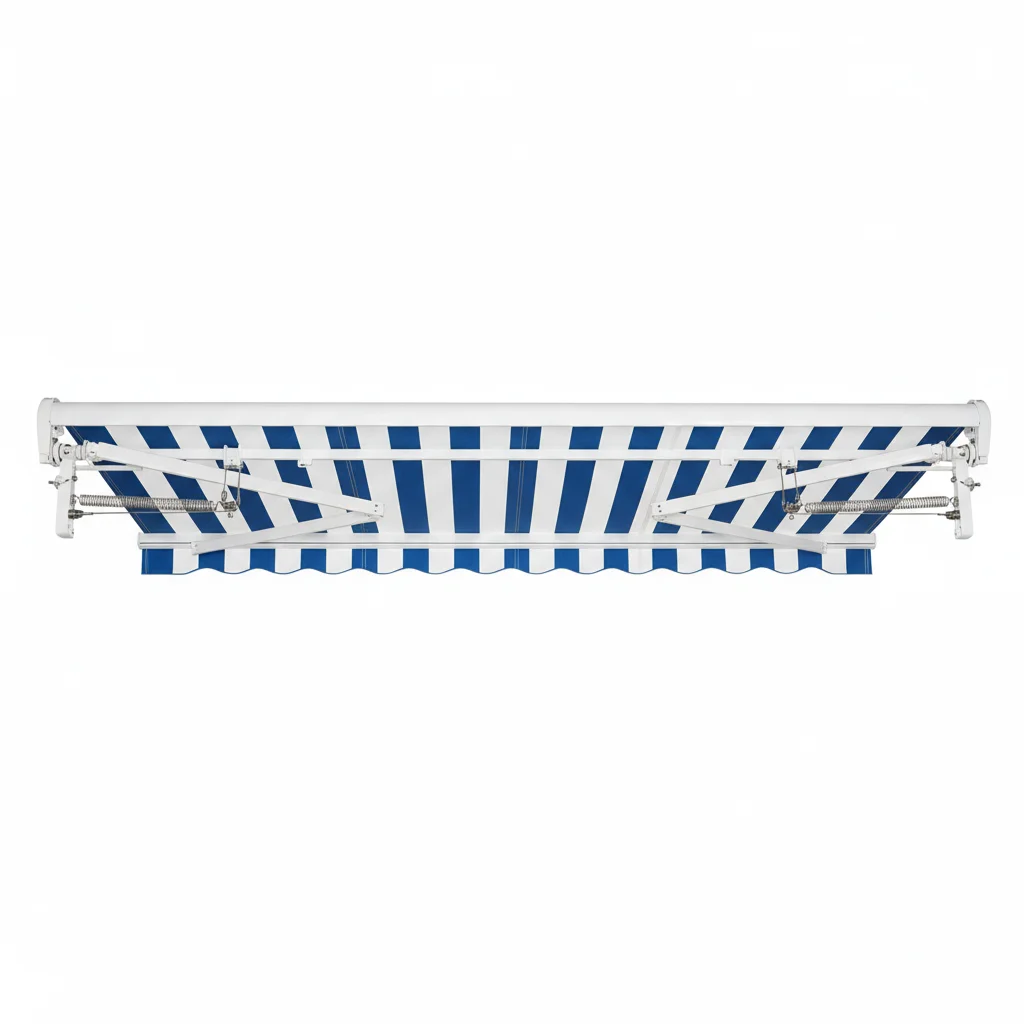
The most critical factor for any installation in this town is the geography. Our position on the coast exposes us to two dominant wind patterns: the Levante from the east and the Poniente from the west. Because we are an exposed coastal town, these winds can pick up speed rapidly, putting immense "lift" on an extended awning. If you are within two kilometers of the shore—which encompasses almost all of the residential areas—salt spray is your biggest enemy. Standard aluminum components will eventually pit and corrode if they aren't treated correctly. I always specify powder-coated aluminum profiles and, where possible, stainless steel internal springs and fixings. A standard 4-meter by 2.5-meter folding arm awning with basic hardware might cost €900 elsewhere, but in this environment, that is a recipe for a structural failure within two years.
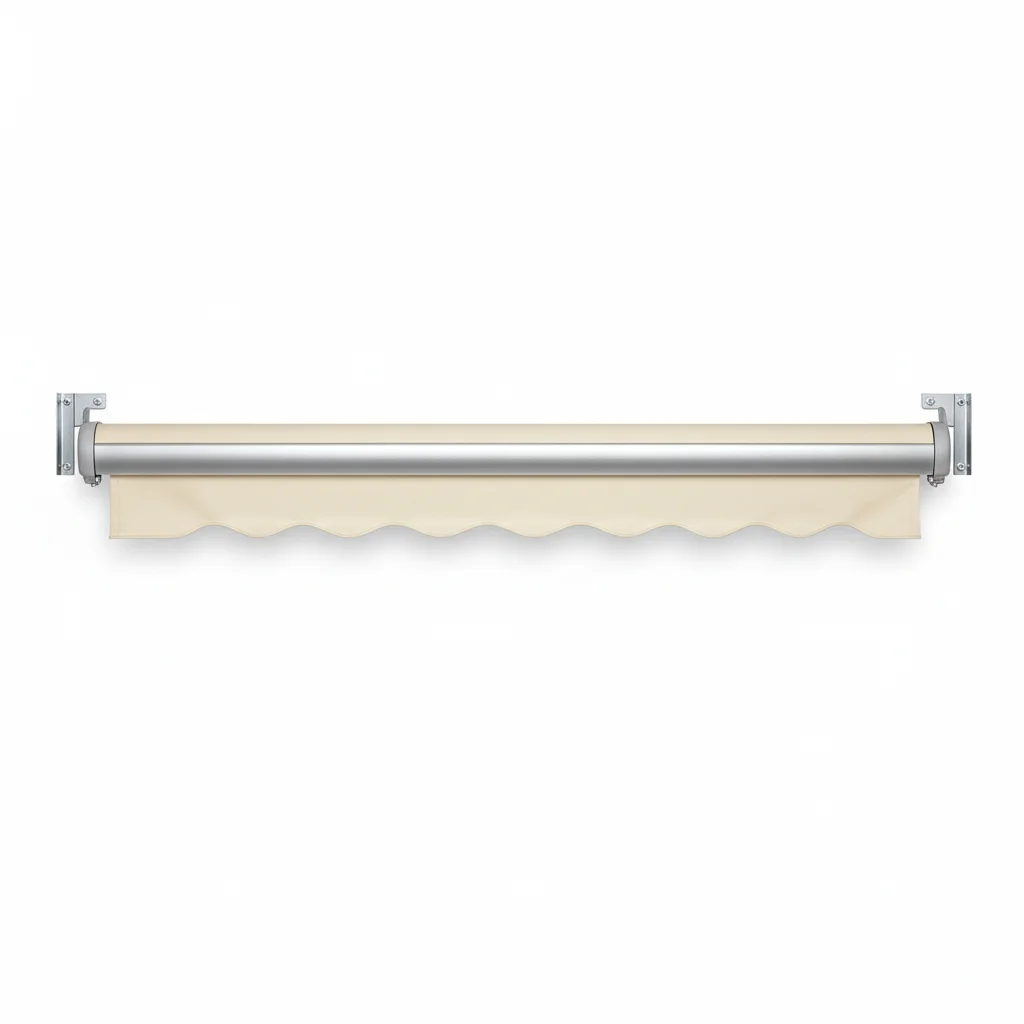
When I talk to residents about budget, I advise looking at the €1,500 to €2,800 range for a high-quality motorized system. This price point usually secures a "Full Cassette" or "Cofre" design. When the awning is retracted, the fabric and the mechanical arms are completely encased in an aluminum box. This is non-negotiable for homes near the Fishing Port or the beachfront. If the fabric is left exposed to the salt air and the winter rains, the grime will bake into the fibers the moment the sun comes out, leading to rot and permanent staining. We only use 100% solution-dyed acrylic fabrics, typically weighing around 300g/m². Unlike cheaper dip-dyed alternatives, the color in these threads goes all the way through, meaning it won't bleach white under the relentless July sun.
Another local technicality involves the "Comunidad de Propietarios" or community of owners. In many blocks of flats, the community has already voted on a specific RAL color for the aluminum and a specific pattern for the canvas. I have seen many expats buy a beautiful charcoal grey awning only to be forced to take it down by the community president because the building standard is "Albero" yellow or "Verde Botella." Before spending €2,000 on a motorized toldo, we always verify the community statutes. Furthermore, the mounting surface in many local buildings is "ladrillo hueco" or hollow brick. You cannot simply bolt an awning into this. We utilize chemical anchoring systems—an epoxy resin that bonds a threaded rod into the brickwork—to ensure that a 50kg awning doesn't pull the wall down during a sudden gust of wind.
For those looking for a specific entry-point recommendation, I often suggest a semi-cassette motorized toldo with a Somfy Eolis vibration sensor. A 4.5-meter wide unit with a 3-meter projection typically costs around €2,200 including professional installation. The vibration sensor is a lifesaver here; it detects when the wind is bouncing the front bar of the awning and automatically retracts the unit, preventing the arms from snapping or the wall brackets from failing while you are out having lunch in the town center.
Choosing the Right Configuration for Your Property Type
The architectural diversity here means there is no one-size-fits-all solution. For the beachfront apartments and those compact terraces in the central town area, I recommend the "Toldo de Punto Recto" or Straight Point Awning. These are the classic Spanish shutters you see on older buildings, but modernized with high-tension arms. They are superior for wind resistance because the arms are fixed to the wall at two points, creating a stable triangle. These are excellent for privacy and for blocking the low-hanging sun in the late afternoon. If your balcony is roughly 3 meters wide, a pair of manual straight-point awnings can be installed for approximately €1,200, providing a very traditional and effective cooling solution.
For the larger villas found in areas like Partida Paraíso or heading toward the hills of Finestrat, we move into the territory of Monoblock systems or Bioclimatic Pergolas. If you have a large open terrace of 20 square meters or more, a standard folding arm awning might struggle with the weight and wind load. In these cases, we often combine a large retractable awning with secondary shade solutions like shade sails for irregular corners or specialized parasols for dining areas. A Monoblock awning uses a square steel bar to support the weight, allowing for multiple sets of arms to be attached. This allows us to cover spans of 6 or 7 meters in a single run. For a villa owner, a motorized 6-meter Monoblock with premium Sunbrella fabric will likely sit in the €3,500 to €5,000 range, depending on the complexity of the electrical run.
Integrating these systems with other products often makes sense. Many of my clients find that while a toldo is great for the terrace attached to the house, their poolside area needs a different approach. We often pair awnings with shade sails—tensioned fabric structures that can stay up all summer. However, in this town, shade sails must be engineered with high-grade marine stainless steel turnbuckles because of the salt air. If you are looking at a bioclimatic pergola as a permanent structure, it offers the ultimate wind resistance, but the cost jumps significantly, starting at around €6,000 for a small footprint. For most residents, a well-engineered retractable awning provides the perfect balance of flexibility and cost-effectiveness.
Local Logistics and Implementation in the Marina Baixa
Installing outdoor equipment in this region requires more than just a ladder and a drill. The logistics of delivering a 5-meter long, 80kg aluminum cassette into the narrow streets of the old town or the winding roads near the Chocolate Museum requires meticulous planning. I have personally managed installations where we had to coordinate with the local police to briefly hold traffic or use specialized lifting equipment to get the units onto fourth-floor penthouses. We serve not only the immediate urban area but also the surrounding regions of Benidorm, Finestrat, Campello, and Alicante. Each of these areas has its own micro-logistics; for example, Benidorm often requires navigating complex service lifts in high-rise buildings, while Campello involves high-exposure beachfront wind considerations similar to our own.
Our knowledge of local building materials is what sets us apart. We know which urbanizations used high-quality concrete and which used the lighter, more problematic clay blocks that require specialized load-spreading plates. When we provide a quote, we aren't just looking at the price of the fabric; we are calculating the wind load based on your specific elevation and the orientation of your street. A north-facing terrace in the shadow of the hills will have completely different requirements than a south-facing frontline apartment exposed to the full force of the Mediterranean.
We offer a free consultation where we visit your property to measure the space and, more importantly, check the mounting surfaces and electrical access. I prefer to meet clients on-site to discuss how the sun moves across their specific terrace at different times of the year. Often, a client thinks they need a massive 4-meter projection, but after looking at the sun's path, we realize a 2.5-meter projection with a drop-down "valance" (a vertical piece of fabric at the end of the awning) will provide better shade during the peak heat of the afternoon. This kind of practical, street-level advice is what saves you money and ensures the installation actually does its job. If you are ready to reclaim your terrace from the heat, we can walk you through the options that make the most sense for your specific corner of the coast.
 JW'"
/>
JW'"
/>