Outdoor Living in Villajoyosa
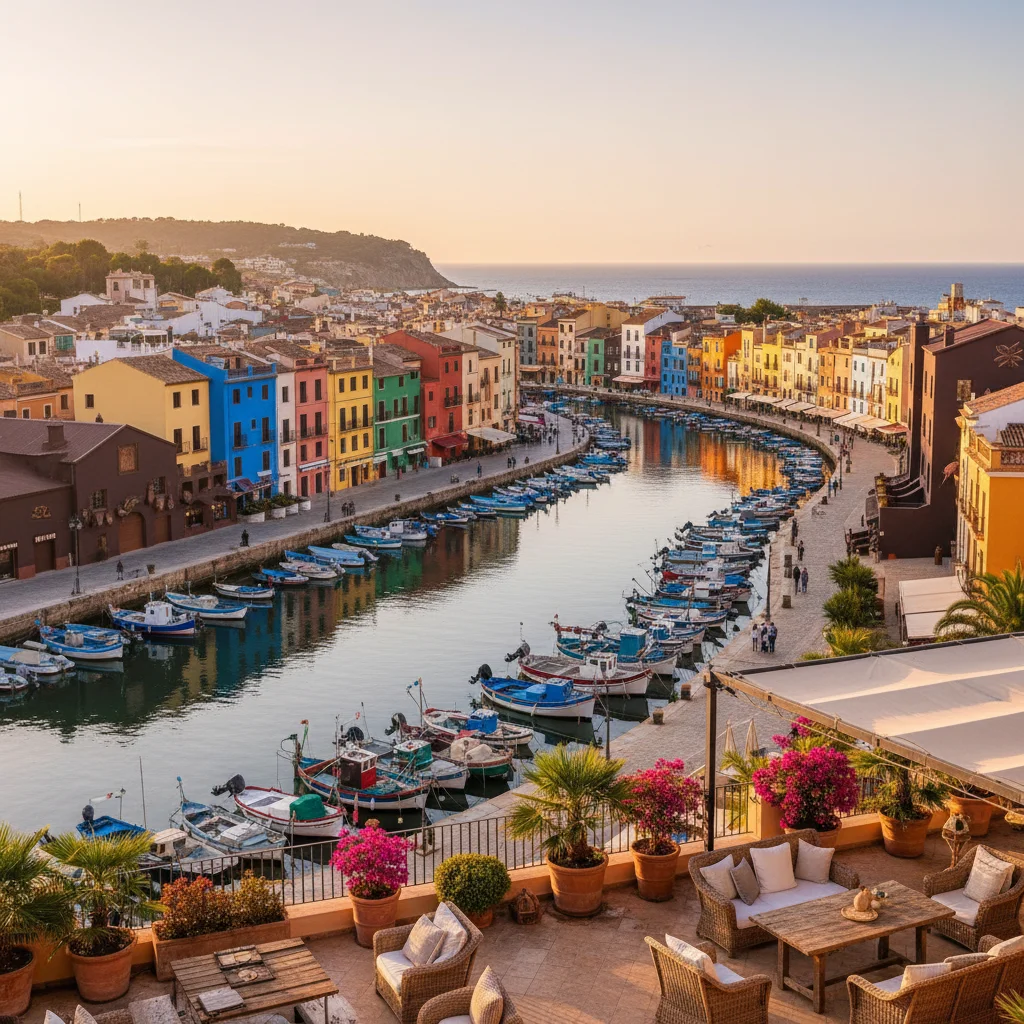
Villajoyosa — La Vila Joiosa in Valencian — is an authentic Spanish coastal town of 35,000 residents with a 15% expat community, famous for its rainbow-painted seafront houses, Valor chocolate factory, and an active fishing port that puts fresh-caught seafood on the grill within hours of landing.
Villajoyosa feels different from the resort towns that surround it. This is a working town with a genuine Spanish identity. Fishermen still haul catches into the port each morning, the Valor chocolate museum draws visitors from across the province, and the iconic coloured houses along the waterfront have become one of the Costa Blanca’s most photographed landmarks. At €200,000 average, property prices remain remarkably accessible for a coastal town with this much character.
The old quarter climbs the hillside behind the seafront in a tangle of narrow streets and traditional houses. Behind the town, residential villas dot the slopes with sea views. Beachfront apartments line the Playa Centro and extend toward the quieter Paraiso and Bol Nou beaches to the south. This variety means outdoor cooking setups range from compact balcony grills on seafront apartments to full terrace installations on hillside villas.
The expat community, while smaller proportionally than in neighbouring Benidorm or Finestrat, is a committed group of residents who chose Villajoyosa specifically for its authenticity. British, Dutch, and German homeowners mix easily with the Spanish majority, and the town’s restaurants, fiestas, and beach culture create a social environment where outdoor entertaining is a weekly fixture, not a special occasion.
Villajoyosa’s authentic Spanish coastal character, affordable property market, and active fishing port create a unique outdoor cooking environment where fresh seafood, colourful streetscapes, and a genuine community come together.
Choosing Your Setup in Villajoyosa
With fresh fish from the port, hillside villa terraces, and a seafront that demands stainless steel — Villajoyosa’s equipment choices need to balance coastal conditions with the town’s exceptional access to quality produce.
The fishing port changes your approach to outdoor cooking. When you can buy dorada, lubina, or gambas straight off the boat each morning, a gas plancha or flat-top grill becomes essential rather than optional. Many of our Villajoyosa customers add a plancha attachment to their main BBQ specifically for seafood — the high, even heat sears fish perfectly without the flare-ups that grill grates can cause.
For beachfront apartment owners along Playa Centro, a compact gas BBQ rated for balcony use is the practical choice. Salt air is a serious consideration this close to the water — Costa Blanca Outdoors exclusively recommends stainless-steel construction or marine-grade coated models for any seafront position. Check your building’s community rules regarding balcony cooking before purchasing, and we will advise on compliant options.
Hillside villa owners have more options. A full gas BBQ, a pizza oven for weekend bread and pizza sessions, and a kamado grill for smoking the fresh fish and seafood that the port provides daily. The elevated positions above town typically get good afternoon breezes, which helps with charcoal and wood-fired cooking but means positioning your setup with a windbreak is sensible.
A wood-fired pizza oven pairs beautifully with the local food culture. Villajoyosa’s bakeries and the Valor chocolate tradition reflect a town that takes food seriously — your outdoor kitchen fits right into that heritage.
Prioritise stainless steel for seafront apartments, add a plancha for the port’s fresh seafood, and take advantage of hillside villa space for full outdoor kitchen builds — Villajoyosa’s food culture deserves quality equipment.
Delivery to Villajoyosa
We deliver across all Villajoyosa neighbourhoods weekly — from the seafront apartments to the hillside villas and the old quarter — as part of our central Costa Blanca route.
Villajoyosa is a regular stop on our central delivery circuit. The town is well laid out with good road access to most areas, though the old quarter requires some care with narrow streets and limited parking. For seafront apartment deliveries, we coordinate lift access, timing, and building entry in advance. Hillside villa deliveries are straightforward, with private driveways and easy terrace access.
Every delivery includes full unpacking, assembly, placement in your chosen spot, and a walkthrough of your equipment’s features and maintenance requirements — particularly important for coastal locations where salt air care extends the life of your investment.
Villajoyosa sits between several towns on our regular route. Benidorm is ten minutes north, Finestrat just inland, and Campello a short drive south toward Alicante. We combine deliveries across these towns regularly.
Standard delivery for in-stock items is 5–10 working days. Custom outdoor kitchen installations for hillside villas run 3–4 weeks from design to completion, including countertop construction, equipment fitting, and all gas connections.
Bioclimatic Pergolas in Villajoyosa: What You Need to Know
Living in this corner of the Marina Baixa offers a unique microclimate that differs significantly from the more sheltered areas of the northern Costa Blanca. The architectural landscape here is a fascinating mix, ranging from the iconic narrow, brightly painted fisherman houses near the shore to the more sprawling modern villas found as you move toward the hills near the chocolate museum. While the average property price sits around the 200,000 Euro mark, the diversity in how residents use their outdoor space is vast. I have spent years helping people navigate these differences, and it has become clear that the bioclimatic pergola is the most effective way to manage the intense environmental variables we face. This town attracts a savvy international demographic, with British, Dutch, and German residents making up about 15% of the population. These homeowners typically view their terraces as a primary living area rather than a secondary one, which changes the requirements for shade and weather protection significantly.
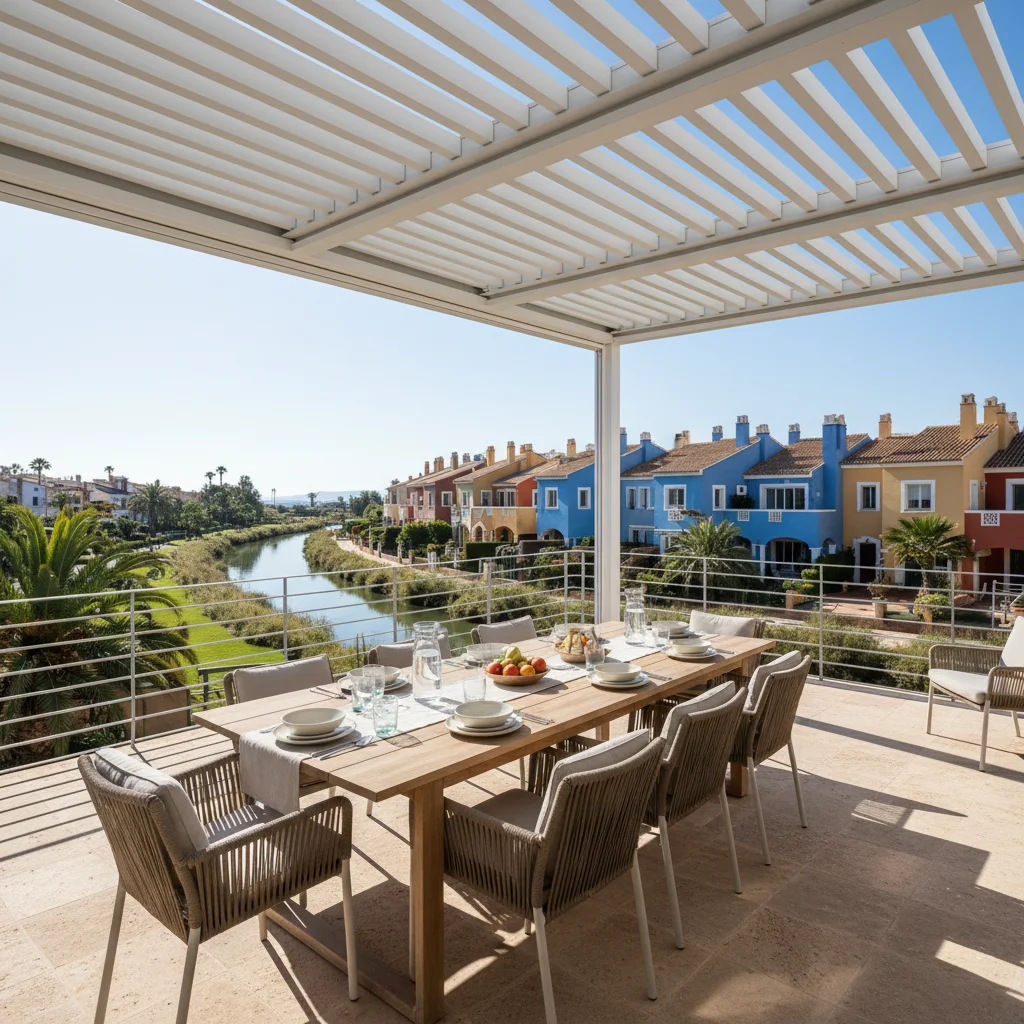
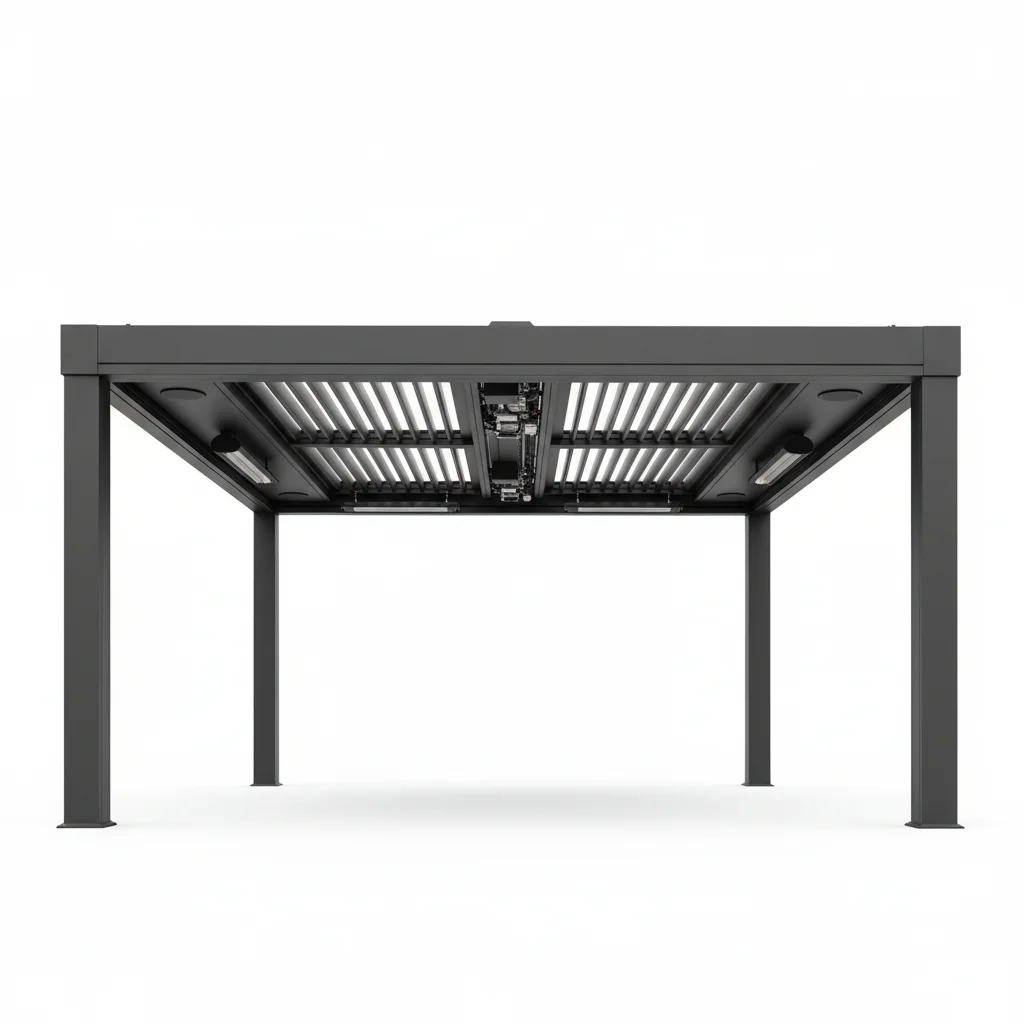
The outdoor culture here revolves around the long, sun-drenched days, but the transition between the blistering heat of July and the surprisingly damp, windy nights of February requires a versatile solution. Traditional awnings often fail because they cannot handle the sudden shifts in wind speed that occur near the fishing port. A bioclimatic pergola, constructed with motorized, adjustable aluminium louvers, allows you to pivot the roof to follow the sun's trajectory or close it entirely to create a watertight seal. This flexibility is essential for the compact balconies overlooking the Mediterranean as well as the larger garden plots inland. Because the international community often prioritizes outdoor kitchens and lounge areas, the ability to protect expensive outdoor appliances and furniture from the elements is a major driver for choosing a louvered system over a fixed-roof structure or a fabric shade sail.
Integrating a high-end shade structure into a local property requires an understanding of how the sun interacts with the specific topography of the area. For those living in the historic center or the newer developments near the coast, the sun remains high and aggressive for a large portion of the year. The bioclimatic system works by creating a natural convection current; as you slightly crack the louvers, hot air escapes upward, pulling a cooler breeze through the space below. This "chimney effect" can lower the temperature on a terrace by several degrees without the need for fans or air conditioning. It is the difference between a terrace that is unusable from noon until five in the afternoon and one that becomes the preferred spot for lunch.
When considering a bioclimatic pergola for a home in this region, the first thing I tell clients is to ignore the "one size fits all" approach common in big-box hardware stores. Our proximity to the sea creates an aggressive environment that will destroy a low-quality structure within three seasons. If your property is within two kilometers of the shoreline—which encompasses nearly all the major residential zones here—you are dealing with a constant salt spray carried by the Levante wind. This salt air is corrosive. For this reason, we only install pergolas with a Qualicoat Seaside powder coating finish. Standard aluminum finishes will eventually pit and bubble when exposed to the high salinity of the Mediterranean air. This is a technical detail that often gets overlooked until the damage is already done, so checking the micron thickness of the paint and the grade of the stainless steel fixings is non-negotiable.
Wind load is the second critical factor. The Levante blows in from the sea with significant force, while the Poniente brings hot, dry gusts from the interior. A standard fabric awning acts like a sail and must be retracted the moment the wind picks up, often leaving you without shade just when you need the breeze. A bioclimatic pergola, when properly anchored with 150mm x 150mm reinforced posts, is rated for much higher wind speeds. For a typical 4-meter by 3-meter installation, which usually starts around 7,500 Euro for a motorized unit, the structural integrity allows the louvers to remain open in all but the most extreme gale-force conditions. Furthermore, you must consider the "comunidad de propietarios" rules if you live in an apartment block or a gated development. Many communities have strict regulations regarding the aesthetic of the building's facade. Because bioclimatic pergolas are considered "temporary" or "removable" structures in many legal contexts—unlike a permanent brick-and-mortar extension—they are often easier to get approved, provided the color matches the existing joinery of the building.
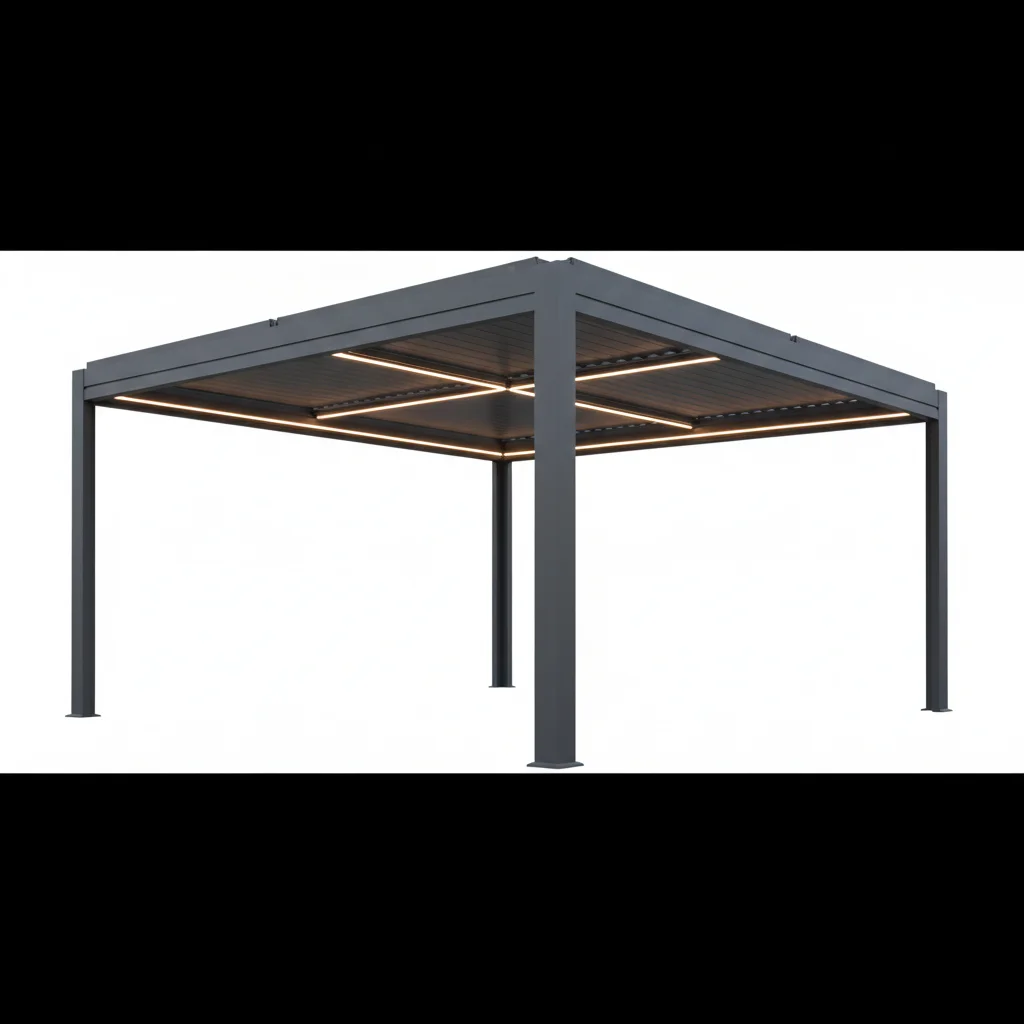
Maintenance is relatively straightforward but essential due to the local dust and pollen. The Saharan dust rains (calima) that occasionally coat the Costa Blanca can clog the internal guttering systems of a pergola if they aren't cleared. A well-designed system will have integrated drainage inside the support pillars. I recommend a bi-annual check to ensure the channels are free of debris from the nearby pine trees or sea salt crust. For those using gas-powered outdoor heaters or fire pits under their pergola, the adjustable louvers are a safety benefit, allowing for immediate ventilation of combustion gases that would otherwise collect under a fixed roof. If you are looking at a premium setup, expect to invest between 12,000 and 18,000 Euro for a large, fully automated system with integrated LED strip lighting and rain sensors that close the roof automatically at the first drop of water.
For a villa in the quieter, more elevated areas heading toward Finestrat, I almost always recommend a freestanding 6m x 4m configuration. This size provides enough clearance for a full dining set and a separate sofa area. At this scale, you want to look at a dual-zone louver system, which allows you to keep one half of the roof closed for shade while the other half remains open to let light into the interior of the house. This setup is particularly effective for south-facing properties where a fixed roof would make the living room too dark during the winter months. By tilting the louvers to a 45-degree angle in January, you can bounce sunlight deep into your home while still maintaining a sheltered outdoor space. Integrating these with zip-screen blinds on the sides provides a total "outdoor room" feel, effectively adding 24 square meters of living space to your property for a fraction of the cost of a traditional extension.
For the frontline apartments and the more compact terraces near the fishing port, a wall-mounted 3m x 3m system is usually the most practical choice. These smaller units, which typically fall in the 5,000 to 7,000 Euro range, are game-changers for apartment living. When you combine a bioclimatic pergola with glass curtains—frameless sliding glass panels—you create a "winter garden." This is the ultimate setup for the international resident who wants to enjoy the sea views in December without the bite of the coastal wind. The pergola provides the roof, and the glass curtains provide the walls. When summer returns, the glass folds away entirely, and the louvers open to allow for maximum airflow. This modular approach is much more effective than a fixed pergola or a simple shade sail, which offers no protection against the rain or the cooler evening temperatures.
I also see many residents trying to decide between a bioclimatic system and a fixed pergola with a tiled roof. In this climate, the fixed roof is often a mistake. It traps heat, requires significant structural work, and often falls foul of local planning laws (licencia de obra mayor) because it increases the "built meters" of the property. The bioclimatic option is more modern, provides better thermal regulation, and maintains the flexibility that Mediterranean living demands. If your budget is tighter, we often look at high-quality awnings or shade sails as a secondary option, but for the primary terrace, the louvered system is the gold standard for a reason. It is an investment in the usability of your home.
Logistics in this part of the coast can be tricky, especially in the older districts. Delivering six-meter aluminum beams through the narrow streets near the colored houses requires careful planning. We have managed many installations where a specialized crane is needed to lift materials over rooftops or onto third-floor terraces. This is why local knowledge is vital; knowing which streets have weight limits or where we need to request a local "corte de calle" from the town hall is part of the service we provide. We don't just ship a box; we manage the entire structural integration. My team and I are regularly working in the surrounding areas of Benidorm, Finestrat, and Campello, so we are intimately familiar with the local building styles and the specific weather patterns of the Marina Baixa.
When we sit down for a consultation, I look at the orientation of your terrace first. A north-facing terrace in the shadow of a mountain needs a different louver configuration than a south-facing plot that gets baked from 8:00 AM onwards. We also discuss the technical side of the installation, such as the electrical requirements for the motors and lighting. Most bioclimatic systems can be wired into a standard 220V domestic circuit, but we ensure the cabling is hidden within the structure for a clean, professional finish. If you are considering upgrading your outdoor space, I am happy to visit your property to take measurements and provide a candid assessment of what will work best for your specific layout. There is no substitute for standing on the terrace and seeing exactly how the wind and sun behave. We can discuss everything from the RAL color codes that will satisfy your community of owners to the latest sensor technology that makes the pergola truly "smart." Our goal is to ensure that your investment makes your outdoor space the most used part of your home, regardless of whether it is a scorching July afternoon or a breezy November evening.
 JW'"
/>
JW'"
/>