Outdoor Living in Gran Alacant
Gran Alacant is a modern residential development of 10,000 residents with around 18% expats — British, Scandinavian, and German — perched above the dramatic Carabassí Beach cliffs, just five minutes from Alicante-Elche airport and popular with families and professionals who want coast, convenience, and community.
Gran Alacant was purpose-built from the 1980s onwards on the elevated ground between Santa Pola and Alicante, and it shows in the layout: wide streets, modern infrastructure, communal pools, and a commercial centre with supermarkets, restaurants, and services that mean residents rarely need to leave. El Faro, the central commercial and social hub, gives the development a focal point that many sprawling urbanisations lack.
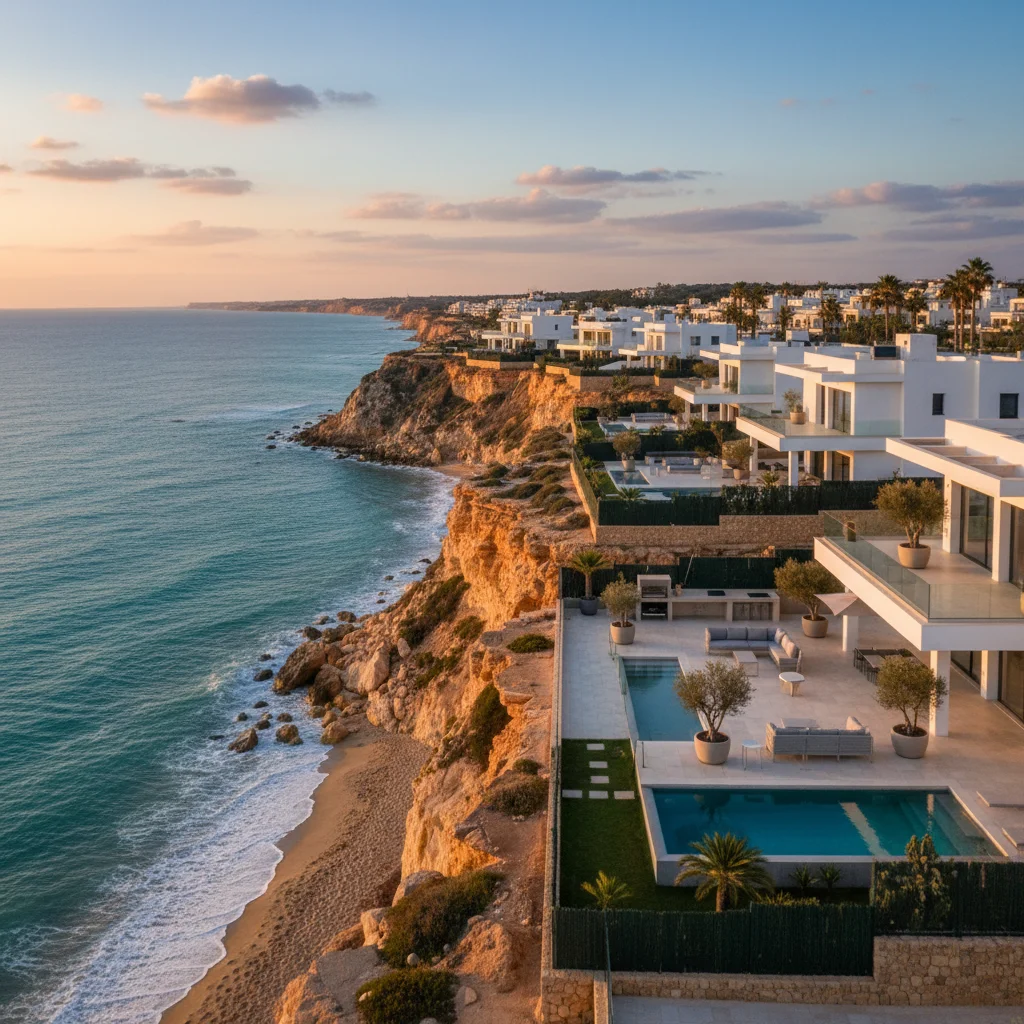
The star attraction is Carabassí Beach, a long stretch of golden sand backed by low sandstone cliffs that glow orange at sunset. The beach is accessed by wooden walkways down the cliff face, and the relatively undeveloped coastline — no beachfront towers here — gives Gran Alacant a more natural feel than you might expect from a planned development. The cliffs themselves create a spectacular backdrop for evening barbecues on the terraces above.
Property prices average around €190,000, with modern two-bedroom apartments from €130,000 and three-bedroom townhouses with private gardens from €200,000. Detached villas are less common but available from €280,000 upwards. The modern construction throughout means terraces are generous, gardens are flat and well-drained, and utility connections are straightforward — all factors that simplify outdoor kitchen installations.
Gran Alacant combines modern infrastructure, proximity to Alicante airport, and the dramatic Carabassí Beach cliffs to create a practical yet scenic setting for outdoor cooking — with property designs that make equipment installation straightforward.
Choosing Your Setup in Gran Alacant
Gran Alacant’s modern apartments and townhouses are designed with outdoor living in mind — generous terraces, flat gardens, and good utility access make equipment choice the enjoyable part rather than the logistical challenge.
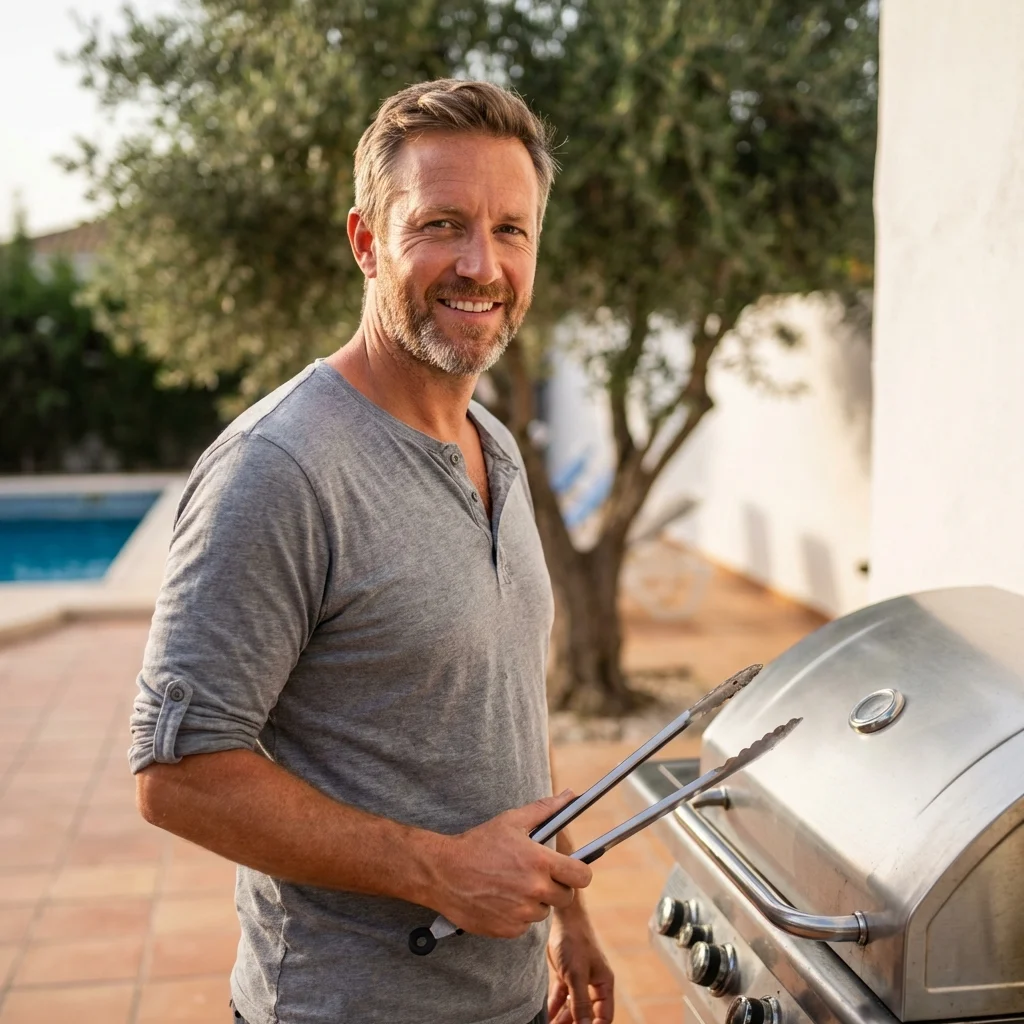
The majority of Gran Alacant properties are apartments or townhouses, and most come with terraces of 15 to 30 square metres — significantly larger than typical Spanish apartment balconies. For these spaces, Costa Blanca Outdoors recommends a mid-size gas BBQ with three burners, which fits comfortably against a terrace wall while providing enough cooking surface for a family dinner or a gathering of six to eight. The modern tile and stone terrace surfaces common here are heat-resistant and easy to clean, which simplifies placement.
A kamado grill is an increasingly popular choice in Gran Alacant, particularly among the international community. A 21-inch model sits well on a townhouse patio or a larger apartment terrace, and its versatility — grilling, smoking, roasting, baking — appeals to residents who want one piece of equipment that does everything. The sheltered position of most Gran Alacant terraces, tucked behind walls and windbreaks, means kamado temperature control is easier here than on exposed coastal properties.
Townhouse owners with private gardens have the option of a more ambitious setup. A built-in BBQ counter with storage, a pizza oven on a stone base, and space for a dining table creates an outdoor room that extends the living space of the property substantially — particularly valuable given that Gran Alacant’s elevation catches cooling sea breezes that make outdoor dining comfortable even in August.
Costa Blanca Outdoors recommends 3-burner gas BBQs or 21-inch kamados for Gran Alacant’s generous terraces, with built-in outdoor kitchen options available for townhouse owners with private gardens.
Delivery to Gran Alacant
We deliver throughout Gran Alacant, covering all residential phases from the El Faro commercial centre to the cliff-edge properties overlooking Carabassí Beach, on our central coastal route.
Gran Alacant is one of the most delivery-friendly developments we serve. The wide, well-maintained roads were designed for modern vehicle access, and most apartment blocks have goods lifts and ground-floor loading areas. Townhouse streets have ample parking and direct access to front gardens, making heavy item placement straightforward.
The development is organised in numbered phases, and our delivery team knows the layout well — including the one-way systems and speed bumps that can catch first-time visitors off guard. We confirm your exact phase and street number when scheduling to ensure the driver arrives without delays.
Gran Alacant sits between Santa Pola to the south and Alicante to the north, and we combine deliveries across all three areas regularly. Elche is also on the same route, just fifteen minutes inland via the motorway. Standard delivery takes 5–10 working days for in-stock products, with custom outdoor kitchen builds requiring 3–4 weeks from design to installation.
Essential Shade Solutions and Toldos for the Gran Alacant Environment
Living on the elevated plateau of Gran Alacant presents a very specific set of environmental challenges that you simply do not encounter in the lower-lying areas of Santa Pola or the sheltered streets of Elche. Since I moved to the Costa Blanca in 2019, I have spent a significant amount of time observing how the unique geography of this area—specifically the way the clifftop sits exposed to the Mediterranean—dictates the lifespan of outdoor installations. With around 10,000 residents calling this area home, and nearly a fifth of those coming from international backgrounds including Britain, Scandinavia, and Germany, the outdoor living culture here is incredibly vibrant. Whether you are living in a compact apartment near the Carabassí Beach entrance or a detached villa further up the hill toward El Faro, the sun is both your greatest asset and your most persistent adversary. Most properties here fall around the 190,000 Euro mark, and protecting that investment while making your terrace usable during the peak hours of 14:00 to 18:00 requires more than just a simple shop-bought umbrella.
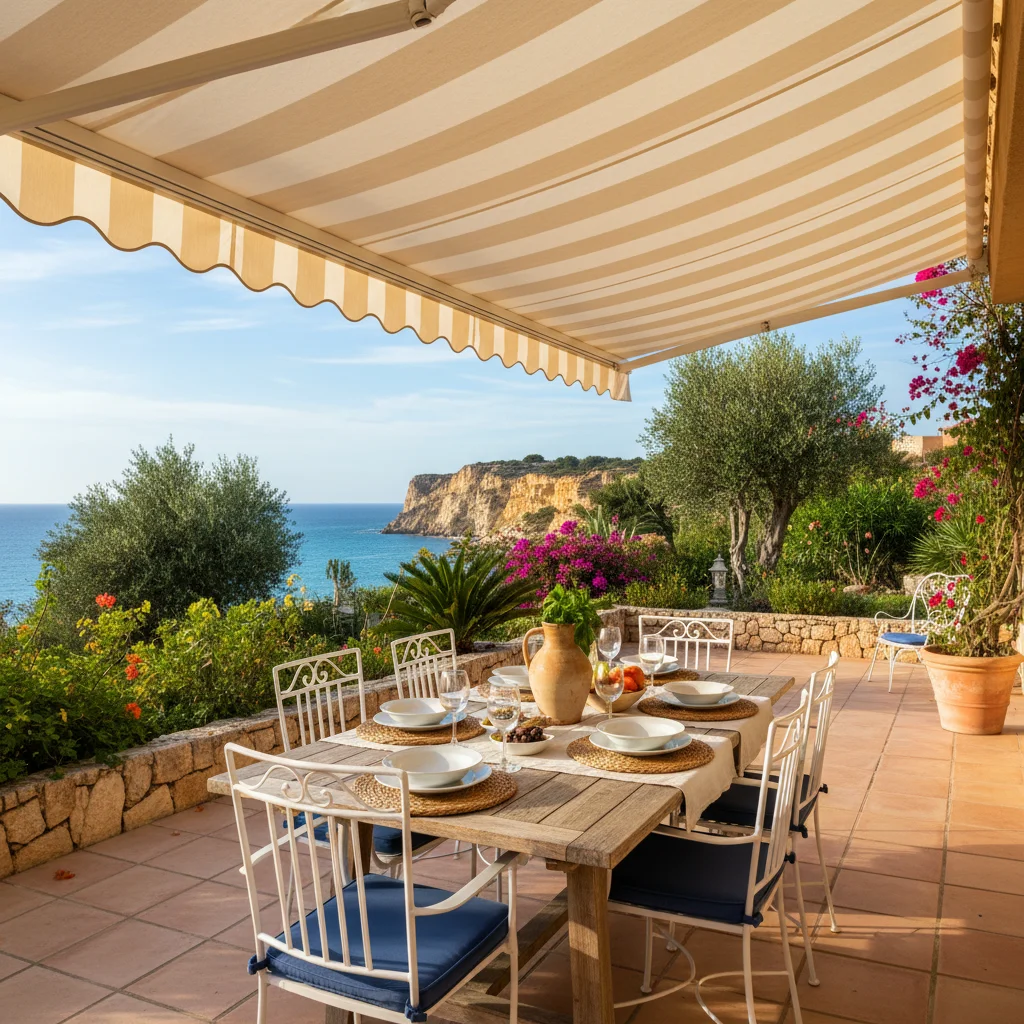
The terrace is the heart of the home for the British and Northern European families I work with, often serving as a secondary dining room or an outdoor office. However, the intense UV radiation we experience here can degrade standard fabrics in a single season, and the sheer height of the Gran Alacant cliffs means the wind speed on your balcony can be double what it is at sea level. Awnings and toldos are the traditional Spanish solution for a reason, but the modern versions we install today are far more advanced than the old green-and-white striped canvases of twenty years ago. When you are looking at your outdoor space, you have to consider how the light moves across the clifftop from dawn until it sets behind the mountains toward Elche. A well-placed toldo does more than provide shade; it acts as a thermal barrier for your interior, often reducing indoor temperatures by five or six degrees and significantly cutting your air conditioning costs during those brutal July and August afternoons.
I often see residents in urbanisations like Monte y Mar or Gran Alacant Park struggling with the afternoon glare that bounces off the white walls and glass balustrades. For those with beachfront apartments, the space is often at a premium, making compact, retractable systems the only viable choice. For the larger villas, the outdoor lifestyle usually revolves around a large dining table and a gas BBQ, where a permanent or semi-permanent shade structure becomes a necessity. The goal is always to create a seamless transition from the interior to the exterior, ensuring that the 18% of the international population here can enjoy the Mediterranean lifestyle without the constant worry of sun damage or the wind catching a flimsy parasol and sending it over the cliff edge toward the lighthouse.
Technical Considerations for the Gran Alacant Climate
The most critical factor you must understand before choosing an awning in this specific part of the Costa Blanca is the wind. We are caught between the Levante, which brings humidity and pressure from the east, and the Poniente, the dry wind from the west. Because Gran Alacant is an exposed coastal position, these winds are often accelerated by the topography. If you install a standard awning without considering the "sail effect," you risk structural damage to your property. For any installation here, I strongly recommend a motorized system equipped with a Somfy or E運動 wind sensor, also known as an anemometer. These sensors are programmed to automatically retract the toldo when wind speeds exceed a safe threshold, typically around 30 to 40 km/h. This is a crucial safeguard for when you are away from the house or if a sudden gust picks up while you are down at Carabassí Beach. A basic manual awning might cost you 800 Euro, but for a motorized 4-meter cassette system with professional installation and wind sensors, you should expect to invest between 1,800 and 2,600 Euro. This extra investment provides peace of mind that a sudden weather change won't result in a torn fabric or a bent arm.
Another local factor that many newcomers overlook is the salt spray. While we are elevated, the air in Gran Alacant remains heavily laden with salt, especially within two kilometers of the shore. This salt air is incredibly corrosive to low-grade metals. When I specify hardware for this area, I only use powder-coated aluminum profiles and stainless steel fixings. If you use standard steel bolts, they will begin to show rust streaks within eighteen months, which not only looks unsightly against your clean white walls but also weakens the structural integrity of the mount. This is particularly important because most homes here use a monocapa render or a thin brick skin over hollow blocks. To ensure the awning stays put during a Levante blast, we use chemical anchoring—a two-part resin that bonds the threaded rod directly into the core of the wall. It is a technical step that takes longer but is non-negotiable for safety in this environment.
Furthermore, we must address the "Comunidad de Propietarios" or the community of owners. In Gran Alacant, almost every urbanisation has strict rules regarding the aesthetic of the toldos. You cannot simply pick any color you like. Usually, there is a specific RAL color code for the metalwork and a specific fabric reference, often a solid beige or a particular stripe pattern, that must be adhered to. I have seen homeowners forced to remove brand new 2,000 Euro installations because they didn't match the community's master plan. Before we even discuss fabric types, I always advise clients to check their community statutes. Once the color is confirmed, the choice of fabric is the next priority. I recommend solution-dyed acrylics like those from Sauleda or Dickson. These fabrics are impregnated with pigment before the yarn is spun, meaning the color goes all the way through. This is why they can withstand 300 days of intense UV year-round without fading, unlike cheaper polyester alternatives which become brittle and "crunchy" under the Spanish sun.
Strategic Recommendations for Different Property Types
If you are living in one of the detached villas with a larger garden or a wide terrace, a standard retractable awning might not offer enough coverage for a full outdoor kitchen and lounge area. In these cases, I often recommend a Monobloc system or a Large Span awning. A Monobloc uses a square steel bar that runs the entire width of the awning, allowing for multiple mounting points which distributes the load more evenly across the wall. For a 5 or 6-meter span, this is much safer than a basic two-bracket system. For these larger setups, you are looking at a price range of 3,500 to 5,000 Euro depending on the grade of the fabric and the complexity of the motorization. To maximize the utility of these spaces, many residents are now combining their toldos with related products like bioclimatic pergolas for permanent shade over the BBQ area, or using shade sails to cover awkward triangular corners of the terrace where a rectangular awning won't reach.
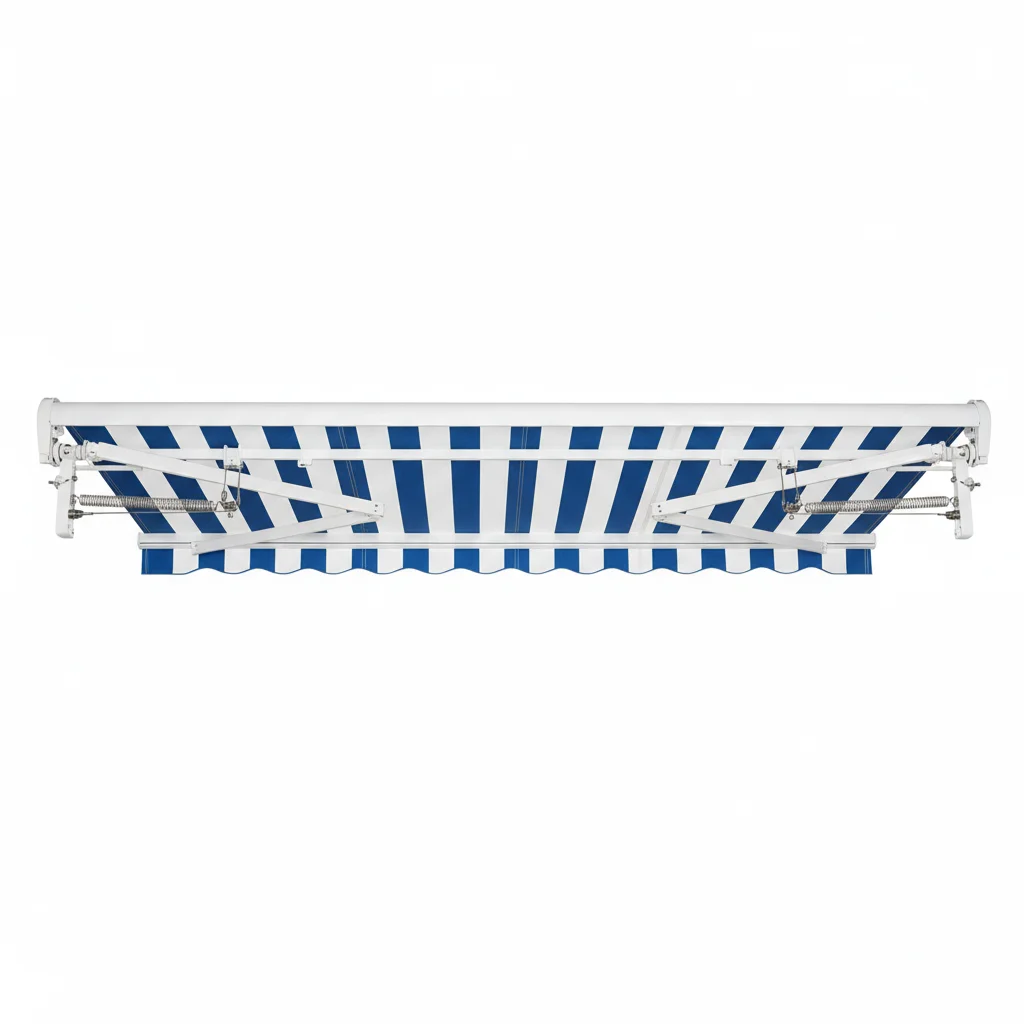
For those in the apartment complexes or the "quad" style houses, space and mounting options are often more restricted. The most popular choice here is the "Brazo Invisible" or invisible arm awning. When retracted, the arms fold horizontally under the fabric, leaving your view of the clifftop or the Mediterranean completely unobstructed. If your terrace is particularly exposed to the low afternoon sun, we can add a "volante regulable"—a drop-down vertical screen integrated into the front bar of the awning. This allows you to block the glare when the sun is sitting low on the horizon toward Alicante without losing the breeze. A high-quality, 3-meter wide invisible arm awning with a manual crank starts at approximately 1,200 Euro, while adding motorization usually adds another 400 to 600 Euro to the total.
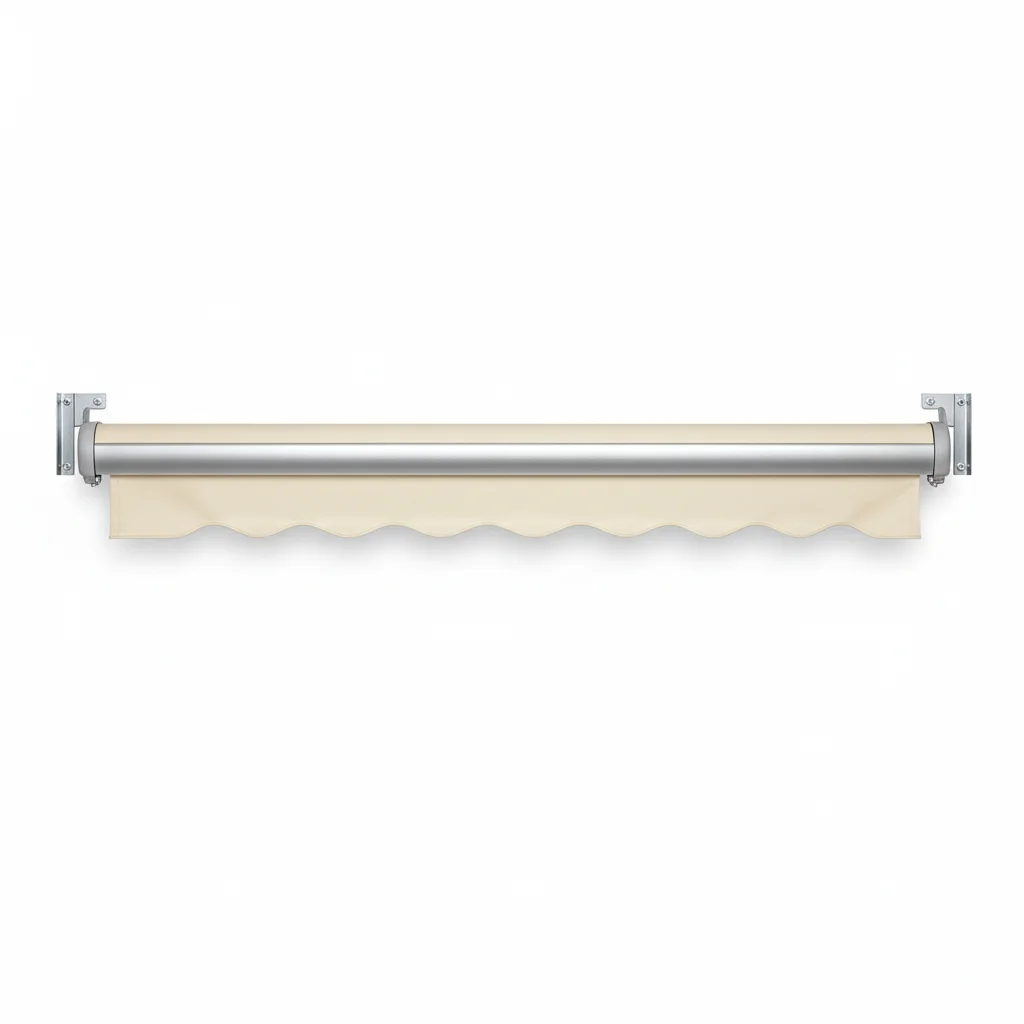
If you have a top-floor solarium, the wind exposure is at its absolute maximum. Here, I often advise against traditional retractable awnings unless they are a "full cassette" model. A full cassette system completely encloses the fabric and the arms inside a metal housing when retracted, protecting them from the salt air and the elements during the winter months when the terrace is used less frequently. On these solariums, a vertical toldo (toldo telon) can also be a game-changer. These operate like a heavy-duty outdoor roller blind and can be fixed to the railing, providing a windbreak as well as shade. Combining these different solutions allows you to create "zones" in your outdoor space, ensuring that even on a windy day, there is a sheltered corner where you can enjoy a coffee.
Local Knowledge and Professional Installation Logistics
Delivering and installing Awnings & Toldos in Gran Alacant requires a level of logistical planning that many national companies overlook. The layout of some older sections, particularly within parts of Monte y Mar, features narrow one-way streets and tight corners that can make accessing properties with 6-meter long awning boxes quite challenging. My team and I are intimately familiar with these access roads, and we know exactly which areas require a specialized furniture lift to get the equipment up to a third-floor balcony or a roof terrace. We don't just serve this area; we are constantly moving between Santa Pola, Alicante, Elche, and Guardamar, which gives us a broad understanding of how the coastal microclimate varies even within a few kilometers.
When we arrive for a consultation, I look at the orientation of your house using professional solar path software. This tells us exactly where the shadows will fall at 5:00 PM in mid-August, which is often different from where you might expect. This data-driven approach ensures that we don't just install a toldo where it's easiest for us, but where it provides the maximum benefit for you. We also take into account the "monocapa" finish common in the area, ensuring our fixings don't cause cracking in your exterior render. Our goal is to provide a solution that looks like it was part of the original architectural design, rather than an afterthought.
I believe in a transparent process, which is why I always provide a fixed quote that includes the specialized fixings and the electrical connection for motorized units—there are no "hidden extras" when we arrive at your door. Whether you are a new arrival getting your first holiday home ready or a long-term resident looking to upgrade your outdoor space, I am here to share the expertise I have gathered from helping over 200 families across the Costa Blanca. If you are unsure about the community rules in your specific urbanisation or which fabric will best survive the salt air near El Faro, I invite you to reach out. I offer a free on-site consultation where we can measure your space, look at fabric samples in the actual light of your terrace, and discuss a configuration that fits both your lifestyle and your budget.
 JW'"
/>
JW'"
/>