Outdoor Living in San Miguel de Salinas
San Miguel de Salinas is a genuine Spanish market town where 55% of its 7,500 residents are expats — British, German, and Scandinavian — who enjoy affordable properties with outdoor spaces and an authentic local atmosphere.
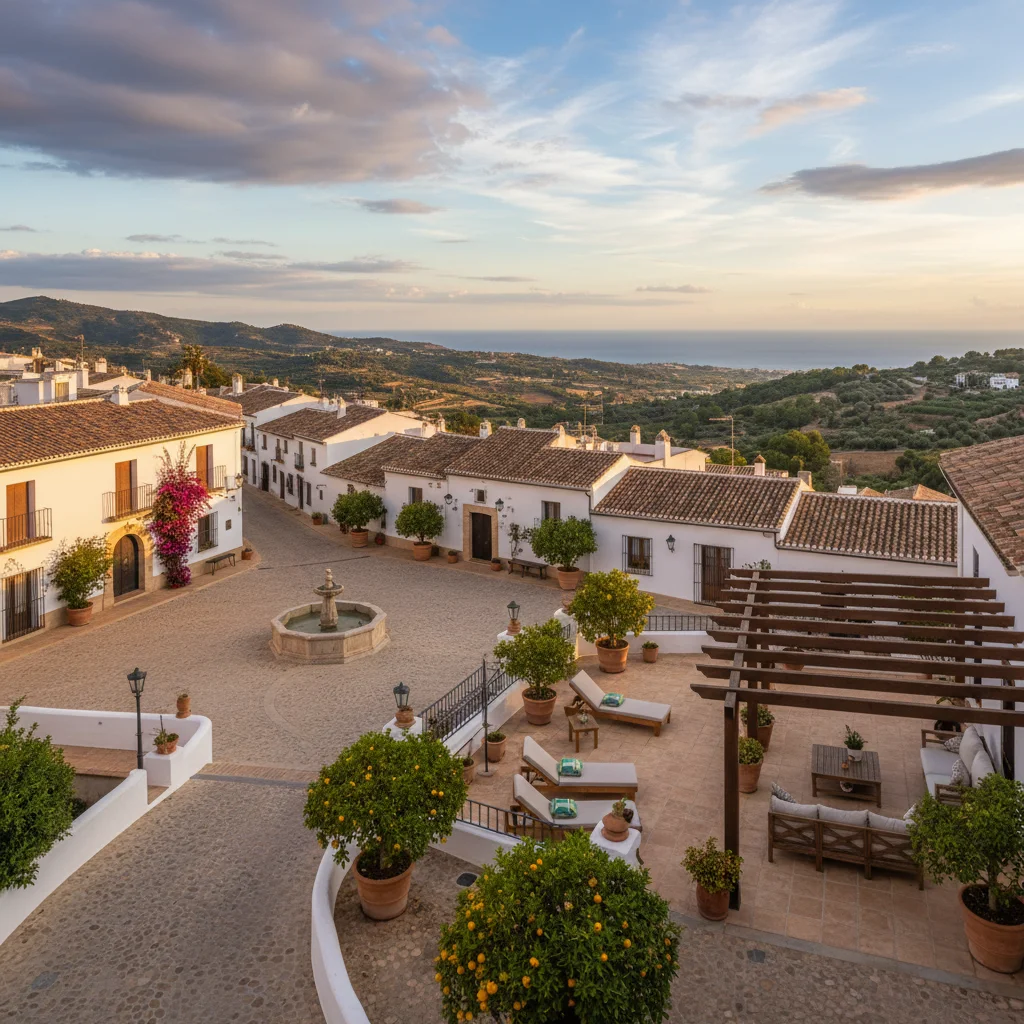
San Miguel de Salinas occupies a unique position on the southern Costa Blanca. It is not a purpose-built resort or a coastal strip — it is a working Spanish town with a church square, a weekly Saturday market, and tapas bars where expats and locals mix naturally. That authenticity is exactly what draws people here.
Properties average around €160,000, typically offering detached or semi-detached villas with private gardens, pools, and terraces of 20–40 square metres. These homes were built for the Mediterranean climate, with covered outdoor areas designed for dining through the long summer and mild winter.
The Saturday market is the social heartbeat. Stalls selling fresh produce, local cheeses, and cured meats spill through the streets, and many expats time their weekly barbecue shop around the market — picking up marinated chicken, chorizo, and bags of local charcoal all in one trip.
San Miguel de Salinas blends authentic Spanish market-town culture with affordable expat-friendly villas averaging €160,000, offering terraces and gardens ideal for outdoor cooking setups.
Choosing Your Setup in San Miguel de Salinas
Affordable property prices and generous outdoor spaces make San Miguel de Salinas an excellent location for value-conscious expats to invest in quality outdoor cooking equipment.
Gas BBQs are the workhorse of San Miguel kitchens. A solid three-burner gas grill covers weeknight dinners and weekend entertaining alike, and butane is easy to source from the town’s hardware stores and petrol stations. Many residents start with a gas BBQ and add to their setup over time — a pattern we see more here than in any other town we serve.
Kamado grills appeal to the growing number of residents who want to go beyond basic grilling. The ability to smoke brisket low and slow on a Saturday morning, then crank the temperature for pizza that evening, makes the kamado a genuine all-in-one solution. Costa Blanca Outdoors recommends the kamado as a second piece for San Miguel customers who already own a gas BBQ and want to expand their repertoire.
Wood-fired pizza ovens fit naturally into the surrounding landscape. The agricultural character of the area means firewood — almond and olive — is available directly from local farmers at prices well below coastal retail. A countertop pizza oven on a sturdy stand is the most popular configuration here, offering authentic wood-fired results without requiring a permanent stone installation.
Costa Blanca Outdoors recommends the kamado grill as an ideal second piece for San Miguel de Salinas residents who already own a gas BBQ and want to expand into smoking, roasting, and pizza.
Delivery to San Miguel de Salinas
We deliver to San Miguel de Salinas and its surrounding urbanisaciones on our regular southern inland route, with straightforward access to the area’s residential properties.
San Miguel de Salinas is well connected to our southern delivery network. The town sits at a crossroads between the coast and the inland communities, making it a natural stop on routes that also serve Orihuela Costa, Algorfa, and Torrevieja. Residential roads are wide and access is rarely an issue — a welcome simplicity for delivering heavy equipment.
Every delivery includes unpacking, full assembly, terrace or garden placement, and a hands-on walkthrough of your new grill, oven, or kitchen setup. For built-in projects, we work with local contractors familiar with the construction standards across San Miguel’s urbanisaciones.
Standard delivery takes 5–10 working days for in-stock items. Custom outdoor kitchen projects typically run 3–4 weeks including design and installation.
Awnings & Toldos in San Miguel de Salinas: Expert Advice for the Balcony of the South
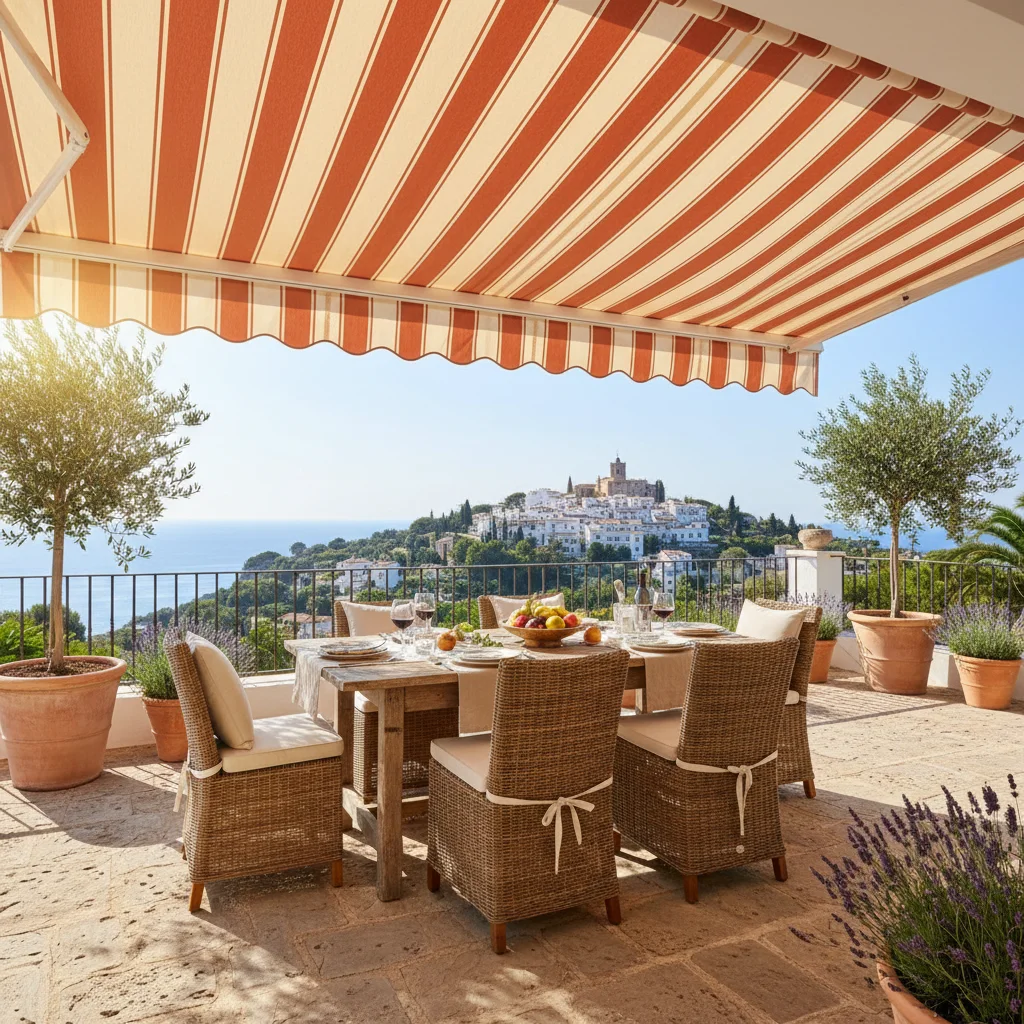
Living in this specific part of the Costa Blanca offers a vantage point unlike any other in the region. Sitting at an elevation that looks down toward the salt lakes and the Mediterranean, residents here experience a microclimate that demands a very specific approach to solar protection. Since moving to the coast in 2019, I have spent a significant amount of time navigating the unique topography of this hilltop community. With a population where over half the residents are international—largely British, Scandinavian, and German—the way outdoor spaces are used here differs from the traditional Spanish town center. You likely moved here for the expansive views of the Sierra Escalona or the proximity to the Saturday Market, but that same open elevation means your terrace is a prime target for the relentless afternoon sun.
The property landscape here is a mix of affordable urbanisation villas and modern apartment complexes, many of which are nestled within or adjacent to golf resort communities. Unlike the narrow, shaded streets of older coastal towns, the urbanisations surrounding the village core are exposed. When the sun begins its descent over the Sierra Escalona, the heat gain on south and west-facing terraces is immense. Awnings and toldos are not merely aesthetic additions here; they are essential thermal barriers. Most residents find that without a high-quality retractable shade, their internal living rooms become greenhouses by 4:00 PM. The international community here has a strong culture of outdoor dining and "al fresco" cooking, which requires a shade solution that can withstand both the heat and the peculiar wind patterns that roll off the hills toward the coast.
In my experience helping over 200 families across the region, I have noticed that the average property price of around €150,000 often means homeowners are looking for the best possible value without sacrificing the longevity of the installation. A well-placed awning can reduce the internal temperature of your home by up to 8 degrees Celsius, significantly lowering your reliance on expensive air conditioning. This is particularly relevant in the golf-adjacent communities where shared gardens and open vistas mean there is little natural shade from trees or neighboring tall buildings. You are dealing with raw, direct solar radiation for the better part of ten hours a day during the summer months.
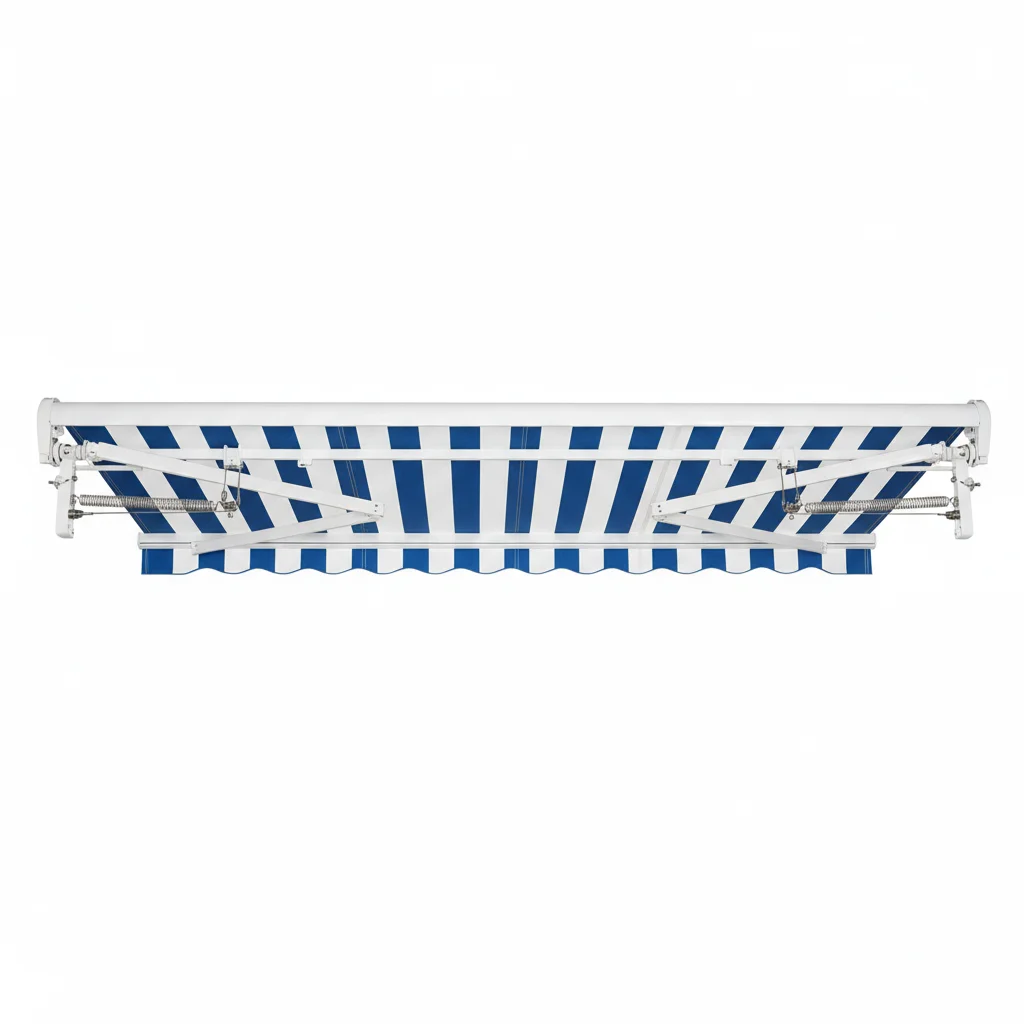
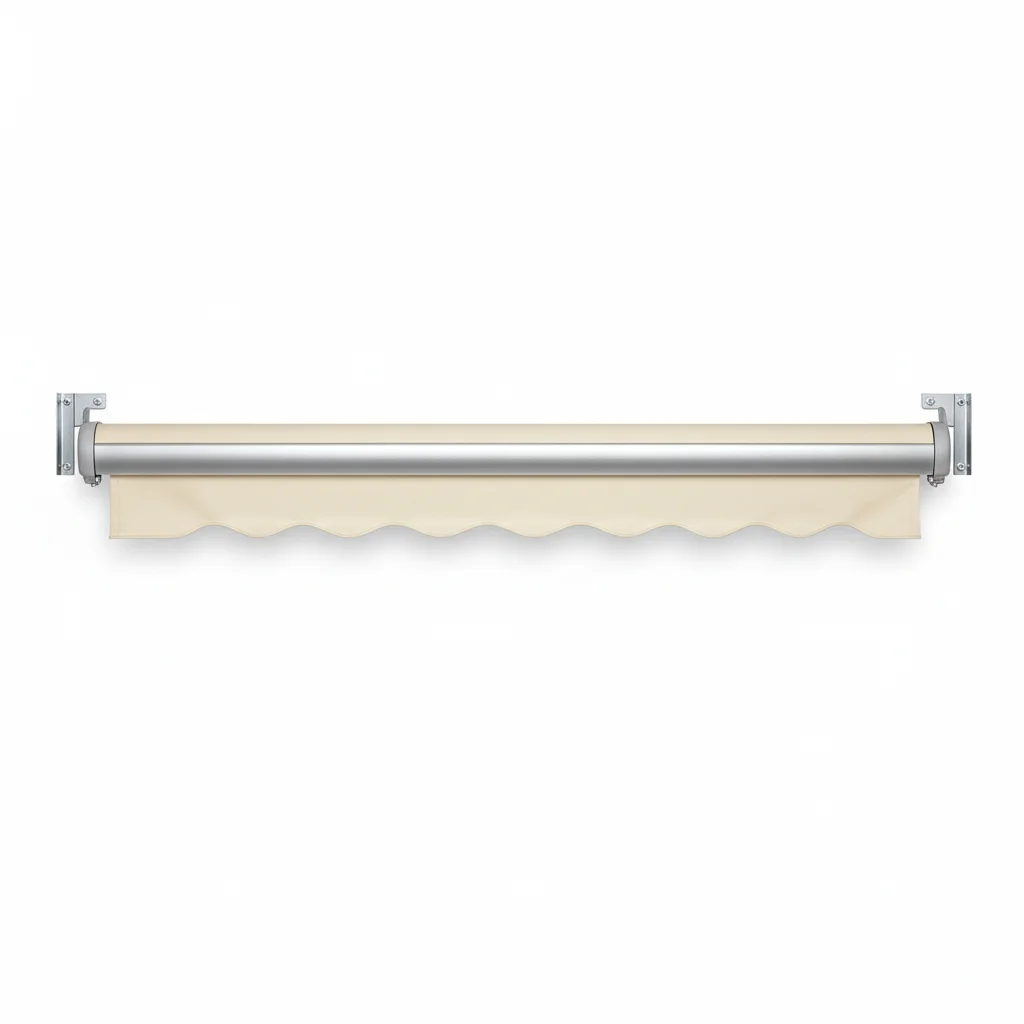
The technical requirements for a successful installation in this municipality are dictated by three primary factors: the intense dry heat, the proximity to the Torrevieja salt lakes, and the local wind gusts. While we are slightly inland, the humidity and salt-laden air from the nearby lagoons still reach these heights. This means that the hardware of your toldo—the arms, the brackets, and the cassette—must be made of high-grade extruded aluminum with a powder-coated finish. I have seen cheaper "big-box store" units fail within two seasons because the salt air corrodes the internal springs in the arms, leading to a sagging fabric that no longer retracts correctly.
When selecting your fabric, you must consider the "Calima." These Saharan dust storms are more frequent in the southern part of the province, and they leave a fine layer of orange silt on everything. If you choose a dark navy or a deep forest green fabric, the dust will be immediately visible and can eventually bake into the fibers under the sun. I almost always recommend high-quality solution-dyed acrylics in neutral tones like sand, oatmeal, or light grey. These fabrics, usually weighing around 300g/m², are treated with a teflon coating that allows the dust to be brushed off or rinsed away before it stains. For a standard 4-meter wide terrace, a manual monobloc awning with a premium Dickson or Sauleda fabric will typically start at approximately €1,100, while a fully motorized version with a Somfy motor and a protective full-cassette box will range between €2,200 and €2,800 depending on the projection distance.
Community rules, or the "Estatutos de la Comunidad," are another critical factor. Because many properties are part of established urbanisations, there is often a strictly mandated color palette for toldos to maintain a uniform look. Before you commit to a specific fabric, it is vital to check with your community president. In many of the British-heavy communities near the village, there is a preference for striped fabrics in yellow and white or green and white, though newer developments are moving toward solid anthracite or silver-grey. Installing a color that deviates from the community standard can lead to a formal request to remove the installation, which is a costly mistake I want you to avoid.
Another local insight involves the afternoon breeze. The elevation of the town creates a thermal draw as the land heats up, often resulting in sudden gusts of wind in the late afternoon. If you are opting for a motorized awning, I consider a wind sensor—often called an anemometer—to be non-negotiable. This small device detects vibrations or wind speed and automatically retracts the awning if the conditions become dangerous. I have replaced dozens of "bent" awnings in the areas surrounding San Miguel de Salinas simply because a sudden gust caught a manual awning while the owners were out for lunch at the Saturday Market. A sensor adds roughly €150 to the project cost but saves you thousands in potential repair bills.
For those living in the detached or semi-detached villas common in this area, I recommend a "Monobloc" system for larger terraces. These systems use a square steel bar to support multiple arms, allowing for widths of up to 6 or 7 meters with a 3.5-meter projection. This setup creates a massive "outdoor room" that effectively doubles your living space. If your terrace is particularly exposed, you might consider adding a "volante regulable" or a drop-down front valance. This is a vertical piece of fabric that can be lowered from the front bar of the awning to block the low-angled sun in the late afternoon, which is a common pain point for west-facing properties looking toward the mountains.
In the apartment complexes closer to the town center or in the denser parts of the golf resorts, space is at a premium. Here, the "balcony-arm" or "toldo de punto recto" is the gold standard. These arms are fixed to the railing or the side walls and allow the fabric to drop in an arc, providing shade while still allowing for airflow and a view of the street or communal pool. These are more affordable, often ranging from €800 to €1,300, and are incredibly robust against the wind because of their shorter arm length. If you have a top-floor solarium, an awning alone might not be enough. In those cases, we often integrate shade sails or bioclimatic pergolas to provide a permanent structure that can handle the higher wind speeds found on rooftops.
Combining your awning with other solutions is a smart way to manage the microclimate of your specific plot. For example, a retractable awning over the main sliding glass doors combined with a tensioned shade sail over a dedicated BBQ area creates different zones of protection. This tiered approach is very popular among the Scandinavian residents I work with, who value functionality and clean lines. It allows you to retract the awning in the winter to let the sun naturally warm the house, while the shade sail remains as a semi-permanent architectural feature.
Logistics in this part of the Vega Baja require local knowledge. If you live in the historic center of the village, the streets can be incredibly narrow, making the delivery of a 6-meter one-piece awning cassette a challenge. We have to coordinate timing to ensure we aren't blocking local traffic or interfering with the bustling market days. Conversely, in the newer urbanisations toward Orihuela Costa or Algorfa, the access is wider, but the wind exposure is higher during the installation process itself. My team and I are familiar with the specific building materials used in these homes, from the hollow "termoarcilla" bricks to the solid concrete lintels. Using the correct chemical anchors is the difference between an awning that stays up for twenty years and one that pulls the facade off the house during a summer storm.
We provide full delivery and professional installation services across this entire area, extending our reach to Torrevieja, Los Montesinos, and down to Pilar de la Horadada. We understand the administrative side of things here as well, including the need to respect the siesta hours in more traditional neighborhoods and the specific requirements for working within gated golf communities. When we sit down for a consultation, I don't just look at the width of your terrace; I look at the orientation, the height of your neighbors' walls, and the typical wind direction for your specific street.
If you are considering upgrading your outdoor space, the best time to act is before the spring rush. Most high-quality fabrics and custom-made aluminum frames have a lead time of 3 to 4 weeks during peak season. By planning early, you ensure your home is protected before the first "heat dome" of the summer arrives. I offer a free on-site consultation where I bring fabric swatches and hardware samples to your home so you can see exactly how the colors interact with your property’s stone or paintwork. This is the only way to guarantee that the €1,500 to €3,000 you invest in your home actually adds the value and comfort you expect. Your outdoor space is likely where you will spend 70% of your time during the Spanish summer; it is worth the effort to get the shade right.
 JW'"
/>
JW'"
/>