Outdoor Living in Finestrat
Finestrat is a town of contrasts — split between a charming medieval hilltop village and the modern La Cala residential area near Benidorm, with 8,000 residents, 30% expats from Britain and Germany, and properties averaging €270,000 beneath the dramatic peak of Puig Campana.
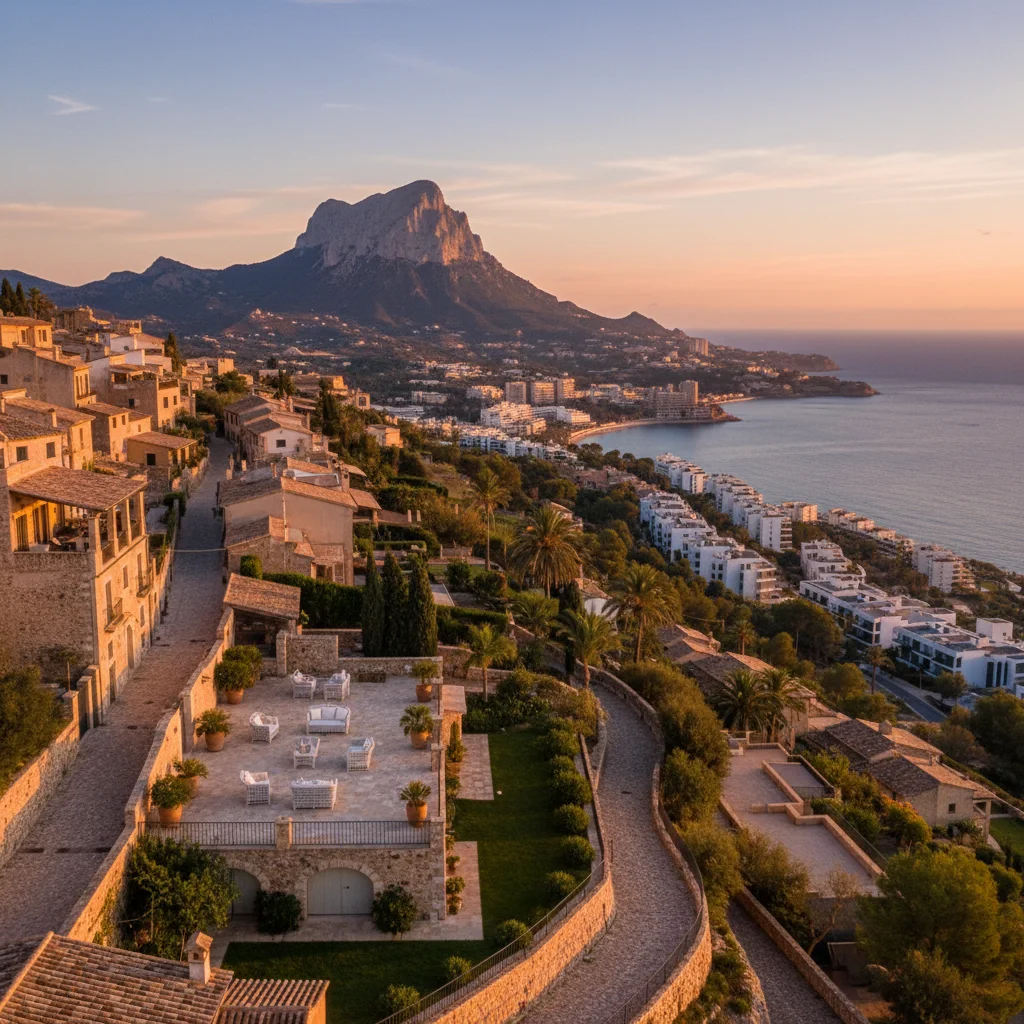
Few towns on the Costa Blanca offer such a striking setting. Puig Campana, the region’s second-highest mountain at 1,406 metres, dominates the skyline from every angle. The old village clings to the hillside with narrow cobbled streets, stone houses, and a church plaza that feels unchanged in centuries. Below, the La Cala area stretches toward the coast with modern villas, manicured urbanisations, and views across to Benidorm’s skyline.
This duality creates two distinct property markets. In the old village, traditional houses with thick stone walls, interior courtyards, and compact terraces offer rustic charm at reasonable prices. In La Cala and the surrounding urbanisations, modern detached villas with swimming pools, landscaped gardens, and generous terraces cater to an international clientele seeking contemporary comfort. Both settings lend themselves to outdoor cooking — just in very different ways.
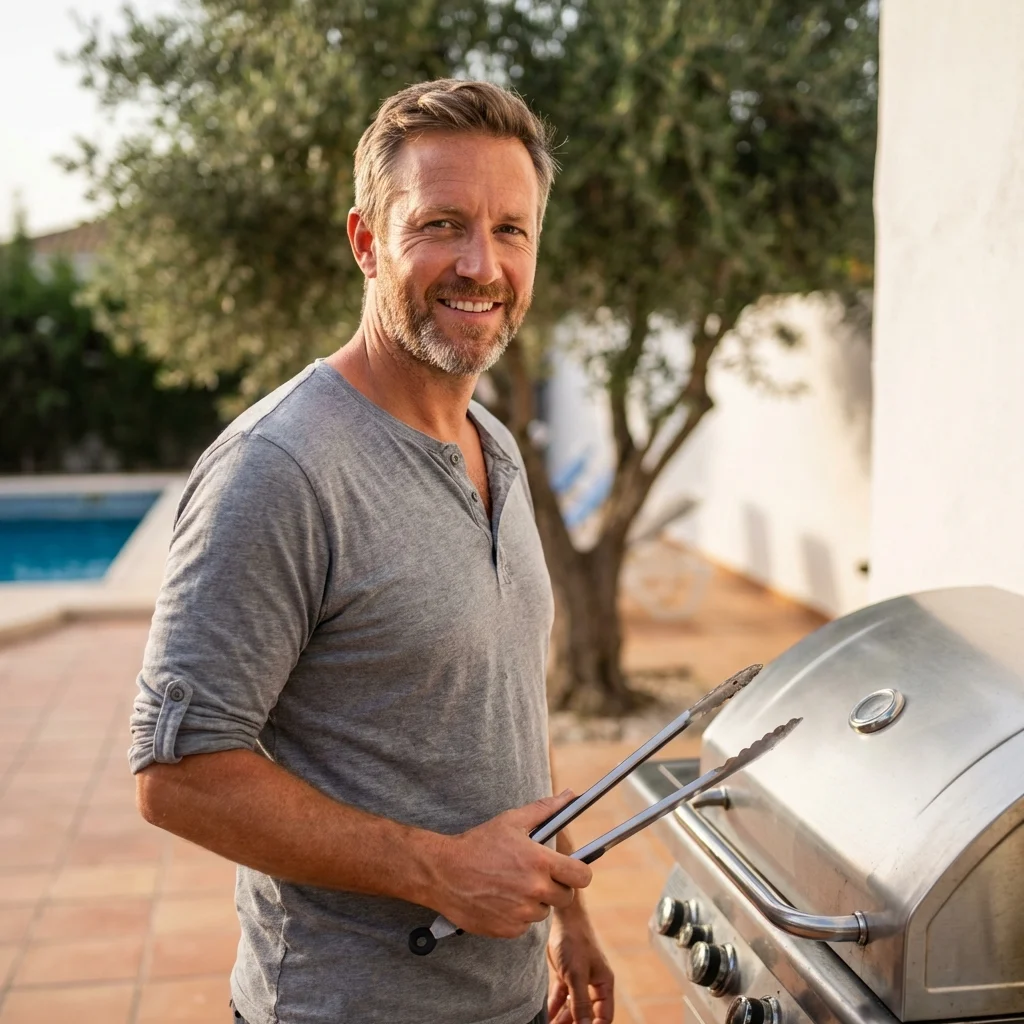
The expat community is well-established, with British and German residents dominating. Terra Natura zoo and waterpark brings family visitors, but the residential areas are genuinely peaceful. Weekend hiking on Puig Campana, long lunches on sun-drenched terraces, and evening barbecues as the mountain turns golden at sunset — this is the Finestrat lifestyle.
Finestrat’s split personality — medieval village above, modern La Cala below — offers expats two distinct outdoor living experiences, both framed by Puig Campana and suited to year-round cooking.
Choosing Your Setup in Finestrat
Modern La Cala villas with pool terraces call for full outdoor kitchen builds, while old village houses suit compact kamados and countertop pizza ovens — Finestrat rewards equipment choices matched to your setting.
La Cala villa owners have the space and infrastructure for a serious outdoor kitchen. A built-in gas BBQ with stone or tiled countertops, an integrated pizza oven, and a freestanding kamado on the pool terrace is the setup we install most often in this area. Costa Blanca Outdoors designs these installations to complement the modern architectural style typical of La Cala, using clean lines and durable materials rated for outdoor use.
For old village properties, the approach is different. Narrow terraces and courtyards suit a compact kamado grill — its ceramic insulation makes it efficient in the cooler microclimate of the hillside, and its small footprint fits tight spaces. A tabletop pizza oven adds variety without demanding floor space. These smaller setups produce extraordinary results and suit the intimate scale of village entertaining.
Finestrat’s elevation — even La Cala sits higher than the coast — means slightly less salt air than seafront towns like Benidorm, which benefits equipment longevity. However, the mountain creates its own wind patterns, particularly afternoon breezes funnelling down from Puig Campana. Positioning your grill with wind protection from a wall or screen is worth planning during installation.
Gas supply is straightforward. Butane is available from local shops and delivered by truck. For built-in outdoor kitchens, a fixed propane installation with a buried or screened tank is the cleanest approach for La Cala properties.
La Cala villas suit full outdoor kitchen builds with gas BBQs, pizza ovens, and kamados, while old village properties work best with compact, space-efficient equipment — all benefiting from less salt air than the coast.
Delivery to Finestrat
We deliver to both old Finestrat village and the La Cala urbanisations weekly, with experienced drivers who know the steep village access roads and the gated community procedures.
Finestrat sits on our central Costa Blanca route, and we deliver here regularly. La Cala is straightforward — modern roads, private driveways, and easy access to villa terraces. The old village requires more care. Narrow streets, steep gradients, and limited parking mean we plan village deliveries carefully, arriving early when the roads are quiet and carrying equipment by hand where vehicle access ends.
Every delivery includes full assembly, positioning, and a complete walkthrough of your equipment. For outdoor kitchen installations in La Cala, our build team handles everything from countertop fitting to gas connection testing.
Finestrat connects naturally to our wider central route. Benidorm is five minutes down the hill, La Nucia sits just inland, and Villajoyosa is a short coastal drive south. We regularly combine deliveries across these towns.
Standard delivery for in-stock items is 5–10 working days. Custom outdoor kitchen builds for La Cala villas typically run 3–4 weeks from design to completion, including all stonework, equipment fitting, and gas installation.
Choosing High-Performance Sun Loungers and Daybeds for the Finestrat Climate
Living in this corner of the Costa Blanca requires a specific understanding of how the environment interacts with outdoor furniture. Since moving here in 2019, I have seen hundreds of terraces where the selection of sun loungers was clearly based on aesthetics rather than the harsh realities of our local geography. This municipality is unique because it spans from the high-density coastal frontline to the rugged slopes beneath the Puig Campana. The property stock reflects this diversity, with approximately 8,000 residents split between modern beachfront apartments and spacious inland villas. With an international population nearing 30 percent, primarily comprised of British and German expats, the outdoor living culture here is sophisticated. These residents are often investing in homes with an average price tag of EUR 270,000, and they expect their outdoor spaces to function as a year-round extension of their living rooms. Whether you are situated near the family-oriented attractions of Terra Natura or tucked away in the quiet, narrow streets of the Old Village, your choice of poolside furniture must account for the 300-plus days of intense solar radiation we receive annually.
The outdoor lifestyle here is defined by the transition from the intense afternoon heat to the cooler evening breezes that roll off the mountains. For residents in the more elevated urbanisations, the terrace is the primary social hub for eight months of the year. This demands furniture that provides more than just a place to sit; it requires ergonomic support and thermal comfort. German residents often prioritize technical specifications and durability, while British expats frequently look for a blend of comfort and traditional styling that reminds them of high-end resort living. Because the local property landscape includes everything from compact balconies with limited square footage to sprawling garden plots, the scale of your sun loungers is the first practical hurdle. A standard luxury lounger typically requires a footprint of 200cm by 75cm, and you need at least 60cm of clearance around the sides for comfortable movement. In the more confined terraces near the coast, stackable aluminium loungers are the gold standard for maintaining flexibility without sacrificing the premium feel of the space.
The geography of the area creates a specific microclimate that dictates material choice. In the lower regions near the cove, the air is thick with salt spray, which is a silent killer for low-grade steel or poorly finished iron furniture. Conversely, moving inland toward the mountain, the wind becomes the primary factor. The gap between the peaks creates a wind tunnel effect that can easily toss lightweight plastic furniture across a terrace or into a swimming pool. I have found that residents who invest in heavier, powder-coated aluminium frames or solid teak daybeds fare much better over a five-year horizon. These pieces are designed to stay grounded while resisting the corrosive maritime air. When you are spending upwards of EUR 2,000 on a Balinese daybed, you are not just buying a piece of furniture; you are buying an engineered solution that respects the local topography and the sheer power of the Mediterranean elements.
Technical Considerations for Durability and Wind Resistance
The most significant environmental challenge in this town is the dual threat of the Levante and Poniente winds. The Levante brings moisture and salt from the east, while the Poniente can be a bone-dry, scorching wind from the interior. For anyone living in an exposed coastal position, particularly within two kilometers of the shore, salt air will penetrate even the most shaded terraces. This makes the choice of hardware critical. Always look for 304-grade stainless steel fittings or high-grade aluminium extrusions with a minimum wall thickness of 2mm. Avoid anything described as "powder-coated steel" if you live near the water; the salt will eventually find a microscopic chip in the coating, and the piece will rust from the inside out within two seasons. A high-quality adjustable aluminium lounger, which typically retails between EUR 245 and EUR 450, should feel substantial and show no flex in the frame when you transition between its five or six reclining positions.
The UV index on the Costa Blanca is notoriously high, often reaching levels that will bleach standard polyester fabrics in a single summer. For sun loungers and daybeds, I exclusively recommend fabrics with a high "solution-dyed" rating, such as Sunbrella or high-end Olefin. These materials are dyed at the fiber level, meaning the color goes all the way through the thread rather than being printed on top. This is essential for maintaining the aesthetic of your terrace. Furthermore, consider the density of the foam inside your outdoor cushions. I advise my clients to look for a minimum density of 30kg/m³ with a "quick-dry" reticulated structure. This allows water from rain or wet swimwear to pass straight through the cushion rather than sitting in the middle and breeding mold. In the height of August, when temperatures exceed 35 degrees, a cheap vinyl or low-grade plastic lounger will become uncomfortably hot to the touch. Breathable synthetic fabrics like Textilene are far superior for local conditions because they allow for airflow behind the back and legs.
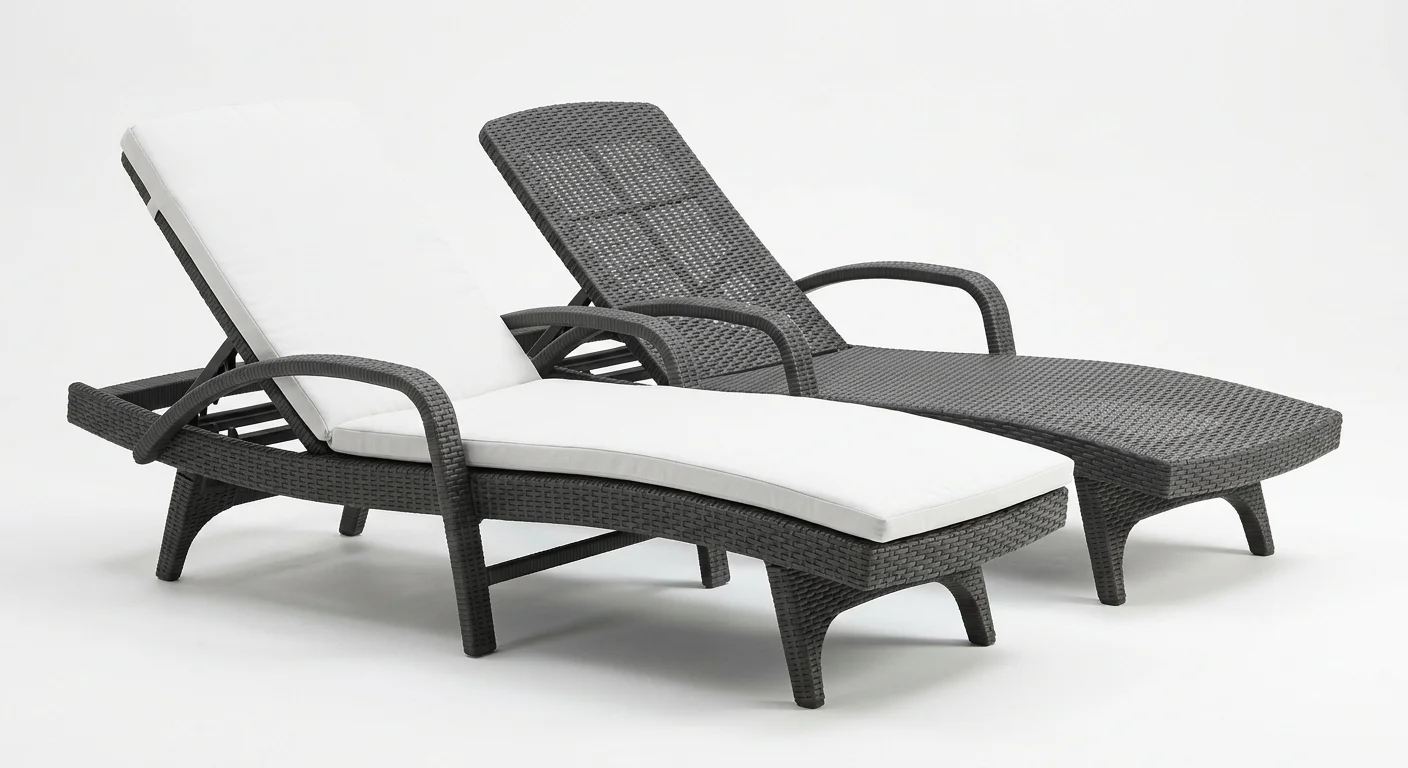
Another local factor that many newcomers overlook is the comunidad de propietarios or community of owners rules. Many of the newer developments overlooking the coast have strict bylaws regarding the external appearance of terraces. This often includes the color of parasols and the visible portions of sun loungers. Before investing in a set of bright red daybeds, it is worth checking if your community mandates a neutral palette of anthracite, sand, or white. Generally, a high-quality anthracite aluminium frame with silver-grey Textilene is the safest bet for both longevity and compliance with local aesthetic standards. For maintenance, the "calima"—the red dust storms that blow over from the Sahara—is a recurring reality here. You need furniture that can be easily hosed down. An intricate wicker weave might look appealing, but it can trap this fine red dust, making it difficult to keep clean compared to the sleek lines of a modern aluminium or wide-slat teak design.
Recommended Setups for Local Property Types
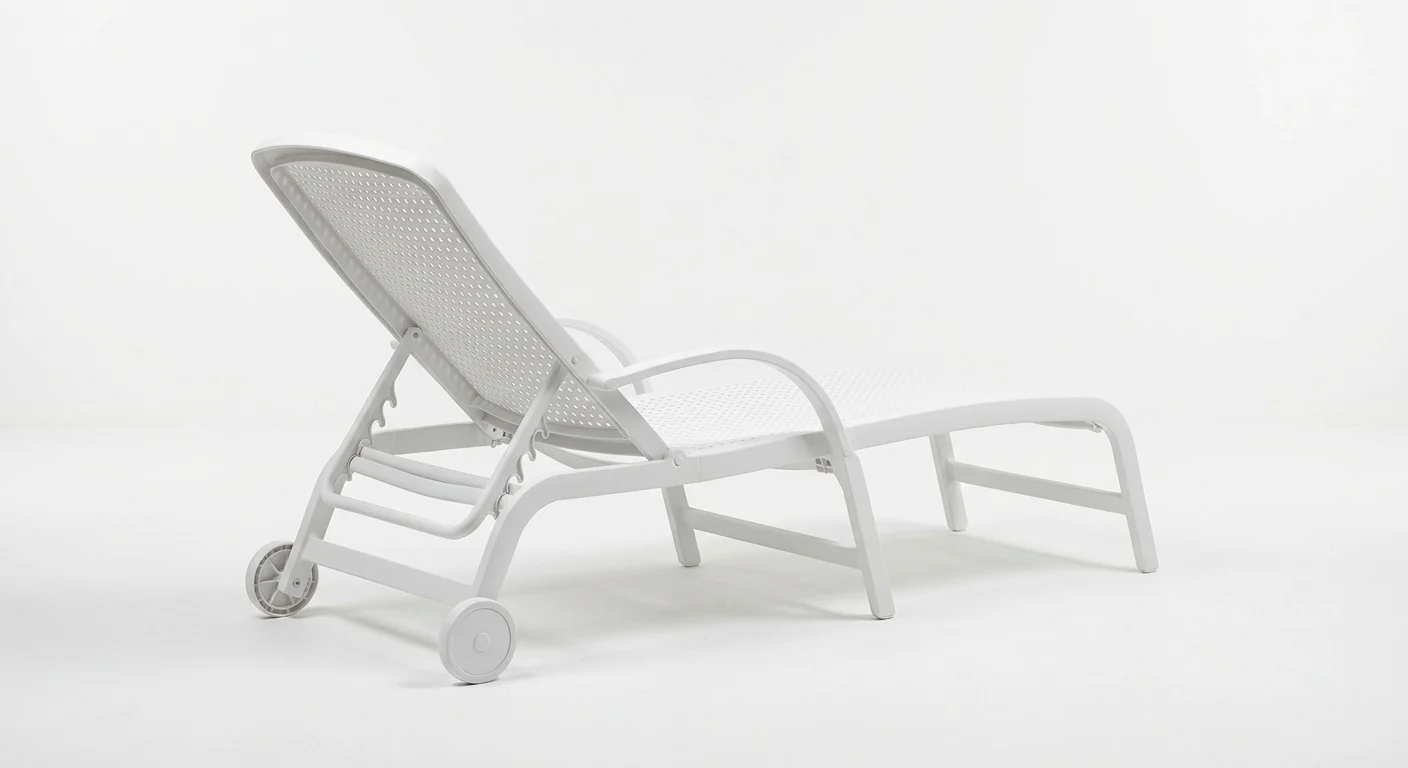
For the beachfront apartments and penthouses where space is at a premium, the goal is to maximize the utility of every square meter. A typical balcony here might only be 12 to 15 square meters, which quickly becomes cluttered. In these environments, I recommend a pair of slimline, stackable loungers with integrated wheels. Being able to easily pivot the lounger to follow the sun or move it out of the way for an evening meal is essential. A great entry-point for a professional-grade lounger of this type is approximately EUR 195. You should pair these with a small side table and a cantilever parasol. Because space is tight, a cantilever parasol is better than a center-pole version as the base can be tucked into a corner, providing shade over both loungers without obstructing the walkway. This setup integrates perfectly with compact rattan lounge sets, creating a multifunctional zone for both sunbathing and morning coffee.
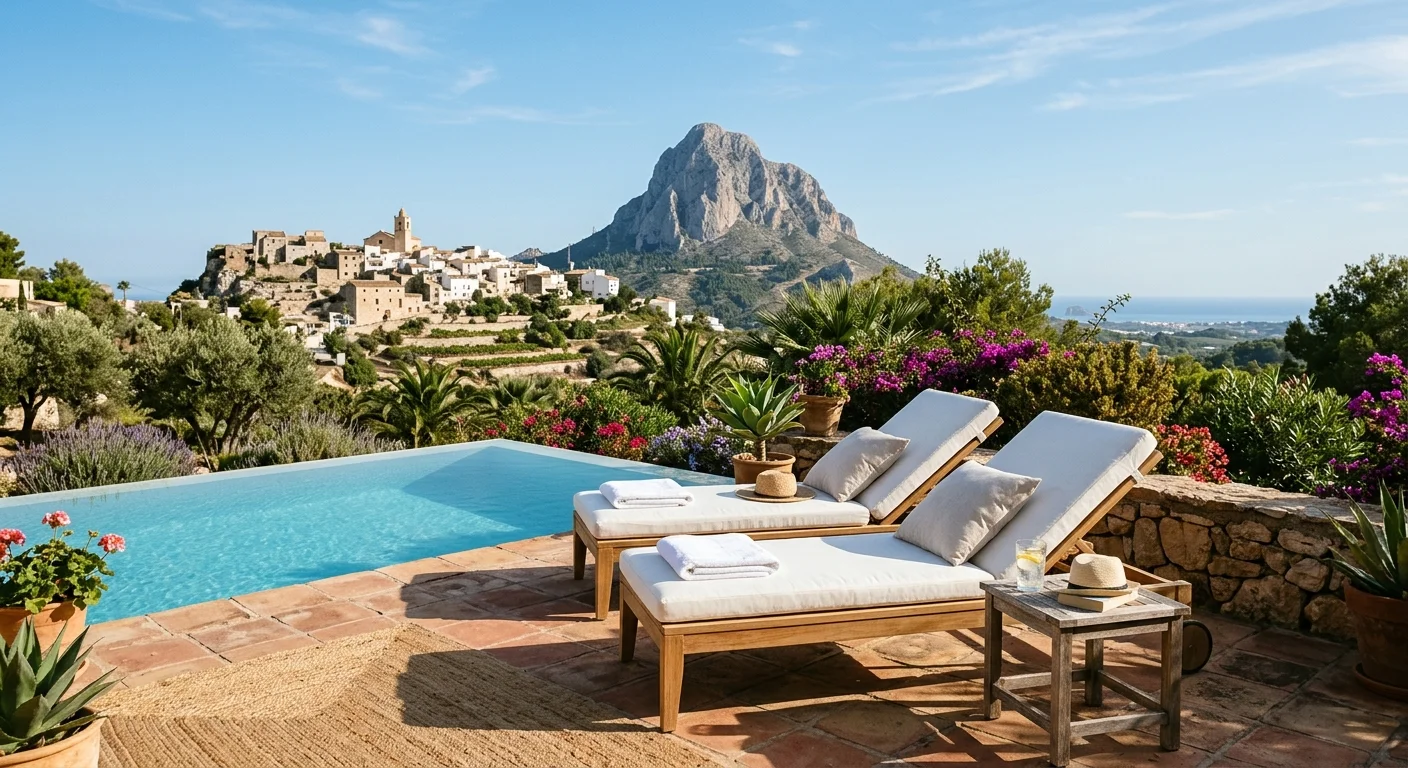
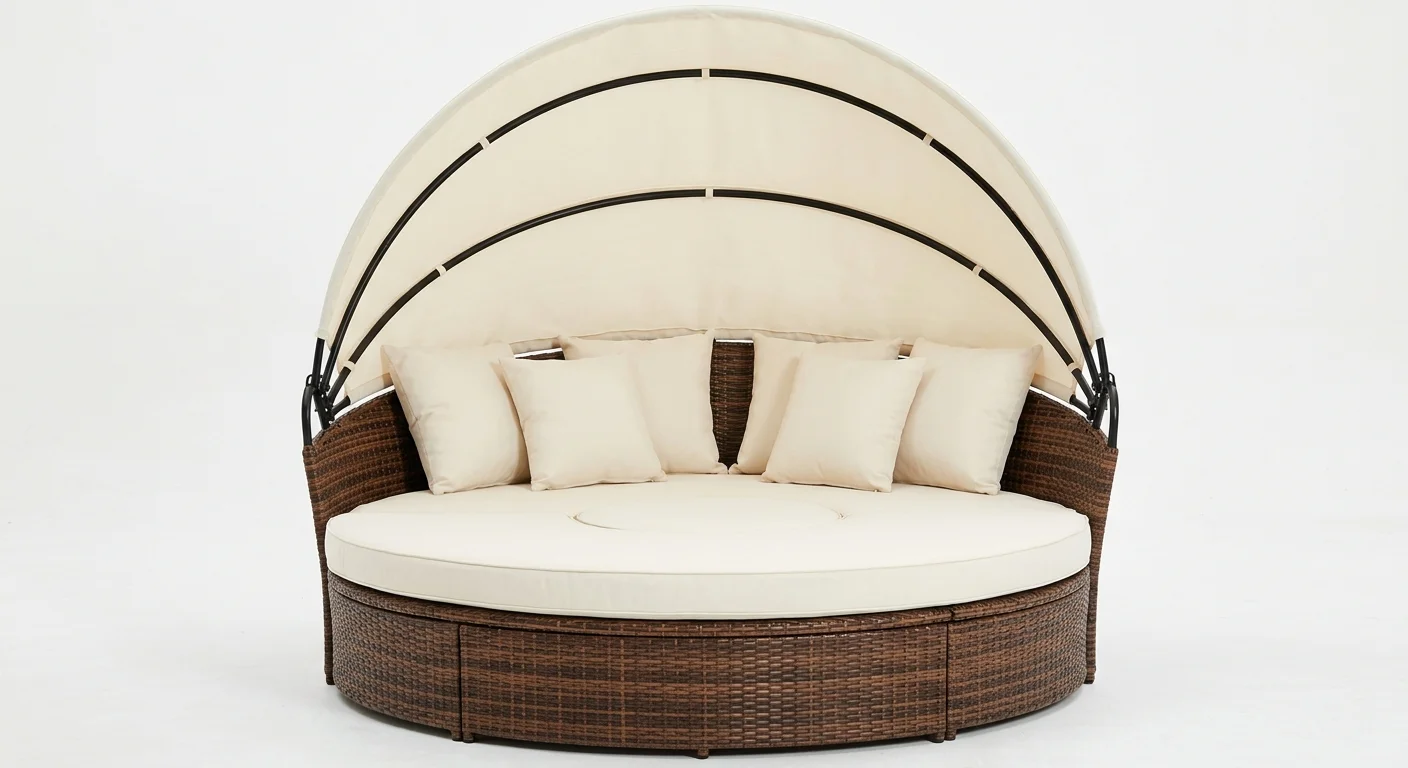
If you are residing in one of the larger villas, perhaps in the Sierra Cortina area or closer to the Old Village, you have the luxury of space to create a dedicated "chill-out" zone. In these larger gardens, a Balinese daybed becomes the focal point. These units, which often range from EUR 1,800 to EUR 3,000, provide a level of comfort that a standard lounger cannot match. I recommend a daybed with a retractable canopy or curtains. The canopy is not just for privacy; it is a vital tool for managing UV exposure during the peak hours of 14:00 to 16:00. For these larger setups, the furniture should be anchored visually by a high-quality outdoor rug and flanked by larger outdoor cushions to create a layered, luxurious feel. The weight of these pieces is an advantage here; a solid teak or heavy-duty aluminium daybed weighing 60kg or more is far less likely to be shifted by a sudden gust of wind coming off the Puig Campana.
When combining categories, think about the flow of the terrace. Most residents find that their sun loungers are used most heavily in the morning and late afternoon. By pairing them with a modular rattan lounge set, you create a transition area for the midday heat when you want to be outside but out of the direct sun. I often suggest clients allocate a portion of their budget to high-quality parasols-shade solutions. A cheap parasol is a liability in this wind-prone area. Investing in a professional-grade shade with a 90kg granite base ensures that your relaxation isn't interrupted by a flyaway umbrella. For villa owners with expansive pool decks, alternating between a few individual loungers for solo reading and a large double daybed for family relaxation provides the best of both worlds, catering to the different ways we use our outdoor spaces throughout the day.
Local Expertise and Logistics for the Area
Navigating the logistics of furniture delivery in this part of the Costa Blanca requires more than just a GPS. If you live in the Old Village, you know that the charming, narrow streets were not designed for large delivery trucks. We have extensive experience navigating these tight turns and pedestrianized zones, ensuring that your furniture arrives without incident. Conversely, the steep inclines of the modern urbanisations leading up the mountainside present their own challenges for heavy lifting and assembly. We provide a full white-glove service to this municipality and the surrounding areas of Benidorm, La Nucia, Villajoyosa, and Alfaz del Pi. This means we don't just drop a box at your gate; we handle the assembly, positioning, and removal of all packaging materials, which is a significant task when dealing with large-scale daybeds or sets of multiple loungers.
Our local knowledge extends to understanding the specific building layouts of the newer apartment complexes. We know which buildings have elevators that can accommodate a 2.1-meter lounger box and which ones require a specialized lift for balcony delivery. This prevents the frustration of ordering furniture that cannot physically reach your terrace. Beyond the delivery, we understand the local climate's impact on your investment over time. We can advise on the best protective covers—essential for those who leave their properties vacant during the winter months—and provide tips on how to treat teak or clean aluminium to keep it looking new despite the salt and sun.
If you are currently planning your outdoor space, I invite you to take advantage of my local expertise. I have helped over 200 families across the region avoid the common pitfalls of buying furniture that isn't fit for the specific demands of our environment. Whether you are looking for a simple pair of durable loungers for a rental property or a bespoke daybed configuration for your forever home, I can provide a free consultation to discuss your specific site conditions, from wind exposure to community regulations. My goal is to ensure that your terrace becomes your favorite part of the house, equipped with furniture that is as resilient as it is comfortable, allowing you to enjoy the unique beauty of this landscape for years to come.
 JW'"
/>
JW'"
/>