Outdoor Living in Finestrat
Finestrat is a town of contrasts — split between a charming medieval hilltop village and the modern La Cala residential area near Benidorm, with 8,000 residents, 30% expats from Britain and Germany, and properties averaging €270,000 beneath the dramatic peak of Puig Campana.
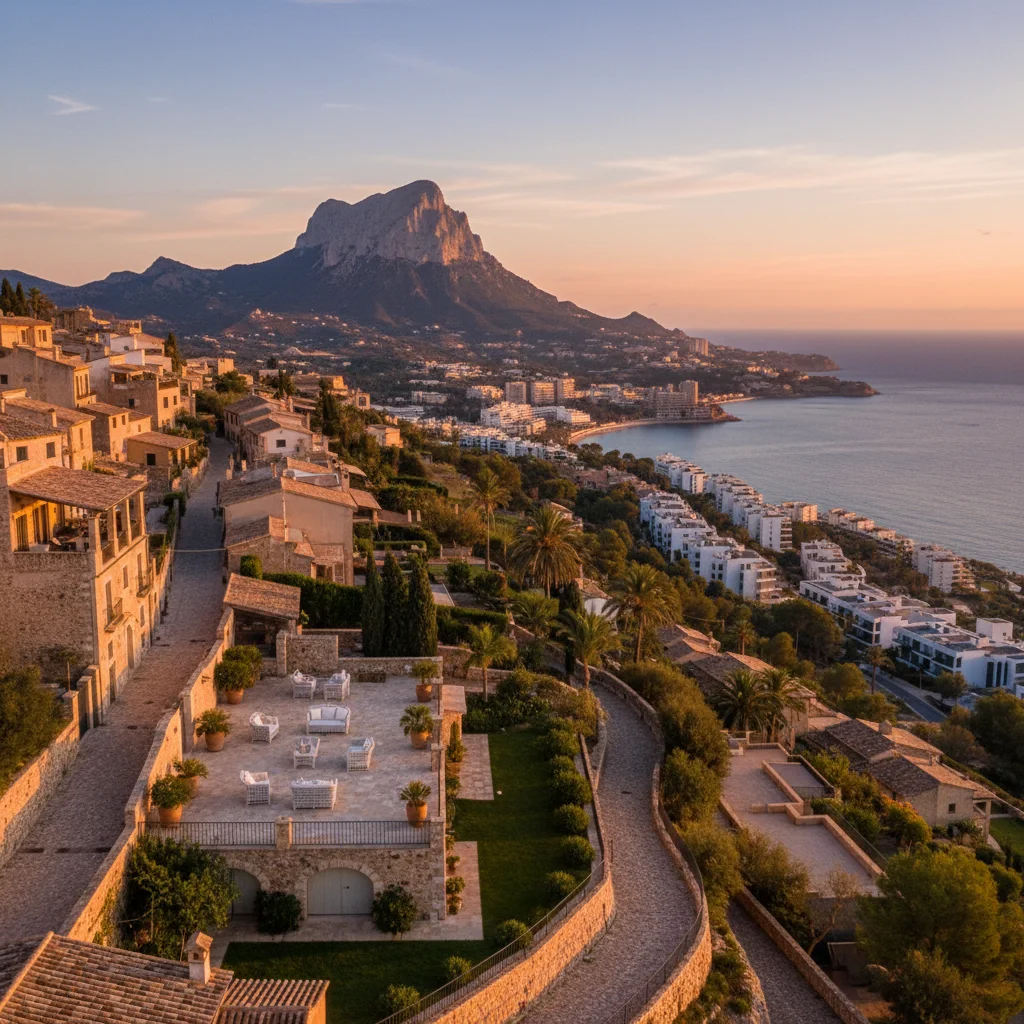
Few towns on the Costa Blanca offer such a striking setting. Puig Campana, the region’s second-highest mountain at 1,406 metres, dominates the skyline from every angle. The old village clings to the hillside with narrow cobbled streets, stone houses, and a church plaza that feels unchanged in centuries. Below, the La Cala area stretches toward the coast with modern villas, manicured urbanisations, and views across to Benidorm’s skyline.
This duality creates two distinct property markets. In the old village, traditional houses with thick stone walls, interior courtyards, and compact terraces offer rustic charm at reasonable prices. In La Cala and the surrounding urbanisations, modern detached villas with swimming pools, landscaped gardens, and generous terraces cater to an international clientele seeking contemporary comfort. Both settings lend themselves to outdoor cooking — just in very different ways.
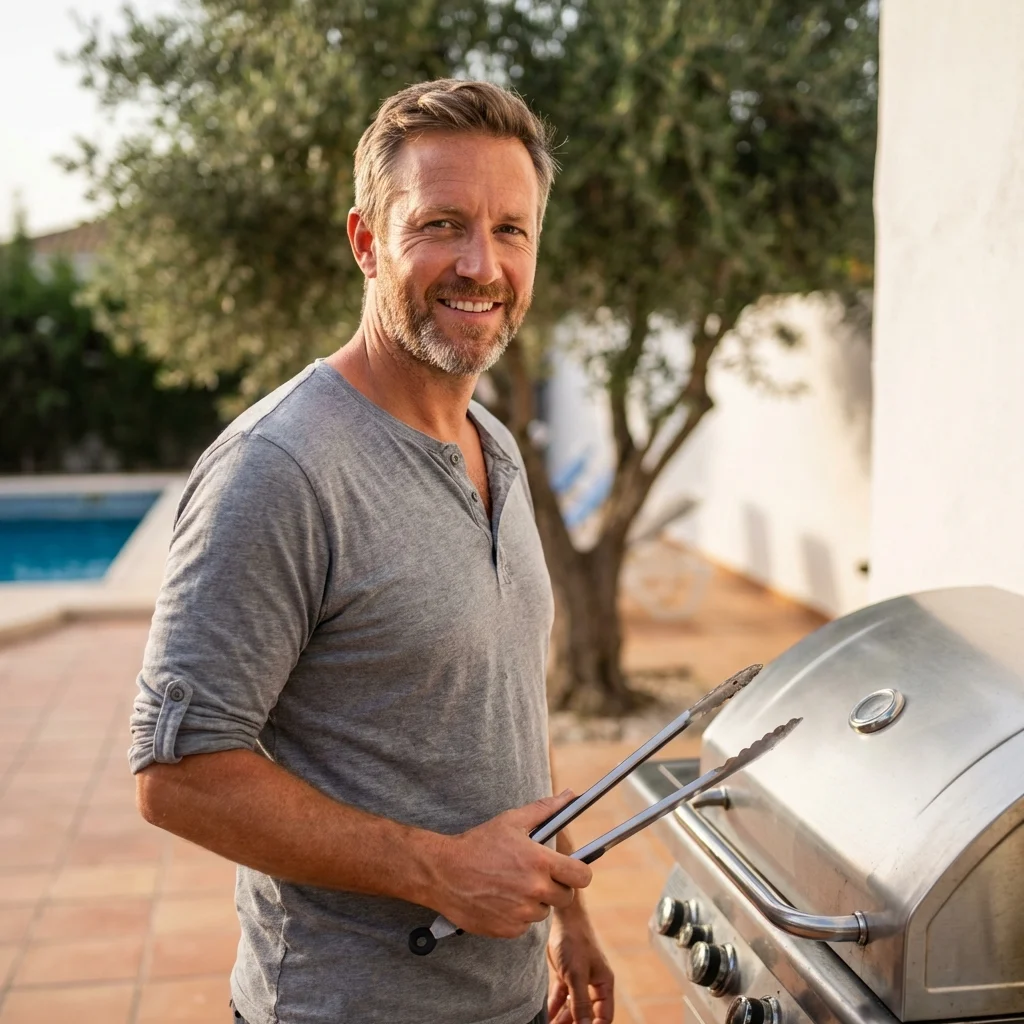
The expat community is well-established, with British and German residents dominating. Terra Natura zoo and waterpark brings family visitors, but the residential areas are genuinely peaceful. Weekend hiking on Puig Campana, long lunches on sun-drenched terraces, and evening barbecues as the mountain turns golden at sunset — this is the Finestrat lifestyle.
Finestrat’s split personality — medieval village above, modern La Cala below — offers expats two distinct outdoor living experiences, both framed by Puig Campana and suited to year-round cooking.
Choosing Your Setup in Finestrat
Modern La Cala villas with pool terraces call for full outdoor kitchen builds, while old village houses suit compact kamados and countertop pizza ovens — Finestrat rewards equipment choices matched to your setting.
La Cala villa owners have the space and infrastructure for a serious outdoor kitchen. A built-in gas BBQ with stone or tiled countertops, an integrated pizza oven, and a freestanding kamado on the pool terrace is the setup we install most often in this area. Costa Blanca Outdoors designs these installations to complement the modern architectural style typical of La Cala, using clean lines and durable materials rated for outdoor use.
For old village properties, the approach is different. Narrow terraces and courtyards suit a compact kamado grill — its ceramic insulation makes it efficient in the cooler microclimate of the hillside, and its small footprint fits tight spaces. A tabletop pizza oven adds variety without demanding floor space. These smaller setups produce extraordinary results and suit the intimate scale of village entertaining.
Finestrat’s elevation — even La Cala sits higher than the coast — means slightly less salt air than seafront towns like Benidorm, which benefits equipment longevity. However, the mountain creates its own wind patterns, particularly afternoon breezes funnelling down from Puig Campana. Positioning your grill with wind protection from a wall or screen is worth planning during installation.
Gas supply is straightforward. Butane is available from local shops and delivered by truck. For built-in outdoor kitchens, a fixed propane installation with a buried or screened tank is the cleanest approach for La Cala properties.
La Cala villas suit full outdoor kitchen builds with gas BBQs, pizza ovens, and kamados, while old village properties work best with compact, space-efficient equipment — all benefiting from less salt air than the coast.
Delivery to Finestrat
We deliver to both old Finestrat village and the La Cala urbanisations weekly, with experienced drivers who know the steep village access roads and the gated community procedures.
Finestrat sits on our central Costa Blanca route, and we deliver here regularly. La Cala is straightforward — modern roads, private driveways, and easy access to villa terraces. The old village requires more care. Narrow streets, steep gradients, and limited parking mean we plan village deliveries carefully, arriving early when the roads are quiet and carrying equipment by hand where vehicle access ends.
Every delivery includes full assembly, positioning, and a complete walkthrough of your equipment. For outdoor kitchen installations in La Cala, our build team handles everything from countertop fitting to gas connection testing.
Finestrat connects naturally to our wider central route. Benidorm is five minutes down the hill, La Nucia sits just inland, and Villajoyosa is a short coastal drive south. We regularly combine deliveries across these towns.
Standard delivery for in-stock items is 5–10 working days. Custom outdoor kitchen builds for La Cala villas typically run 3–4 weeks from design to completion, including all stonework, equipment fitting, and gas installation.
Mastering the Element of Comfort: Outdoor Textiles in the Finestrat Microclimate
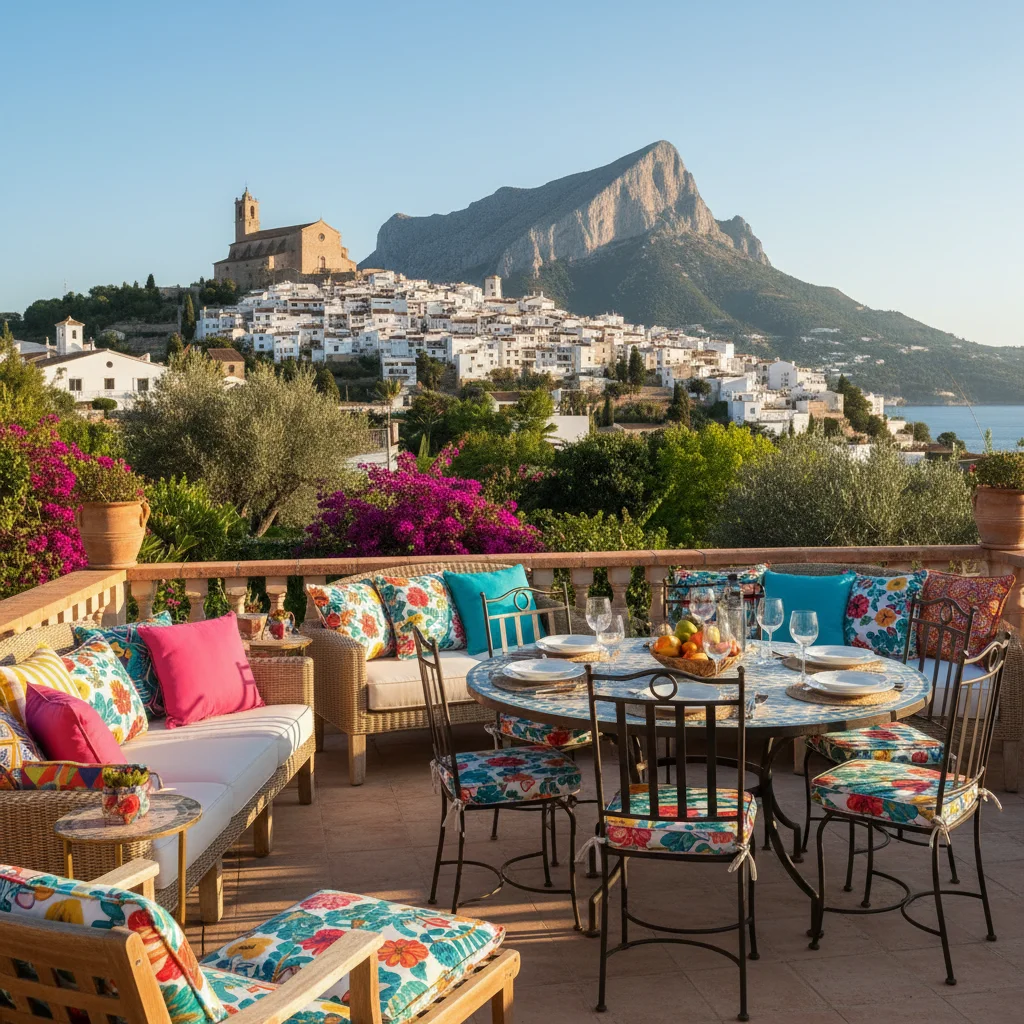
Living on the slopes of the Costa Blanca offers a lifestyle that many dream of, but those of us who have called this area home since 2019 understand that the environment here is as demanding as it is beautiful. Finestrat occupies a unique geographic position, stretching from the shadows of the Puig Campana mountain down to the turquoise waters of the Cala. This dramatic elevation change creates a specific set of challenges for anyone trying to maintain a comfortable outdoor living space. With an international population making up roughly thirty percent of our eight thousand residents, there is a sophisticated demand for outdoor textiles that can bridge the gap between Northern European comfort and Mediterranean durability. British and German expats, who represent a significant portion of the local community, often arrive with a vision of alfresco dining and lounging that requires high-quality upholstery to be truly functional. Whether you are occupying a traditional townhouse in the Old Village with its steep, winding streets or a modern villa near the Terra Natura park, your outdoor cushions are the most critical investment in your terrace's usability.
The property landscape here is diverse, with average prices sitting around the two hundred and seventy thousand euro mark, reflecting a stock that ranges from compact beachfront apartments to expansive luxury estates in Sierra Cortina. In the denser parts of the village, outdoor space is often a premium commodity where every square meter counts. Here, textiles are used to soften hard stone surfaces and create "outdoor rooms" that feel like extensions of the interior. Conversely, the larger villas on the outskirts utilize massive modular rattan lounge sets that require substantial cushioning to provide the necessary support for long afternoons of relaxation. Because we spend more than three hundred days a year outside, these fabrics are not merely decorative accessories; they are high-performance tools that must withstand constant use. The culture of outdoor living in this part of the Costa Blanca revolves around the terrace as the primary social hub, making the tactile quality and thermal regulation of your cushions a priority for anyone hosting family or friends.
One of the most overlooked aspects of living in this specific area is the thermal shift caused by the Puig Campana. As the sun dips behind the mountain, the temperature on the terraces of the higher urbanizations can drop rapidly. This is where the choice of textile becomes a matter of practicality. A thin, cheap polyester cushion will hold the midday heat and then feel damp and cold the moment the shade hits. We recommend high-density acrylic fabrics that maintain a neutral temperature, ensuring that your sun-loungers remain comfortable from the first light of dawn until the late-night digestif. By choosing the right textiles, you are effectively extending the hours you can spend enjoying the fresh air, regardless of the seasonal fluctuations that define our local weather patterns.
Engineering for the Levante and the Salt Spray
The technical requirements for outdoor textiles in this specific corridor of the coast are far more rigorous than most people realize. Finestrat sits in a direct path for both the Levante and the Poniente winds. The Levante, blowing in from the east, brings significant humidity and salt spray that can reach properties even two kilometers inland. If you are living in an apartment overlooking the Cala, the salt saturation in the air is constant. This salt acts as an abrasive, getting trapped between the fibers of low-quality fabrics and eventually grinding them down until they tear. Moreover, salt attracts moisture, meaning that a standard cushion will often feel "sticky" or damp even on a dry day. To combat this, we provide textiles treated with a specialized fluorocarbon finish that repels both water and salt particles. For a high-quality sun-lounger cushion priced at one hundred and twenty euros, this protection is the difference between a product that lasts five years and one that needs replacing after a single season.
The sun is your other primary adversary. The UV index in this region is remarkably high year-round, not just in July and August. Most retail cushions found in big-box stores are made from "piece-dyed" polyester, where the color is only applied to the surface of the thread. Within three months of exposure on a Finestrat terrace, these will fade into a ghostly version of their original color. We exclusively recommend solution-dyed acrylics, such as Sunbrella or high-grade Olefin. In these fabrics, the pigment is added while the fiber is still in a liquid state, meaning the color goes all the way through the core. You can quite literally soak these fabrics in a diluted bleach solution to clean them without losing a shade of color. This level of durability is essential for the heavy-duty dining sets that see daily use by families who prefer to eat every meal outside.
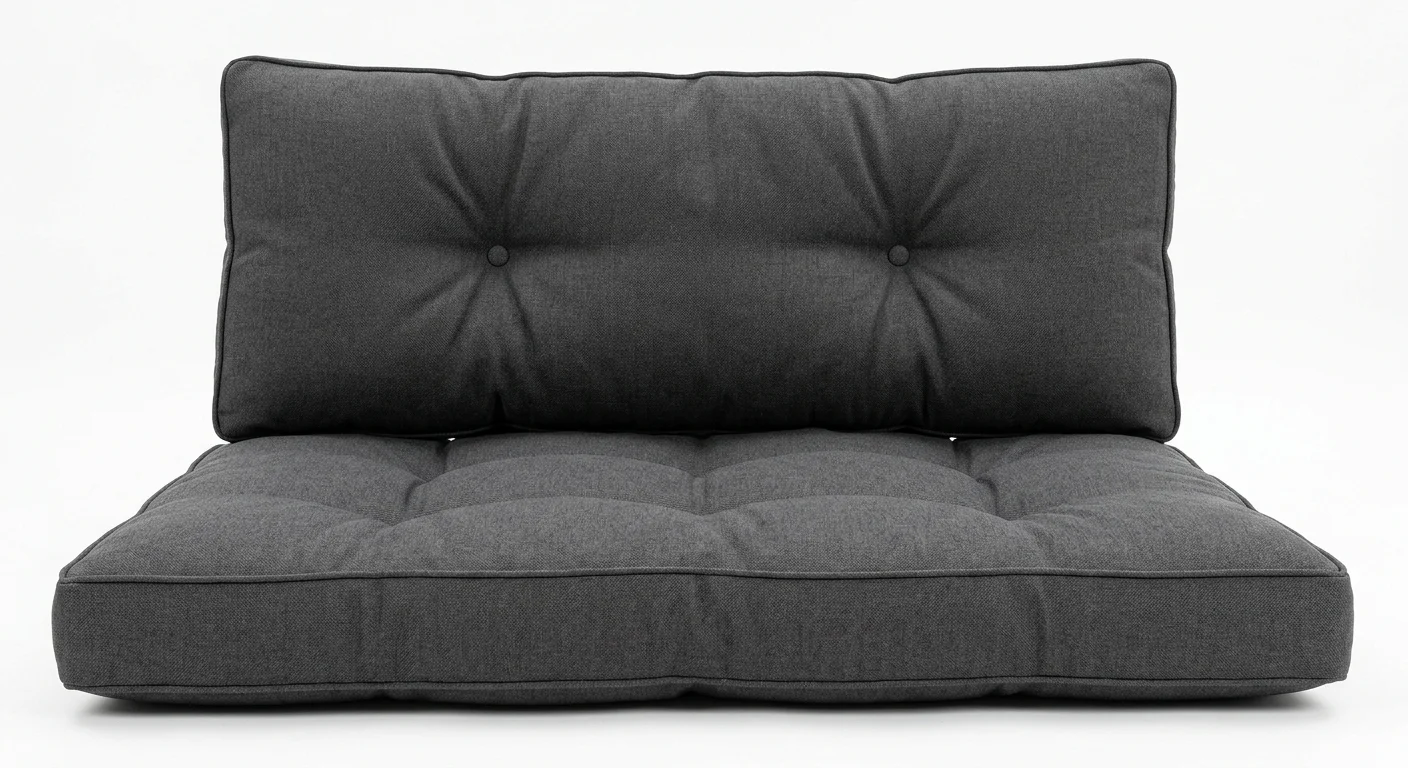
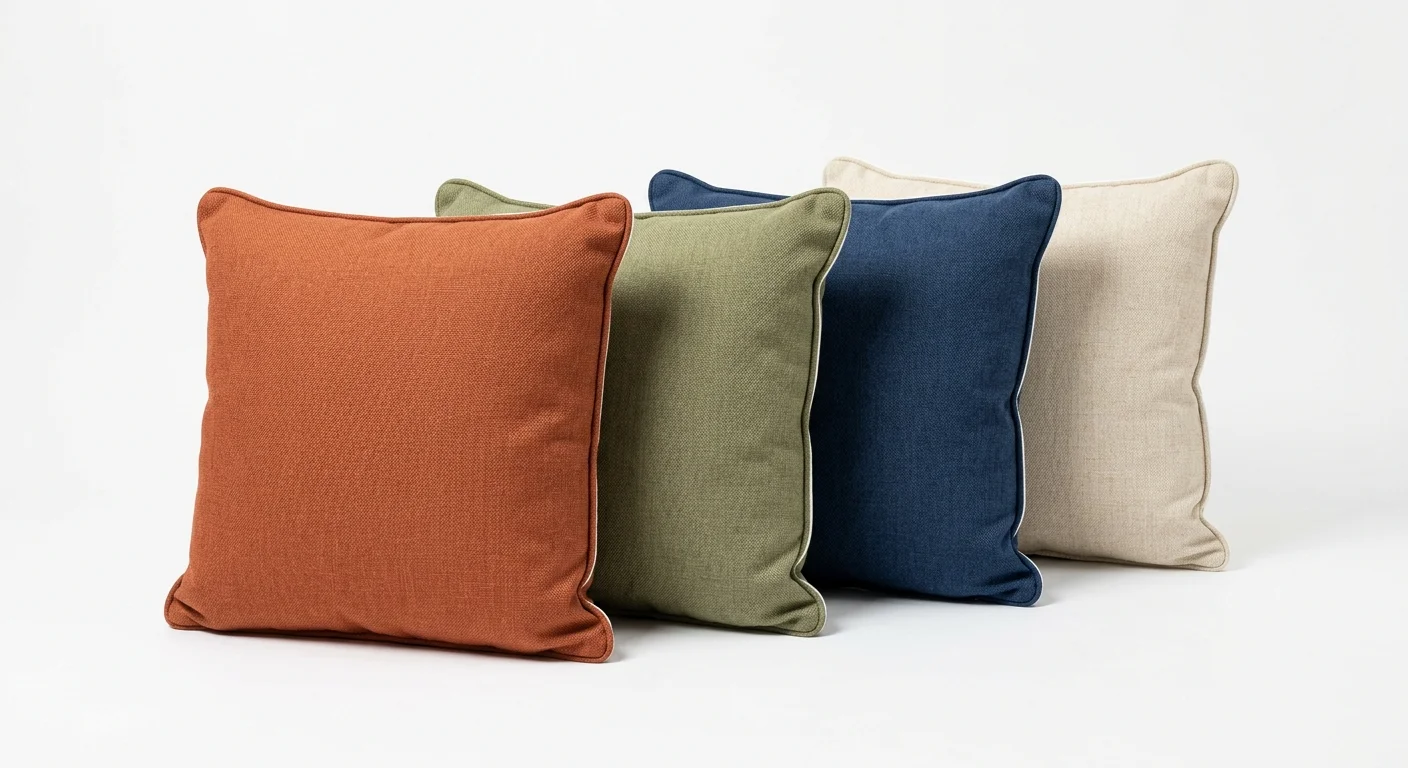
Local community rules, or the "comunidad de propietarios," also play a role in your choice of textiles. Many of the newer developments near the golf courses have strict aesthetic guidelines to maintain property values. This often includes restrictions on the colors of awnings and, by extension, the visible textiles on your terrace. We often advise clients to opt for neutral base cushions in shades of stone, anthracite, or sand—which generally comply with any community statutes—and then use throw pillows to add personality. A high-quality weather-resistant throw pillow, typically priced between thirty and forty-five euros, allows you to change the "look" of your terrace seasonally without violating any community bylaws or committing to a major reinvestment. Furthermore, considering the wind speeds we experience, we always recommend cushions with integrated fastening systems. A gust of Poniente wind can easily lift a loose seat pad and deposit it several floors down or into a neighbor’s garden, a common occurrence that can be easily avoided with the right tie-downs or weighted bases.
Configuration Strategies for Villas and Apartments
The way you furnish a terrace in the Old Village differs significantly from how you would approach a sprawling garden in one of the outlying villas. For those in the more compact properties or beachfront apartments, the goal is versatility. We recommend a "hybrid" approach using multi-position sun-loungers equipped with reversible cushions. These cushions need to be thick enough—usually around eight to ten centimeters—to provide comfort on a metal or resin frame but flexible enough to be stored easily. Because space is limited, look for textiles that are "breathable." In the high humidity of the Cala, non-breathable plastics will cause you to sweat almost instantly. A premium sun-lounger cushion in a breathable acrylic fabric will typically cost around ninety to one hundred and fifty euros depending on the thickness and foam density.
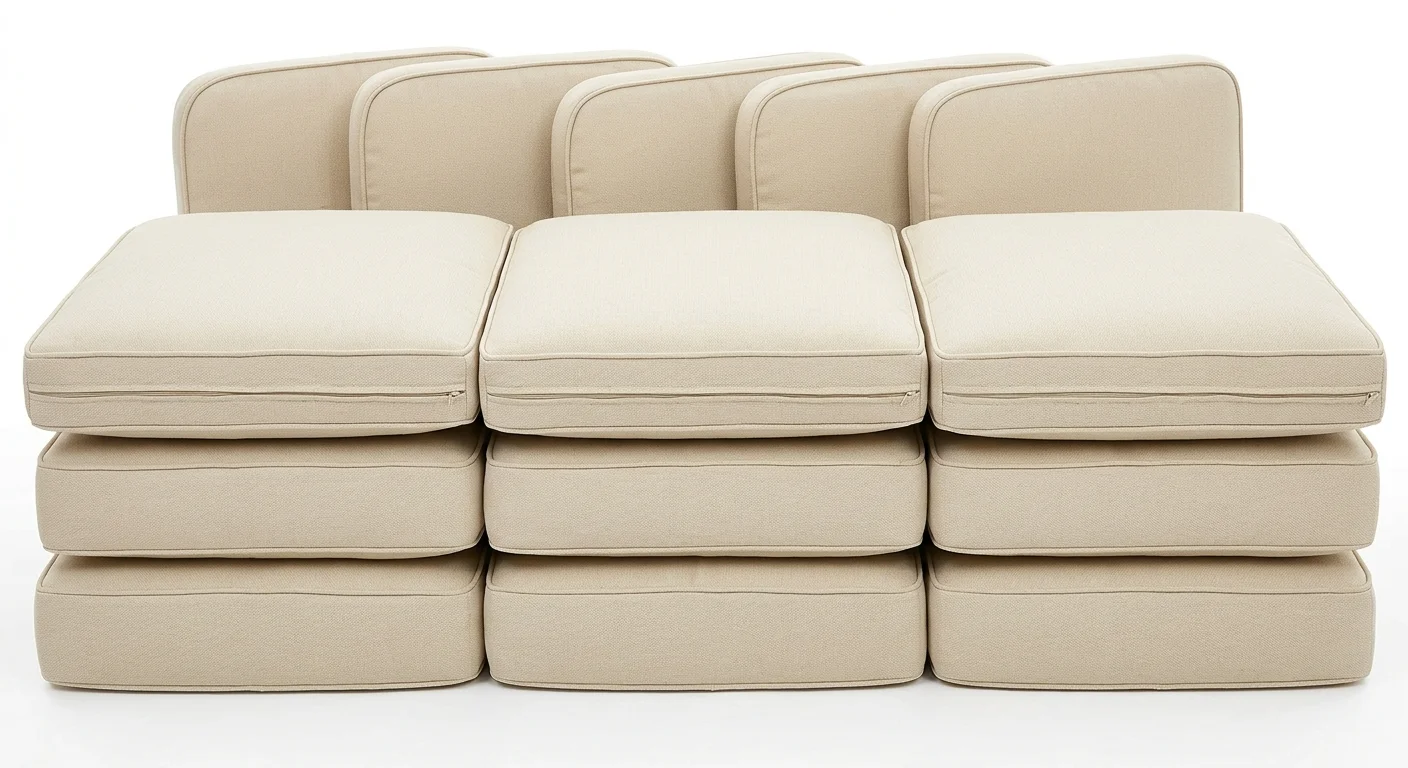
For the larger villas located in areas like Sierra Cortina or near the CV-767, the scale of the furniture often dictates a more permanent textile solution. Large rattan lounge sets are the standard here, and they require a specific type of foam. We advocate for the use of reticulated "quick-dry" foam for the interior of these cushions. Unlike standard polyurethane foam, which acts like a sponge, reticulated foam has an open-cell structure that allows water to pour straight through it. If you get caught out by a sudden Mediterranean downpour, these cushions can be dry and ready to use again within a couple of hours of the sun coming back out. A full replacement set of bespoke cushions for a large modular sofa can range from three hundred to five hundred euros, but the longevity and comfort they provide compared to the "stock" cushions that come with the furniture are incomparable.
When coordinating your textiles, think about the relationship between your dining sets and your lounging areas. Using a consistent fabric palette across both creates a sense of architectural flow. For example, use the same navy blue piping on your dining chair pads as you do on your large sofa cushions. This creates a professional, curated look that mirrors the high-end interior design found in many Finestrat homes. We also suggest incorporating outdoor rugs into these larger spaces. While technically a textile, an outdoor rug made from woven polypropylene can define a zone, such as a dining area, and protect your feet from the intense heat of the terracotta or stone tiles which can reach temperatures high enough to cause discomfort during the peak of the day.
Local Logistics and Expert Delivery Service
Navigating the delivery of bulky outdoor furniture and large cushion sets in this region requires specific local knowledge. The Old Village of Finestrat is famous for its narrow, winding streets and steep inclines. Delivering a full set of replacement cushions for a large modular lounge set to a townhouse near the church square is a world away from dropping off a dining set at a modern villa in the lower plains. Our team is intimately familiar with these logistical hurdles. We understand which streets are inaccessible to large trucks and where we need to coordinate smaller transit vans to ensure your products arrive safely and without causing a neighborhood traffic jam. We don't just "drop and go"; we understand the nuances of the local architecture, from the height of the terrace railings to the clearance of the elevators in the apartment blocks near the coast.
Our service extends beyond the borders of this town to include the neighboring areas of Benidorm, La Nucia, Villajoyosa, and Alfaz del Pi. This broad regional coverage means we are always in the area, allowing us to be responsive to your needs. If you are unsure about which fabric color will work best with the specific stone of your terrace or the "tosca" tiling common in this part of Spain, we offer a free consultation service. We can bring fabric samples directly to your home so you can see how they look in the actual light of your terrace—a crucial step, as the intense Spanish sun can make colors look very different than they do in a showroom or on a computer screen.
Setting up a truly comfortable outdoor space is about more than just buying furniture; it is about choosing the right textiles that can survive the unique pressures of our coastal and mountain environment. Whether you are looking to refresh a few tired sun-loungers or are embarking on a complete redesign of a luxury villa's exterior, we have the local expertise to guide you toward the best investment. We have spent years testing these materials in the real-world conditions of the Costa Blanca, and we stand by the quality of the brands we recommend. Contact us today to discuss your project, and let us help you turn your terrace into a space that offers genuine, lasting comfort through every season.
 JW'"
/>
JW'"
/>