Outdoor Living in Los Montesinos
Los Montesinos is a compact inland town of 5,500 residents where roughly 45% are expats — predominantly British and Scandinavian retirees — attracted by affordable villas, Vistabella Golf, and a peaceful residential atmosphere just fifteen minutes from the coast.
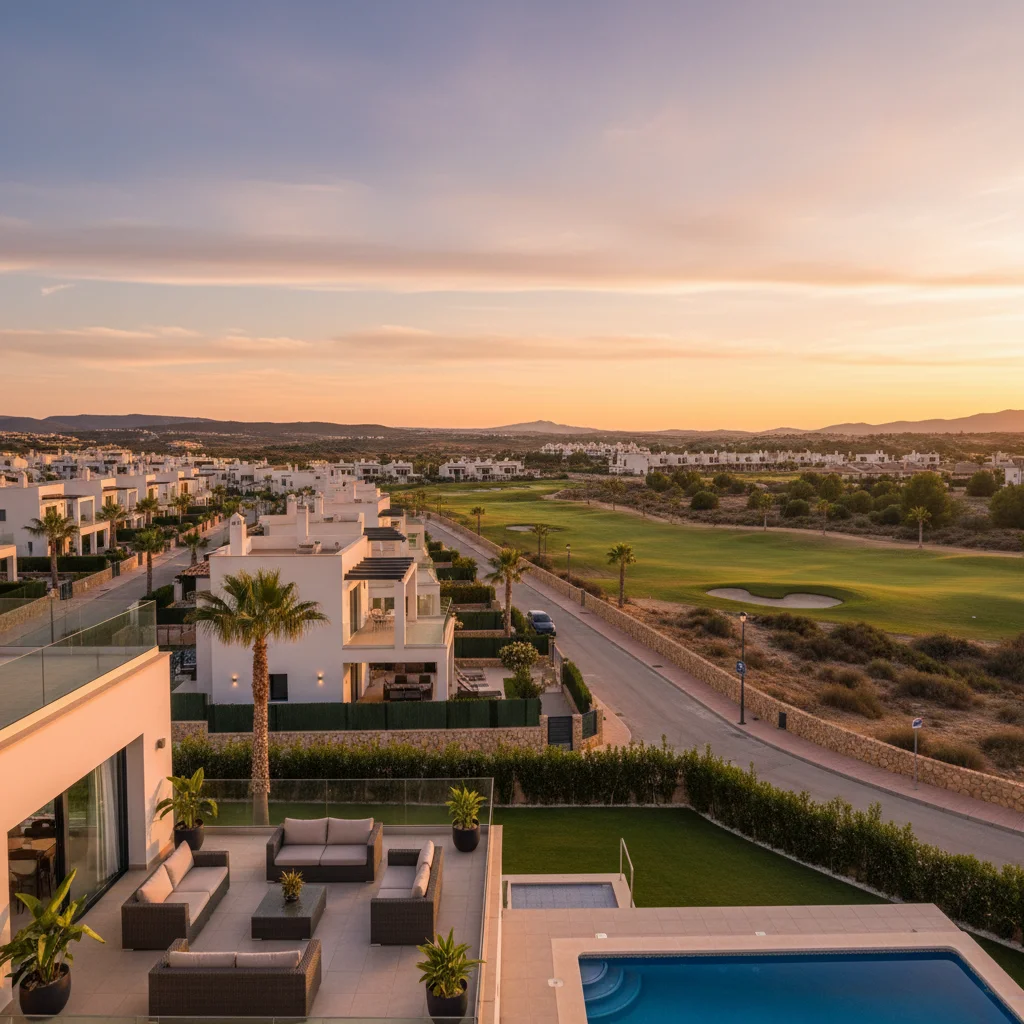
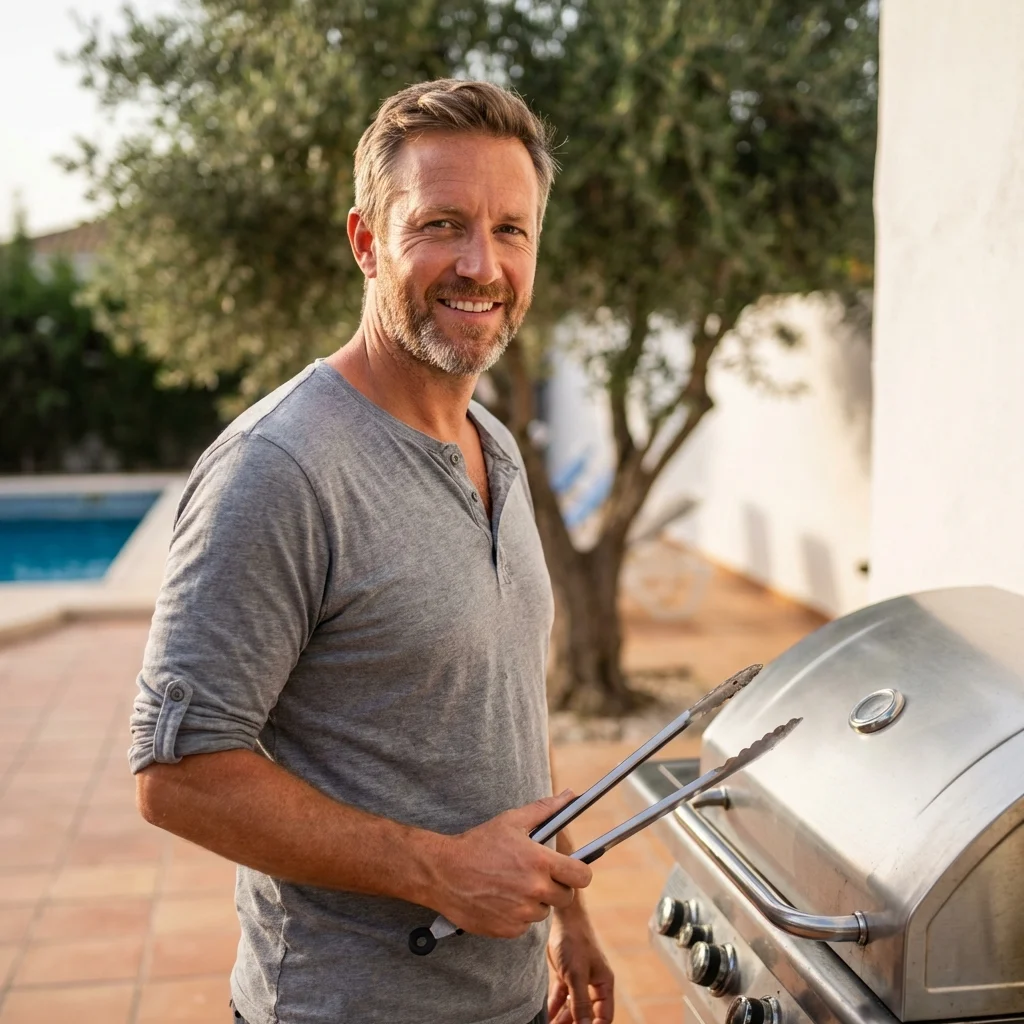
Los Montesinos sits on a gentle rise above the surrounding citrus groves and salt lakes, offering a quiet alternative to the busier coastal strip. The town centre retains a genuine Spanish feel with its weekly street market and traditional tapas bars, but step into the surrounding urbanisations — particularly La Herrada and the streets around Vistabella Golf — and the community is distinctly Northern European. Neighbours swap tips on gas bottle suppliers and argue over charcoal versus briquettes at weekend barbecues.
Property prices here average around €150,000, making it one of the most affordable expat destinations in Alicante province. For that budget you typically get a detached villa or a spacious bungalow with a private garden, a pool, and a covered terrace — exactly the kind of property that lends itself to serious outdoor cooking. The plots in La Herrada tend to be particularly generous, with mature gardens that offer both shade and space for a full outdoor kitchen installation.
The inland climate is marginally warmer in summer and cooler in winter than the immediate coast, but barbecue season here effectively runs year-round. Low humidity and clear skies mean you can fire up a kamado in January as comfortably as you can in July.
Los Montesinos offers some of the most affordable detached villas with large gardens on the Costa Blanca, making it an ideal location for premium outdoor cooking setups that would cost significantly more in coastal towns.
Choosing Your Setup in Los Montesinos
Most properties in Los Montesinos have enough garden space for multiple cooking stations — the challenge is choosing what to install first, not where to fit it.
The typical Los Montesinos villa comes with a garden of 80 to 150 square metres, often with an existing covered terrace or naya. Costa Blanca Outdoors recommends starting with a quality gas BBQ on the terrace for everyday grilling — quick to light, easy to control, and perfect for the midweek dinner you did not plan until five o’clock. A 4-burner model with a side burner handles everything from lamb chops to a full paella.
For the garden proper, a kamado grill is the natural next step. The Vistabella Golf community in particular has embraced kamado cooking, with several owners running informal smoking competitions during the cooler months. A large kamado — 24 inches or above — lets you smoke a full pork shoulder overnight, grill steaks at 300 degrees, or bake bread, all on the same unit.
If you have a dedicated corner with a solid base, a wood-fired pizza oven rounds out the setup. Olive and almond wood from nearby farms burns cleanly and adds a flavour you simply cannot replicate with gas. Several suppliers in neighbouring Rojales stock seasoned firewood by the trailer load.
Costa Blanca Outdoors recommends a three-zone approach for Los Montesinos gardens: gas BBQ on the terrace, kamado by the pool, and a wood-fired pizza oven on a stone plinth in a dedicated garden corner.
Delivery to Los Montesinos
We deliver throughout Los Montesinos, La Herrada, Vistabella Golf, and the surrounding countryside on our regular southern inland route.
Los Montesinos is one of the most straightforward towns on our delivery schedule. Wide residential streets, open driveways, and ground-floor properties mean even the heaviest items — stone pizza ovens, large kamado grills, built-in BBQ islands — can be placed directly in your garden without the stairwell and access challenges common in coastal apartment blocks.
Every delivery includes our full white-glove service: unpacking, assembly, placement in your preferred location, and a complete walkthrough of your new equipment. For custom outdoor kitchen projects, we work with local builders who know the construction methods and materials typical of Los Montesinos properties.
We cover Los Montesinos on the same runs as Algorfa, Rojales, and San Miguel de Salinas, with Torrevieja just ten minutes to the east. Standard delivery takes 5–10 working days for in-stock products, while custom outdoor kitchen builds typically require 3–4 weeks including design consultation and installation.
Why Glass Curtains and Glass Rooms Define Year-Round Living in Los Montesinos
Living in this corner of the Vega Baja offers a lifestyle that many of my clients from the UK and Scandinavia spent decades dreaming about before finally making the move. Since I started helping families here in 2019, I have noticed a distinct shift in how people view their outdoor spaces. In an area like this, where property prices hover around the 150,000 Euro mark, every square meter of your home needs to earn its keep. Most residents here are living in either the traditional town center apartments or the more modern urbanizations like La Herrada and the expanding communities around Vistabella Golf. These properties almost always feature a terrace or a "solarium" that looks perfect on a July afternoon but can become surprisingly difficult to use during the rest of the year. This is where the concept of a glass room or a frameless glass curtain system moves from being a luxury to a practical necessity for local homeowners.
The international demographic here, which makes up nearly half of our five and a half thousand residents, brings a specific set of expectations for outdoor living. My British clients often want a space that feels like a conservatory back home but without the stifling heat traps associated with PVC frames. My Scandinavian clients tend to look for sleek, minimalist lines that provide a thermal barrier during the cooler winter months when the dampness from the nearby salt lakes starts to creep inland. Whether you are situated in the heart of the village or out near the golf course, the geography of this area creates a specific microclimate. We are just far enough from the coast to miss the constant sea breeze of Torrevieja, meaning the heat can feel more intense and stagnant in the height of summer, yet we are close enough to the Salinas that humidity levels can fluctuate wildly at sunset.
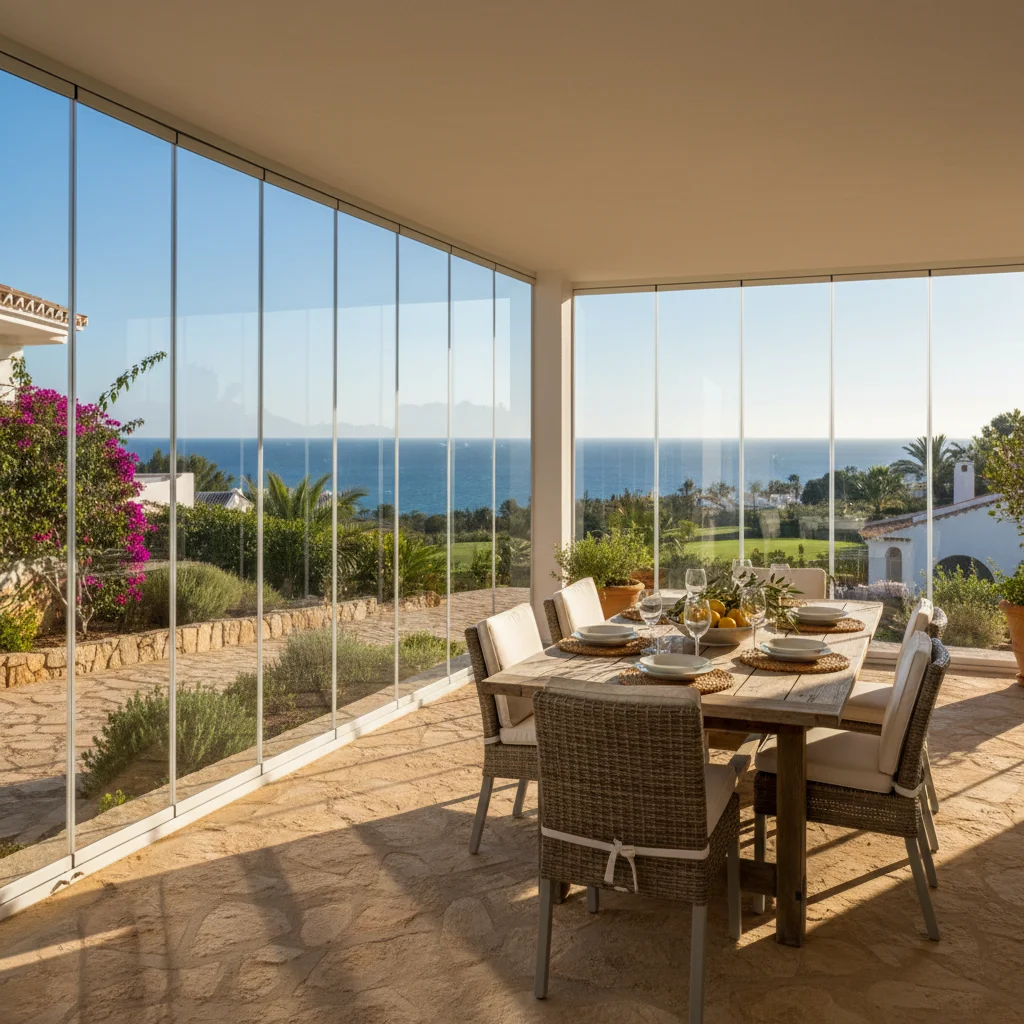
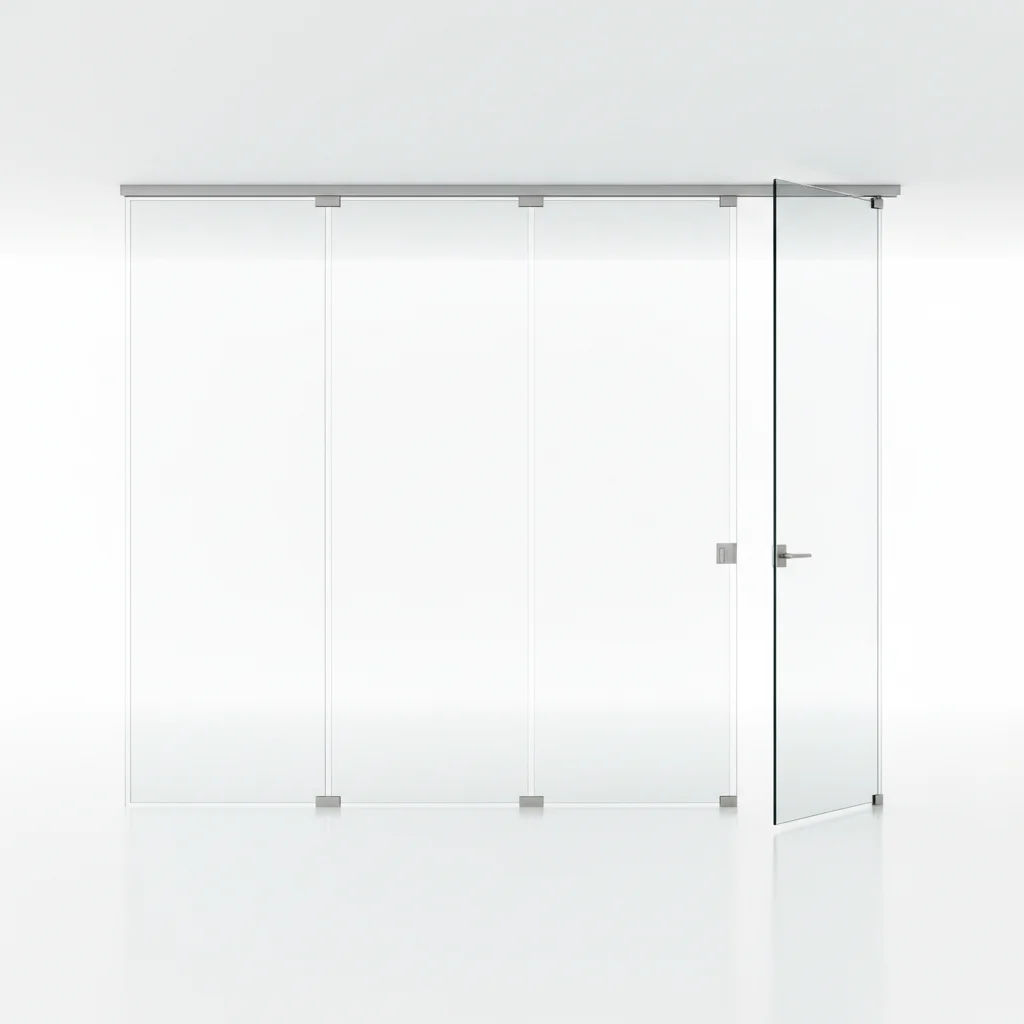
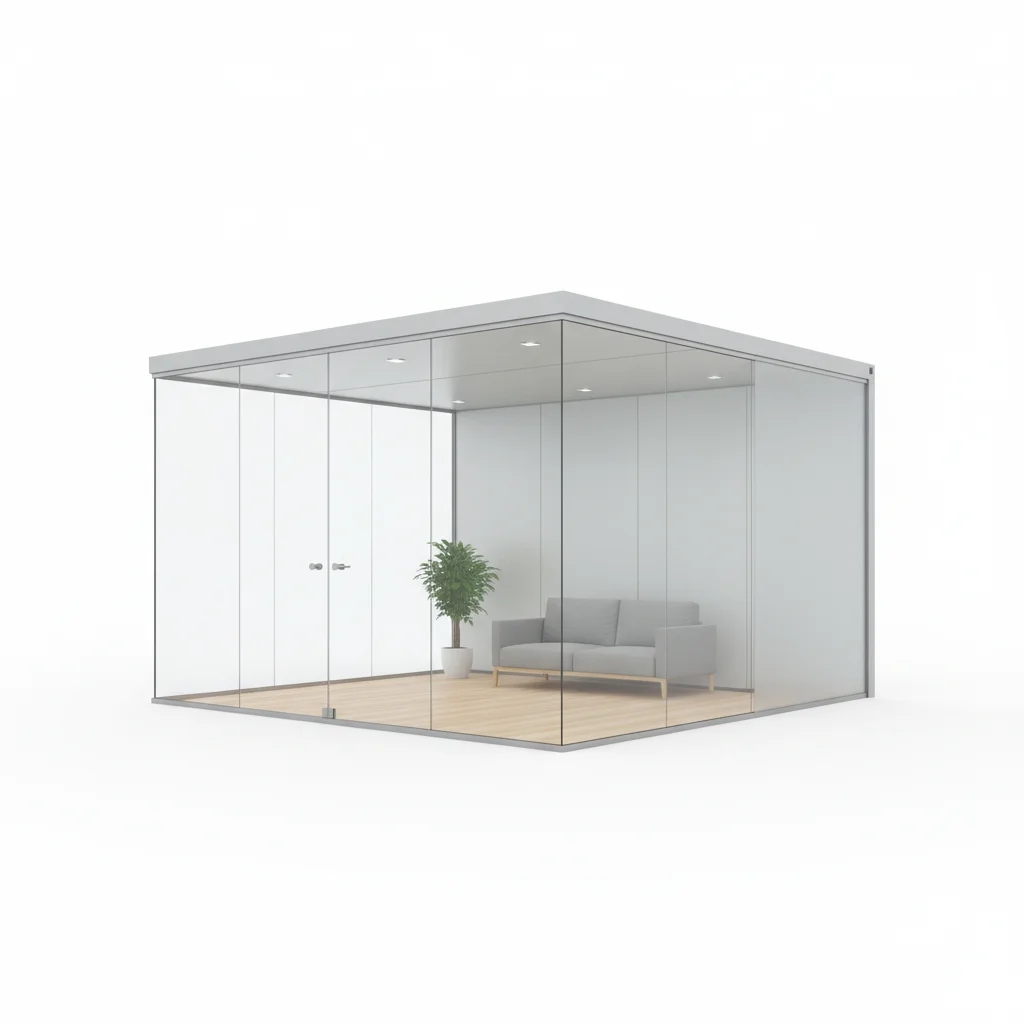
Installing a glass curtain system essentially transforms a seasonal terrace into a multi-functional glass room. In properties across La Herrada, I often see terraces that are unusable for three months of the winter because of the biting wind that whips across the agricultural plains, and unusable for another three months of the summer because of the sheer intensity of the afternoon sun. By enclosing these spaces with frameless glass, you are creating a controllable environment. When the glass is fully retracted, you have your open-air terrace back in seconds, with the panels stacked neatly to one side. When closed, you have a weather-sealed room that maintains your panoramic views toward the mountains or the salt lakes without the visual clutter of traditional aluminum window frames. This versatility is precisely why this product has become the primary renovation choice for those looking to extend their living space without the bureaucratic headaches of seeking formal planning permission for a brick-and-built extension.
Practical Engineering for the Southern Costa Blanca Climate
When we discuss the technical side of installing glass curtains in this specific part of the province, we have to talk about the "Calima" and the salt lake environment. Unlike the northern Costa Blanca, our air here carries a higher concentration of fine dust from the Sahara and salt particles from the lagoons. For a frameless glass system to survive ten years here without the tracks seizing up, the hardware must be of a specific grade. I always recommend 10mm toughened safety glass for our installations here. While 8mm is available and cheaper, it lacks the structural rigidity needed when those strong afternoon "Poniente" winds start blowing across the Vega Baja. A 10mm pane offers better acoustic insulation and a much more solid feel when you are sliding the panels along the Teflon-coated tracks.
The salt lake humidity is another silent killer for inferior outdoor products. In my experience, any system using standard steel bearings will begin to corrode within twenty-four months, leading to a grinding noise every time you try to open your curtains. We prioritize systems that utilize high-grade stainless steel or specialized nylon rollers that are impervious to the salt-laden air. Furthermore, the heat in this area is relentless. A south-facing terrace in a community like Vistabella Golf can reach temperatures that soften cheap sealants. This is why the choice of translucent weather strips between the glass panes is vital. You need UV-stabilized h-strips that won't turn brittle and yellow after one season in the Spanish sun. If your seals fail, your glass room will leak during the occasional but violent Gota Fría rainstorms we see in September.
Price is always a major consideration for my neighbors here. For a standard apartment balcony of about four to five linear meters, you should expect to invest between 3,000 and 4,500 Euros for a high-quality glass curtain system. If you are looking to create a full standalone glass room on a villa plot—which involves a structural roof, either fixed or a bioclimatic pergola, combined with glass perimeters—the investment can range from 8,000 to 15,000 Euros depending on the square footage and the complexity of the drainage. It is a significant sum, but when you consider that it effectively adds an extra room to a 150,000 Euro property, the return on investment is immediate, both in terms of property value and daily quality of life.
One aspect that is often overlooked is the "Comunidad de Propietarios" or the community of owners. In Los Montesinos, many residents live in shared buildings or urbanizations with strict aesthetic rules. Because glass curtains are frameless and do not alter the "façade" of the building in the same way that traditional white aluminum windows do, they are generally much easier to get approved by a community president. However, I always advise my clients to check their specific community statutes first. In most cases, because the system is considered a temporary, removable enclosure rather than a permanent structural change, it bypasses the need for the costly "Obra Mayor" licenses from the town hall, which can save you months of waiting and thousands in professional fees.
Tailored Configurations for Different Property Types
Every home requires a slightly different approach to glass. If you are living in one of the villas in La Herrada or around the golf resort, you likely have a "porche" or a covered terrace area that serves as the main transition between your lounge and your garden. For these properties, I recommend a bottom-weighted glass curtain system. Unlike top-hung systems that require a heavy-duty lintel to take the weight of the glass, a bottom-weighted system puts the pressure on the floor track. This is ideal for many Spanish builds where the overhead beams may not be reinforced enough to hang 200 kilograms of glass. By using a "long-stack" configuration, we can tuck all the glass panels into a corner that doesn't block your walkway, keeping the flow of the house natural.
For apartment dwellers closer to the village center, space is at a premium. Here, the challenge is usually a smaller balcony that feels cramped if you put any furniture on it. In these scenarios, glass curtains should be combined with an overhead awning or "toldo." Glass is excellent at blocking wind and rain, but on a west-facing balcony, it can act like a magnifying glass in the late afternoon. By installing a high-quality drop-arm awning outside the glass curtains, you can block the sun before it hits the glass, keeping the room cool while still enjoying the protection of the enclosure. This combination of glass and fabric is the gold standard for apartment living in our area, allowing you to sit outside and enjoy a coffee even when the winter wind is whipping through the streets.
If you have a larger outdoor area or a solarium, you might want to consider a full glass room. This involves installing a fixed insulated roof or a bioclimatic pergola with adjustable slats, and then using glass curtains as the "walls." This setup is particularly popular with our Scandinavian residents who use these spaces as outdoor kitchens or hobby rooms. To make this work, we have to pay close attention to drainage. The dust we get here means that when it does rain, it's often "muddy rain." A well-designed glass room must have integrated guttering that can handle the sludge without clogging. I always suggest a slight pitch on the roof and oversized downpipes to ensure that your new room doesn't turn into a pond during a November downpour.
Maintenance in this region is relatively straightforward but non-negotiable. Because of the dust from the surrounding citrus groves and the occasional Calima, I tell all my clients to hose down the tracks at least once a month. You don't need harsh chemicals; a bit of soapy water and a silicone-based spray for the rollers will keep the system gliding silently. Avoid using oil-based lubricants like WD-40 on the tracks, as these will actually attract the local dust and turn into a sticky paste that will eventually jam the mechanism.
Local Logistics and Expert Implementation
Delivering and installing heavy glass systems in this part of the Costa Blanca requires specific local knowledge. We regularly work not just in the main village but in the surrounding areas of Rojales, Algorfa, and San Miguel de Salinas. Each of these spots has its own logistical quirks. For instance, the narrow streets in the old center of town can make it difficult for large delivery trucks to maneuver, often requiring us to offload glass panels onto smaller transit vehicles or use specialized glass lifts for upper-floor apartments. If you are in Vistabella, the roads are wider, but the wind exposure is significantly higher, requiring us to be much more precise with our wind-load calculations and the depth of our fixings.
Our team knows the local building styles intimately. We know which urbanizations used hollow clay bricks that require specialized chemical anchors for a secure fit, and we know where the coastal salt air is most likely to cause issues with standard hardware. When we come out for a consultation, we aren't just measuring the width of your terrace; we are looking at the orientation of the sun, the prevailing wind direction from the salt lakes, and the structural integrity of your existing roofline. This is the difference between a system that looks good on day one and one that still functions perfectly five years later.
I have helped over 200 families across the Costa Blanca optimize their homes, and many of those projects are right here in the Vega Baja. I understand that for most of my clients, their Spanish home is their sanctuary, and they don't want to deal with contractors who don't show up or who don't understand the local regulations. Because I live here and operate locally, I am familiar with the nuances of the "Ley de Propiedad Horizontal" and how it applies to our specific communities. We handle the logistics of getting the glass from the factory to your terrace, ensuring that every panel is millimetre-perfect.
If you are tired of retreating inside every time the wind picks up or the dust starts to settle, it is worth looking at what a glass enclosure can do for your property. I offer a free, no-pressure consultation where I can walk you through the options for your specific terrace or garden. We can look at the different track options, discuss the pros and cons of tinted versus clear glass, and figure out a configuration that fits your budget and your lifestyle. My goal is always to provide a solution that feels like a natural part of your home, not an afterthought. Whether you are overlooking the greens at Vistabella or the rooftops of the village, let's make sure you can enjoy those views 365 days a year.
 JW'"
/>
JW'"
/>