Outdoor Living in Torrevieja
Torrevieja is the Costa Blanca’s largest expat city, with 90,000 residents — 35% from abroad including British, Scandinavian, Russian, and German communities — and a property market offering outdoor cooking setups for every budget starting from €160,000.
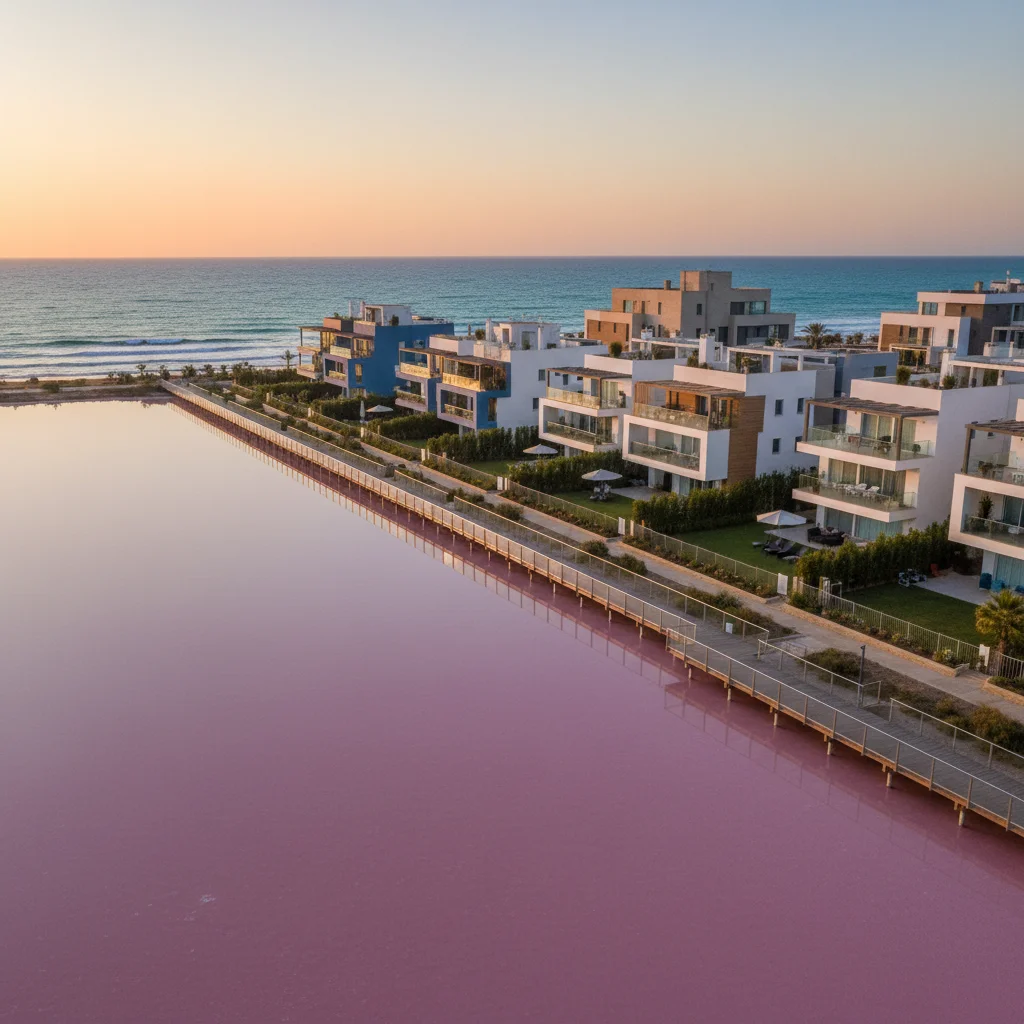
Torrevieja operates at a different scale to every other town on the Costa Blanca. This is a proper city with year-round services, a full hospital, and an international population that creates a genuinely cosmopolitan atmosphere. The famous pink salt lakes, the beaches at La Mata and Los Locos, and the Habaneras commercial centre give the city an energy that smaller towns cannot replicate.
The property market is the most varied in the region. Seafront apartments with compact balconies sit alongside detached villas in the outskirts. La Mata has a more relaxed feel, while the centre around Los Locos beach buzzes with street life. Average prices around €160,000 make Torrevieja one of the most accessible entry points for expats on the Costa Blanca.
Over 30,000 foreign residents means every outdoor cooking culture is represented. British barbecue traditions, Scandinavian grilling techniques, Russian shashlik culture, and German Bratwurst expertise all coexist within a few square kilometres — a vibrant scene with no single dominant style.
Torrevieja’s 90,000 residents and 35% expat population make it the Costa Blanca’s largest international city, with diverse property types and outdoor cooking cultures from British, Scandinavian, Russian, and German communities.
Choosing Your Setup in Torrevieja
From compact balcony grills for seafront apartments to full outdoor kitchen builds for La Mata villas, Torrevieja’s varied property stock demands flexible equipment recommendations.
Apartment owners — and there are many in Torrevieja — need equipment that works within building community rules. Many apartment complexes have regulations about open-flame cooking on balconies, making electric grills or gas plancha units the safest choice. Costa Blanca Outdoors recommends checking your community’s normas before purchasing, and we are happy to advise on compliant options for any specific building.
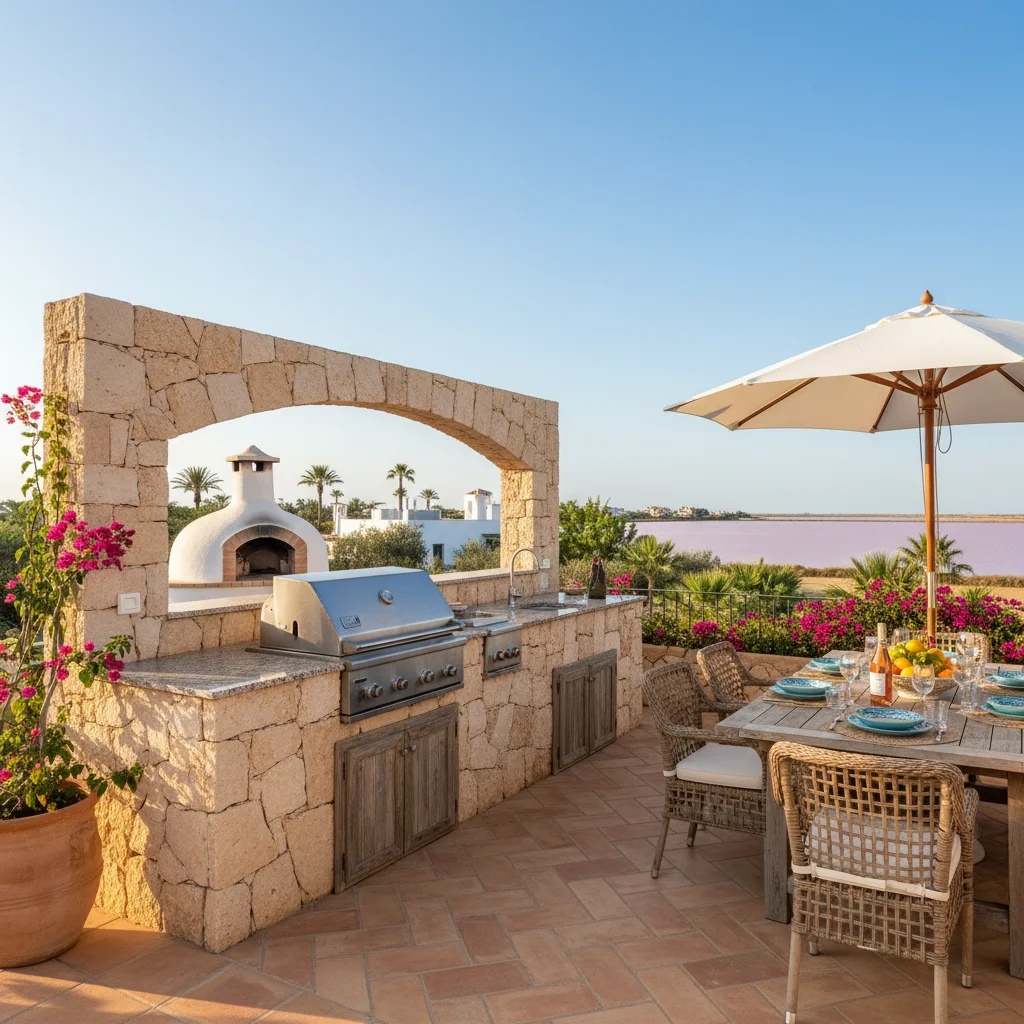
For townhouse and villa owners in the residential areas behind Los Locos, along the La Mata strip, or in the urbanisaciones toward San Luis, the full range of options opens up. A gas BBQ is the essential starting point — reliable, fast, and perfect for the spontaneous midweek grilling that Torrevieja’s social calendar demands. Add a kamado grill for weekend projects, or a countertop pizza oven for something different.
Torrevieja’s coastal position means salt air is a factor for any metal equipment. Stainless-steel construction or properly rated powder-coat finishes will outlast cheaper alternatives by years. Consider this an investment in longevity — replacing a corroded budget grill every two seasons costs more than buying quality once.
Costa Blanca Outdoors recommends checking apartment community rules before purchasing balcony grills in Torrevieja, and investing in stainless-steel or marine-rated finishes to combat coastal salt air corrosion.
Delivery to Torrevieja
We deliver across all Torrevieja neighbourhoods weekly — from La Mata in the north to the city centre and southern residential areas — as the hub of our southern Costa Blanca route.
Torrevieja is the anchor point for our southern delivery operation. We know the city thoroughly — the one-way systems in the centre, the loading restrictions along the seafront, the access routes for apartment blocks near Los Locos, and the quieter streets of La Mata.
For apartment deliveries, we coordinate building access, lift capacity, and timing with building administrators in advance. Villa deliveries in the outskirts and urbanisaciones are straightforward, with wide roads and private driveways. Every delivery includes full unpacking, assembly, placement, and a walkthrough of your equipment.
Torrevieja connects naturally to our wider southern network. Orihuela Costa starts immediately to the south, Rojales and Ciudad Quesada are a ten-minute drive inland, and San Fulgencio sits just to the north. Standard delivery is 5–10 working days for in-stock items, with custom outdoor kitchen builds running 3–4 weeks from design to installation.
Designing Functional Outdoor Kitchens for the Southern Costa Blanca Lifestyle
Living in this specific corner of the province since 2019 has taught me that outdoor living here is fundamentally different from the northern parts of the coast. When you are situated between the vast Mediterranean and the unique microclimate created by the Pink Salt Lake, your home is subject to environmental factors that demand a specific approach to construction and material selection. With a local population of around 90,000 residents, a significant third of whom are international, the culinary culture here is a fascinating mix. I have worked with British families who want a traditional grill setup, Scandinavians who prioritize sleek, minimalist outdoor cooking stations for year-round use, and Germans who demand high-spec technical precision in their appliances. Most properties in this region, especially those within a €170,000 price bracket, tend to be villas within established urbanisations or apartments with generous terraces. Whether you are situated near the Habaneras center or closer to the breezy stretches of La Mata, the transition from indoor to outdoor living is not just a luxury but a functional requirement for at least ten months of the year. The local preference for shared garden spaces in golf resort communities also means that outdoor kitchens must be designed with both privacy and community regulations in mind.
The sheer variety of nationalities here has pushed the local market to evolve. We no longer see just a simple brick barbecue tucked in a corner. Today, the residents of the southern Costa Blanca are installing sophisticated culinary hubs that often serve as the primary kitchen during the summer months. This shift is partly driven by the property styles found in the urbanisations surrounding the Paseo Marítimo, where compact but high-value outdoor spaces are the norm. Residents are looking to maximize every square meter of their plot or terrace. Because many homes here are part of a larger community, the design of these kitchens often focuses on modularity and clever spatial planning. A well-executed outdoor kitchen does more than just cook food; it increases the usable square footage of a home and provides a focal point for social life that keeps the heat of cooking out of the main house during those intense July and August weeks.
In my experience helping over 200 families across the region, I have noticed that the most successful projects are those that acknowledge the specific geological and climatic quirks of the area. The proximity to the salt lakes is a major factor that many newcomers overlook. The air here carries a specific type of humidity that is highly corrosive to lower-grade metals. When I walk through older urbanisations, I often see rusted grill hoods and pitted cabinet handles on kitchens that are only a few years old. This is almost always because the materials chosen were not suited for a salt-heavy environment. Designing for this region requires a deep understanding of how the afternoon sun hits a terrace and how the frequent dust storms, known locally as the calima, will interact with your cooking surfaces.
Technical Considerations for the Local Environment and Climate
The southern Costa Blanca is significantly hotter and drier than the northern reaches of the province. This intense heat, combined with the strong afternoon sun, means that the placement and material of your worktops are critical. I always advise against using dark-colored granites or certain metals for uncovered work surfaces. In the peak of summer, a black granite countertop can reach temperatures exceeding 60 degrees Celsius, making it impossible to touch, let alone prepare food on. Instead, I recommend high-performance sintered stones like Dekton or Neolith. These materials are UV resistant and will not fade or crack under the relentless sun. Furthermore, they are non-porous, which is essential when the calima dust arrives. This fine Saharan sand can settle into the pores of natural stone and be incredibly difficult to remove, but a sintered stone surface can be wiped clean with minimal effort.
Corrosion is the second major challenge. Because of the salt lake humidity and the coastal air, I exclusively recommend 316-grade stainless steel for any exposed metal components. Many off-the-shelf modular kitchens use 304-grade steel, which is fine for inland Madrid but will begin to show tea-staining and surface rust within twelve months in this coastal hub. If you are looking at a mid-range modular setup, perhaps something in the €5,500 to €8,500 range, ensure the cabinetry is either powder-coated aluminum or high-density polyethylene. Aluminum is particularly effective here because it does not rust and can be finished in a variety of textures that mimic wood or stone, providing a modern aesthetic without the maintenance headaches of natural materials.
Before you begin any installation, you must consider the rules of your Comunidad de Propietarios. In many urbanisations around the southern Costa Blanca, there are strict rules regarding permanent structures and chimney heights. This is especially true if you are planning to install a wood-fired pizza oven or a charcoal-heavy setup. Many communities have transitioned toward gas-only policies for outdoor cooking to prevent smoke nuisance to neighbors. If you are in an apartment or a townhouse with close neighbors, a high-quality gas BBQ integrated into a custom island is often the most frictionless way to proceed. You should also be aware of the Horizontal Property Law, which may require you to seek formal permission from the community board if your kitchen involves permanent plumbing or electrical extensions that alter the exterior appearance of the building.
Maintenance in this region is also dictated by the wind. The wind often picks up in the late afternoon, blowing salt and dust across terraces. I suggest incorporating integrated covers or custom-fitted weather shields into your design. For a standard 3-meter kitchen run, expect to spend around €400 to €600 on high-quality, breathable covers. This small investment will save you hours of cleaning and protect your investment from the abrasive nature of the local dust. When it comes to gas supply, most modern installations here utilize the standard orange Repsol or Cepsa bottles. If you are designing a high-end kitchen in the €15,000+ range, I often suggest building a dedicated, ventilated housing for two bottles with an automatic changeover valve. This ensures you never run out of gas halfway through a Sunday lunch, which is a common frustration for many expats who rely on single-bottle setups.
Specific Recommendations for Regional Property Types
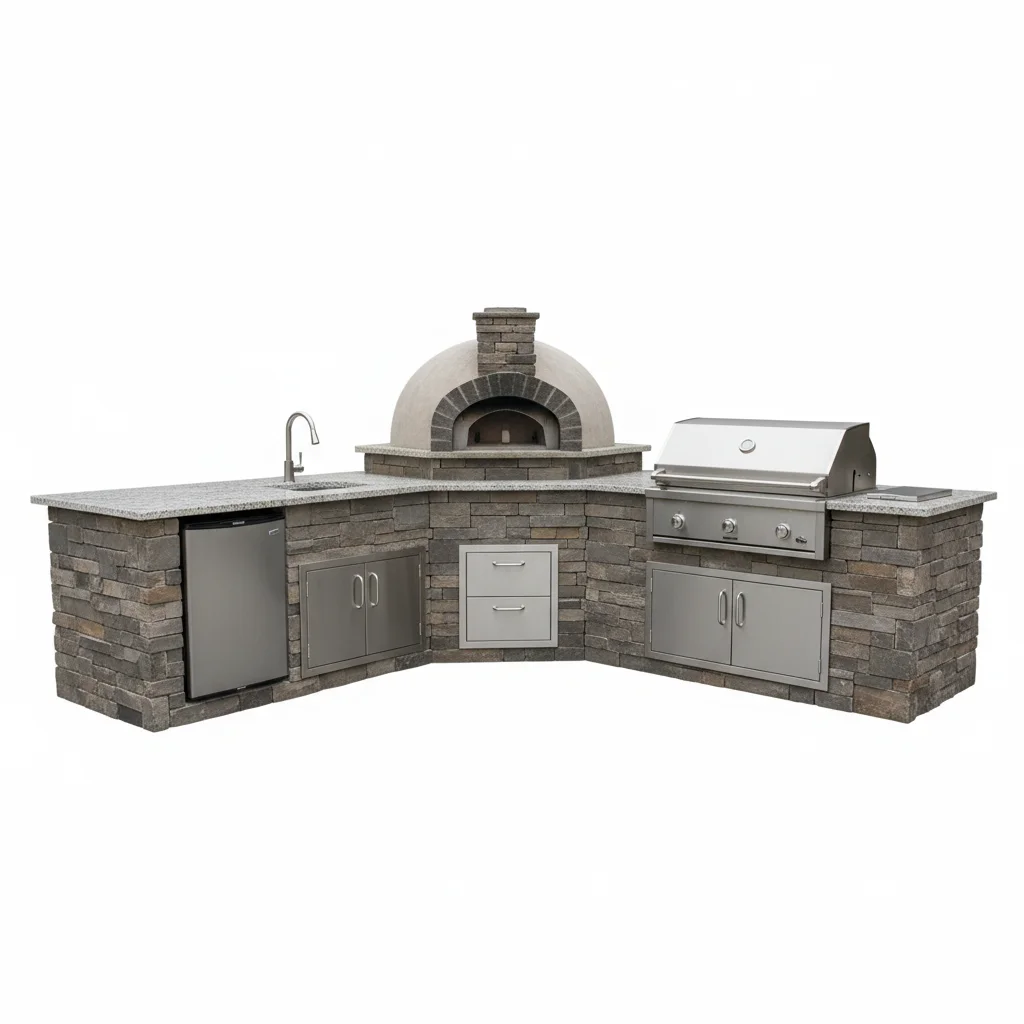
For the many villas found in areas like San Miguel de Salinas or Los Montesinos, the luxury of space allows for more expansive, U-shaped or L-shaped configurations. In these larger plots, I recommend a multi-fuel approach. Combining a high-performance gas grill for daily use with a ceramic kamado-style BBQ, such as a Monolith or Big Green Egg, offers the best of both worlds. A kamado is particularly effective in our dry climate because the ceramic insulation retains moisture in the food, which can otherwise dry out quickly in the low humidity. For a villa setup, a comprehensive 4-meter run featuring a built-in gas grill, a kamado station, a small outdoor sink, and a fridge will typically range from €12,000 to €18,000. This configuration provides a complete secondary living area that keeps the house cool and the cook engaged with the guests.
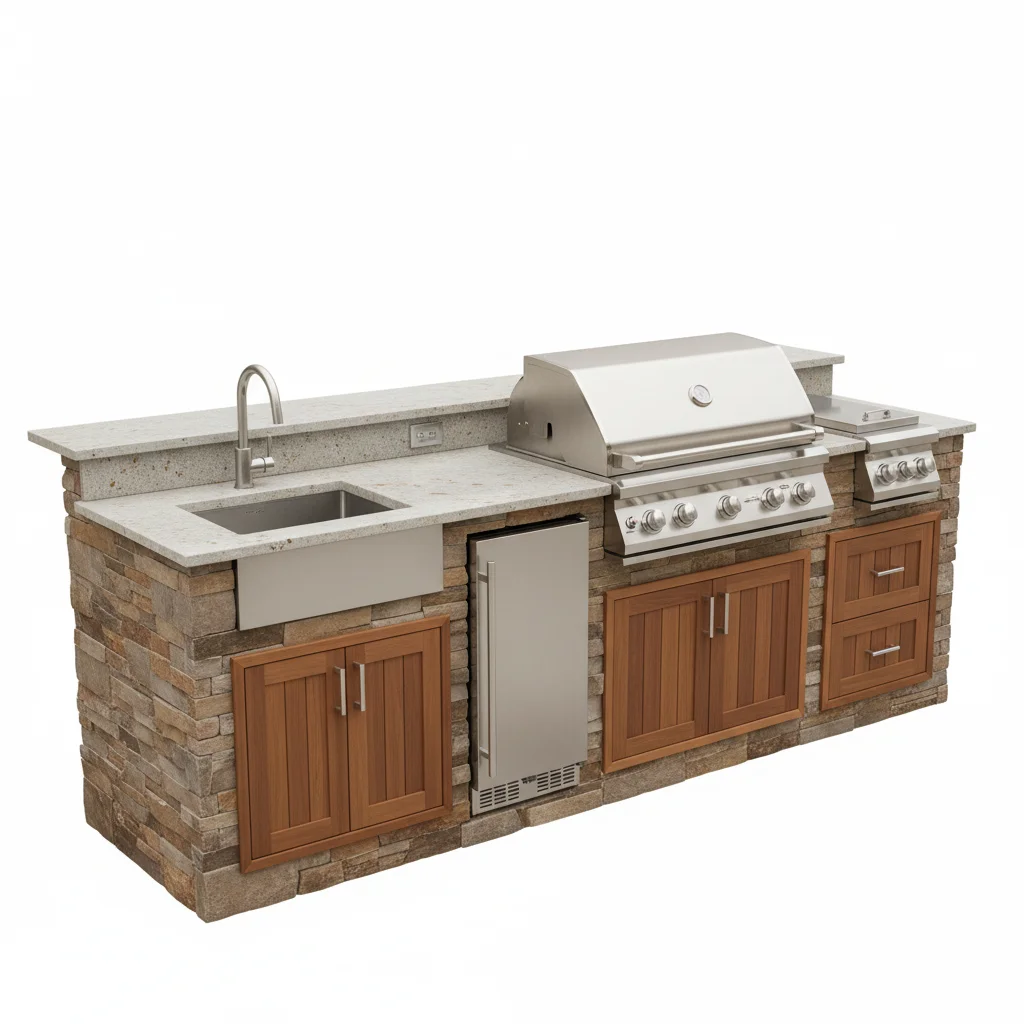
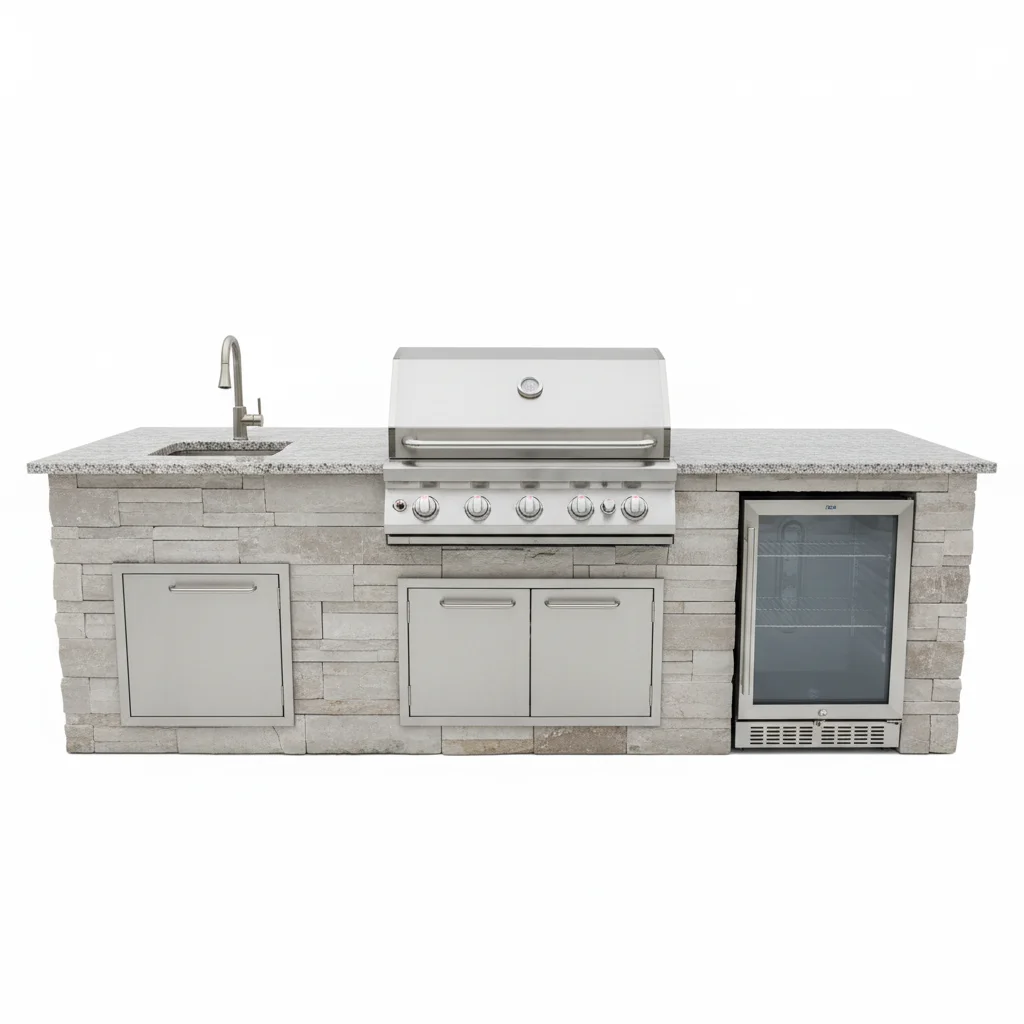
Residents in apartments or smaller townhouses, perhaps near Guardamar or the busier urban centers, need to be more strategic. Space is at a premium, and weight can be a factor for rooftop solariums. For these properties, I recommend a compact modular island. A 1.8-meter to 2.2-meter unit is usually the sweet spot. I suggest focusing on a high-quality 3-burner gas grill as the centerpiece. You can find excellent modular units starting around €3,500 that include a side burner and some storage. If you enjoy hosting pizza nights, a portable gas-fired pizza oven can be added to the countertop, providing versatility without the weight and smoke of a traditional brick oven. These smaller setups are perfect for the balconies and terraces of the southern Costa Blanca, where the goal is to enhance the lifestyle without cluttering the limited outdoor space.
I also frequently recommend integrating a dedicated beverage center. The heat here makes an outdoor fridge almost essential. However, not all fridges are created equal. You must ensure the unit is tropical-rated, meaning it can maintain a 2-degree internal temperature even when the ambient outdoor temperature hits 40 degrees. A standard indoor fridge used outdoors will burn out its compressor in a single season. A proper outdoor-rated fridge will add about €1,200 to €1,800 to your budget, but it is the difference between a lukewarm beer and a truly refreshing drink during a September heatwave. Combining this with a pizza oven or a specialized sear station creates a professional-grade cooking environment that rivals any indoor kitchen.
For those looking at the higher end of the market, perhaps in the newer developments toward Orihuela Costa, we are seeing a trend toward fully bespoke islands finished in large-format porcelain slabs. These kitchens often feature hidden induction hobs underneath the stone surface and integrated LED lighting. While these projects can reach the €25,000 mark, they represent the pinnacle of outdoor design, offering a seamless look that matches the contemporary architecture of the newest villas in the region. The key is to balance these aesthetics with the practical realities of the local environment—ensuring that every hinge, drawer runner, and gas connection is built to withstand the salt and the heat.
Delivery Logistics and Local Expertise
Navigating the logistics of delivering and installing an outdoor kitchen in this part of the world requires specific local knowledge. The narrow streets of older urbanisations in Rojales or the tight corners of residential zones in Guardamar can be challenging for large delivery vehicles. I have managed many installations where we had to coordinate specialized crane lifts to get heavy stone worktops or large grill islands over garden walls or onto third-floor solariums. This is where my experience living and working in the area becomes invaluable. We understand the local traffic patterns on the N-332 and the AP-7, ensuring that our delivery teams arrive when they say they will, avoiding the midday heat and the peak tourist traffic during the summer months.
Our service extends throughout the neighboring areas, including Orihuela Costa, Guardamar, Rojales, and San Miguel de Salinas. We are intimately familiar with the building styles and the specific requirements of the local town halls. For instance, knowing which areas have stricter regulations regarding "obra" (construction) versus modular installations can save a homeowner a lot of stress and potential fines. A modular kitchen is often viewed differently by local authorities than a fixed, brick-built structure, which can be a significant advantage when you want to upgrade your home quickly and legally.
Beyond the delivery, we provide the technical support that comes from knowing the local supply chains. Whether you need a specific regulator for a Spanish gas bottle or advice on which local stone mason can best handle a repair five years down the line, we are part of this community. We don't just drop off a box; we ensure that your kitchen is correctly calibrated for the local gas pressure and that your surfaces are treated with the right sealants for our specific UV levels. Every installation we facilitate is backed by the knowledge of how these materials perform over time in our unique salt-lake environment.
If you are considering enhancing your outdoor space, I invite you to reach out for a free consultation. We can discuss your specific terrace or garden, look at the orientation of your property to account for the wind and sun, and determine which materials will offer you the best longevity. My goal is to ensure that your outdoor kitchen becomes the most used part of your home, designed with the expertise that only comes from years of living and working right here on the southern Costa Blanca. Let's build something that not only looks great today but stands up to the unique challenges of our beautiful Mediterranean climate for many years to come.
 JW'"
/>
JW'"
/>