Why Expats in Calpe Love Outdoor Cooking
Calpe’s 57.6% international population — the highest expat ratio of any major Costa Blanca town — has created a buzzing, multicultural outdoor cooking scene beneath the iconic Peñón de Ifach.
With nearly 15,000 foreign residents out of a population of 26,600, Calpe is genuinely multicultural. British, German, and Russian communities each bring their own grilling traditions — from Sunday roasts to Bratwurst to shashlik — and the result is a town where outdoor cooking is woven into the social fabric.
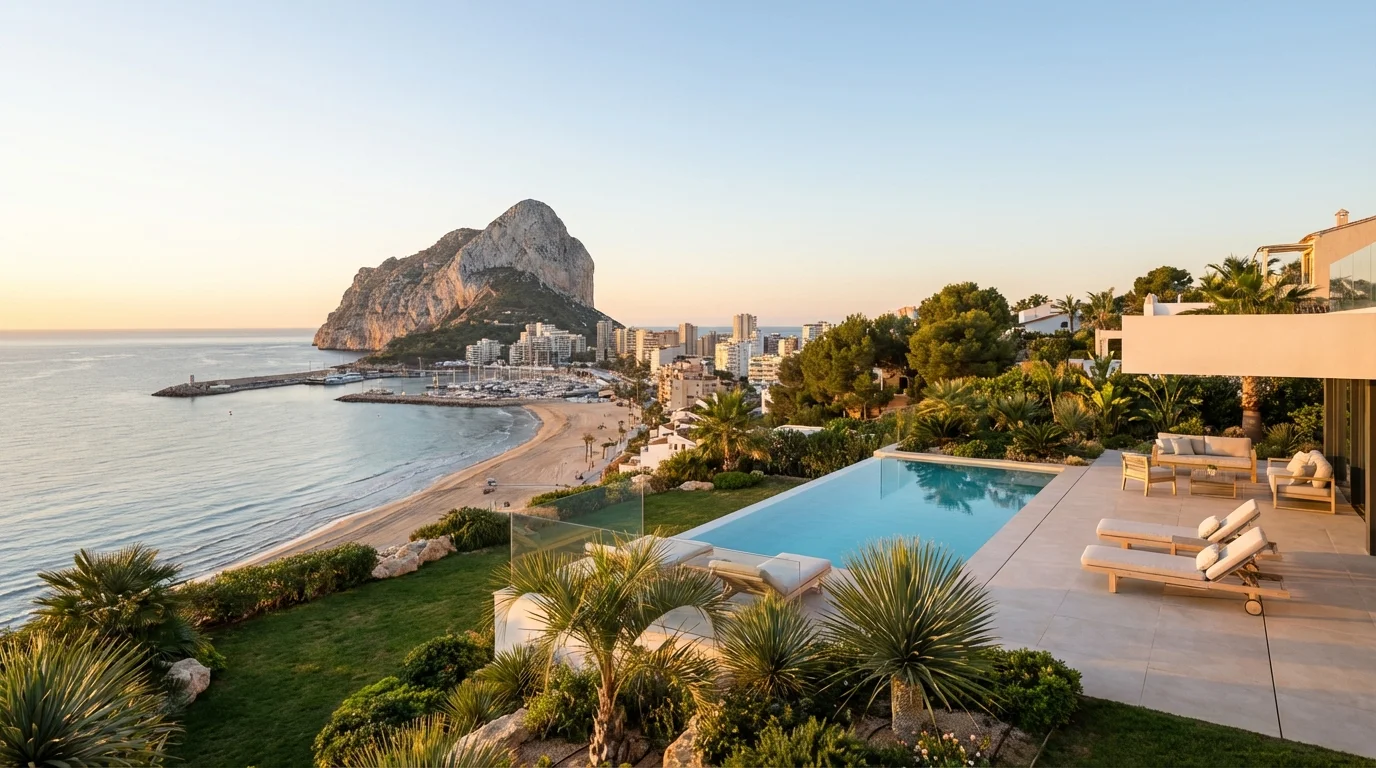
The Peñón de Ifach, Calpe’s dramatic 332-metre limestone rock, defines the town’s geography and microclimates. Properties on the Levante side enjoy morning sun and shelter from westerly winds, while homes in La Fossa get long afternoon light that extends barbecue season well into the evening. The Salt Flats nature reserve to the south gives every terrace a distinctly Mediterranean sense of openness.
With average property prices around €320,000, Calpe attracts a broad range of expats — from retirees converting their terrace into a cooking haven to young families wanting a quality gas BBQ for weekend gatherings.
Answer capsule: Calpe’s 57.6% expat population and accessible property market make it the most internationally diverse outdoor cooking community on the northern Costa Blanca.
Your Calpe Outdoor Kitchen Setup
Calpe’s mix of seafront apartments, La Fossa townhouses, and hillside villas means solutions range from compact balcony setups to full terrace installations.
Along the Levante and La Fossa beachfronts, modern apartments with 10–20m² terraces are the norm. A Kamado Joe Junior or a portable gas BBQ paired with a foldable prep table gives you serious cooking capability without crowding your space.
Move into the hillside urbanisations behind the Peñón — Maryvilla, Cometa, and Oltamar — and detached villas with 30–60m² terraces and private gardens are common. These are where we install complete packages: built-in gas grill, full-size kamado, pizza oven alcove, and Silestone countertops that withstand the coastal salt air.
Costa Blanca Outdoors recommends that Calpe apartment owners consider a kamado grill as their primary investment. The all-in-one versatility — grilling, smoking, roasting, baking — gives you multiple cooking methods in a single footprint, exactly what a compact terrace demands.
Answer capsule: Calpe apartment dwellers benefit from compact kamado grills or portable gas BBQs, while Maryvilla and Cometa villa owners have space for complete outdoor kitchen islands.
Gas, Charcoal, or Wood-Fired? Choosing Right for Calpe
Calpe’s coastal breezes and diverse property types make fuel choice a practical decision — gas for convenience in apartments, charcoal and wood for flavour in villas.
The Levante and Poniente breezes that make Calpe pleasant in summer can affect open-flame cooking on exposed upper-floor terraces. Gas BBQs with windshield burner systems are our top recommendation for seafront apartments — they deliver consistent heat regardless of conditions.
For villa owners in sheltered hillside areas, kamado cooking comes into its own. The thermal mass of ceramic makes a kamado virtually wind-proof once sealed. Calpe’s German and Russian communities have been particularly enthusiastic adopters — perhaps because low-and-slow techniques resonate with their own smoking and curing traditions.
Wood-fired pizza ovens work beautifully in Calpe’s villa gardens. Firewood is sourced through commercial suppliers in Benissa or Callosa d’en Sarrià, and we stock kiln-dried cooking wood for delivery. Costa Blanca Outdoors recommends almond wood for pizza ovens — it burns hot and clean, reaching the 450°C floor temperatures that proper Neapolitan pizza demands.
Answer capsule: Gas BBQs handle Calpe’s coastal breezes best for apartment cooking, while wind-proof kamado grills and wood-fired pizza ovens suit the sheltered hillside villas.
Delivery & Setup in Calpe
Calpe sits centrally on our northern Costa Blanca delivery route, with easy AP-7 motorway access and regular weekly deliveries throughout the town.
The AP-7 exit drops directly into town, and even the hillside urbanisations have wider, better-maintained roads than many neighbouring areas. We can deliver full-size outdoor kitchen components without the access restrictions that sometimes apply elsewhere.
For apartment deliveries along Levante and La Fossa, we coordinate building access and use specialist equipment for upper-floor installations. A 90kg kamado on a fifth-floor terrace is no problem with proper planning.
Customers in nearby Moraira and Altea benefit from our regular Calpe schedule. We also serve Benissa on the same routes. Standard delivery is 5–10 working days, with complete setup including assembly, gas connection testing, and a hands-on walkthrough so you are grilling with confidence from day one.
Designing the Elevated Outdoor Social Space in Calpe
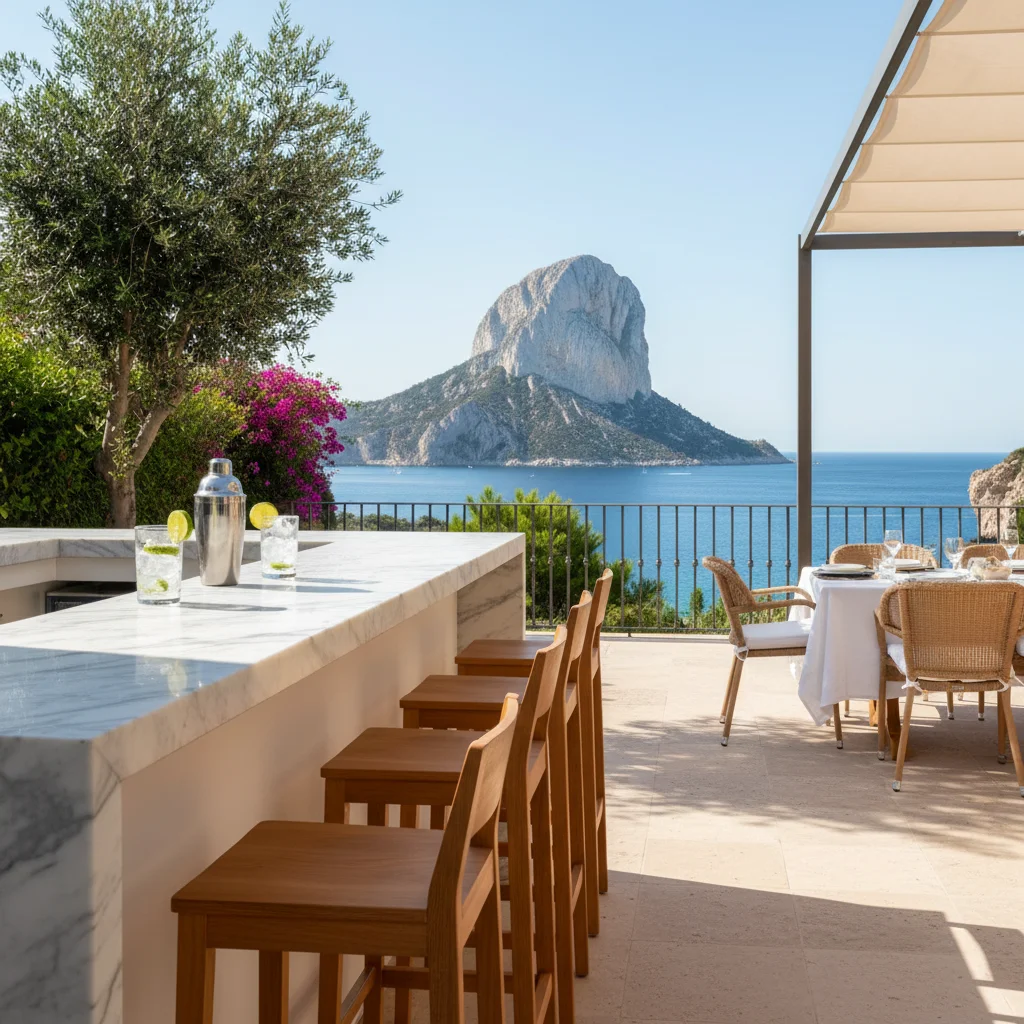
Living on this specific stretch of the Mediterranean coastline requires a nuanced understanding of how architecture and environment intersect. With a population where over 57 percent of residents are international, primarily from British, German, and Russian backgrounds, the local property landscape has evolved into a sophisticated blend of high-rise apartment living near the shoreline and expansive hillside villas. When you are looking at a terrace that spans between 40 and 80 square meters, standard dining sets often fail to capture the social potential of the space. This is where outdoor bar furniture becomes a strategic choice rather than a luxury addition. The villas rising into the hillsides above the salt flats are designed for entertaining, often featuring private pools that serve as the primary social anchor. A traditional dining table sits low and remains static, whereas bar-height furniture elevates the perspective. In this municipality, where the Peñón de Ifach dominates the horizon, maintaining a line of sight over terrace railings is essential. If you are sitting at a standard 75cm high dining table, your view of the sea or the rock is often obstructed by the very safety glass or balustrade designed to protect you. By moving to a 105cm or 110cm bar height, you clear those visual obstacles, turning a routine sunset drink into an immersive experience.
The international demographic here brings a diverse set of expectations to outdoor living. The British contingent often looks for that social "pub-style" hub where guests can lean and linger, while German residents frequently prioritize ergonomic precision and long-term durability in materials. Russian owners often lean toward the sleek, modern aesthetics that complement the sharp lines of contemporary new-builds found in the higher elevations of the town. Regardless of nationality, the goal remains the same: creating a secondary kitchen and social zone that bridges the gap between the interior lounge and the pool deck. In the luxury villas overlooking La Fossa or the quieter residential pockets, a dedicated bar setup serves as a functional transition point. It prevents guests from tracking pool water into the main house and centers the activity around a serving station equipped for the local climate. Given the average property price of approximately 320,000 EUR—with luxury villas often exceeding the million-euro mark—the quality of the furniture must match the investment in the masonry. A flimsy plastic set has no place on a high-spec porcelain tile terrace. Instead, we see a move toward heavy-gauge aluminum and high-pressure laminates that can withstand the unique environmental pressures of this specific coastal pocket.
Material Selection and Environmental Realities of the Local Coastline
One of the most significant advantages of living in this area is the sheltered microclimate. Protected by the mountain ranges to the north, we experience a localized weather pattern that is generally less humid than the southern Costa Blanca and more stable than the valleys further inland. However, this does not mean the environment is easy on furniture. If your property is located near the Levante beach or the salt flats, you are dealing with two distinct corrosive elements: salt spray and high-alkalinity dust. Salt air is a relentless oxidizer. For bar furniture, this means avoiding low-grade "stainless" steel which will inevitably tea-stain within a single season. I always recommend T6-grade powder-coated aluminum. It is lightweight enough to move if the Llebeig wind picks up, but robust enough to resist the salt-heavy air. For example, a high-quality aluminum bar set with four stools typically ranges between 1,200 EUR and 1,800 EUR. This investment ensures that the frames will not bubble or flake, a common issue with cheaper imported sets found in large-scale DIY stores.
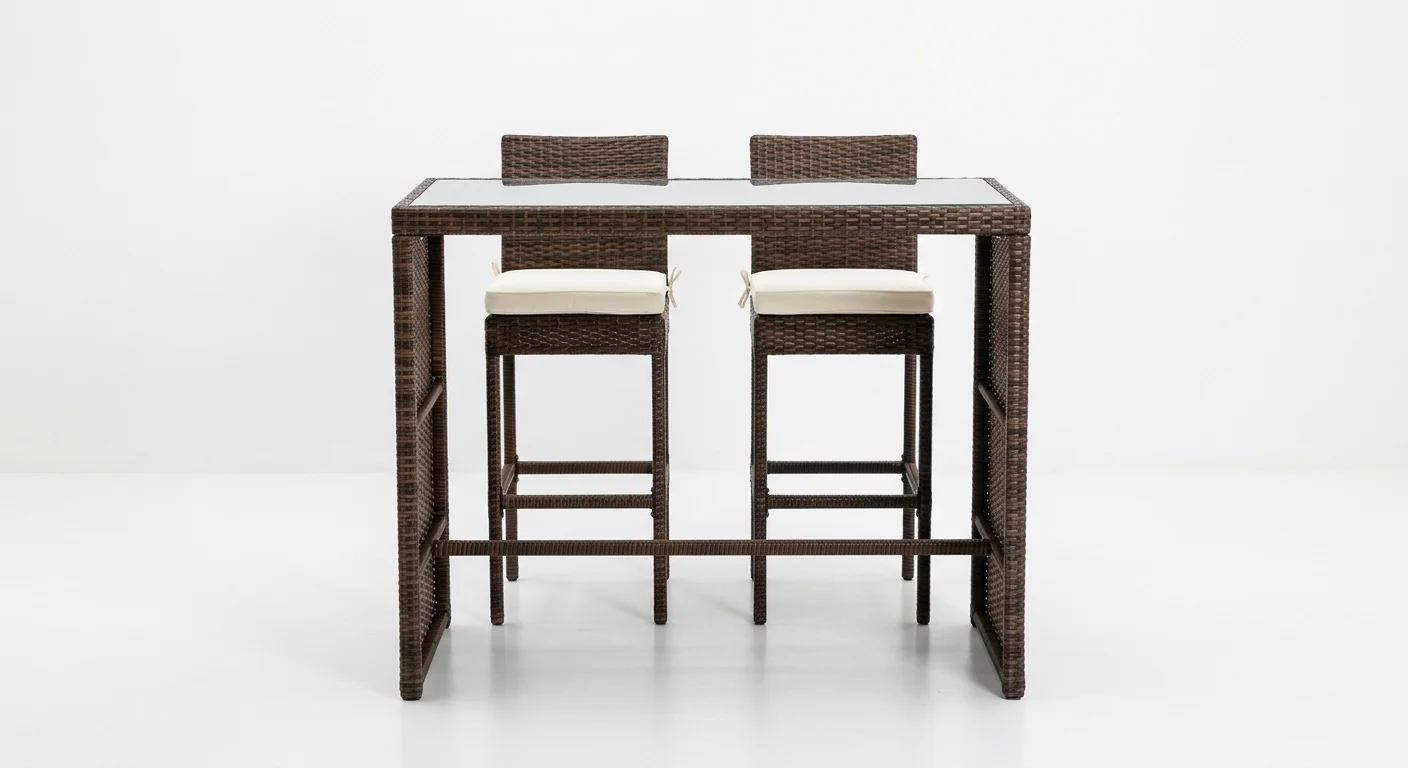
The salt flats introduce another factor many newcomers overlook. The fine salt dust can settle in the tracks of sliding doors and, more importantly, in the moving parts of swivel bar stools. If you are choosing stools for a poolside bar, I advise opting for fixed-leg designs over complex swivel mechanisms unless the bearings are fully sealed in marine-grade housings. Furthermore, the mountain protection that creates our pleasant microclimate also acts as a heat trap in mid-August. Your bar surfaces can reach temperatures exceeding 60 degrees Celsius if left in direct sun. Avoid dark-colored glass tops which can become touch-burn hazards. Instead, look for HPL (High-Pressure Laminate) or ceramic-topped bar tables. These materials stay significantly cooler and are virtually impossible to scratch with glassware or cocktail shakers. For residents in a comunidad de propietarios near the beach, you must also consider the height of your furniture in relation to terrace wind-breaks. Most community rules allow for bar furniture, but if you intend to add a permanent bar structure or a tall serving station, it is vital to ensure it does not exceed the height of your perimeter wall, as this can catch the wind and create a safety hazard for those on lower floors.
Maintenance in this region is less about scrubbing and more about rinsing. Because the humidity is lower here than in places like Torrevieja, we don't see the same level of rapid mold growth on outdoor cushions. However, the UV index is exceptionally high. When selecting fabrics for your bar stools, specify solution-dyed acrylics. These are fabrics where the pigment is added at the liquid stage of fiber production, meaning the color goes all the way through the thread. Cheap polyester cushions will fade from navy to a dull grey in less than three months under our sun. A set of high-performance outdoor cushions for a bar configuration can cost between 300 EUR and 600 EUR, but they will maintain their structural integrity and color for five to seven years. If you are using gas-powered cooling or heating elements near your bar, ensure the bottles are stored in ventilated compartments. The local sun can cause pressure build-up in gas canisters if they are trapped in unventilated metal cabinets during the peak of summer.
Tailoring Your Setup to the Property Type
The configuration of your outdoor bar should be dictated by the specific footprint of your home. In the expansive villas common in the hills, the terrace is often split into zones. We frequently recommend a modular bar station—a piece of furniture that acts as a standalone island. These units, which can range from 1,500 EUR to 3,000 EUR, provide a dedicated workspace for food prep and drink service. By pairing a modular bar with existing rattan lounge sets, you create a seamless flow between "active" and "passive" zones. The bar becomes the transition point between the dining area and the pool. In a villa with a 60-square-meter terrace, a three-meter bar counter with six stools allows the host to remain part of the conversation while preparing drinks, rather than being isolated at a low table or inside the kitchen. This setup works best when the bar stools are placed facing the view, usually toward the Peñón de Ifach, allowing guests to rest their arms on the counter while taking in the landscape.
For those residing in the apartment blocks near the harbor or La Fossa, space is at a premium, but the desire for that elevated "sky bar" feel is just as strong. In these 20 to 30-square-meter balconies, a full modular station is often too bulky. Instead, we recommend "narrow-profile" bar sets. These consist of a slim bar table—perhaps only 40cm to 50cm deep—that can be pushed directly against the glass balustrade. This turns the edge of the balcony into a functional seating area without eating into the central floor space needed for foot traffic. These smaller setups usually cost between 400 EUR and 900 EUR and are highly effective for morning coffee or evening gin and tonics. When combined with custom outdoor cushions that match your dining sets, these small bar areas make the apartment feel like an extension of a boutique hotel. It is also worth considering the "stackability" of stools in an apartment setting. During the winter months, or when the occasional heavy rain arrives from the east, being able to stack four stools in a corner and cover them with a single breathable fabric cover is a significant logistical advantage.
Integration is the hallmark of a well-designed outdoor space. We often find that bar furniture is the final piece of the puzzle, added after the primary dining sets and lounge furniture are in place. To ensure a cohesive look, pay attention to the textures. If you have a grey rattan lounge set, you don't necessarily need a grey rattan bar. In fact, mixing materials can often look more professional. A sleek aluminum bar with teak-topped stools can provide a warm, organic contrast to the synthetic weave of a lounge set. The key is to keep the "metal" accents consistent—if your door handles and terrace lights are anthracite, keep your bar frames in the same tonal family. This creates a sense of intentionality that is often missing from piecemeal outdoor setups. We also recommend incorporating weather-resistant lighting into the bar area. Low-voltage LED strips under the lip of a bar counter can transform the space at night, providing enough light for the bartender without creating the glare that ruins the ambiance of a Mediterranean evening.
Local Logistics and Expert Delivery Service
Navigating the logistics of furniture delivery in this part of the Costa Blanca requires more than just a GPS. Having lived here since 2019 and managed hundreds of installations, I know that the road names on a map often bear little resemblance to the reality of the terrain. Whether you are located in the steep, winding streets of Maryvilla or the narrow access roads near the old town, getting large-scale bar furniture to your terrace requires planning. Many of the luxury villas here are built on significant inclines, meaning the "ground floor" from the street might actually be three levels above the pool terrace. We don't just drop boxes at the curb. Our service includes full assembly and positioning, ensuring that every piece of bar furniture is leveled—a crucial step on terraces where drainage slopes can make bar stools feel unstable.
We serve the entire surrounding region, from the coastal stretches of Moraira and Benissa to the hills of Altea and Alfaz-del-Pi. Each of these areas has its own logistical quirks. For instance, in certain urbanizations in Benissa, we have to time our deliveries to avoid the narrowest sections of road during peak school-run or waste-collection times. In the apartment complexes near the Peñón, we are well-versed in the dimensions of the local elevators. There is nothing more frustrating than ordering a 2.5-meter one-piece bar counter only to find it won't fit in the lift or around the tight corners of a stairwell. In those cases, we specify modular units that can be assembled in situ, ensuring you get the size you want without the logistical headache.
My approach is built on genuine local expertise. I have seen which materials fail after two years in the Spanish sun and which ones look as good as the day they were installed. When you invest in outdoor bar furniture through us, you are not just buying a table and stools; you are benefiting from the collective experience of 200+ families we have helped across the Costa Blanca. We understand that your outdoor space is likely your favorite "room" in the house, and it should be treated with the same level of interior design detail as your lounge or kitchen. If you are unsure about which configuration will work best for your specific terrace layout or if you are concerned about how certain materials will react to the salt air near the salt flats, I am always available for a free consultation. We can walk through your space together, take measurements, and look at samples that match your existing furniture. Let’s make sure your terrace is ready for the long, warm evenings that make living in this part of Spain so extraordinary.
 JW'"
/>
JW'"
/>