Outdoor Living in Jalón
Jalón — known locally as Xaló — is a stunning wine valley town of 3,500 residents where 35% are expats, mostly British and Dutch, living in country houses surrounded by almond orchards, vineyards, and cherry trees, with properties averaging €260,000.
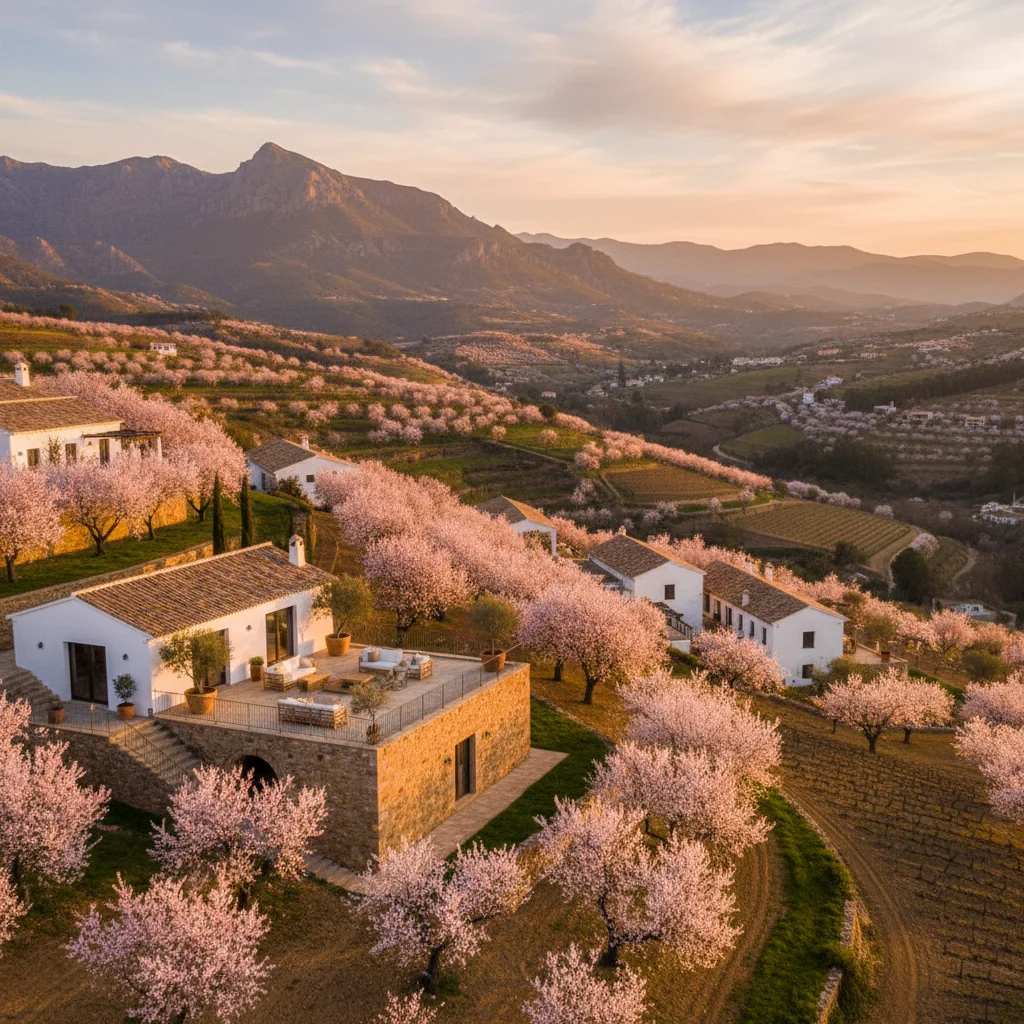
The Jalón Valley is one of the most beautiful settings on the Costa Blanca. Ringed by mountains, carpeted with vineyards and almond groves, and home to a cluster of traditional bodegas producing honest local wine, this is rural Spain at its most appealing. The famous Saturday rastro market draws thousands of visitors from across the region — a sprawling, chaotic affair that has become a genuine institution among the expat community.
Properties here are overwhelmingly rural. Country houses with large plots sit among the orchards, many with views across the valley floor to the surrounding sierra. Stone-built fincas with traditional riurau arches, converted farmhouses with swimming pools, and newer villas on elevated plots make up the housing stock. Almost every property has a generous outdoor area — terraces, gardens, and flat land that calls out for a proper cooking setup.
The valley creates its own microclimate. Winters are slightly cooler than the coast, summers marginally less humid. The almond blossom in January and February transforms the landscape into a sea of white and pink, and the grape harvest in September fills the air with sweetness. Living here means living outdoors, and cooking outdoors feels like the most natural thing in the world.
Jalón’s wine valley setting, spacious rural properties, and thriving 35% expat community make it a prime location for outdoor cooking, with large plots, local wood supplies, and a climate built for year-round entertaining.
Choosing Your Setup in Jalón
Valley fincas with big gardens, local almond wood for smoking, and a community that loves long outdoor lunches — Jalón is built for serious outdoor cooking setups.
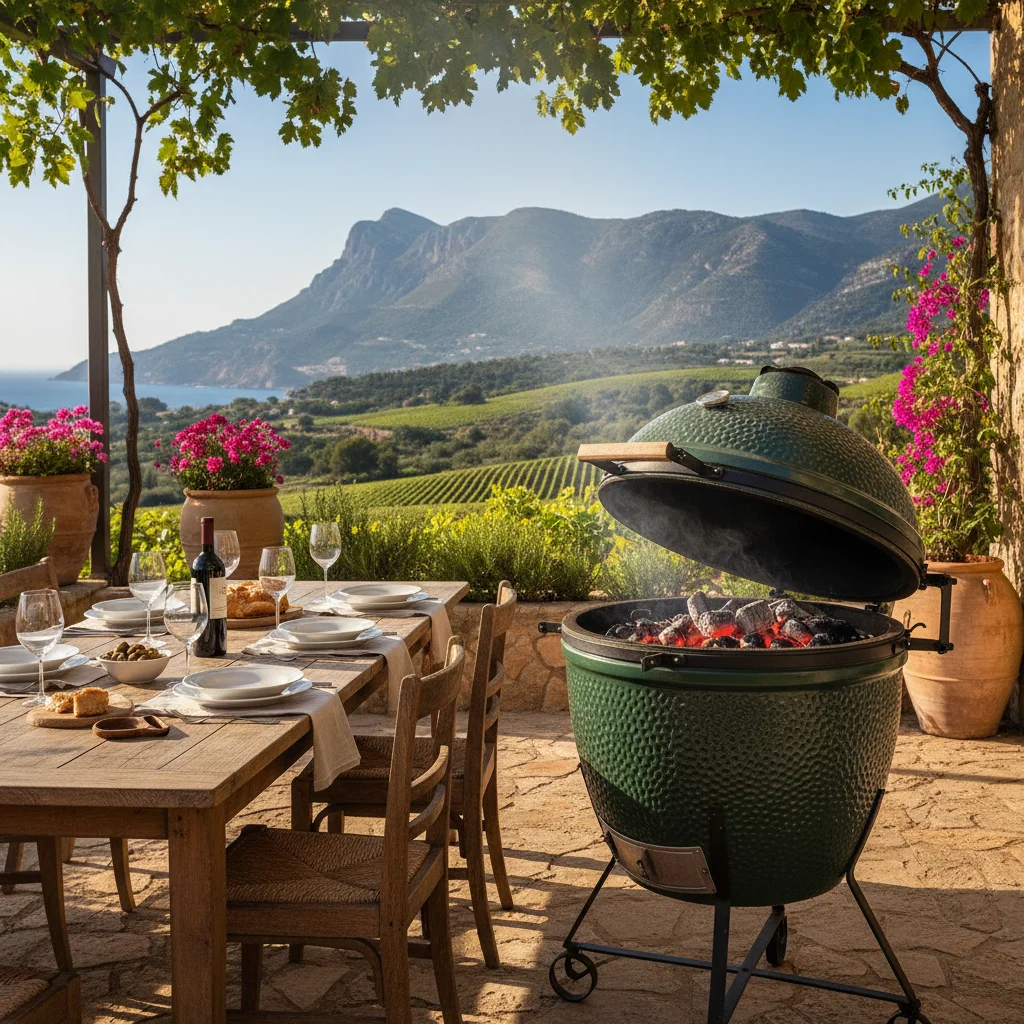
The generous plots in the Jalón Valley practically demand a multi-station outdoor kitchen. A gas BBQ for everyday grilling, a wood-fired pizza oven for weekend gatherings, and a kamado grill for low-and-slow projects is the combination we recommend most often to valley residents. Costa Blanca Outdoors can design a layout that fits naturally into your terrace or garden, using local stone that matches the traditional architecture.
What makes Jalón genuinely special for outdoor cooking is the wood. Almond trees are pruned annually across the valley, producing fragrant hardwood that is perfect for pizza ovens and smoking. Orange and lemon wood from nearby groves adds citrus-scented smoke to poultry and fish. Many of our Jalón customers collect prunings from their own land or from neighbours — a free, sustainable fuel source that adds authentic local character to every cook.
The valley’s bodega culture also means wine-barrel wood occasionally becomes available — oak staves that produce extraordinary smoke flavour. Ask at the local bodegas during harvest season.
Butane delivery is straightforward, with regular truck rounds through the valley. For permanent installations, a propane tank with a fixed gas line to your outdoor kitchen is the cleanest solution and avoids bottle changes during long cooking sessions.
We recommend a full outdoor kitchen setup for Jalón properties — gas BBQ, pizza oven, and kamado — taking advantage of abundant local almond and citrus wood for smoking and a valley lifestyle built around long outdoor meals.
Delivery to Jalón
We deliver throughout the Jalón Valley weekly, navigating the country lanes and finca access tracks with care — every delivery includes full assembly, placement, and equipment walkthrough.
The Jalón Valley is one of our favourite delivery destinations. We know the roads well — including the narrow lanes between orchards, the unsigned tracks to remote fincas, and the Saturday market traffic to avoid. For country properties with challenging access, we confirm details in advance and plan accordingly.
Our northern route covers the entire valley corridor. Pedreguer sits just to the east, Benissa to the south, and Dénia is twenty minutes toward the coast. We regularly combine valley deliveries with these neighbouring towns.
Standard delivery on in-stock items is 5–10 working days. Custom outdoor kitchen builds — which are particularly popular in the valley given the space and lifestyle — run 3–4 weeks from design approval to completion. We source local stone for countertops and surrounds where possible, keeping the build sympathetic to Jalón’s traditional architecture.
Mastering Ceramic Grilling in the Jalón Valley
Living in this specific corner of the Marina Alta offers a lifestyle that is fundamentally different from the high-density coastal strips of the southern Costa Blanca. When you move inland toward the valley, the architectural landscape shifts from crowded apartment blocks to expansive hillside villas, often perched on significant plots that overlook the vineyards and almond groves. For the 3,500 residents here, outdoor living isn't just a summer hobby; it is a year-round reality facilitated by a unique microclimate. With an international population making up roughly 35 percent of the community—predominantly British and Dutch expats—there is a sophisticated culture of outdoor gastronomy that demands more than a basic charcoal tray or a flimsy supermarket grill. These homeowners, many of whom have transitioned from professional careers in Northern Europe, bring with them a high standard for equipment and a desire for versatility in their cooking.
The property profile in this region heavily favors the Kamado BBQ. Most villas feature terraces ranging from 40 to 80 square meters, providing ample footprint for a dedicated outdoor cooking station without sacrificing space for poolside lounging or dining. Because these homes often enjoy views stretching toward the coast or across the valley floor, the outdoor kitchen becomes the primary hub of the house. During the almond blossom season in February or the bustling Saturday Rastro market days, the social life of the valley revolves around long lunches. A ceramic grill fits this rhythm perfectly. It is not just about searing a steak; it is about the "low and slow" process that allows a host to put a shoulder of pork on at ten in the morning and head down to the wine bodegas to pick up some local Mistela, knowing the grill will maintain a steady 110 degrees Celsius for the next ten hours without intervention.
The specific nationalities that call this area home have a deep-seated appreciation for the technical side of BBQ. The British contingent often looks for that traditional smoky flavor they grew up with but wants to escape the unpredictability of the UK weather. Meanwhile, Dutch residents frequently seek out high-end ceramic brands like Monolith or Kamado Joe because they recognize the engineering value of high-fire ceramics. In a valley where property prices average around €260,000 but often climb significantly higher for modernized fincas, investing in a piece of equipment that costs between €800 and €3,500 is seen as a logical extension of the home's value. These grills are built to last decades, matching the permanence of the stone-walled terraces they sit upon.
Technical Considerations for the Inland Microclimate
One of the most significant advantages of living in this valley is the protection offered by the surrounding mountain ranges. We benefit from a sheltered microclimate that mimics the protection provided by the Montgó further north, but with a distinct inland characteristic. While coastal towns like Dénia or Javea struggle with high salt-air corrosion and intense humidity that can cause metal components to rust within a single season, our air is notably drier. This lower humidity is a major benefit for Kamado owners. In more humid zones, the porous nature of ceramic can sometimes trap moisture if the grill is left unused for long periods, leading to mold growth on the internal firebox or gaskets. In the drier air of the valley, your Kamado stays seasoned and ready to use with far less maintenance.
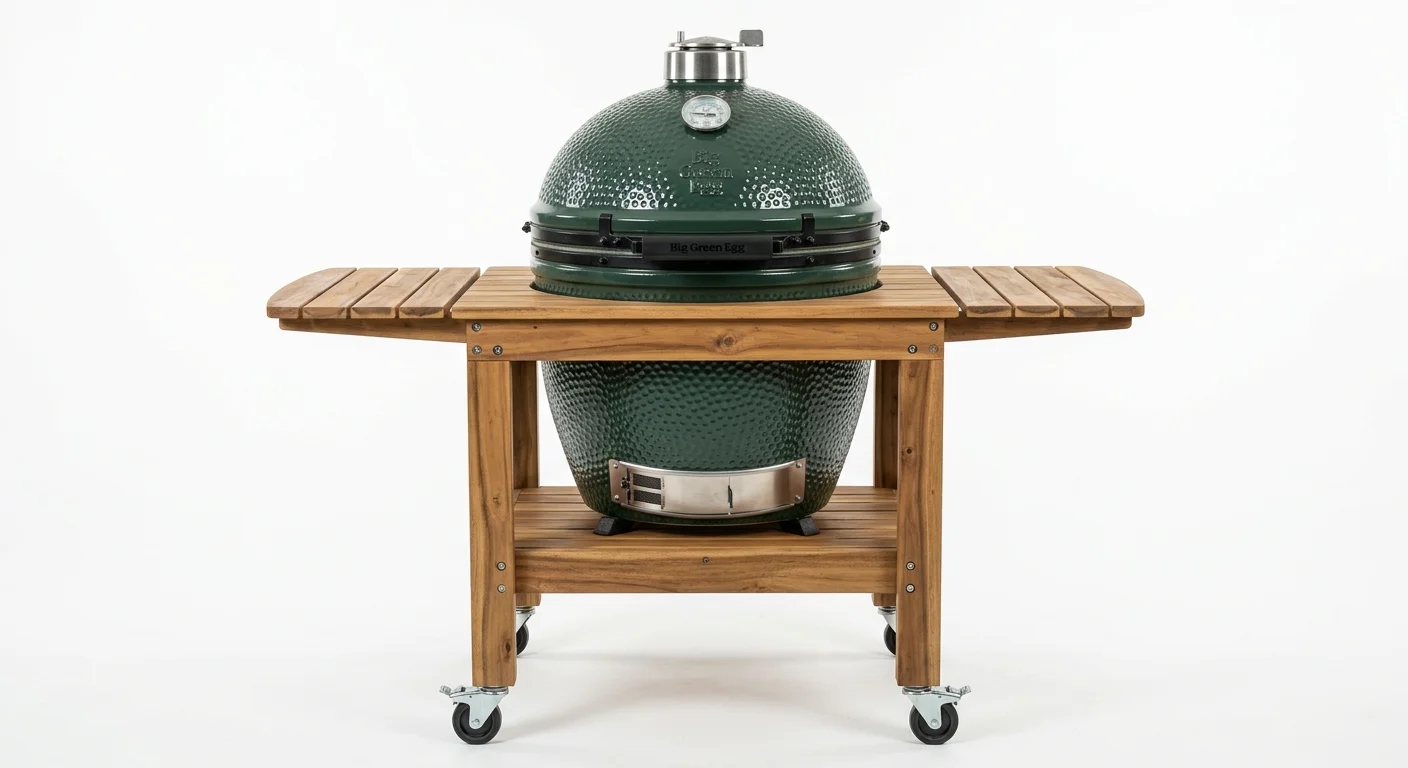
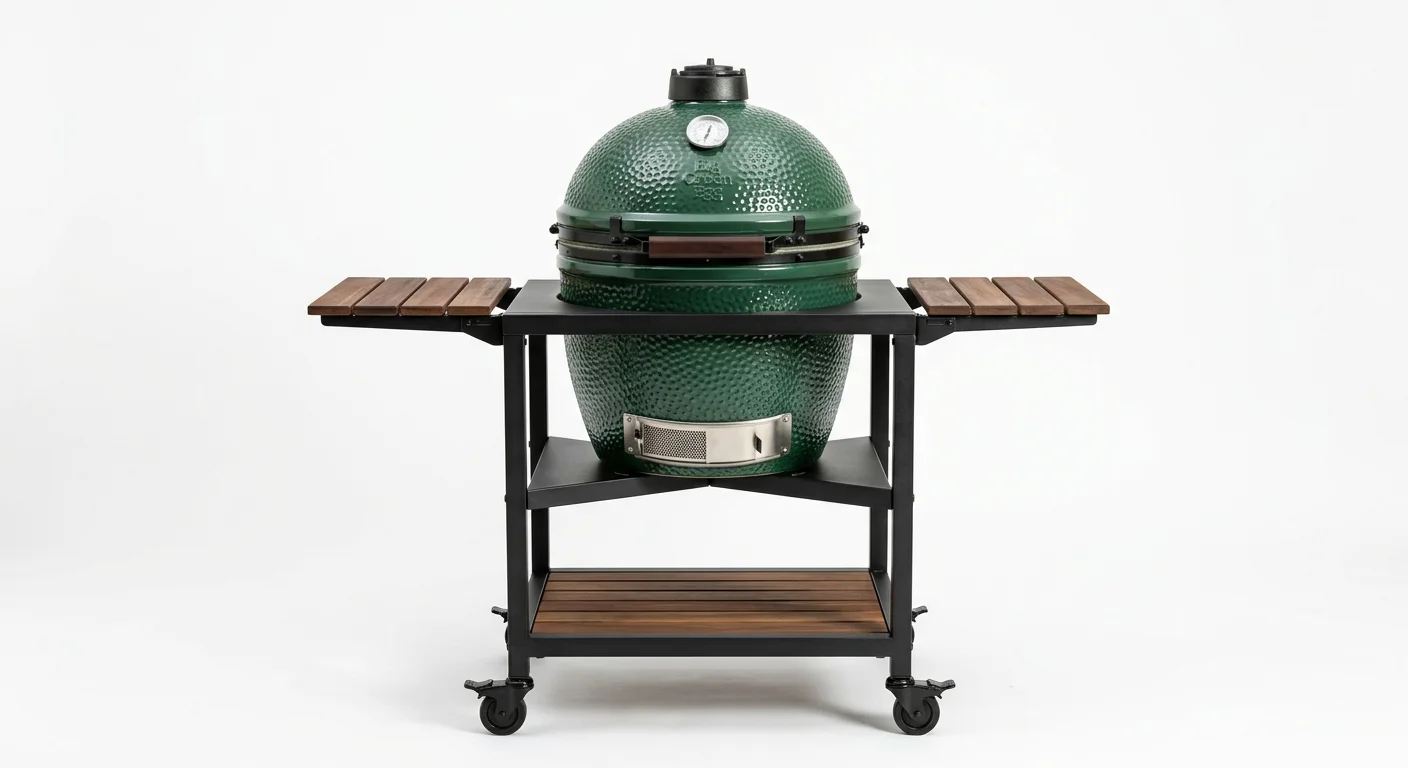
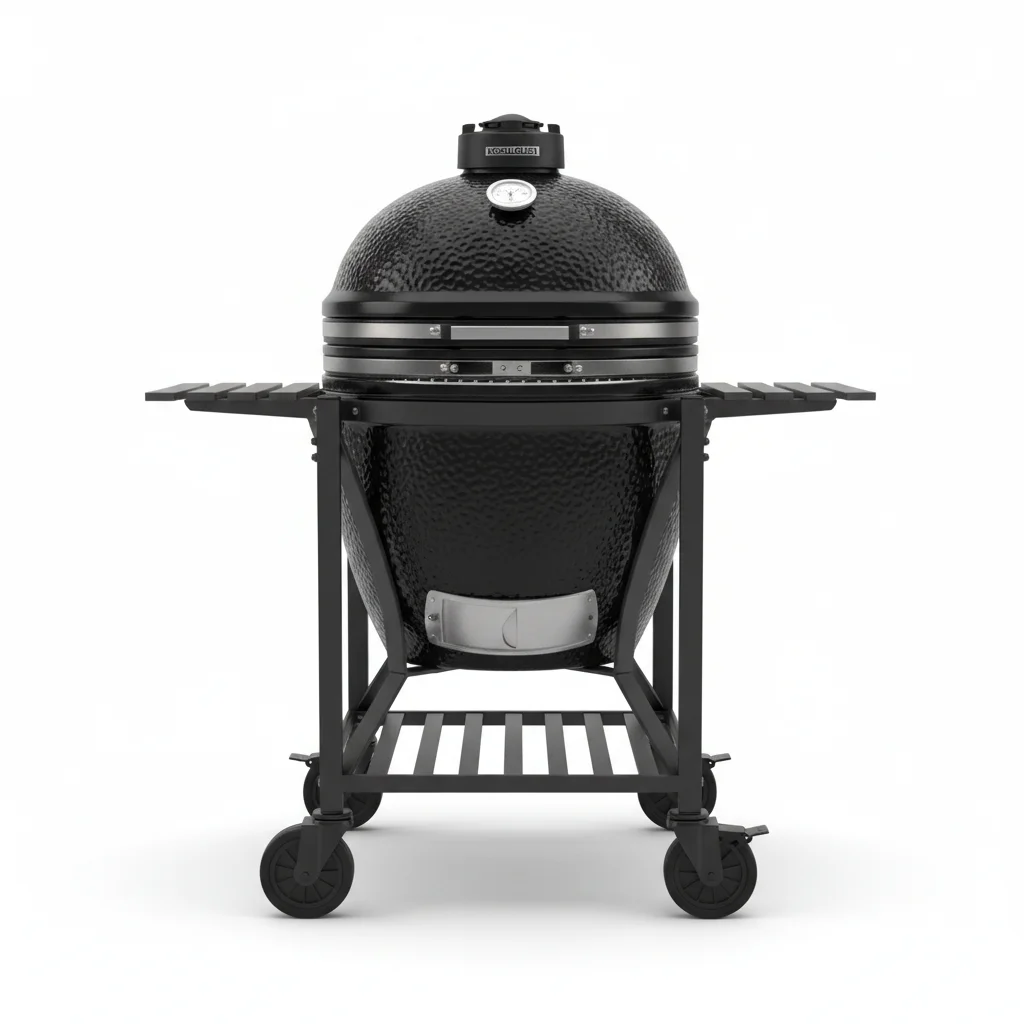
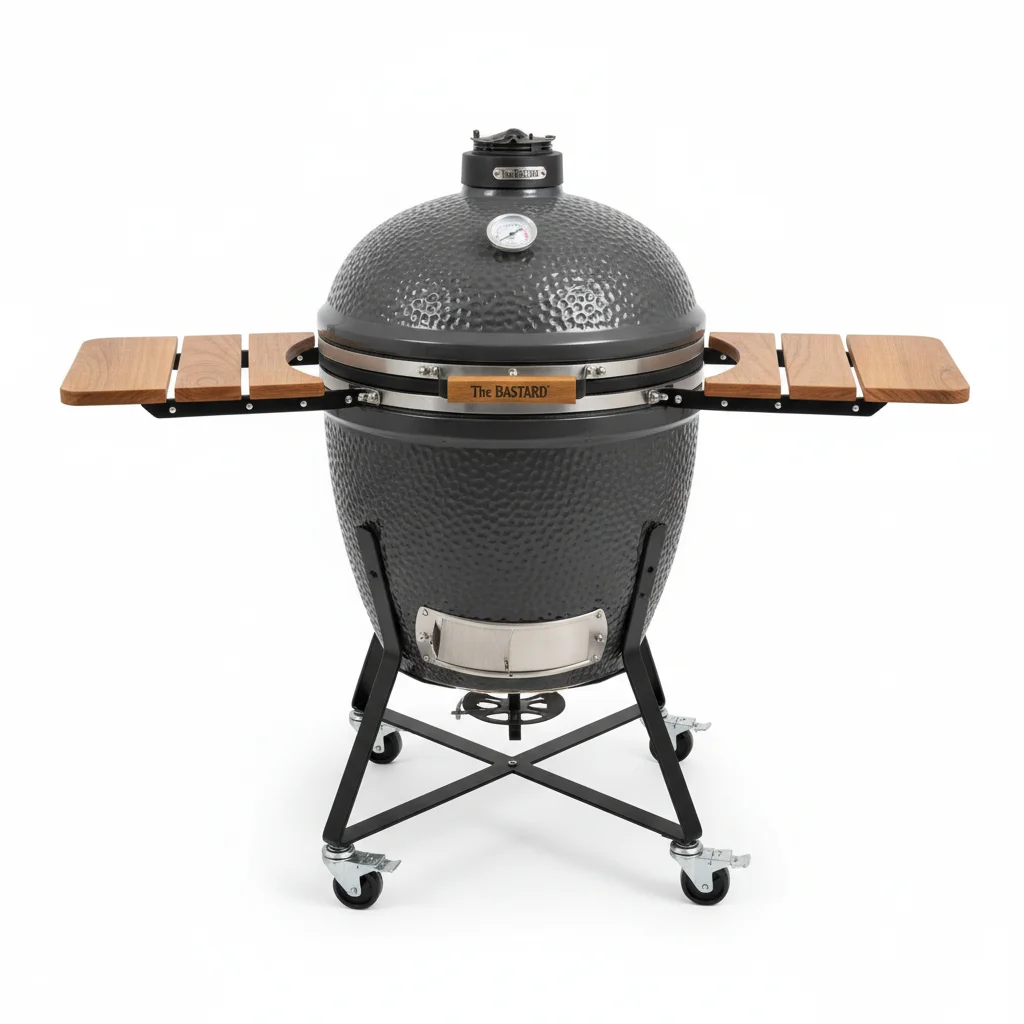
However, the moderate coastal breeze that filters through the valley does play a role in how you should position your equipment. A Kamado relies on precise airflow control through the top vent and bottom draft door. While the weight of a standard large ceramic grill—often exceeding 100 kilograms—makes it incredibly stable in wind, a strong gust can occasionally disrupt the convection current inside the dome if the bottom vent is facing directly into the wind. When I help families set up their outdoor spaces here, I always advise positioning the grill so the intake is shielded, ensuring that your long-duration smokes aren't affected by fluctuating temperatures. Furthermore, because many villas are situated on hillsides with limestone-tiled terraces, the sheer weight of a ceramic grill requires a sturdy, wheeled cart or a purpose-built stone plinth. I generally recommend against placing these heavy units on wooden decking unless the substructure has been specifically reinforced.
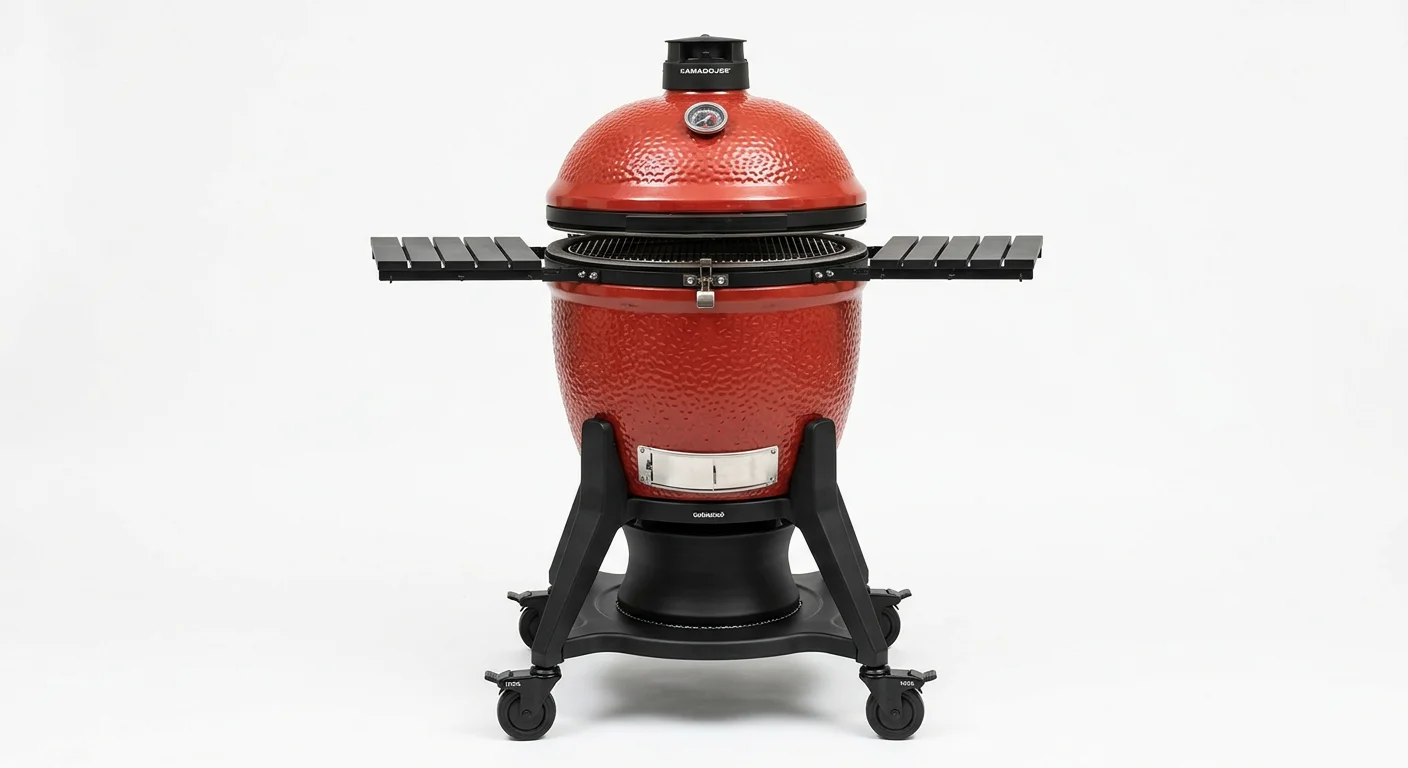
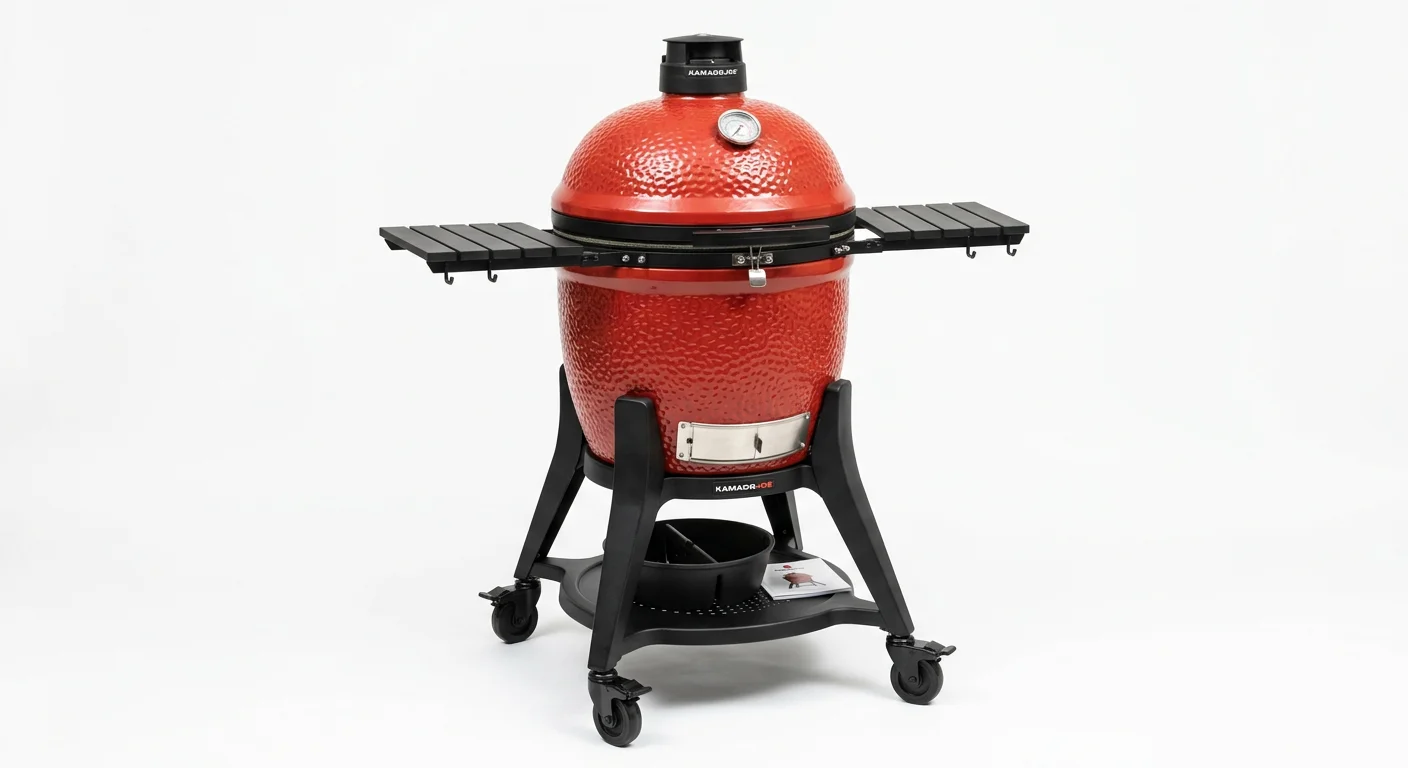
Regarding community regulations, most residents here live in independent villas rather than "comunidad de propietarios" complexes. This gives you significant freedom, but being a good neighbor still matters. The beauty of a high-quality ceramic BBQ is its efficiency. Because the thick walls retain heat so effectively, you use far less charcoal than a traditional open grill. Once the charcoal is lit and the dome is closed, there is very little smoke output compared to a standard BBQ. This is a crucial detail if your villa is part of a tiered hillside development where your smoke might otherwise drift up toward a neighbor’s terrace. For those looking for a specific recommendation, the Kamado Joe Classic III, priced around €2,300, is an exceptional choice for this environment. Its heavy-duty cart is perfect for moving across slightly uneven terrace tiles, and its three-tier cooking system allows you to roast local vegetables and sear meat simultaneously at different temperatures.
Tailoring Your Setup to Valley Property Types
The way you integrate a Kamado into your home should reflect the specific architecture of your property. For those owning the larger, luxury hillside villas with expansive 80 square meter terraces, a standalone BBQ is rarely enough. In these settings, I recommend a modular outdoor-kitchen configuration. Integrating a ceramic grill into a stone or stainless steel countertop provides the prep space necessary for serious entertaining. In these larger setups, a Kamado is frequently paired with a secondary gas-bbq. This provides the ultimate flexibility: the gas grill for a quick mid-week burger when you don't want to wait for coals to reach temperature, and the Kamado for the elaborate weekend roasts. This combination is particularly popular among the British expat community who enjoy hosting large Sunday lunches.
For residents living in the more traditional townhouses or smaller apartments closer to the center of the village, space management becomes the priority. You might not have 60 square meters of terrace, but a 15 or 20 square meter balcony or patio is still more than enough for a "Junior" or "Minimax" style ceramic grill. These smaller units, which usually retail between €800 and €1,200, offer the same thermal properties as their larger siblings but with a smaller footprint. They are perfect for couples or small families who want to bake artisanal bread or roast a whole chicken with that distinct wood-fired flavor. I often see these smaller units used alongside a portable pizza-oven, creating a versatile cooking zone that can be tucked into a corner when not in use.
A professional tip that I often share with my clients in the valley involves the local fuel source. Because we are surrounded by almond groves and vineyards, there is often a temptation to use local wood scraps for fuel. While a few chunks of almond wood are excellent for adding smoke flavor, you must always use high-quality lump charcoal as your primary heat source in a Kamado. Avoid the cheap briquettes found in local supermarkets, as they contain binders and fillers that can permeate the ceramic walls and leave a chemical taste in your food. Instead, look for heavy, dense lump charcoal which burns hotter and leaves less ash. This is particularly important for maintaining the airflow needed for high-temperature searing, which is where these grills truly shine, reaching temperatures in excess of 400 degrees Celsius for the perfect crust on a ribeye.
Local Logistics and Expert Delivery Services
Navigating the geography of this region requires more than just a GPS. If you’ve ever tried to drive a delivery van up the winding roads toward the higher urbanizations or through the narrow, ancient streets of the village center, you know that logistics can be a challenge. At Costa Blanca Outdoors, we don't treat a delivery like a standard courier service. When you invest in a premium ceramic grill, you are buying a piece of equipment that is both incredibly heavy and relatively fragile until it is fully assembled. My team and I regularly deliver to properties throughout the valley, including nearby areas like Pedreguer, Benissa, and the outskirts of Dénia and Ondara. We understand the specific challenges of local access, from steep driveways to the necessity of navigating stairs on multi-level terraces.
Our service includes more than just dropping a box at your gate. We specialize in "white glove" installation, which means we bring the unit to your terrace, assemble the complex internal firebox components, and ensure the hinge is perfectly calibrated. For the residents of this valley, who often value their time and want things done correctly the first time, this is a vital service. We’ve seen too many DIY attempts go wrong when someone tries to lift a 100kg ceramic dome alone. Beyond the physical setup, our local presence means we understand the environmental factors I’ve discussed—wind direction, humidity levels, and the best placement for your specific terrace layout.
I have personally helped over 200 families across the Costa Blanca transform their outdoor spaces, and many of those are your neighbors right here in the valley. Whether you are looking to install a full outdoor-kitchen with a built-in Kamado or simply want a standalone unit to upgrade your weekend grilling, I offer a level of expertise that comes from years of living and working in this specific climate. I invite you to reach out for a free consultation where we can discuss your terrace dimensions, your cooking style, and which model fits your budget and property type. My goal is to ensure that your investment in a Kamado BBQ becomes a central part of your Mediterranean life, providing decades of exceptional meals in one of the most beautiful settings in Spain.
 JW'"
/>
JW'"
/>