Why Expats in Moraira Love Outdoor Cooking
With 55% of its 14,000 residents from abroad, Moraira is the most international small town on the Costa Blanca — and its villa-heavy property market makes it a hotspot for premium outdoor kitchen installations.
Moraira punches well above its weight. This small coastal town between Jávea and Calpe has quietly become one of the most sought-after addresses on the Spanish Mediterranean. Walk through the Benimeit hillside or the Cap d’Or headland on any evening between April and November, and you will catch the unmistakable scent of charcoal and wood smoke drifting from terrace after terrace.
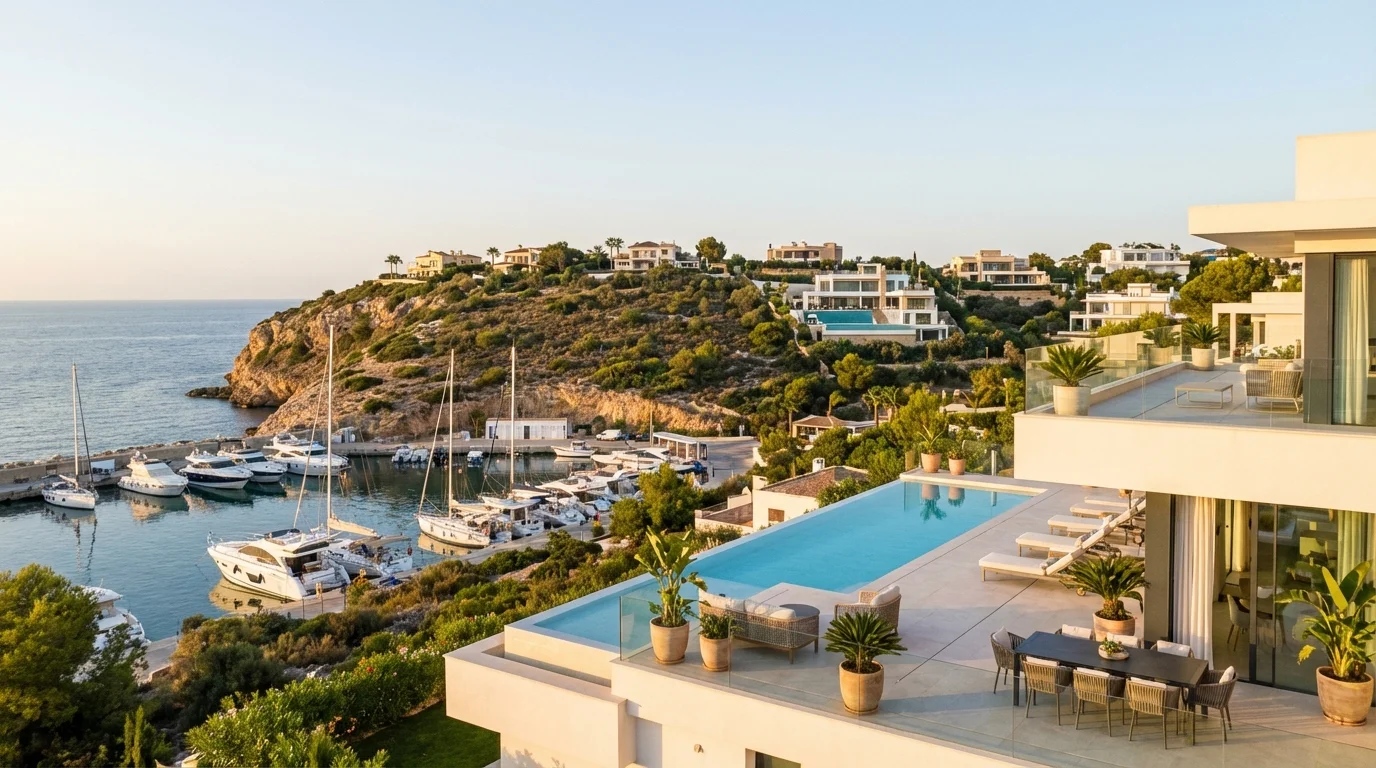
With an average property price around €450,000 — the highest of any town in our delivery zone — homes here tend to be spacious villas with large gardens, infinity pools, and terraces designed for entertaining. The British and Dutch communities have brought a culture of weekend barbecues and al fresco dinner parties that has become inseparable from life in Moraira.
Answer capsule: Moraira’s high-end villa market and 55% expat population create strong demand for premium outdoor kitchens, kamado grills, gas BBQs, and pizza ovens built for serious entertaining.
Your Moraira Outdoor Kitchen Setup
Moraira’s generous villa terraces — often 50–100m² with sea views — are ideally suited to full outdoor kitchen islands with built-in grills, pizza ovens, and prep stations.
Villas in Benimeit, Moravit, and the Pla del Mar areas routinely feature covered terraces and expansive pool surrounds that are perfect for a complete island setup: built-in gas BBQ on one side, kamado station in the centre, and wood-fired pizza oven at the end, tied together with natural stone countertops.
For El Portet properties — closer to the beach and slightly more compact — a standalone kamado paired with a rolling prep cart works beautifully. The covered terraces common in El Portet townhouses provide natural shelter for cooking even during autumn rain showers.
Costa Blanca Outdoors recommends that Moraira homeowners with existing summer kitchens consider a retrofit rather than a full rebuild. Many villas built in the 1990s and 2000s have solid masonry summer kitchens that just need modernising with new appliances — saving 30–40% compared to building from scratch.
Answer capsule: Moraira’s villas often have existing summer kitchens ideal for retrofit upgrades, while El Portet townhouses suit standalone kamado grills and countertop pizza ovens.
Gas, Charcoal, or Wood-Fired? Choosing Right for Moraira
Moraira’s sheltered coastal position and premium property stock make it suitable for all fuel types — from convenient gas to atmospheric wood-fired cooking.
The Dutch and Scandinavian residents often gravitate toward gas BBQs — clean, predictable, and perfect for the frequent midweek dinners that Moraira’s social scene demands. Most Benimeit and hillside villas already have either a butane connection or mains gas, making installation straightforward.
The British contingent leans heavily toward kamado grills. There is a genuine community of kamado enthusiasts — we have heard of informal cook-off competitions between neighbours in the Moravit and Pinar de l’Advocat urbanisations. The ceramic construction handles Moraira’s mild winters without issue, and the versatility from low-and-slow smoking to 400°C pizza cooking makes the kamado a natural centrepiece.
Wood-fired pizza ovens are where Moraira really shines. Local olive and almond wood from suppliers in nearby Benissa is abundant, and the flavour is incomparable. Costa Blanca Outdoors recommends the Alfa Forni range for Moraira customers who want authentic Neapolitan-style results with manageable fuel consumption.
Answer capsule: Gas BBQs suit Moraira’s active social calendar, kamado grills have a devoted local following, and wood-fired pizza ovens complement the town’s strong dining culture.
Delivery & Setup in Moraira
Our team delivers throughout Moraira weekly, with experience navigating the hillside access roads of Benimeit, Cap d’Or, and Moravit urbanisations.
Moraira is one of our most active delivery areas, sitting at the heart of our northern Costa Blanca zone. Access to the hillside urbanisations requires local knowledge, and our drivers know every tight turn on these roads.
For larger installations, we work with Moraira-based builders who understand local construction standards and community regulations. Many urbanisations have specific rules about exterior modifications, and we ensure every installation complies fully.
Based near Calpe or Jávea? You are on our regular Moraira route. We also deliver to Benissa and inland areas around Lliber. Expect 5–10 working days for in-stock products, with custom outdoor kitchen projects taking 3–4 weeks including design, fabrication, and installation.
Bioclimatic Pergolas for the Unique Microclimate of the Marina Alta
Living in this specific pocket of the Costa Blanca since 2019 has taught me that outdoor living is less of a luxury and more of a primary architectural requirement. The lifestyle here, particularly for the fifty-five percent of the population who have moved from northern Europe, revolves entirely around the terrace. When you look at the property landscape from the hillside villas of Benimeit down to the more secluded pockets of El Portet, you notice a consistent theme: large, expansive tiled areas ranging from 40 to 80 square meters. These spaces are often underutilized during the peak summer heat or the occasional torrential autumn rains. A bioclimatic pergola is the most effective engineering solution for this problem because it replaces static shade with an active, motorized ceiling that adapts to the shifting coastal conditions. In my experience helping over 200 families across the region, I have seen how the British, Dutch, and German residents prioritize high-spec outdoor kitchens and lounge areas that require serious protection. The average property price here sits around 450,000 euros, but many of the luxury villas near the Castle or overlooking the Cap d’Or represent significantly higher investments. For these homeowners, a bioclimatic system is not just about shade; it is about protecting high-end outdoor furniture and ensuring that the transition from the interior living room to the poolside terrace is seamless and functional every day of the year.
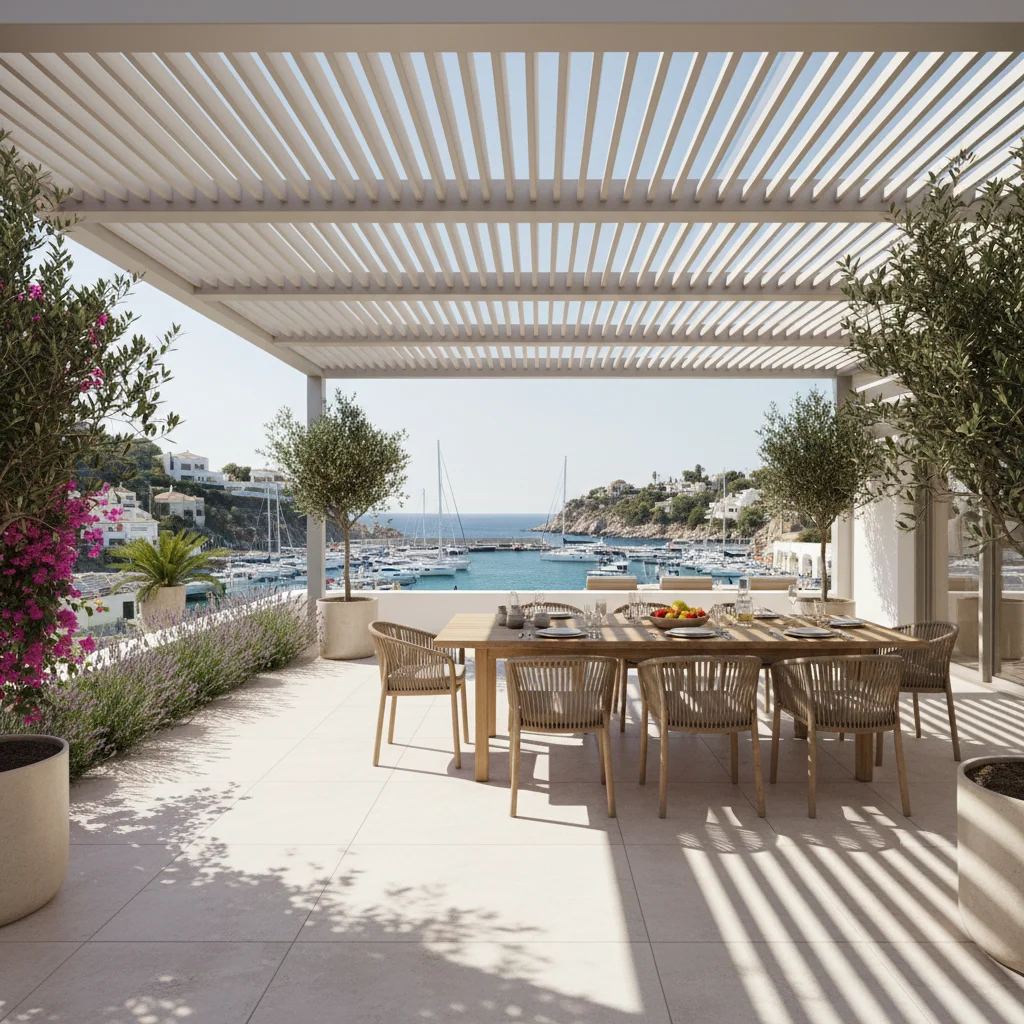
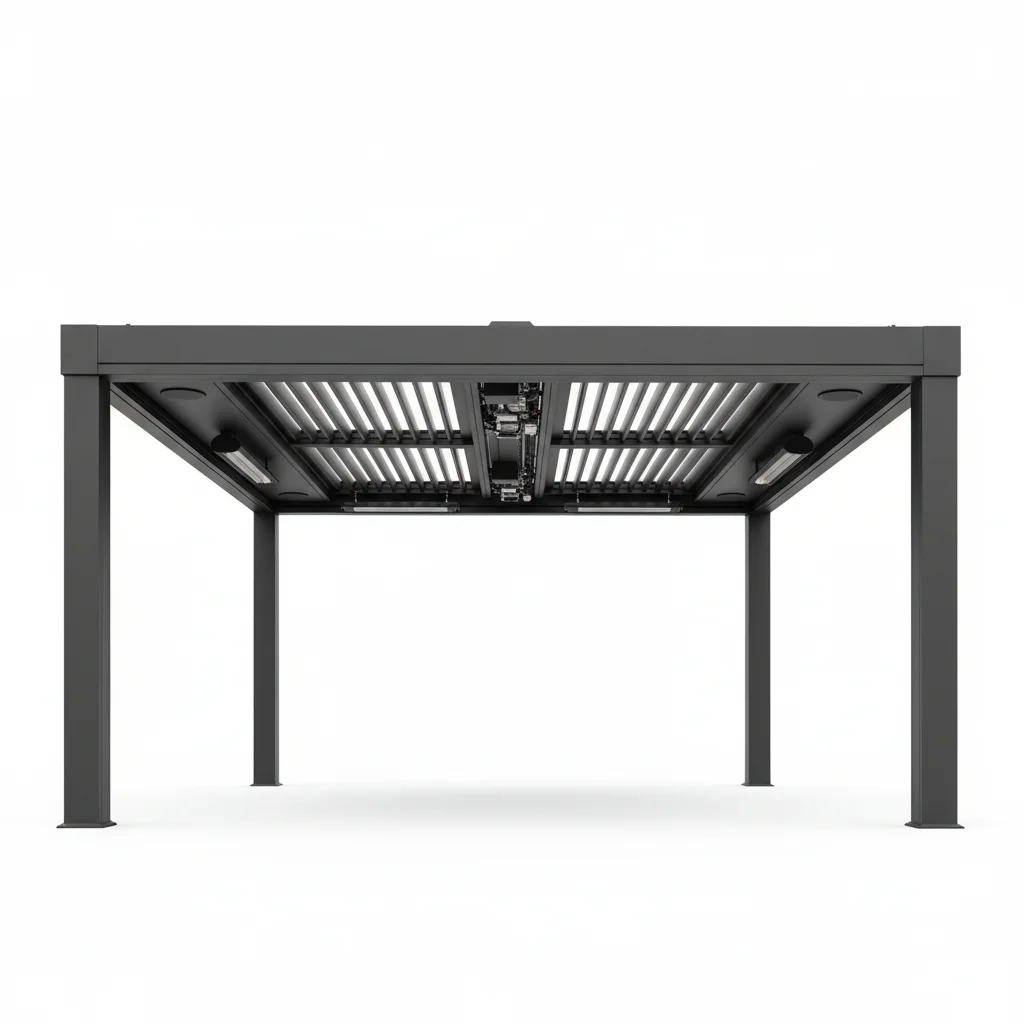
The town maintains a distinct character compared to its neighbors, largely because it lacks the high-rise density of Calpe. This means the wind patterns are more predictable, yet the proximity to the sea introduces a specific set of challenges for any outdoor structure. Most residents I speak with are looking to create a "third space"—somewhere between the air-conditioned interior and the exposed garden. Because the international community here is so established, there is a deep understanding of quality. They know that a basic fabric awning will struggle with the salt air and the UV index we experience during July and August. By installing a motorized aluminium louver system, you gain the ability to tilt the roof to a precise angle, blocking the direct sun while allowing the rising hot air to escape through the slats. This creates a natural convection current that lowers the temperature underneath the structure by several degrees, something a fixed roof simply cannot achieve. Whether you are hosting a late lunch or working from your terrace, this level of control is what makes the investment worthwhile in this specific corner of the Marina Alta.
When considering a bioclimatic pergola in this municipality, you must account for the microclimate created by the surrounding topography. We are fortunate to sit in a sheltered zone that benefits from what many locals call the Montgó-style protection. The massive headlands and nearby mountains act as a buffer against the harshest northern winds, resulting in a more moderate breeze than you find in the exposed plains further south. However, this lower humidity does not mean you can ignore the impact of salt air. Any structure installed within two kilometers of the coastline, particularly near the Cap d’Or, must be constructed from 6063-T6 architectural grade aluminium with a high-micron powder coating. I always recommend a minimum of 20-micron thickness for the finish. Lower quality imports often use a 15-micron finish which will begin to pit and bubble within three years due to the saline environment. If you are looking at a standard 4x3 meter motorized unit, you should expect to invest approximately 7,200 euros for a professional-grade installation. While entry-level options exist from 5,000 euros, they often lack the internal guttering systems necessary to handle the heavy, sudden "Gota Fría" rains we see in October.
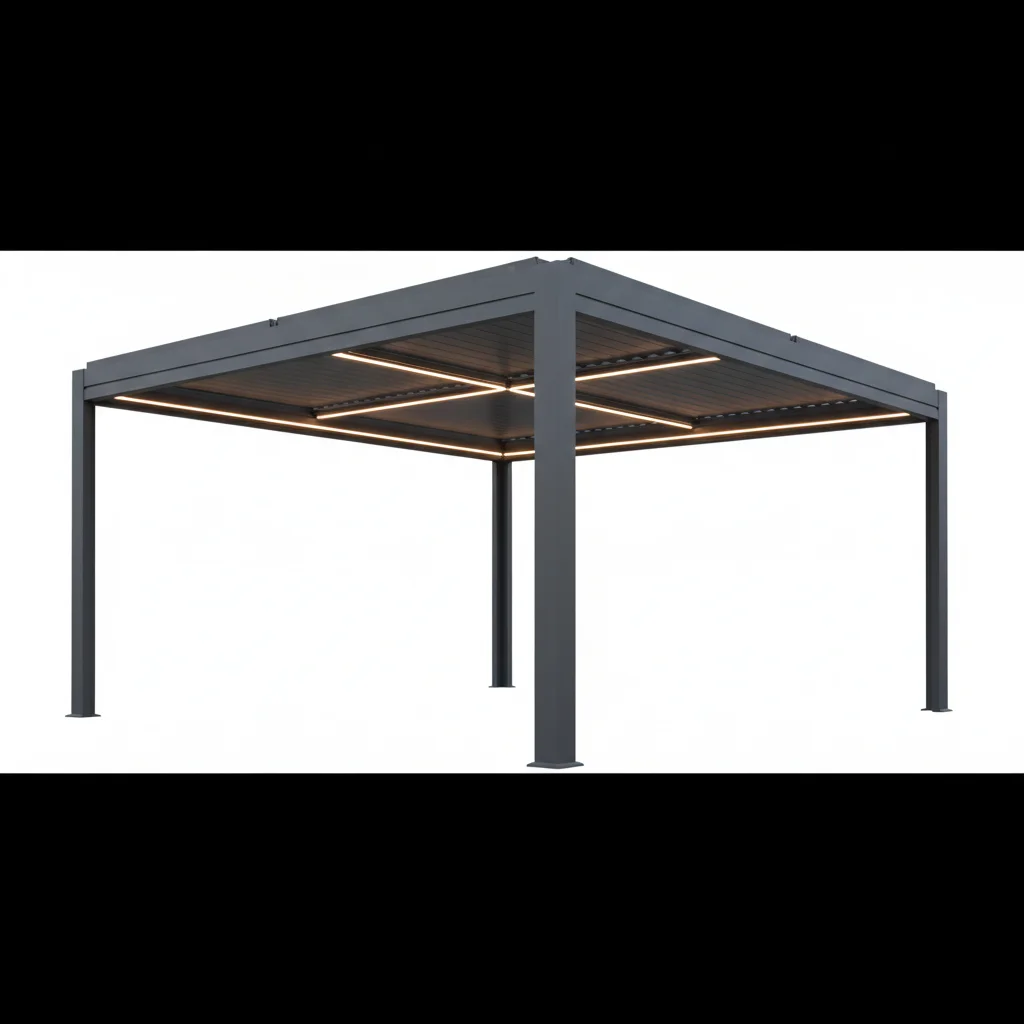
Community regulations, or the rules of the comunidad de propietarios, are another critical factor. Because bioclimatic pergolas are technically "open" structures—meaning they are not permanent brick-and-mortar enclosures—they are generally more acceptable to local planning committees than fixed extensions. However, it is vital to match the RAL color of the aluminium to the existing joinery of your villa to maintain aesthetic harmony. Most modern builds in areas like Benimeit use a specific anthracite or textured grey finish, which we can match exactly. Another technical point often overlooked by non-local installers is the wind sensor calibration. While our breeze is moderate, the gusts that roll off the hills can be sudden. A high-quality system will include an integrated anemometer that automatically opens the louvers if wind speeds exceed a certain threshold, preventing the "sail effect" from damaging the motor or the structural fixings. For a mid-sized villa terrace, a fully integrated 5x4 meter system with LED perimeter lighting and rain sensors typically falls into the 12,500 euro range. This price point reflects the durability needed to withstand the intense UV exposure that degrades cheaper plastics and fabrics within a few seasons.
The recommendation for a property depends heavily on its elevation and orientation. For the large hillside villas that characterize the local market, I suggest a wall-mounted configuration that extends directly from the main salon or kitchen. This effectively doubles your living area. For a typical 60 square meter terrace, a bioclimatic pergola covering a 20 square meter section allows for a dedicated dining zone while leaving the rest of the space open for sunbathing. In these larger installations, I often suggest integrating glass curtains along one or two sides. This combination is particularly popular with British and Dutch expats who enjoy the terrace during the cooler months of January and February. By closing the glass and tilting the louvers to catch the winter sun, you create a solar-heated conservatory effect. When the summer returns, the glass slides away and the louvers open to restore the airflow. If you are living in a more compact apartment or a townhouse near the center, a free-standing four-post model is often more appropriate. This allows you to create a shaded "island" on the terrace without needing to bolt heavy structures into the potentially fragile facade of an older building.
In many cases, a bioclimatic pergola works best when paired with other shade solutions. For example, I have frequently designed setups where a fixed pergola covers an outdoor kitchen area for permanent rain protection, while the bioclimatic louvers sit over the main seating area for adjustable light. If you have a very large, irregular terrace of 80 square meters or more, adding a shade sail near the pool edge can complement the more structured look of the aluminium pergola. This layered approach to shade is something I’ve refined over the years, as it addresses the movement of the sun from the morning over the Mediterranean to the late afternoon as it dips behind the hills. It is also worth considering the drainage logistics. A professional installation should always include hidden downpipes within the pergola posts, directing rainwater away from the house foundations and onto the terrace’s existing drainage slope. This prevents the pooling of water which is a common issue with cheaper, DIY-style structures.
Our team is on the ground every day, delivering and installing these systems across the municipality and into neighboring towns like Javea, Calpe, Benissa, and Benitachell. We understand the logistical nuances of working here, such as the incredibly narrow and winding access roads leading up to the higher urbanizations in Benimeit. Navigating a six-meter aluminium beam in a delivery truck through these streets requires local experience and the right equipment. We also know that many properties here are built on steep inclines, which means the terrace floors are not always perfectly level. We use laser-leveling technology during the initial survey to ensure the pergola frame is perfectly squared, which is essential for the motorized louvers to operate without friction or noise. If the frame is even a few millimeters out of alignment, the motor will burn out prematurely—a common problem I see when repairing installations done by general contractors who don't specialize in these specific systems.
Beyond the hardware, my role is to help you navigate the practicalities of Spanish outdoor living. This includes understanding how the sun hits your specific plot at 4:00 PM in mid-August, which is usually the most uncomfortable hour of the day. We can position the louvers so they provide maximum shade during that window while still maintaining a view of the sea or the valley. My knowledge of the local building styles means I can advise on whether your terrace tiles can support the weight of a heavy four-post structure or if we need to implement hidden structural reinforcements. We provide a full, no-obligation consultation where I visit your property to take precise measurements and discuss the RAL color options and sensor configurations that best suit your lifestyle. This isn't about a quick sale; it’s about ensuring that the structure we put on your terrace today will still be functioning perfectly and looking as good as new a decade from now. If you are ready to transform your outdoor space into a truly year-round living area, we are here to provide the expertise and the local knowledge to make it happen.
 JW'"
/>
JW'"
/>