Outdoor Living in Benitachell
Benitachell — known locally as Poble Nou — sits between Jávea and Moraira on the dramatic north coast, where 61.5% of its 5,500 residents are expats living in luxury villas with commanding Mediterranean views.
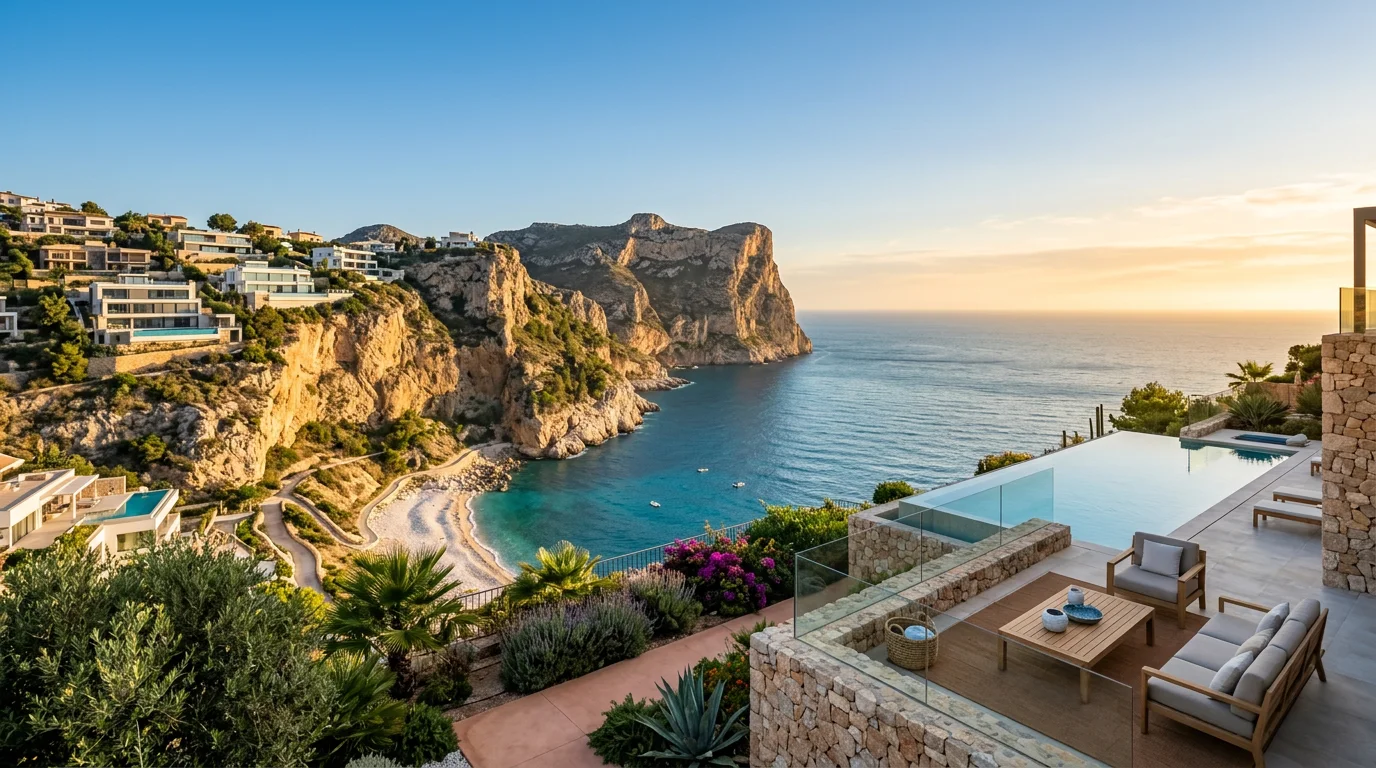
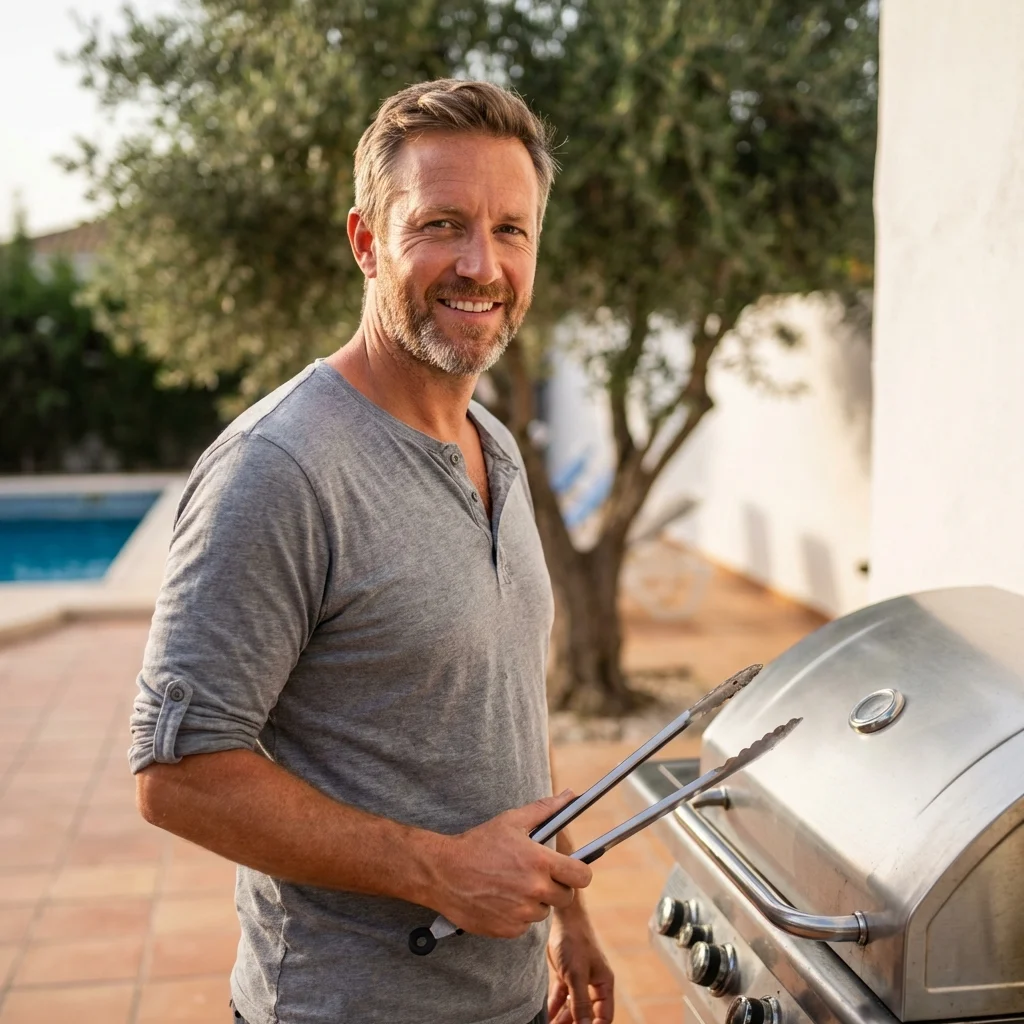
Benitachell is one of the Costa Blanca’s best-kept secrets, though the secret has been out for a while among discerning British, German, and Dutch buyers. The town’s star attraction is Cumbre del Sol, a prestigious hilltop urbanisation perched above the Cala Moraig cliffs, where villas with infinity pools gaze across open sea toward Ibiza on clear days. This is outdoor cooking with a view that few places in Spain can match.
Properties here average around €300,000 and skew heavily toward detached villas with substantial terraces and landscaped gardens. Many feature existing summer kitchen areas — stone-built structures with countertops and sometimes basic sinks — that were part of the original architectural design. The microclimate benefits from the same shelter as neighbouring Jávea, with the Montgó massif blocking northerly winds and keeping temperatures mild through the winter months.
The expat community, while smaller than in the southern towns, is engaged and sociable. Cumbre del Sol has its own restaurants, tennis courts, and social clubs, and weekend barbecues are a cornerstone of neighbourhood life. The setting naturally lends itself to elevated entertaining — think sunset dinners with wood-fired pizza and a glass of local Jalón Valley wine.
Benitachell’s Cumbre del Sol urbanisation offers premium villa terraces with sea views, existing summer kitchens, and a sheltered microclimate ideal for year-round outdoor cooking and entertaining.
Choosing Your Setup in Benitachell
Benitachell’s spacious villa terraces and existing summer kitchen structures make it one of the best locations on the Costa Blanca for premium outdoor kitchen installations.
The premium property stock here naturally calls for premium equipment. Many Cumbre del Sol homeowners invest in complete outdoor kitchen islands: a built-in gas BBQ paired with a kamado station and a wood-fired pizza oven, all tied together with natural stone or granite countertops that complement the architectural style of their villa.
Costa Blanca Outdoors recommends retrofitting existing summer kitchens rather than building from scratch wherever possible. Many Benitachell villas from the early 2000s have solid masonry structures that simply need modernising — new appliances, updated countertops, and proper drainage can transform a dated setup into a contemporary outdoor kitchen at 30–40% less cost than a full rebuild.
For the handful of apartment and townhouse owners closer to the old village of Poble Nou, a standalone kamado grill or a compact countertop pizza oven works beautifully on the smaller terraces typical of these properties. Wood and charcoal sourcing is straightforward, with suppliers in nearby Jávea and the Jalón Valley providing almond, olive, and orange wood throughout the year.
Costa Blanca Outdoors recommends retrofitting Benitachell’s existing summer kitchens with modern appliances and countertops, saving 30–40% compared to building a full outdoor kitchen from scratch.
Delivery to Benitachell
We deliver to Benitachell and Cumbre del Sol weekly on our northern Costa Blanca route, with vehicles suited to the urbanisation’s steep hillside access roads.
Cumbre del Sol’s winding roads and steep gradients require local knowledge and the right vehicles. Our team delivers here regularly and knows which approaches work best for each section of the urbanisation. Heavy items — large kamado grills, stone pizza ovens, kitchen island components — are handled with care on the inclines, and we always confirm terrace access before scheduling.
Every delivery includes full white-glove service: unpacking, assembly, precise placement, and a complete walkthrough of your equipment. For built-in kitchen projects, we work with trusted local builders who understand Cumbre del Sol’s community regulations for exterior modifications.
We serve Moraira and Calpe on the same northern routes, making combined deliveries to the area efficient. Expect 5–10 working days for in-stock items, or 3–4 weeks for custom outdoor kitchen installations.
Creating Year-Round Living Spaces in Benitachell with Bioclimatic Pergolas
Living on the elevated ridges of the Costa Blanca offers a perspective on Mediterranean life that is quite different from the flat coastal stretches of nearby Denia or the bustling port of Javea. In this specific pocket of the coastline, the landscape is defined by dramatic cliffs and the massive presence of the Montgó to the north, which creates a very particular set of environmental conditions for homeowners. When I first started helping families here in 2019, I noticed a recurring challenge. People would invest significantly in luxury villas within urbanisations like Cumbre del Sol, only to find that their expansive 60 or 80 square metre terraces were unusable for large portions of the day. The intensity of the Spanish sun, combined with the occasional stiff breeze coming off the Mediterranean towards Cala del Moraig, makes finding the right balance of shade and airflow a technical necessity rather than a stylistic choice.
The local population is a unique blend of cultures, with over sixty percent of residents hailing from outside Spain, predominantly from the UK and the Netherlands. This demographic shift has fundamentally changed how outdoor spaces are used in the area. Our British and Dutch clients tend to view the terrace not just as a place to sit, but as a fully functional extension of the home. They want outdoor kitchens, lounge areas, and dining spaces that can handle a Sunday roast or a summer "borrel" without the constant worry of a sudden change in weather. A traditional fixed roof often feels too claustrophobic and blocks the natural light from entering the main house during the shorter winter days. Conversely, a simple fabric awning often lacks the structural integrity to withstand the gusts that can whip up the cliffs from Cala Llebeig. This is where the bioclimatic pergola has become the gold standard for high-end properties in the region.
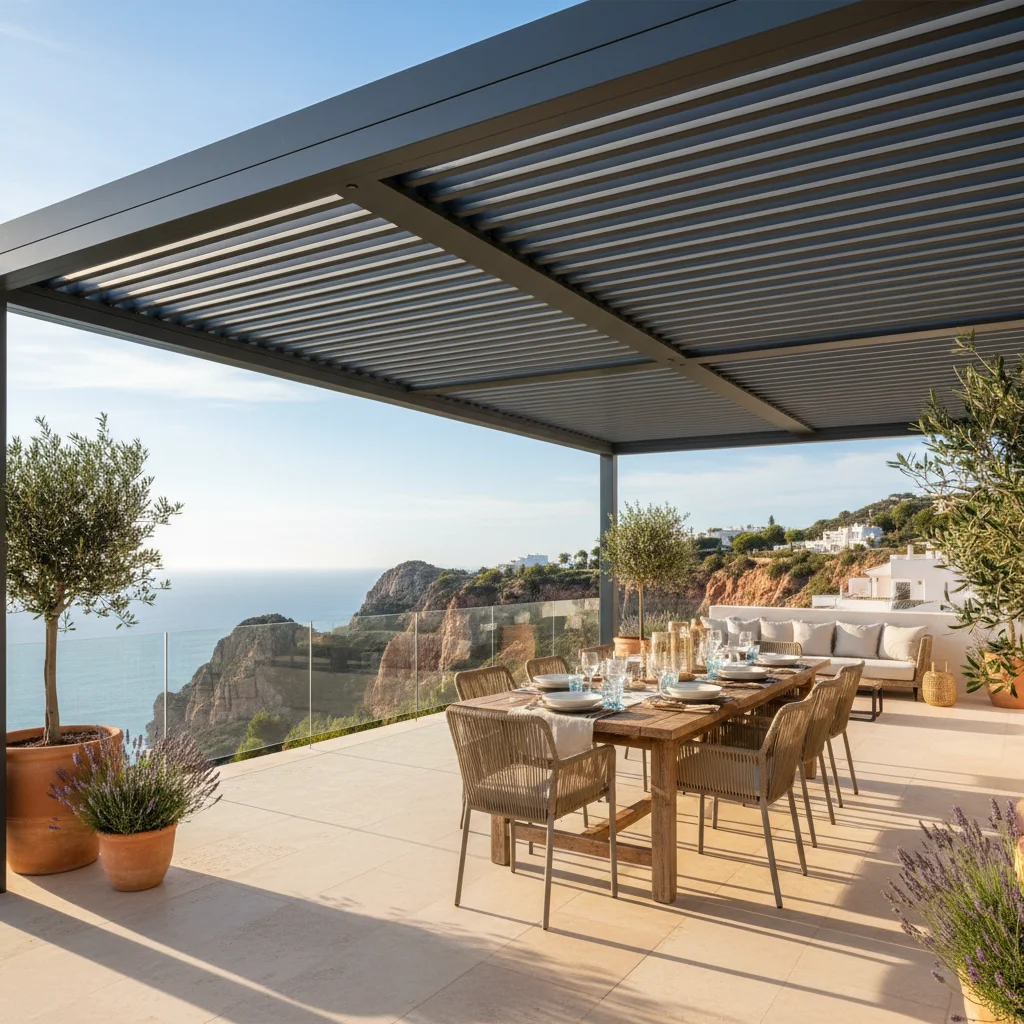
Most of the properties I work on in this area are valued around the four hundred thousand Euro mark and upwards, often featuring modern, minimalist architecture that demands a shade solution of equal quality. These villas typically boast terraces ranging from 40 to 80 square metres, frequently positioned to overlook the sea or the surrounding vineyards. A bioclimatic system, with its motorized aluminium louvers, allows a homeowner to pivot the roof slats to follow the sun’s trajectory throughout the day. This means you can maintain a perfectly shaded dining area at 2:00 PM while still allowing hot air to escape through the gaps in the louvers, preventing the heat-trap effect common under glass or polycarbonate roofs. It is this ability to regulate the microclimate of the terrace that justifies the investment for those who value the outdoor lifestyle that the Costa Blanca promises.
Technical Considerations for the Local Microclimate
When considering a bioclimatic installation in this specific part of the coast, you have to account for the "Montgó effect." This mountain acts as a massive natural barrier, shielding the area from the harshest northern winds, which results in a slightly more stable climate than what you might find further south towards Alicante. However, the proximity to the sea—especially for homes perched on the cliffs of Cumbre del Sol—introduces the factor of salt-laden air. I always advise my clients to look closely at the grade of aluminium and the quality of the powder coating. For an installation here, a Qualicoat Seaside certified finish is non-negotiable. This ensures that the structure can withstand the corrosive effects of the salt spray without the paint bubbling or the motorized mechanisms seizing up over time.
One of the most frequent questions I get from residents concerns the comunidad de propietarios or local building regulations. In many of the established urbanisations, there are strict rules about the height and colour of external structures to maintain a cohesive aesthetic. Because a bioclimatic pergola is technically a demountable structure and not a permanent brick-and-mortar extension, it often sits in a smoother regulatory path, though it is always wise to choose a RAL colour that matches the existing window frames or carpentry of the villa. Usually, this means shades of Anthracite Grey (RAL 7016) or pure whites, which blend seamlessly with the contemporary Mediterranean style.
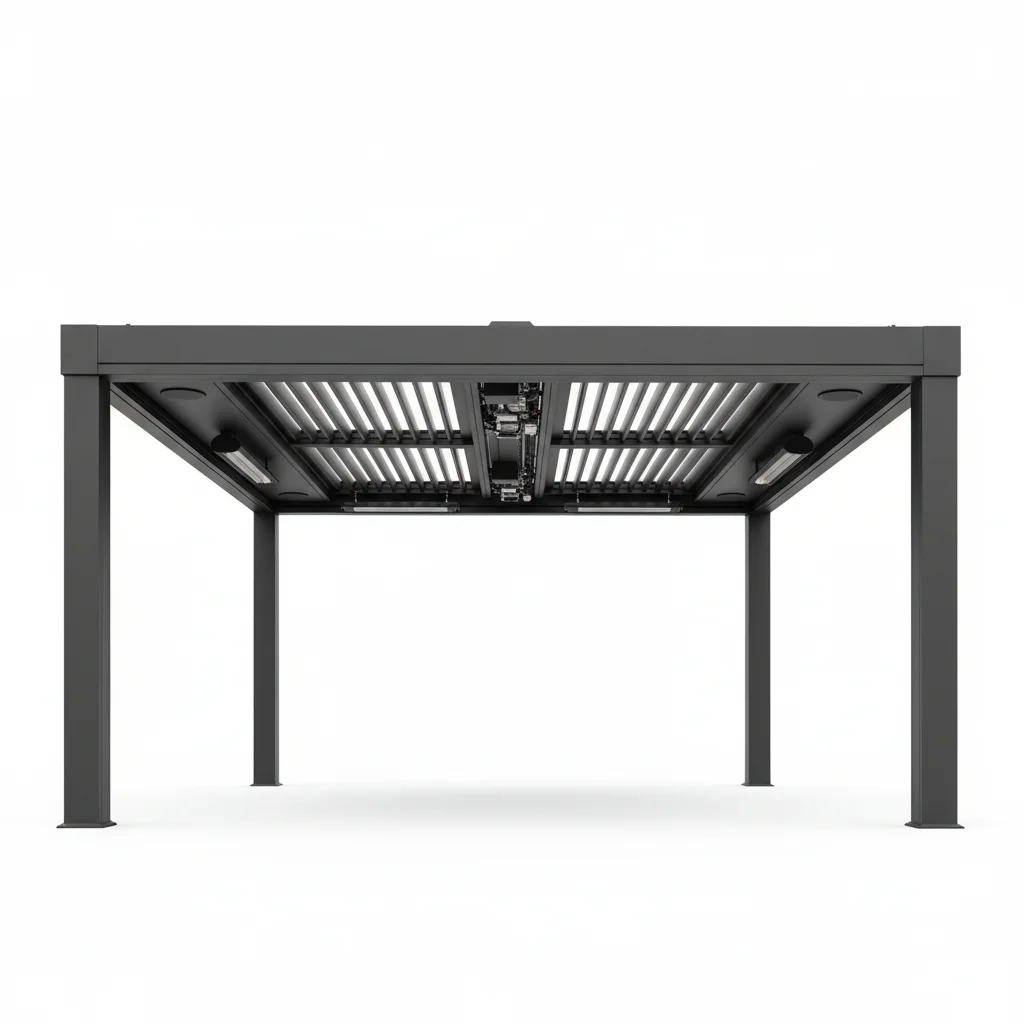
In terms of specific hardware, I often recommend a reinforced louver system for this area. A standard 4m x 4m motorized unit, which typically retails between 9,500 and 12,500 Euros including installation, should be equipped with integrated rain sensors. This is a local necessity because when it rains here, it often comes down with surprising intensity. The sensors will automatically close the louvers at the first drop of water, protecting your outdoor furniture and any integrated electronics like sound systems or televisions. The water is then diverted through an internal guttering system hidden within the support pillars, discharging at the base. This prevents the messy runoff you get with traditional slanted roofs, which can often splash back and stain the expensive porcelain tiles common on local terraces.
Maintenance in this environment is relatively straightforward but requires consistency. The lower humidity compared to the southern Costa Blanca means you won't deal with as much mold or mildew, but the fine dust from the nearby vineyards and limestone hills can settle in the louver tracks. A simple biannual cleaning of the gutters and a light lubrication of the pivot points will keep a system costing 15,000 Euros functioning like new for decades. It is far more cost-effective than replacing fabric sails or awnings every three to four years after they have been bleached by the sun and battered by the wind.
Tailored Configurations for Local Property Types
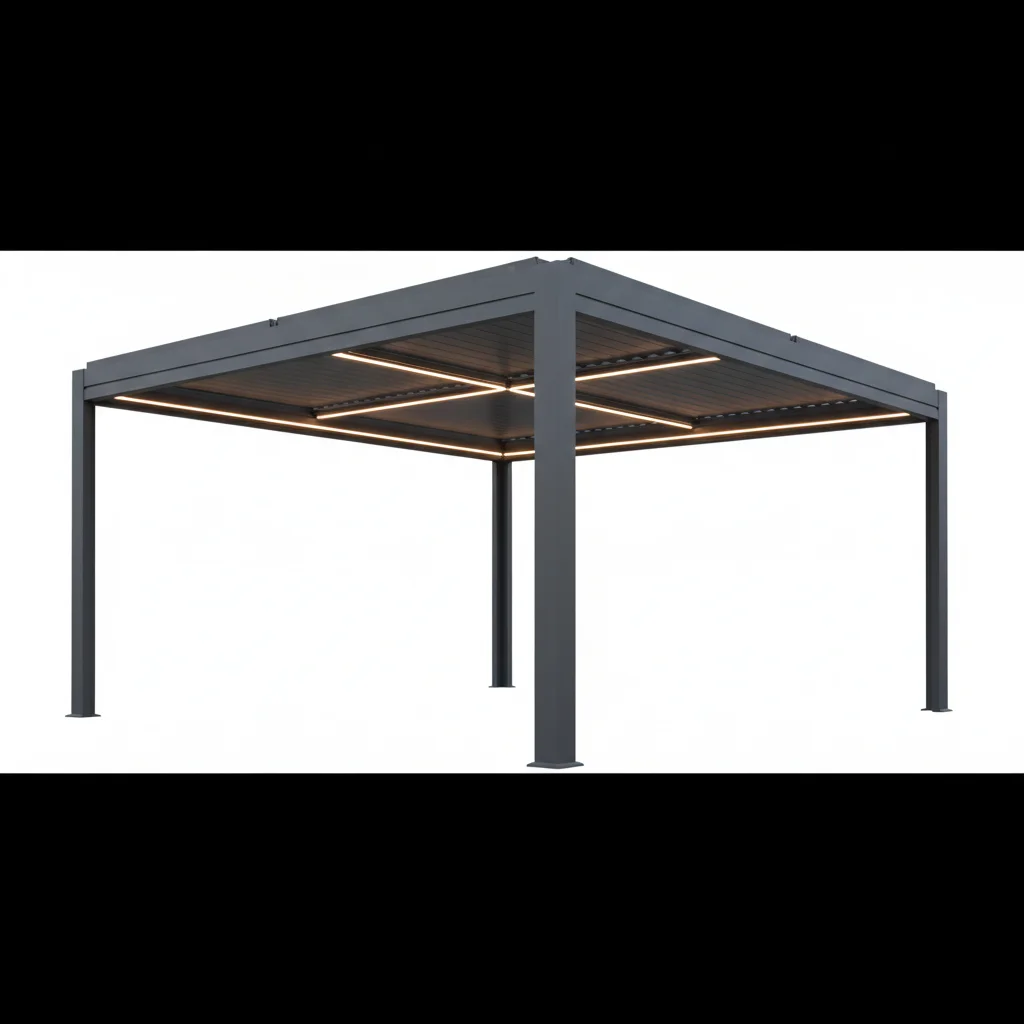
The approach to shade changes significantly depending on whether you are situated in a detached hillside villa or a more compact apartment near the village centre. For the large villas overlooking the coast, I generally recommend a freestanding configuration. Placing a 6m x 4m bioclimatic pergola adjacent to an infinity pool creates a dedicated island of comfort. In these larger setups, we often integrate LED perimeter lighting and infrared heaters into the frame. This transforms the space into a legitimate evening lounge. With the louvers closed and the heaters on, you can comfortably enjoy a glass of local wine outside even in January, when the evening temperatures on the Costa Blanca can drop quite sharply. This setup often pairs well with glass curtains, which can be installed on the sides of the pergola to create a fully enclosed sunroom for the winter months, effectively adding thirty square metres of living space to the property without the need for a major construction project.
For those living in apartments or townhouses with smaller, more enclosed terraces, a wall-mounted version is often the most practical choice. By anchoring one side of the pergola directly to the house facade, you create a seamless transition from the living room to the outdoors. In these instances, a smaller 3m x 4m unit, which might cost in the region of 6,000 to 8,500 Euros, provides enough coverage for a dining table for six. I often suggest pairing these with vertical "zip" blinds. These are motorized fabric screens that slide down the sides of the pergola to provide privacy from neighbours and protection from the low-angled sun in the late afternoon. This is particularly useful for properties facing west toward the mountains, where the glare can be quite intense before sunset.
Another effective strategy I’ve implemented for clients is combining different shade solutions to manage larger plots. You might have a premium bioclimatic pergola over the main dining area, but use fixed pergolas with wooden beams or high-quality shade sails for secondary zones, like a dedicated BBQ corner or a children's play area. This allows you to allocate your budget effectively—investing in the "living" zone where you need total control over the elements, and using more traditional methods for areas that only require basic sun protection. Fixed pergolas are excellent for supporting climbing plants like bougainvillaea, which adds a touch of traditional Spanish greenery to a modern terrace, whereas the bioclimatic system provides the high-tech functionality needed for daily comfort.
Expertise in Delivery and Local Logistics
Installing a structure that weighs several hundred kilograms on a hillside property requires more than just a toolbox; it requires an intimate understanding of local geography and logistics. Having lived and worked here since 2019, I am well-acquainted with the narrow, winding access roads that lead up to the higher reaches of Cumbre del Sol. We don't just show up with a van and hope for the best. We coordinate deliveries using specialized vehicles that can navigate the tight bends and steep gradients characteristic of the area. In some cases, for villas with restricted access, we have even coordinated small crane lifts to move the primary aluminium beams over the house and onto the terrace.
Our service extends beyond Benitachell to the neighbouring towns of Javea, Moraira, and Benissa. This regional presence means we understand the specific soil conditions for footings and the wind load requirements for each micro-zone. For example, a terrace in the valley of Benissa might face less wind than one on the front line of Moraira, which influences how we anchor the base plates into the terrace substructure. We always perform a thorough site survey to check the depth of the floor screed and the presence of underfloor heating or waterproof membranes before we even think about drilling a single hole.
When you work with someone who lives in the area, you aren't just getting a product; you're getting a solution that has been tested by the local environment. I’ve seen what works and, more importantly, I’ve seen what fails after two summers in the Spanish sun. My goal is to ensure that your outdoor space is an asset to your home and your lifestyle, not a source of ongoing maintenance headaches. If you are considering upgrading your terrace, I invite you to reach out for a conversation. We can walk through your space together, look at the sun’s orientation, and figure out exactly which configuration will give you the best return on your investment. A free consultation is the best way to start, ensuring that the technical specs of your bioclimatic pergola are perfectly matched to the unique demands of your hillside home.
 JW'"
/>
JW'"
/>