Outdoor Living in Rojales and Ciudad Quesada
Rojales and Ciudad Quesada form one of the Costa Blanca’s largest expat hubs, where 69% of the 16,000 residents — mainly British, Scandinavian, and German — have built a year-round barbecue culture across sprawling urbanisations.
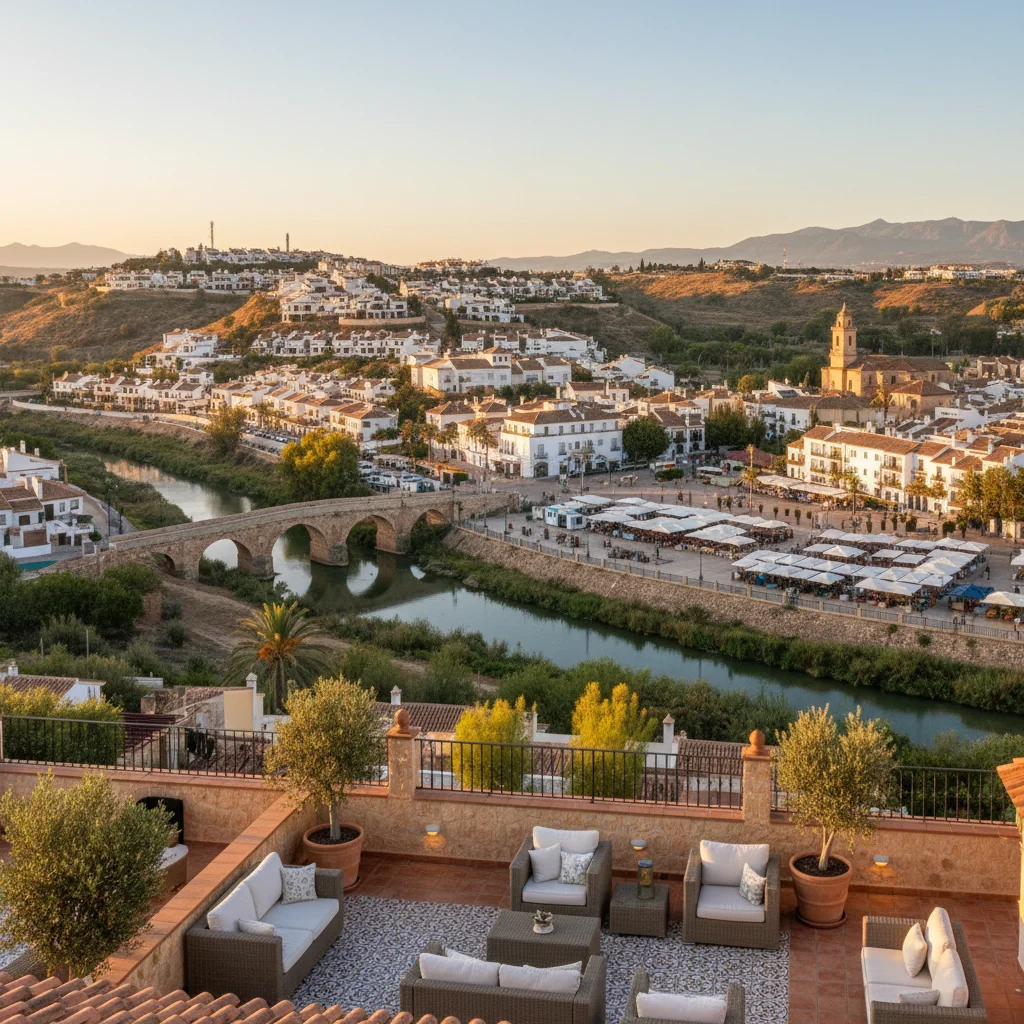
Ciudad Quesada sits on a hillside just above Rojales town, and it is here that most of the outdoor cooking action happens. The urbanisation was purpose-built for northern European buyers, so nearly every property comes with a south-facing terrace or rooftop solarium designed for exactly the kind of entertaining that a gas BBQ or kamado grill makes possible. Walk through Doña Pepa or Benimar on a Saturday afternoon and you will hear the familiar hiss of fat hitting hot grates from almost every other garden.
The surrounding areas — La Marquesa golf course, the riverside walk along the Segura, and the Sunday market in Rojales old town — give the area a community feel that keeps expats rooted here for decades. Properties average around €180,000, typically two- or three-bedroom villas with private pools and terraces between 20 and 50 square metres. That is more than enough space for a complete outdoor cooking station.
Rojales and Ciudad Quesada’s purpose-built expat urbanisations offer terraces ideally sized for gas BBQs, kamado grills, and compact pizza ovens, with 69% of residents from abroad.
Choosing Your Setup in Rojales
The typical Ciudad Quesada villa terrace of 20–50m² suits a standalone grill with room to spare, while rooftop solariums open up creative possibilities for elevated cooking stations.
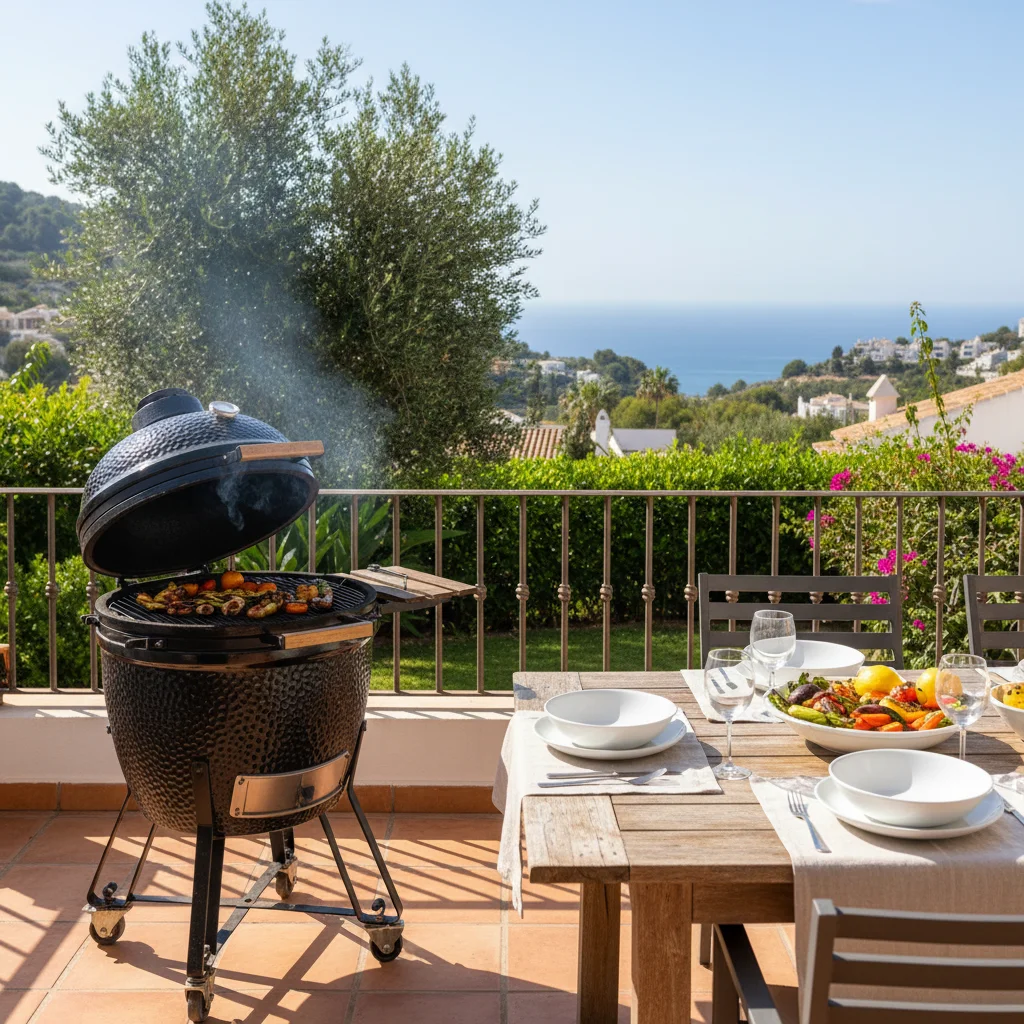
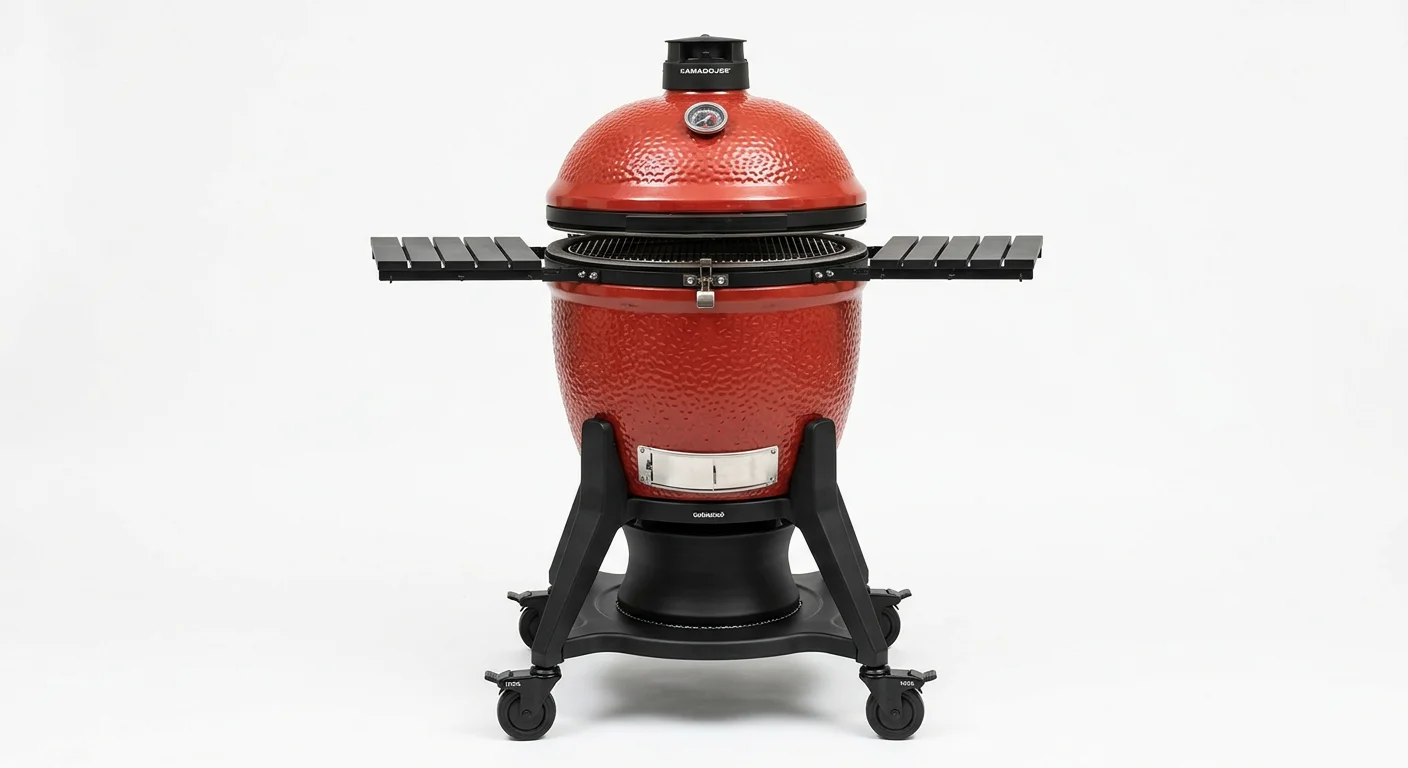
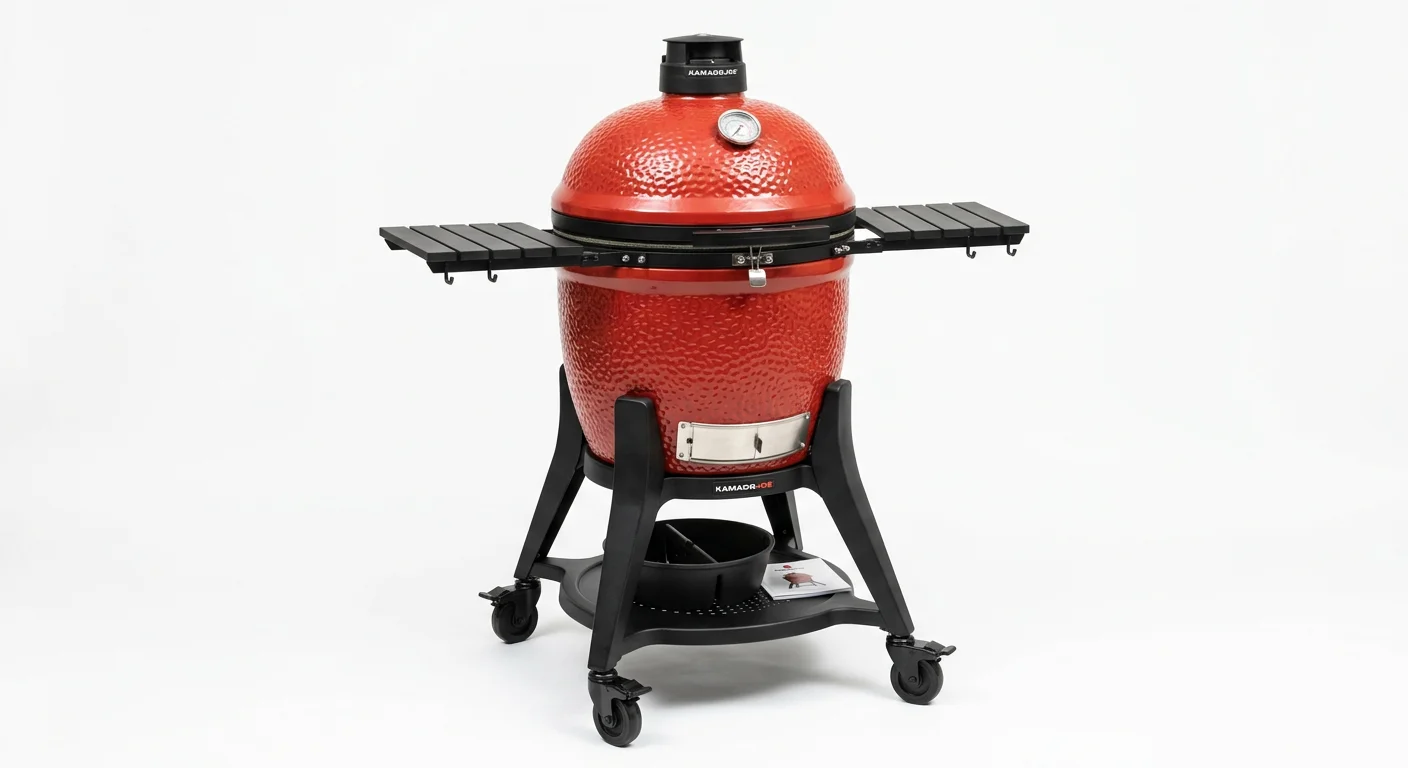
Gas BBQs remain the top seller across the Rojales area. Spanish butane bombonas are available from multiple local suppliers, and the convenience of gas suits the midweek dinner culture that British and Scandinavian residents have established. For those who want richer flavour, a kamado grill handles everything from slow-smoked ribs to searing-hot steaks, and the ceramic body shrugs off the occasional cool evening from November to February.
Pizza ovens have gained serious traction here over the past two years. Neighbours in Ciudad Quesada trade tips on dough recipes and wood sourcing — almond and olive wood is readily available from agricultural suppliers inland. Costa Blanca Outdoors recommends a mid-sized wood-fired oven for Quesada terraces: large enough to cook for a dinner party of eight, compact enough to leave room for seating.
Properties near La Marquesa golf course tend to have larger gardens, making them ideal candidates for a full outdoor kitchen island with built-in gas BBQ and prep space. If you are working with a smaller Benimar terrace, a portable kamado paired with a folding prep table delivers impressive results without crowding the space.
Costa Blanca Outdoors recommends mid-sized wood-fired pizza ovens for Ciudad Quesada terraces, balancing cooking capacity for eight guests with enough remaining space for comfortable outdoor seating.
Delivery to Rojales and Ciudad Quesada
We deliver throughout Rojales, Ciudad Quesada, and surrounding urbanisations weekly, with reliable access to hillside properties and gated communities.
Rojales sits in our southern Costa Blanca delivery zone, one of our busiest corridors. Ciudad Quesada’s grid-pattern roads make access straightforward for even the largest deliveries — a welcome contrast to some of the narrower hillside urbanisations further north. Every delivery includes full setup: unpacking, assembly, placement on your terrace, and a hands-on walkthrough of your new equipment.
For built-in outdoor kitchen projects, we coordinate with local builders experienced in the construction standards common across Quesada and Benimar. Typical lead time is 5–10 working days for in-stock items, or 3–4 weeks for custom kitchen installations including design and fabrication.
Living nearby? We cover Orihuela Costa and San Fulgencio on the same southern routes, and customers in Torrevieja are just minutes away. One delivery run covers the entire southern corridor efficiently, keeping costs down for everyone in the area.
High-Performance Outdoor Cooking in Rojales: The Kamado Expert Guide
Living in this corner of the Vega Baja provides a unique set of circumstances for anyone looking to upgrade their outdoor cooking setup. With a population that is nearly seventy percent international, the local culture here has evolved into a sophisticated blend of British, Scandinavian, and German influences, all of which share a common thread: a deep appreciation for high-quality, slow-cooked food. Whether you are situated in the elevated urbanisations of Ciudad Quesada or the more traditional setting of the Pueblo Español, the environment dictates what equipment will actually survive and perform over the long term. The standard property profile in this area often includes villas with decent-sized terraces or modern apartments within golf resort communities like those surrounding La Marquesa Golf. These spaces are designed for year-round utility, but they also present challenges in terms of sun exposure and proximity to neighbors.
The choice of a Kamado BBQ over a standard grill in this specific region is driven by more than just a desire for better flavor. In an area where the average property price sits around EUR 160,000, homeowners are often looking for an investment that adds genuine value to their outdoor living space without requiring constant replacement. Ceramic grills are particularly suited to our local lifestyle because they act as a complete outdoor oven, smoker, and grill in one. When you consider the diverse nationalities living here, the versatility of a ceramic egg makes sense. Our British neighbors might be looking for the perfect Sunday roast with heat retention that a gas grill simply cannot match, while Scandinavian residents often prioritize the cold-smoking capabilities for fish, and German expats appreciate the engineering precision required to hold a steady 110 degrees Celsius for a twelve-hour brisket.
The layout of many local communities also plays a role in why these units are becoming the standard. Many homes are part of "quad" style urbanisations or terraced villas where smoke management is a matter of neighborly courtesy. Because a Kamado is a sealed system, you use significantly less charcoal than you would in a traditional open grill. Once the ceramic walls are heat-saturated, the oxygen intake is minimal, meaning you aren't sending plumes of white smoke across your neighbor's solarium. This efficiency is vital when you are cooking in a densely populated golf community where shared gardens and close-proximity terraces are the norm. The ability to shut down the airflow and extinguish the coals almost instantly also provides a level of safety that is essential during the dry summer months when fire risks are a serious concern across the Vega Baja.
Technical Considerations for the Local Climate
The environment in this specific part of the province is significantly harsher on outdoor equipment than many realize. While we enjoy more sun than the northern Costa Blanca, we also deal with a higher frequency of the calima—that fine, abrasive Saharan dust that coats everything in an orange film. For a Kamado BBQ, this dust is more than just a cleaning nuisance. It can get into the felt or wire mesh gaskets and act as an abrasive, eventually compromising the airtight seal that is critical for temperature control. If you are living in the areas closer to the salt lakes or experiencing the afternoon humidity that rolls in from the coast, the hardware on your grill is under constant attack. Many entry-level ceramic grills use powder-coated steel for their hinges and bands, which will inevitably show rust within two seasons in this climate. I always advise residents here to look for models with stainless steel or high-grade galvanized hardware.
Sun exposure is another factor that is often underestimated. The afternoon sun in this region is intense enough to degrade low-quality plastic handles and side shelves within a single summer. A premium Kamado, such as a Monolith or a Kamado Joe, uses high-fired ceramics and HDPE or bamboo components that can withstand these UV levels. When you are looking at a price point of EUR 1,200 to EUR 2,500 for a mid-to-large setup, you need to ensure the exterior glaze is thick enough to prevent "crazing"—those tiny spider-web cracks—which can be exacerbated by the extreme temperature swings between a 40-degree August day and the 300-degree internal temperature of the grill. For those living in the more exposed hills of Ciudad Quesada, wind is a secondary factor. A heavy ceramic grill, often weighing over 100kg for a 46cm diameter grate model, provides the stability you need during the gusty "Leveche" winds that can easily tip over lighter, tripod-based charcoal kettles or gas grills.
Maintenance in this region requires a local touch. I recommend a "burn-off" clean twice a year to remove the organic buildup inside the dome, but you must be careful with the ceramic during the winter months. If we have a rare period of heavy rain, followed by a sharp temperature drop at night, moisture trapped in the ceramic pores can theoretically cause issues, though high-quality units are designed to handle this. The most important piece of advice I give to anyone in this town is to invest in a heavy-duty, breathable cover. It is not just about the rain; it is about keeping that calima dust out of the air intakes and protecting the hardware from the salt-laden air. A decent cover for a large model will usually cost between EUR 90 and EUR 130 and is the single best investment you can make to protect your equipment.
Tailoring Your Setup to Your Property Type
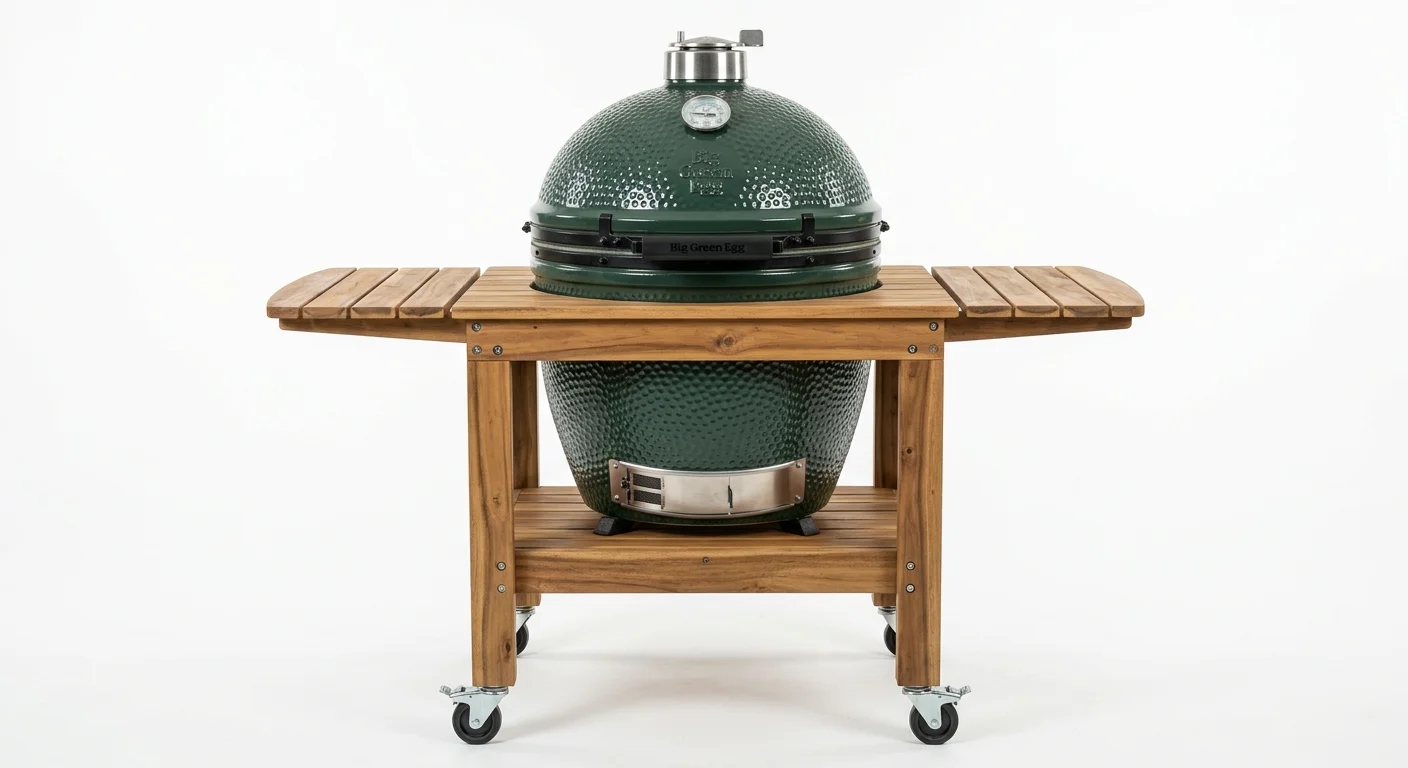
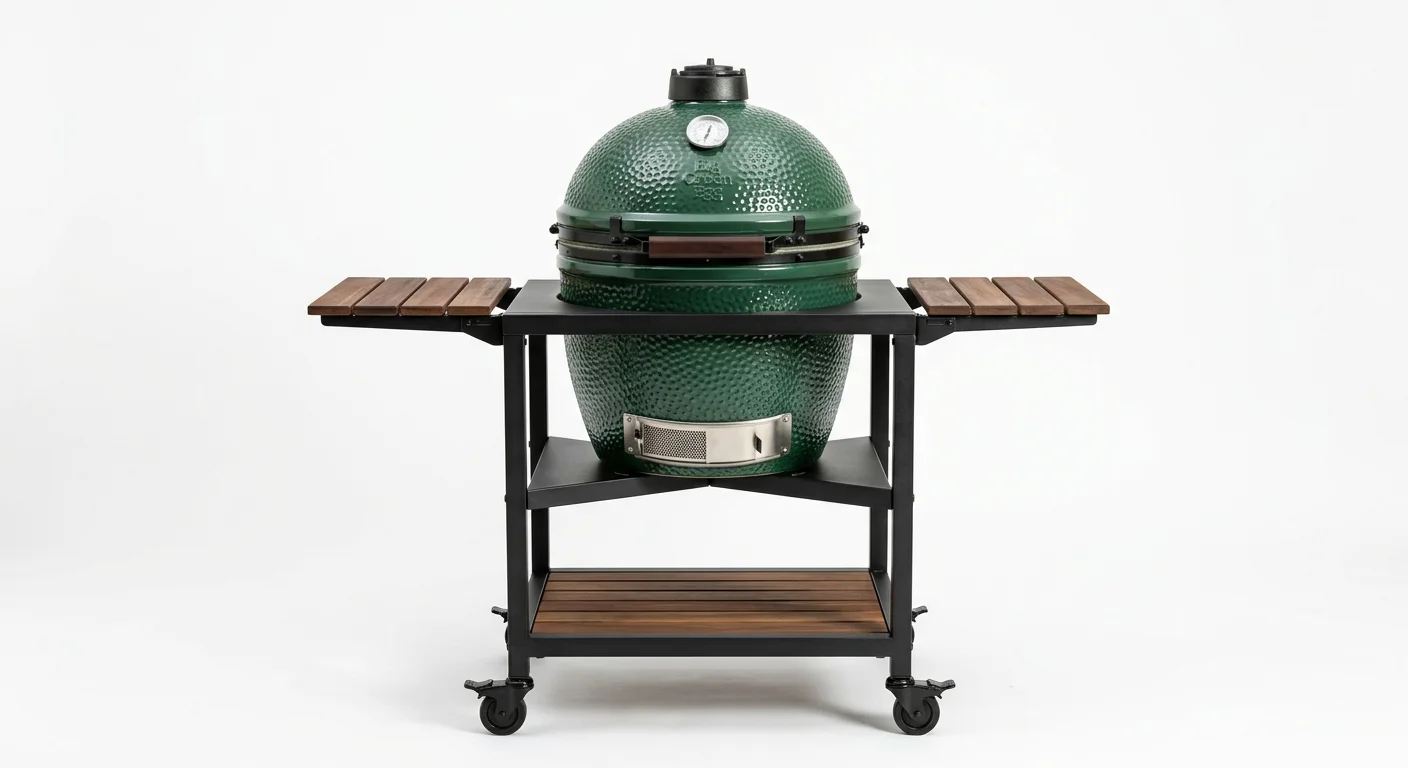
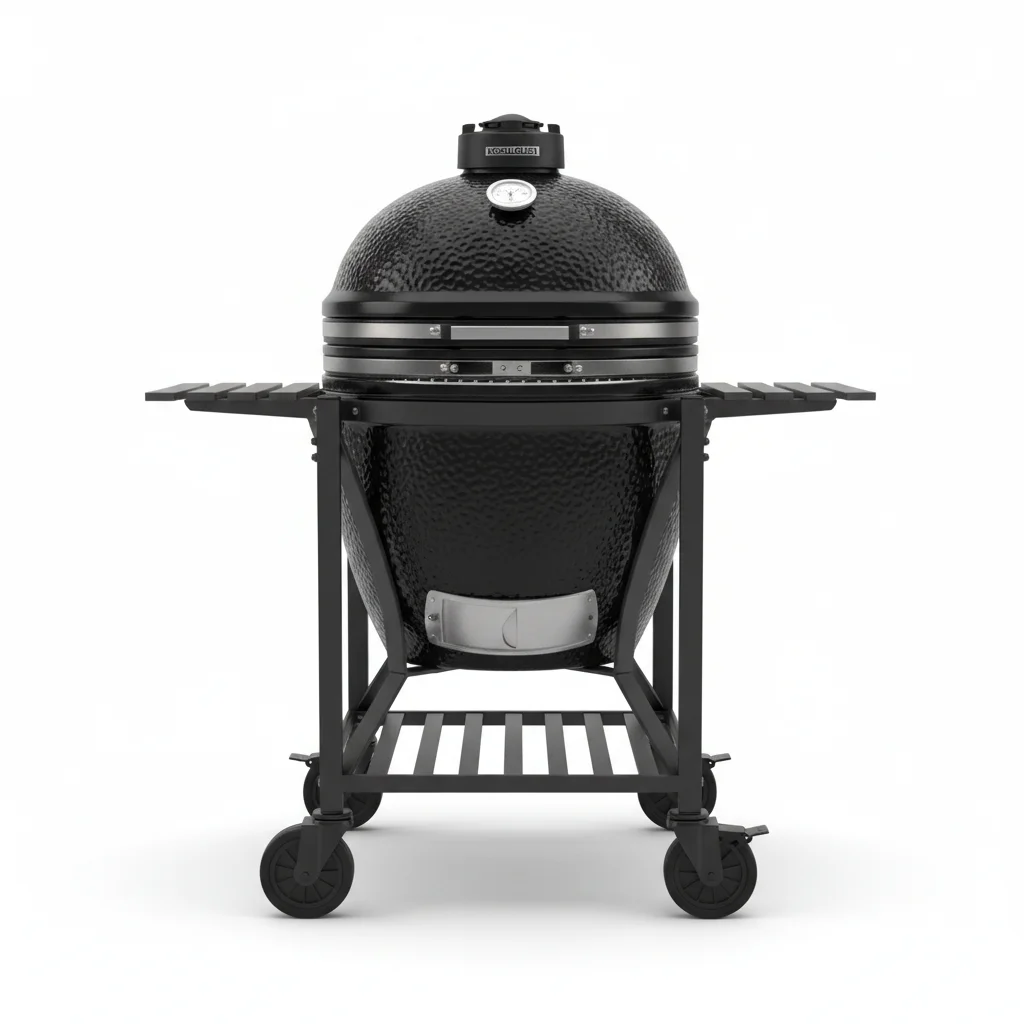
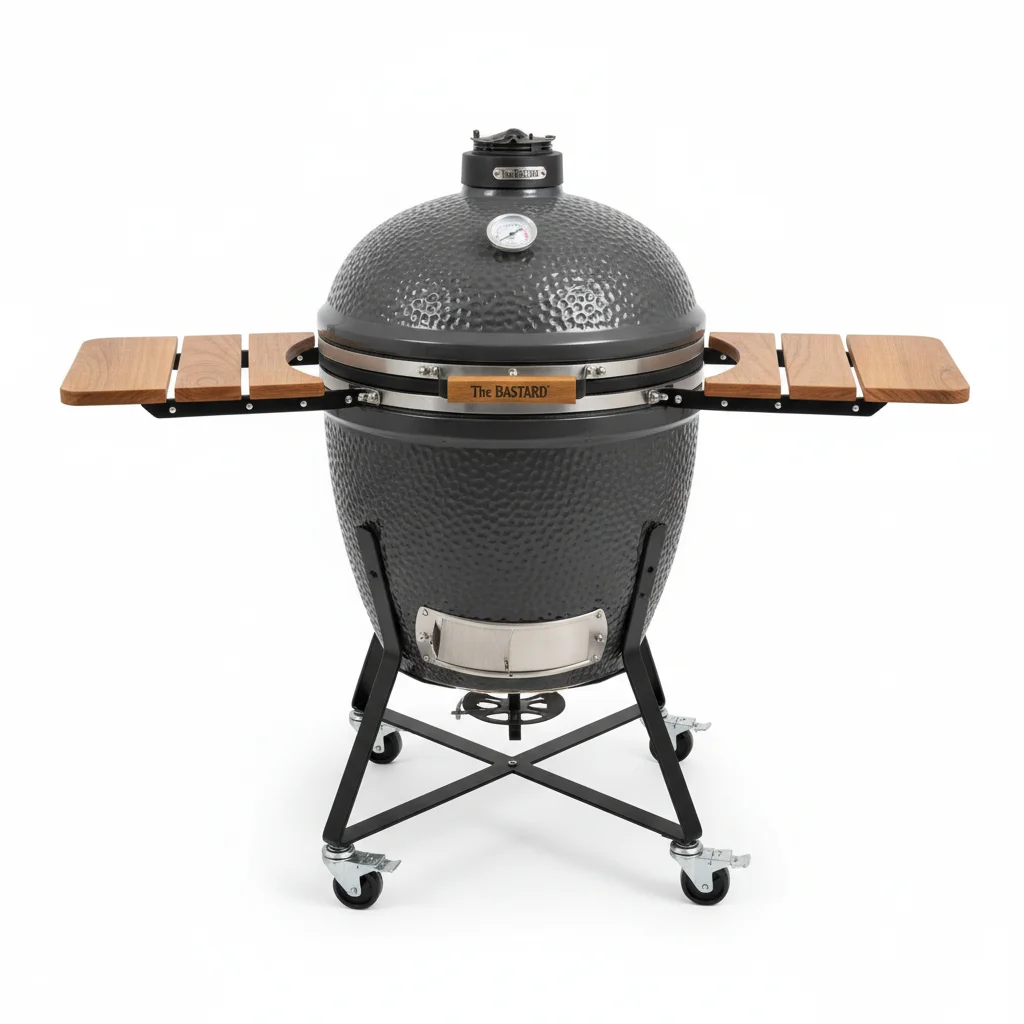
If you are living in one of the larger detached villas, perhaps near the La Marquesa golf course, you likely have the footprint for a permanent outdoor kitchen. In these scenarios, I often recommend a "built-in" Kamado rather than a standalone unit on a cart. A Large 18-inch (46cm) or XL 24-inch (61cm) ceramic grill can be integrated into a masonry or stainless steel counter. This setup often replaces the need for a traditional Spanish stone BBQ, which is notoriously difficult to control and consumes massive amounts of fuel. By integrating the Kamado, you gain the ability to bake bread, roast whole chickens, and even sear steaks at 400 degrees Celsius, all within a footprint of about 1.5 square meters. For these larger properties, we often see residents pairing a Kamado with a dedicated gas-bbq for quick mid-week grilling, creating a versatile cooking zone that handles everything from a fast burger to a slow-smoked pork shoulder.
For those residing in apartments or smaller townhouses with terraces of 15m² to 25m², space is the primary constraint. You don't want a massive rig taking up half your lounging area. In these cases, a "Junior" or "Joe Jr" model is surprisingly effective. These typically have a 33cm to 35cm cooking diameter and weigh around 35kg to 50kg. They are portable enough to be moved into a storage room if you are leaving the property for the winter, yet they offer the same thick-walled ceramic insulation as their larger counterparts. This size is perfect for a couple or a small family and can still handle a 5kg turkey if managed correctly. The price for these smaller units usually starts around EUR 850, making them a more accessible entry point into ceramic cooking without sacrificing the quality of the results.
We also see a growing trend of residents combining their ceramic grill with a dedicated pizza-oven. While a Kamado can certainly cook a pizza using a ceramic heat deflector and a pizza stone, a dedicated oven can reach the 450-degree temperatures needed for a 60-second Neapolitan crust more efficiently. However, if you only have room for one appliance on a compact terrace in the Pueblo Español, the Kamado is the clear winner for its sheer multi-functionality. It can bake a pizza at 350 degrees with a stone, then be dialed back down to 110 degrees for a slow-cook the following day. This versatility is exactly why they have become so popular among the international community here, where outdoor space is premium and every purchase needs to serve multiple purposes.
Local Logistics and Expert Delivery Services
Navigating the delivery of a 120kg ceramic grill in this area requires more than just a van and a tail-lift. Many of the streets in the older parts of the village are narrow, and the steep inclines found in certain parts of Ciudad Quesada can make moving heavy equipment on wheels surprisingly dangerous. When we deliver to this town and surrounding areas like San Fulgencio or the coastal stretches of Guardamar, we don't just drop a box at the gate. We understand the local terrain. We know that many urbanisations have gravel driveways or stepped entries that require specific ramps and heavy-duty trolleys to navigate safely. We also understand the specific access issues in communities near Torrevieja and Los Montesinos, where narrow gates and tight terrace turns are common.
Our service includes a full assembly and "first-fire" briefing. This is particularly important for those who are new to ceramic cooking. Using the wrong fuel—such as cheap briquettes with chemical binders—can ruin the flavor of your food and even taint the porous ceramic of your grill. We ensure you have access to high-quality lump charcoal, which is essential for the long burn times we expect in this climate. Because I have lived on the Costa Blanca since 2019 and have helped hundreds of families set up their outdoor spaces, I know which chimney starters work best in our wind conditions and which local suppliers stock the best hardwoods for smoking.
If you are considering an upgrade to your outdoor cooking area, I am always happy to provide a free consultation to look at your space and recommend a setup that fits your property and your cooking style. We regularly serve clients across Algorfa and the surrounding golf communities, bringing a level of local expertise that you simply won't find at a national retailer. My goal is to ensure that your investment in a Kamado BBQ is one that you’ll still be enjoying a decade from now, regardless of what the Mediterranean climate throws at it. Whether you are looking for a standalone unit for a villa in Quesada or a compact setup for a terrace near the town center, we can help you find the right balance of size, features, and durability.
 JW'"
/>
JW'"
/>